Most people treat valet parking like a simple handoff: keys out, ticket in hand, forget about it until pickup. But ask any attendant who’s worked a stand for more than a summer, and they’ll tell you the real story starts the second an older driver presses a folded bill into their palm before the car door even shuts.
That small gesture isn’t just old-fashioned courtesy. Attendants say it quietly rewires everything that happens next – where the car gets parked, how carefully it’s driven, even how the whole night unfolds for the person standing at the curb. Here’s what valets actually notice, and rarely say out loud.
#13 – They Clock the Bill Before They Clock the Car
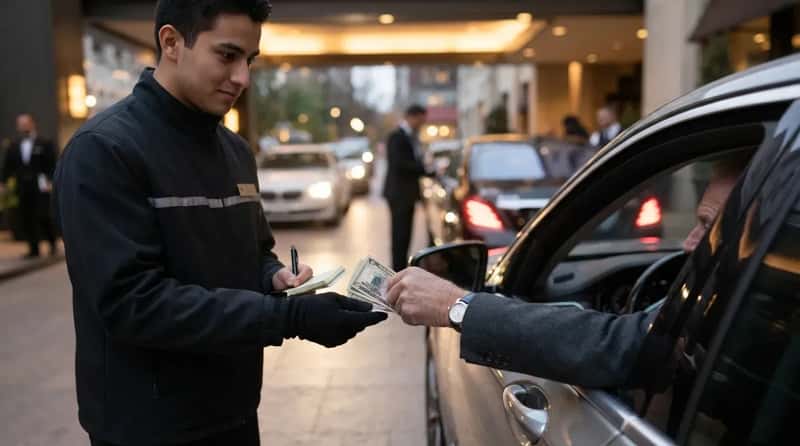
Attendants say the timing matters more than the amount. A $2 or $3 bill handed over at drop-off registers instantly, long before anyone glances at the make or model of the car. It cuts through the blur of a busy valet line the way nothing else does.
It sounds small, but longtime valets call it one of the biggest predictors of how a night goes. A driver who tips at drop-off essentially buys a spot near the front of an invisible line, even if a dozen other cars were requested first. Nobody admits this to management, but attendants admit it to each other constantly.
Fast Facts
- Tipping at drop-off, not pickup, is what most attendants remember later
- A $2-$5 bill handed over early can quietly influence where a car gets parked
- Busy stands can have a dozen or more cars arriving within minutes of each other
- First impressions form in the first few seconds of the handoff, not the car itself
#12 – They Notice You Brought Exact Change
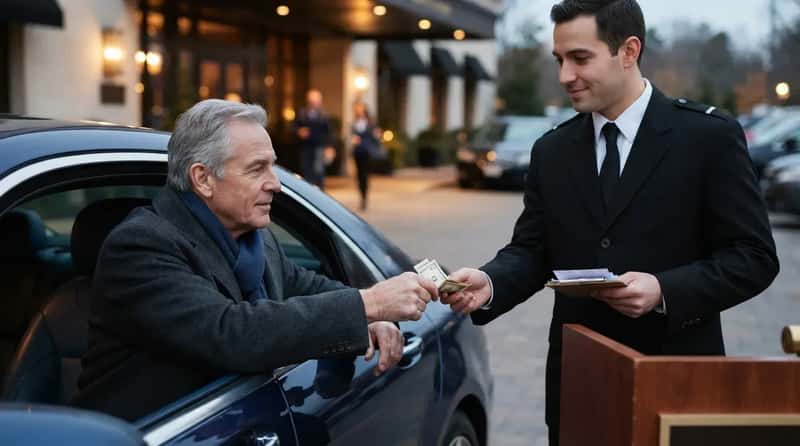
Here’s a detail nobody talks about: attendants can tell in about two seconds whether a guest planned for this moment or is digging through a wallet for anything smaller than a twenty. Older drivers, more often than younger ones, tend to have small bills folded and ready before they even reach the stand.
That kind of preparation doesn’t go unnoticed. It signals a guest who respects the job, not just the service that comes with it. Attendants say that quiet foresight tends to earn a little extra patience later in the night, whether the guest realizes it or not.
#11 – They Watch How You Treat Them, Not Just What You Pay Them
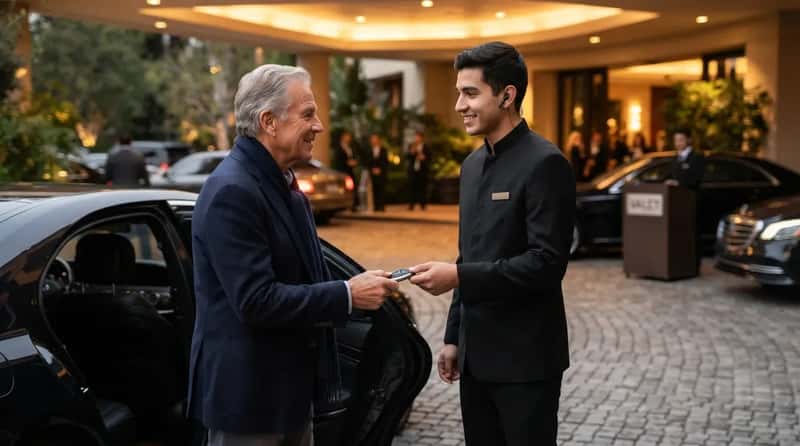
Tone matters as much as cash, maybe more. Valets consistently say the drivers who make eye contact, say please, and actually use their name stick in memory far longer than the size of any tip.
Older guests, attendants report, are statistically more likely to treat the person at the stand like a person, not a machine that parks cars. That single habit, more than the dollar amount, often decides who gets prioritized when three cars are requested at once. It’s a small thing that compounds fast during a chaotic Saturday rush.
#10 – They Park Your Car Somewhere Easier to Reach
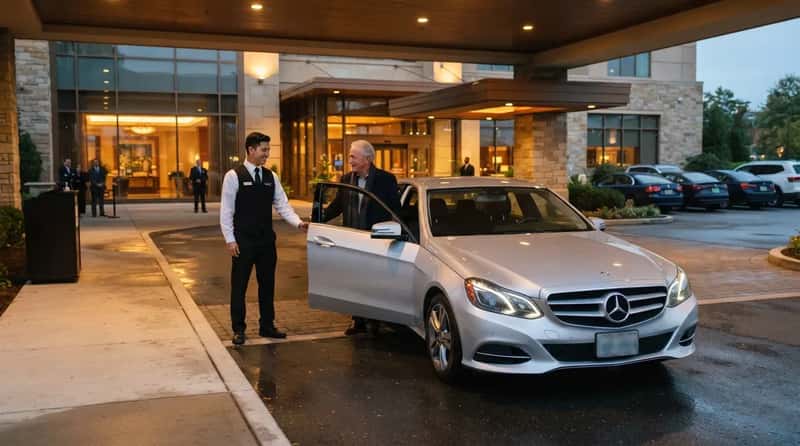
Valet lots are rarely as tidy as guests imagine. Cars get stacked, wedged, and double-parked during busy shifts, which means retrieval time can swing wildly depending on where a car lands.
Attendants admit that guests who tip early tend to get parked somewhere faster to pull, not buried three rows deep behind someone else’s SUV. For an older driver standing near a warm entrance instead of a cold curb, that difference isn’t just convenience. It’s a small kindness nobody advertises but plenty of valets quietly practice anyway.
#9 – They Adjust Their Driving Style Once They Know Who You Are
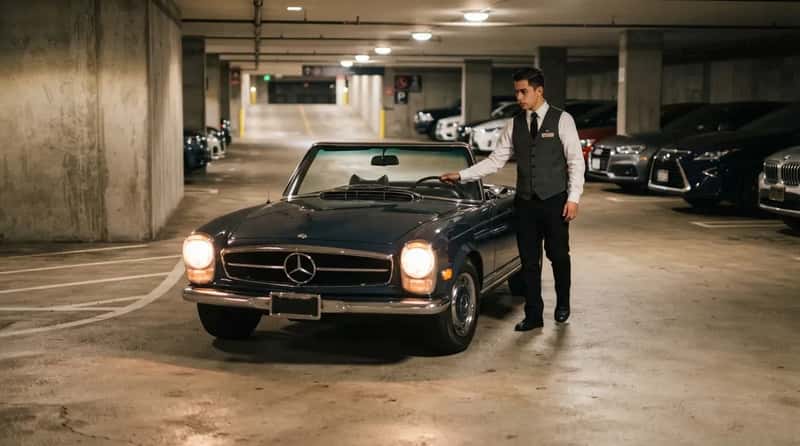
Once an attendant has your name and your tip in hand, something shifts. Many valets say they slow down, take corners more carefully, and skip the quick showy laps some younger attendants use to impress each other in the lot.
It’s not written in any training manual, but attendants describe it as an unspoken respect that kicks in once a guest feels personal rather than transactional. Cars belonging to older drivers who tipped early are, according to several attendants, handled with a noticeably gentler touch. Nobody wants to be the one who dings the car of the guy who just handed them a five and asked about their night.
#8 – They Remember the Small Requests You Never Repeat
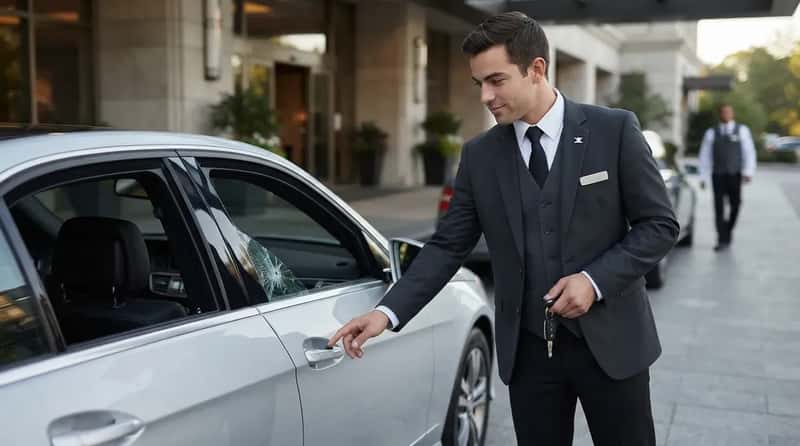
Ask a valet once to leave the radio off, crack a window, or park facing a certain direction, and older drivers who tip upfront are far more likely to have that request honored automatically the next time. Attendants say memory is the real currency of the job, and a good tip is often what makes a guest worth remembering in the first place.
It’s a strange kind of loyalty economy. The guest never asks twice, but the valet quietly keeps a mental note anyway. That’s the part most people never see, and it only kicks in once a driver has shown they notice the person doing the work, not just the paint job on the car.
#7 – They Pick Up on Which Cars Are Sentimental, Not Just Expensive
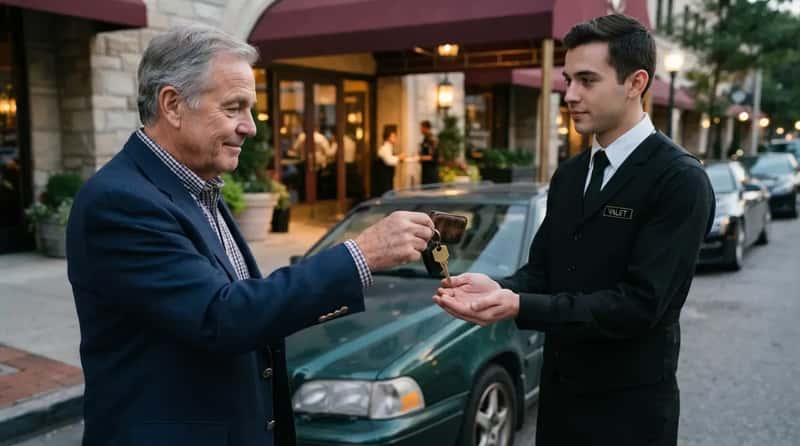
Contrary to what most guests assume, valets don’t size up a car by price tag alone. Attendants say older drivers frequently arrive in vehicles owned for a decade or more, and it shows in how carefully those guests hand over the keys.
That hesitation is a signal attendants have learned to read immediately. A driver over 60 gripping the keys a beat too long usually means the car matters for reasons that have nothing to do with resale value. Attendants who notice tend to treat that vehicle with extra deliberate care, tip or no tip, though the tip is often what tips them off in the first place.
#6 – They Notice When You’re Nervous About Letting Go
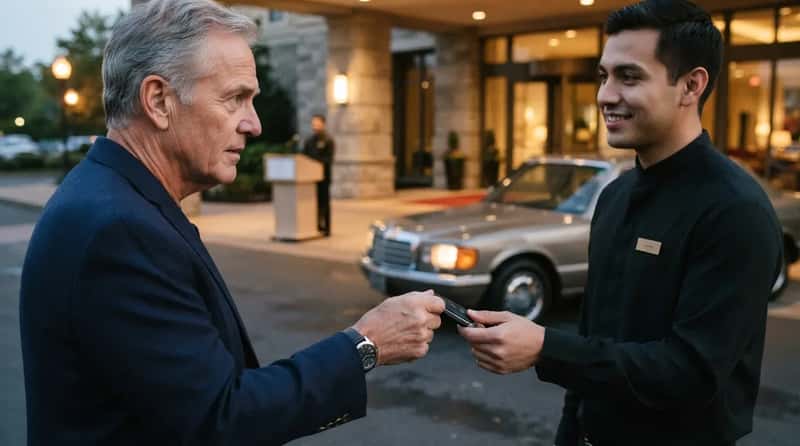
Handing a stranger the keys to your car is a small act of trust, and valets say older drivers show that hesitation more visibly than most. A pause, a lingering glance, a quiet “be careful with her” – attendants hear it constantly, and say it changes how they handle the vehicle.
Far from finding it annoying, most valets say they respect it. It reminds them the job isn’t just parking metal, it’s holding something that represents years of memories for someone. Drivers who tip early and voice that nervousness politely tend to get the same care mirrored right back.
#5 – They Notice the Cash-Versus-Card Divide
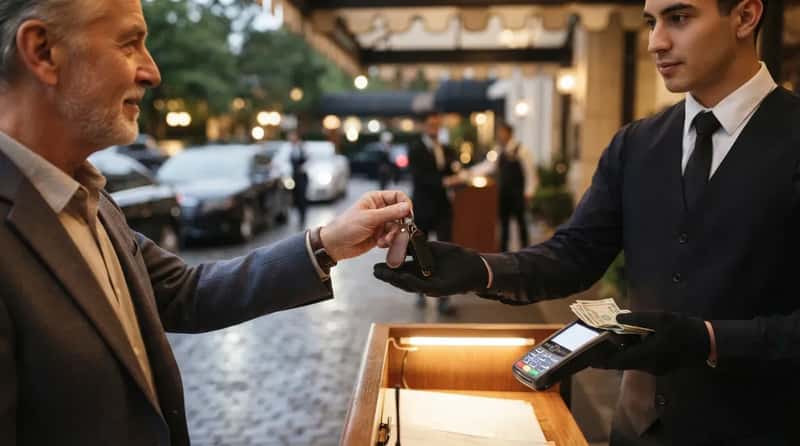
Tipping culture has shifted fast, and valets are on the front lines of that change. At most restaurants and shops now, it’s common to tip by card instead of cash, which means fewer people carry bills at all. Older drivers, attendants say, are far more likely to still carry cash and hand it over directly.
That habit hasn’t gone unnoticed. Cash tips guarantee the specific attendant who parked the car actually gets the money, instead of it disappearing into a pooled tip jar split among a whole shift. Many attendants privately admit they prefer stands where older guests dominate the crowd, precisely because the tipping is more direct and predictable.
Quick Compare: Cash Tip vs. Card Tip
- Cash: Goes straight to the attendant who actually parked your car
- Card or app tip: Often pooled and split across the whole shift
- Cash: Tends to quietly influence priority parking and faster retrieval
- Card or app tip: Usually processed after the car has already been pulled
#4 – They Notice the Regulars and Build a Quiet Relationship
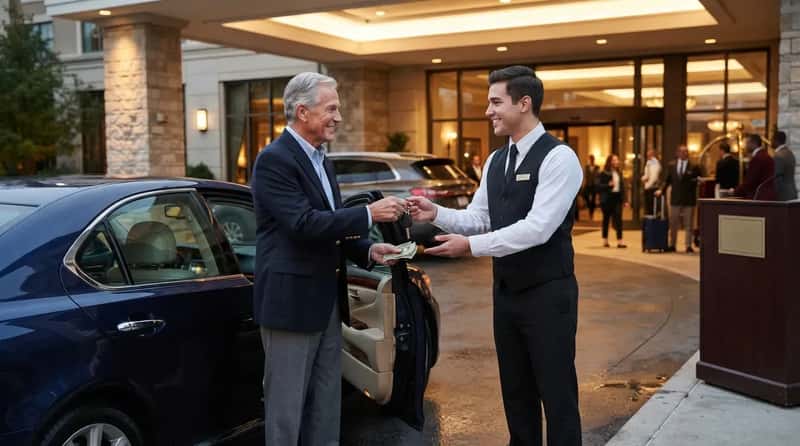
Valet stands at hotels, hospitals, and restaurants see plenty of repeat faces, and attendants say older drivers are more likely to become recognizable regulars. Once that relationship forms, tipping habits harden into a kind of ritual both sides recognize instantly.
Many attendants say these regulars get treated almost like family by the end of a season. A driver who’s tipped consistently at drop-off for months can end up with a reserved-feeling spot without ever asking for one. It’s an informal system nobody writes down, but everyone on staff quietly understands.
Worth Knowing
- Regular guests often get remembered by name within just a few visits
- Hotels and hospitals tend to see the highest rate of returning valet guests
- Consistent tipping habits can quietly turn into reserved-feeling treatment over time
- None of this loyalty system is ever written into official valet training
#3 – They Notice When Older Guests Overtip Out of Habit
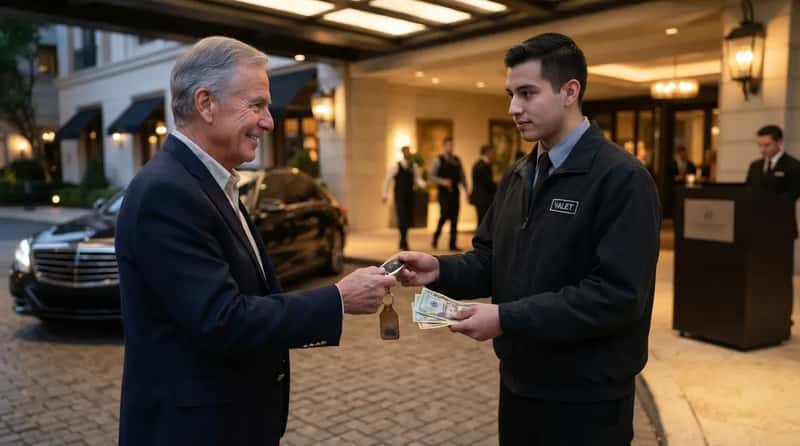
Here’s a mildly controversial opinion many valets share privately: older drivers sometimes tip more generously than the situation calls for, simply because that’s how they were raised. Most etiquette guides suggest $2 to $5 per trip, or $10 for standout service, yet plenty of older guests hand over more without hesitation, regardless of how busy or slow the night was.
Some younger attendants find it sweet. Others admit it quietly raises expectations for everyone else, making a standard tip suddenly feel stingy by comparison. Either way, valets notice the pattern immediately, and it often becomes the deciding factor in who gets remembered fondly at the end of a long shift.
#2 – They Notice the Conversations That Go Deeper Than Small Talk
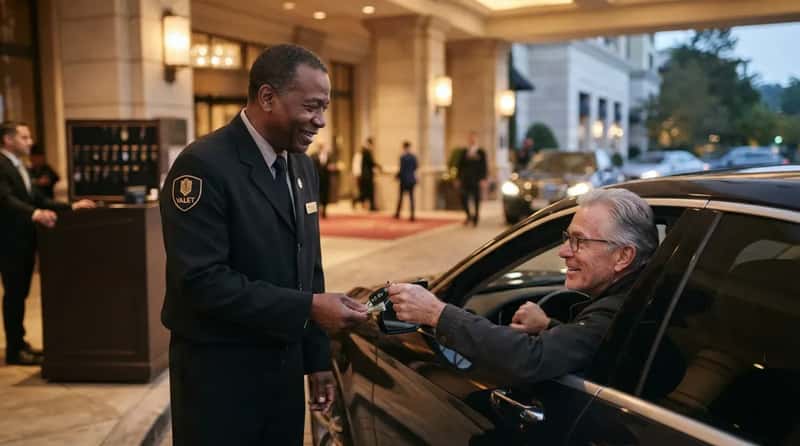
Younger guests tend to stay glued to their phones during the handoff. Older drivers, attendants say, are far more likely to ask a valet’s name, comment on the weather, or ask how their night is going, turning a ten-second exchange into something closer to a real conversation.
Attendants describe these moments as the best part of an otherwise repetitive job. A driver who tips early and then actually talks to them stands out more than any dollar amount ever could. It’s a small human connection inside a job built almost entirely around anonymous transactions.
#1 – They Notice When It Might Be One of the Last Times
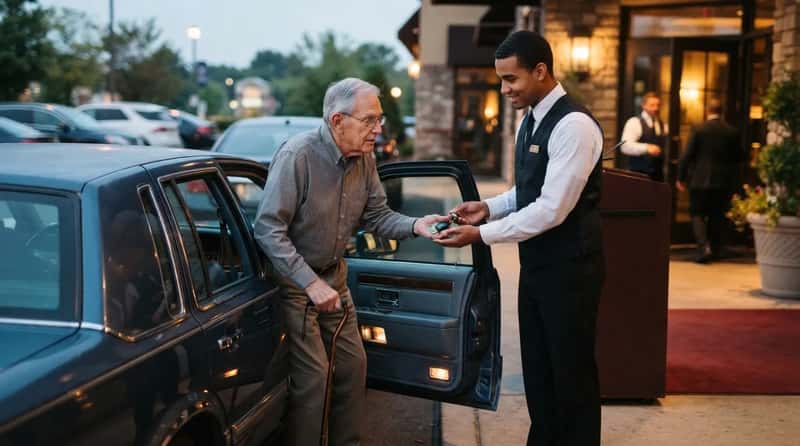
This is the one attendants rarely say out loud. Some valets have quietly noticed older guests who seem less steady behind the wheel, slower to pull away, or hesitant in ways that suggest driving itself may not last much longer for them. In those moments, the early tip and the extra courtesy take on a different weight entirely.
Attendants describe treating these guests with an almost protective gentleness, not because it’s required, but because they sense something bigger than a parking transaction is happening. A kind word, a careful hand on the door, an unhurried goodbye. It’s the quiet, unspoken part of the job that never makes it into a training manual, yet it’s the moment many valets say stays with them the longest.
You’re not just parking a car. Sometimes you’re the last stranger who’s kind to someone that day.
Anonymous hotel valet, speaking to a local news outlet about the job
Valet work looks simple from the outside, but the people holding the keys see far more than most guests realize. A tip at drop-off, a name remembered, a car parked a little closer to the door – none of it is required, yet it happens constantly for drivers over 60 who treat the exchange like a human moment instead of a formality.
The real takeaway isn’t about money. It’s about how a few seconds of courtesy, repeated night after night, quietly reshapes the way a stranger treats something you love.