Here’s the assumption almost everyone makes: turning 60 doesn’t change a single thing about how you move through an airport. Same lines, same shoes-off shuffle, same figure-it-out-as-you-go approach that’s worked for decades. That assumption is quietly costing travelers over 60 time, money, and a lot of unnecessary pain, and most of them have no idea why.
There’s an entire layer of rules, exemptions, and quiet accommodations built specifically for this age group, and almost none of it gets announced over the intercom. Skip it, and you’re doing the airport the hard way, every single trip. Here’s what frequent flyers, gate agents, and travel specialists actually wish more people over 60 knew.
#13 – Never Park in the Cheapest, Farthest Lot to Save a Few Bucks
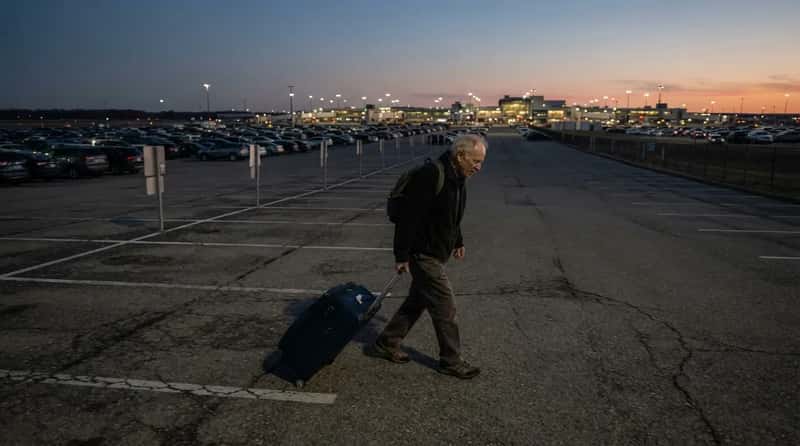
Saving fifteen dollars on parking sounds smart, right up until you’re dragging a suitcase across a quarter-mile of pavement before sunrise. For a lot of older travelers, that long walk before the terminal doors even open ends up being the most physically brutal part of the entire trip, worse than the flight itself.
Most major airports have premium or covered lots much closer to the entrance, plus free shuttle loops that run more often than people expect. Paying a little extra for proximity, or just using curbside drop-off, saves your energy for the part of the trip that actually demands it: making the connection.
#12 – Never Book the Tightest Legal Connection Time
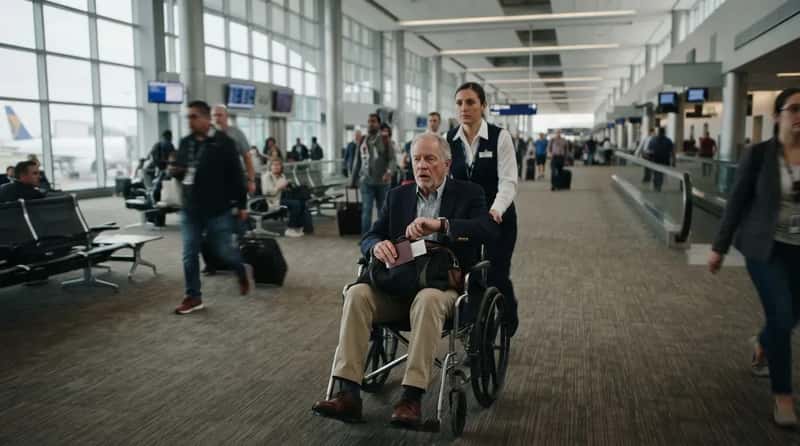
Airlines will sell you a 40-minute layover because it’s technically legal, not because it’s realistic for a human being to sprint through a terminal. Travel specialists who work with older flyers routinely tell clients to ignore the airline’s minimum entirely and build in real breathing room.
A layover of at least 90 minutes is the safer bet, especially at larger airports, and that number matters even more if you’re using a wheelchair or cart. Airlines typically coordinate a wheelchair and an assistant to meet you right at the gate, but that careful handoff falls apart in seconds if your connection is too tight to catch it.
#11 – Never Pack Medications in Your Checked Bag

Checked luggage gets lost, delayed, or sent to the wrong city more often than anyone likes to admit, and that becomes a real emergency when your daily medication is inside it. Travelers are advised to keep all medications in their original containers, in a carry-on, never in the bag that disappears into the belly of the plane.
It’s a small habit with a big payoff if things go sideways. Plenty of travelers have flown for decades without incident and figure the rule doesn’t apply to them, until the one flight where it does. Keep the pills within arm’s reach, not at the mercy of baggage claim.
#10 – Never Try to Lift a Heavy Carry-On Onto the Belt Alone
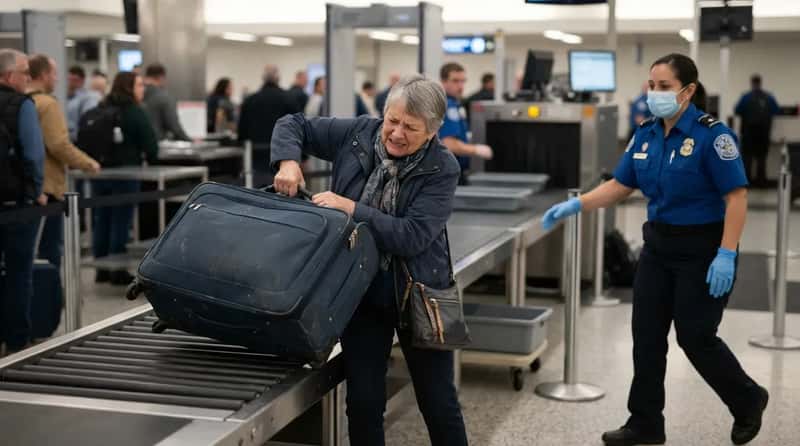
Standing in the standard security lane means bending, lifting, and unzipping bags over and over before you’ve even reached the scanner. For travelers managing arthritis or limited range of motion, that repetitive strain adds up fast and quietly, one bin at a time.
Ask a TSA agent or even a stranger in line for a hand rather than risking a back injury under pressure. Many checkpoints have staff nearby specifically to help, they just rarely say so out loud. A slipped disc before a flight is a far worse way to start a trip than thirty seconds of asking.
#9 – Never Skip the 48-Hour Wheelchair Request Call
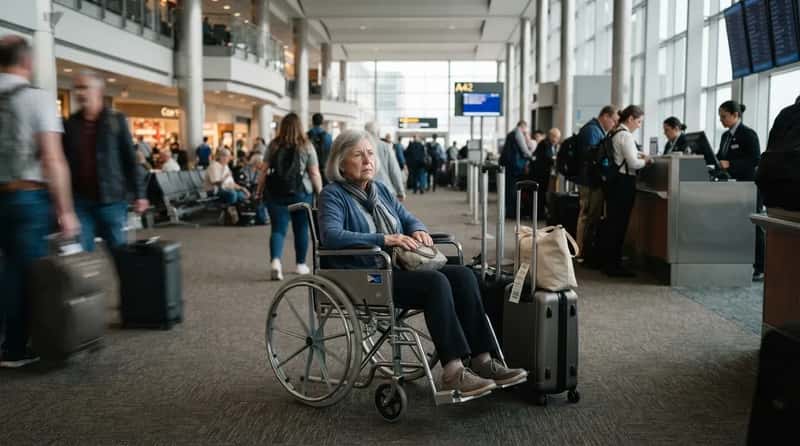
A surprising number of older travelers assume wheelchair help is something you just grab on the spot, like a luggage cart. It isn’t, and the numbers back that up: a 2022 Department of Transportation survey found more than a quarter of air travelers 65 and older use some form of airport assistance, including wheelchairs.
To actually get that support waiting for you, seniors or family members need to contact the airline at least 48 hours before departure so the reservation gets flagged for staff. Skip that call, and you’re left hoping airport employees can improvise the same level of coordination on zero notice, which rarely goes smoothly.
Fast Facts
- More than 1 in 4 travelers 65+ use some form of airport assistance
- Airlines typically require 48 hours notice to guarantee wheelchair help
- The request goes to the airline directly, not TSA or the airport
- Skipping the call means hoping staff can improvise on the same day
#8 – Never Wait Until You’re at the Gate to Ask for Pre-Boarding
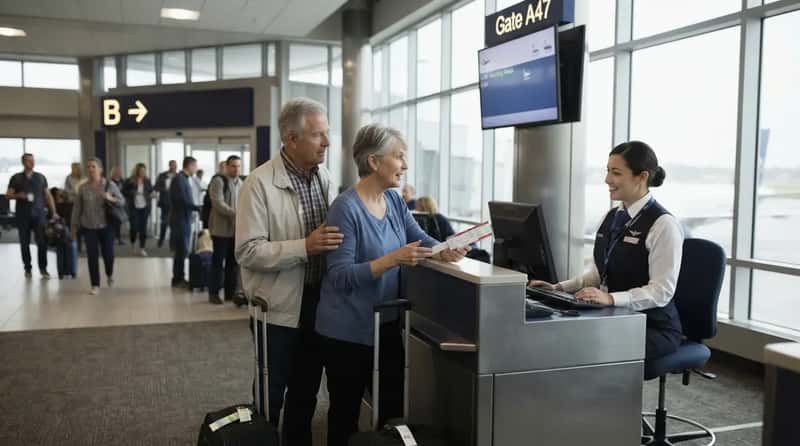
Pre-boarding exists for exactly this situation, yet plenty of older travelers assume they need paperwork or a doctor’s note to use it. They don’t. Most airlines let passengers who need extra time simply tell the gate agent when they arrive, no documentation required.
That head start matters more than people think. It means settling into your seat, stowing your bag properly, and getting situated before dozens of passengers start crowding the aisle behind you. Waiting for your zone to be called, only to find the overhead bins already full, is a completely avoidable headache.
#7 – Never Automatically Take Off Your Shoes and Jacket at Security
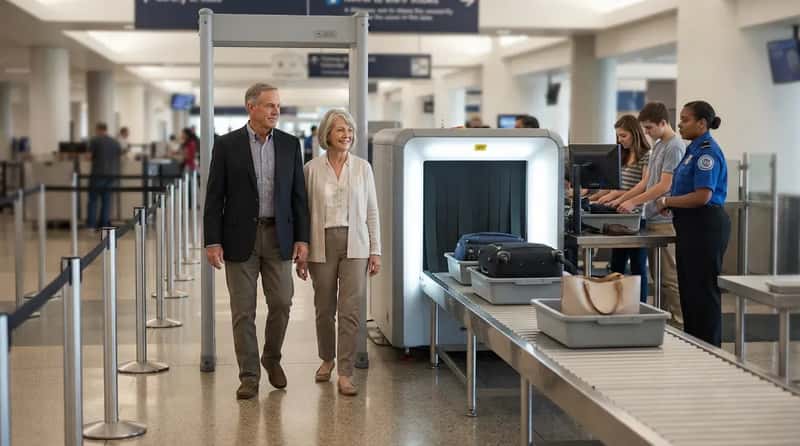
Here’s the part almost nobody announces over the intercom. Federal TSA policy has long given travelers 75 and older modified screening: shoes stay on, light jackets stay on, belts stay on, and the whole line moves faster.
What’s even bigger is that this isn’t limited to age 75 anymore. As of a major policy shift in July 2025, TSA officially ended the mandatory shoe-removal rule for all passengers, thanks to the nationwide rollout of advanced CT scanners and AI-assisted screening. TSA screened more than 904 million passengers in 2024 alone, and yet plenty of qualifying travelers still bend down and untie their shoes purely out of decades-old habit.
Quick Compare
- Old rule: Everyone removes shoes, belts, and light jackets before screening
- 75+ rule (still standard): Shoes, belts, and light jackets stay on
- New 2025 rule: Shoe removal no longer mandatory for any age, thanks to CT scanners
- Bottom line: Old habits are outdated for nearly everyone now, not just seniors
#6 – Never Assume Every Airport Treats Older Travelers the Same
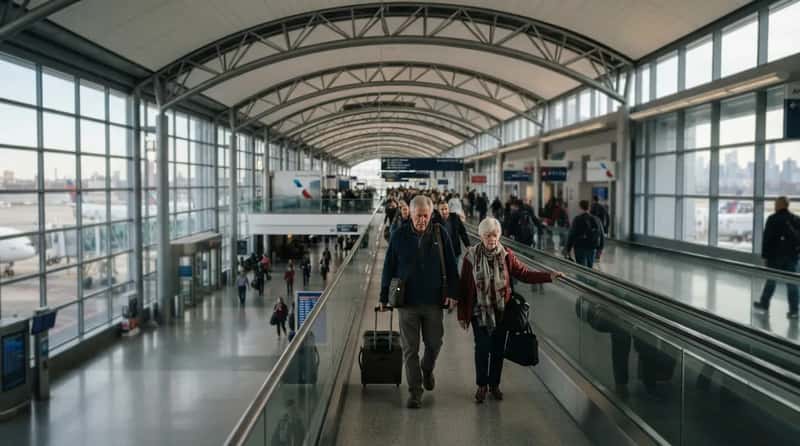
Not every terminal is built with the same patience for slower-moving passengers, and industry insiders aren’t shy about saying so. Travel specialists who work with mobility-limited clients regularly point to Las Vegas, Miami, and Orlando as hubs that go out of their way to make the walk easier.
New York’s LaGuardia, by contrast, has a long-standing reputation for being tougher to navigate for anyone dealing with mobility challenges or long connection walks. It’s a controversial opinion among frequent flyers, but if you’re booking a connection through an unfamiliar hub, it’s worth checking the layout before committing to a tight layover there.
#5 – Never Skip Calling TSA Cares Before a Complicated Trip
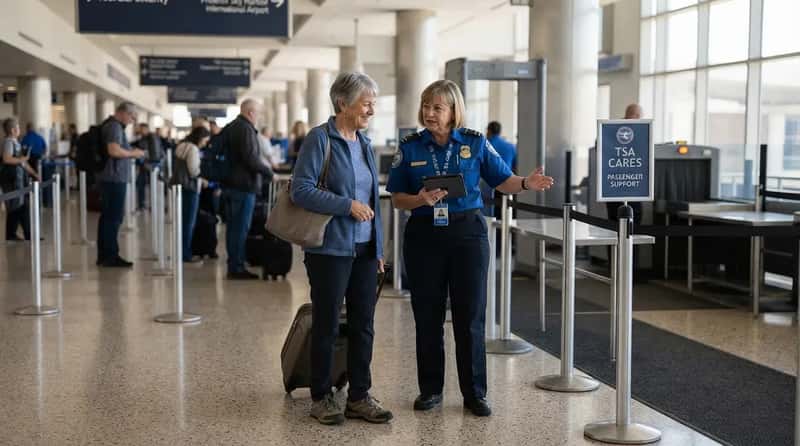
Most travelers have never even heard of this program, which is exactly why it stays so underused. Anyone with questions or extra needs is encouraged to call the TSA Cares hotline at least 72 hours before their flight to request on-site assistance.
That call does more than log a note somewhere in a database. It routes directly to the Customer Service Manager at your specific departing airport, a supervisor who gets briefed on your situation, your needs, and your arrival time before you ever show up. At airports like Phoenix Sky Harbor, dedicated Passenger Support Specialists exist purely to move travelers through security smoothly. Most people never make this call, and never find out what they missed.
#4 – Never Forget to Ask About Senior Discounts on Fares
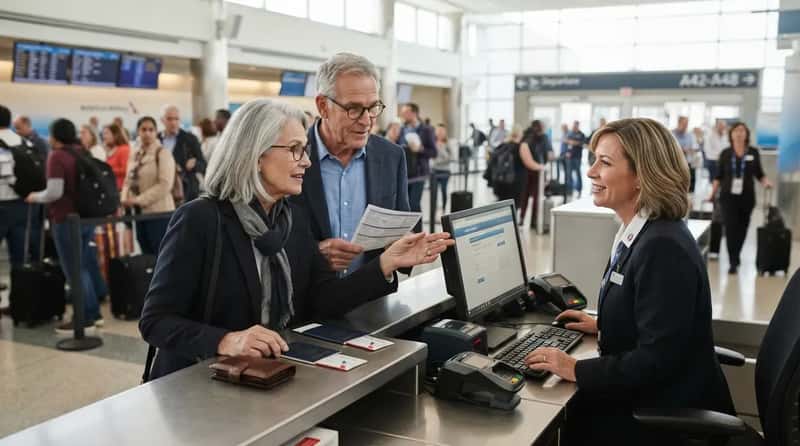
Airlines rarely advertise this, and that’s exactly the point. Several major carriers quietly offer discounts for travelers over 60 or 65, but you almost never see them listed on the booking page.
American Airlines, for instance, lets travelers select “Senior (65+)” under passengers during booking, which can unlock lower fares on certain routes. Delta, United, and JetBlue also offer senior discounts, often in the 5% to 15% range, but only if you call and ask, since the rates simply aren’t published online. Booking without asking means leaving money on the table every single time.
At a Glance
- American Airlines: built-in “Senior (65+)” fare option at booking
- Delta, United, JetBlue: discounts typically 5%-15%, phone-only
- Rates rarely appear on the public booking page
- Calling reservations directly is often the only way to unlock them
#3 – Never Ignore Battery and Mobility Device Rules Before You Arrive
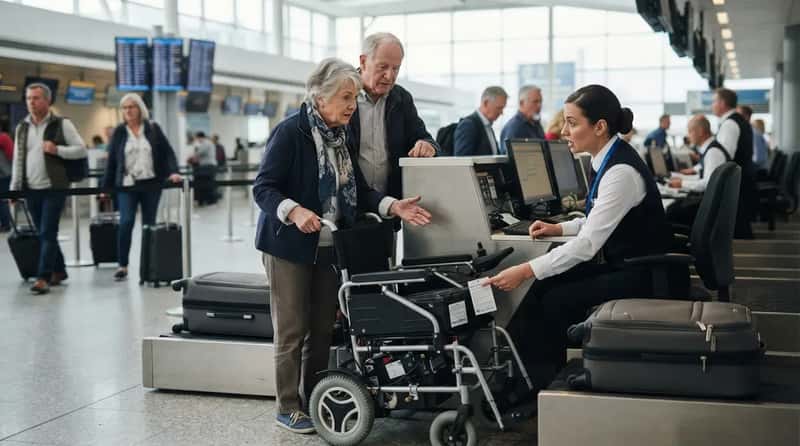
If you or a travel companion uses a power wheelchair or scooter, showing up unprepared can delay an entire flight, not just your own boarding. Passengers with battery-powered wheelchairs are asked to check in two hours early so crews can properly load the chair upright and keep components connected.
Some batteries fall under dangerous-goods handling rules, and airline staff sort all of that out ahead of time so it never becomes a gate-side crisis. A single unflagged battery really can hold up an entire aircraft. One phone call with your battery type and dimensions turns a potential two-hour scramble into a non-issue.
#2 – Never Let Embarrassment Stop You From Requesting Help
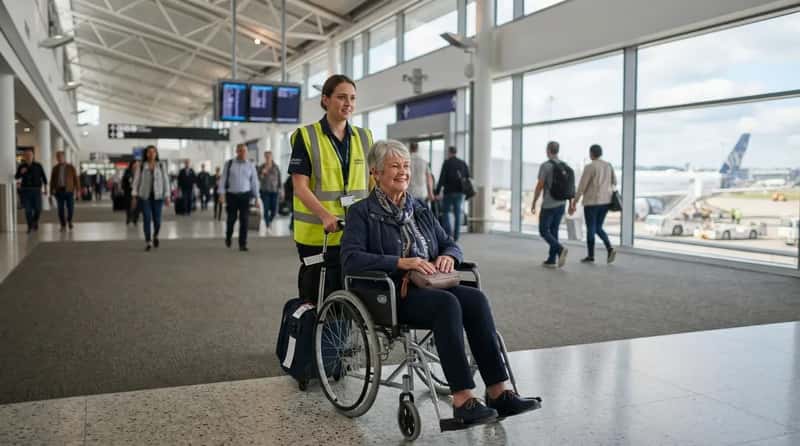
Travel staff say this is the mistake they see most often, and it has nothing to do with actual need. Plenty of travelers in their 60s and 70s quietly struggle through long terminal walks because asking for a wheelchair or a cart feels like admitting defeat.
No one needs or wants to know what’s wrong to justify requiring help.
A frequent wheelchair-assistance traveler, on why staff can’t ask for proof of disability
It’s actually illegal for staff to demand proof of a disability before offering help. Many large airports also run electric cart service for travelers who can walk but need a hand covering long distances between gates. Pride costs a lot more than it’s worth when a missed connection is on the line.
#1 – Never Assume the Standard Security Line Is Your Only Option
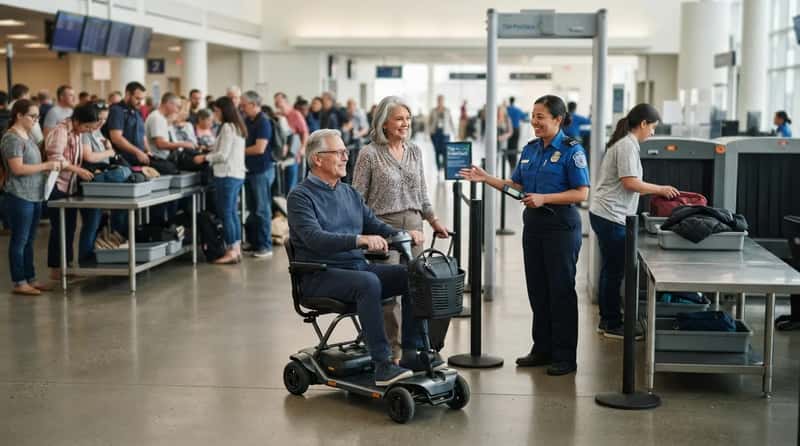
This is the one that changes everything, and almost nobody says it out loud. A lot of older travelers skip TSA PreCheck because they figure the standard line is fine, or because they’re already 75 and get the shoe exemption anyway. But agents quietly admit PreCheck does far more than save you from untying your shoes, especially for anyone managing mobility issues, medication, or arthritis.
PreCheck runs around $78 for five years, and stacked with the age-based accommodations already covered here, it can turn the most stressful ten minutes of a travel day into the fastest. Travelers 75 or older in a wheelchair or scooter can even stay seated while an officer swabs their hands for explosive traces, skipping the standing pat-down entirely. Most seniors never combine these options, and end up doing security the hard way, trip after trip.
Worth Knowing
- PreCheck costs about $78 and lasts five years
- Members skip shoe, belt, and laptop removal at security
- Travelers 75+ using a wheelchair or scooter can stay seated for an explosives swab instead of a standing pat-down
- Combining PreCheck with age-based exemptions creates the fastest possible line
None of this requires special paperwork, a doctor’s note, or years of frequent-flyer status. It just requires knowing these programs exist, and being willing to actually use them instead of quietly toughing it out the way travelers have for decades. The gap between what most people over 60 experience at the airport and what they’re genuinely entitled to is wider than almost anyone realizes.
Which one of these caught you off guard? Drop it in the comments, and tell us what you wish someone had told you before your last flight.