Most guests assume turndown service is the same for everyone: a folded blanket corner, a mint on the pillow, maybe dimmed lights. Ask a veteran housekeeper and they’ll tell you that’s only half the story. For guests who show signs of being over 60 – reading glasses on the nightstand, a cane by the door, a lineup of medication bottles – experienced attendants quietly shift what they do, and they never say a word about it.
None of it shows up on an official checklist, and nobody ever asks a guest their age at check-in. It’s read entirely from small clues left around a room in the ten minutes before a guest walks back in. Here’s what longtime turndown staff and hospitality accessibility experts say they actually watch for, every single evening.
#13 – The Extra Blanket That Has Nothing to Do With the Thermostat
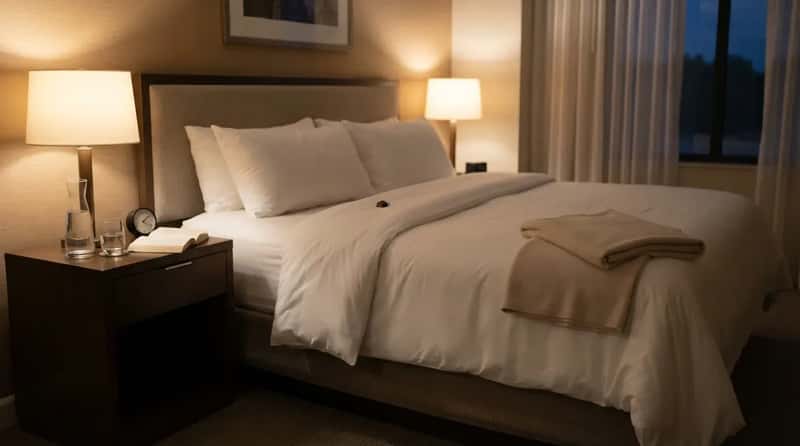
Younger guests typically get one folded blanket. Older guests, attendants say, often quietly get two. It isn’t about a cold room – it’s about circulation, and the fact that many people over 60 sleep colder regardless of what the thermostat reads.
Staff who’ve worked the evening shift for years say the habit becomes automatic after noticing the same pattern night after night. The extra blanket is folded within arm’s reach of the bed, not stashed in a closet, so nobody has to get up in the dark to dig for it. It’s a small fix for a common complaint almost nobody bothers to file on a comment card.
#12 – Water Moved to the Exact Side of the Bed a Guest Actually Sleeps On
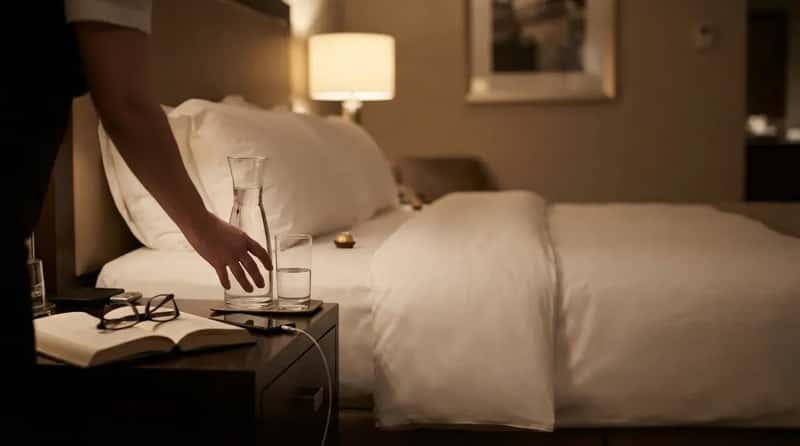
Standard turndown puts a water bottle or carafe dead center on the nightstand. For older guests, attentive staff quietly move it to whichever side shows real signs of use – a phone charger, an open book, a pair of reading glasses.
Housekeeping routines already call for changing towels, restocking toiletries, and setting out fresh water at bedside, but the placement detail is where the real thoughtfulness happens. Getting up for water in an unfamiliar dark room is a leading cause of overnight stumbles for older travelers, so staff quietly remove the guesswork by putting the bottle exactly where a hand will land first.
#11 – A Nightlight Left Glowing Between the Bed and the Bathroom Door
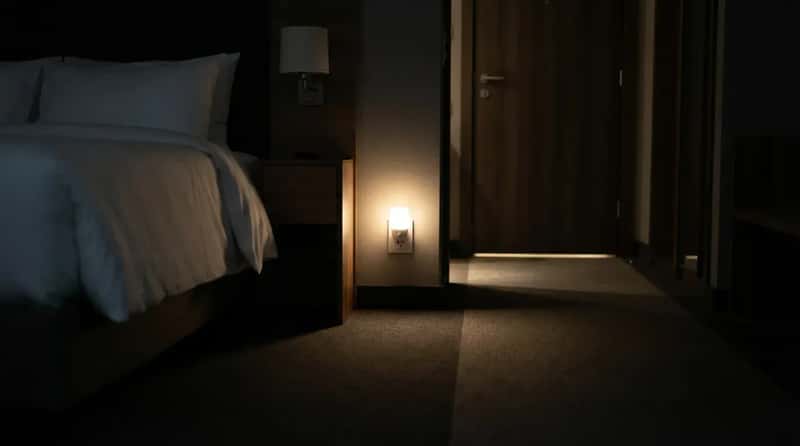
This one isn’t universal, but where it happens, it’s completely deliberate. Hospitality accessibility specialists have flagged it as one of the simplest, cheapest fixes a hotel can make for aging guests, and it takes staff about ten seconds during turndown.
Accessibility research on senior travel points to basic plug-in nightlights as a way to help guests navigate unfamiliar spaces safely after dark. Staff who notice a guest is likely over 60 often quietly plug one in, angled low so it won’t disturb sleep but still lights the path to the bathroom. It’s the kind of touch a guest almost never consciously registers – they just don’t trip.
Worth Knowing
- Middle-of-the-night falls are one of the most common injuries reported by older travelers in unfamiliar hotel rooms.
- A single plug-in nightlight costs a hotel almost nothing but eliminates the need to fumble for a switch in the dark.
- Placement matters – staff aim the glow low and toward the floor so it guides steps without disrupting sleep.
- Guests rarely notice the nightlight was added specifically for them – they just stop stumbling.
#10 – Reading Glasses Relocated, But Never Actually Touched by Hand
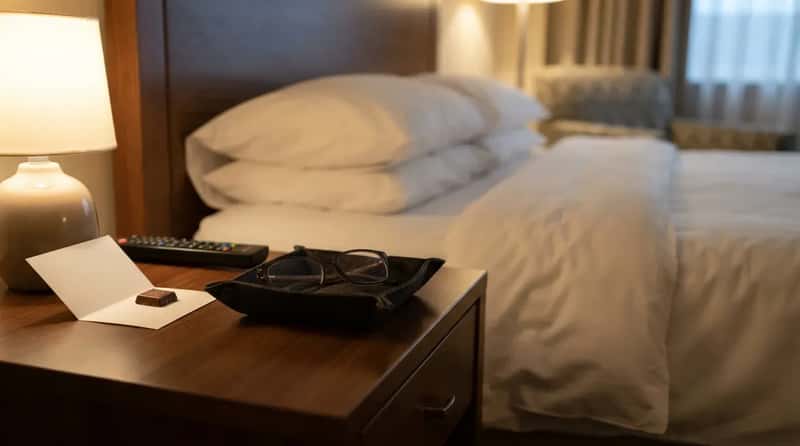
Turndown staff are trained to tidy a room without disturbing personal belongings, but experienced attendants make one quiet exception. If reading glasses are sitting across the room from the bed, they’re gently nudged onto the nightstand using a cloth or tray – never picked up bare-handed, never mentioned later.
It sounds trivial until you consider how many people over 60 wake up disoriented at 3 a.m. and reach for glasses before anything else. Some hotels formalize this instinct by tailoring amenities to guest preferences already on file in a loyalty profile. Most of the time, though, it’s simply a staff member who’s paying closer attention than anyone asked them to.
#9 – A Chair Pulled a Few Feet Closer to the Bed
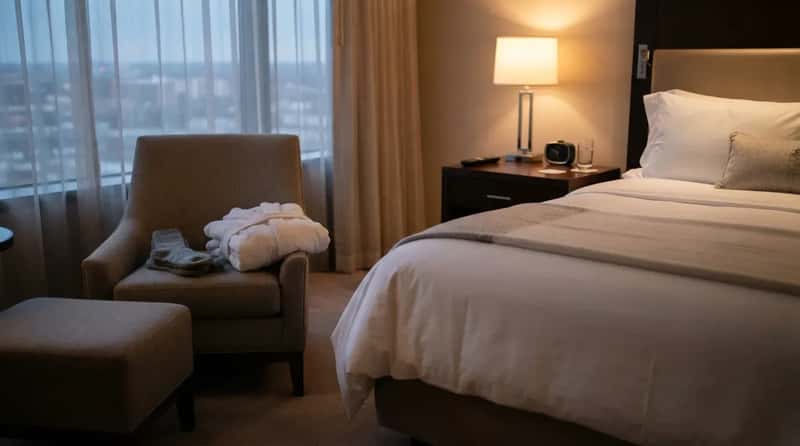
This is one of the more debated habits among housekeeping teams, because rearranging furniture technically isn’t on any turndown checklist. Some attendants do it anyway, and they rarely explain why.
Accessibility designers point out that a chair positioned near the bed makes everyday tasks easier – slipping on socks, digging through a suitcase, or just resting for a moment between getting up and standing fully. Staff who’ve spent years reading a room can often spot a guest who needs somewhere to sit before standing, and they quietly close that gap during turndown without ever being asked.
#8 – The Bath Mat Gets Swapped Even When It Looks Perfectly Clean
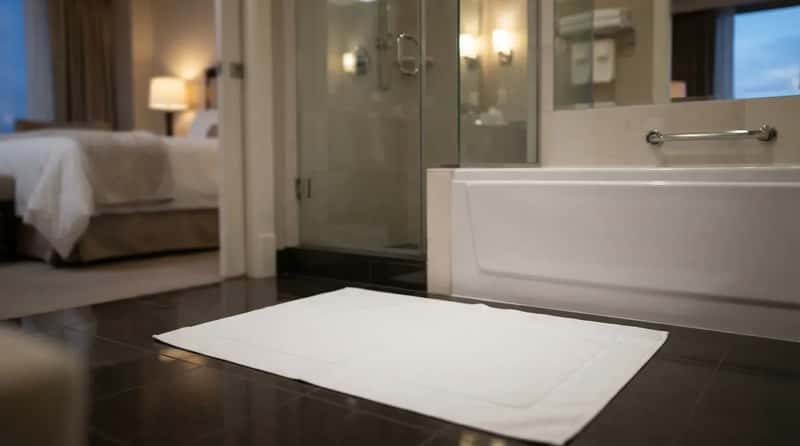
Standard turndown swaps out towels. For guests over 60, some attendants go a step further and replace the bath mat too, even when it hasn’t visibly been used at all.
The reasoning is blunt: a damp mat is a fall risk, and falls in hotel bathrooms are disproportionately common among older travelers. Senior-focused travel guides consistently flag this exact issue, pushing for rooms equipped with grab bars and non-slip mats specifically to prevent accidents. A dry, fresh mat laid down during evening turndown is one of the cheapest, quietest ways staff address the danger without ever raising the subject out loud.
Fast Facts
- Bathroom floors are consistently named as the riskiest spot in a hotel room for slips, especially for older guests.
- A damp bath mat left overnight is far more likely to cause a slip than one swapped fresh at turndown.
- Grab bars, non-slip mats, and dry flooring are now standard recommendations in senior-focused travel guides.
- The swap takes housekeeping under a minute, but it’s one of the few turndown habits tied directly to injury prevention.
#7 – Blackout Curtains Double-Checked for the Smallest Gap of Light
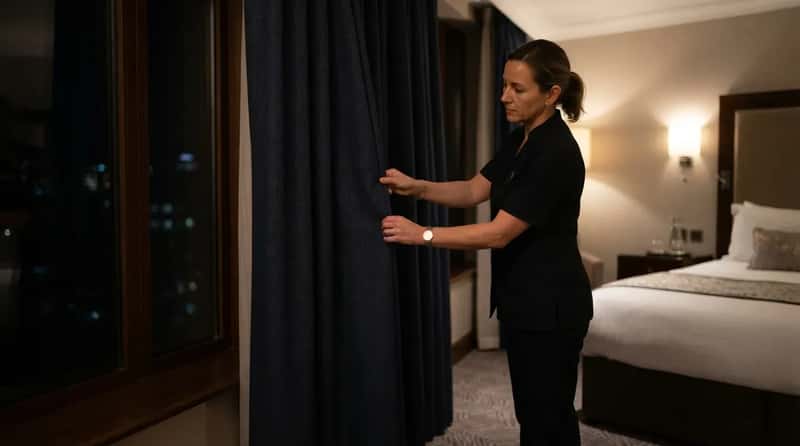
Younger guests often don’t care if a sliver of hallway light sneaks through the curtains. Many older guests are far more sensitive to light disrupting their sleep cycle, and turndown attendants say they’ve learned to double-check blackout panels specifically for this age group.
It’s a five-second habit: pull the drapes fully shut, confirm there’s no gap, move on to the next task. Closing the drapes is already a baseline step in standard turndown, but the extra check for a complete seal is the part that never makes it into any training manual. Guests just wake up more rested and never quite know why.
#6 – The Outlet Closest to the Bed Cleared and Left Open
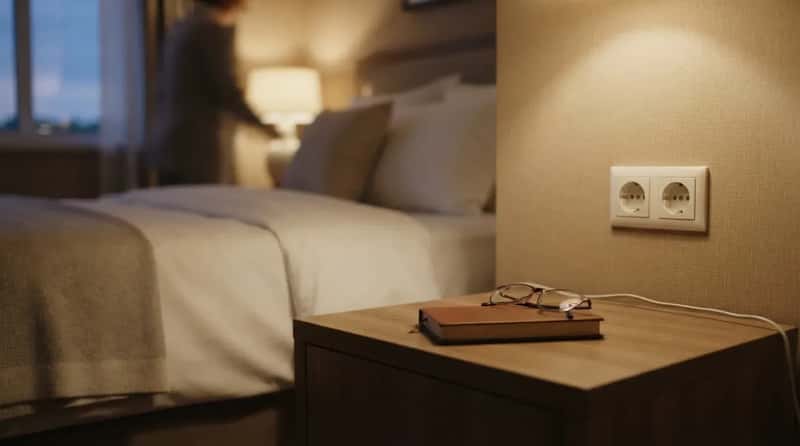
This touch has grown more common as hotels quietly adapt to an aging traveler base. Staff who notice medical equipment – a CPAP machine, a nebulizer, a phone that absolutely needs to stay charged overnight – make sure the nearest outlet isn’t blocked by a lamp cord or a nightstand leg.
Hospitality accessibility reporting confirms this is a known pain point, noting that charging outlets are often awkwardly placed and that older adults traveling with medical equipment frequently need extra access. It’s rarely written into any turndown checklist, yet it’s become one of the most consistent unofficial habits among experienced attendants.
At a Glance
- CPAP machines, nebulizers, and hearing aid chargers show up more often in rooms booked by older travelers.
- Outlets near the headboard are frequently blocked by lamp cords or nightstand legs by default.
- Clearing that one outlet during turndown means no guest has to unplug a lamp at midnight.
- It’s an unofficial habit, but one many hotels now quietly train staff to check nightly.
#5 – A Softer Knock, and a Noticeably Longer Wait Before Entering

Every turndown visit is supposed to start with a knock and a pause. But staff say they quietly adjust both the volume and the timing when they suspect an older guest is inside, giving several extra seconds before pushing the door open.
Hospitality is really about anticipating needs before a guest ever has to voice them.
Danny Meyer, restaurateur and hospitality writer
This isn’t guesswork – it echoes real hospitality training. Properties increasingly coach housekeeping to follow strict protocols: knock, wait for a response, and respect any “Do Not Disturb” sign without exception. For a guest who moves slower to reach the door, or simply startles more easily, that extra pause matters more than most travelers ever realize.
#4 – Closed Captioning Quietly Switched On Before the Guest Walks Back In
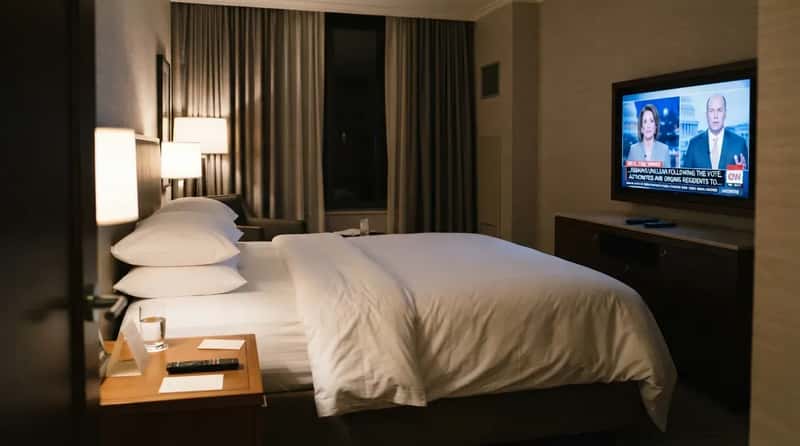
Some attendants will flip on the television for a moment during turndown just to confirm closed captioning is active, then switch it back off before leaving. It’s a two-second detour that never gets logged on any sheet.
Hotels catering to guests with hearing changes have made this a documented feature in designated accessible rooms, where caption decoders are provided by default or on request. Outside those designated rooms, it’s simply a habit some staff have picked up on their own – a quiet assumption that an older guest watching TV before bed might appreciate having the option without ever having to ask.
#3 – A Handwritten Note Written Bigger, Bolder, and Easier to Read
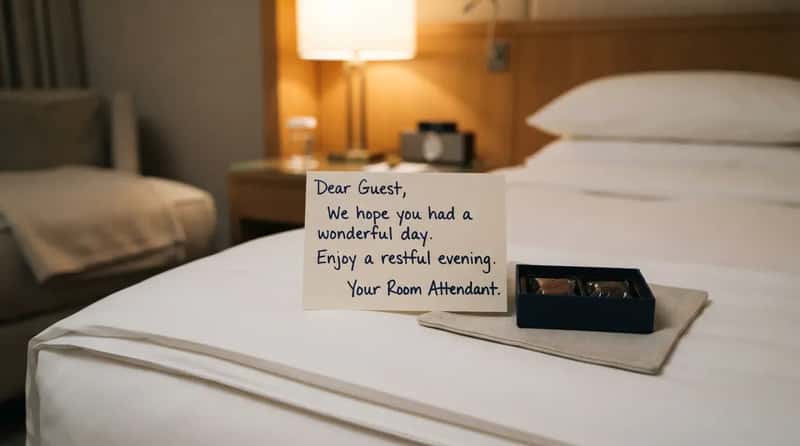
Personalized turndown notes are common at upscale properties, but the handwriting itself often shifts depending on the guest. Staff who’ve worked evening shifts for years say they naturally write bigger and clearer when they believe the reader is older.
Standard practice already encourages a card addressing the guest by name for a warm, personal touch. What never makes it into a training manual is the quiet adjustment in penmanship – bigger loops, less flourish, more legibility. It’s a small courtesy that costs nothing and gets noticed by exactly the person it’s meant for.
#2 – The Room Gets Turned Down Earlier, Not Later

Most turndown service is scheduled somewhere inside a wide evening window. Staff who track return patterns say older guests tend to come back from dinner earlier than younger travelers, and some housekeeping teams quietly prioritize those rooms first on the rotation.
Industry guidance already notes turndown typically happens between 5 p.m. and 9 p.m., timed so guests return to a refreshed room with minimal disruption. The adjustment isn’t official policy – it’s pattern recognition, built from years of noticing which doors tend to open first each night. It’s a small logistical choice that quietly improves the experience for the guests most likely to be ready for bed sooner.
#1 – The Grab Bar Quietly Tugged and Tested Before Anyone Returns
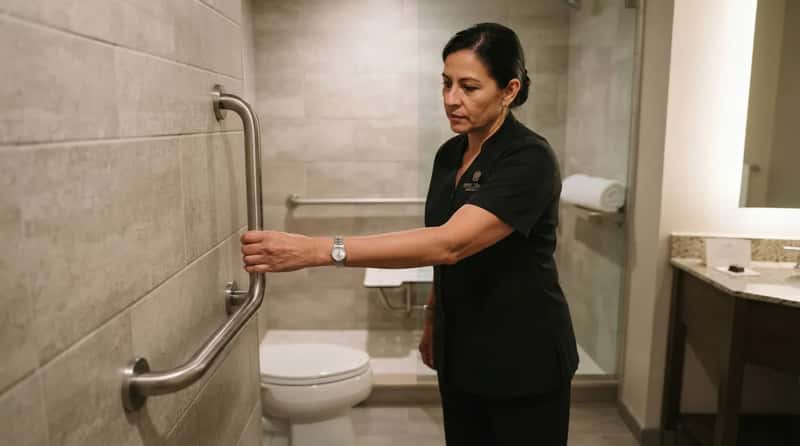
This is the touch veteran attendants take most seriously, and the one they’re least likely to ever mention out loud. In rooms with bathroom safety hardware, some staff give the grab bar or handrail a firm tug during turndown, purely to confirm it’s still bolted tight and hasn’t loosened.
It’s not glamorous, and no guest is ever told it happened. But accessible-room standards call for exactly this kind of vigilance, recommending hotels regularly test grab bars, door openers, and non-slip surfaces to make sure accessibility equipment stays fully functional. For a guest over 60 who might lean on that bar without thinking twice, a five-second check during evening turndown is the difference between routine and real risk.
Why It Stands Out
- Most turndown checks focus on cleanliness – this one focuses purely on safety hardware.
- A loose grab bar can go unnoticed by a guest until the exact moment they need to lean on it.
- Testing takes seconds, but it’s one of the only turndown habits that could prevent a serious injury outright.
- No guest is ever told it happened – it’s quietly built into the walk-through, not printed on any checklist.
None of these 13 touches are printed on any official turndown checklist, and no hotel will ever confirm a guest’s age before deciding to do them. They’re built entirely from pattern recognition – reading glasses on a nightstand, a slower answer at the door, a cane leaning by the closet. The real story here isn’t a secret policy. It’s that the best turndown attendants have always paid closer attention than most guests ever give them credit for.
Most of these habits cost nothing and take seconds, yet they’re the difference between a room that’s simply clean and one that actually feels looked after. Have you noticed any of these small touches on a recent stay? Drop your experience in the comments – it’s worth knowing how common this really is.