Most people assume a sleeper-train ticket buys you a bed and nothing else – pay for the roomette, get the room, good luck with everything in between. But longtime attendants and the passengers who ride with them season after season tell a very different story, one where the real value shows up in a dozen small, unadvertised gestures nobody puts in a brochure.
None of it is written into any official policy, and most riders never notice it’s happening until they’re the one receiving it. Here’s what actually goes on behind those narrow sliding doors once the lights dim and the rest of the train falls asleep.
#14 – The Room Assignment That’s Never Left to Chance
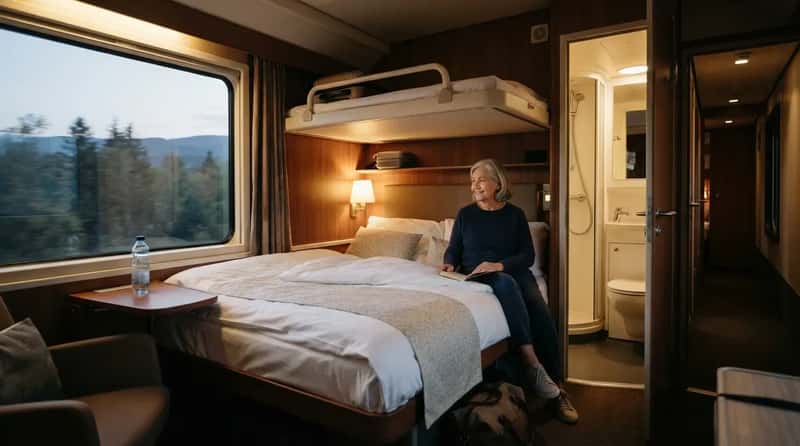
Booking systems assign rooms automatically, but attendants and reservation agents quietly steer older travelers toward the layouts that actually work for aging knees and backs. Bedrooms are generally recommended over Roomettes for overnight travel because they offer easier access to beds without climbing, private bathroom facilities, and more space to move around. That’s not a coincidence – it’s a pattern insiders repeat constantly when asked what they’d book for a parent or grandparent.
The lower berth is wider and more accessible, while the upper berth requires climbing a small ladder – a detail almost nobody explains at checkout. Attendants routinely nudge older passengers toward lower berths before anyone even asks, because they’ve watched too many 3 a.m. ladder mishaps to leave it to chance. It’s the first quiet decision made on your behalf, long before you’ve even boarded.
Quick Compare
- Bedroom: private bathroom, no ladder, easier access for aging knees
- Roomette: more compact, but the upper berth still requires a ladder climb
- Lower berth: wider and ground-level, the option attendants steer toward most
#13 – A Coffee Urn That’s Never Actually Empty
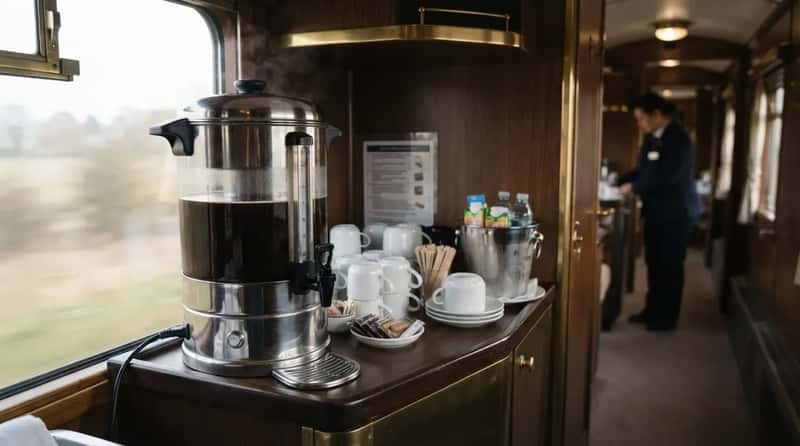
Ask any regular overnight rider what they remember most, and it’s rarely the scenery – it’s the coffee that’s somehow always hot. Attendants keep the coffee urn filled, stock a chilled ice chest nearby, place cartons of juice near the station, and handle small tasks like fresh towels near the shower. None of this gets announced; it just appears.
For older passengers who wake early or take medication with breakfast, that steady supply matters more than it seems. The urn refill isn’t scheduled – it’s judged by instinct, attendants topping it off before dawn specifically because they know who tends to be up first. It’s a tiny routine, repeated thousands of times a year, that most riders never realize is deliberate.
#12 – Beds Made Up While You’re Still at Dinner
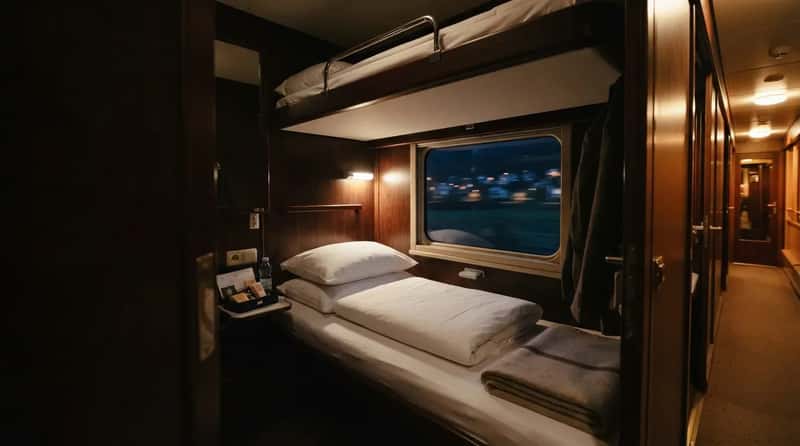
The turndown isn’t just a nice touch – it’s core to the job, and it’s timed on purpose. A dedicated first-class attendant provides turndown service, assists with meals, and helps with luggage for every private-room passenger, but the timing shifts quietly for older travelers.
Attendants often convert the room to sleeping mode while a passenger is still finishing dinner in the diner, so there’s no fumbling with folding furniture in an unfamiliar space at 9 p.m. Making up the beds – and putting them back before arrival – is still considered one of the primary duties of a sleeping car attendant, not something passengers are expected to do themselves. Most riders assume they’ll have to build their own bed; the reality is the opposite.
#11 – Meals That Never Require the Long Walk to the Diner
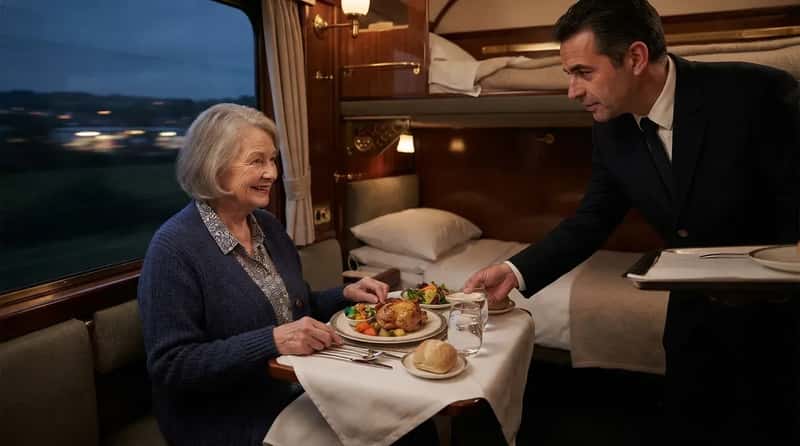
A dining car sounds romantic until you’re trying to walk through three rocking, narrow cars at midnight. That’s why attendants quietly route around it whenever a passenger seems unsteady on their feet.
Meals can simply be brought to your room instead of requiring a trip to the dining car – a service that exists for everyone but gets offered far more insistently to older travelers who haven’t asked for it outright. The offer usually comes disguised as a casual question, something like “would you rather eat in?” rather than a formal accommodation. For someone managing a cane or a bad hip on a moving train, it quietly removes the riskiest part of the evening.
#10 – A Private Ice Supply for Medications, No Questions Asked
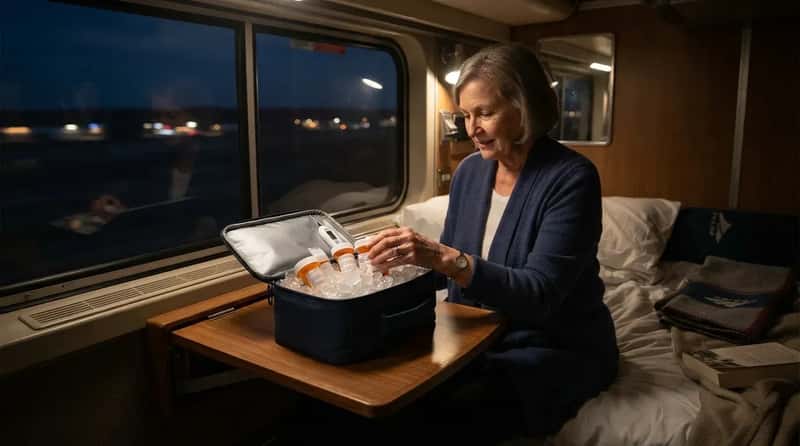
Cooling medication overnight is one of the quietest crises in senior travel, and attendants have an unglamorous fix ready before anyone panics. Amtrak can supply ice for a cooler or container to keep medication cool, and crews keep this offer low-key rather than making a passenger explain a medical situation to a stranger.
The instructions are blunt about responsibility, though: passengers must travel with all necessary medications, be able to self-administer them, and carry anything they’ll need en route rather than packing it in checked luggage. Attendants can’t manage the medicine itself – but they’ll quietly keep it cold all night without making a scene of it. It’s a small workaround that solves a real problem nobody wants to ask about out loud.
Worth Knowing
- Amtrak crews can supply ice for a personal cooler or container on request
- Passengers must carry all needed medications themselves, not in checked bags
- Attendants assist with logistics like ice, but can’t administer medicine
#9 – Learning Your Name and Your Habits in the First Five Minutes
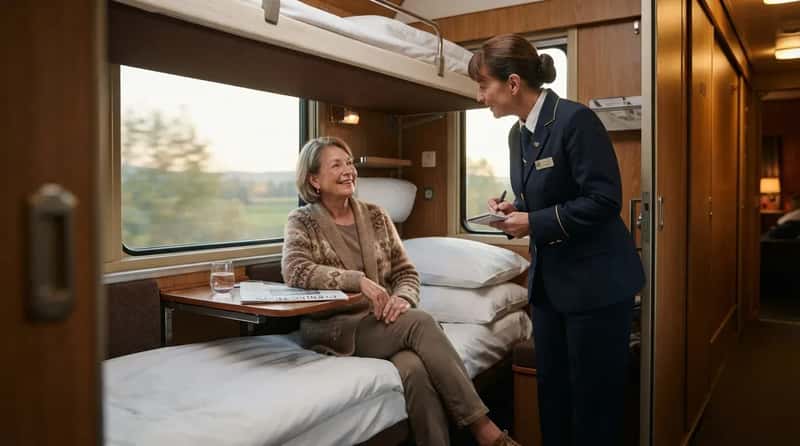
Attendants aren’t required to memorize preferences, yet the good ones do it anyway, almost as a professional habit. One veteran rider described telling an attendant upfront how much help she wanted, and in return getting frequent check-ins, luggage help, delivered newspapers, conversational visits, ice refills, and regular offers of anything she might need.
There’s no consistency in what different attendants offer, but it tends to bend toward whatever the individual passenger actually wants. The best ones treat the first conversation like an intake interview, quietly filing away who needs an extra pillow, who takes their coffee black, and who wants to be left completely alone. It’s improvised, personal, and almost never labeled a “service.”
#8 – Luggage Handled Before You Even Reach for It
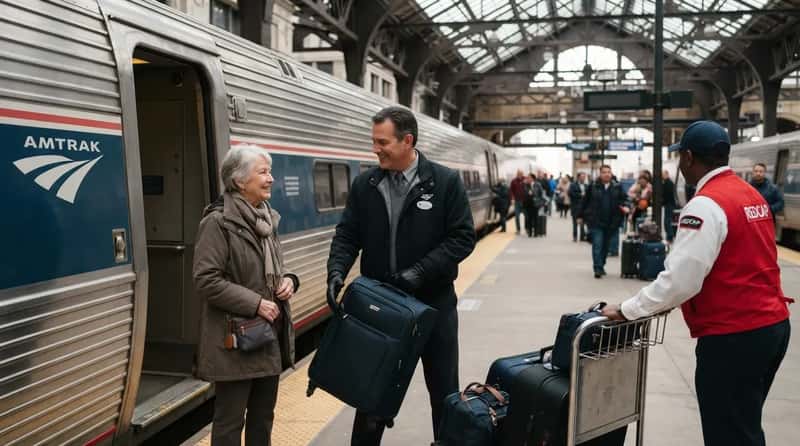
Watch an experienced attendant work a station stop, and you’ll notice bags disappearing before the passenger has fully stood up. It’s one of the most consistent unwritten duties on the route.
Beyond the room itself, crews quietly loop in outside help too: Redcap service is available at many stations for help with luggage, and mentioning it to your car attendant ensures the arriving station is alerted ahead of time. One traveler recalled Chicago staff going as far as arranging a golf cart for her, her luggage, and two other passengers – coordination that starts well before the train even pulls in. The handoff between attendant and station staff happens almost invisibly, so an older passenger never has to stand around wondering who’s helping next.
Fast Facts
- Redcap service is available at many stations for luggage assistance
- Attendants can alert the arriving station ahead of time on a passenger’s behalf
- Coordination has included shared golf carts for passengers and their bags together
#7 – A Warning Before the Attendant Disappears
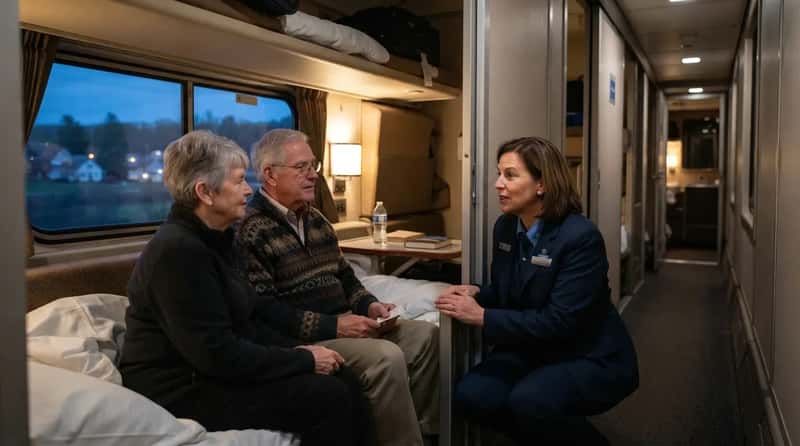
Nothing rattles an older passenger more than pressing a call button into silence. Attendants know this, so the good ones head it off entirely.
Riders who’ve built a rapport with their crew report that attendants inform them about their “out of service” windows and will track them down elsewhere on the train to update them on how close their stop is getting. It’s a courtesy that costs nothing and prevents almost every late-night panic call, because passengers know exactly when help is and isn’t available instead of guessing. It’s the difference between a stressful trip and a genuinely restful one.
#6 – Personally Walking You to Your Stop, Not Just Announcing It
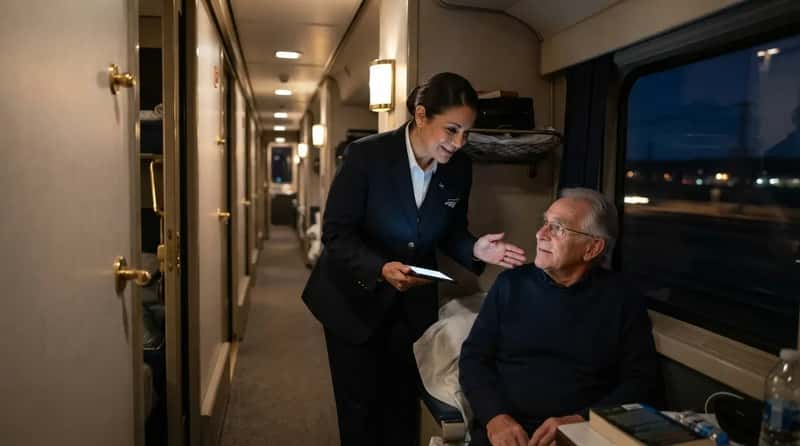
Overhead announcements are easy to sleep through, especially for passengers with hearing loss or heavy medication. So attendants build in a manual backup.
One long-time rider explained the routine plainly: attendants locate passengers in the diner or elsewhere on the train specifically to tell them how close they are to their stop, rather than relying on a speaker system alone. This isn’t standard procedure written anywhere – it’s a habit crews develop because they’ve seen how easily an overnight stop gets missed. For someone traveling alone late at night, a familiar face saying “we’re twenty minutes out” is worth more than any chime.
#5 – Rooms Positioned Away from the Hardest Walks
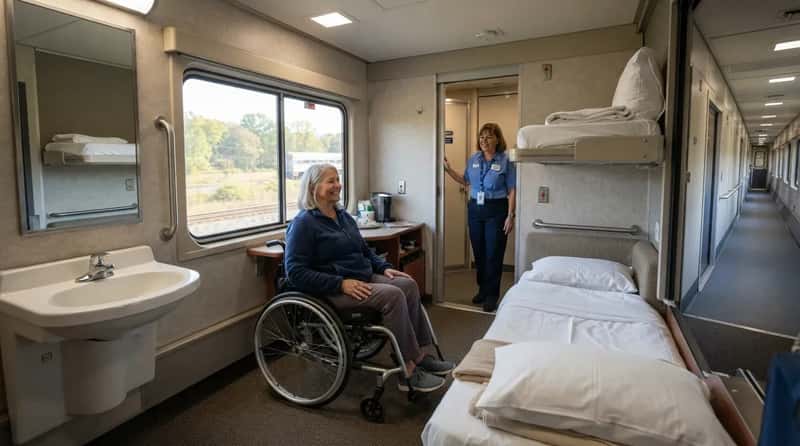
Not every private room sits in a convenient spot, and attendants know exactly which ones do. The Accessible Bedroom is the clearest example of design meeting real need.
Accessible Bedrooms sit on the entry level of the train and offer ample space for a wheelchair, with seating that transforms into upper and lower beds and an accessible in-room sink. On Superliner trains, the Accessible Room sits on the lower level, past the shower and restrooms, cutting out stairs entirely for anyone who requests it. Most passengers never think to ask about location – attendants often suggest it before boarding is even finished. It’s a quiet routing decision that saves an unsteady walker from the train’s worst obstacle: the stairwell.
At a Glance
- Accessible Bedrooms sit on the train’s entry level, with room for a wheelchair
- Seating converts into both upper and lower beds
- Rooms include an accessible in-room sink
- On Superliner trains, the accessible room is on the lower level, away from stairs
#4 – A Step Stool That Appears Without Being Asked
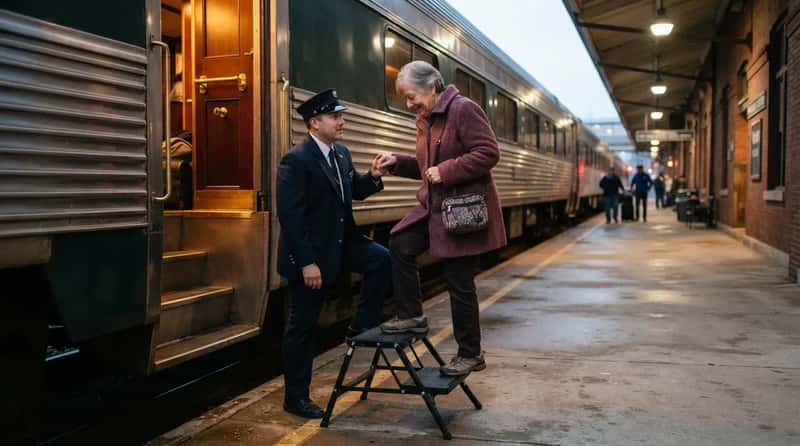
Boarding itself can be the hardest part of the whole trip, especially at older, ground-level stations. Crews treat this moment with more care than almost any other.
Boarding doors sit closer to the ground on bi-level cars, but passengers still have to step up a little, and conductors and car attendants offer small steps to help with boarding. Portable ramps are also typically available for wheelchair users, deployed quietly rather than announced over the platform speakers. The step stool shows up before anyone has to ask for it, timed to the exact moment an older passenger hesitates at the door.
#3 – Bathroom Help That Stops Exactly Where It Should
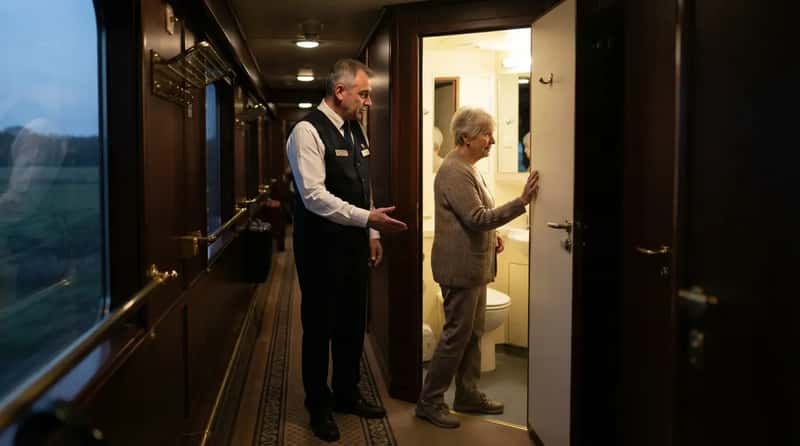
This is the one nobody likes talking about, and attendants handle it with more discretion than anything else on this list. There’s a firm, quietly enforced line here that protects both dignity and safety.
Sleeping car attendants assist with travel needs but aren’t responsible for personal hygiene – they can help someone get to the bathroom or shower, but not inside it. That boundary is explained gently, almost never bluntly, and attendants who sense a passenger needs more than that will privately suggest traveling with a personal assistant, rather than making the passenger feel like a burden.
#2 – Wine Labeled with Your Name and Kept Cold All Night
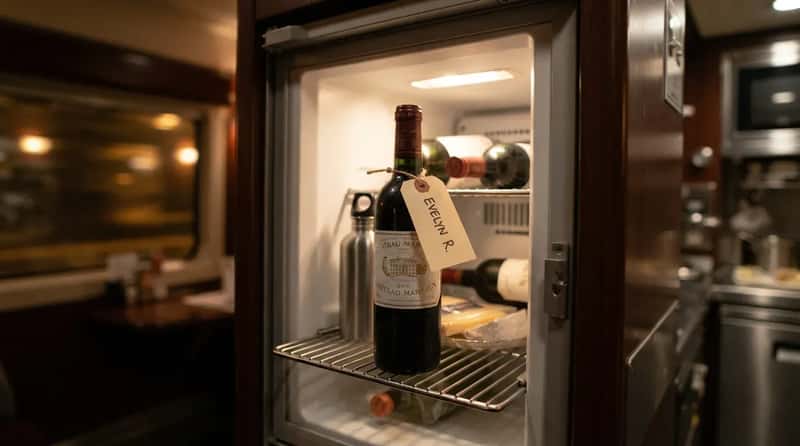
It sounds like a small flourish, but it says everything about how far crews will go for a regular. One traveler ordered a half bottle of wine at dinner and didn’t finish it.
The dining car steward offered to put it in the fridge, labeled with the passenger’s name on a luggage tag tied around the bottle neck – unprompted, unofficial, and clearly born from experience rather than any training manual. It’s the kind of detail that turns a transactional overnight ride into something that feels personal. Multiply that gesture across decades of shifts, and you start to understand why so many older riders request the same route, and sometimes the same attendant, year after year.
#1 – Genuine Company for Passengers Traveling Alone
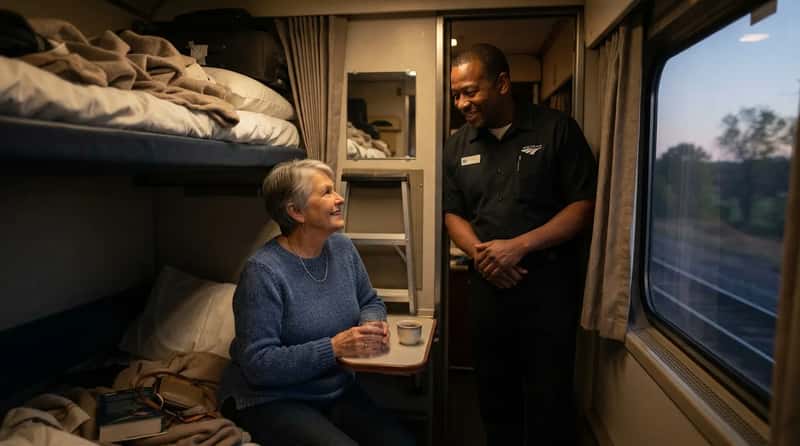
Strip away the linens, the coffee, and the turndown service, and the single most requested comfort is simpler than all of it: someone checking in who actually means it. Attendants who’ve been doing this for decades describe it almost like a calling rather than a job.
Best sleeping car attendant I’ve ever had – attention to detail, candor, and professionalism unmatched in years of long-distance travel.
Amtrak rider, longtime overnight passenger
Another rider noted that when she was upfront about wanting minimal fuss, she still received frequent checks, conversational visits, and regular offers of anything she might need – proof that good attendants read the room rather than following a script. For an older passenger traveling solo overnight in an unfamiliar car, that unhurried, familiar face checking in every hour is worth more than any amenity on this list. It’s the one comfort that can’t be booked, upgraded, or requested – only earned, one shift at a time.
None of these fourteen comforts show up on a fare chart, and that’s precisely the point. They exist because attendants have spent years learning what older passengers actually need at 2 a.m. in a rocking, unfamiliar room – and they’ve quietly built habits around it that no policy manual requires.
The next time an overnight sleeper ride feels easier than it should, it’s probably not luck. Someone in a uniform noticed, and adjusted, before you even had to ask.