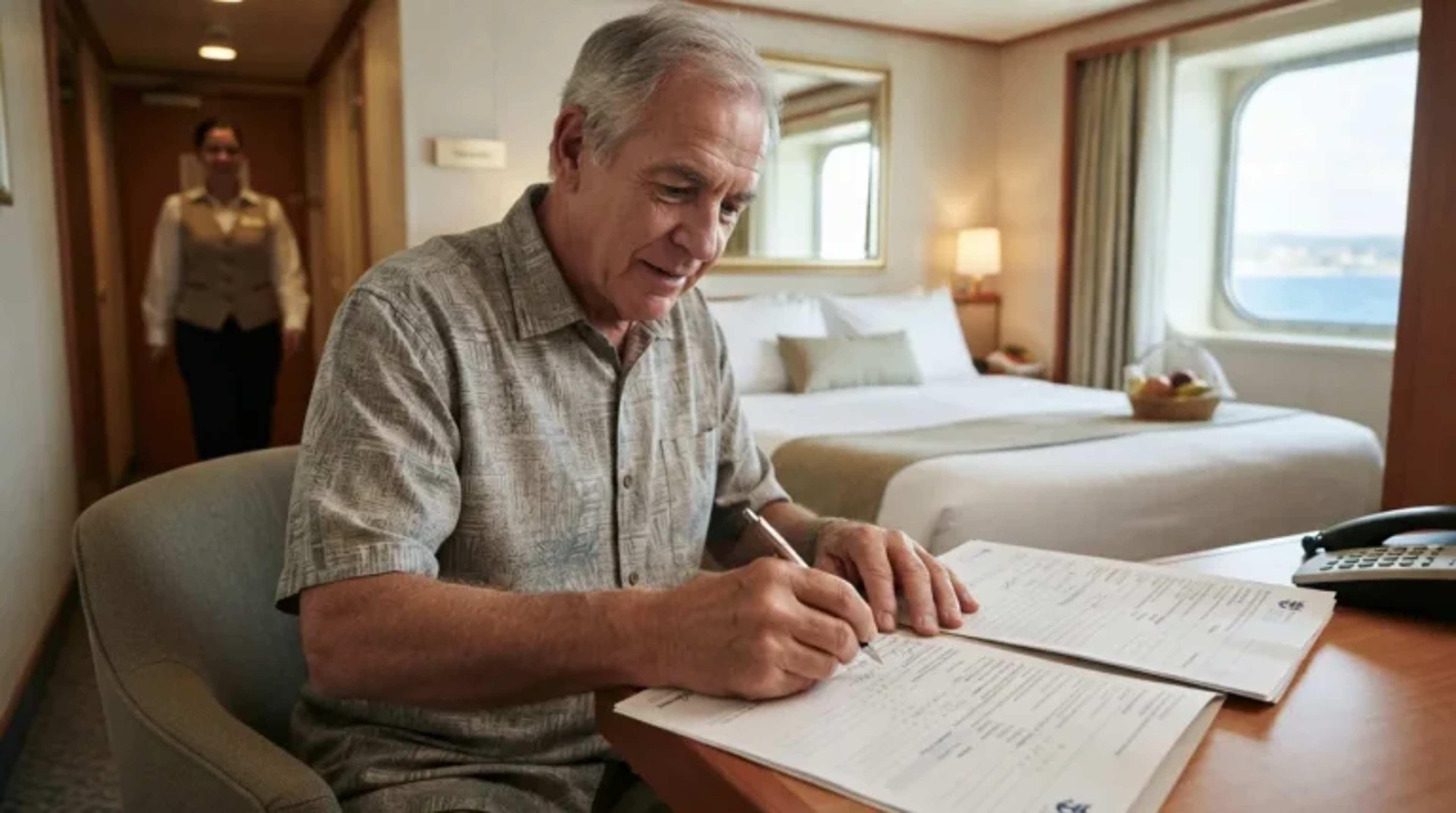
Most people assume the biggest travel expense is the flight or the hotel. It’s not. For travelers over 60, the real money leaks out through a dozen small blind spots most vacationers never think to question – a coverage gap here, a “convenient” currency option there, a phone call that sounds too good to pass up.
None of these mistakes look dangerous in the moment. That’s exactly why they’re so expensive. Here’s what insurance experts, banking analysts, and consumer watchdogs actually say is draining retirement travel budgets right now – starting with the one almost every retiree gets wrong before they even leave home.
#14 – Believing Medicare Follows You Overseas

Millions of retirees pack for an international trip assuming their Medicare card works just like it does at home. It doesn’t. Medicare usually doesn’t cover health care outside the U.S., and “outside” is defined narrowly – the 50 states, D.C., Puerto Rico, the U.S. Virgin Islands, Guam, the Northern Mariana Islands, and American Samoa count as home turf. Paris, Cabo, a Danube river cruise? All fair game for a denied claim.
The gap catches even seasoned travelers off guard. Head to Canada, Mexico, Europe, or basically anywhere abroad and need medical care, and Medicare Part A and Part B generally won’t pay a cent, leaving you on the hook for the entire bill unless one of three narrow exceptions applies. Most people only learn this the hard way – staring at a foreign hospital invoice with no idea how to pay it.
Fast Facts
- Medicare treats the 50 states, D.C., Puerto Rico, the U.S. Virgin Islands, Guam, the Northern Mariana Islands, and American Samoa as “home.”
- Step outside those borders and standard Part A and Part B benefits generally stop working.
- Only a handful of narrow exceptions ever apply, so most international claims are simply denied.
#13 – Buying Travel Insurance the Night Before You Fly

Timing a travel insurance purchase feels like a formality – until it costs someone a denied claim. Plenty of seniors quietly carry pre-existing conditions that standard travel policies won’t touch. High blood pressure, diabetes, heart conditions – if an emergency ties back to any of those, a basic policy can simply refuse to pay.
There’s a fix, but it comes with a strict clock attached. Plans with a “pre-existing condition waiver” typically require purchase within a few weeks of your first trip deposit. Wait until the week before departure, like so many travelers do, and that protection is gone for good – permanently, for that trip, no matter how much you’re willing to pay afterward.
#12 – Assuming Your Policy Covers a Medical Flight Home

Even travelers who dutifully buy a Medigap plan often misunderstand what it actually protects. The foreign travel emergency benefit sounds comprehensive, but it has a hard ceiling most people never notice until they need it. That $50,000 lifetime cap isn’t unlimited coverage, and a serious illness or injury abroad can blow past it fast.
That ceiling matters most at the exact moment travelers need help the most: getting home. A single air ambulance evacuation from Europe can run $100,000 or more. A number that once sounded reassuring on paper can quietly leave a six-figure gap between what’s covered and what’s owed.
#11 – Grabbing Cash at the Airport Currency Booth
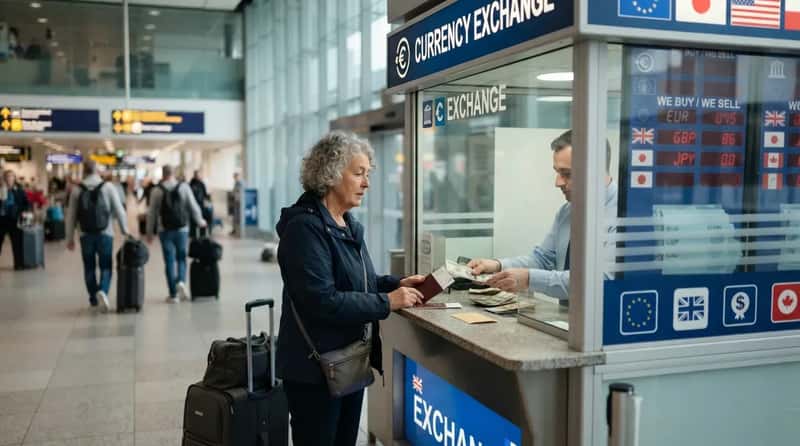
Exhausted after a long flight, plenty of travelers walk straight to the first currency exchange counter they see. It feels convenient – and it’s often the worst exchange rate available anywhere in the city. Airport kiosks routinely bake in a steep markup because they know travelers are tired, jet-lagged, and unlikely to shop around.
The fix is almost embarrassingly simple: skip the booth and withdraw cash from a bank ATM once you’re in town, using a card that doesn’t pile on fees. That one small change – a five-minute walk from the terminal – can mean noticeably more foreign currency for the exact same dollars.
#10 – Saying Yes When the Card Reader Asks for Dollars

It sounds helpful when a foreign card machine offers to charge you in U.S. dollars instead of local currency. It isn’t. This is called dynamic currency conversion, and it quietly stacks fees on top of a bad exchange rate for the privilege of feeling “protected.”
The math turns brutal fast. In most cases you’ll lose 3% to 5% on the conversion itself, and if your card also carries a foreign transaction fee, tack on another 3% to 5% on top of that. Over a two-week trip full of small purchases, that little bit of “convenience” adds up to real money. The rule is simple: always choose to pay in the local currency.
Quick Compare
- Pay in local currency: just your card’s normal exchange rate applies.
- Pay in U.S. dollars (DCC): add roughly 3% to 5% in hidden conversion markup.
- DCC plus a foreign transaction fee: stack another 3% to 5% right on top of that.
#9 – Swiping a Card That Was Never Built for Travel

Plenty of retirees travel internationally using the same everyday credit card they’ve carried for decades, never realizing it’s quietly taxing every single purchase. Many cards tack on an extra 3% for each transaction made outside the U.S. – and it never shows up as a separate line item, so nobody notices.
Across a trip full of meals, souvenirs, and hotel incidentals, that percentage compounds quickly. By declining dynamic currency conversion and switching to a card with zero foreign transaction fees, travelers can save meaningfully on nearly every purchase, both online and in person. Swapping to a no-fee travel card before a trip takes ten minutes and can save hundreds of dollars by the time you land back home.
#8 – Never Actually Asking for the Discount You Already Earned

Here’s an uncomfortable truth: senior and membership discounts are almost never applied automatically. Travelers who never ask simply pay full price, never knowing a lower rate was sitting there the entire time. Marriott’s senior discount, for guests 62 and older, offers 15% or more – but there’s no separate AARP rate at that chain, which trips people up constantly.
Rates vary wildly brand to brand, which is exactly why so many people miss out. La Quinta Inn & Suites offers up to 30% off for guests 55 and older, while AARP members save at least 10% off standard rates elsewhere. The discount exists – but the guest has to be the one who speaks up at booking or check-in, because nobody’s offering it first.
Quick Compare
| Chain | Discount | Who Qualifies |
|---|---|---|
| Marriott | 15% or more | Guests 62 and older |
| La Quinta | Up to 30% | Guests 55 and older |
| AARP members | 10% or more | Varies by hotel chain |
#7 – Trading a Free Weekend for a High-Pressure Sales Pitch

An offer for a nearly free resort stay sounds like a win – until the “quick presentation” turns into hours in a conference room with no windows. Promoters sometimes stretch out the wait between parts of the pitch on purpose, banking on exhaustion to do what persuasion can’t, and often claim the deal is only good “right now, today.”
Consumer advocates say the pattern repeats itself across destinations like clockwork. Attendees burn hours of their actual vacation sitting through these pitches, and many end up feeling pressured into signing for a timeshare they never wanted. The “free” trip only stays free if you’re willing to walk away without signing a single thing.
#6 – Answering the Call That Promises a Free Cruise

A robocall claiming you’ve “won” a free cruise feels harmless to ignore – but plenty of retirees engage anyway, curious enough to follow up just to see what happens. What happens next is a well-documented pattern. Winners are often told they must sit through a one-hour timeshare presentation before the cruise, sometimes with the excuse that return flight tickets can only be picked up in person, there.
The “one hour” almost never stays one hour. That promised meeting frequently stretches to around eight hours, dragged out until enough people are too worn down to say no. The safest response to any unsolicited “you’ve won” call is the simplest one: just hang up.
#5 – Forgetting to Tell Your Bank You’re Leaving Town

Nothing derails a trip faster than a declined card in a foreign restaurant, with a line forming behind you. Banks routinely flag international charges as suspicious when they don’t know a trip is happening, freezing the account mid-vacation without warning. Suddenly you’re stuck relying on one backup card, or worse, wiring emergency cash at a steep fee just to cover dinner and a hotel bill.
A two-minute call or app notification before departure avoids the entire mess completely. It’s one of the few mistakes on this list that costs absolutely nothing to prevent, yet it trips up travelers of every age, every single trip.
#4 – Skipping Trip Cancellation Coverage on the Big Trip

Older travelers often book the trip of a lifetime – an anniversary cruise, a multi-generational family reunion overseas – without protecting the money already on the line. Trip cancellation coverage exists specifically for this moment, and it’s a different animal than travel medical insurance. One protects your health while you’re away; the other protects the money you already spent before you ever left.
A cancelled nonrefundable cruise or tour package can mean losing thousands overnight if a health scare, family emergency, or even a wildfire evacuation forces a sudden change of plans. The premium for cancellation coverage is a small fraction of what’s actually at stake. Skipping it means quietly betting the entire trip cost against one unpredictable event you can’t control.
#3 – Booking Through a Third-Party Site to Save Ten Dollars

Saving a few dollars on a hotel booking site feels smart in the moment – but it can quietly erase years of earned loyalty status. Many hotel chains only apply elite perks, room upgrades, and senior discounts to reservations made directly through their own channels. At Choice Hotels, for instance, stays must be booked direct to qualify for member-specific rates and benefits at all.
Book that same room through an outside travel site instead, and the discount vanishes – along with any late checkout, free breakfast, or point earnings that would’ve come with it. It’s a controversial opinion among frequent travelers, but plenty of experts now argue chasing the lowest sticker price online is often the more expensive choice once every perk is factored in.
#2 – Trusting Medicare on a Cruise Ship Six Hours From Shore

Cruises feel distinctly American right up until something goes wrong medically far from port – and that’s exactly where this mistake lives. Medicare will likely not cover medical costs on cruise ships that are more than six hours away from a U.S. port, a detail buried far from the glossy brochure.
That six-hour window is easy to cross without realizing it on longer itineraries through the Caribbean, Mexico, or Alaska. Cross it, and Medicare pays $0 in most cases, leaving seniors fully responsible for out-of-pocket emergency care at sea. A dedicated cruise medical rider closes this exact gap for a relatively small daily cost – cheap insurance against a very expensive surprise.
#1 – Underestimating What a Medical Evacuation Actually Costs

This is the mistake that can erase a retirement account in a single incident, and almost nobody budgets for it. Medical evacuation by air ambulance can run over $100,000 internationally, and Medicare doesn’t guarantee coverage for emergency evacuations even within the U.S., let alone abroad.
Even travelers who feel well-prepared underestimate the range. Emergency evacuation to the U.S. can cost anywhere from $25,000 to $250,000 depending on location, aircraft type, and the medical staffing required. A single fall, stroke, or cardiac event in a remote destination can turn into a bill larger than most people’s retirement savings – which is exactly why dedicated evacuation coverage, purchased before departure, matters more than almost anything else on this list.
Fast Facts
- Air ambulance evacuation from abroad can run well over $100,000.
- Total costs typically range from $25,000 to $250,000 depending on location and aircraft needed.
- Medicare offers no guaranteed evacuation coverage, even for emergencies inside the U.S.
None of these mistakes announce themselves in advance. They hide in fine print, in a friendly voice on the phone, in a card reader that asks one extra question at checkout. The travelers who avoid them aren’t necessarily more cautious – they’ve simply learned, often the expensive way, exactly where the traps are hidden.
A little research before departure costs nothing. Finding out after the fact almost never does.
Which of these has actually happened to you or someone in your family? Drop it in the comments – your story might save someone else’s trip.