July looks like the perfect month for a national park trip. School is out, the days are long, and every bucket-list photo seems to glow in summer light. Then you hit the parking lot at 11 a.m., and the postcard turns into a 100-degree traffic jam.
Travelers over 60 can pick any month on the calendar, and July is the one they cross off first. Some parks on this list are genuinely dangerous in July. Others are just exhausting, jammed, or tangled in new rules. The surprise is how many famous names made the cut, and the one at #1 comes with numbers that stop you cold.
#15 – Joshua Tree: The Desert Postcard That Bakes by Noon
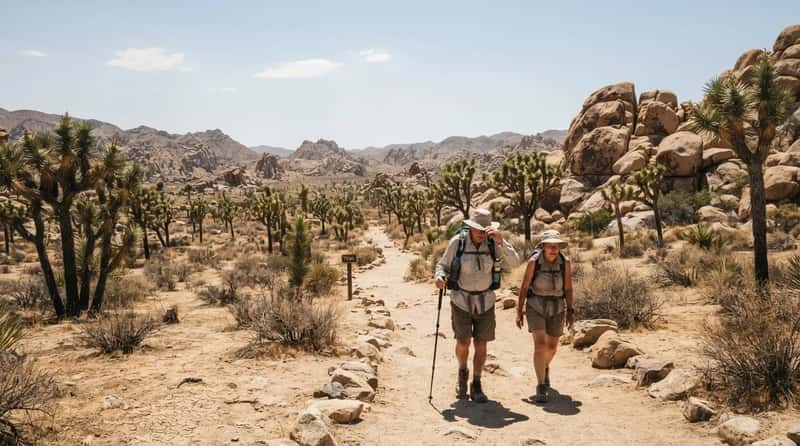
Joshua Tree looks like a gentle desert stroll in the photos. The park drew about 2.9 million visitors in 2025, and plenty of them show up with no plan for the sun. Summer afternoons in the low desert commonly run past 100°F, and shade is scarce.
Boulders hold heat long after the sun moves on. Services are spread thin, cell signal drops out, and a short walk to a viewpoint can turn into a long trudge back to the car. A “quick sunset hike” can easily start in the worst heat of the day, and that’s the trap first-timers fall into.
The frustrating part is that winter and spring show off the same rocks and the same stars, minus the oven.
But the heat isn’t the only thing that can catch you off guard. Our next stop made a rule change that sounds like good news…
#14 – Arches: No More Tickets, Which Might Be Worse
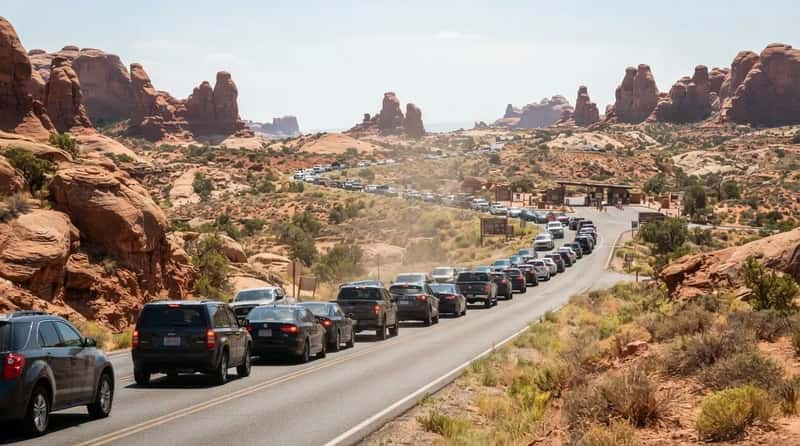
Arches ended its timed-entry system for 2026, so visitors may enter at any time during operating hours. That sounds like a win. The catch is that the cars now arrive whenever they want, and the park has one main road and limited parking at its famous stops.
The NPS itself suggests entering before 8 a.m. or after 3 p.m. to avoid traffic. That tells you exactly what midday looks like in July: heat, a line of cars, and trails with almost no shade. The park’s own advice is basically “don’t come during the hours most people do.”
For travelers who want a relaxed day, that leaves very little wiggle room. The after-hours option is real, though. The park’s International Dark Sky designation makes evenings worth the wait.
Quick Compare
- Before 8 a.m.: cooler air and the NPS-suggested window for lighter traffic
- Midday: peak heat, a line of cars, and trails with almost no shade
- After 3 p.m.: the other suggested window, with Dark Sky evenings ahead
Next up is a park that feels more like a parade than a getaway…
#13 – Great Smoky Mountains: Eleven Million Reasons for the Traffic
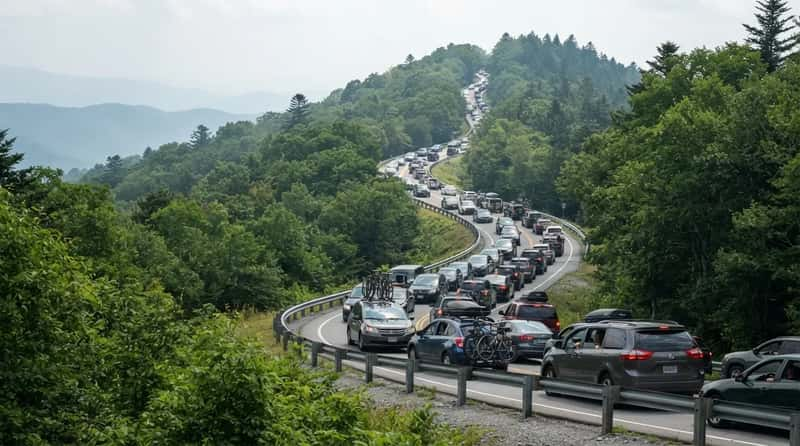
The Smokies are the most-visited national park in America, and it isn’t close. The park logged about 11.5 million visits in 2025, more than twice the next-busiest park.
Most of those visitors arrive by car, not shuttle. That creates long backups at spots like Cades Cove, Newfound Gap Road, and Kuwohi. A scenic loop drive can turn into a slow crawl, with more time spent in the car than out of it.
July isn’t the only crowded month here, since fall color season brings its own mobs. But summer weekends still deliver heavy traffic, hazy views, and humid air that wears you down fast.
Meanwhile, the next park has a different problem: wildlife that doesn’t care about the crowds…
#12 – Yellowstone: Where July Meets the Crowds and the Bison
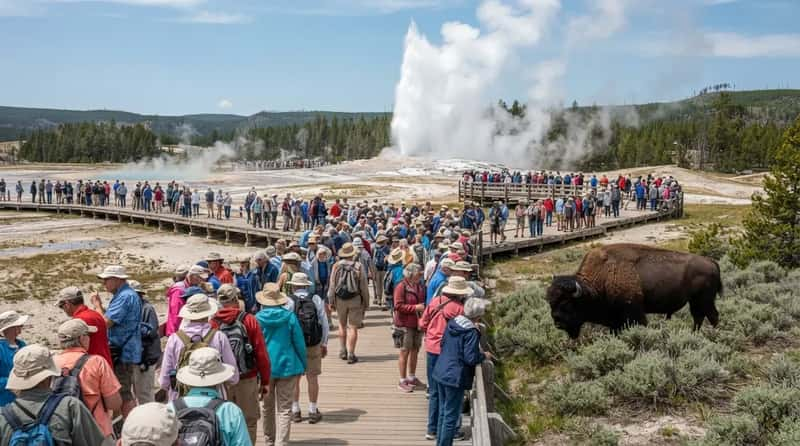
Yellowstone’s busiest month is July, according to NPS visitation data. The park drew nearly 4.8 million visits in 2025. Boardwalks around geysers and hot springs fill up fast, and the roads between them can feel endless.
Then there’s the wildlife. Bison injure more Yellowstone visitors than any other animal. Bison can look calm right up until they aren’t, and a crowded roadside makes it easy for people to drift closer than they should.
For visitors with mobility concerns, a packed pullout or a long boardwalk in midday sun is a real strain. The geysers erupt on schedule in any month, so there’s no reason to fight the July rush.
The next park dropped its entry system, and not everyone is cheering…
#11 – Yosemite Valley: The 7:30 a.m. Parking Race
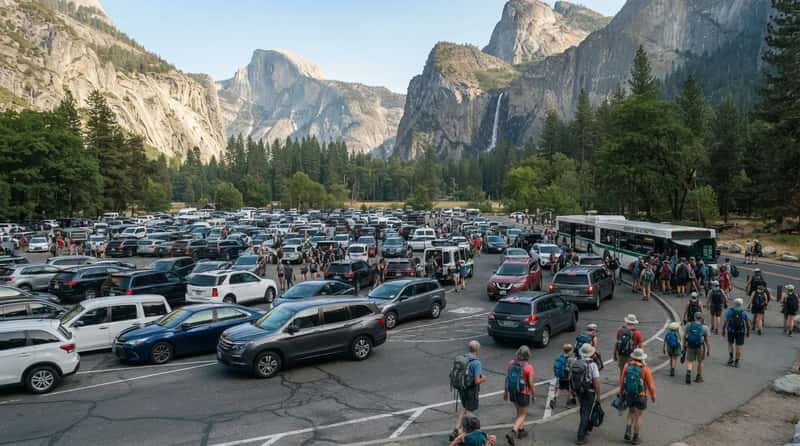
Yosemite is skipping park-wide vehicle reservations in 2026. On paper, that means easier entry. In practice, Yosemite Valley parking fills by roughly 7:30 a.m. on busy days regardless.
The park drew more than 4.2 million visitors in 2025, and a huge share squeeze into one narrow valley. Without a reservation system, the real gatekeeper is how early you can wake up. That’s a tough ask on a vacation.
There’s another sting. By late summer the waterfalls are thinner, so you fight the thickest crowds for a gentler show. The park remains remarkable, but July asks a lot of your patience.
But the next park added a rule that changes how you see the whole road…
#10 – Glacier: A Three-Hour Clock at Logan Pass
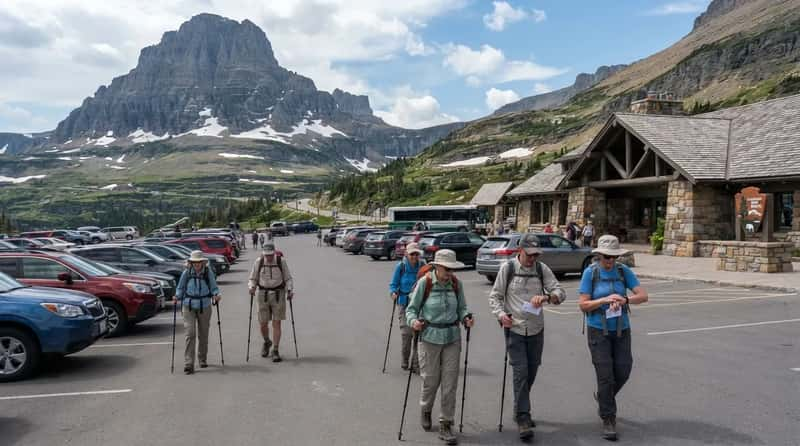
Glacier dropped its park-wide vehicle reservation for 2026, but it replaced it with something tighter. Parking at Logan Pass is limited to 3 hours starting July 1, 2026. That makes longer hikes from the pass hard to pull off.
There’s also a shuttle system for the Going-to-the-Sun Road corridor, running July 1 through Sept. 7. Every rider age 2 and up needs a ticket, sold on Recreation.gov.
The most famous stop in the park now runs on a three-hour clock. Travelers who pictured a slow, scenic day find themselves watching the time and a ticket instead of the view. Older visitors who like an unhurried pace often feel that squeeze the most.
Up next: a park that quietly changed the rules on its biggest summer draw…
#9 – Mount Rainier: Timed Entry Is Gone, but the Parking Isn’t
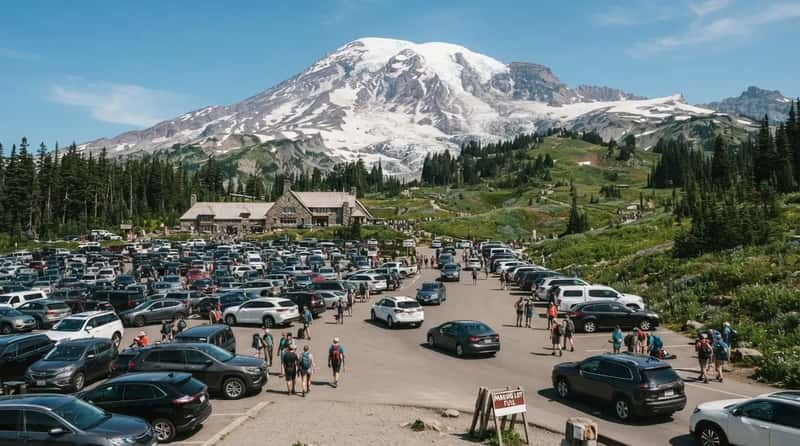
Mount Rainier canceled the timed-entry system it introduced in 2024 for peak spring and summer periods. That sounds like freedom. But parking and capacity can still limit practical access.
The July draw here is the subalpine meadows near Paradise and Sunrise. Those are the exact spots where everyone wants to be on the same sunny weekends. A removed reservation doesn’t add a single parking space.
Visitors who arrive at midday may circle lots or turn around entirely. The pressure simply moved from the booking page to the parking lot. If your plans hang on one viewpoint, July leaves very little margin.
The next park squeezes its trouble into an even smaller space…
#8 – Zion: Five Million Visitors in One Canyon
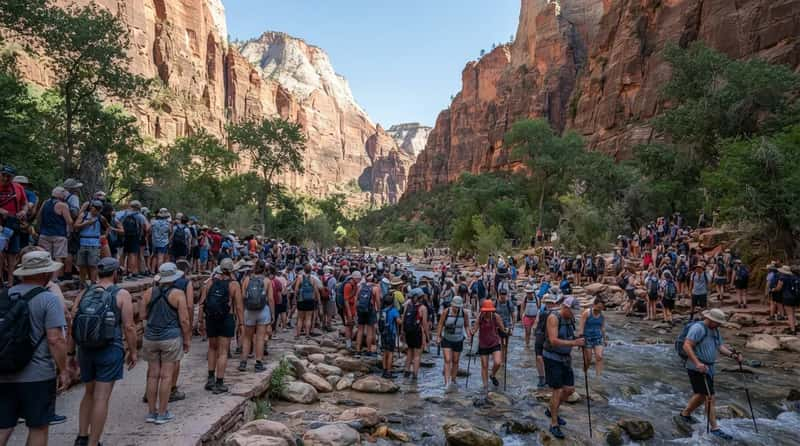
Zion recorded 4,984,525 visits in 2025, close to its all-time high. Most of that demand is crammed into a relatively small section of Zion Canyon. Think of the shuttle line, the Narrows, and the cliffside trails.
The park’s busiest month in 2025 was June, and July isn’t far behind. Angels Landing needs a permit awarded by lottery, so even the famous hike isn’t something you can decide to do on a whim.
Add canyon-wall heat that commonly pushes into the 100s, and a day here can wear down even fit hikers. Spring and fall treat this place far better. In July, it’s a hot, packed funnel.
Fast Facts
- 2025 visits: 4,984,525, close to the park’s all-time high
- Busiest month in 2025: June, with July not far behind
- Angels Landing: permit required, awarded by lottery
- July heat: canyon temperatures commonly climb into the 100s
The next park has a different kind of challenge: thin air…
#7 – Rocky Mountain: A Ticket, a Time Slot, and Altitude
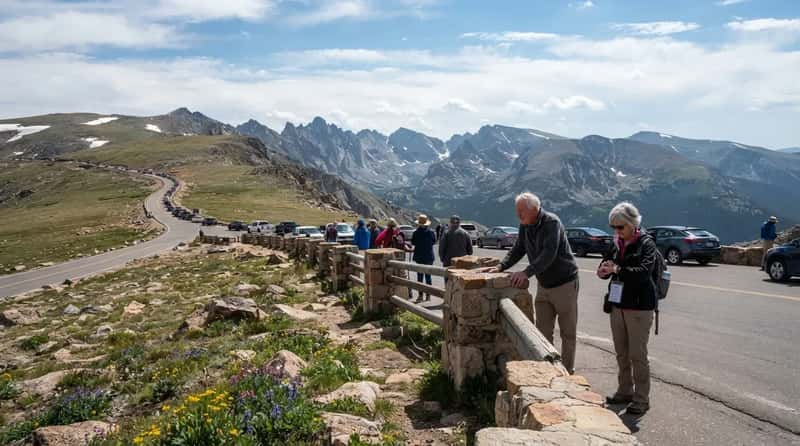
Rocky Mountain is one of the few big parks that kept its reservation system. Timed entry continues during peak months, from late May through mid-October. The park drew more than 4.1 million visits in 2025, so July slots go fast.
Then comes the altitude. Trail Ridge Road climbs above 12,000 feet, far higher than most visitors live. A scenic pullover can leave you short of breath before you take a single step.
That’s a real concern for anyone with heart or lung issues, and it’s the part the postcards skip. A ticket, a time slot, and thin air is a lot to plan around for one afternoon drive.
Next, a park where the reservation is for the road itself…
#6 – Acadia: The Mountaintop You Have to Book
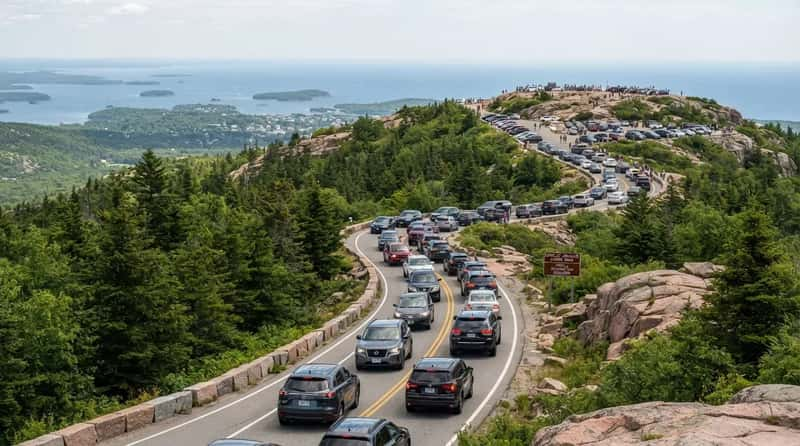
Acadia drew about 4.1 million visitors in 2025, packed onto an island with limited roads. To drive up Cadillac Mountain, you need a Cadillac Summit Road reservation. Miss the booking window and the park’s most famous viewpoint is off the table.
July is peak season in Maine, so lodging and parking get tight too. The quiet coastal getaway many people imagine often turns into a scramble for a spot.
Acadia is at its best after Labor Day, when the lots thin out and the air turns crisp. The park itself is excellent. July just makes you compete for it.
But the next one makes you set an alarm for before sunrise…
#5 – Haleakalā: Sunrise Is a Reservation, and It’s Cold
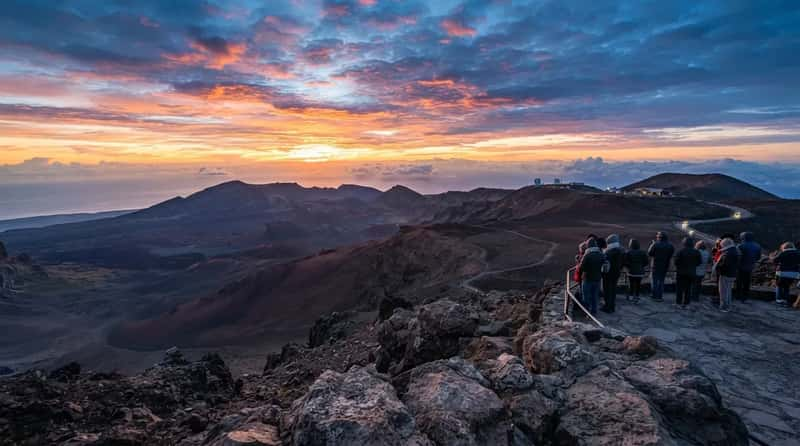
Haleakalā’s summit sunrise is the headline attraction. Sunrise visits are reservation-only, so you can’t just show up and hope. That means a pre-dawn drive up a winding mountain road.
Here’s what many visitors don’t expect: the summit sits above 10,000 feet. It can be cold and windy at the top even in July, while the beach below is warm.
Travelers who dress for the tropics often end up shivering in the dark. Add thin air and a very early wake-up, and it’s a lot for anyone who values their sleep. It’s still a spectacular sight, but the cost in comfort is real.
The next park doesn’t need reservations at all. It’s just remote…
#4 – Big Bend: Beautiful Emptiness, Brutal Distance
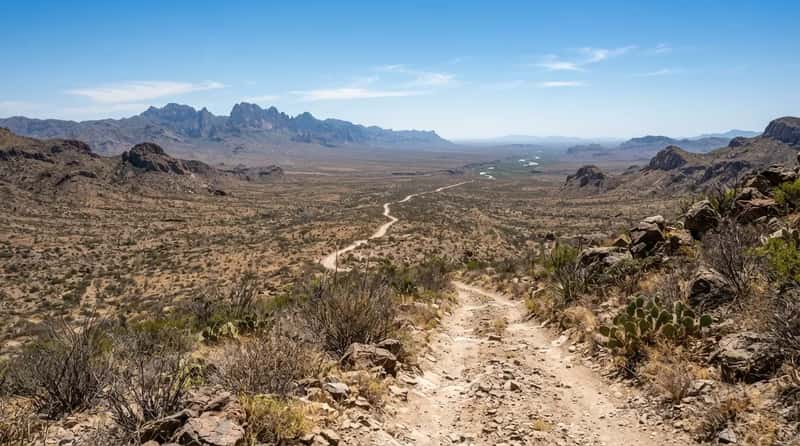
Big Bend sits in far West Texas, along the Rio Grande and deep in the Chihuahuan Desert. It is remote, and help is far away. Summer heat in the lowlands can be intense, and the park’s own advice is to plan around it.
The real problem is the gap between where you are and where care is. Services are limited and distances are long, so a heat problem on a trail can take a long time to resolve.
Many travelers over 60 say distance matters more than temperature when they plan. Winter and early spring are the sweet spot here. In July, the same wide-open feel that draws people becomes the thing to worry about.
Worth Knowing
- The park covers roughly 800,000 acres, so even “nearby” stops can be a long drive apart.
- Lowland summer highs commonly top 100°F.
- Services are limited, so fill your tank and water supply before you roll in.
- Winter and early spring are the comfortable seasons.
Now for a park where the heat has company: humidity, storms, and insects…
#3 – Everglades: Heat, Humidity, and a Season Built for Mosquitoes
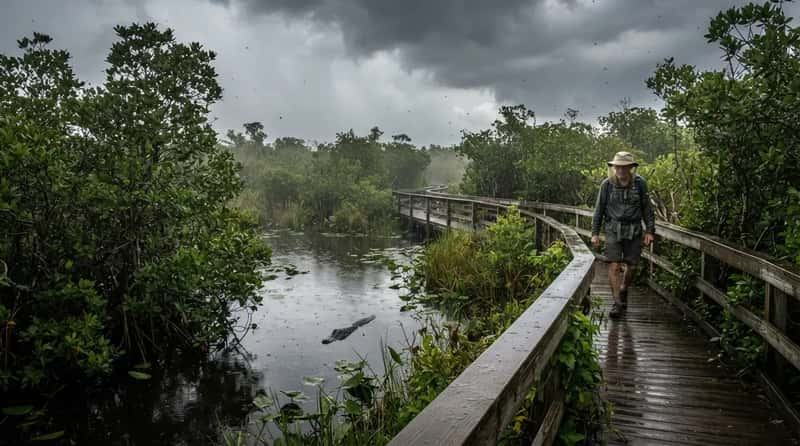
The Everglades has two seasons, and July sits in the wet one. Hot, humid air, afternoon storms, and swarms of mosquitoes are all part of the package. Hurricane season also runs June 1 to November 30.
The wet season changes the whole experience. Trails can be soggy, wildlife spreads out across the flooded landscape, and the bugs can be relentless.
The sightings that draw people, like gators and wading birds, are easier in the dry winter months when animals gather around shrinking water. A July visit means more sweat and fewer payoffs. That’s why winter gets all the credit.
The last two are the ones rangers worry about most…
#2 – Grand Canyon’s Inner Canyon: A Heat Trap Disguised as a Hike
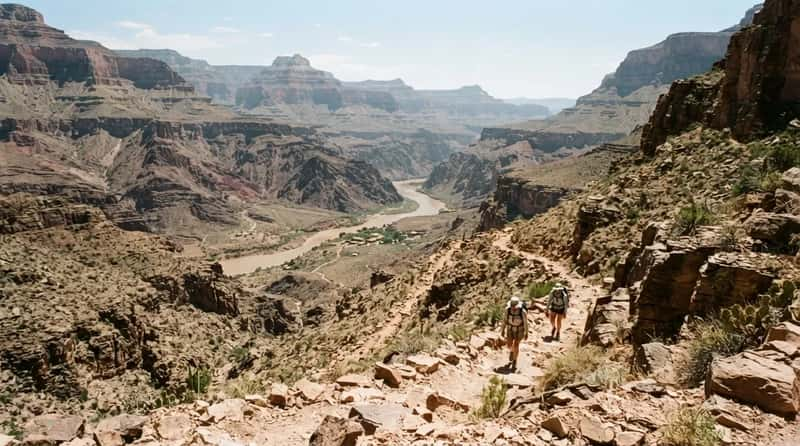
This one is not a matter of comfort. In June 2026, three hikers died of heat-related causes in the inner canyon, ages 72, 67, and 68. Heat warnings followed, with temperatures forecast to reach or exceed 110°F at Phantom Ranch.
The gap between rim and river is the trap. Phantom Ranch averages about 106°F in July, while the South Rim averages around 84°F. The canyon floor can run more than 20°F hotter than the rim, and on bad days the gap is wider.
The descent starts cool, so hikers feel fine. Then comes the return climb, which is strenuous, in much worse heat. The NPS says not to hike between 10 a.m. and 4 p.m. In July, the rim view is the smart choice, and the descent is the mistake.
But even this isn’t the most extreme place in America in July…
#1 – Death Valley: The Month That Hit 129°F and Never Cooled Off
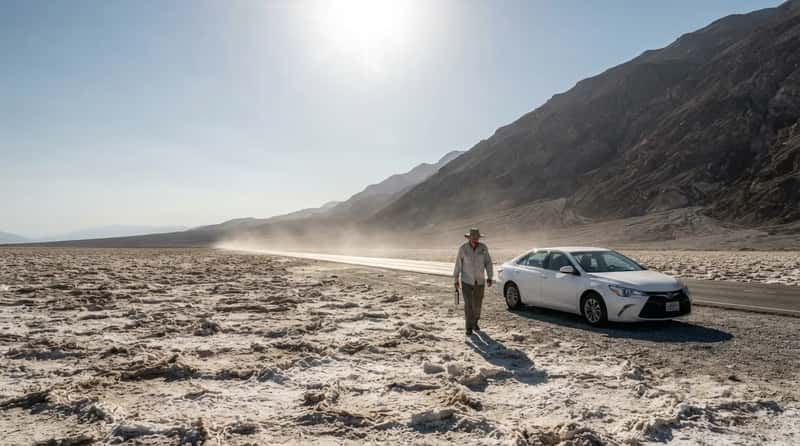
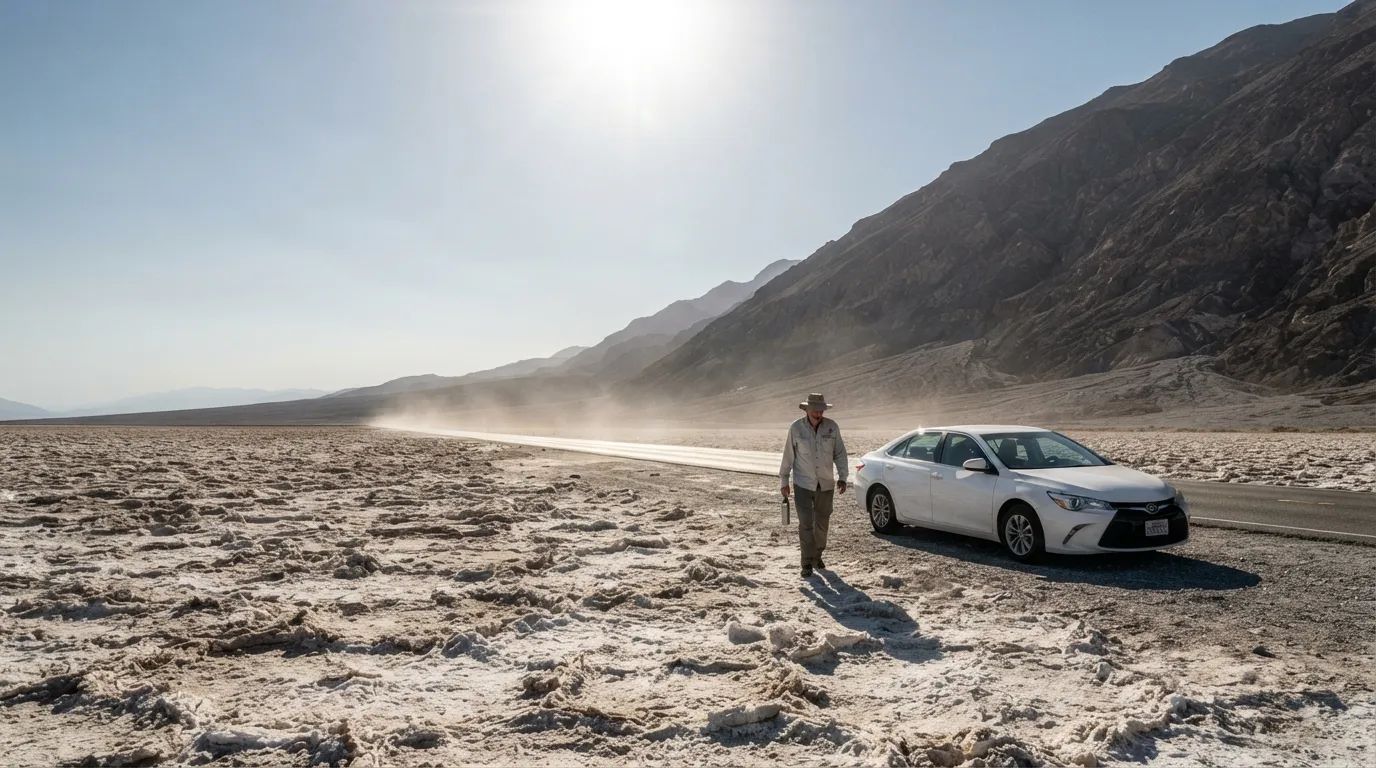
July 2024 was the hottest month in Death Valley’s history, with a 108.5°F average over 24 hours. The thermometer peaked at 129.2°F on July 7. The park saw nine straight days at 125°F or higher, and the normal July high is already 117°F.
The danger isn’t theoretical. A visitor on a motorcycle died of heat exposure near Badwater Basin on July 6, 2024. Emergency medical helicopters generally can’t fly safely in that kind of heat, which means help may not arrive from the air.
Even the nights offered no relief, with nine days when overnight lows never fell below 100°F. The park’s advice is to stay within a 10-minute walk of an air-conditioned vehicle. For anyone over 60, that’s the clearest sign of all. July here isn’t a trip. It’s a risk assessment.
Why It Stands Out
- It holds the record for the hottest month in the park’s history, set in July 2024.
- Even the 117°F normal July high is hotter than most visitors have ever planned around.
- Nights offer no recovery when lows stay at 100°F or above.
- The park’s own rule of thumb is a 10-minute walk from an air-conditioned vehicle.
The pattern across all 15 parks is the same. July stacks heat, crowds, and new rules on top of each other, and travelers with flexible calendars have the most to gain by skipping it. Death Valley and the Grand Canyon’s inner canyon are the real warnings, backed by park data and recent deaths. The rest are tests of patience.
Nearly every park here shines in spring or fall. The views don’t change, and neither do the memories. Only the thermometer does, and it makes all the difference.