Most people picture a sleeper car as a bed on rails and a person who hands out towels. Then they board, and the room is already half-ready, the coffee is already hot, and someone seems to know exactly when their stop is coming. Almost none of it was on the ticket.
Some of these arrangements are written into the job. Others are habits riders and rail fans describe again and again, and they depend on the attendant’s judgment. One item on this list is a hard limit that catches almost everyone off guard, and it’s waiting at #1.
#15 – The Bed That’s Already Made Before Dessert Arrives
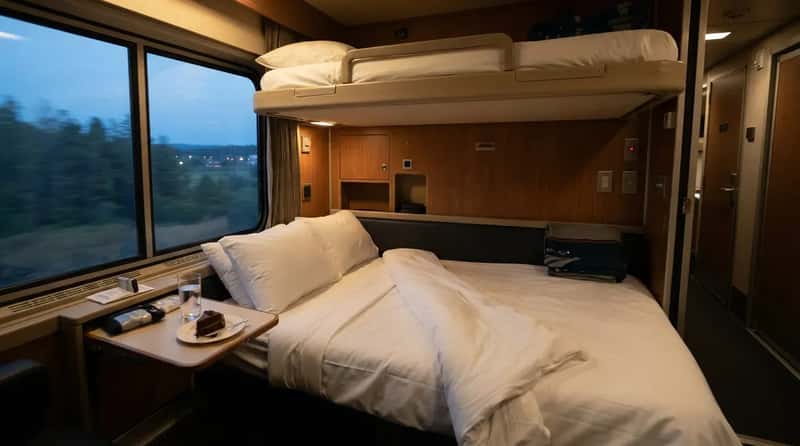
Sleeping car attendants typically convert the room from “day” mode to “night” mode so passengers don’t have to. Amtrak lists turndown service as part of what a dedicated First Class attendant provides. Many attendants time it for dinner, so the bed is frequently ready before dessert even hits the table.
One veteran rider says the bed is made up when he returns from the diner nearly every time. Nobody asked him to unlatch, pull, or fold a thing.
For a rider with a stiff back or sore hands, that is the whole point. And the next arrangement happens before you even sit down to eat.
#14 – Your Dining Reservation Gets Booked Behind the Scenes
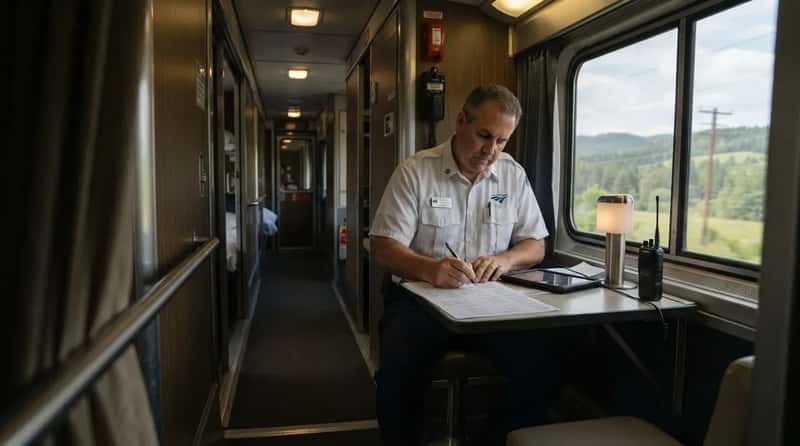
Riders often assume they’ll have to fight for a meal time. In practice, with any sleeper reservation, your attendant books your meal reservations, makes and takes down your bed, and tells you when your stop is coming up. Amtrak runs Traditional and Flexible dining, and your attendant will tell you which one your train uses.
Rail forum veterans also say a good attendant will offer to bring a meal to your room if you can’t make it to the diner. That’s a standard riders expect, not a printed guarantee. And the next item is waiting before you’ve even had breakfast.
#13 – Coffee and Juice Appear While You’re Still Waking Up
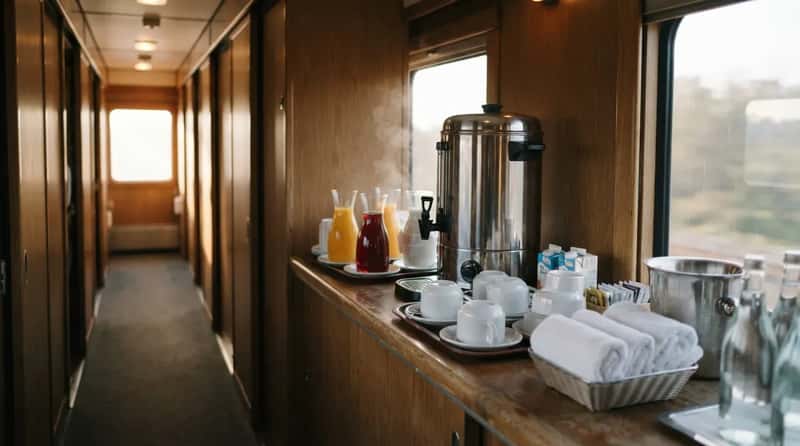
There’s no coffee cart rattling down the aisle at dawn. Instead, attendants typically set out coffee and juice for their passengers each morning. One rider noticed the attendant kept the coffee urn filled, put juice cartons near the coffee station, and even stocked towels in the shower.
At a Glance
- Coffee urn kept filled through the morning
- Juice cartons set out near the coffee station
- Fresh towels stocked in the shower
- Ice and bottled water restocked as part of the routine
That same rider admitted they barely saw the attendant except at the beginning and end of the trip. That invisibility is the service. The setup happens quietly, and you only notice it when it’s missing. But one thing at that morning station left even a seasoned rider puzzled.
#12 – The Mystery Ice Chest Nobody Bothered to Label
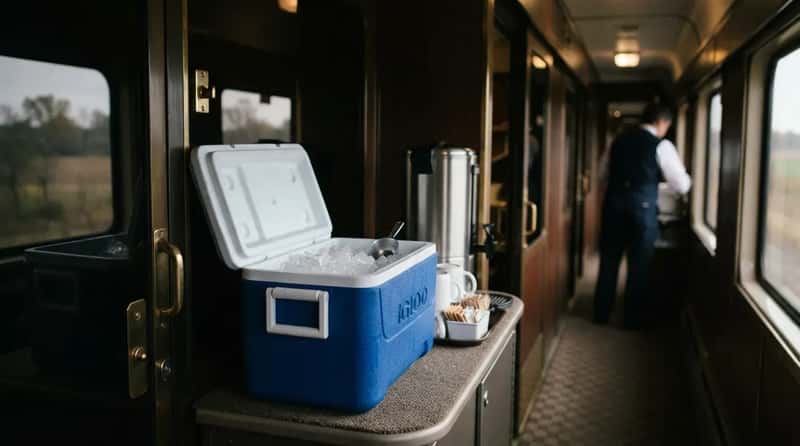
On one trip, the attendant left a filled ice chest near the coffee urn and never said a word about it. The riders weren’t sure whether it was for them. It was. Restocking ice and water is simply part of the routine.
One forum veteran sums up the baseline this way: the bed goes down at night and back up in the morning, the car stays reasonably clean, and ice, bottled water and coffee stay stocked. If you take pills with water or want something cold at 5 a.m., it’s already there. The first ten minutes of the trip hold another surprise.
#11 – The Room Tour Nobody Ordered
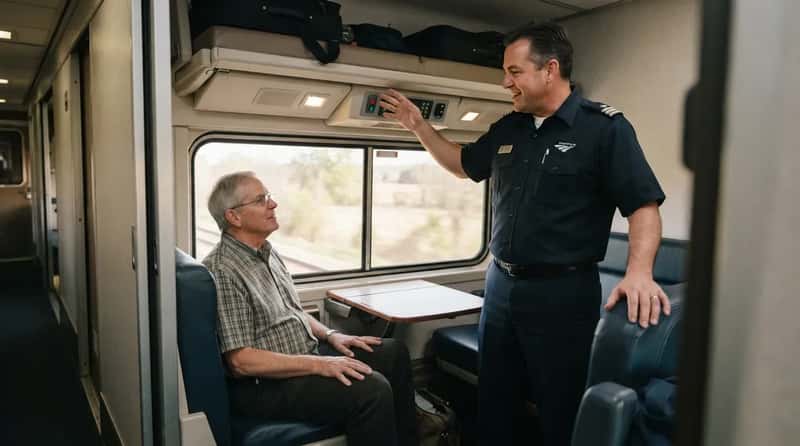
One rider on a Chicago-to-Portland trip described an attendant who stopped by early to introduce himself. He walked through the roomette’s features and pointed out the shower, the toilets, and the dining car. Forum riders say a good attendant asks whether you’re familiar with how everything works in your room, or would like it reviewed.
Folding seats, sliding doors and reading lights can feel like a puzzle when you’re tired. Ten minutes of orientation spares you an awkward midnight hunt for the call button. Then comes a quieter point that shapes how the whole trip feels.
#10 – A Smaller Car Means Someone Actually Notices You
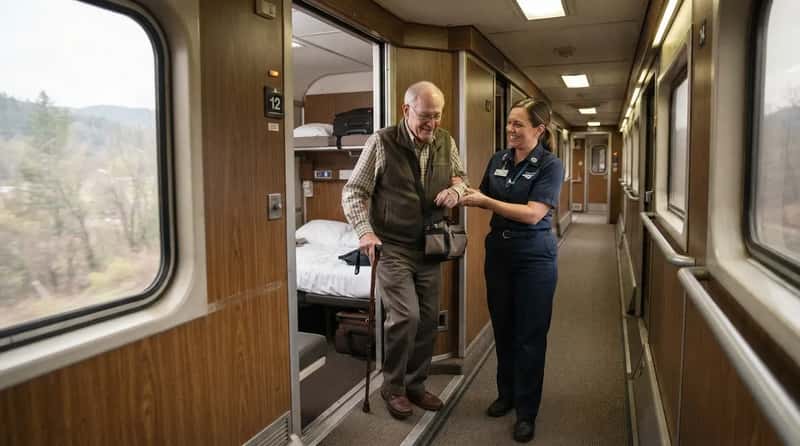
Here’s a detail most people miss. Sleeping car attendants typically have fewer passengers to serve than coach attendants. That makes it easier to spot who is struggling with a step or a heavy bag. That’s an inference from the staffing math, not a promise of constant attention.
Riders say a little contact helps in return. One veteran makes a point of saying hello, so the attendant knows him on sight when he heads to the diner. A rider who is visibly moving slower may get the extra minute without having to ask. Next up is how much say you really have over your own evening.
#9 – Bedtime Is Yours to Set (Even If Some Attendants Hover)
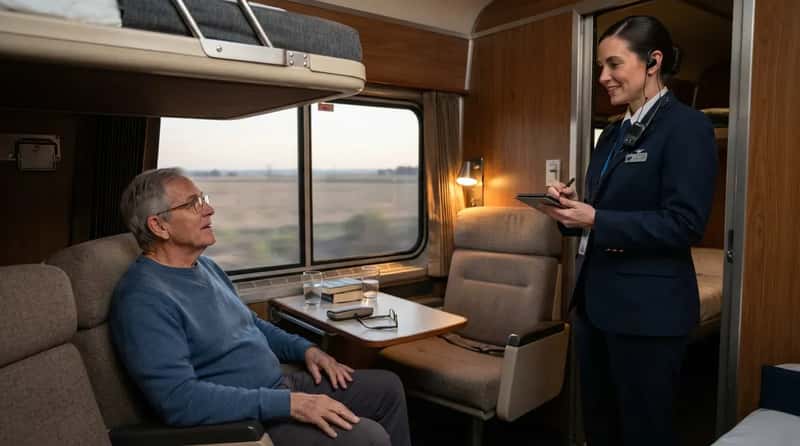
Experienced riders simply say what time they want to turn in, and ask whether they can stay up in the seat configuration a little longer. That’s the part many first-timers don’t realize is allowed. Beds are also put away during breakfast each morning.
Some attendants over-ask. One rider reported that an attendant checked about the bed roughly every hour, until he finally asked, “and exactly where would I sit.” Some riders find that pushy, while others see it as the attention they’re paying for. The next arrangement doesn’t depend on your phone at all.
#8 – The Wake-Up Call That Doesn’t Rely on Your Phone
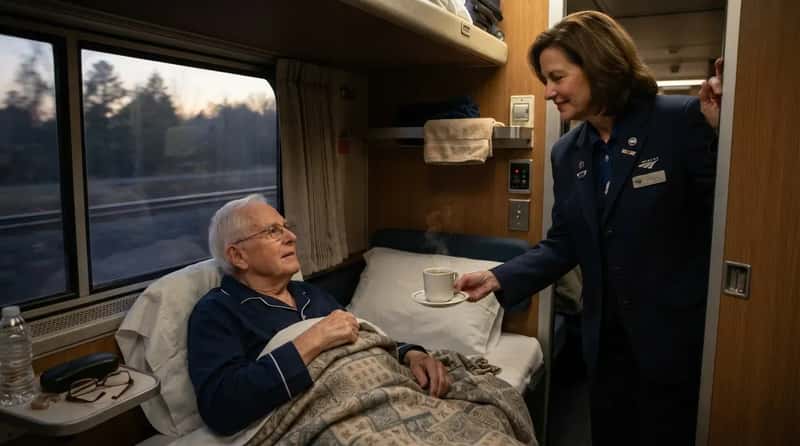
Phone alarms fail, and time zones confuse. One veteran rider always requests a 6 a.m. wake-up call. A travel-site roundup says attendants are expected to explain train procedures, replenish room supplies, and deliver wake-up beverages.
Quick Compare
- In writing: making beds, changing linen, and keeping the restroom and shower clean
- In writing: booking meals, helping with luggage, and telling you when your stop is coming up
- Rider habit: a soft, direct knock for riders who take hearing aids out overnight
- Rider habit: bringing meals to the room when the walk to the diner is too much
The same roundup adds that for riders who take their hearing aids out overnight, attendants often follow up with a soft, direct knock. That’s a practice described by one travel site, not an Amtrak policy. Still, it shows how much of the job runs on judgment. And the biggest anxiety on any overnight train is still ahead.
#7 – The Heads-Up Before Your Stop Arrives
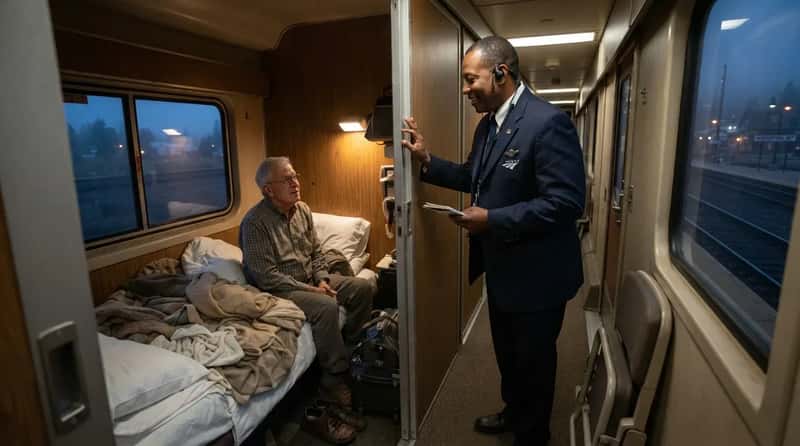
Sleeping through your own station is the classic overnight-train fear. Your attendant is the person who tells you when your stop is coming up. Long-distance trains often reach stations at odd hours, so that warning matters.
For riders over 65, an unhurried exit can be the difference between a smooth arrival and a stumble on the platform. It’s one of the cheapest forms of safety on the train. Now for something far less glamorous, but just as important.
#6 – The Shower Gets Wiped Down Before You Step In
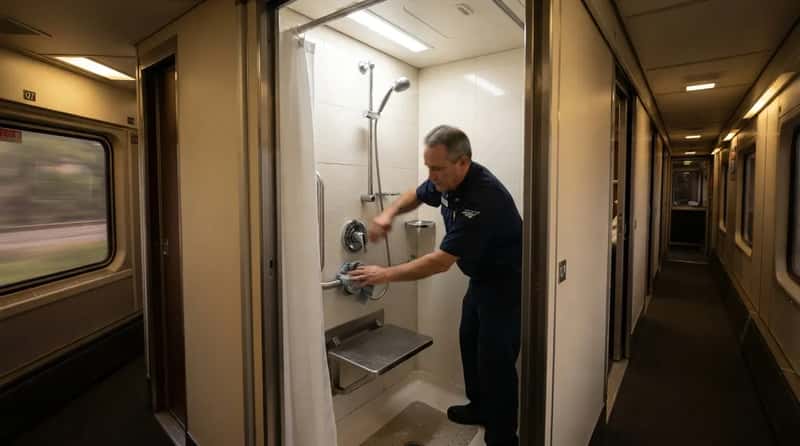
Nobody romanticizes this part of the job. Amtrak’s own job posting says sleeping car attendants must keep the restroom and shower area clean and sanitary for the duration of the trip. A wet floor on a moving train is a real slip risk.
Attendants work through the cleaning in the background while passengers are at meals or asleep. Most riders only notice when a bathroom isn’t clean. Another arrangement kicks in when the hallway itself becomes the problem.
#5 – Meals Delivered When the Hallway Feels Too Long
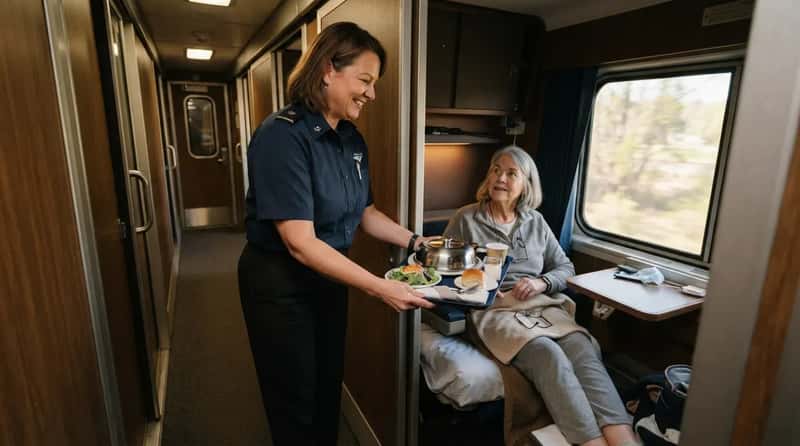
On Viewliner trains, everything is on one level, but the hallways are narrow, especially if your sleeper car is far from the dining car. For some riders, that long walk with a swaying floor is the real obstacle. Your attendant can bring meals to your room if navigating the hallways becomes tiring.
Keep in mind that passengers are normally expected to go to the dining car unless they have limited mobility. Room dining is an exception, not the default, and you may have to ask. Next is the room itself, and a catch many riders discover too late.
#4 – The Stair-Free Room That Gets Booked Fast
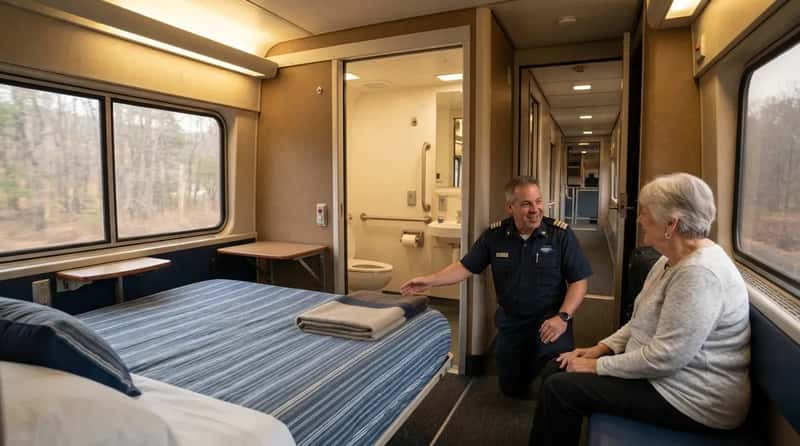
Stairs are a problem on two-level cars. One accessible bedroom is available in each sleeping car, located on the entry level. Those rooms are first-come, first-served, so Amtrak Vacations advises notifying them before booking and reserving early. The attendant can’t conjure a room, but they know the car’s layout and can explain what to expect.
Here’s the part that frustrates people: the senior discount does not apply to sleeping accommodations. Many riders call that the biggest letdown in the whole system. The service you get inside the room, meanwhile, is the same no matter your age. The next arrangement happens right when you’re packing.
#3 – The Bed Goes Back Up Before You Have to Think About It
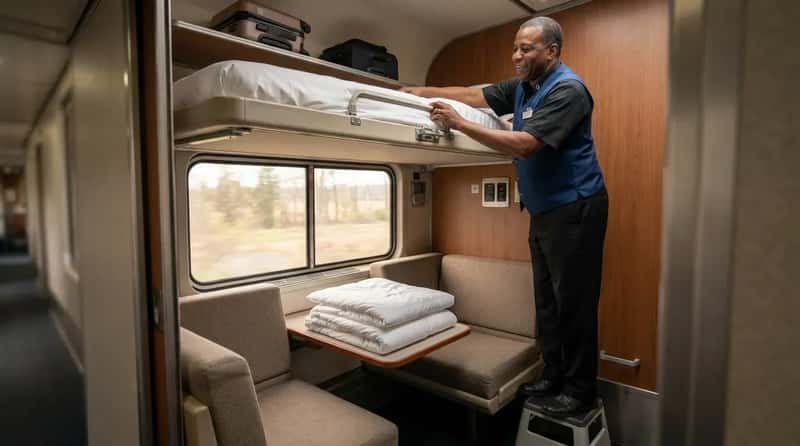
Before the train arrives, the attendant puts the beds back up and changes the sheets and blanket. One roundup notes that this happens just as people are collecting their bags. Amtrak’s job posting confirms the duty: sleeping car attendants make beds and change linen.
Why It Stands Out
- No folding, lifting, or latching on your part
- Linen gets changed for the next passenger without a word from you
- It happens while you’re collecting your bags, so nothing slows you down
- It’s a listed duty, not a favor
For a rider with a bad shoulder or knee, not having to fold a berth matters. The room goes from bed back to seats without a single lift on your part. It’s work most passengers never see. And the next arrangement is the closest this list gets to an official rule.
#2 – Special Assistance at Both Ends of the Trip
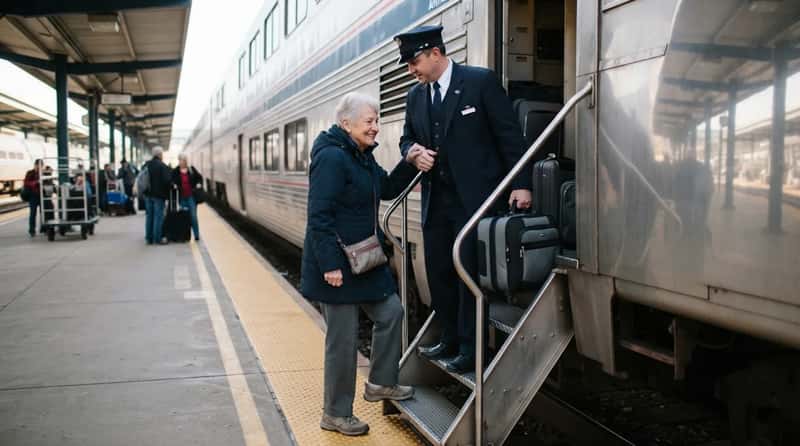
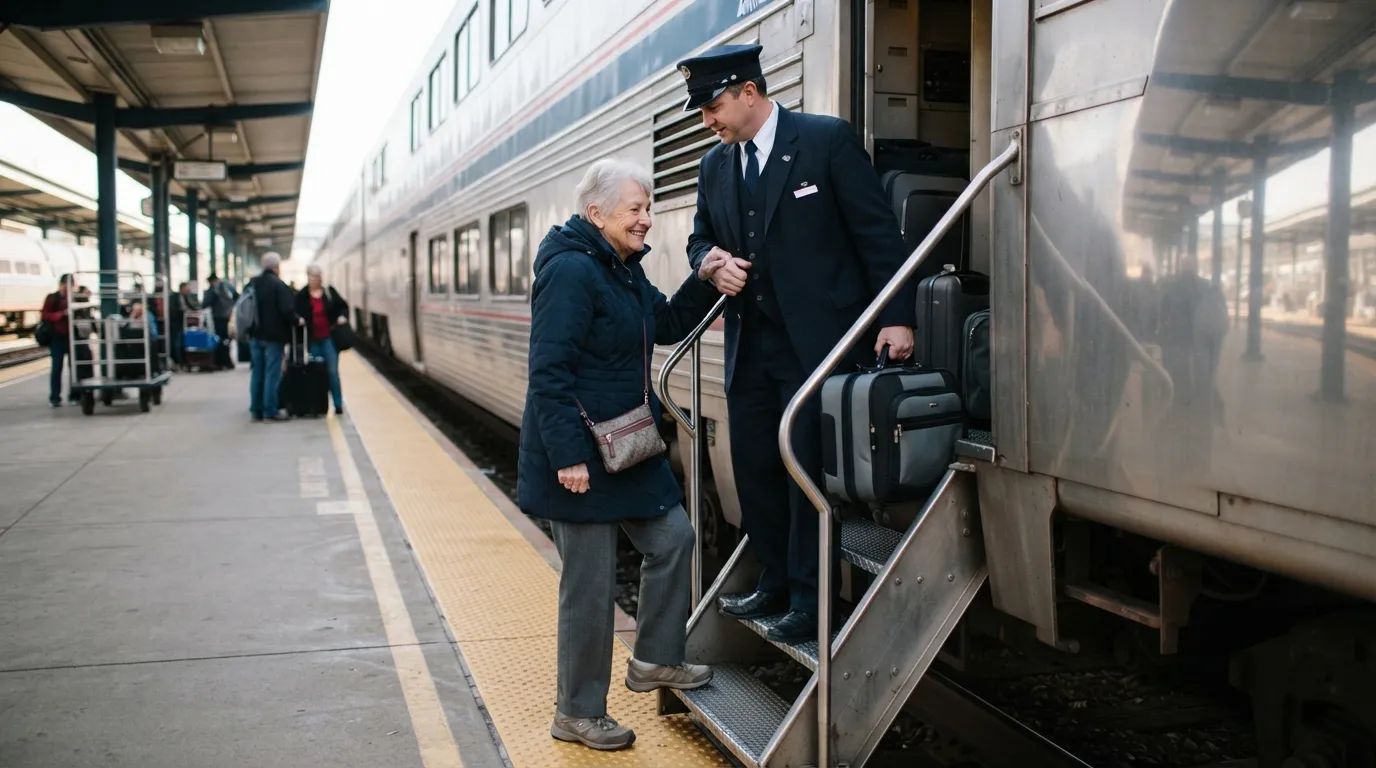
This is the one that is actually in writing. Amtrak’s job posting says attendants must be willing to give special assistance to elderly and disabled passengers who are boarding and detraining. Amtrak also lists that your attendant will help with luggage.
Train steps are steeper and narrower than most entrances, and a heavy bag can turn them into a hazard. That makes this the arrangement riders over 65 are most likely to lean on. But the last item is a limit nobody expects.
#1 – They’ll Walk You to the Bathroom, and Then the Arrangement Ends
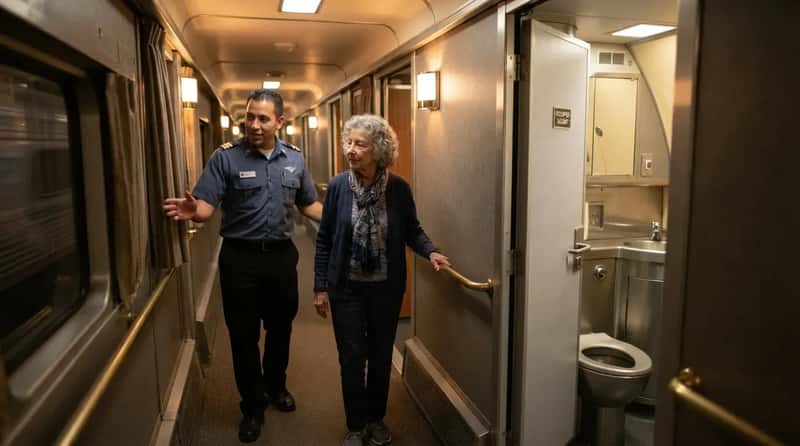
Here is the truth that surprises people. Sleeping car attendants assist with your travel needs but are not responsible for personal hygiene. They can help you get to the bathroom or shower, but they cannot assist you inside.
That is why you may need to travel with a personal assistant if you require that kind of support. Everything else on this list bends with the attendant’s judgment, but this line doesn’t. Knowing where it sits before you book is the most useful arrangement of all.
An attendant can make a long night on the rails feel almost effortless, but the care has edges. The riders who do best learn both what gets done for them and what they need to bring along.
Ridden a sleeper lately? Chances are the best part of your trip was something nobody announced.