Most people assume turning 65 buys you a gentler, faster trip through airport security. TSA’s own published guidance draws its line at 75, and that gap is where a surprising number of delays begin.
The trouble rarely starts at the X-ray belt. It starts in the kitchen, in the carry-on and at the ID check, and the mistake waiting at #1 is one most travelers never think to fix.
#15 – Assuming the Senior Break Starts at 65
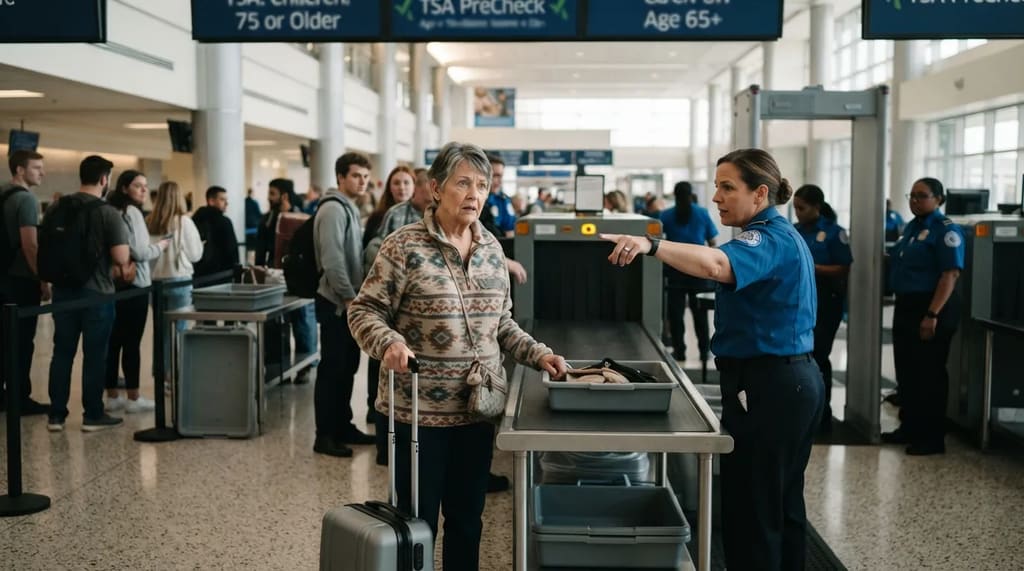
Your 65th birthday changes far less at the checkpoint than most people think.
TSA’s own page sets its line at 75, not 70 and not 65. Passengers 75 and older can receive some form of expedited screening, and everyone younger goes through standard screening.1
Quick Compare
- Under 75: Standard screening.
- 75 and older: Some form of expedited screening, not a guaranteed lane.
- Any age with a medical need: Support options like TSA Cares and the notification card, covered later in this list.
TSA says “some form of” expedited screening at 75, not a fixed lane. Even at 75, keep your usual time cushion.
Picture a 68-year-old who read a vague “senior perks” blog post the night before. She arrives early, scans for a shorter line and spends five minutes looking for something that isn’t there.
The delay comes from the expectation. A traveler who walks up looking for a fast lane and doesn’t find one starts the day flustered, and flustered people fumble bins, bags and boarding passes.
But the next item on the list trips up even the travelers who do know about the 75 rule, #14.
#14 – Leaving the Light Jacket On
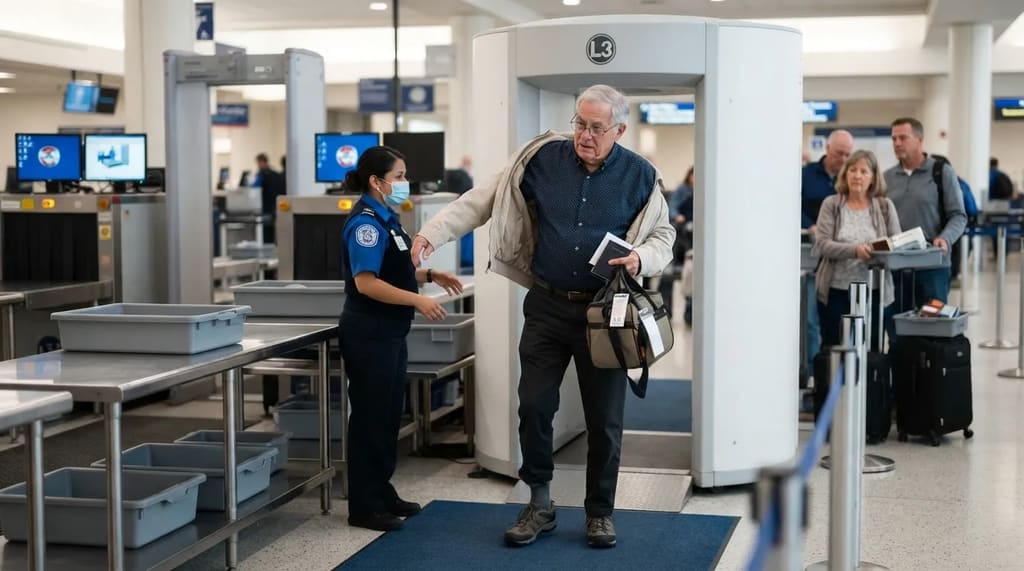
Even for the travelers TSA treats most gently, the jacket is still a problem.
TSA’s page says removal of light jackets is required for Advanced Imaging Technology screening.1 Advice that says older travelers can keep a jacket on goes further than TSA’s page does.
You will find websites that say otherwise. Some of them tell travelers 75 or older they can keep shoes and light jackets on.
When websites and the agency disagree, plan for the stricter version. If the officer waves you through with the jacket on, you’ve lost nothing.
The cost of guessing wrong is small but public. You end up shrugging off a coat at the front of the scanner, hands full, with a line behind you.
Still, the jacket is a small thing next to the ritual in #13, one that TSA actually retired.
#13 – Taking Your Shoes Off Before Anyone Asks
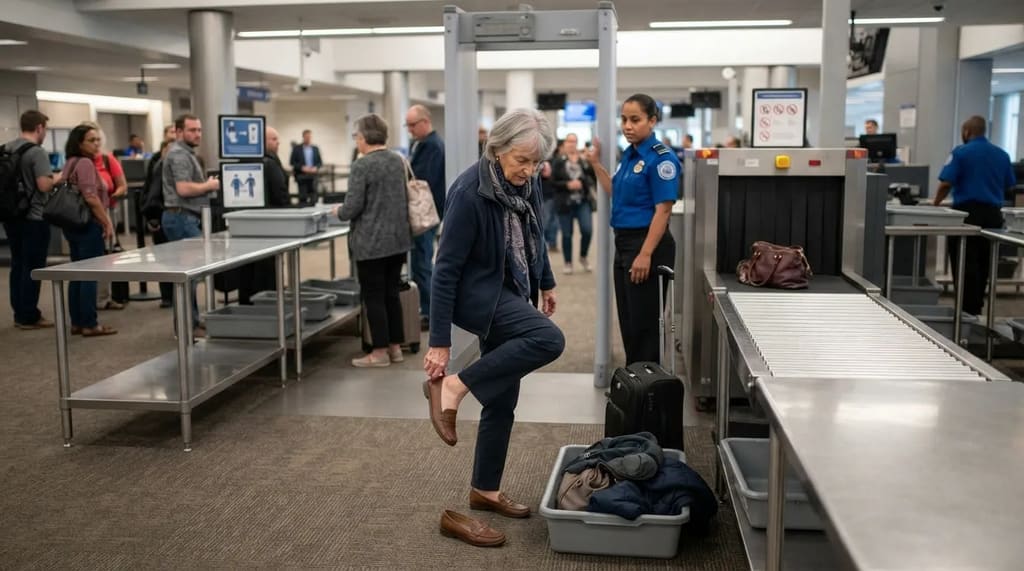
Plenty of older travelers are still performing a routine the agency dropped.
TSA ended its shoe removal mandate on July 8, 2025.2 That ended a rule many travelers had followed for almost two decades.
For years, shoes off was as automatic as showing a boarding pass. Habits that old don’t disappear just because the rule did.
If an alarm goes off, TSA says you may be required to remove your shoes for further screening or undergo a pat-down.1 So walk up with your shoes on and take them off only if you are asked.
Balancing on one foot to tug off a loafer is a real fall risk for anyone. Skipping it saves time and spares your knees.
Shoes are the easy part, though, and #12 is where the lunch bag gets people in trouble.
#12 – Packing a Lunch That Counts as a Liquid
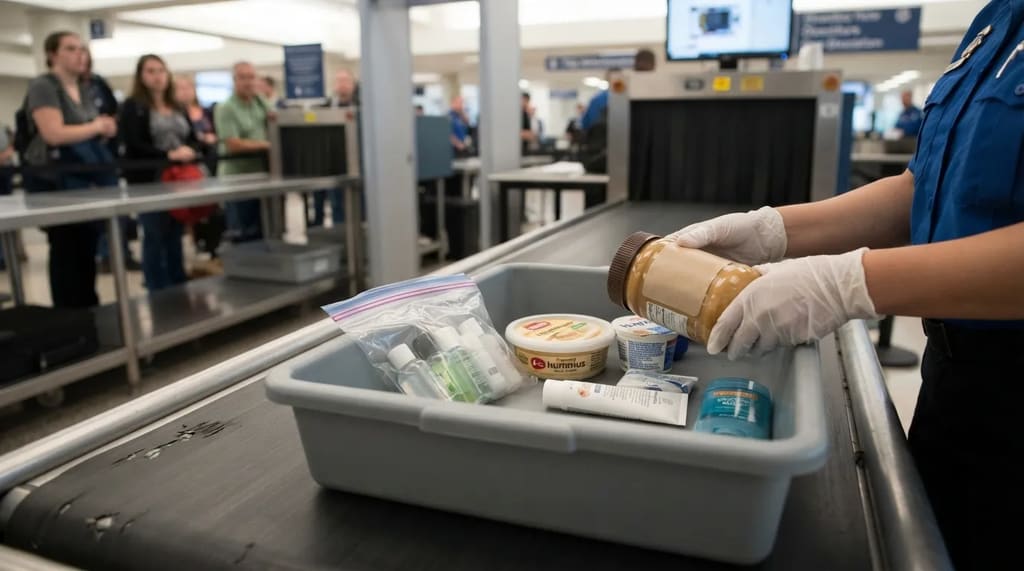
A jar of peanut butter can stop a checkpoint line cold.
The 3-1-1 rule means containers of 3.4 ounces or less, in one quart-size bag, with one bag per passenger. Larger containers go in checked baggage.
Peanut butter, hummus, yogurt and cream cheese all count as liquids. So do gel deodorants and hair gels.3
- The rule applies to liquids, gels and pastes.
- Solid deodorant, bar soap and stick lip balm are not liquids.
A lunch that looked perfectly ordinary in the kitchen can look like a pile of mystery containers on the belt. Someone then has to open the bag and sort it out while everyone waits.
Hand creams and snacks packed for a long travel day are the usual offenders. Anything bigger than the limit that isn’t medication may get thrown away on the spot.
Medication is a different story, and #11 shows how a good rule gets turned into a delay.
#11 – Not Declaring Liquid Medications
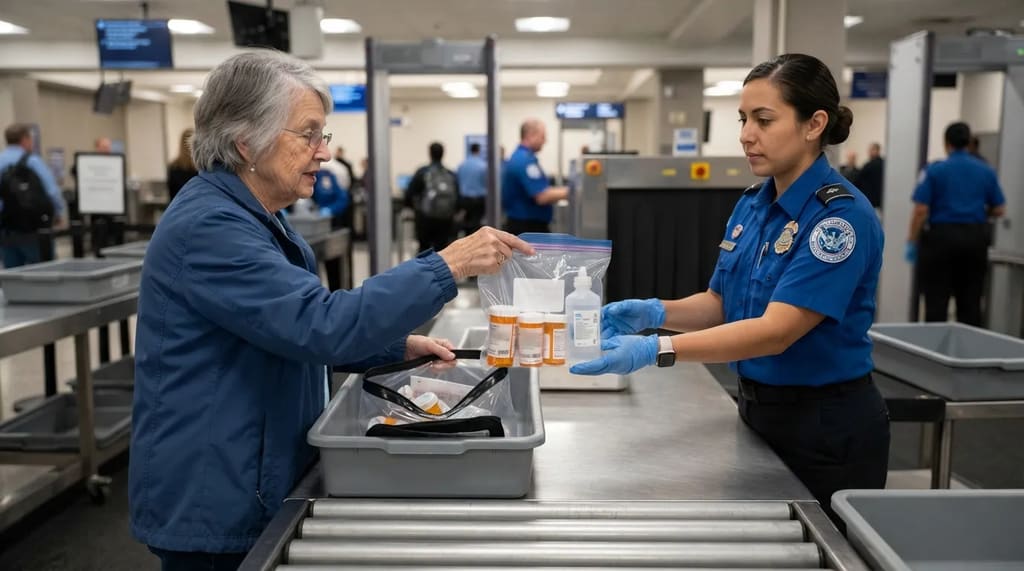
Your liquid medicine is exempt from the limit, but only if you say so.
Medically necessary liquids may exceed 3.4 ounces in reasonable quantities for your trip when declared and screened. You declare them to the officer at the start and take them out of your bag to be screened separately.
Over-the-counter items such as contact solution and saline are also exempt. TSA may test medically necessary liquids for explosive residue.3
The mistake is silence. Declare it separately from your other liquids, before the bin reaches the X-ray.
It also helps to pack these items where you can reach them. Digging through a stuffed carry-on while a line waits is its own kind of delay.
Declaring is only half of the medication story, and #10 starts before you ever leave home.
#10 – Putting Medications in the Checked Bag
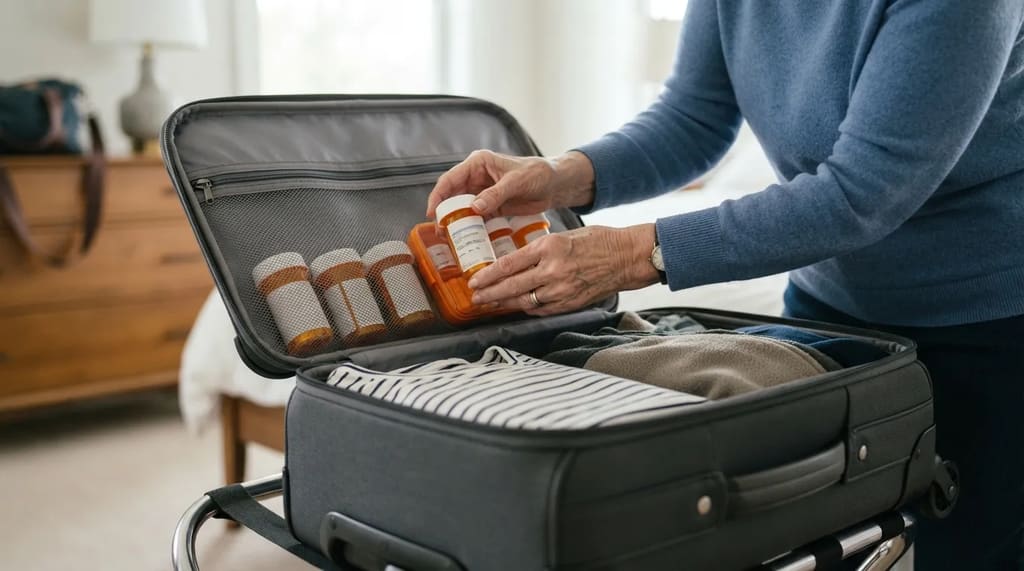
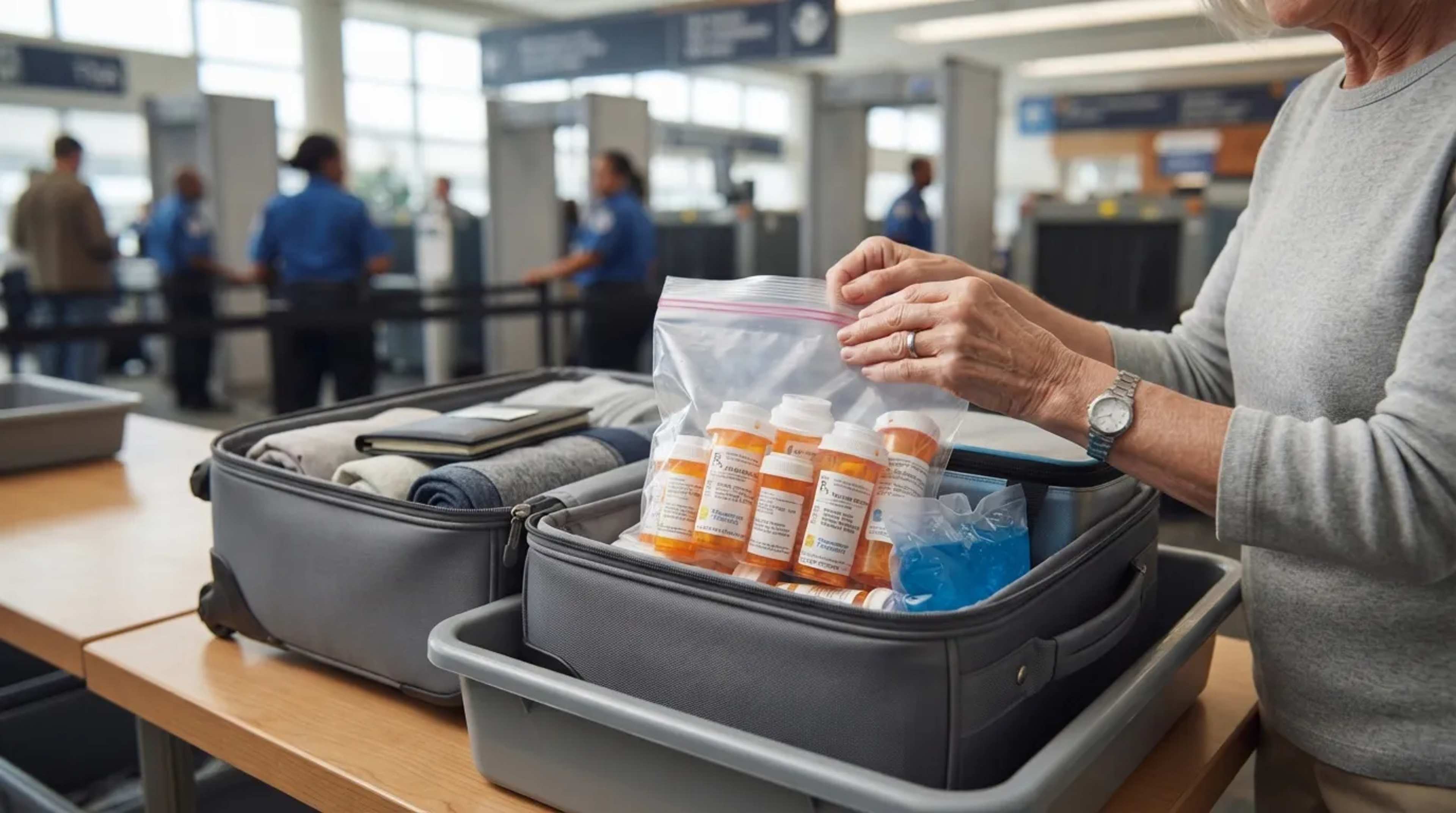
The pills you cannot go without do not belong in the suitcase you hand over at the counter. Checked bags can be delayed or lost, and a missing suitcase is a terrible place for your daily medication to be.
All medications belong in your carry-on. Pills and tablets are not subject to the 3-1-1 rule at all.
The TSA does not require medications to be in their original prescription bottles. TSA does not require a prescription label or a doctor’s note, though a labeled bottle speeds up the checkpoint conversation.
Fast Facts
- Daily medications belong in your carry-on, not your checked bag.
- Pills and tablets are not covered by the 3-1-1 liquids rule.
- Original bottles and doctor’s notes are not required by TSA.
- A labeled bottle still makes the conversation at the checkpoint easier.
A weekly pill organizer is fine in a carry-on. Keeping the original bottles in your bag alongside it covers you in situations a loose organizer alone doesn’t.
Destination rules can differ from TSA’s, especially abroad. State and destination rules can require different labels, documents or quantities.
Once the bag is sorted, the real test comes when the machine beeps, which is #9.
#9 – Not Knowing What Happens When the Alarm Sounds
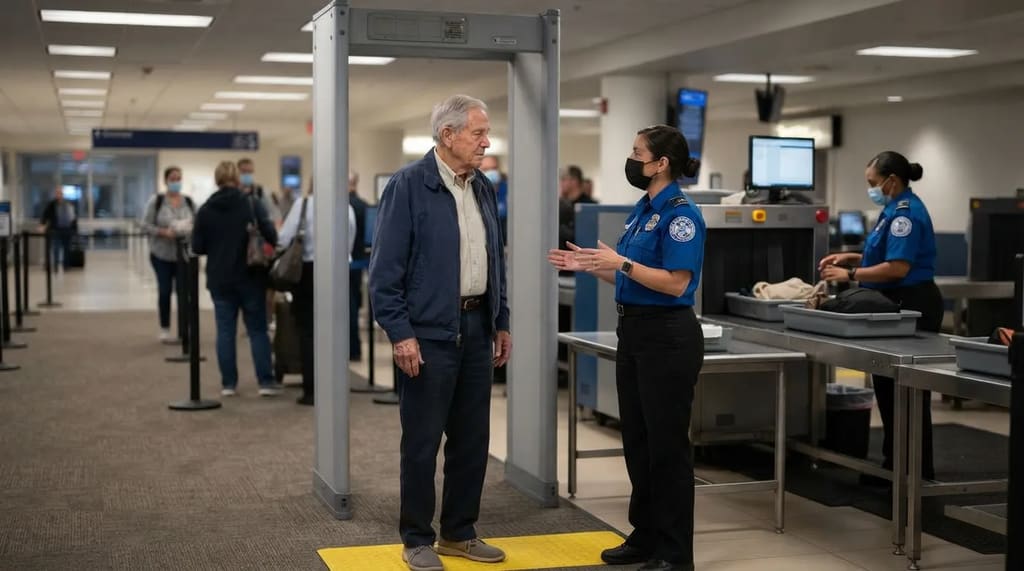
One beep does not automatically mean a pat-down.
If the alarm goes off, you may be required to remove your shoes for further screening or undergo a pat-down. Travelers 75 and older who trigger the detector can pass through a second time before a pat-down and shoe removal.
You can request to be seated during this portion of the screening. You can also request a private screening with a companion present.
TSA says a pat-down is done by an officer of the same gender. If you’d rather not have it in public view, the private option is there.
The common mistake is to freeze, argue or apologize at length. Ask what is happening and what your options are, in a calm voice, and the process moves faster.
That brings up a request many travelers never make, and it’s #8.
#8 – Standing When You Could Sit
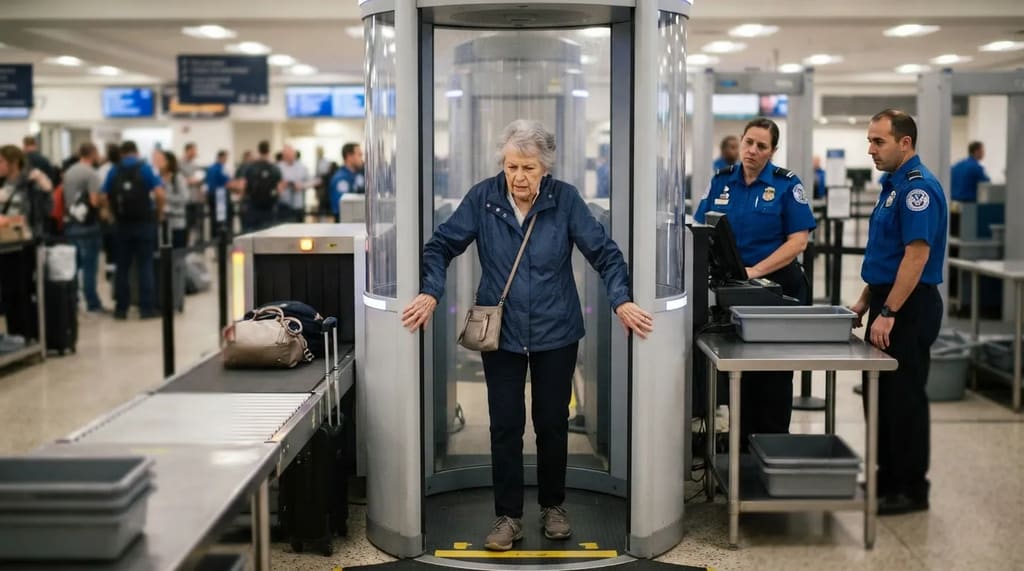
Standing through screening is the default, not a requirement.
TSA says passengers 75 and older who are unable to stand for screening will be screened through other security methods.1 Younger travelers whose medical conditions prevent standing or walking aren’t required to remove their shoes, though the shoes are manually inspected.
The principle is simple. If standing is a problem, tell the officer before the line pushes you into the scanner.
Picture someone gripping the edge of a bin, jaw set, insisting they’re fine. Fine is not a screening option, but a request for a seat is.
Plenty of people tough it out anyway. The result is a wobbly, slow trip through the machine.
Telling officers about your limits matters even more when the limit is inside your body, as #7 shows.
#7 – Surprising Officers With a Medical Device
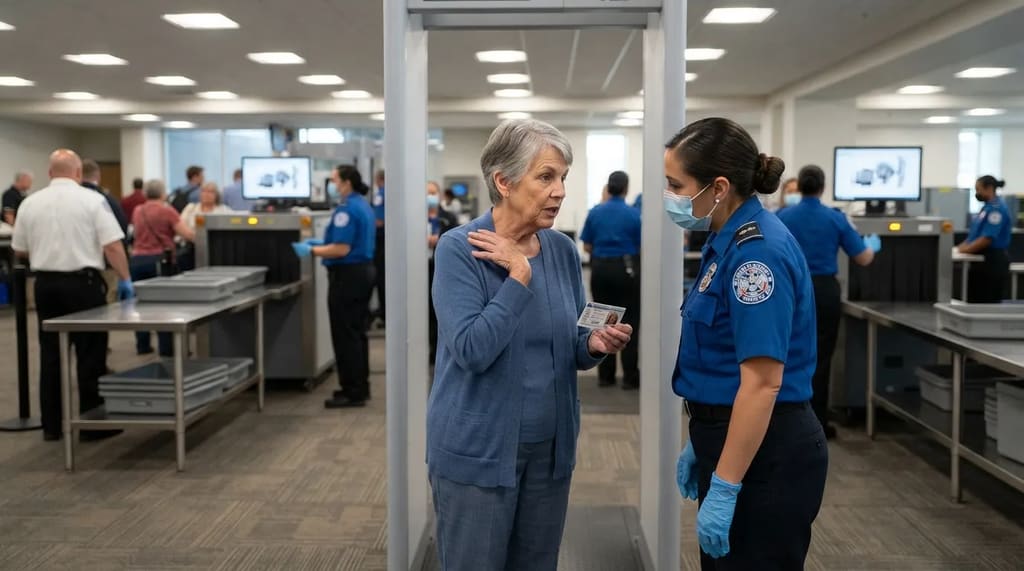
An implant nobody knows about turns a two-minute screening into a long one.
TSA recommends that passengers or their caregivers tell security officers where any internal medical devices are located. You can decline to remove a medical device and ask for alternative screening instead.
- Pacemakers, joint implants, insulin pumps and respiratory devices are all covered.
- Prosthetics, ostomy bags and hearing or vision loss also count.
An alarm can’t tell a joint replacement from anything else. A short sentence from you saves a long conversation.
Say it early, before you step toward the machine. Talking on the move in a noisy checkpoint is how details get lost.
There is a free way to put all of this on paper, and almost nobody uses it. That’s #6.
#6 – Skipping the TSA Notification Card
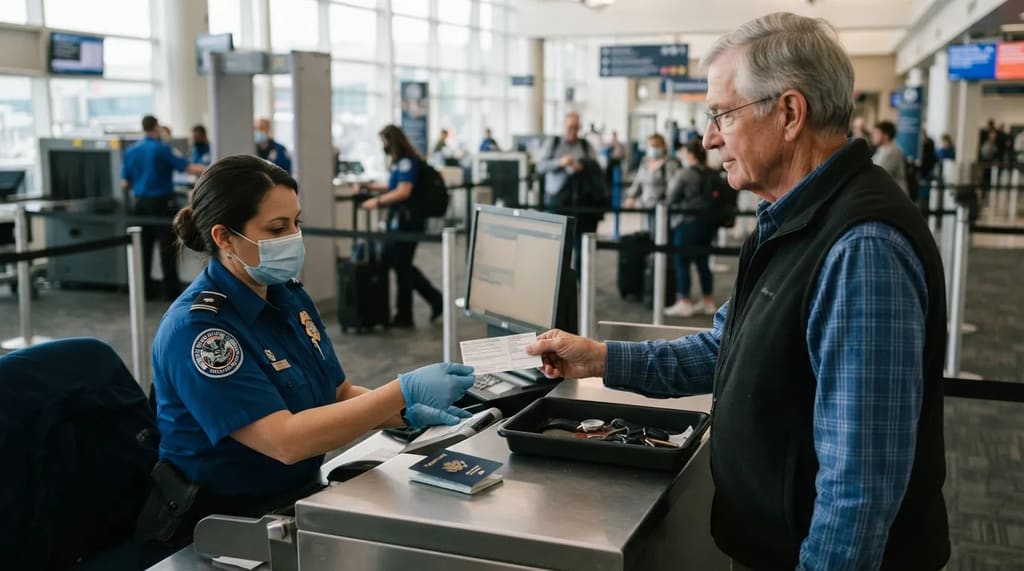
The free card does the explaining for you.
Travelers can print and fill one out, then hand it to officers to say that a disability or medical condition may affect their screening. It also lets passengers communicate discreetly with screening staff.
Think of it as your explanation, printed and portable. You don’t have to rehearse it or shout it over the noise.
The card also prints the TSA Cares number, 1-855-787-2227. It tells you to call 72 hours prior to traveling to request a Passenger Support Specialist.4
Worth Knowing
- The card is free to print and fill out at home.
- You hand it to the officer instead of explaining out loud.
- A travel companion can also speak up about devices or medications.
- Save the TSA Cares number on your phone before you leave.
Without it, many travelers explain everything out loud at the checkpoint while a line builds behind them. A travel companion can also tell officers about medical devices or medications.
One more category of gear gets less attention than it deserves, and #5 explains why it draws extra scrutiny.
#5 – Letting Canes, Walkers and CPAPs Roll Through Unannounced
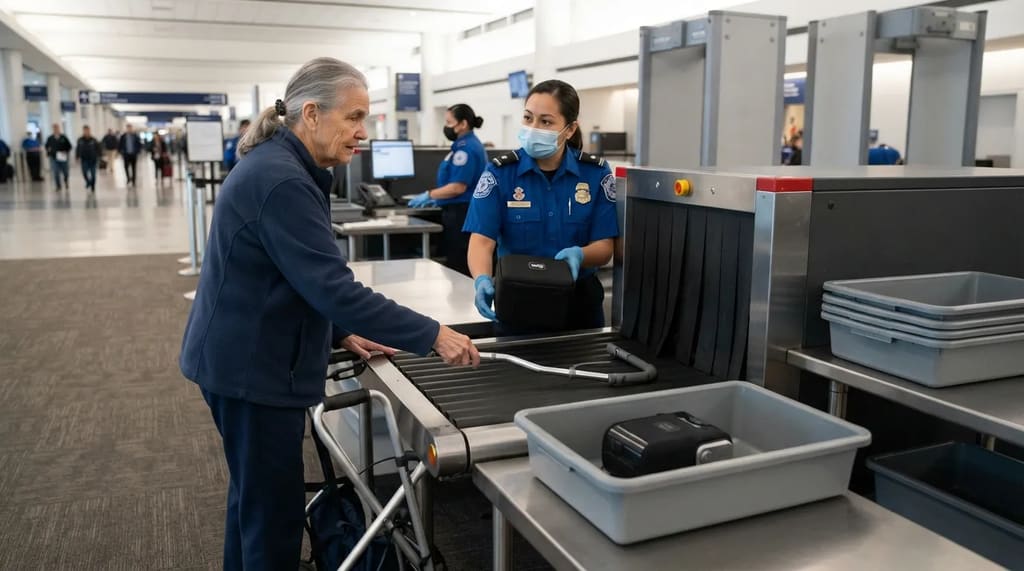
Mobility aids and breathing equipment do not get waved past the machine.
Walkers, canes, crutches and other mobility aids will be X-rayed or hand-inspected. Medical oxygen and respiratory devices such as nebulizers, CPAP, BiPAP and APAP machines must be screened before going through the checkpoint.
Your hands, mobility aids, medical devices and shoes may be swabbed for trace amounts of explosives. None of this is a sign that you’ve done anything wrong.
When a cane or walker leaves your hands, your balance leaves with it. That is the moment most people haven’t planned for.
The mistake is not planning for the handoff. Ask how the officer wants to handle your cane or walker, and keep a hand on something steady until you have it back.
Now we get to the mistakes that stop people before they reach the belt, starting with #4.
#4 – Treating PreCheck or a Phone ID as a Substitute for the Real Thing
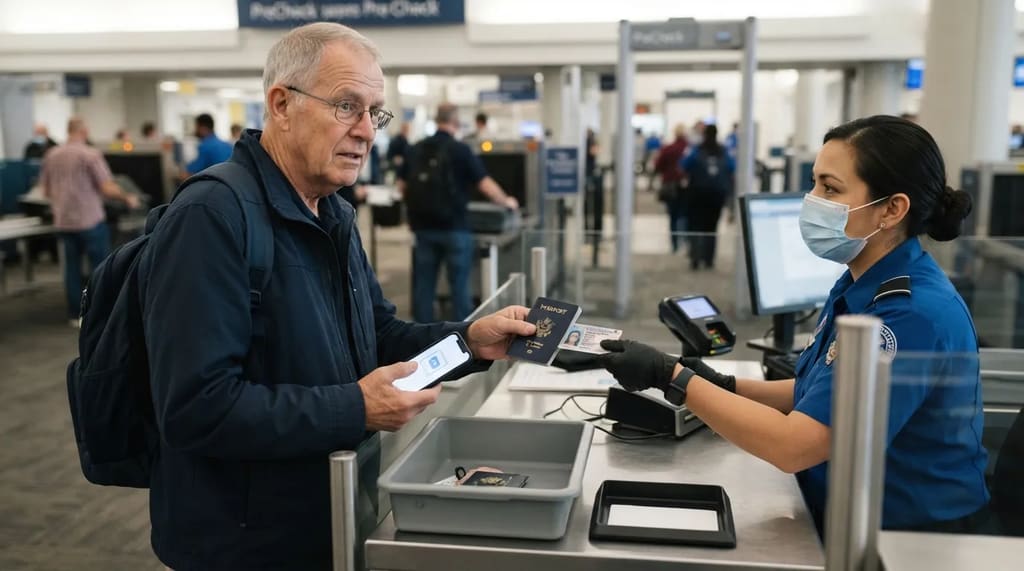
PreCheck speeds up screening, but it does not replace your ID.
Travelers who love PreCheck can start to treat it like a pass that covers everything. The lane is faster, but the ID check is the same.
All passengers 18 and older, including TSA PreCheck members, must present REAL ID-compliant identification or another acceptable ID, such as a passport. PreCheck does not waive the requirement to present acceptable ID.5
TSA also accepts certain digital IDs, including approved mobile driver’s licenses, Apple Digital ID, Clear ID and Google ID pass. Bring your physical ID anyway.
Other documents work too. They include a U.S. passport or passport card, a Global Entry or other DHS trusted traveler card, and a U.S. military ID.
Even a physical ID can fail, though, and the reason is printed in small type. That’s #3.
Related Stories From Travelbinger

#3 – Not Checking the Expiration Date
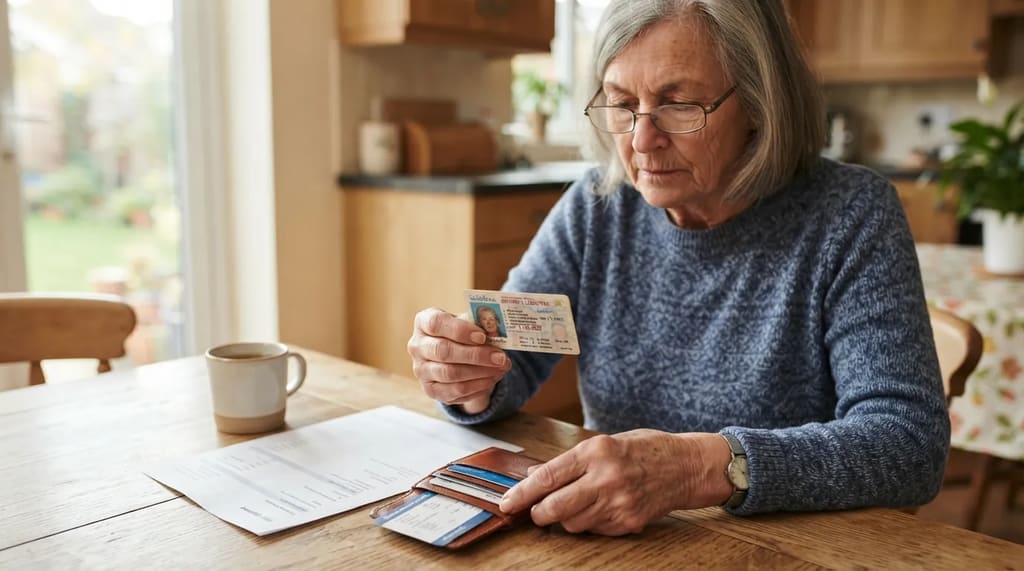
A date in small print can decide whether you reach the gate.
TSA currently accepts an ID on its list up to two years after it expires. TSA says that list can change without notice.6
Beyond that period, you need a valid document or the TSA ConfirmID verification process. People make the mistake in both directions.
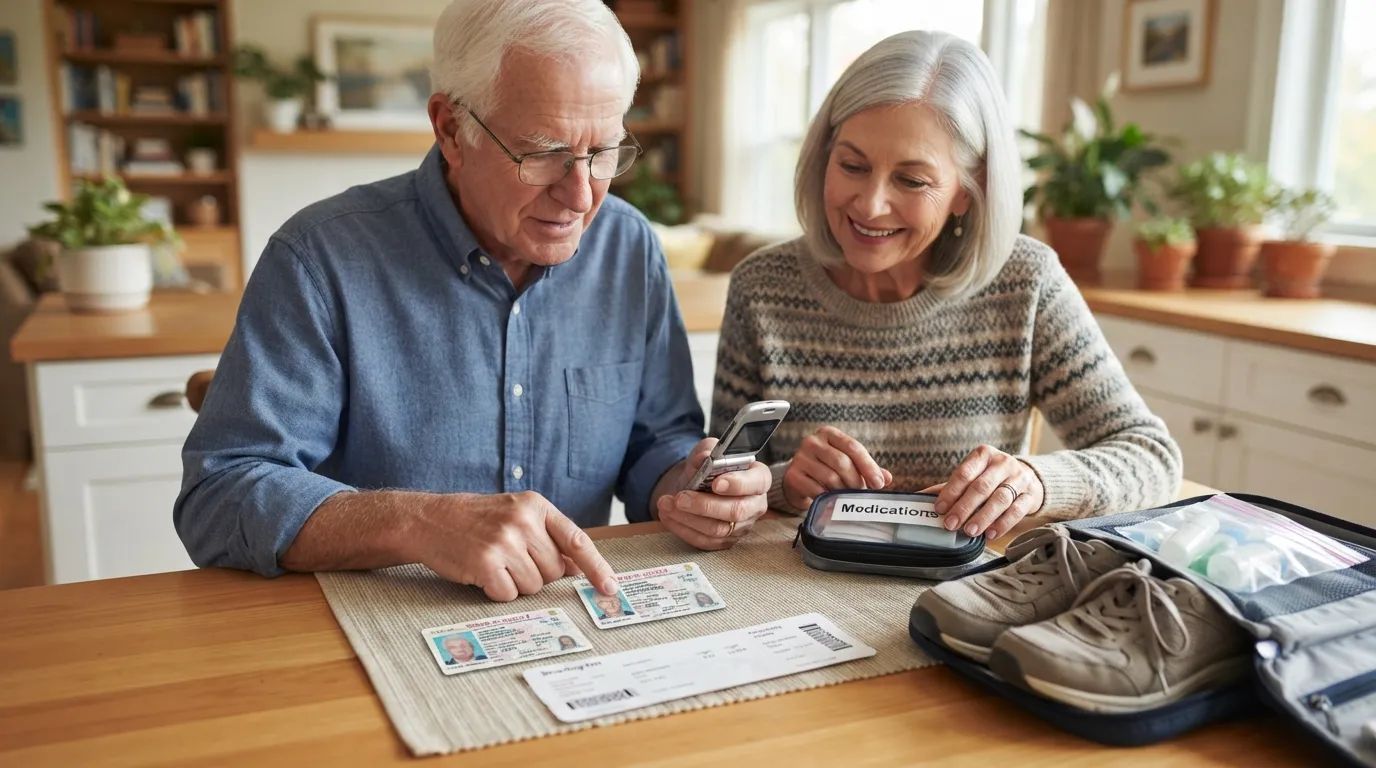
Some assume an expired card is useless and panic. Others assume it works forever, and find out at the checkpoint.
Check the date at the kitchen table, a week before you fly, not in the departure lane. Then confirm the current rule on TSA’s own ID page.
If your date is fine but your card isn’t the right kind, the cost goes up fast, and that’s #2.
#2 – Showing Up With a Non-REAL ID and No Backup
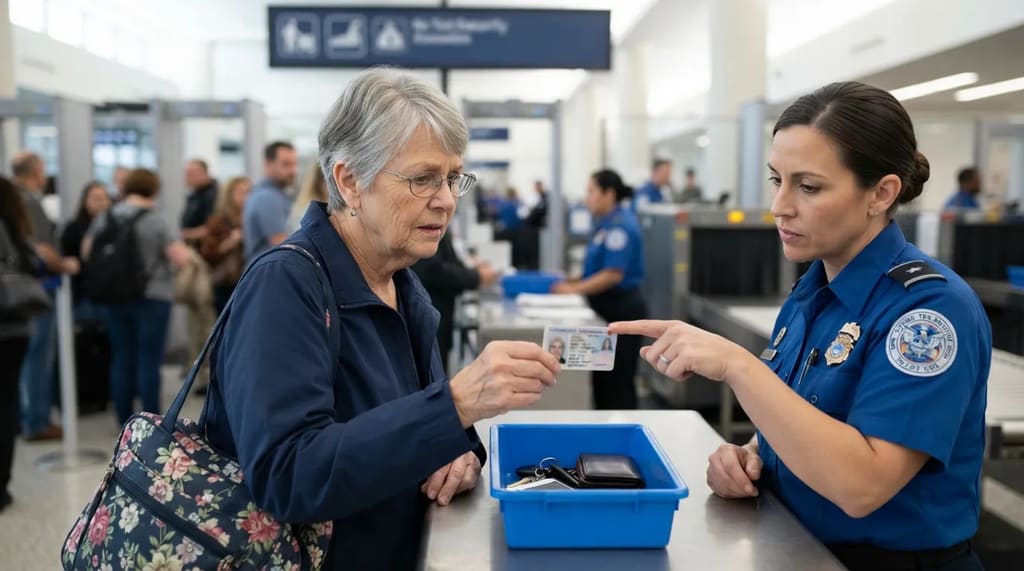
This mistake can end with a stranger deciding whether you get in.
On May 7, 2025, TSA stopped accepting state IDs that are not REAL ID compliant at its security checkpoints.5 6 Travelers without an alternative can expect delays, additional screening and the possibility of not being permitted into the checkpoint.
A REAL ID has a star in the top corner of the card. A valid U.S. passport or passport card works equally well at any checkpoint nationwide.
At a Glance
- May 7, 2025: TSA stopped accepting non-compliant state IDs at checkpoints.
- Look for the star: It sits in the top corner of a REAL ID card.
- Best backup: A valid U.S. passport or passport card.
- Last resort: ConfirmID, a $45 online fee offered since February 1, 2026.
It is a strange feeling to be packed, early and still stuck at the front of the line. That is what this mistake looks like in real life.
Since February 1, 2026, TSA has offered ConfirmID, a $45 online fee,6 with an emailed receipt you bring to the checkpoint along with any government-issued ID. TSA can still deny entry if it cannot confirm your identity, so treat this as a backup, not a plan.
But the biggest avoidable mistake on this list isn’t about paperwork at all. It’s #1.
#1 – Never Calling TSA Cares Before the Trip
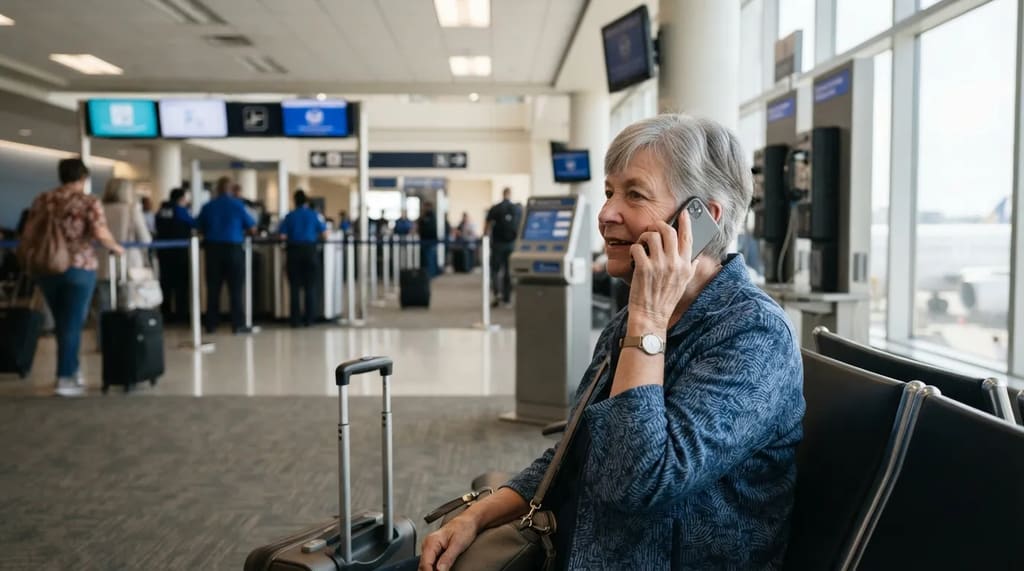
The most useful tool for an older traveler is a free phone call most never make.
TSA Cares is a free help line for travelers with disabilities, medical conditions and other situations that make standard screening difficult. TSA recommends contacting it at least 72 hours before departure when you want assistance.
A representative explains what to expect and can arrange for a Passenger Support Specialist, a TSA officer with extra training, to meet you at the checkpoint. It has no age floor, so you can use it at 66 if a medical device or trouble standing is the reason.
Know its limits. TSA Cares is about support, not speed, and it covers only the screening portion of the journey, with no transport through the rest of the airport and no medical care during the flight.7
Think about what the call replaces: guessing, explaining on the fly and hoping for a patient officer. A plan on file replaces all three.
That is why this one tops the list. Every other mistake here is easier to fix with a plan on file, and the number to call is (855) 787-2227.
The Bottom Line
The 75 cutoff is real, but it’s narrower than most people assume. Anyone younger goes through standard screening, and shoes now stay on unless something calls for a closer look.
The costliest delays come from ID, medication and medical devices. A non-compliant ID with no backup can mean delays and extra screening.
Most of these mistakes cost nothing to fix. A date checked at the kitchen table, a card printed at home and one phone call can change how the whole morning feels.
The fastest line at the airport usually belongs to the person who sorted it all out the week before.
- TSA Screening Passengers 75+: https://www.tsa.gov/travel/tsa-cares/screening-passengers-75-and-older
- CBS News Shoe Rule: https://www.cbsnews.com/news/tsa-shoes-rule-expires/
- TSA Liquids Rule Guide: https://trecklist.com/guides/tsa-travel-liquid-rules/
- TSA Media Room TSA Cares: https://www.tsa.gov/news/press
- TSA REAL ID Enforcement Release: https://www.tsa.gov/news/press/releases/2025/04/11/tsa-begins-real-id-full-enforcement-may-7
- TSA Acceptable Identification: https://www.tsa.gov/travel/security-screening/identification
- TSA Passenger Support Specialist: https://www.tsa.gov/news/press/releases/2024/04/30/tsa-officer-den-recognized-national-passenger-support-specialist