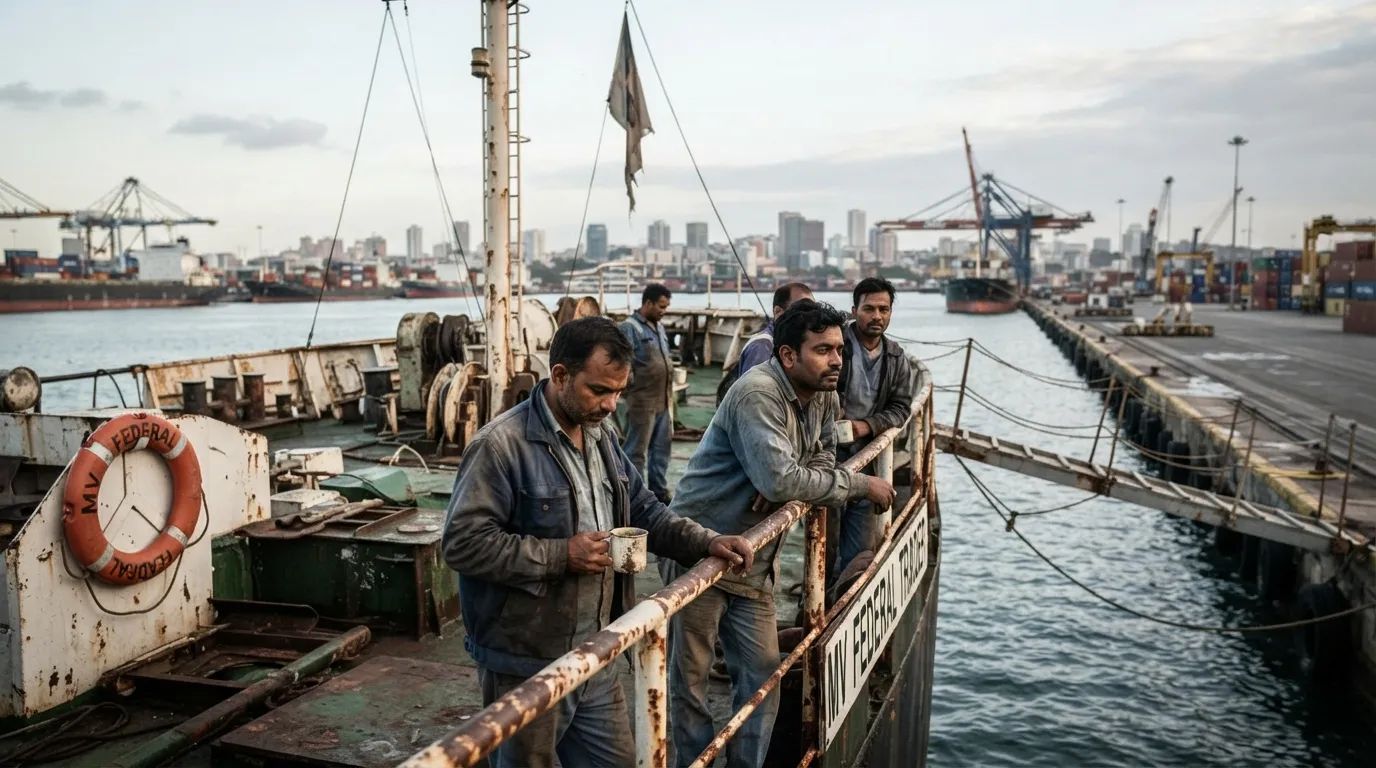
A ship glides in, the gangway drops and everyone heads ashore. It looks effortless. It almost never is, because the real fight usually ended before the first boot touched the dock.
Someone on land has already been wrestling with a phone, a laptop and a checklist that never ends. That someone is the port agent. Some of the fires they put out are as small as one wrong form, and others involve people who can’t leave a ship for months. Here is what industry documents and 2024–2026 data show, starting with the quietest crisis and ending with the one that hit a record in 2025.
#15 – The Customs Paperwork That Has to Land Before the Ship Does
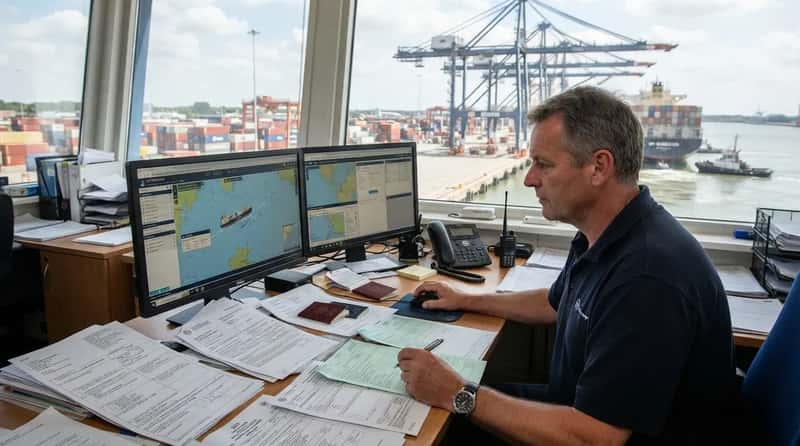
The first crisis begins while the ship is still far out at sea. One industry roundup says vessel agents submit documentation to customs 24 to 48 hours before arrival. Agents also file pre-arrival notices, including the security information required under the ISPS Code. The paperwork race is usually won or lost a day or two before anyone sees the ship.
Many agents also follow the ship’s approach on AIS tracking platforms. They aren’t just waiting for a phone call. They’re watching a dot on a map and checking it against a timetable that officials, terminals and tug crews all depend on. And the next crisis looks like a scheduling hiccup, until you see how many people it touches.
#14 – The Berthing Window That Quietly Slips Away
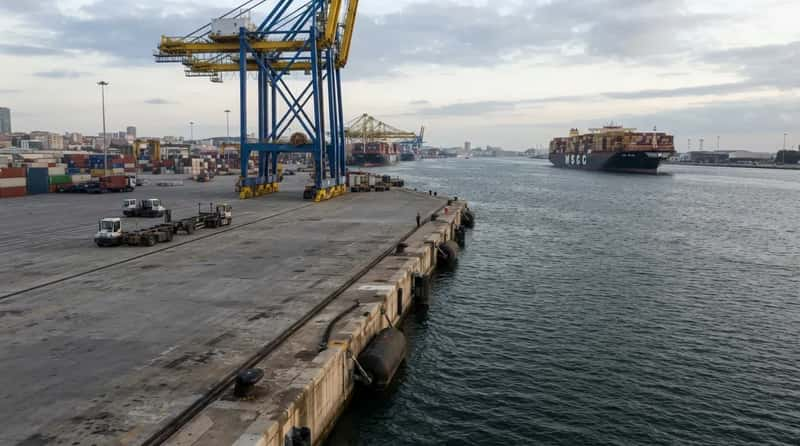
A berth works like a booking, and bookings can fall apart. The agent orders the pilot and the tugs and confirms the berthing window. If one piece shifts, the rest has to be rebuilt fast. Everything from pilot to terminal crew is tied to a single slot of time.
Worth Knowing
- The agent orders the pilot and the tugs, then confirms the berthing window.
- Many agents watch the ship’s approach on AIS platforms, not just wait for a call.
- Customs paperwork is typically filed 24 to 48 hours before arrival, so the clock starts early.
- Delays can mean significant financial losses for shipowners and charterers.
The stakes are real, because delays can cause significant financial losses for shipowners and charterers. Passengers on a cruise ship just notice a late arrival. The agent sees a chain of phone calls trying to keep a whole port in step. The next crisis can freeze a ship in place even when nothing is wrong with the engine.
#13 – The Health Clearance That Can Hold a Whole Ship in Place
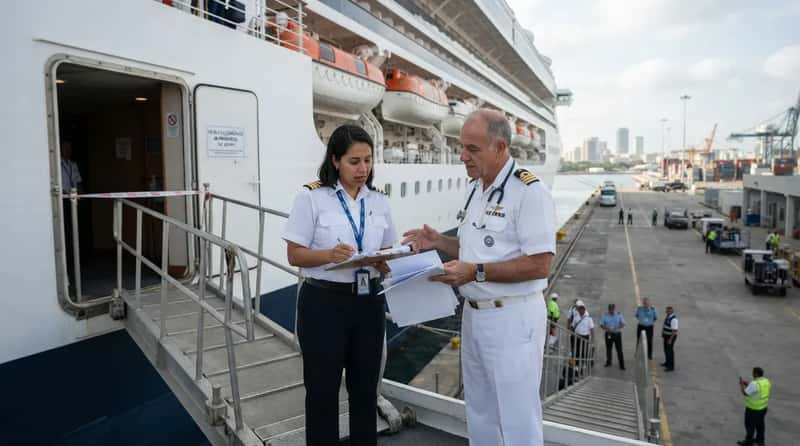
A ship can be mechanically perfect and still not be allowed in. Port health inspections, including checks for illness aboard, are part of the clearance process. Free pratique is permission to enter and deal with the port, and Wilhelmsen lists it among the cruise services its agents handle. Illness on board is a port-clearance issue, not only a medical one.
The agent’s job is to make sure the right authority hears the right thing at the right time. They clear the ship with customs, immigration and health on arrival. Get the sequence wrong and the ship simply waits. Sometimes the problem isn’t the ship at all but one person aboard.
#12 – The Crew Member Who Needs a Hospital Right Now
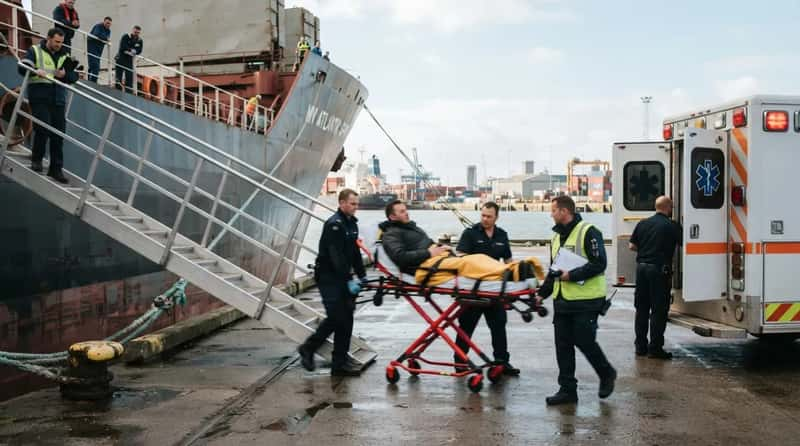
A medical emergency at sea turns into a logistics puzzle on shore. Agents liaise with local authorities, coordinate emergency services and assist with medical evacuations if necessary. They know which clinics are close, how to reach them and who has to sign off. The ambulance has to be waiting before the ship is tied up.
Crew changes, medical visits and shore leave all fall under the agent’s remit. It’s quiet, unglamorous work, and a seafarer’s health can depend on it. The next crisis involves someone nobody expected to find on board.
#11 – The Stowaway Nobody Meant to Bring
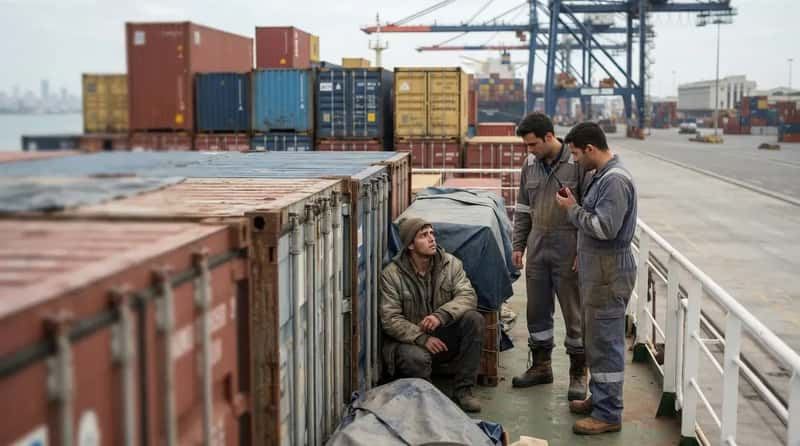
Not everyone aboard has a contract. Stowaways are listed among the agent’s responsibilities, alongside port entry, clearance, security and immigration. Pre-arrival work includes preparing stowaway and crew documentation. Handling an unplanned person on board is considered a standard part of the agency job.
At a Glance
- Stowaways sit on the agent’s responsibility list next to entry, clearance and security.
- Stowaway and crew documentation is part of the pre-arrival workload.
- It’s an immigration problem and a security problem at the same time.
- The agent’s task is to get the right information to the right officials, fast.
There’s no clean script for a situation like this. Meanwhile, another group is stuck in a different kind of limbo, waiting on a visa.
#10 – The Crew Change That Dies on a Visa Technicality
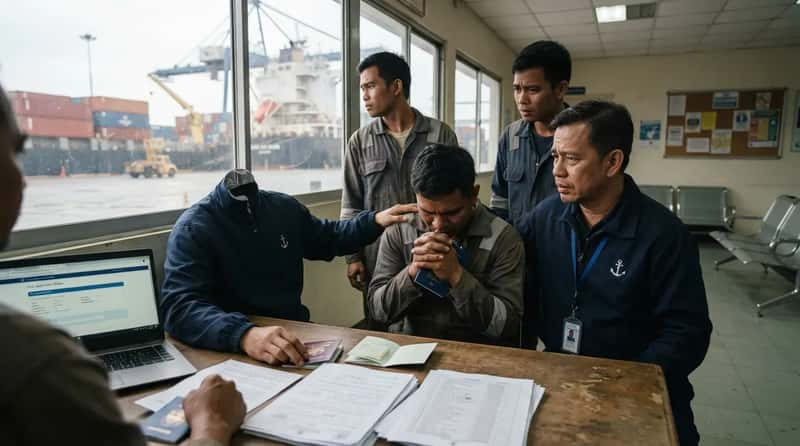
Swapping a crew sounds simple until the paperwork gets involved. Agents help arrange visas, transportation, accommodation and provisions to keep crew welfare maintained during the call. Visa extensions and crew repatriation are on the agent’s service list too. One missing stamp can strand a person who’s supposed to be going home.
The agent is the person who has to make those calls before the relief crew boards a plane. It’s easy to see why crew changes feel so personal to everyone involved. The next crisis puts a different hurdle between crew and shore.
#9 – The Shore Leave That Isn’t Automatic
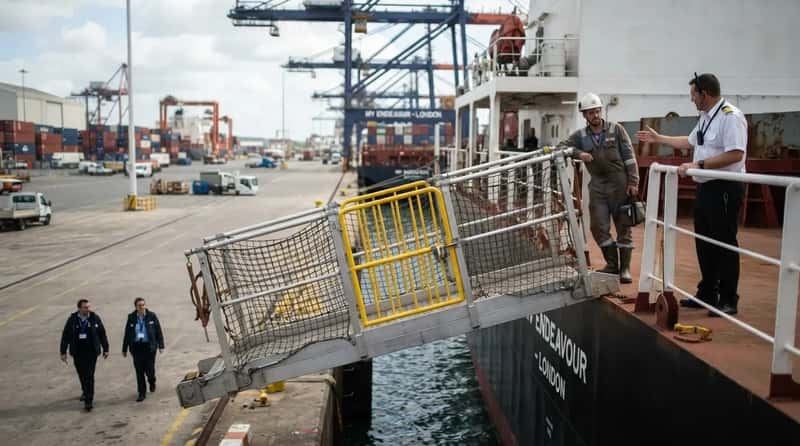
Getting to a port doesn’t mean getting off the ship. Agents handle crew changes, medical visits and shore leave, which the MLC 2006 protects for seafarers. But customs, immigration and health clearance come first. The gangway stays closed until the right officials give the nod.
Behind a simple request to go for a walk sits a stack of approvals. For someone who’s been at sea for weeks, a few hours on land matter a lot. The agent’s phone calls often decide whether they happen. But there’s a crisis even earlier in the chain, and it starts with the cargo itself.
#8 – The Cargo Details That Don’t Match Reality
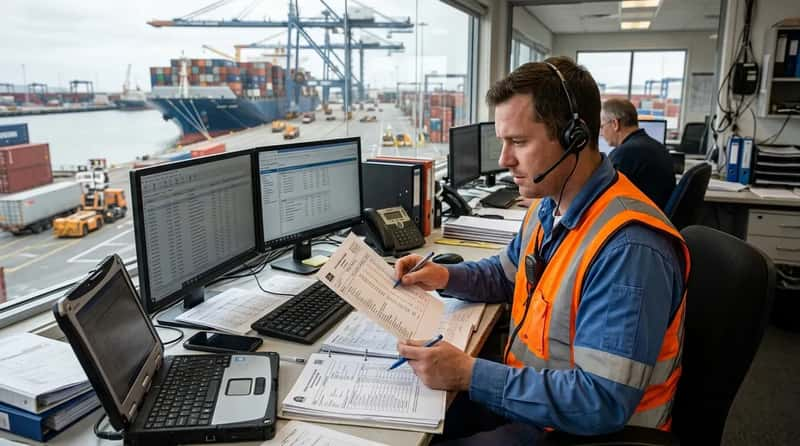
Cargo problems often start with data, not boxes. The ship agent must provide accurate cargo and ship details to the parties involved. That can include hazardous characteristics, temperature requirements, hatch dimensions, draft and ETA. Even a small error in a number can cause delays when the ship arrives.
The agent is the link between the ship, the terminal and everyone handling the cargo. Their continuing duty is to keep the terminal and others updated on the ship’s ETA and operational status. That’s a lot of messaging for something passengers never hear about. Next up is a crisis with real numbers behind it.
#7 – The Inspection That Can Pin a Ship to the Dock
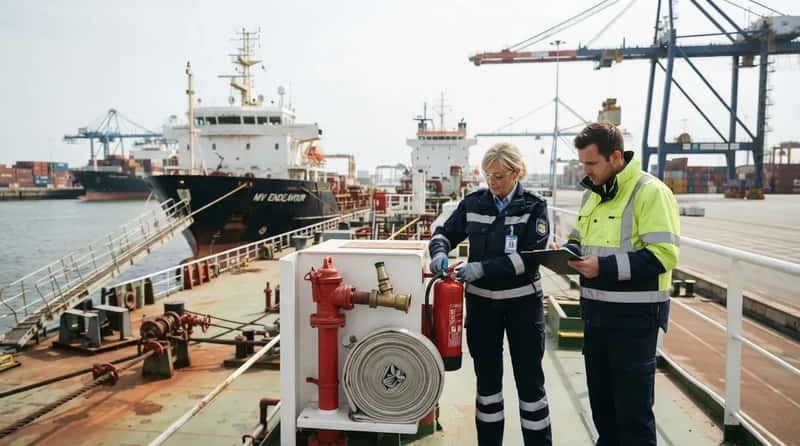
Inspectors don’t just wave ships through. In the Paris MoU region alone, there were 16,474 inspections in 2025, with 688 ships detained and 19 refusals of access. The detention rate rose to 4.18%, up from 4.03% in 2024. Hundreds of ships in a single year were told they couldn’t sail until problems were fixed.
Fire safety remained the largest deficiency category. When findings are disputed, the agent manages the resolution process. Those figures cover one region, and other regimes report separately. The next crisis is about money, and it makes some owners wince.
#6 – The Port Bill Nobody Wants a Surprise From

Port calls cost money, and agents are expected to predict how much. Before the call, the agent sends the principal a proforma disbursement account estimating every port cost. Afterward comes a final account, a fully itemised and receipted record of every cost. The agent fronts the local costs on the principal’s behalf.
Quick Compare
- Proforma account: sent before the call, estimating every port cost.
- Final account: sent afterward, itemised and backed by receipts.
- The gap between them: the part someone has to explain.
Some operators argue that the cheapest agent quote can turn out to be the most expensive call. That’s an opinion, and not everyone agrees. What’s not in dispute is that estimates and final bills don’t always match, and someone has to explain why. Speaking of unclear responsibility, the next crisis is all about it.
#5 – The “Whose Job Is This?” Fight Over Cargo Removal

Sometimes the crisis is that nobody knows who’s in charge. Cargo removal and quay clearance can fall under the terminal operator, cargo receiver, freight forwarder or another party, depending on local custom and contract terms. The answer changes from port to port.
The agent should pin down responsibility before operations begin to avoid delay, storage costs and demurrage. It’s a small question with a big price tag. Now for something that affects daily life on board.
#4 – The Groceries, Spare Parts and Fuel That Must Show Up on Time
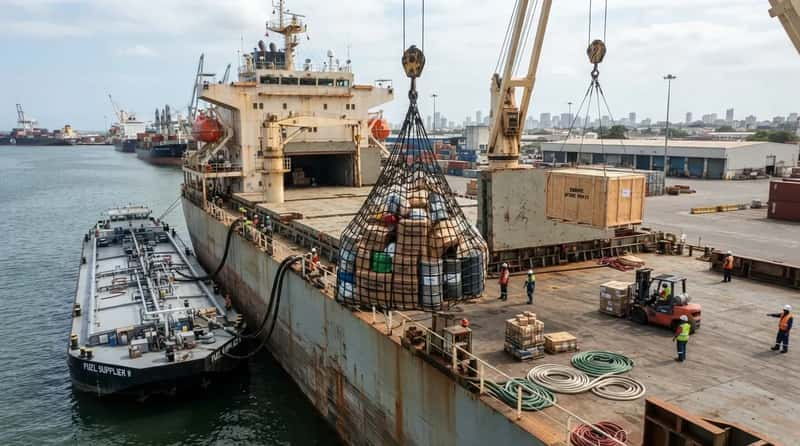
A ship is a floating town, and the town needs supplies. Agents arrange stores, provisions and spares through a ship chandler, plus fresh water and bunkers if ordered. The kitchen, the engine room and the water tanks all depend on someone ashore.
Provisions and spare parts coordination, along with bunker fuel arrangements with suppliers, are part of the routine. A late delivery can mean a ship leaves short, or doesn’t leave on time. Passengers never see any of it. The next crisis does involve passengers, though.
#3 – The Passenger Who Has to Leave Mid-Voyage

Sometimes a guest needs off the ship in a hurry. For cruise passengers, the agent arranges transport between the airport and the vessel and liaises with immigration and port authorities. A single person’s emergency can pull in customs, immigration and the port at the same time.
The agent is the person who knows who to call. Most passengers never learn that someone else cleared the road for them. Next comes a crisis that unfolds when no local agent is there at all.
#2 – The Port Where the Ship Has No Local Help
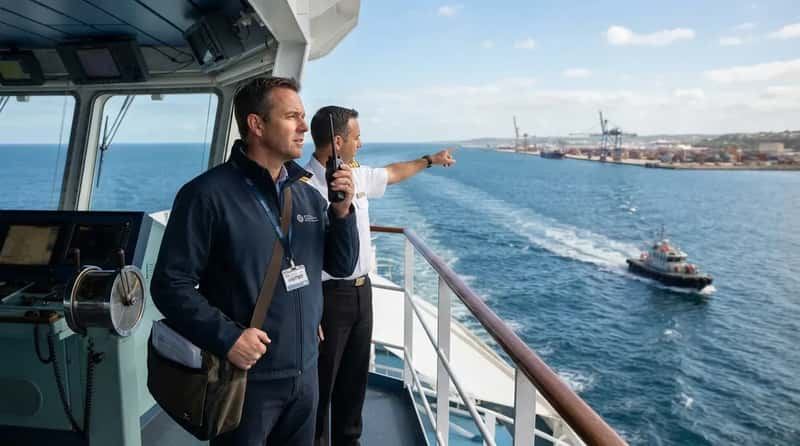
Not every port has a trusted representative. According to one industry roundup, Royal Caribbean Group’s agreement even covers relocating an agent to join the vessel at a previous port, to oversee en-route clearance where the agency has no local representation. In some cases the agent travels to the ship instead of waiting at the dock.
Why It Stands Out
- The agent can join the ship at an earlier port instead of waiting ashore.
- The goal is to oversee clearance en route where there is no local representation.
- It shows how far agencies will go to keep a schedule intact.
That’s the extreme version of a simple idea. In emergencies or unforeseen circumstances, ship agents act as a point of contact. They bring local knowledge to places where the ship has none. Then comes the crisis no checklist can fully fix.
#1 – The Crew Stuck Aboard and Left Behind
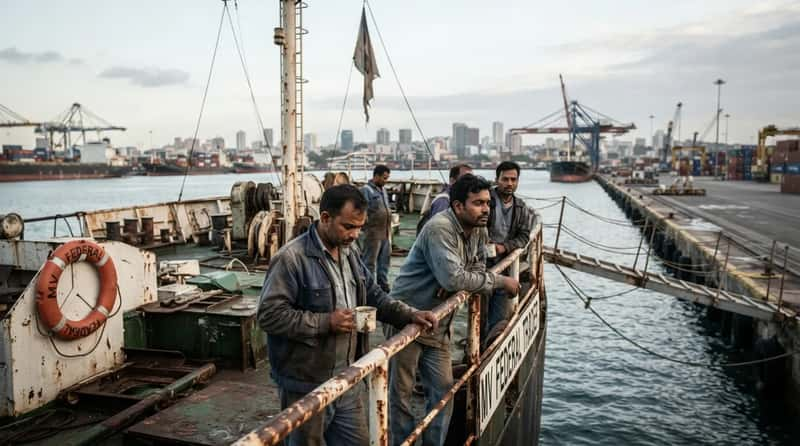
The most serious crisis on this list isn’t a delay. It’s people left on a ship. Seafarer abandonment hit record levels in 2025, according to ITF data, with 6,223 seafarers abandoned across 410 ships. That’s a 31% increase in ship abandonments compared with 2024. It’s the worst year ever recorded.
Under the Maritime Labour Convention, a seafarer is abandoned when the shipowner fails to provide repatriation or support, or stops paying wages for at least two months. Many can’t leave their vessels because of immigration restrictions. One case involved four Indian crew aboard the Eleen Armonia off Nigeria, unpaid since June.
The people who deal with these cases are not only agents. They include port officials and welfare groups, and guidelines say port state control officers or other stakeholders should report cases immediately. It’s the one crisis here where nobody can walk down the gangway at all.
Every port call starts as a pile of small decisions made on land. Most of the time they work, and nobody notices. When they don’t, a ship, a crew or a whole schedule can stand still.