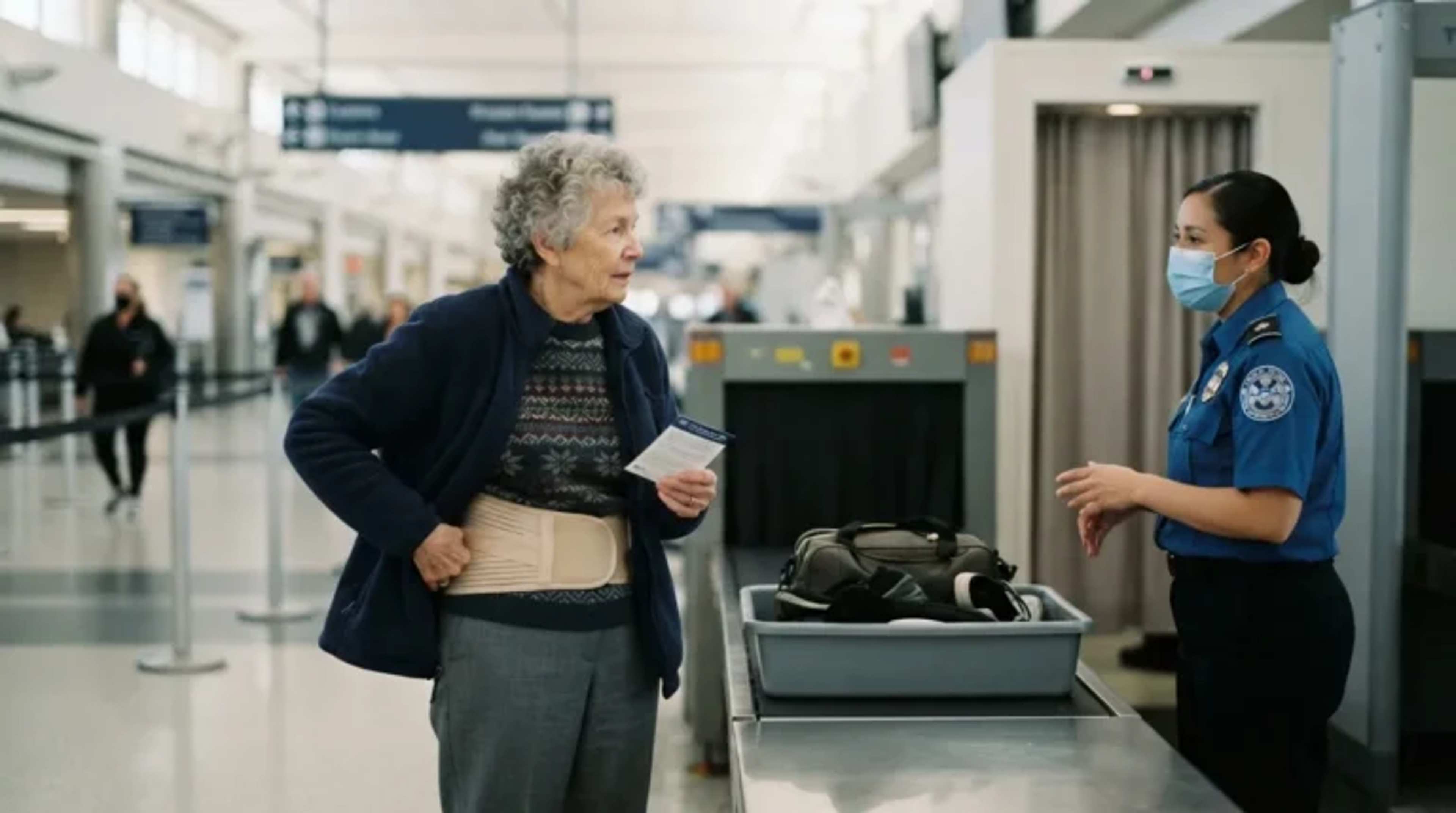
Most travelers assume the only way to end up with an overweight bag is packing too many clothes. They’re wrong – and the real culprits are hiding in places nobody thinks to check.
They’re hiding in your toiletry bag, in the suitcase you grabbed from the closet, and in airline rules you never bothered to read. Checked luggage is commonly capped at 23 kg (about 50 lbs) for economy travelers, and overweight fees can run from $50 to well over $200 per bag depending on the airline and route.
Insiders count at least 15 specific mistakes that push a bag past that limit – and almost nobody catches all of them before reaching the check-in counter. Here’s what actually tips the scale, starting with the one nobody thinks to blame first.
#15 – The Suitcase Itself Is Already Eating Your Weight Limit
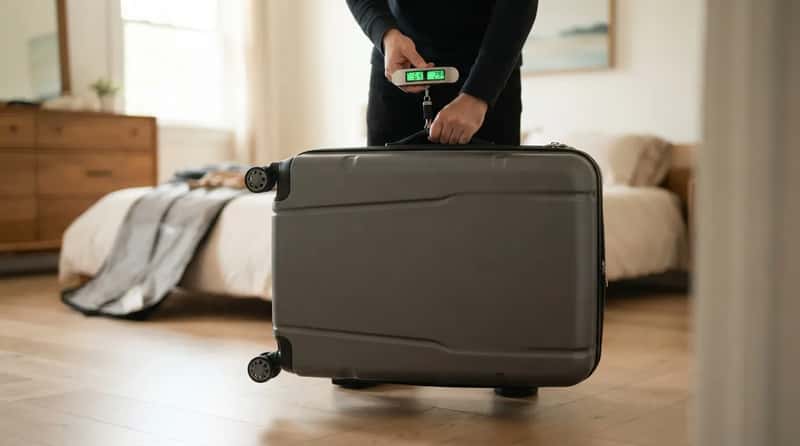
Your suitcase is stealing pounds before you’ve packed a single item.
A bulky hard-shell case can weigh 5-7 lbs empty – more than 10% of a standard 50-lb allowance gone before you’ve folded a single shirt.
The empty weight of your bag is the most underestimated factor in packing. Most travelers focus entirely on clothes and never check the manufacturer’s listed weight for the bag itself.
Swap to a soft-sided or lightweight spinner and you can claw back 2-3 lbs instantly – pounds that could go toward gear you actually need.
But choosing the wrong bag is only the beginning. The next mistake trips up even travelers who’ve flown a hundred times…
#14 – Assuming Every Airline Uses the Same Weight Limit
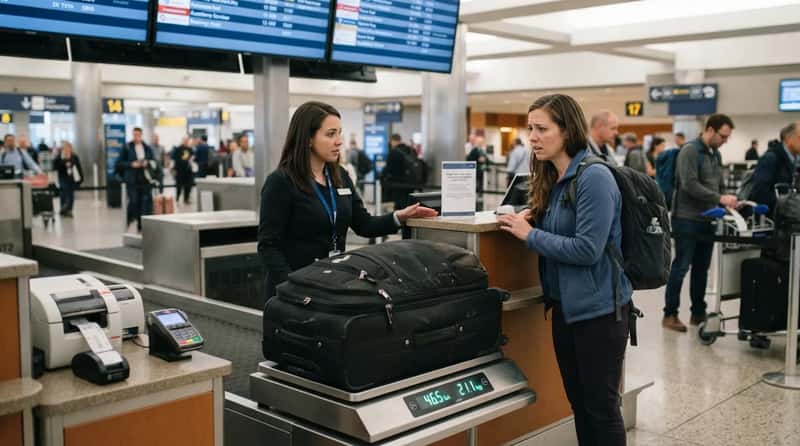
Most people assume all airlines play by the same rules. They don’t – and that assumption is expensive.
Most major carriers cap checked bags at 50 lbs, but budget airlines like Spirit and Frontier often drop that to 40 lbs. That’s a 10-lb gap – almost the weight of two pairs of shoes.
Never assume what worked on one airline will work on another. International routes often carry different limits than domestic ones, which gets confusing fast when you’re connecting between carriers.
Quick Compare
- Legacy carriers (Delta, United, American): 50-lb standard limit, with overweight fees starting around $100 for 51-70 lbs and climbing to $200 for 71-100 lbs.
- Budget carriers like Frontier: extra fees can kick in once a bag hits just 41 lbs.
- International economy tickets: capped at 23 kg (50 lbs), with business and first-class allowances rising to 32 kg (70 lbs).
And if you think you’ve nailed down the weight limit, wait until you see what the fine print on your ticket type does to it…
#13 – Ignoring What Your Fare Class Actually Allows
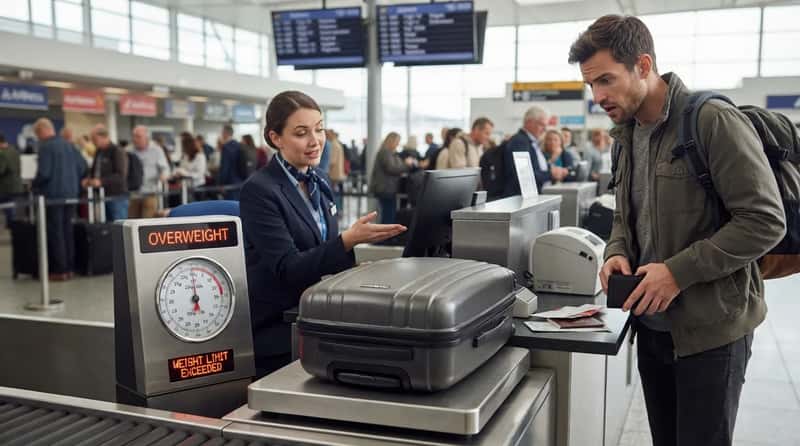
Your ticket type quietly rewrites the rules on what you’re allowed to bring.
Under the standard Piece Concept, economy passengers are typically capped at 23 kg (50 lbs) per bag, while business and first-class travelers can check bags up to 32 kg (70 lbs). The exact allowance shifts based on elite status, ticket type, and route.
Many travelers buy a discount fare and then unknowingly pack to the weight rules from a totally different trip. Premium credit cards and elite status sometimes waive overweight fees entirely – but only if you know to check before you fly.
The next mistake is one almost every traveler makes without realizing it – and it costs more than most people think…
#12 – Packing Full-Size Toiletries

That shampoo bottle looks innocent. It isn’t.
A full-size shampoo, conditioner, body wash, and face wash can quietly add 3-4 lbs before you’ve packed a single outfit.
Switching to travel-size bottles is one of the fastest ways to shed real weight from a bag. Most hotels stock the basics anyway, making full bottles unnecessary for shorter trips.
Sunscreen, shampoo, and lotion are sold everywhere at your destination – you don’t need to carry them across an ocean.
Liquids aren’t the only dense items catching people off guard, though. The next mistake is the one item most travelers flat-out refuse to leave behind…
#11 – Overpacking Shoes
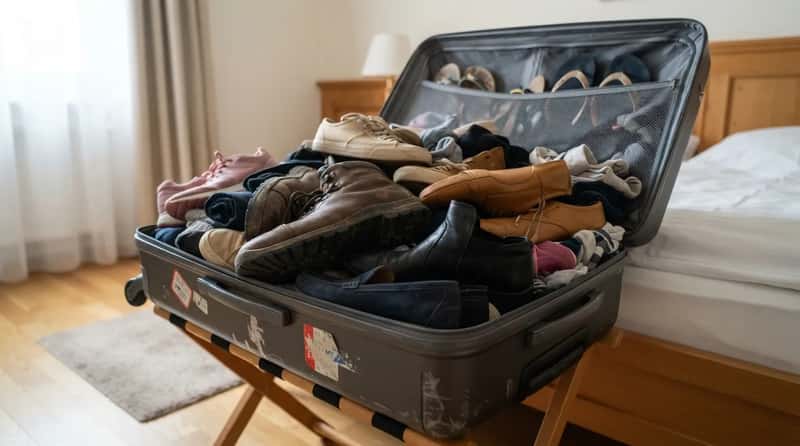
Shoes are the single heaviest item most travelers pack – and the most over-packed by far.
A single pair of boots can weigh 3-4 lbs. Pack three pairs and you’ve burned through roughly 10 lbs of your limit on footwear alone.
“What if I need them” is the logic that convinces people to pack five pairs and wear two. Experienced travelers pick one walking shoe, one dressier option, and wear the heaviest pair on the plane.
Whatever you wear on your body never touches the scale – so let your boots and jacket do double duty.
If shoes are mistake #11, the next culprit is something travelers pack with even less thought – and it surprises almost everyone…
#10 – Underestimating Your Tech and Cables
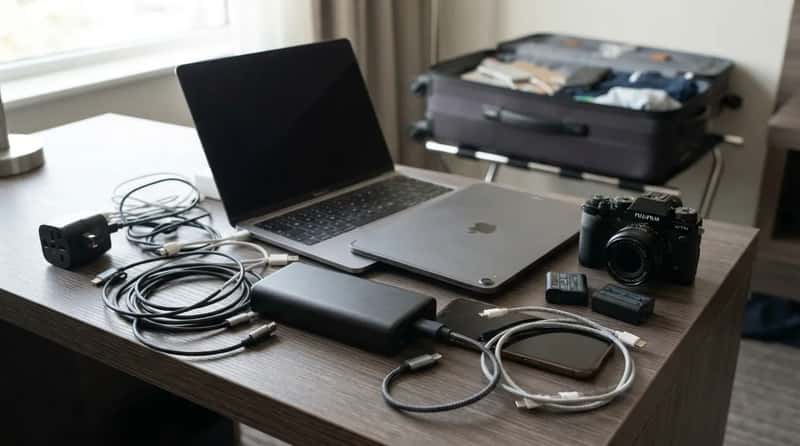
Your gadgets are heavier than you think, and you probably packed too many of them.
A laptop, a tablet, a power bank, three charging cables, a camera, spare batteries, and a travel adapter can easily total 8-10 lbs together.
Most travelers never weigh their tech stack at all – they just assume it’s “not that heavy.” One at a time, each item feels light. Stacked together, they’re a hidden anchor.
Ask yourself if the laptop and tablet are both necessary. Cutting even one device can free up 2-3 lbs instantly.
What’s coming up next is a mistake so obvious that most people never even notice they’re making it…
#9 – Packing “Just in Case” Outfits
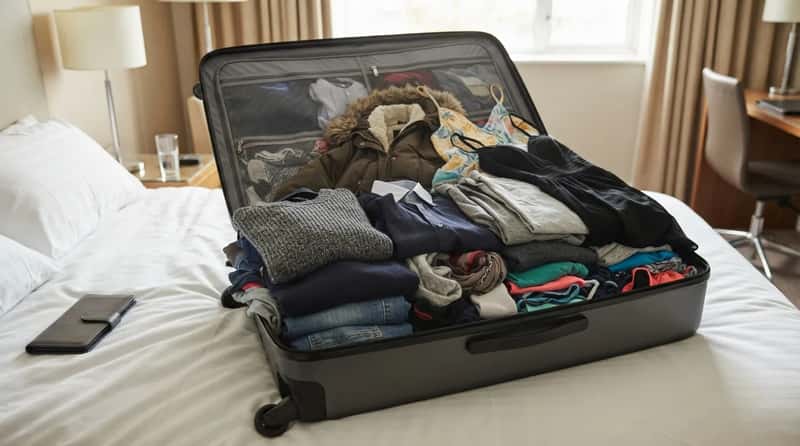
The most expensive words in packing are “just in case.”
Cold-weather clothes join summer outfits, formal wear joins casual pieces, and most of it never leaves the suitcase.
Planning outfits in advance – instead of packing individual pieces – is the single most effective habit for cutting clothing weight. Five days of travel rarely requires ten separate tops.
Mix-and-match, versatile pieces can cut your clothing load in half without cutting a single outfit option.
The “just in case” trap doesn’t stop at clothing, though. The next mistake quietly sabotages even seasoned travelers – on the way home…
#8 – Leaving No Weight Buffer for the Return Trip
Packing to exactly 50 lbs on the way out is setting yourself up to fail on the way back.
Souvenirs, gifts, local products, and duty-free finds can add several pounds to a bag that was already sitting at its limit.
The smart move is to pack to 44-46 lbs outbound and preserve 4-6 lbs of headroom for the return. Experienced travelers treat the trip home as a completely separate packing challenge.
If you know you’re going to shop, go even lighter than that on the way out.
The next mistake is one that catches travelers completely off-guard – right at the check-in desk…
#7 – Trusting a Bathroom Scale Over a Luggage Scale
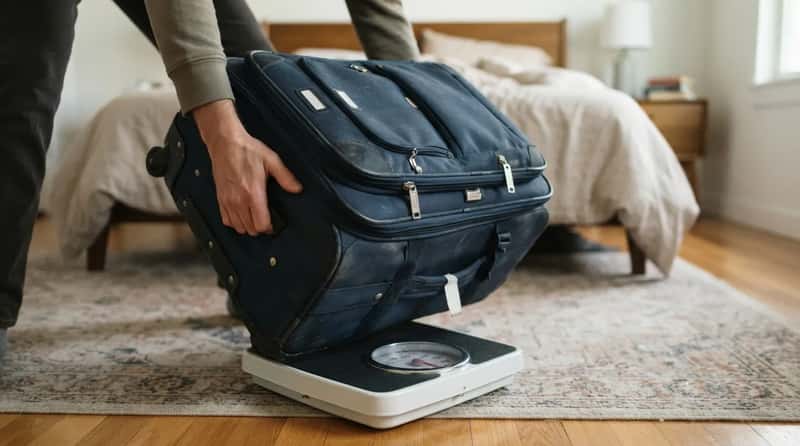
Your bathroom scale is lying to you, and it’s about to cost you at the airport.
A 1-2 lb discrepancy between a home scale and an airport scale is common, since bathroom scales weren’t built to read a shifting, hand-held bag accurately.
If your bag reads 49.5 lbs at home, it may read 51 lbs at the airport – and that triggers a fee. A dedicated luggage scale costs $10-$20 and clips right to the handle for an accurate number.
Flight attendants have watched travelers pay more in overweight fees than they paid for their flight – all because they trusted the wrong scale.
Worth Knowing
- Bags added at the counter or gate often cost $25-$50 more than the same bag purchased online in advance.
- On some budget carriers, gate-side bag pricing can run close to triple the online rate.
- Most airline apps let you check your fare’s exact weight allowance before you ever leave the house.
That $10 scale pays for itself the very first time it saves you a fee. But even with the right scale, there’s a mistake people make while packing that they never catch in time…
#6 – Packing Without a Checklist or Weight Tracking

Packing by feel instead of by list is how bags silently go overweight.
Without a checklist, you add items impulsively – an extra book, a backup outfit, a “maybe” pair of sandals.
Each impulsive addition feels small on its own, but together they can add 5-8 lbs without any single item feeling excessive. The fix is a list made before you open the bag, and a scale check at intervals as you pack – not just at the end.
It feels excessive the first time. By the second trip, it’s just how you pack.
And it sets up the most overlooked mistake on this entire list…
#5 – Ignoring Baggage Rules on Multi-Airline Connections
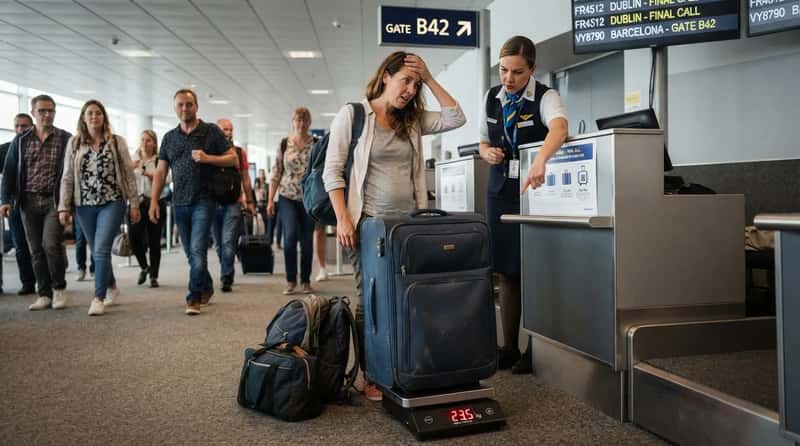
Here’s one even seasoned travelers miss: connecting flights on separate airlines can carry completely different baggage rules.
A bag that clears at 50 lbs on a US domestic leg can get flagged at 23 kg – about 50.7 lbs – on a European partner carrier.
If your itinerary crosses multiple carriers, pack to the strictest weight limit on your route – not just the first one. Budget carriers overseas are notably stricter and less flexible than full-service airlines.
If you’re connecting through a hub with a budget carrier, build in extra time for a gate-side weight check.
The stakes get higher at the next mistake – one nobody plans to make, but almost everybody does at some point…
#4 – Shifting Carry-On Overflow Into Your Checked Bag
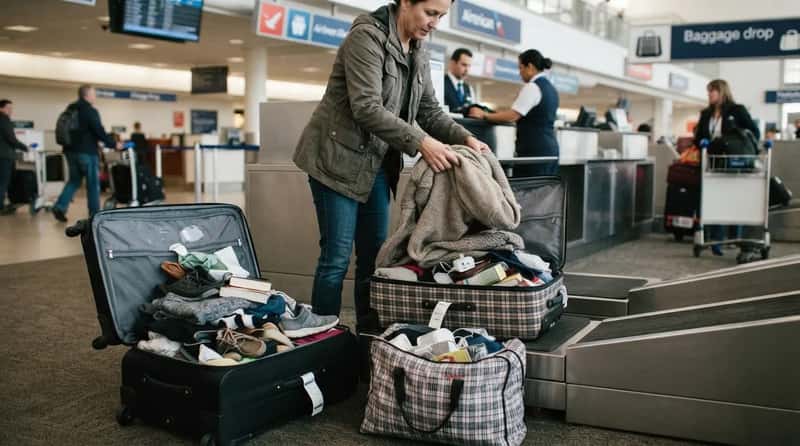
Some travelers overload the checked bag on purpose to keep the carry-on light. Others do the opposite – stuffing the carry-on, then dumping the overflow into checked luggage at the last minute.
Most international carriers cap carry-ons at 15-22 lbs (7-10 kg), a rule most travelers don’t even know exists.
The result: heavy items get shuffled into the checked bag to “fix” the carry-on – and then the checked bag goes over instead. It’s a weight-redistribution trap that solves nothing.
The real fix is removing items entirely, not shuffling them between bags.
The mistake at #3 happens before the trip even begins, in a way most travelers never anticipate…
#3 – Buying the Wrong Size Bag for the Trip Length

Most people own one or two suitcases and grab whichever fits the most stuff. That’s exactly backwards.
A large suitcase for a three-day trip gets filled simply because there’s room – the bag dictates the packing, not the other way around.
Frequent travelers deliberately downsize their bag for shorter trips to force themselves to pack only what’s necessary. A weekend bag for a weekend trip. A medium case for a week. A large case only when it’s genuinely needed.
A smaller bag also happens to be easier to lift into overhead bins and hotel racks – a bonus nobody complains about.
Slide #2 reveals the mistake that almost guarantees a fee even after you’ve done everything else right…
#2 – Not Realizing Overweight Fees Stack With Other Fees
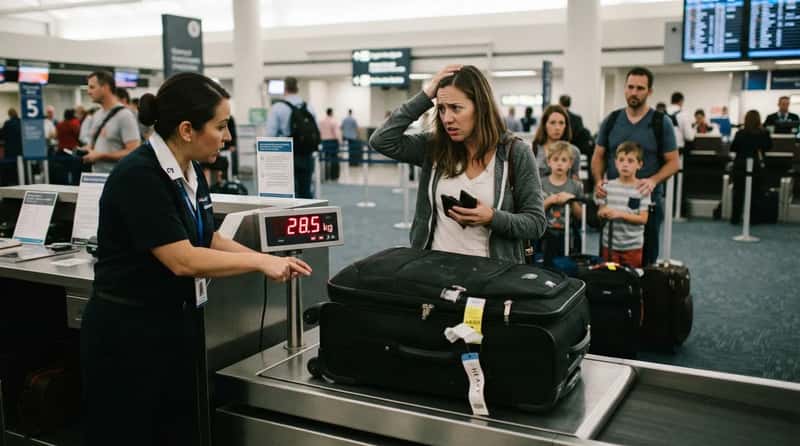
Getting charged once is painful. Getting charged twice for the same bag is avoidable – but most travelers don’t know it’s even possible.
When a bag exceeds both weight and size limits, the checked bag fee, the overweight fee, and an oversize fee can all apply to the same piece of luggage.
A family of four with bags that are both overweight and oversized could realistically pay $600 or more in combined penalties on a single trip. Most travelers check the weight and never think to check the linear inch total at all.
At a Glance
- 51-70 lbs: typically a $100 overweight fee, per bag, per direction.
- 71-100 lbs: fees jump to around $200 – and can reach $400 on some routes.
- Oversize (linear-inch) violations are usually billed separately from weight violations, not folded into one fee.
Now for the #1 mistake – the one that sets every other mistake on this list in motion…
#1 – Waiting Until Check-In to Discover the Problem
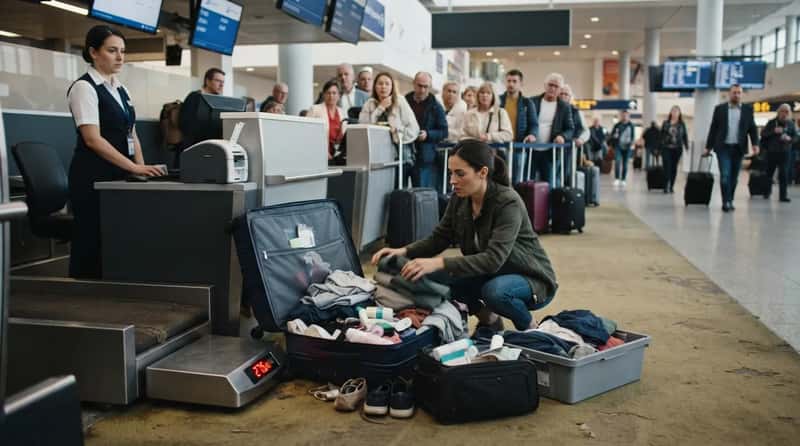
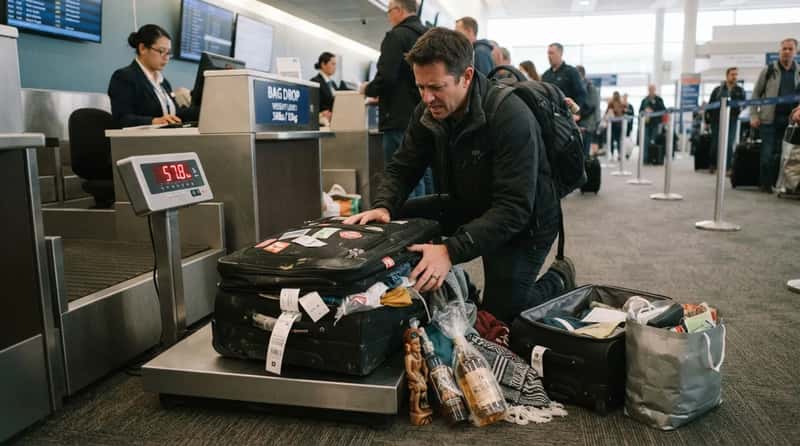
Every mistake on this list leads to this exact moment: standing at the check-in counter, watching the scale flash red, with a hundred people behind you in line.
Once the agent flags a bag as overweight, the choices are limited – pay the fee, redistribute items into a carry-on, or repack on the spot in front of a growing line.
Repacking at the counter is common enough that airport staff barely blink – travelers dumping toiletries and spare clothes into the trash because the bag came in too heavy.
The only mistake that truly costs you is discovering the problem at the airport instead of at home. Every issue on this list is fixable in your living room; none of them are fixable gracefully at the check-in desk.
Buy checked bags online or through the airline app before you travel – the counter price is always higher. Weigh at home, build in a buffer, and the entire game changes.
The Bottom Line
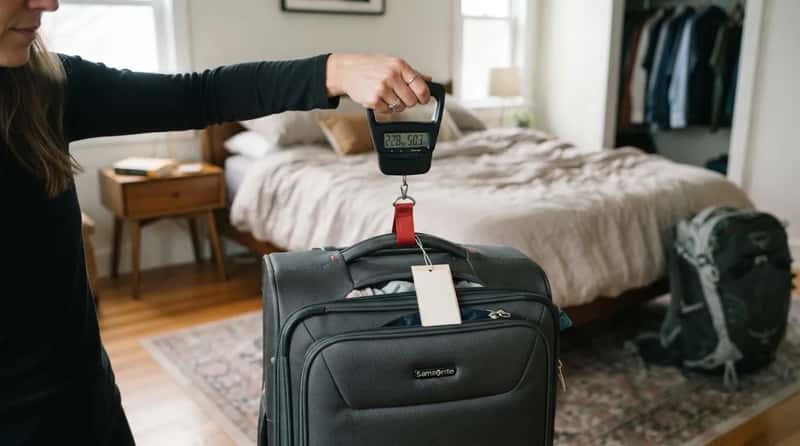
An overweight bag fee is one of the most avoidable expenses in travel – and one of the most common.
The real culprits were never the giant wardrobe. They were the heavy suitcase, the airline rules nobody read, the tech pile nobody weighed, and the buffer nobody left for the trip home.
Know your airline’s policy, buy a $15 luggage scale, and weigh your bag before you leave the house. Which of these fifteen mistakes got you – or which one are you guilty of right now?
Bonus: The Counter-Side Fix Nobody Tells You
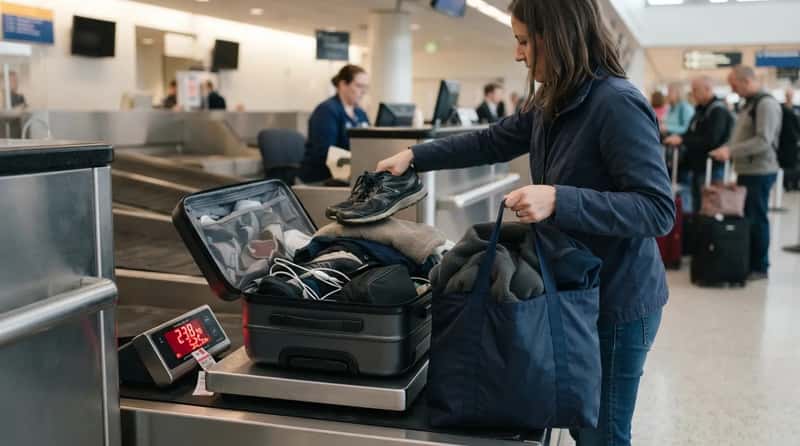
Even if every mistake above already happened, there’s one move left when the counter scale flashes red – and it works in under two minutes.
- Before you leave home, fold a lightweight nylon tote or packable duffel (it weighs only a few ounces) flat into your checked bag.
- If your checked bag reads over the limit at the counter, step aside, unzip it, and pull the tote out on the spot.
- Move your 3-5 heaviest loose items – shoes, chargers, a jacket, a toiletry kit – directly into the tote.
- Carry the tote onto the plane as your personal item, not your carry-on; most airlines only weigh checked bags and carry-ons, not the personal item under the seat.
This single trick can drop a bag from overweight back under the limit and avoid a $100-$200 fee, without leaving anything behind at the counter.
Keep the tote packed flat in every trip going forward – it costs nothing to carry and only matters the one time you actually need it.