Airport wheelchair help is free, and under Department of Transportation rules the airline, not the airport, must provide it promptly on request.1 So why do some travelers still end up waiting at the wrong gate, or missing a flight altogether?
The service works like a relay race, and the baton usually drops in small handoffs: a late request, a name that never reached the attendant, a connection nobody confirmed. The cheapest fix on this list is tied to the biggest way people get stranded, and it starts with a question about who is allowed to ask.
#15 – Thinking you must prove a disability first
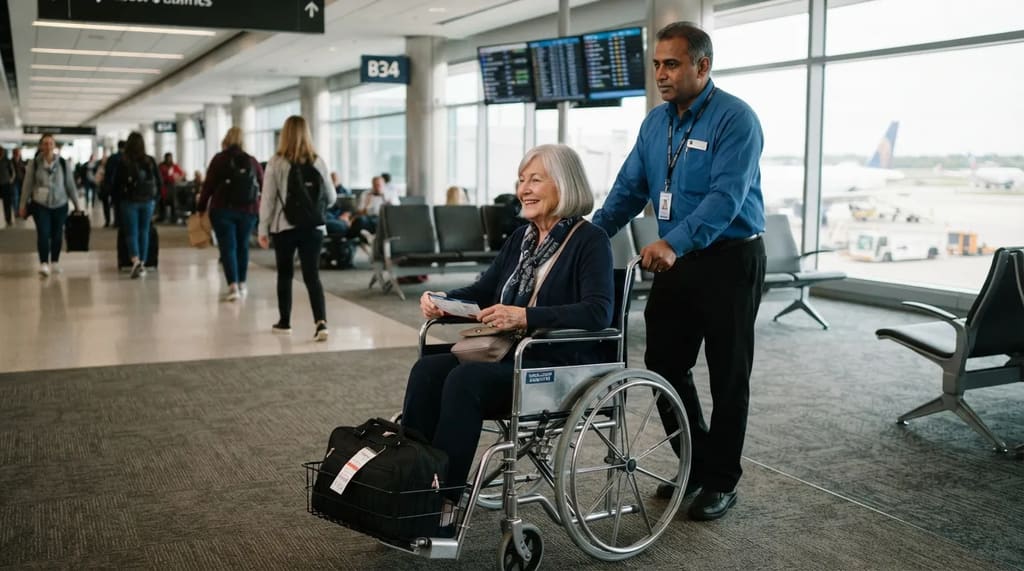
Federal law requires airlines to provide a wheelchair or motorized cart and an attendant to any passenger who asks. No proof of disability is needed.1
If a long march through a crowded terminal would drain energy you want for the trip itself, you are allowed to ask. You also decide how much help you get.
Airlines cannot require you to accept a form of help you did not request, such as a wheelchair when you asked for a sight guide.2
At a large hub, taking the ride is a smart move. A chair to the gate isn’t a verdict on your health, and it keeps your legs fresh for the connection.
Asking costs nothing, though the attendant who answers is usually a contractor rather than an airline employee.3 That is where tipping comes in.
#14 – Arriving without small bills for the attendant
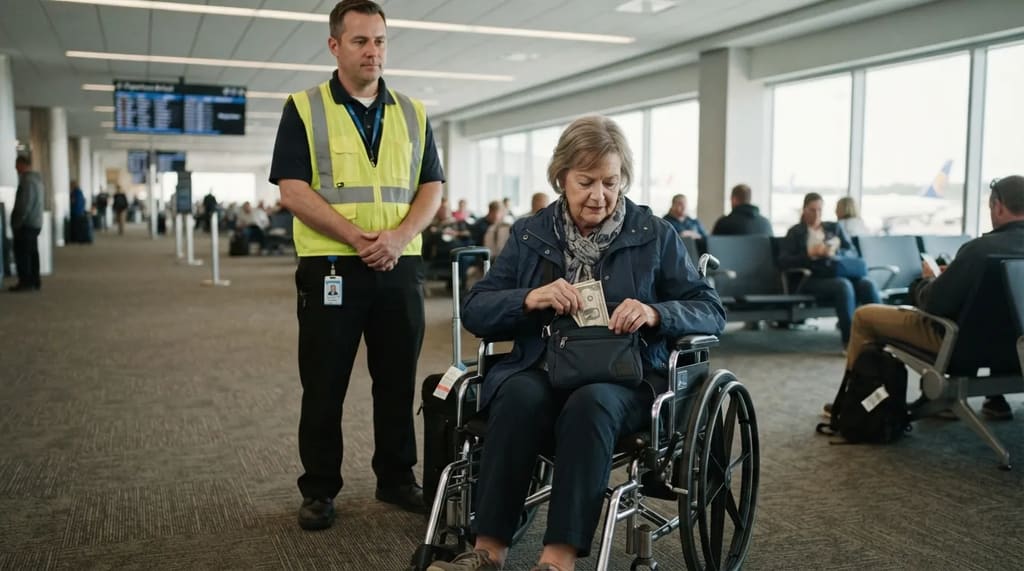
Tipping wheelchair attendants is discretionary, but it is commonly done. AARP suggests $3 to $5, more if the attendant helps with luggage or spends extra time with you, and $2 to $3 for an electric cart.1
Tips are normally handed over in cash, so the bills belong in your pocket before you leave home. Nothing is required, and federal guidance tells staff to avoid asking passengers for tips.
For a routine ride to a nearby gate, AARP’s range is plenty. Save the larger amounts for a long trip across a terminal with bags in tow.
Cash covers the ride itself. It does not guarantee a stop along the way.
#13 – Expecting a stop you never mentioned
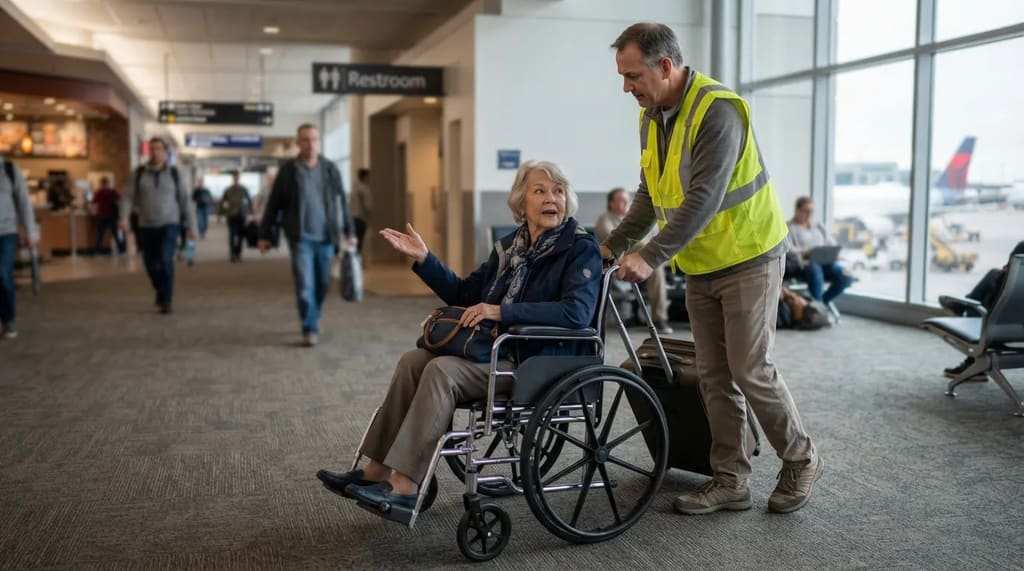
Attendants will usually try to fit in a restroom stop if time allows. A meal is a harder request, because other passengers are waiting and you have a boarding time.
One guide suggests asking the attendant to take you to a restroom or food on the way, if there’s time. The words “if there’s time” carry the weight.
Worth Knowing
- A restroom stop is the easiest add-on to fit in.
- A meal stop is the hardest, since other passengers are waiting too.
- Ask at the start of the ride, not halfway to the gate.
- An extra stop is extra effort, so it fits the higher end of the tipping range.
Mentioning the stop up front lets the attendant judge whether it fits. If your schedule is tight, a restroom near your gate is a safer bet than a detour to a food court.
Eat before you leave for the airport if you can.
#12 – Hanging bags on the wheelchair at the checkpoint
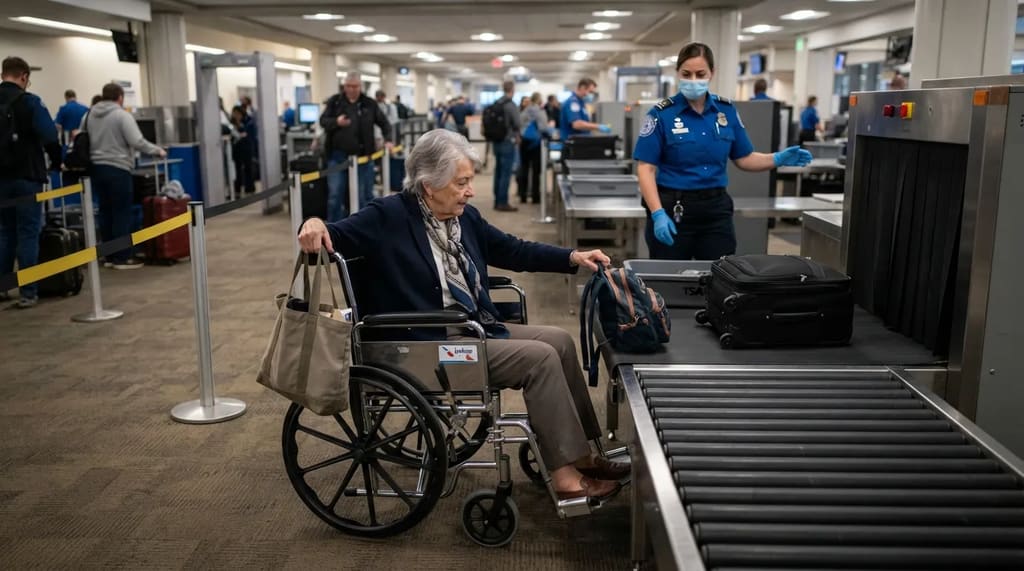
Fodor’s reports that wheelchair users must remove any bags attached to their chairs and put them through the X-ray machine. The wheelchair and the person in it are still thoroughly screened.
So a tote that was easy to hang on the armrest can slow you down at the belt. Pack so bags come off in one motion.
TSA asks you to tell the officer, before screening starts, whether you can walk or stand independently. The screening method depends on that answer, and seat cushions and pouches are inspected too.4
Telling the officer helps in the moment. A call placed days earlier can put a specially trained TSA officer at the checkpoint.
#11 – Mixing up TSA Cares with the wheelchair request
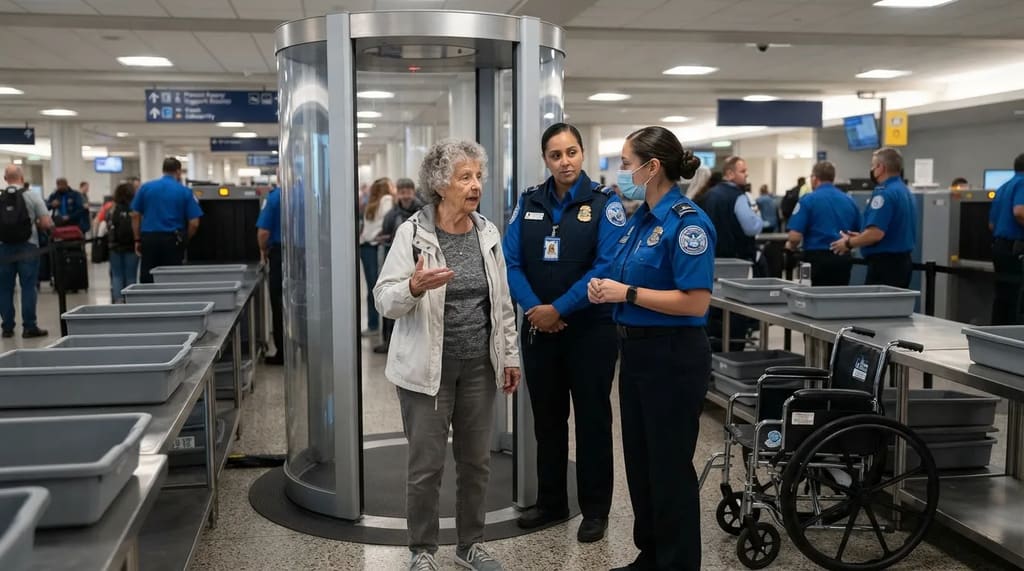
Airport wheelchair service comes from your airline, not from TSA. TSA Cares is a separate free help line that can arrange for a specially trained Passenger Support Specialist to meet you at the checkpoint.5
Asking for that specialist does not exempt you from screening, and it does not make screening faster.5 What you get is a guide who knows the procedure.
If you only need a ride and can stand for the scanner, the call is optional. If you use a device, have an implant, or cannot stand or raise your arms, it is worth making.
Neither call settles how far you want to be taken. That belongs to the airline side of the request.
#10 – Saying “wheelchair” without saying how far
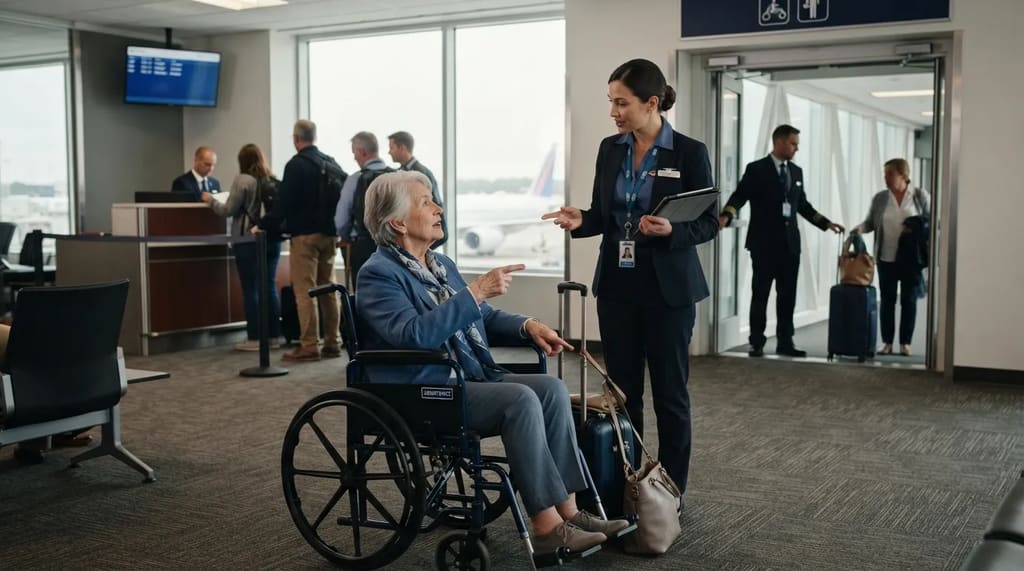
Tell the airline whether you need the chair all the way to your seat, or only to the gate with you walking onto the plane. Those are different requests, and a vague one invites the default.
You are entitled to stay in your own wheelchair until you reach the gate. Airlines must also help carry gate-checked or carry-on luggage when a disability keeps you from carrying it.
Quick Compare
- Chair to the gate: you ride through the terminal, then walk onto the plane.
- Chair to your seat: the help continues down the jet bridge and onto the aircraft.
- Luggage help: a separate request, owed to you when a disability keeps you from carrying bags.
If you want the chair and the luggage help, say both when you book. It follows the same logic as the sight-guide example earlier: you choose the help, and the airline supplies it.
#9 – Assuming the airline already knows you are coming
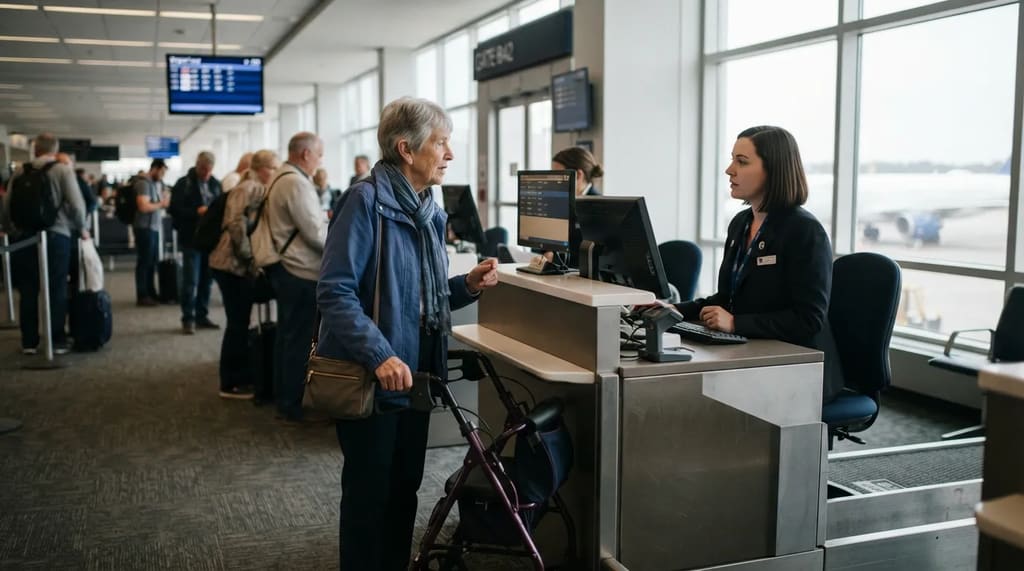
Passengers who request help in advance still have to identify themselves to airline personnel when they arrive at the airport or the gate.2 A request on file does not walk up to the counter by itself.
Speaking up at the gate also earns you a head start. Airlines must let a passenger who self-identifies at the gate as needing extra time or assistance board before everyone else.
Keep your phone charged and the ringer on, because airlines may text you about your request. If seating yourself or stowing a walker takes extra minutes, preboarding is the best use of this service.
Being identified at the counter only matters if you arrive early enough for anyone to find you.
#8 – Cutting the arrival time too close
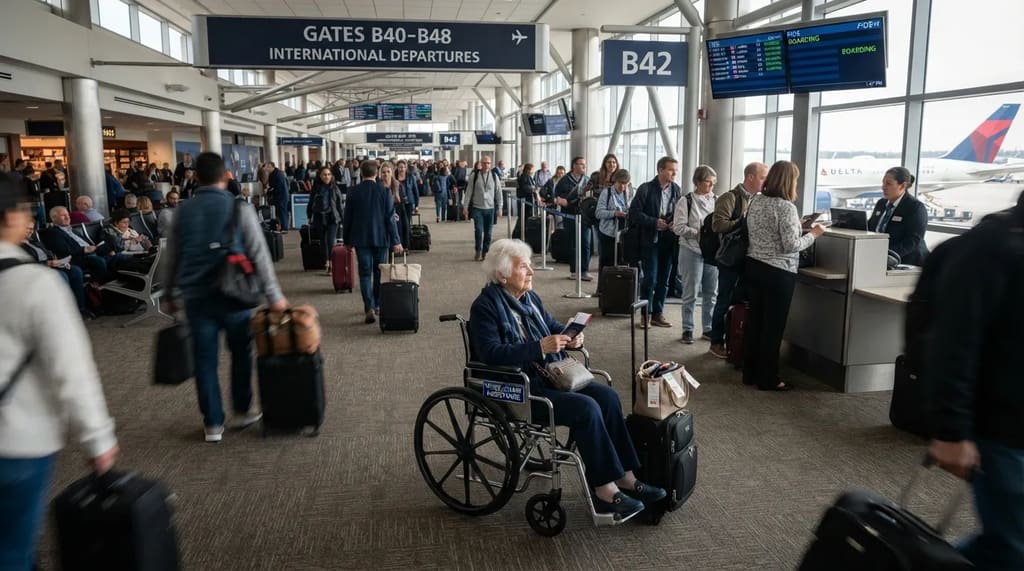
An accessibility specialist quoted by AARP recommends two to three hours before an international flight and an hour and a half before a domestic one. That time lets you move around the airport and gives the help a chance to be in place.
Specialists say pandemic-era labor shortages mean some airports have fewer attendants, so you may have to wait. Demand for wheelchairs and carts has also grown as airports have grown and the population has aged.
An extra half hour in a gate seat costs you a little boredom. A missed boarding costs you a flight, so don’t shave this margin.
Those hours assume you use the airport’s chair. A battery-powered chair of your own sets a different clock.
#7 – Leaving your own chair or scooter out of the plan
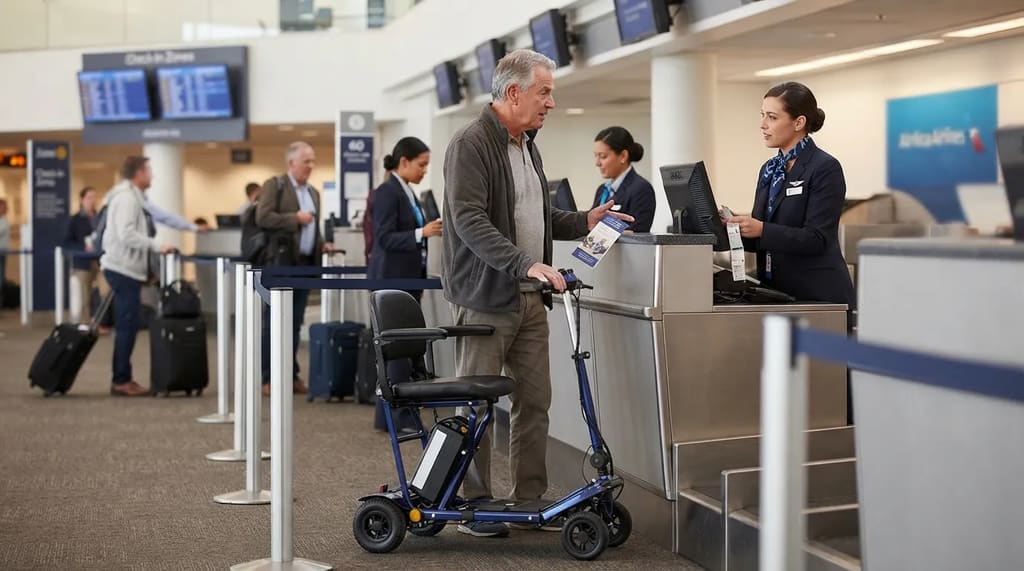
If you travel with a battery-powered wheelchair, DOT says to arrive one hour before the normal check-in time. That is an earlier start than the standard advice.
Airlines may require 48 hours’ notice to carry an electric wheelchair on aircraft with fewer than 60 seats.6 DOT suggests telling the airline in advance, whenever possible, the device’s size, weight and battery type.
At a Glance
- Battery chair: arrive one hour before normal check-in.
- Planes under 60 seats: airlines may require 48 hours’ notice.
- Tell the airline: size, weight and battery type.
- Manual chair or walker: no need to check it until the gate.
A walker or manual chair is simpler, and airlines must accept at least one manual wheelchair on aircraft with 100 or more seats. The extra planning mostly falls on battery chairs and small planes.
If that is your situation, make the call before you buy the ticket, not after.
#6 – Waving the attendant off at the gate
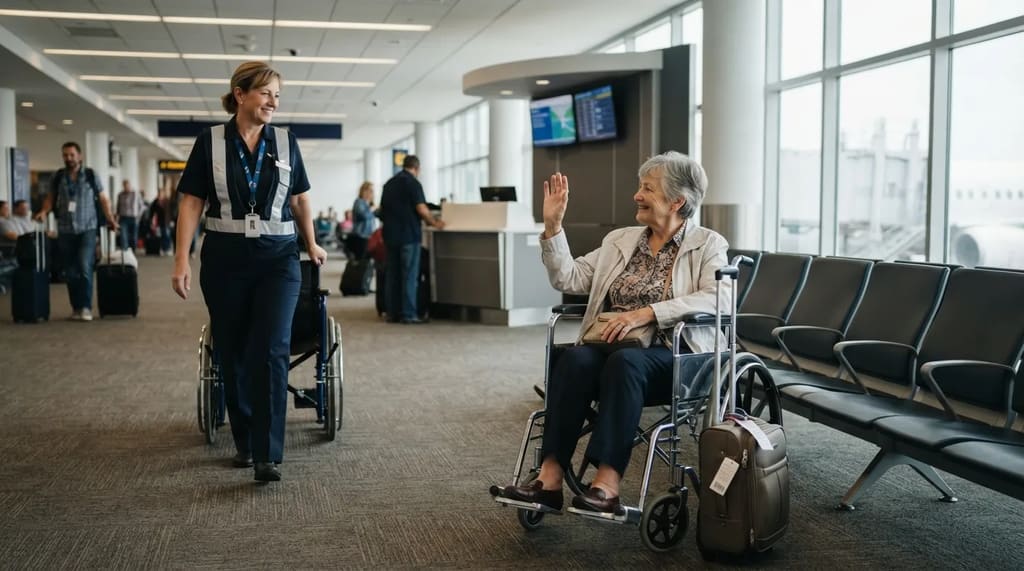
An airline cannot leave a passenger who is not independently mobile unattended in a wheelchair for more than 30 minutes.2 AARP notes the attendant needs your permission to leave, even if you are traveling with a companion.
Otherwise, the attendant stays with you until boarding begins and helps you onto the plane during preboarding. DOT’s guidance for staff also says to confirm the gate has not changed before leaving a passenger.
A polite “go ahead, I’m fine” gives up those protections. If you are traveling alone, think twice before saying it.
That covers the departure side. Arrival begins with the flight crew rather than the ground staff.
#5 – Leaving the plane without telling the flight crew
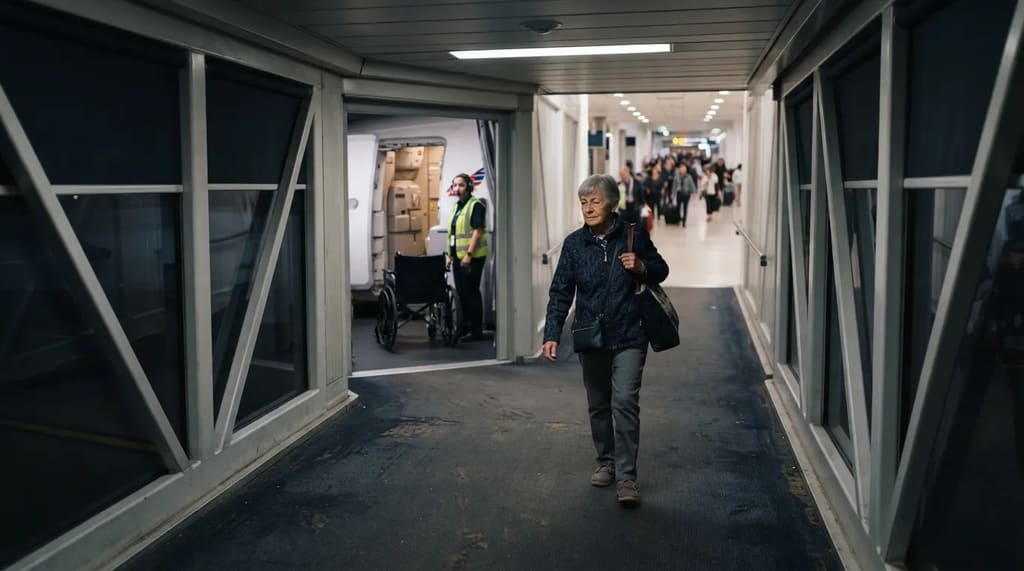
If you realize during a flight that you will need help at your destination or connecting city, tell the flight crew so they know before landing. Airlines must provide prompt help deplaning, so you do not need to leave the plane alone.
Passengers receiving assistance are typically last to deplane, so the attendant can help safely. The wait can feel long, but heading up the jet bridge alone leaves you without a chair or an attendant.
If you brought your own chair or scooter, as in the device item above, ask about it before landing. Under DOT’s rule, airline staff must make a personal wheelchair available as close as possible to the aircraft door, if requested.7
Getting off the plane is only part of arrival. The help can end sooner than your ride shows up.
#4 – Letting the help end before your ride arrives
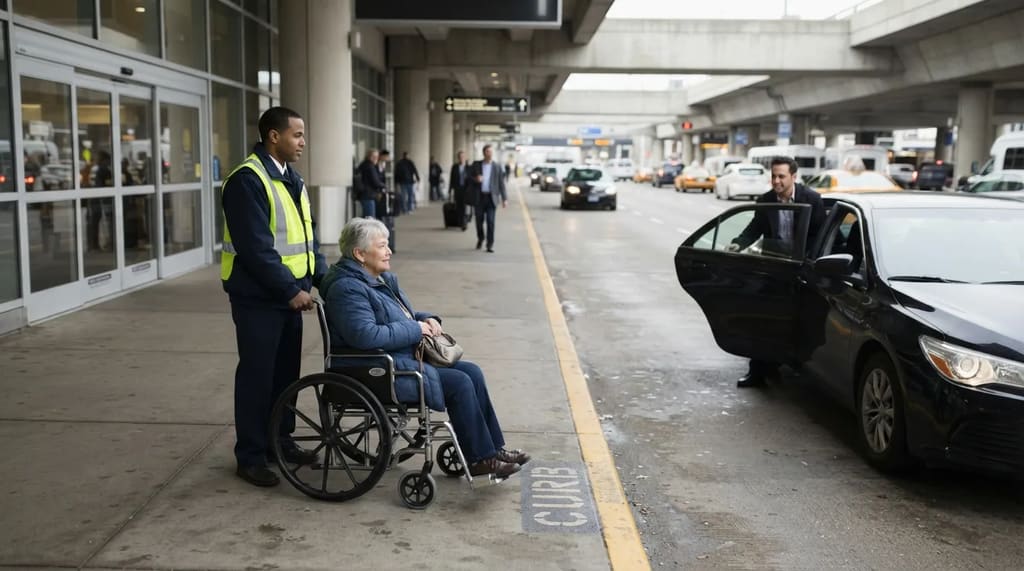
AARP describes the attendant as helping at baggage claim and staying as needed to the terminal exit or vehicle pickup. Airline assistance ends at the curb or a pickup point.
Attendants can stay with you on request until family or friends pick you up. So ask while you are still at baggage claim, before the attendant moves on.
Fast Facts
- Help typically runs from the aircraft to baggage claim and on to the exit or pickup point.
- Airline assistance ends at the curb or a designated pickup point.
- Staying until your ride shows up is available on request.
- Ask at baggage claim, before the attendant moves on.
Text your driver when you land and name the door you will be at. That keeps the wait short and keeps your attendant from standing by while other passengers wait.
#3 – Staying silent while attendants are stretched thin
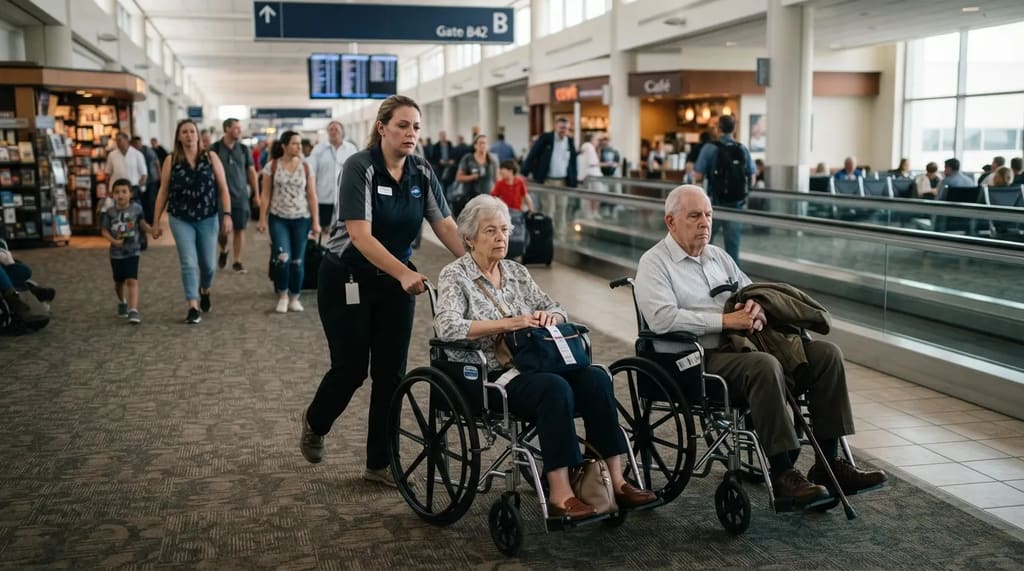
An Afar writer who uses a wheelchair reports that attendants across the country have told her they are understaffed and underpaid by a contractor separate from the airlines and airports. When flights outnumber attendants, one attendant may push two or three passengers at once.
DOT’s guidance to staff says to avoid pushing two wheelchairs at once, because of the risk of injuries or delays. Waiting quietly doesn’t solve the staffing problem, but information does help.
Without someone tracking names, ticket numbers and gates, passengers can be forgotten. Keep your flight number, gate and departure time handy, and say them to the attendant before you start moving.
Speaking up helps once you are in the system. The better fix is getting into it before you leave home.
#2 – Waiting until the curb to ask
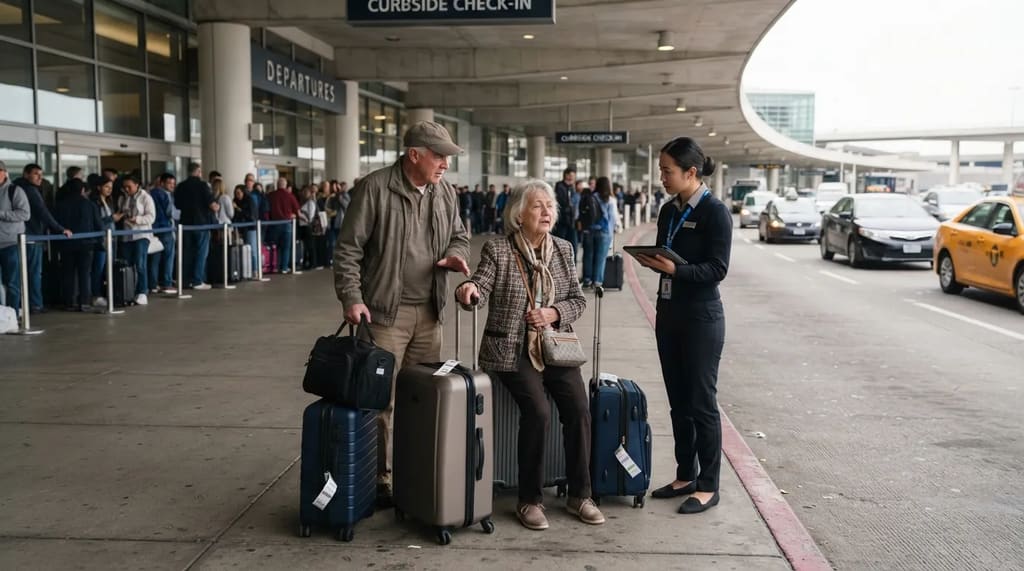
DOT advises requesting an airport wheelchair when you make your reservation if you cannot walk long distances. AARP says to do it online or through the airline’s special assistance line, or failing that, to call at least 48 hours before the trip.3
You can still ask at check-in, since airlines generally cannot require advance notice. But an attendant may not be available right away, and rising demand can overwhelm the system.
A late request is rarely refused, but it is slower. Treat the 48 hours as your own deadline.
A request on the booking covers the flight you had in mind. Whether it covers every flight on the ticket is a separate check.
#1 – Assuming one request covers every flight on the ticket
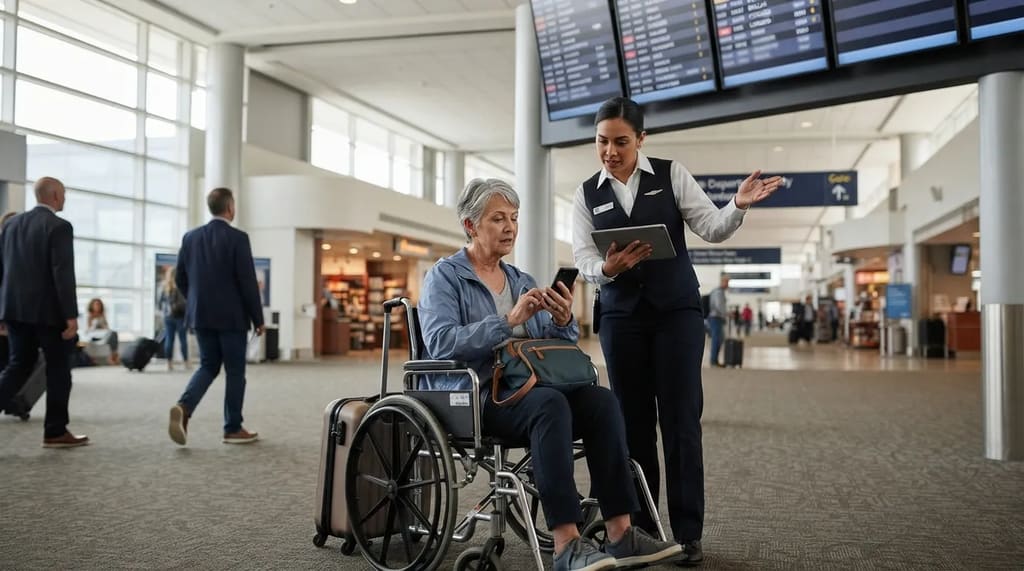
Airlines must assist you from your seat on an arriving flight through the airport to your connecting gate, and from that gate to your seat on the next flight. When two carriers are involved, the second one has to know.
Confirm the request with every airline on your itinerary, and make sure assistance is noted for every segment. American Airlines, for one, provides wheelchair help for connections with other carriers, with staff escorting the customer to the other carrier’s gate.
You cannot count on every carrier on your ticket working that way. An attendant should meet you at the aircraft door and take you to your next gate, which matters most at big hubs where connection gates can be far apart.
If no one is there when you deplane, tell a flight attendant immediately.
The free phone call at booking is the cheapest step on this list. An empty aircraft door at a far-off connection is the costliest result of skipping it, and the read-back from the earlier call is what protects you there.
Before your next trip, write down each handoff: booking, check-in, checkpoint, gate, plane door, connection, curb. Next to each one, note who is supposed to be holding your name and whether you have confirmed it.
The service tends to hold when every link in that chain knows you are coming. It breaks at the link nobody checked.
Which handoff would you most want a name or phone number for on your next trip: the curb, the checkpoint or the connecting gate?
Bonus: The Insider Move When a Handoff Fails
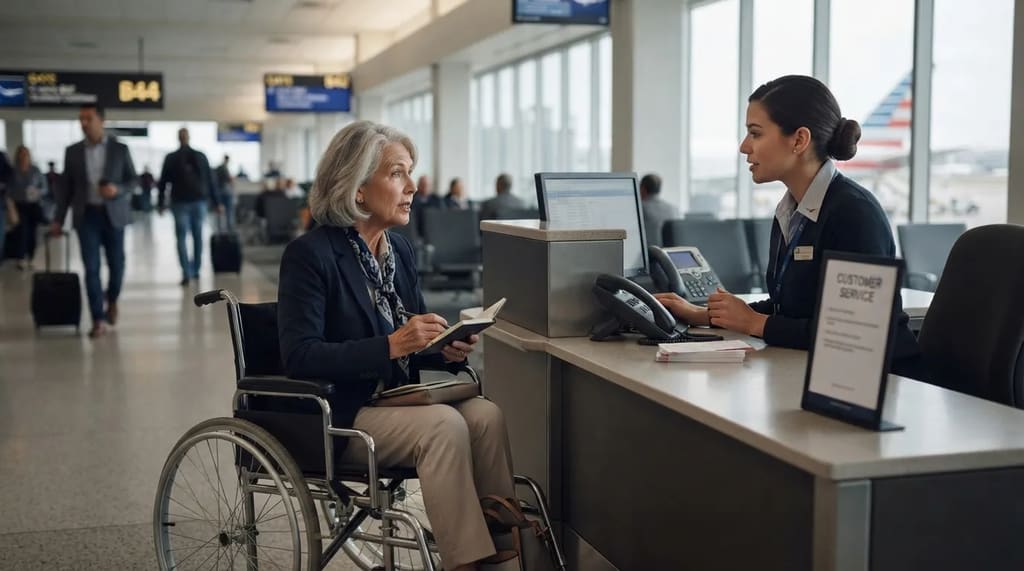
When no attendant shows up, or you are told to just wait, don’t argue with the person at the desk. Ask for the airline’s Complaint Resolution Official, often called the CRO.
Under DOT rules, every U.S. airline must have a CRO available at each airport during operating hours, in person or by phone. That person has the authority to fix the problem on the spot, which a gate agent or contractor often cannot do.
- Say the exact words: “I need to speak with a Complaint Resolution Official about my disability assistance.”
- Write it down: note the attendant’s name, the time, your gate and the CRO’s name before you leave the spot.
- Escalate if needed: the DOT’s aviation disability hotline is 1-800-778-4838, and it can help you in real time or after you land.
- Follow up in writing: send the airline a short complaint with your notes soon after the trip, while the details are fresh.
Most travelers only complain after they get home. Asking for the CRO while you are still standing at the airport is what gets a chair moving.
- AARP Wheelchair Assistance Guide: https://www.aarp.org/travel/travel-tips/transportation/wheelchair-airport-assistance/
- DOT Disability Bill of Rights: https://www.transportation.gov/airconsumer/disabilitybillofrights
- AARP Airport Accessibility Tips: https://www.aarp.org/travel/travel-tips/transportation/flying-with-a-disability/
- TSA Cares Screening Information: https://disabilityinfo.org/records/tsa-cares/
- TSA Passenger Support: https://www.tsa.gov/travel/tsa-cares/passenger-support
- DOT General Travel Tips: https://www.transportation.gov/individuals/aviation-consumer-protection/general-travel-tips-persons-disabilities
- DOT Wheelchair Rule Coverage: https://www.aerotime.aero/articles/dot-issues-new-protections-for-passengers-with-disabilities