A sleeper ticket buys you a bed and a door that closes. It doesn’t buy you the unwritten rulebook that seasoned riders seem to carry in their heads. Attendants notice who has it within about thirty seconds of boarding. Those passengers rarely complain, and somehow they always end up with the extra pillow.
First-timers keep tripping over the same invisible rules, and the attendant is the one who watches it happen. Some of the habits below are so small you’d never think to ask about them. A few of them decide whether your night is smooth or a mess, and the biggest one has nothing to do with money.
#15 – They Say Hello First, and the Attendant Remembers It
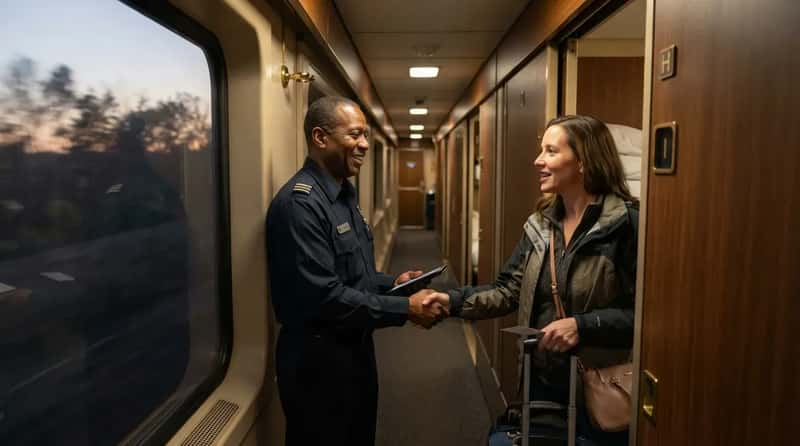
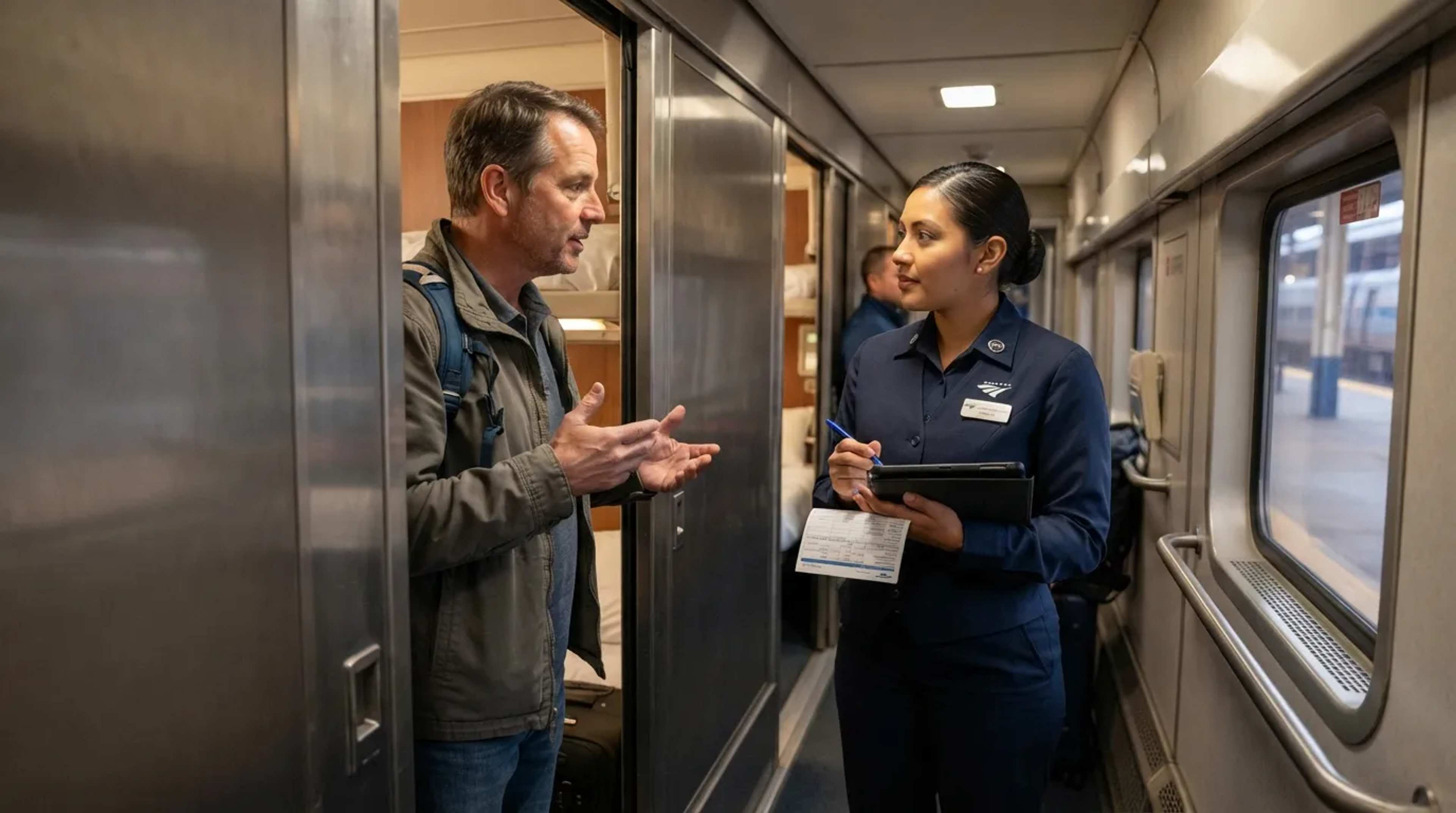
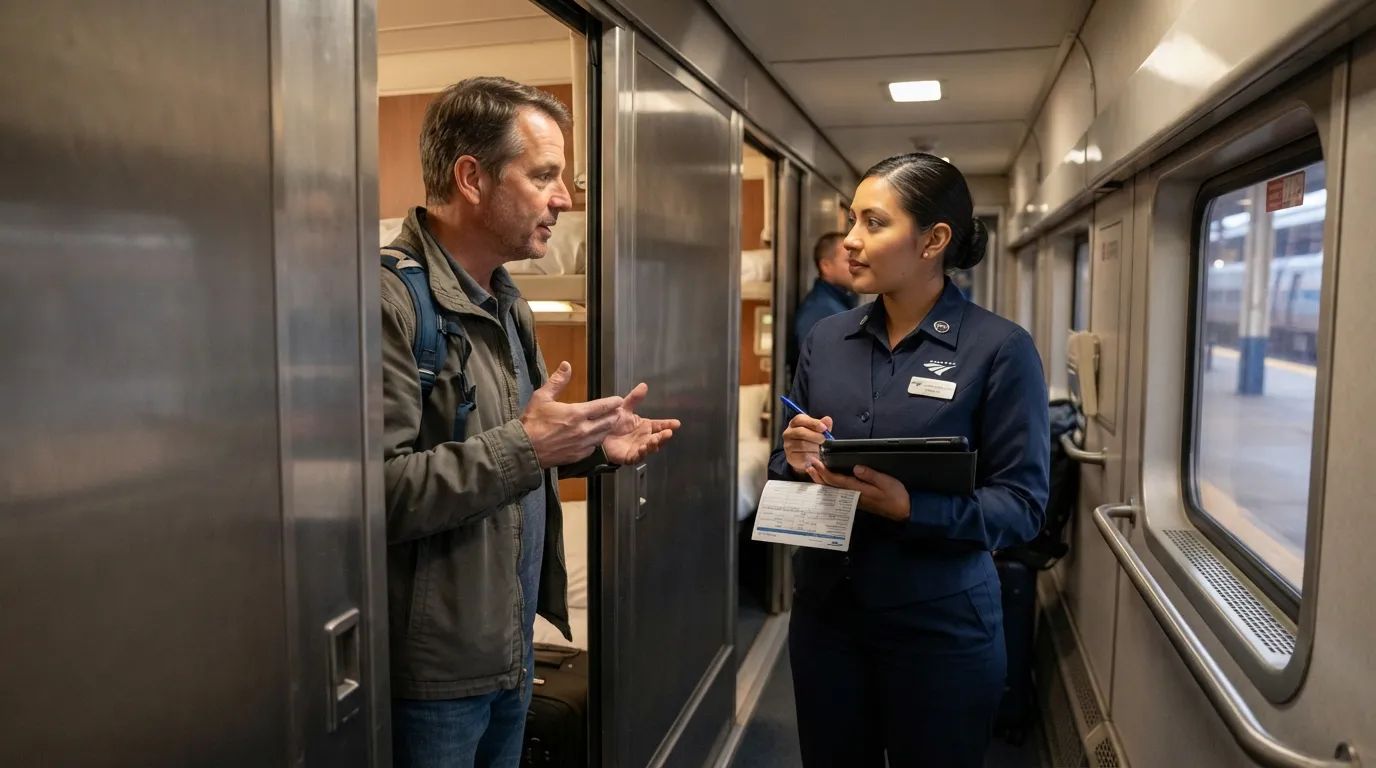
The best-treated passengers often win the night in the first thirty seconds. On most sleeper trains, an attendant checks your ticket and shows you to your berth. Regulars treat that moment as the start of a working relationship, not a box-ticking exercise. They give their name, say which room they’re in, and ask a question or two.
That small courtesy matters because the attendant is juggling a lot. One attendant posting on a rail-fan forum described handling boarding questions for passengers in 24 rooms, and said they still like to chat a little with their passengers. A longtime rider on another forum listed being greeted warmly by an attendant who recognizes you from a previous trip as one of the best parts of the journey. When one person is covering 24 rooms alone, a friendly hello stands out.
But the next rule is about a request regulars never make while the train is still standing at the platform…
#14 – They Don’t Ask for Bags to Be Hauled Upstairs While the Door Is Still Open
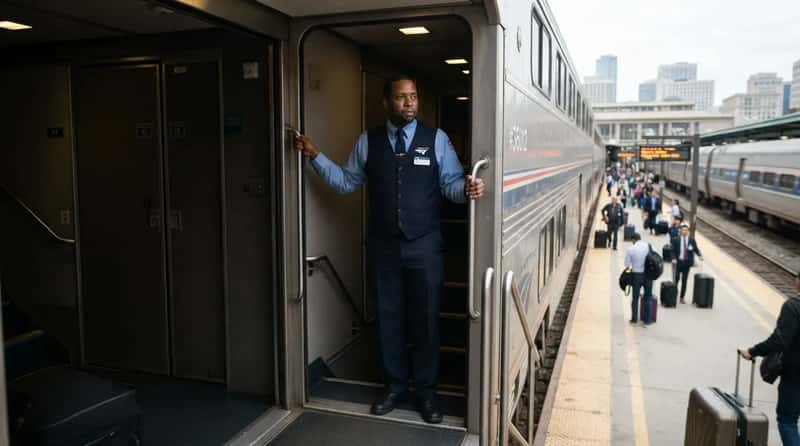
Regulars know the attendant physically can’t leave the doorway yet. One attendant explained on a forum that they’re required to stay at the door until the train pushes off, so they can’t immediately carry larger bags up to the rooms. First-timers sometimes read that as bad service. Seasoned riders just wait a few minutes.
Many also pack a small separate bag for the night, so the big suitcase can stay out of the way. One Amtrak sleeper guide notes that a solo traveler in a roomette can bring a carry-on into the room, and the attendant can hoist bags up. The attendant has to stand at the door until the train leaves the platform, which is why your bag waits. Ask once the train is rolling, and the answer is usually yes.
But that’s nothing compared to the nighttime habit that saves regulars from a very awkward midnight…
#13 – They Finish Their Bathroom Routine Before the Train Starts Swaying
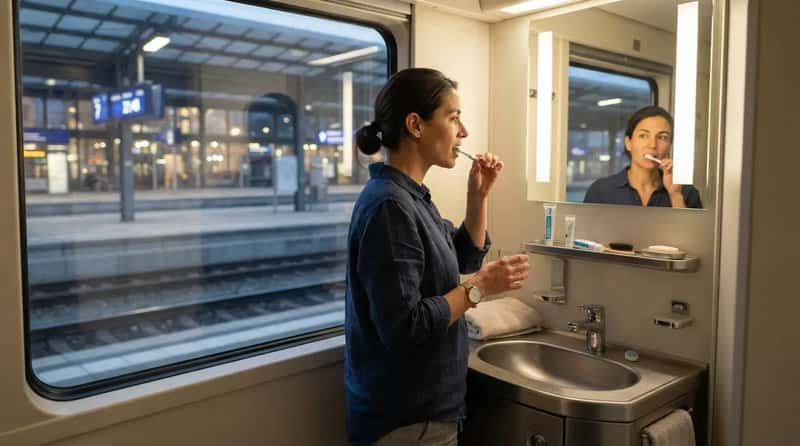
Brushing your teeth on a moving train is a different sport. One rail-travel guide says it’s far easier to get ready for bed before the train is in motion than while it’s rolling down the track. Seasoned riders don’t wait for lights-out. They handle it early.
In a sleeper, the same guide says the smart move is washing up before the attendant comes to turn down the bed. Another travel writer goes further and suggests doing your nighttime cleansing and moisturizing before you even get on board. Skip it, and you end up brushing your teeth sideways at midnight, as that guide jokes. The fix costs nothing and takes about ten minutes.
At a Glance
- Best window: before the train is in motion
- In a sleeper: wash up before the attendant turns down the bed
- Skincare: some writers suggest doing it before you even board
- Cost: nothing but a little planning
But the next rule decides whether you get your bed when you want it, or when someone else does…
#12 – They Name a Bedtime Instead of Waiting to Be Told
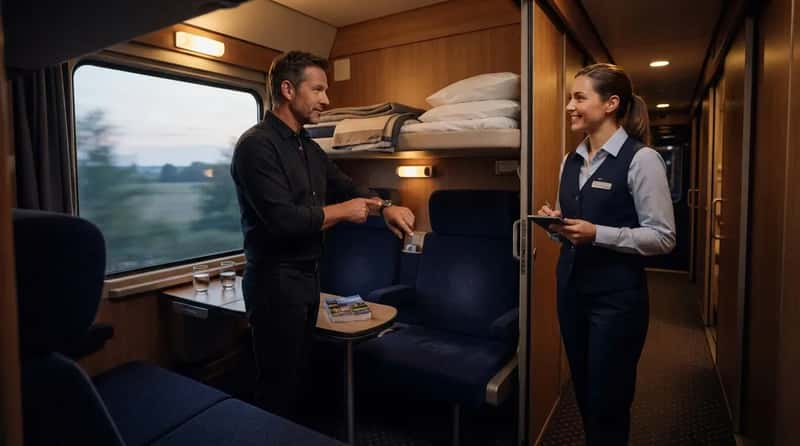
Most first-timers assume the bed just happens. One travel guide says most passengers assume turn-down happens automatically, while regulars tell the attendant exactly when they want it. The attendant converts the room from day mode to night mode, so your timing is something you arrange.
On European sleepers, the etiquette gets more social. Rail expert Seat61 notes that if you’re sharing, you can agree on a time to ask the attendant to convert the seats into beds, and it’s polite to stand in the corridor while others change. Naming a bedtime is part of the etiquette, not a favor. Regulars also ask early, since one guide says the smartest passengers request the switch right after dinner.
But the next rule is the one crew say gets broken most often after dark…
#11 – They’d Never Flip On the Overhead Light After Dark
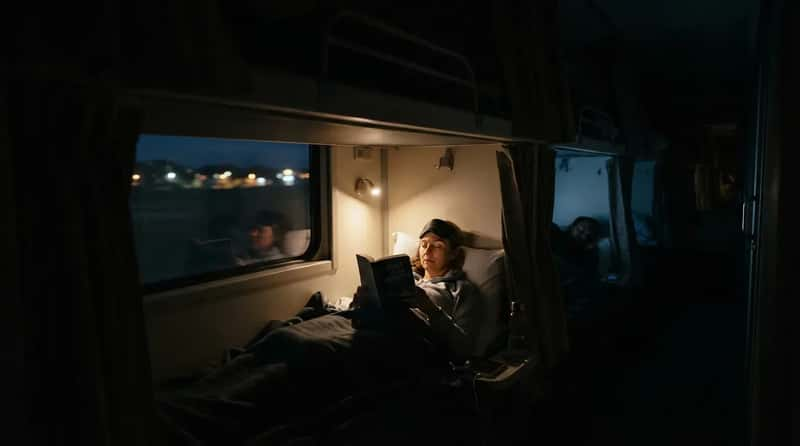
It sounds obvious, yet it shows up on every etiquette list. Sleeper etiquette, as described in reporting on crew accounts, comes down to no overhead light after dark, no music through speakers, and no smelly food. Regulars use a small reading light or their phone screen, turned down low.
One travel writer describes the opposite scene vividly: passengers entering the cabin at 4 a.m. with a glaring mobile light, whispering urgently to a friend. A rail-travel roundup also calls noise complaints the number one friction point on any overnight train. A sleeper car is a sealed, shared space, so one person’s light becomes everyone’s problem. Experienced riders bring earplugs and an eye mask, so they never have to ask anyone else to adjust.
But even regulars forget the one thing attendants say most first-timers never think to request…
#10 – They Ask for the Extra Pillow (and Get It)
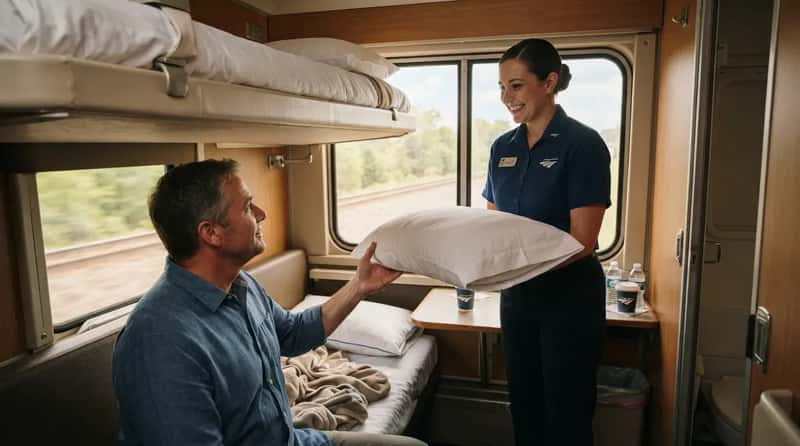
Here’s the quiet perk almost nobody tests. One Amtrak guide admits Amtrak pillows are pretty thin, and tells riders to ask the room attendant for more. Another guide says attendants generally accommodate the request without hesitation, yet first-timers usually settle for less comfort than they paid for.
Regulars ask for small things politely and early. They also know what’s included: coffee, tea, juice, and bottled water are available at no charge to sleeping car passengers. Some even order a bottle of water with dinner in the dining car, so the attendant’s supply isn’t drained. The extra pillow is a free request that most people never make.
But the next rule has caused more awkward walks of shame than any other…
#9 – They Never Try to Sneak a Coach Friend Into the Room
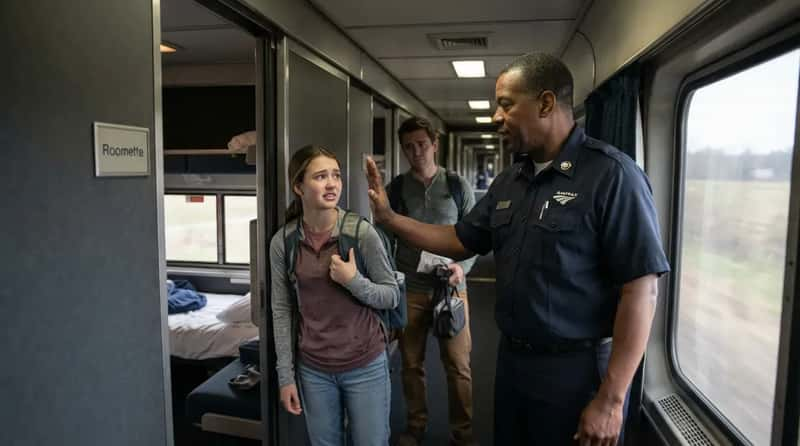
It happens constantly, and it almost never works. One rail-crew roundup says long-time Amtrak riders confirm that coach passengers generally aren’t allowed into sleeper rooms, and attendants enforce that no matter how confused the traveler seems. Regulars skip the attempt and meet friends in the lounge or dining car.
The reasoning is simple. The same roundup says the rule isn’t random: it protects the privacy that sleeper passengers pay a premium fare for. Attendants say they see this attempt on nearly every long-distance route, and it usually ends with an awkward walk back to coach.
But the next rule involves a bill that regulars know never arrives…
#8 – They Know the Meals Are Already Paid For (and Tip Anyway)
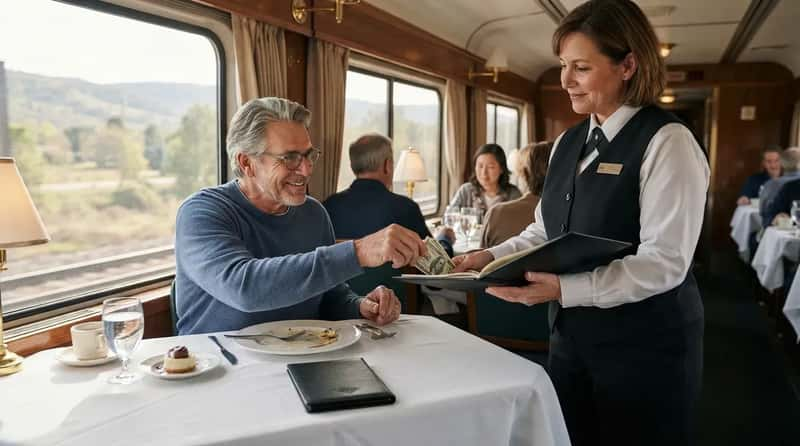
First-timers sometimes treat the dining car like a restaurant with a tab. One overnight-rail guide says sleeper passengers aren’t quietly paying per meal like a hotel room service menu. A longtime rider on a tipping page says if you’re in a sleeping car, your meals are complimentary. That describes the traditional long-distance setup, so check your own route’s current rules.
Regulars handle the dining car smoothly, too. A travel roundup notes that for most lunches and every dinner, a dining car attendant stops by each sleeper compartment to ask which seating time you’d like. The catch is that many sleeper riders forget to tip because no bill ever arrives. One rail traveler wrote that sleeper passengers sometimes don’t know they should tip, or how much, since there’s no meal bill. And don’t assume this setup applies in Europe: Seat61 warns never to assume there will be a restaurant car on a sleeper train unless you’re told there is one.
Quick Compare
- Traditional U.S. long-distance sleeper: meals are typically included, and a dining car attendant asks your seating time
- European sleeper train: don’t assume there’s a restaurant car at all
- Either way: confirm what your specific route includes before you board
But the next rule comes down to one sentence you have to say out loud…
#7 – They Tell the Crew Their Plans Early
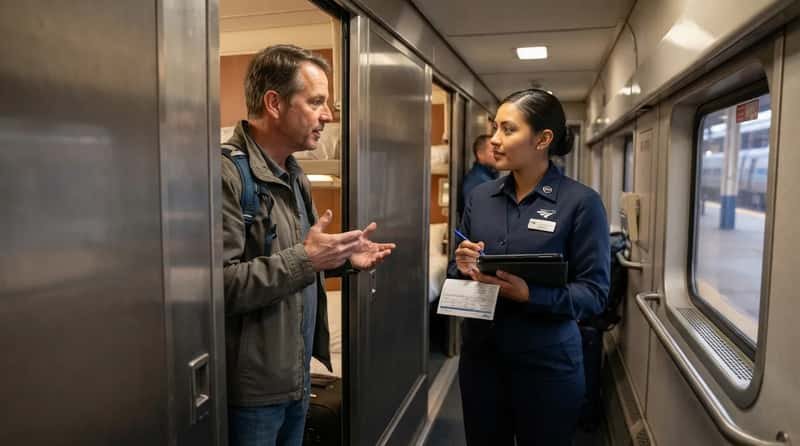
The attendant can’t read your mind. Travel reporting on crew accounts puts it bluntly: the attendant can’t open a door for a stop they were never told about. Regulars say where they’re getting off, and when they need to be woken, at boarding.
They do it early because the attendant is already greeting passengers at the door and checking reservations. A missed detail at boarding can become a missed stop at 4 a.m. One sentence at the start of the trip can save a lot of scrambling later.
But what regulars do about waking up is where the real planning begins…
#6 – They Set a Real Alarm and Treat Short Stops as Hard Deadlines
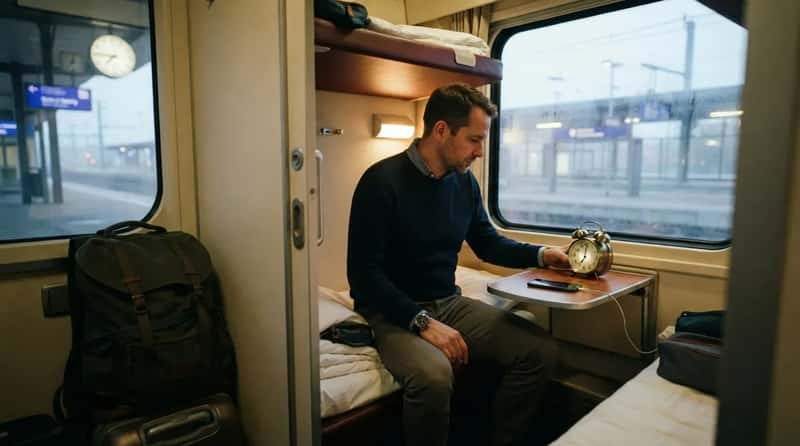
Arrival mornings go wrong quickly. European night-train guidance recommends a real alarm clock or the sleeping car’s wake-up service, so there’s time to freshen up and grab breakfast before arrival. Regulars never rely only on a phone that might die overnight. They use a backup.
Short stops are the other reason. One roundup notes that at some stations, passengers only get about three minutes before the train pulls away, and it catches a surprising number of people off guard. With some stops lasting about three minutes, regulars stay packed and ready. They don’t plan a leisurely exit.
Fast Facts
- Some station stops: about three minutes
- Wake-up options: a real alarm clock or the sleeping car’s wake-up service
- Backup plan: don’t count on a phone that might die overnight
- Morning buffer: enough time to freshen up and eat before arrival
But the next rule is about the person you’re asking for all of this, and when they actually sleep…
#5 – They Remember the Attendant Sleeps in Small Bites
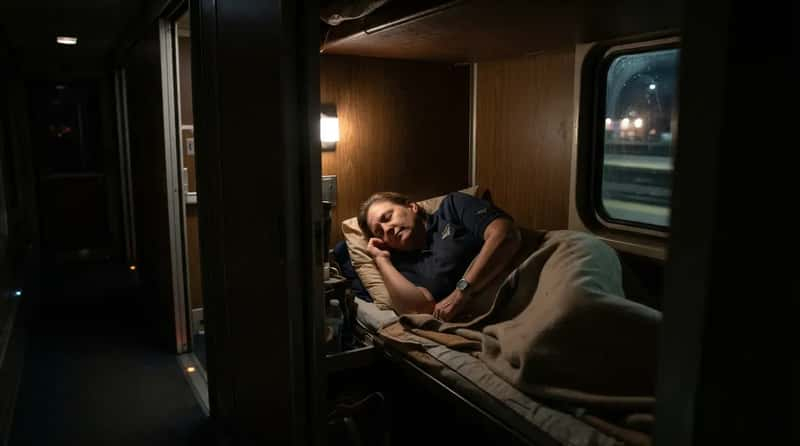
The person keeping your car running isn’t on all night. One Amtrak guide explains that because trains make station stops all night long, your room attendant sleeps in small bites of time. The guide adds that the attendant will probably tell you when they plan to call it a night, albeit a short one.
Regulars take that cue. They save requests for the early evening and don’t knock at 2 a.m. unless something is actually wrong. Another travel write-up notes that on some routes, attendants work through the night in short bursts around station stops. Your attendant is working in short bursts, not a full night’s sleep. Pillows can wait until morning, but a real problem is another matter, and a polite call is welcome.
But the next rule applies mostly to travelers who book across the Atlantic…
#4 – They Ask About the Door Locks Before the Lights Go Out
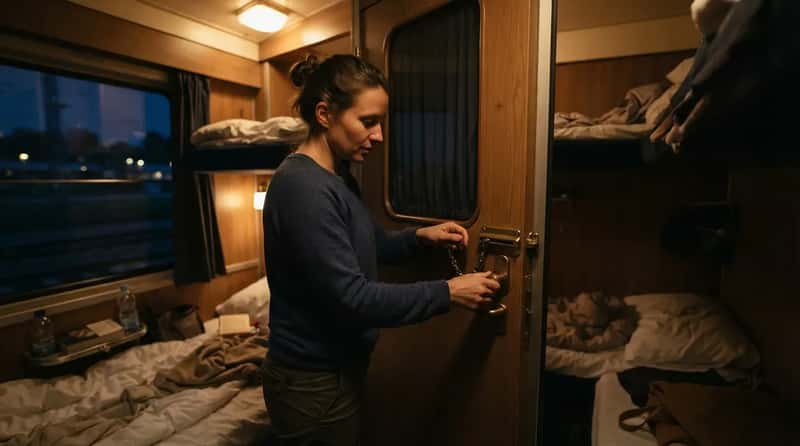
On European sleepers, security habits differ from what many Americans expect. A rail-guard roundup says the conductor’s key opens couchette doors from the outside, but a bolt or chain thrown from inside can’t be opened from outside. One frequent rider added that outer car doors are locked overnight on most European sleepers.
That’s why regulars ask at boarding. As the same roundup puts it, rules vary by operator, so a quick question is worth it. A chain you lock from inside can keep the crew out as well, which can matter in an emergency. They also know shared compartments are usually organized by gender. Seat61 notes that compartments are normally single-gender unless all the berths are booked by people traveling together.
Worth Knowing
- The conductor’s key opens couchette doors from the outside.
- A bolt or chain thrown from inside can’t be opened from outside.
- Outer car doors are locked overnight on most European sleepers.
- Shared compartments are normally single-gender unless everyone is traveling together.
But the next rule is the one crew say they notice before you’ve even left the room…
#3 – They Leave the Room (and the Bathroom) the Way They Found It
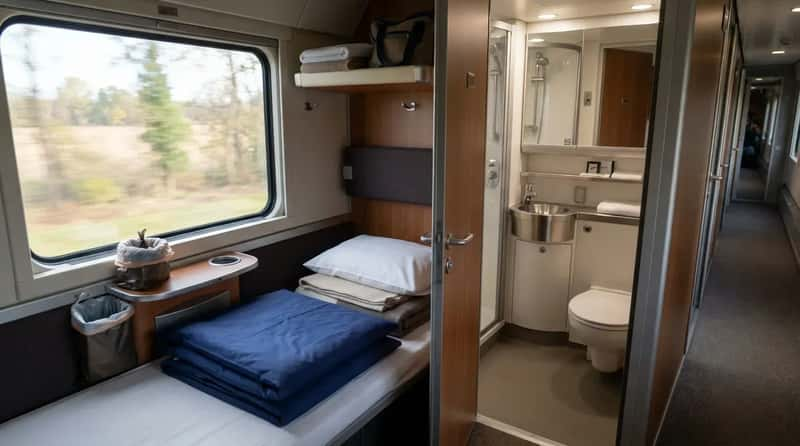
Regulars treat a sleeper like a shared hotel suite that someone else has to flip. Reporting on crew accounts advises tying off trash and handing it to the attendant, or using the bin, before you start gathering luggage. The attendant has plenty to do already.
Bathrooms are the sensitive part. One tipping guide notes that passengers are expected to leave the restroom neat after use, but should call the attendant if there’s a problem. An attendant on a forum admitted they do clean the bathrooms. Attendants clean the bathrooms themselves, so a quick tidy by you goes a long way. Regulars call early if something goes wrong instead of leaving a mess.
But the next rule is the most argued-over etiquette question in the whole sleeper world…
#2 – They Count Out Small Bills Before the Night Even Starts
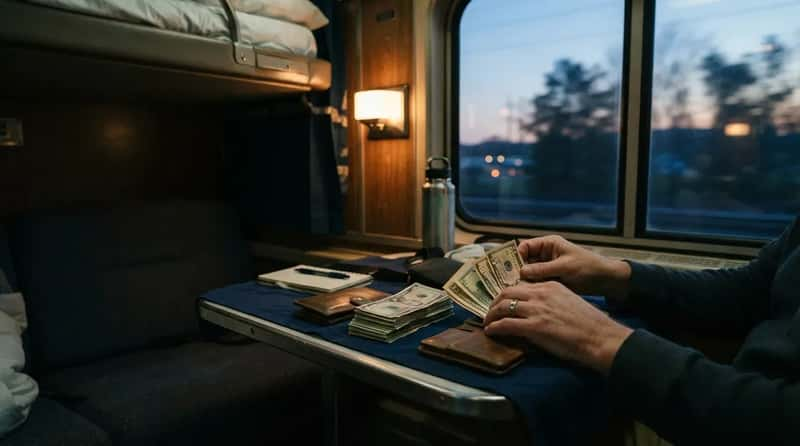
Tipping is where the arguments begin. Amtrak’s stated approach, as summarized by rail fans, is that employees may accept tips but may not solicit them. Experienced riders still prepare. One roundup says experienced sleeper passengers count out small bills the night before for attendants and servers.
Amounts and timing vary, so there’s no single rule. One long-ago estimate was $5-10 per berth and up, and modern forum posters often suggest more, such as $10 per day per passenger. Some riders hand over cash the moment they board, while others follow the older advice to tip at the final destination. Tipping is optional, but plenty of regulars treat it as part of the fare.
But the number one rule isn’t about money at all…
#1 – They Treat the Attendant Like a Person, Not a Butler or Background Furniture
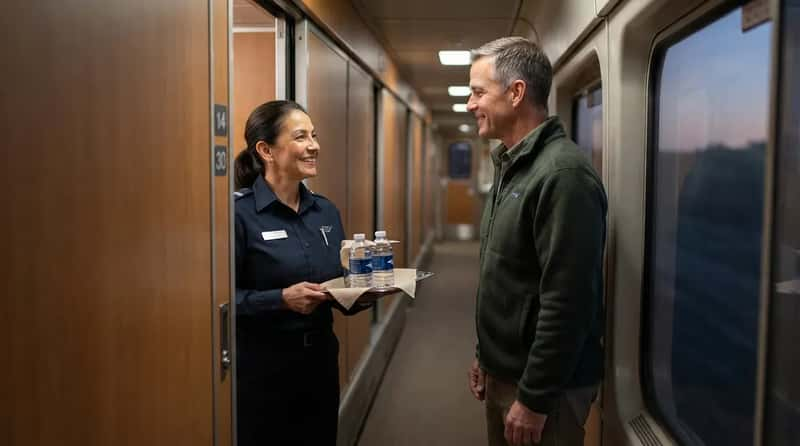
This is the rule crew mention most. A rail-crew roundup says being ignored entirely is one of the attendants’ more common frustrations. Regulars say hello, say thank you, and look for the attendant when something comes up. They don’t treat the job as invisible.
Nor do they treat it like butler service. One attendant wrote that the only thing they truly expect at the end is a smile on your face and maybe a thank you. Another guide says the passengers who get the best treatment are the ones who simply ask. Attendants say a simple “thank you” at the end of the trip matters more than people think.
Look across all fifteen and a pattern shows up. Regulars plan ahead, speak up early, and respect the person who keeps the car running while everyone else sleeps. None of it is complicated, and none of it costs much.
The attendant’s night is a few hours of broken sleep between station stops. The riders who remember that are the ones who get remembered back.