A gate agent looks up, spots someone walking toward the counter, and already knows they’re over 60 – before a boarding pass ever comes out, before an ID gets checked, before a single word is exchanged. That’s not a guess. It’s a pattern paging crews and gate staff see so often they can call it from across a crowded terminal.
It has nothing to do with gray hair or a slower walk. The real tells are smaller, stranger, and honestly kind of touching once you know what to look for – and once you see them, you won’t be able to unsee them the next time you’re stuck at Gate 14.
15. They Ask “What Gate Am I At?” Instead of Checking Their Phone
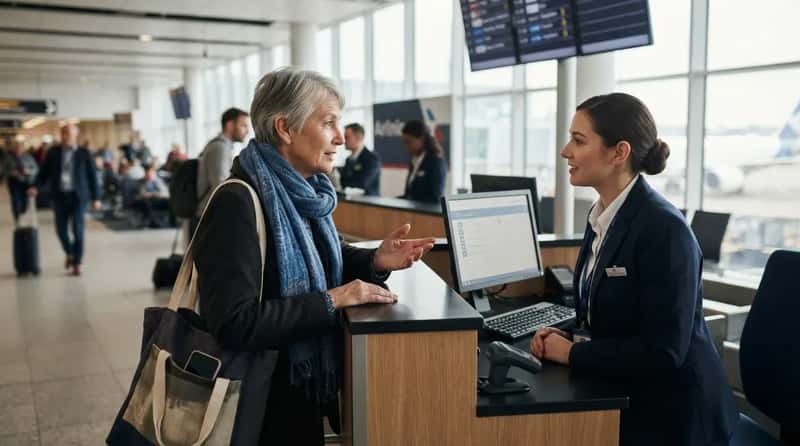
Gate agents say this is the fastest tell in the whole terminal. Someone walks up, phone already tucked away in a bag, and asks a live person a question their app answered ten minutes ago. It isn’t confusion. It’s a plain preference for a human voice over a glowing screen.
Staff say this habit actually pays off more than people think. Travelers who ask in person almost never miss a gate change, because they’ve made a real connection with a real employee instead of trusting a notification. Younger flyers stare at screens. Older flyers make eye contact – and that’s the giveaway before anyone even speaks.
14. They Tip the Wheelchair Attendant Before Anyone Even Asks
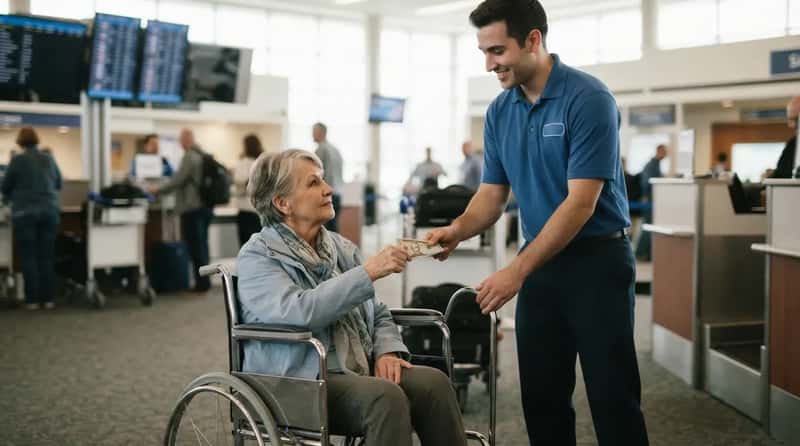
Wheelchair assistance is legally required at every U.S. airport under the Air Carrier Access Act, and it has to be free, no matter the ticket class. Plenty of younger travelers don’t know that, and it rarely occurs to them to tip. Older travelers usually do anyway, out of pure habit.
Wheelchair pushers say the cash often comes out before the ride even starts, not after. It’s automatic, almost reflexive. Crews say it’s one of the clearest signs of someone who grew up tipping skycaps as a matter of course, not as a modern afterthought.
Worth Knowing
- Wheelchair assistance must be free at every U.S. airport under the ACAA, regardless of ticket class.
- The service typically covers curb-to-gate, gate-to-gate on connections, and gate-to-curb on arrival.
- Tipping isn’t required, but $3-$5 per ride has become the informal standard among attendants.
- Requests can be made at booking, at the counter, or curbside – no advance notice is legally required.
13. They Keep Every Travel Document in a Labeled Plastic Sleeve
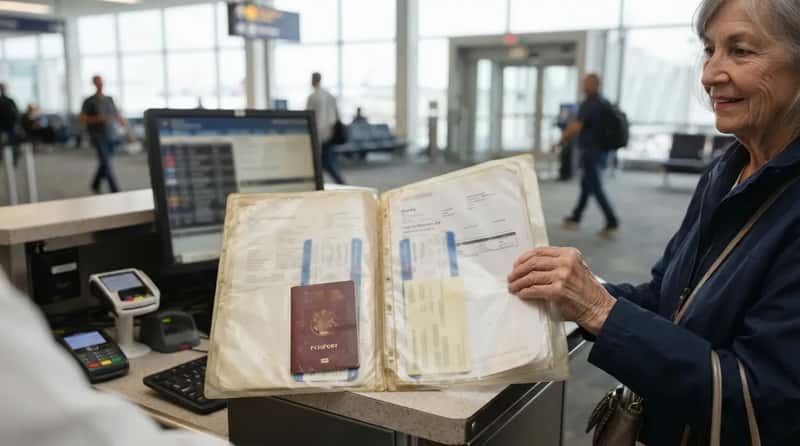
Gate and paging staff spot the paperwork almost instantly. Instead of one phone screen with a mobile pass, there’s a small folder – passport, boarding pass, hotel confirmation, sometimes a printed itinerary, all sorted in order. It’s a filing system built for a world before digital wallets existed.
Staff say it isn’t distrust of technology so much as decades of muscle memory doing its job. That folder has survived every trip they’ve ever taken, and it isn’t retiring today. Crews often use it as a quiet signal for who might appreciate a little extra time at the counter.
12. They Ask for Extra Time Before the Final Boarding Call
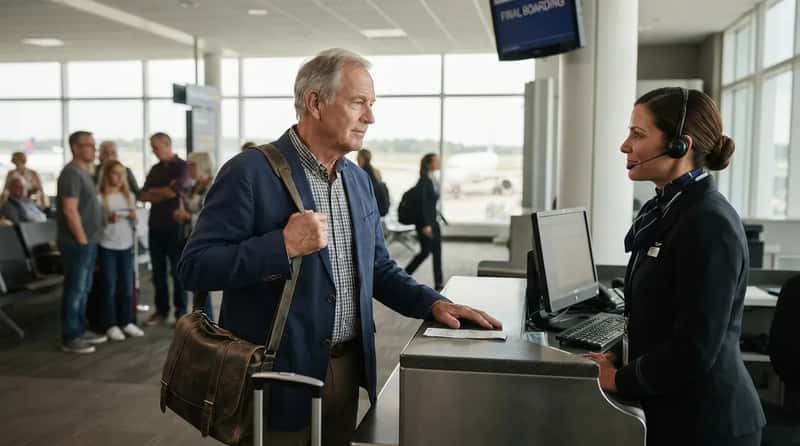
“Final boarding” announcements trigger a very specific reaction from older travelers: a calm, firm request to confirm they still have a few minutes. Gate staff say it isn’t panic. It’s pacing – these passengers walk at their own speed and expect the system to work around that.
Crews have learned to build in a buffer for this group without being asked twice. It’s rarely about being late. It’s about refusing to be rushed, and staff say the request comes almost word-for-word the same way, every single time.
11. They’re Still Flying With the Same Carry-On From Decades Ago
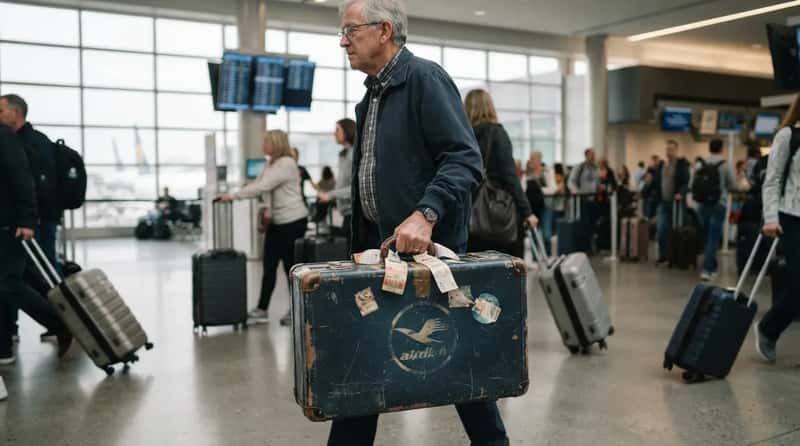
A hard-shell suitcase with a slightly outdated airline logo, or a garment bag older than the terminal itself – baggage and gate crews clock these instantly. The bag has outlived multiple redesigns of the airline it’s flying with. It isn’t about money. It’s loyalty to something that still works.
Staff say these old bags are often better cared for than the shiny new spinners rolling past them. Scuffed corners, taped handles, but never falling apart. It’s become a quiet point of respect among crews – stubborn practicality beating out convenience every time.
10. They Know Their Frequent Flyer Number Cold, No Lookup Needed
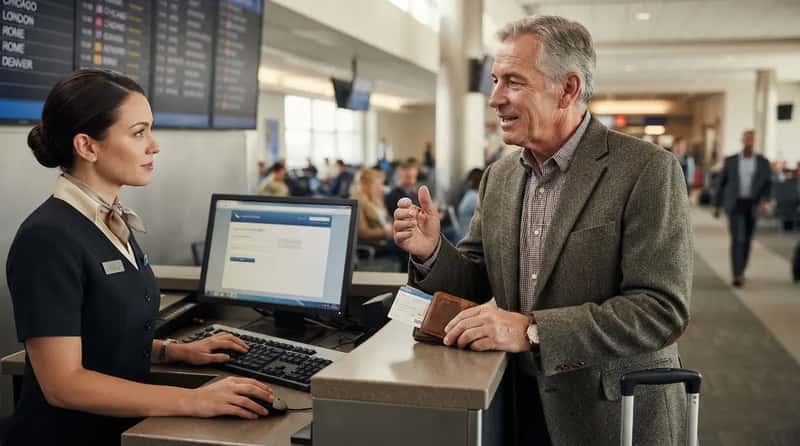
Ask a younger traveler for their loyalty number and they’re digging through an app. Ask someone over 60 and it usually comes out from memory, sometimes a number they’ve had since the 1990s. Gate agents say it’s recited faster than most people can even pull up their boarding pass.
This generation built those loyalty programs from scratch, back when a paper card and a stamped booklet were the entire system. Staff say the pride behind that number is obvious – it isn’t just an account. It’s a decades-long relationship with one airline.
9. They Request a Wheelchair “Just in Case,” Even When They Can Walk Fine
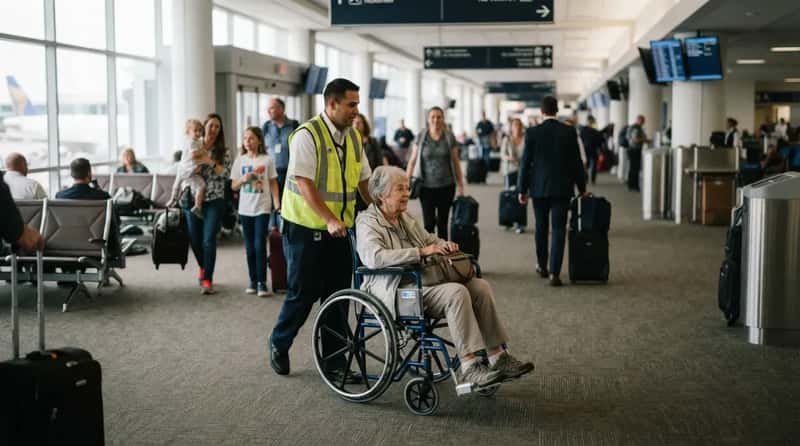
This one is more complicated than it looks, and ground crews talk about it openly. Wheelchair assistance requests at U.S. airports have climbed noticeably in recent years, and a 2022 Department of Transportation survey found more than a quarter of air travelers aged 65 and over use some form of airport assistance, wheelchairs included.
Staff also admit the system gets stretched thin. Passengers who request a chair as a precaution, rather than a necessity, can tie up limited staff and equipment that someone else needs urgently. Crews say they can usually tell within seconds which request is caution and which is real need – and it’s rarely as obvious as people assume.
At a Glance
- More than 1 in 4 U.S. air travelers aged 65+ reported using some form of airport assistance, per federal survey data.
- Wheelchair requests at major airports have risen steadily as more older adults keep flying regularly.
- Not every request involves a mobility issue – some travelers use the service simply to avoid long walks between far-apart gates.
- The service is free by law, but limited staffing can still mean unpredictable wait times during busy hours.
8. Security Crews Already Expect Them to Move Through Screening Differently
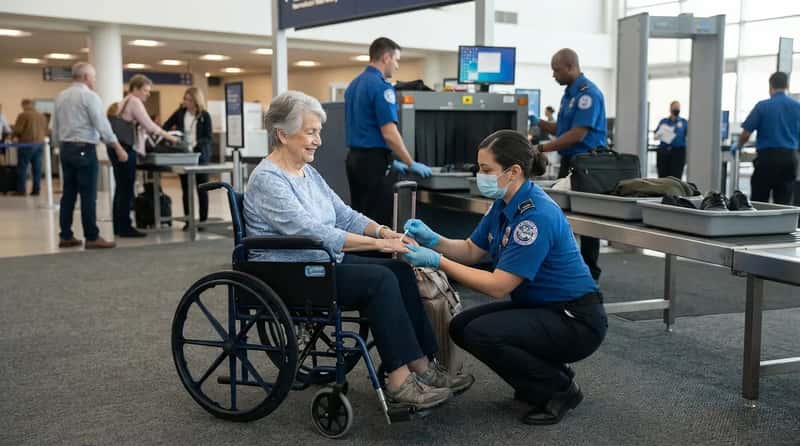
This isn’t guesswork – it’s written policy. Passengers 75 and older can qualify for modified screening under TSA’s risk-based measures. If they’re in a wheelchair or scooter, they’re allowed to stay seated while officers test their hands for traces of explosives.
Older travelers may also be allowed to leave their shoes on, though light jackets still have to come off, and they can ask to be seated for a pat-down if an alarm sounds. Security staff say this age group rarely pushes back on these rules – most simply don’t know they exist until an officer explains it on the spot.
7. They Ask Staff to Repeat Announcements Over the PA
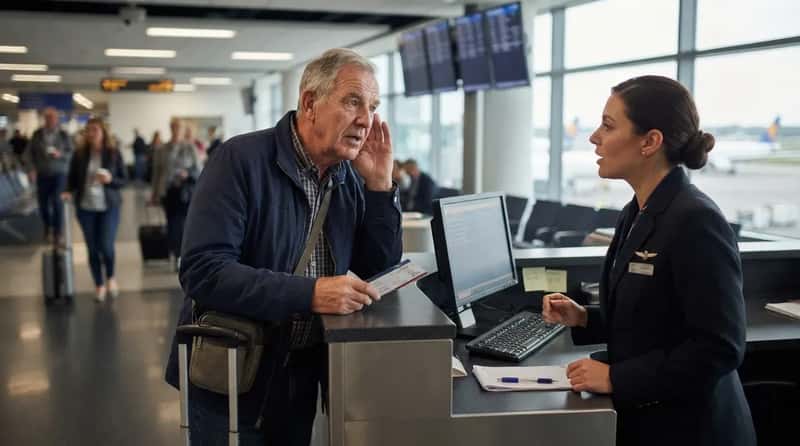
Terminal speakers are famously muddy, and older travelers are more likely to walk up to a nearby employee and ask what was just said. It’s a completely ordinary request, but paging crews say it’s one of the most consistent patterns tied specifically to this age group.
Staff have gotten used to repeating gate numbers slowly, sometimes jotting them down on a sticky note instead of just saying them again. It costs nothing, but it’s one of the clearest instant signals crews pick up on before an age conversation ever comes up.
6. A Travel Companion Does All the Talking at the Counter
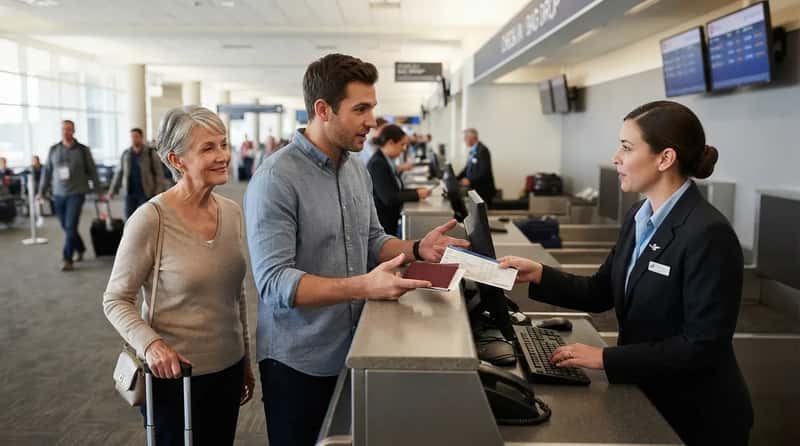
When two people approach together and only one speaks – handling documents, confirming seats, answering every question – gate staff register the dynamic immediately. It’s rarely disrespect. It’s a caregiving pattern that’s become second nature to both people involved.
There’s a formal service most travelers never hear about that fits this exact pairing. Guided assistance, sometimes coded MAAS (Meet and Assist), provides an escort for seniors who can walk but still need help navigating the terminal – different from a wheelchair, which is for passengers who need to be transported. Crews say requesting MAAS instead is one of the more overlooked options out there.
Quick Compare
- Wheelchair service: built for travelers who need to be pushed or transported through the terminal.
- MAAS escort: built for travelers who can walk but need a guide through security, gates, and connections.
- Both options are free to request through the airline – no upgrade or extra fee involved.
- MAAS is requested far less often, even though many older travelers fit the description exactly.
5. They Bypass the Kiosk and Beeline Straight for a Live Human
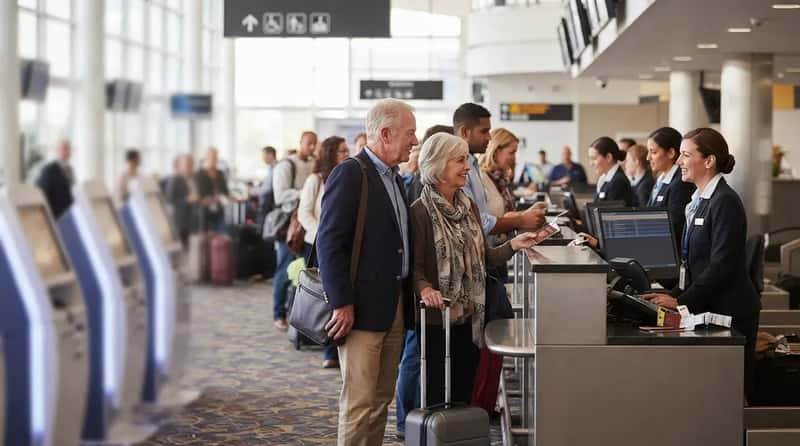
Self-check-in kiosks were supposed to speed up every line in the airport. Older travelers, more often than not, walk right past them toward a staffed counter instead. Gate agents say it’s rarely because the kiosk is broken – it’s a preference for a person who can answer a follow-up question on the spot.
It creates a small friction point staff have learned to plan around, sometimes adding an extra person to the counter during peak hours just for this reason. It’s one of the most visible, least subtle habits in the terminal, and it hasn’t budged despite years of kiosk upgrades.
4. They Dress Like Flying Still Means Something
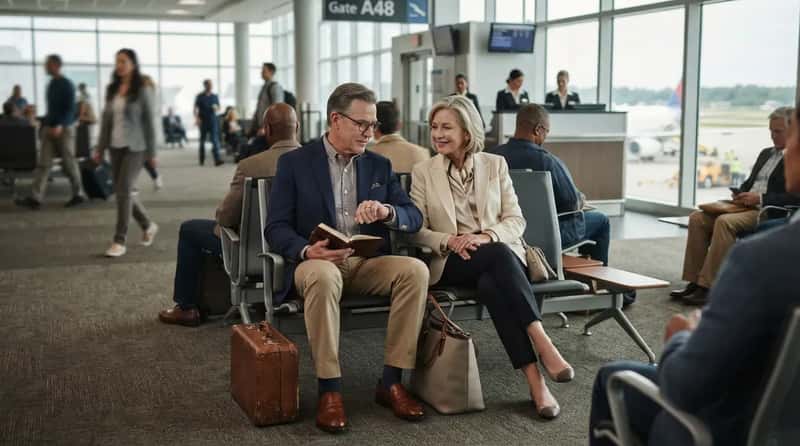
Collared shirts, real shoes instead of sandals, occasionally a blazer for a two-hour domestic hop – gate crews notice the wardrobe difference almost instantly. It’s a holdover from an era when flying was an event, not a chore squeezed between errands.
Younger travelers dress for comfort first. Older travelers often dress for the occasion, even on a routine trip. Staff say it’s one of the more charming patterns in the whole terminal, and more than a few have admitted it quietly raises the tone of an otherwise chaotic gate area.
3. They Call the Airline Days Ahead Just to Confirm Everything Twice

Phone calls confirming a seat, a connection, or a wheelchair request days before departure show up far more often among older travelers than any other group. It actually mirrors official guidance almost exactly: TSA recommends contacting its support line at least 72 hours ahead to coordinate any needed assistance.
Staff say this generation treats that advice like a rule, not a suggestion, while younger travelers often skip it and sort things out on the fly. Crews genuinely appreciate the heads-up – it lets them line up a wheelchair, an escort, or extra time at the gate before the traveler ever walks in.
Fast Facts
- TSA Cares can be reached at (855) 787-2227, weekdays 8 a.m.-11 p.m. ET and weekends/holidays 9 a.m.-8 p.m. ET.
- The agency recommends calling at least 72 hours before departure to arrange a Passenger Support Specialist.
- Requests can cover wheelchair coordination, screening questions, or help with medical devices.
- Airlines also suggest confirming seat assignments and any special service requests a few days ahead, separate from that call.
2. Crews Can Tell Within Seconds When Someone’s Flying Solo for the First Time in Years
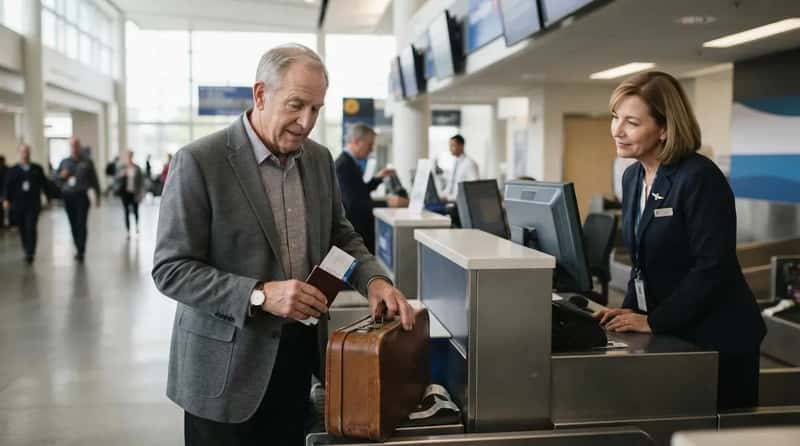
This one is quieter and harder to explain. A traveler who’s clearly flown plenty before but seems unsure of a routine they should know cold – checking a bag alone, picking a seat alone – often signals a recent, painful shift, most commonly the loss of a spouse who used to handle every travel detail.
Gate staff rarely say anything about it directly, but many describe slowing down, softening their tone, moving a little gentler with these passengers. It isn’t written in any training manual. It’s something crews say they simply learn to recognize after enough years at the counter, and it’s the tell that tends to stick with them the longest.
1. They’re Often the First to Notice Confusion Before Family Ever Does
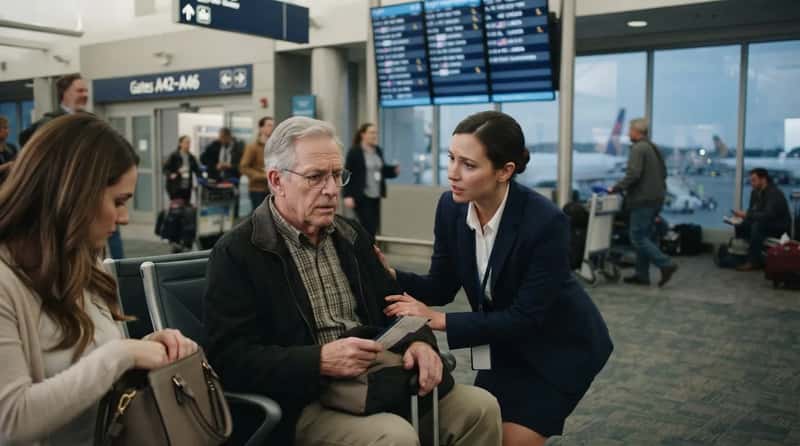
This is the tell staff take most seriously, and the one that carries real weight. Passenger support specialists describe encountering older travelers with dementia who can’t navigate the airport alone – sometimes before the people traveling with them realize how much help is actually needed.
These moments rarely look dramatic. It’s a traveler who can’t recall which direction they came from, or who asks the same question three times in five minutes. Crews say catching it early, and quietly looping in a supervisor or family member, has become one of the most important, least talked-about parts of the job.
None of these habits are really about age. They’re about decades of routines built long before mobile boarding passes existed, and airport staff have learned to read every one of them in seconds flat. Some of these tells are sweet. A few are genuinely serious. Either way, the next time you watch someone over 60 move through a terminal, you’ll probably catch every single one – and you might just see your own parents in the pattern.