Most people picture a Glacier Bay day as a lazy lap around some ice with a coffee in hand. A slow loop, a few photos, maybe a nap before dinner. Then breakfast plates get cleared, and passengers realize this stop runs on rules no other port on the itinerary comes close to.
Cruise ships spend roughly eight hours inside the park’s waters, and the surprises start long before the first wall of ice appears. There are rangers who walk aboard, a strict daily limit on ships, a bay that was packed with ice only a couple of centuries ago, and one strange delay between sight and sound that stops a whole deck of people mid-sentence. Here’s what first-timers figure out before lunch.
#15 – Park Rangers Climb Aboard Like Special Guests
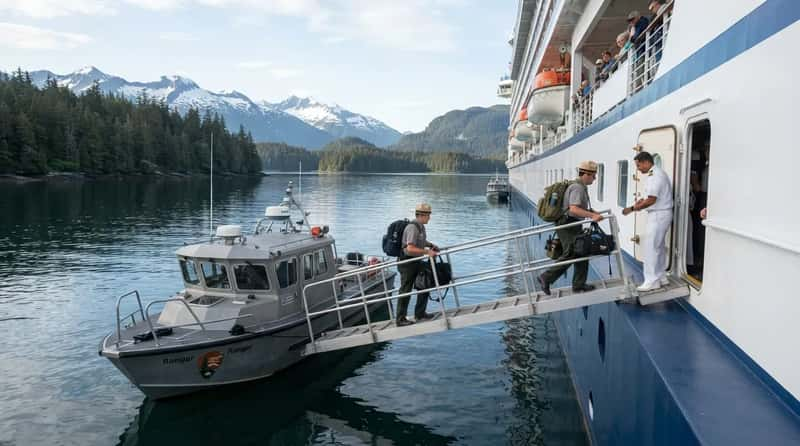
Before the scenery even gets going, your ship picks up extra crew. National Park Service rangers join the vessel at Bartlett Cove, and they work for the park, not the cruise line. They aren’t actors or entertainers. They’re there to explain exactly what you’re looking at.
Their commentary is live over the ship’s PA system, so the story changes as the shoreline does. Passengers often say that’s the moment the day stops feeling like a drive-by and starts feeling like a moving classroom. Many ships also host a ranger talk or set up a small visitor-information space on board.
- Rangers typically join early, so the story starts before the scenery peaks.
- Ask them anything. Spotting tips and “what is that?” questions are the whole point.
But the real shock is how few ships ever get this treatment…
#14 – The Two-Ship Daily Cap Nobody Warned You About
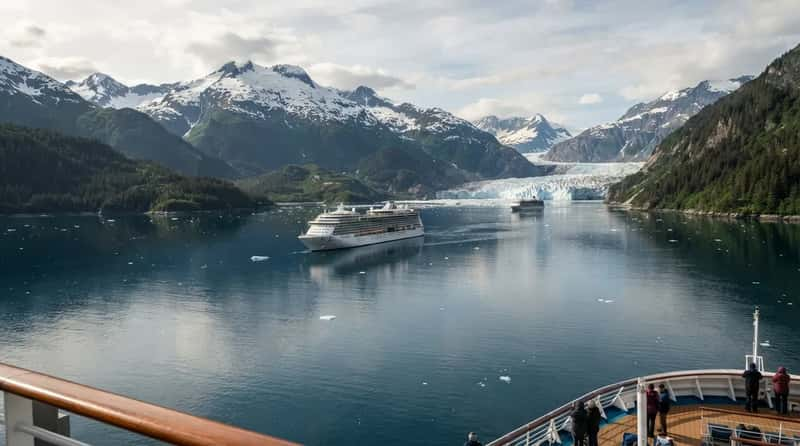
You’re not sharing this bay with a crowd, and that’s on purpose. The park allows only two cruise ships inside Glacier Bay on any given day. That’s why the water feels oddly empty compared with a busy dock in Juneau, where several giant ships can line up at once.
The limit isn’t a new idea. A long-running park plan caps the season at 153 cruise ship visits, a number set for the 2020 season onward. Scarcity like that turns a Glacier Bay day into a prized slot on any itinerary.
And the list of cruise lines that actually hold a ticket is shorter than you’d think…
#13 – Only a Handful of Cruise Lines Hold the Golden Ticket
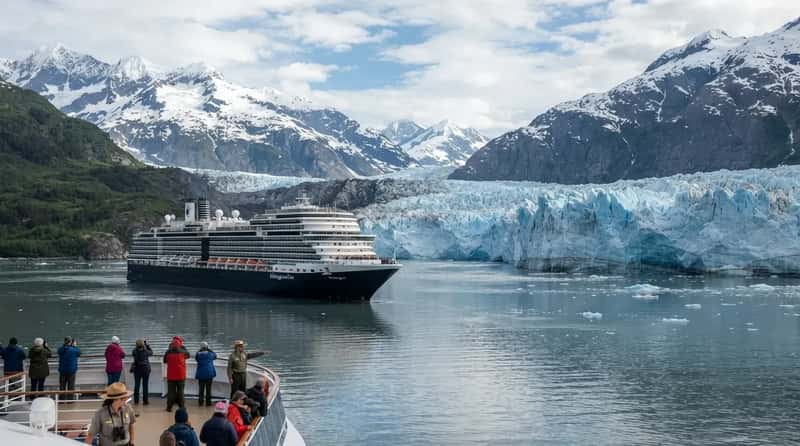
Not every Alaska cruise gets an invitation. Ships need park permission to enter, and only a small group of cruise lines have it. If another itinerary just says “scenic cruising” near some other glacier, that’s a different place entirely.
Holland America Line and Princess Cruises are the best-known names here, with long histories in the bay. Some lines hold far more slots than others. Plenty of passengers don’t realize they landed a rare spot until a ranger casually mentions it over the loudspeaker.
Fast Facts
- A park permit is required before any cruise ship can enter the bay.
- Only two cruise ships are allowed inside on a given day.
- The cruise season runs through the summer, roughly June to August.
- Bartlett Cove is the park’s hub, and it has no road connection to the outside world.
But the rarest part of the day might be what you don’t get to do…
#12 – You Never Set Foot Ashore, and Some Say That’s the Catch
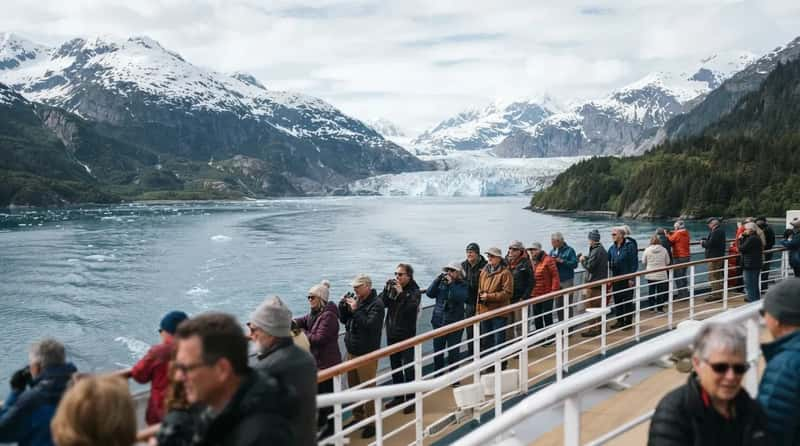
Here’s the part that surprises people: the ship doesn’t dock for a shore day. You sail in, you sail out, and the excursion is the ship itself. The park is remote and reached only by air and water, so there’s no road to a souvenir shop or a visitor town.
That sets up a real debate among cruisers. Some say Hubbard Glacier, a different stop on some itineraries, is the bigger wow because it’s one enormous face of ice. Others argue Glacier Bay wins because one long day gives you multiple glaciers, wildlife and rangers. Fans on both sides get loud about it.
Dress wrong, though, and the day gets a lot shorter…
#11 – The Deck Feels Nothing Like Your Port Photos
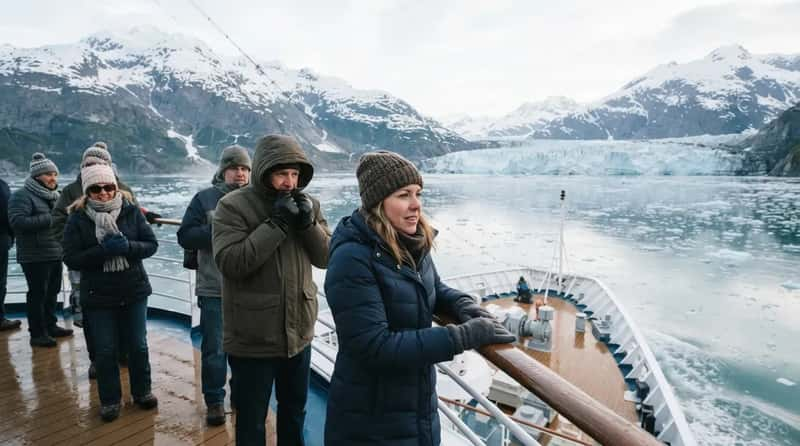
Passengers who stroll out in a T-shirt don’t last long. The air near a glacier stays chilly even in summer, and a moving ship adds its own breeze. The open deck can feel several steps colder than it did at breakfast.
Veterans know the routine. They carry a light windproof layer, a hat and gloves, and they duck inside for a hot drink when the shivering starts. The bow isn’t always the warmest place to watch. Many ships have sheltered decks with nearly the same views.
- Layers beat a single heavy coat.
- Gloves matter more than most first-timers expect.
Look down at the water, though, and you’ll notice something stranger…
#10 – The Water Isn’t Deep Blue, It’s Milky Green
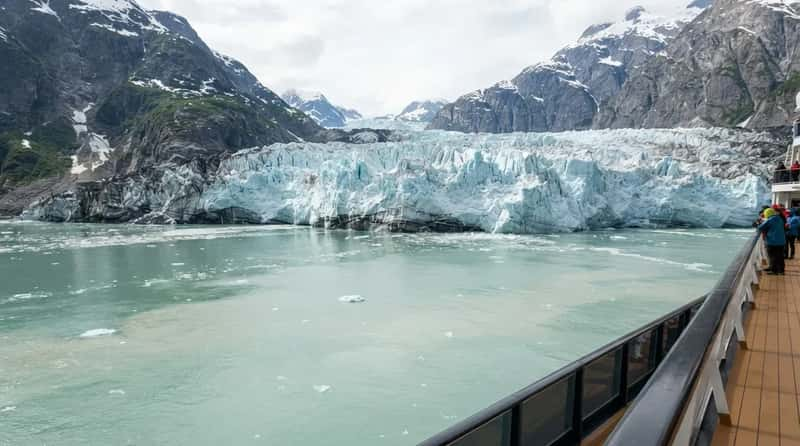
Everyone expects deep, postcard blue. Instead, much of the water near glaciers looks cloudy, pale turquoise or green. It isn’t pollution, and it isn’t a camera trick.
Moving ice grinds rock into ultra-fine powder, which washes into the water and hangs there. The color can shift from one inlet to the next depending on how much of that powder is around. Passengers who catch this early start reading the water like a map of where the ice has been working.
And that water now covers a spot that was solid ice not long ago…
#9 – Most of This Bay Was Buried in Ice Not That Long Ago
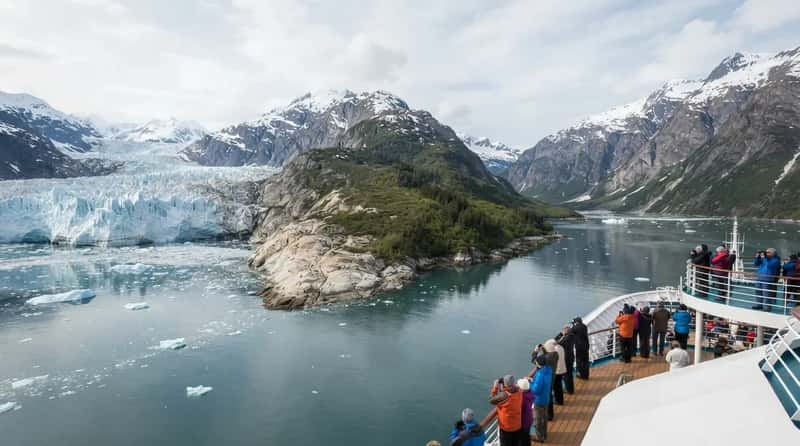
The route you’re sailing is, geologically speaking, brand new. When Captain George Vancouver explored this coast in 1794, what’s now Glacier Bay was largely packed with ice, with only a shallow dent in the shoreline. Most passengers assume the bay is ancient water, and it isn’t.
Over the next two centuries the ice pulled back dramatically and opened a long fjord system. Your ship is moving through space that glaciers carved and then abandoned. Rangers often point to bare rock and young forest along the shore as proof of how fast it happened.
One famous visitor saw the ice before so much of it vanished, and his writing changed everything…
#8 – Naturalist John Muir Saw a Very Different Bay
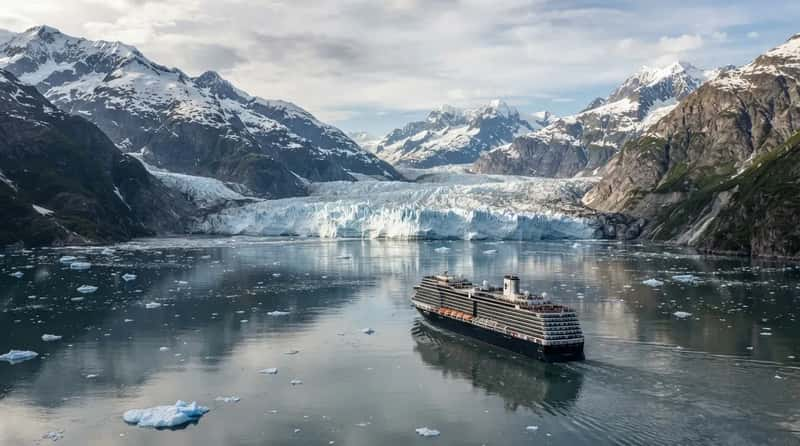
John Muir arrived in 1879, and he found far more ice than today’s cruise passengers see. His writing helped make the place famous long before the first tour ship ever turned up. That’s why so many ranger talks mention his name early.
Comparing his era with now is the quickest way to understand the retreat. The glacier fronts have pulled back so far that spots on today’s route would have been ice in his day. The speed of that change is the thing rangers most want you to carry with you to lunch.
At a Glance
- 1794: Vancouver sails past a coast where ice largely fills the bay.
- 1879: Muir arrives and finds the ice already well back from the mouth.
- 1925: The area is protected as a national monument.
- 1980: It’s upgraded to a national park.
But the ice isn’t the oldest part of the story…
#7 – This Was Someone’s Homeland Long Before It Was a Park
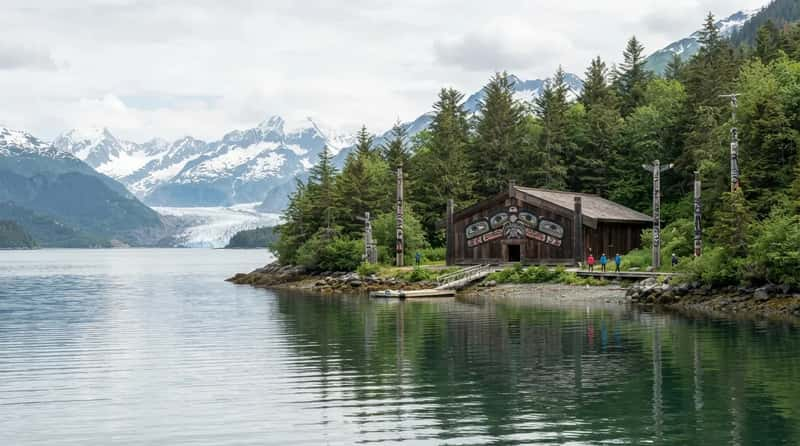
Tour ads rarely mention the first people here. Glacier Bay is the homeland of the Huna Tlingit, and the Yakutat Tlingit also have deep ties to the area. Their history in the bay reaches back well before the national park existed.
Passengers who learn this early tend to watch the shoreline differently. They stop seeing empty wilderness and start seeing a long-held home. At Bartlett Cove, the Huna Tribal House on the shore keeps that presence visible.
Meanwhile, the water has its own rules, and the whales are part of why…
#6 – Whales Can Actually Slow Down Your Ship
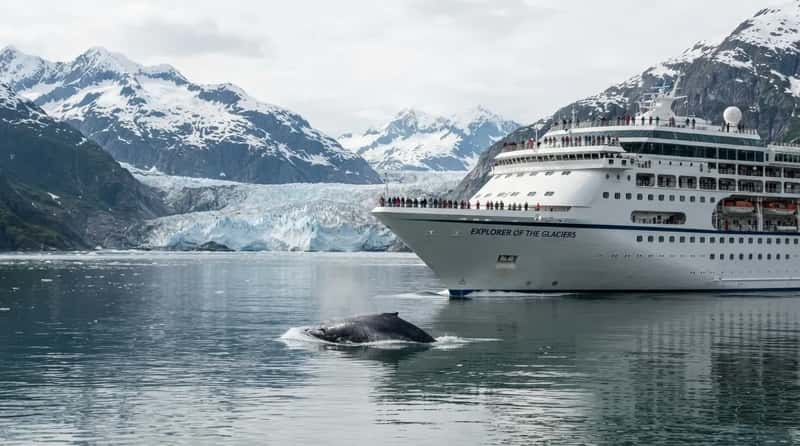
Yes, a humpback can change how fast a cruise ship moves. Glacier Bay has speed restrictions in certain waters where whales gather, and they apply to motor vessels of every size, from small boats to cruise ships. Park managers use limits like these to cut the risk of collisions.
The bridge team isn’t guessing. Alaska mariners can use sighting tools like Whale Alert to know where whales have been spotted. If your ship eases off the throttle in the middle of a calm stretch, a whale is probably the reason.
And whales are only the start of what shows up on the water…
#5 – Seals Riding Icebergs Steal the Show
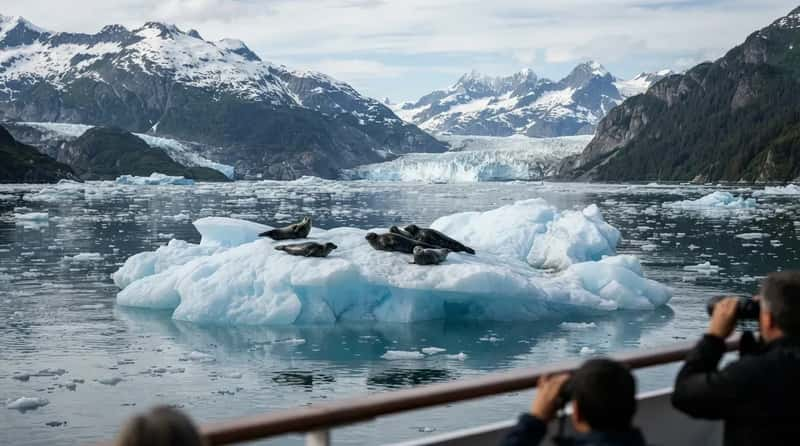
The first wildlife many passengers spot isn’t a whale. It’s a small dark shape resting on a floating chunk of ice. Harbor seals use drifting ice as a platform, and binoculars make them much easier to find.
Sea otters float on their backs in calmer water, and rangers help you tell them apart from logs and kelp. Wildlife blends into ice and rock better than most people expect. After the first sighting, the whole deck tends to go quiet and start scanning.
- Look for dark specks on drifting ice.
- Check calm coves for floating otters.
The most crowded wildlife stop of the day is a pile of rock out in the bay…
#4 – The Marble Islands Are Secretly a Wildlife Apartment Block
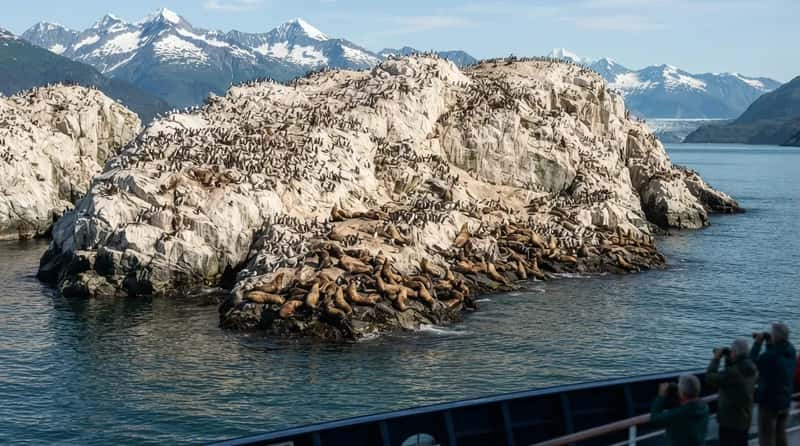
On a clear day the Marble Islands stand out as pale rock crowded with birds. Steller sea lions haul out there, and seabirds nest on the ledges. You can sometimes smell the place before you see it.
Puffins can show up on these islands, but sightings aren’t guaranteed. Passengers with binoculars tend to see far more than those without. From a moving ship, a bird colony looks like static until you zoom in, and then it comes alive.
Wildlife isn’t limited to the water, either…
#3 – Bears and Mountain Goats Are Watching From the Shoreline
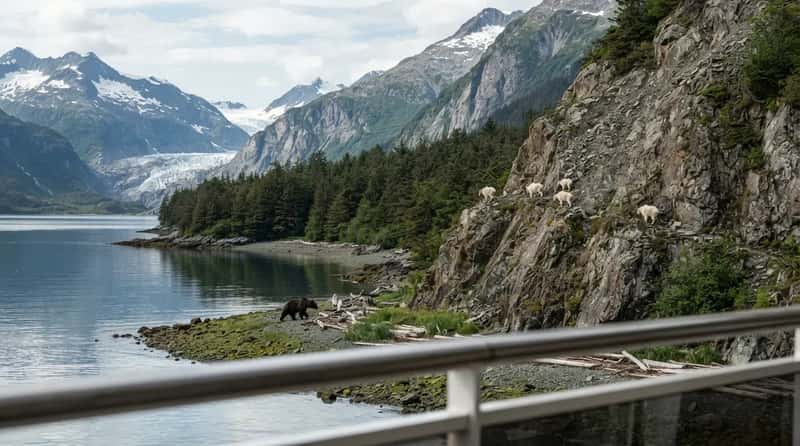
Many first-timers only scan the water. Experienced passengers check the beaches and slopes too. Brown bears can walk the shoreline and mountain goats cling to cliffs, though neither one is guaranteed.
The trick is patience. A brown spot on a green slope might be a boulder, a stump or a bear, and rangers will happily tell you which. Most people see far more after the first hour of looking than in the first ten minutes.
Worth Knowing
- Scan the line where the beach meets the trees, since that’s where bears tend to travel.
- Watch for movement, not color. A “rock” that shifts is usually an animal.
- Mountain goats look like pale specks on steep, high ledges.
- If someone near you points, ask for a landmark instead of a direction.
And the best seat isn’t always where you think it is…
#2 – The Crowded Bow Is Not the Best Seat
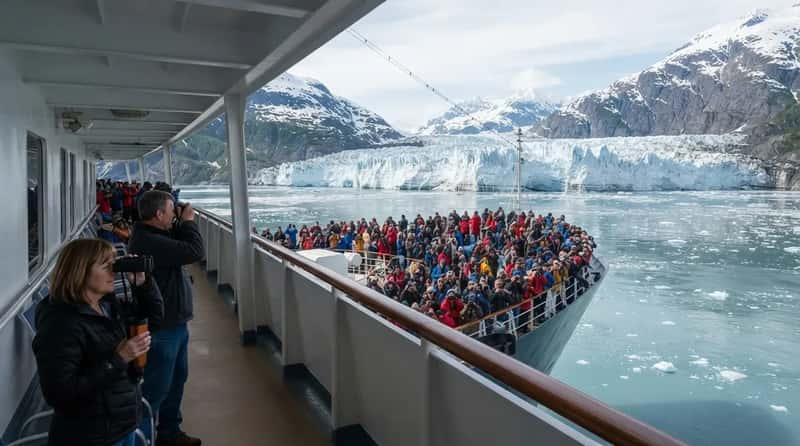
Everybody rushes to the front, but experienced cruisers often skip it. The bow can be windy and packed shoulder to shoulder when the ship slows near a glacier. Side decks and upper levels often have clearer sightlines and a lot more elbow room.
Many ships turn slowly in front of the ice so both sides get a look. Passengers who claim a spot and stay put tend to do better than those who race around. Plenty of people say a quiet spot at the side rail beat the front-row crowd.
But nothing prepares you for the moment the ice actually speaks…
#1 – The Sound Arrives After the Ice Falls
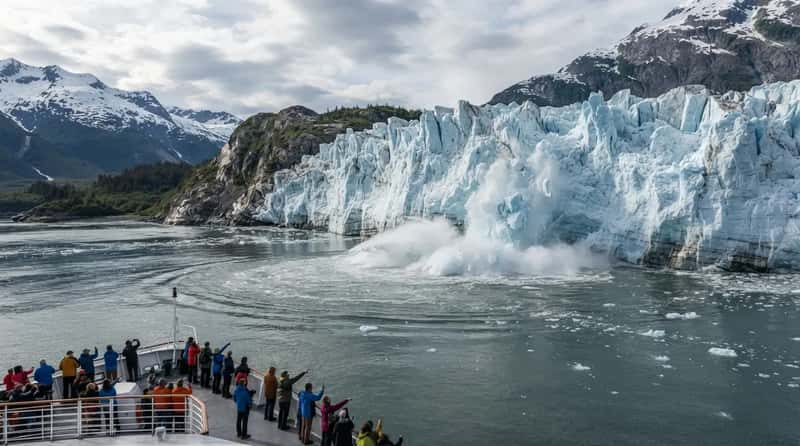
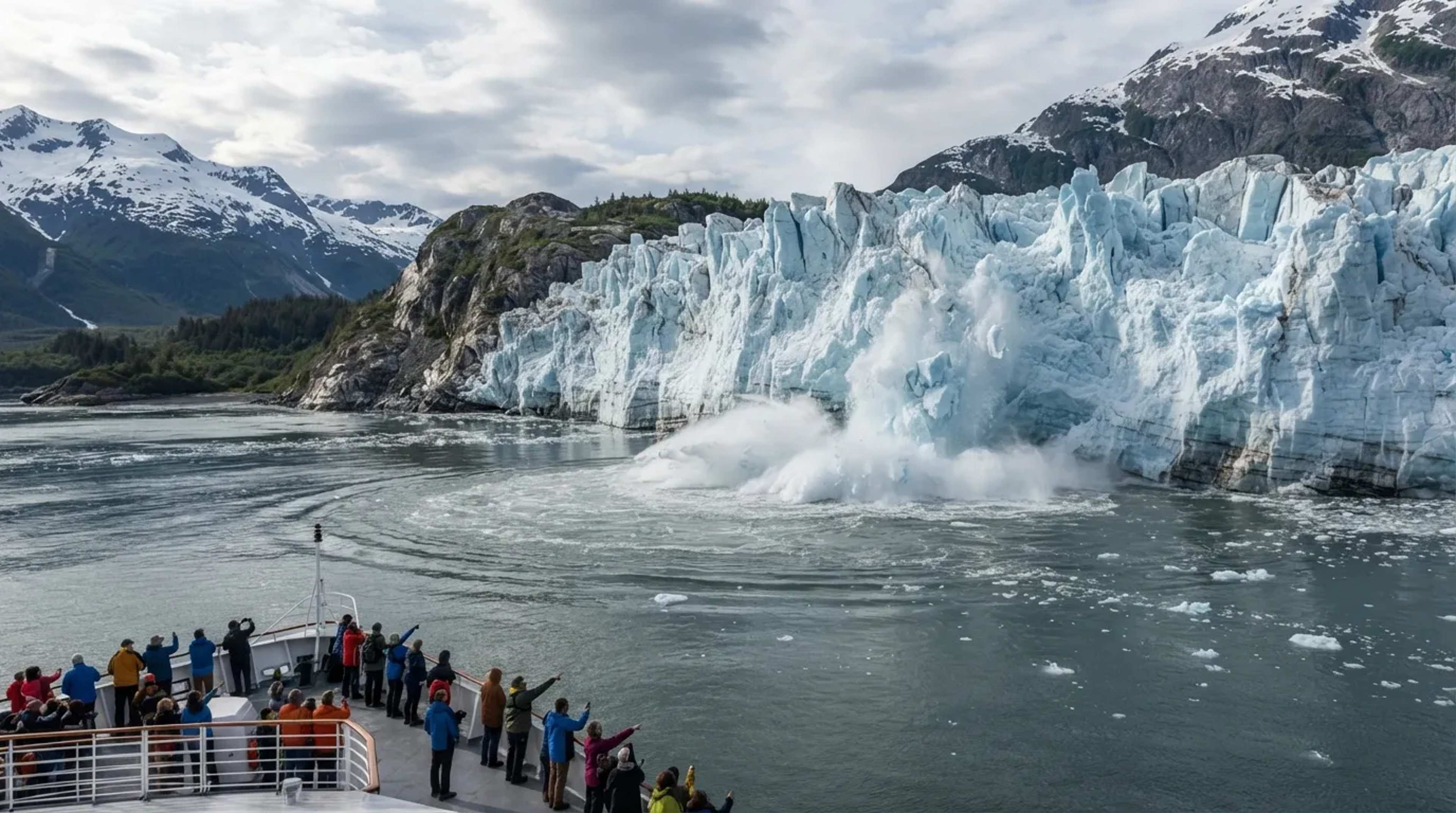
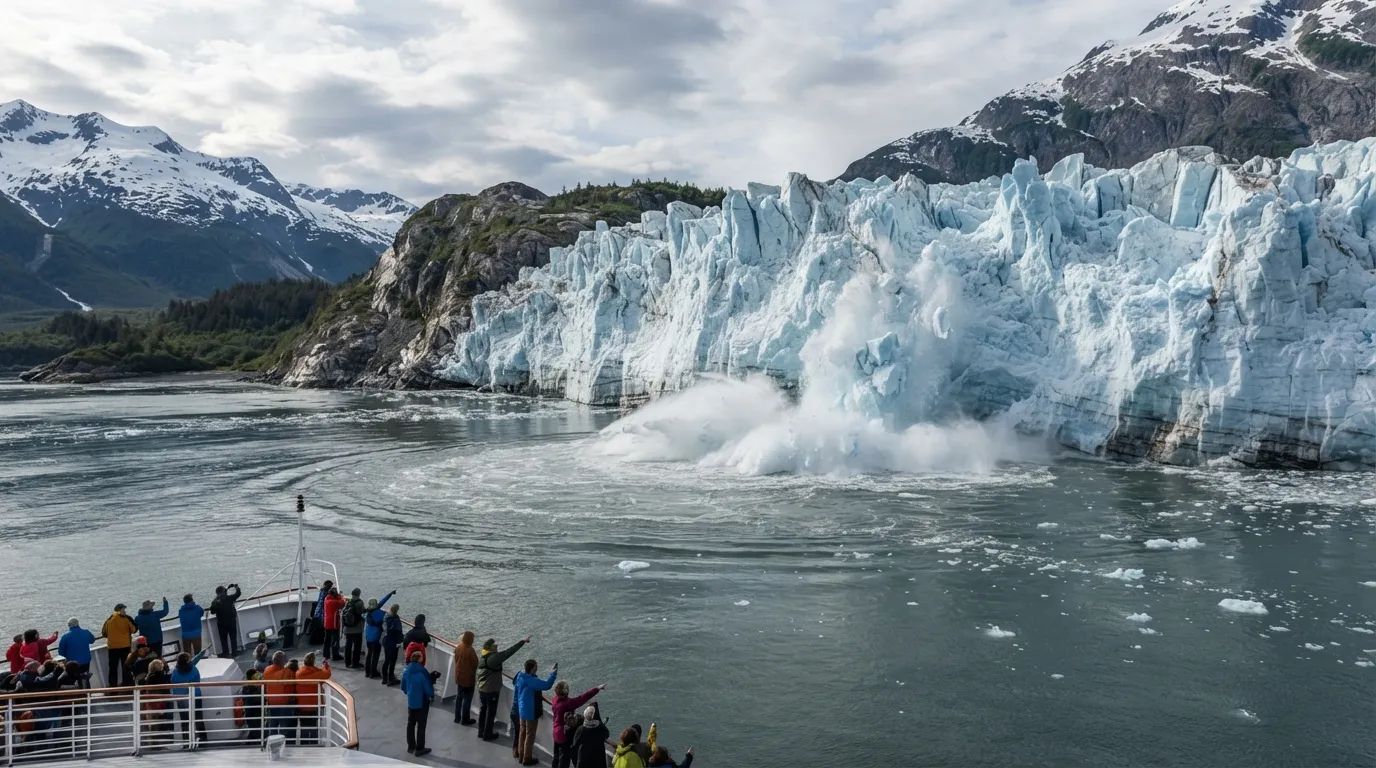
First-timers get fooled by the delay. When a chunk breaks off a glacier face, you see the splash first and hear the crack a moment later. It’s called calving, and the lag is simply sound traveling slower than light.
People often go silent when that rumble rolls across the water. Some say it’s the one moment that makes the whole trip feel worth it. The ice you’re watching is moving all the time, and the sound is proof.
Glacier Bay isn’t a lazy scenic loop. It’s a rationed place, with two ships a day, rangers on the loudspeaker, speed limits for whales and a landscape that was ice not long ago. The best moments aren’t always the loudest ones. They’re the quiet scan of a shoreline, a seal on a floe, and the delayed rumble of falling ice.
Passengers walk in expecting a view. They walk out with a story about a bay that’s still changing while they watch.