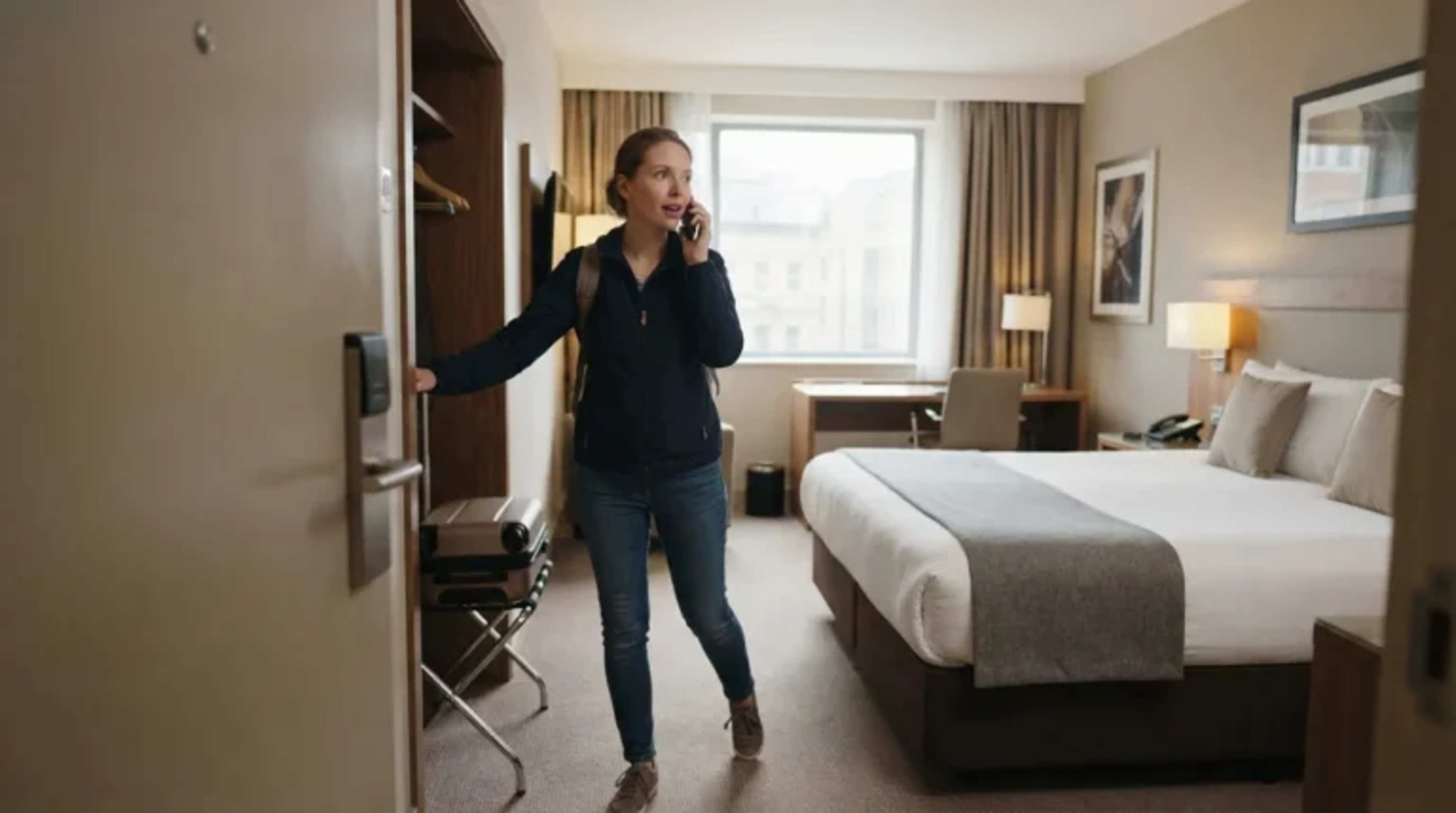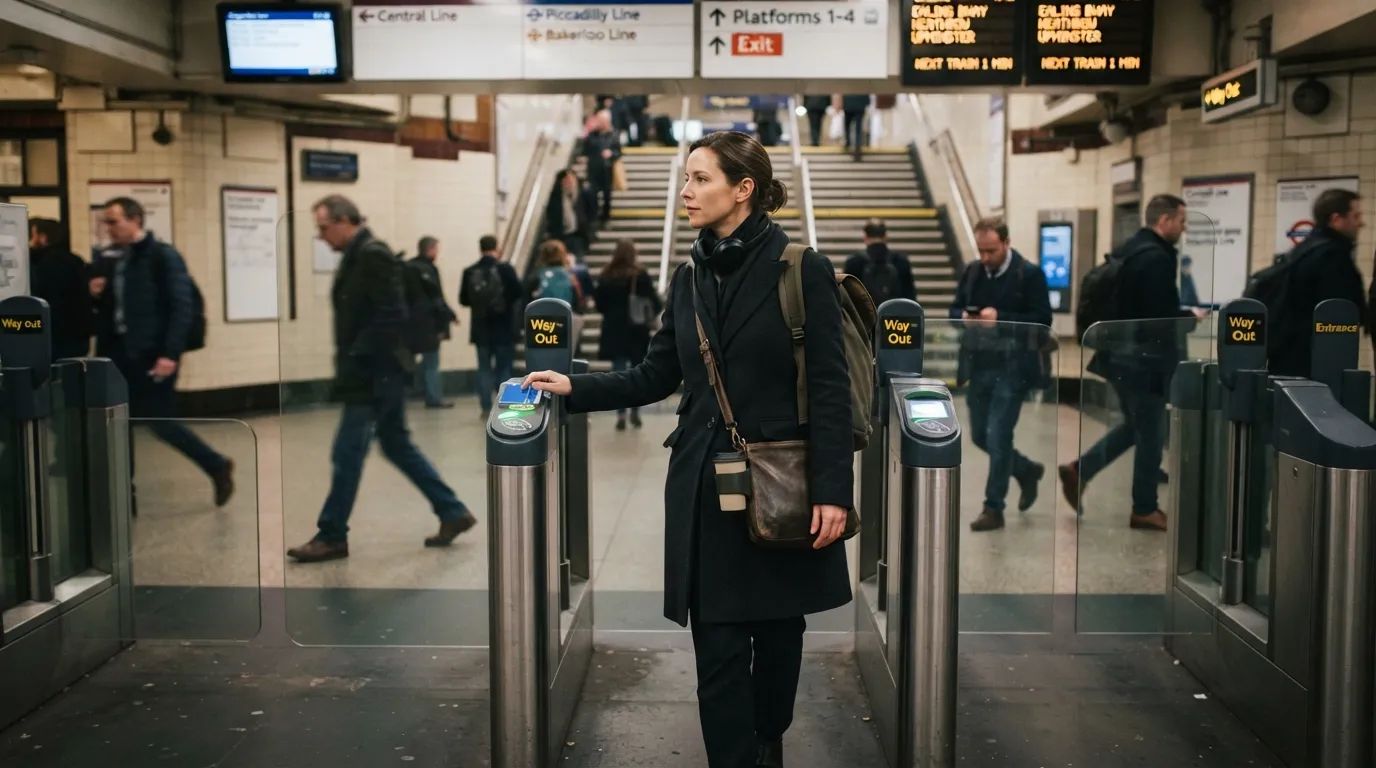
Most people think they can spot a train regular by the jacket, the bag, or the way someone struts down the platform like they own it. They’re wrong – and so is almost everyone else guessing that way.
The real tells are smaller, stranger, and far more revealing than luggage or shoes. There are fifteen of them, and station staff clock every single one before a regular ever opens their mouth.
15. They Walk Through the Ticket Gate Without Breaking Stride
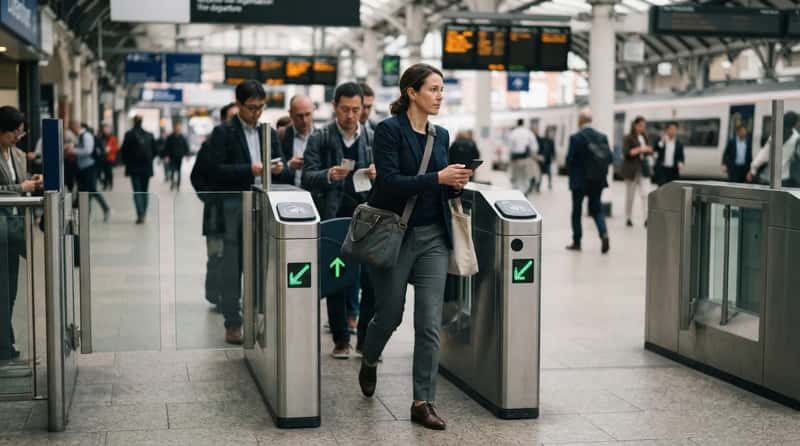
Watch the ticket barriers at any busy station and the pattern is instant. An occasional traveller stops, fumbles through a bag, swipes the wrong card, and blocks the lane behind them.
A frequent rider already has their ticket ready before they reach the gate – phone unlocked, card out, or QR code on screen. The motion through the gate is seamless, one continuous walk.
Fast Facts
- Contactless fare payments on Boston’s MBTA grew from under 10 percent to more than 25 percent of trips within about a year of rollout.
- NJ Transit sells 28 percent of its rail tickets through its MyTix mobile app, up from 17 percent just a few years earlier.
- Contactless-enabled ticket barriers in Japan can admit up to 60 passengers per minute through a single gate.
This matters more than it seems. Passengers who aren’t prepared slow the flow for everyone, and regulars have learned that every second of hesitation at a gate costs a little social capital with the commuters stacking up behind them.
It’s such a small thing, and yet it tells you everything. The platform itself reveals even more.
14. They Know Exactly Where to Stand on the Platform
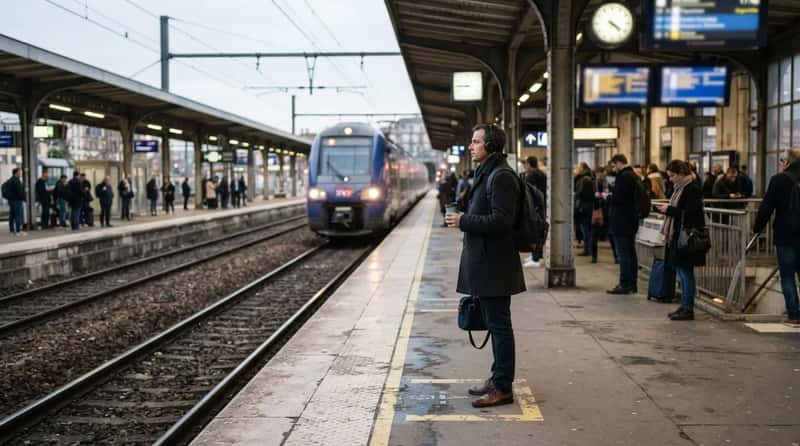
A first-time passenger walks to the middle of the platform and waits wherever feels comfortable. A regular stands at a very specific spot, and it is never random.
Where people choose to wait is usually deliberate, shaped by habit and by where the exit at the destination station leads. An experienced rider positions themselves at the platform point that lines up with their exit at the other end.
Less experienced passengers tend to position themselves based on the layout of their origin station instead – the entry point, or simply the middle of the platform. The regular is already thinking about where they’re going, not where they are.
Platform positioning is one piece of the puzzle. What they do with their eyes once they’re there is just as telling.
13. They Read the Departure Board Differently
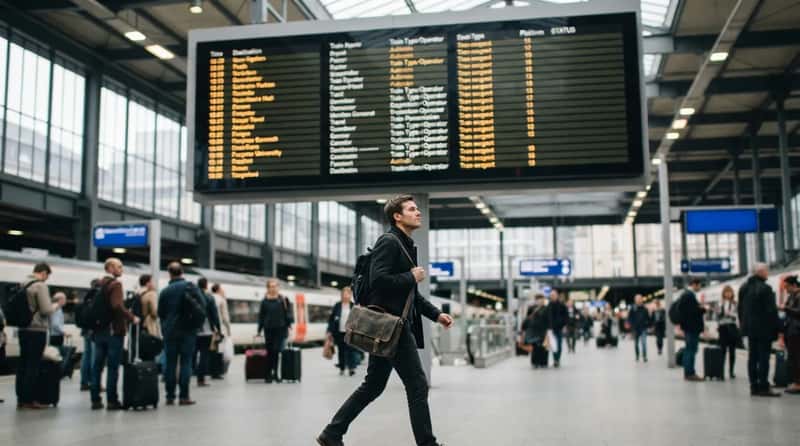
A new passenger stares at the departure board like it’s written in another language, scanning every column before finding their train. A regular glances up for two seconds and already knows what they need.
Frequent riders have learned which parts of the board matter. They check the platform number and any delay notation – not the full train name, which they already know by heart.
Trains on the same schedule don’t always leave from the same platform. A 9 AM service might board at platform 1 on Tuesday and platform 4 on Wednesday, so regulars never assume – they glance, confirm, and move.
But how they handle their luggage once on the platform is what really separates them from the crowd.
12. Their Luggage Is Compact, Positioned, and Never in the Way
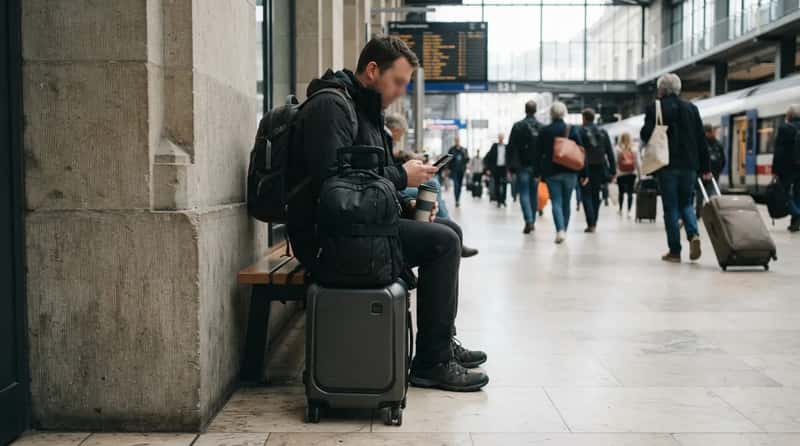
Walk through any busy station and you’ll see sprawling suitcases blocking doorways, backpacks jutting into aisles, wheeled bags left diagonally across walkways. None of those belong to regulars.
Bags left in aisles or in front of doors stop other passengers from moving freely, and experienced riders know better than to stash luggage in vestibule areas. Regulars keep their bags upright, close to the wall, and always within arm’s reach.
This isn’t just politeness – it’s self-interest. A bag in the way gets knocked, kicked, or damaged, and compact luggage means faster boarding and no scramble when a stop arrives suddenly.
Luggage discipline is visible from across the concourse. But what happens at the doors is the moment that exposes everyone else.
11. They Step Aside at the Doors Without Being Told
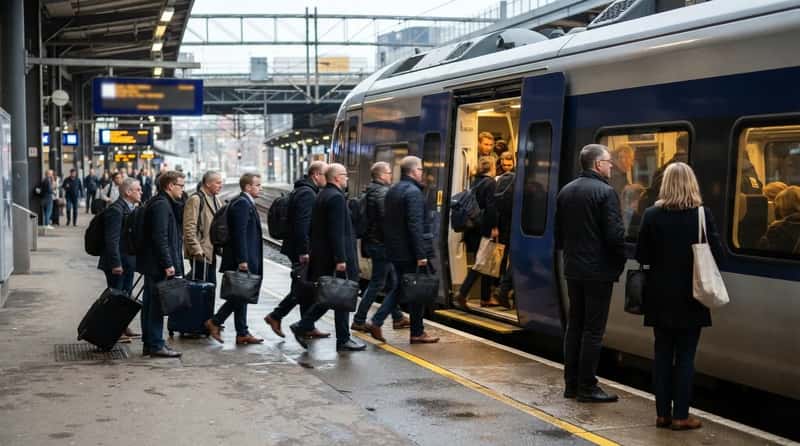
The second a train pulls in, a familiar drama plays out. Occasional travellers crowd the door gap before a single person has stepped off. Regulars move to the side without a word.
The understood etiquette is simple: stand off to the side, let passengers exit, then board. Regulars execute this as an automatic reflex. It doesn’t look like a decision, because for them, it isn’t one.
There’s usually not enough room for two streams of people to pass at once, and the steps are often steep enough that a collision means real injury. Regulars have learned this the hard way, or watched it happen to someone else enough times to never repeat it.
Door behaviour is one of the clearest tells at a station. But the noise they make – or don’t make – is just as diagnostic.
10. They Keep Their Volume Down Without Thinking About It
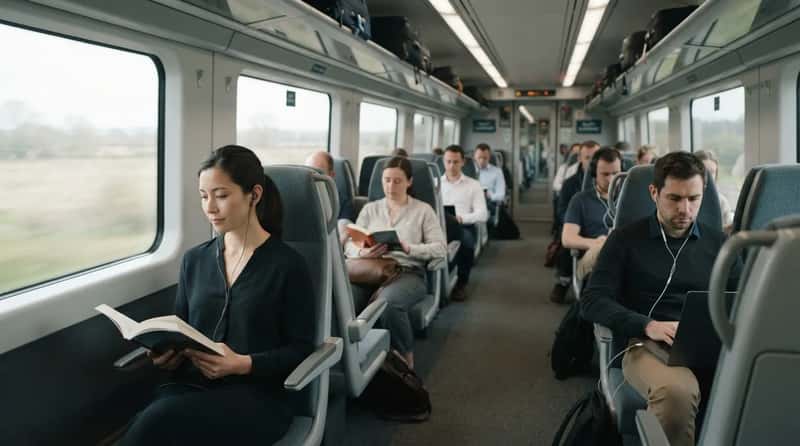
Train stations and carriages amplify sound in ways airports and buses simply don’t. Casual passengers haven’t registered this yet, which is why you can always hear them from two rows back.
Unlike a plane with its constant engine hum, a train seems to amplify every voice – so speaking quietly is the norm for regular riders. Experienced passengers instinctively lower their register the moment they step into the concourse.
If everyone else is speaking in hushed tones, regulars fall in line, and they watch for the signs marking quiet cars where people work or nap. They read the social temperature of a carriage without needing to be told.
Sound gives it away. So does how they handle their phone – and this one surprises most people.
9. Their Phone Is Already Charged Before They Arrive
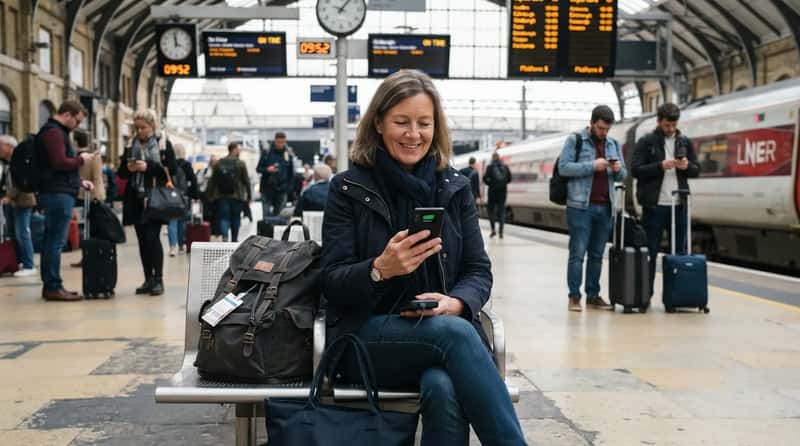
Occasional travellers are the ones scanning frantically for a charging point the moment they sit down. Regulars almost never need one, because they stopped relying on station or carriage outlets a long time ago.
Older train cars sometimes have just one outlet per carriage, forcing someone to run a cord across the aisle. Experienced riders charge everything fully before boarding and carry a portable battery instead. The power bank is one of the most universal items in a regular’s bag.
This is also why you rarely see a regular sprinting to a charging point on the concourse. They planned the night before, not ten minutes before departure – and that calm energy starts here.
This habit reveals a deeper pattern: experienced riders prepare the night before. But there’s one preparation habit even more telling once you spot it.
8. They Know the Stop Times for Every Intermediate Station
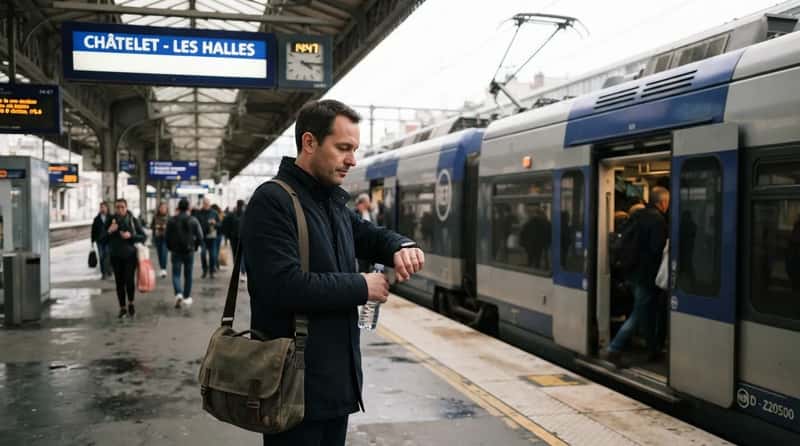
An experienced rider who steps off for air at an intermediate station doesn’t need to check a posted timetable. They already know, to the minute, when the train pulls away again – and they’ve quietly set an alarm just in case.
This habit separates panicked tourists from calm regulars. At some stations, passengers get barely three minutes before departure, and stepping off without checking the schedule risks watching your own train leave without you. Regulars know the next two or three stop times before they consider stepping onto a mid-journey platform.
At a Glance
- Some transit agencies target roughly a forty-five second dwell time at their busiest downtown stations.
- Paris’s RER express network sets a theoretical dwell time of just 30 seconds per stop.
- Most scheduled UK stations run a 30-second dwell window, with a couple of major hubs stretching to 60 seconds.
This knowledge comes from near-misses of their own, or from watching someone else’s disaster unfold. You can spot it instantly: a regular walking onto a short intermediate platform moves with an unhurried stride, checking their watch once, just for confirmation.
Time awareness is a defining trait. But how they handle seat space reveals something else entirely about their character.
7. They Never Put a Bag on the Empty Seat Next to Them
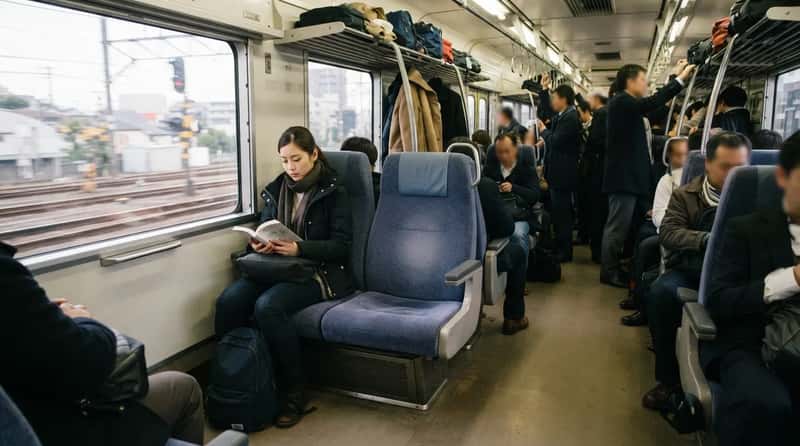
This one is so common among first-timers it’s become a shorthand. A bag on the neighbouring seat is the calling card of someone who doesn’t ride often. A regular would sooner park in a fire lane.
Frequent riders say taking up extra space is one of the most annoying things a passenger can do – seats are for people, not belongings, especially during a crowded rush-hour run. Placing a bag on a seat just to claim personal space is considered outright rude.
Regulars keep their bag on their lap, under the seat, or in the overhead rack. It’s self-preservation as much as manners – leaving a bag on a seat invites an awkward confrontation with a standing passenger, and regulars have no interest in that scene.
Space etiquette is one giveaway. What regulars do before the doors even open is even more revealing.
6. They Start Gathering Their Things Before the Train Stops
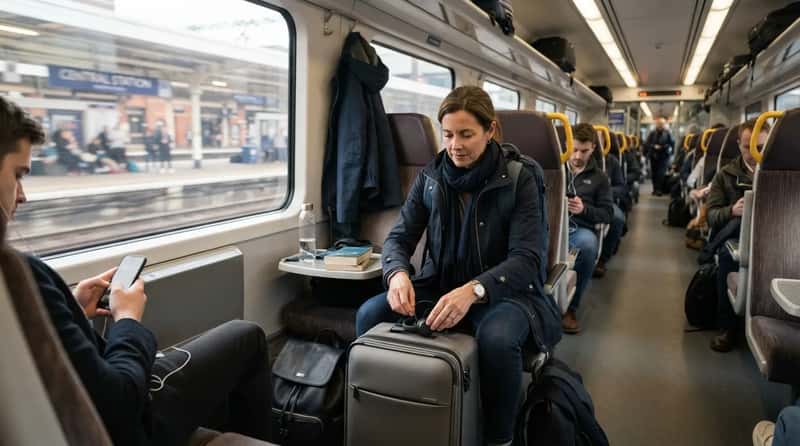
Watch a carriage in its final minutes before a stop. Occasional travellers are still fully reclined, scrolling their phone, coat on the rack, bag overhead. Then the announcement lands and the scramble begins.
Experienced passengers start gathering their belongings well before that point, because waiting until the last minute risks a scramble at the door or a jam with new passengers boarding. Regulars begin their quiet pack-down about three to five minutes out.
Quick Compare
- Casual traveller: stays seated until the platform is already in view, then scrambles for coat, bag, and belongings all at once.
- Regular: begins pack-down three to five minutes out, one item at a time.
- Casual traveller: ends up standing in the aisle, blocking boarding passengers mid-stop.
- Regular: stands still and ready, bag zipped, coat already on, well before the doors open.
Coat goes on, bag comes down from overhead, anything on the tray table gets stowed. By the time the train stops, they’re simply standing there waiting – it looks effortless because it was planned.
This visible calm under time pressure is one of the clearest tells on any platform. What they eat, and what they refuse to buy, is another.
5. They Never Buy Food from the Station at Full Price
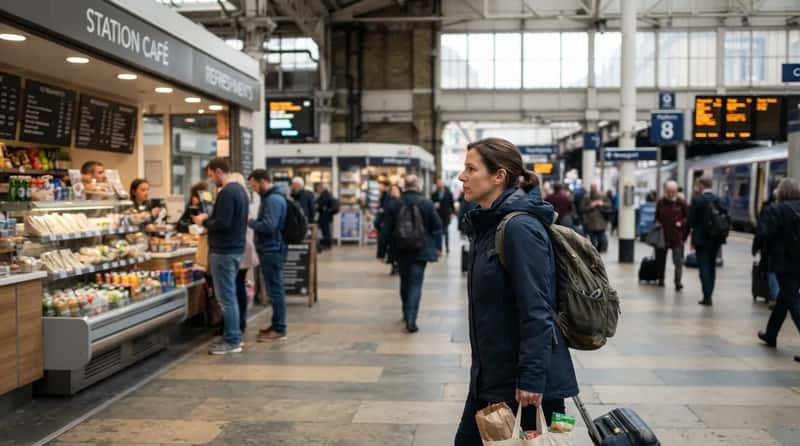
The casual traveller drifts toward the station café, checks the price of a sandwich, and buys it anyway because there’s no other plan. The regular figured this out before they even left home.
Experienced travellers stock up at a nearby deli, bakery, or supermarket before boarding, because food sold inside the station or on the train carries a real markup. Regulars treat station food pricing as a known tax on unpreparedness – and they’ve opted out entirely.
This isn’t about being cheap. It’s about paying full price at a station café enough times to decide it’s never worth repeating – which is why the regular walks straight past the food stalls without glancing at the menu board.
Nutrition planning is practical and easy to spot. But what regulars do with their ticket reveals a financial instinct first-timers rarely develop.
4. They Booked Their Ticket Weeks Ago at a Fraction of the Price
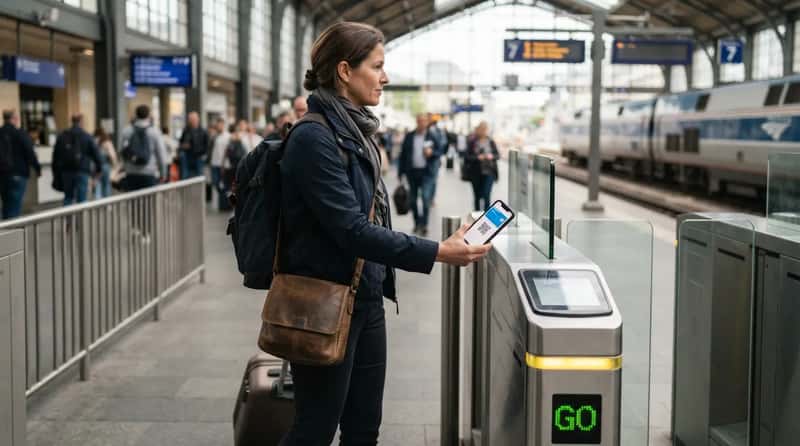
Casual travellers buy their ticket at the machine minutes before departure. Regulars booked theirs days or weeks earlier, at a price that would make those same casual travellers wince with regret.
Booking early unlocks discounted fares and better seat options, and most rail systems offer fare classes ranging from flexible and refundable to cheap but locked-in. Regulars understand the pricing structure of their rail network the way some people understand a stock chart.
To dodge extra fees and outdated schedules, experienced travellers book directly through official rail operators and use mobile tickets that scan instantly at the gate. There’s no fumbling with paper – for most regulars, paper tickets stopped existing years ago.
Ticket intelligence is deep insider knowledge. But two giveaways left are even harder to fake – and the last one is the most surprising of all.
3. They Recognise Station Staff and Know Which Ones to Ask
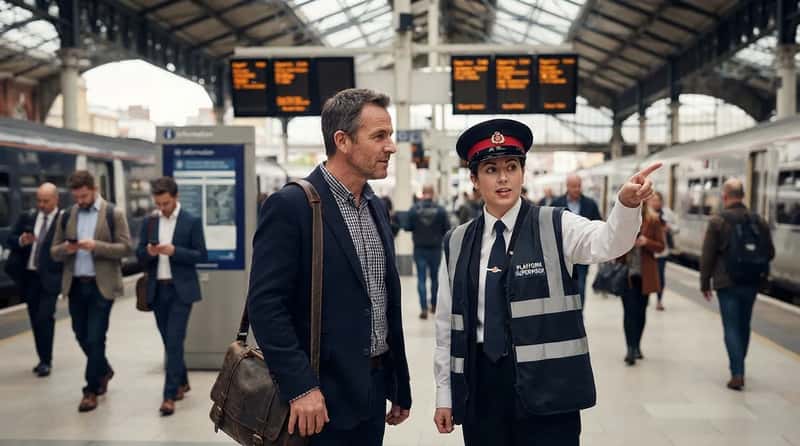
Inside every busy station, there’s a dozen types of staff – gateline supervisors, platform assistants, retail employees, cleaning crews, transit police. A regular knows exactly who has the information they need and who doesn’t.
An occasional traveller approaches whoever’s nearest and gets bounced between three different people before getting an answer. A regular walks past the retail staff, ignores the information kiosk, and heads straight for the platform supervisor – the one most likely to know about real-time changes.
Worth Knowing
- Gateline staff mainly handle ticket problems and fare gate malfunctions, not train delays or platform changes.
- Platform supervisors are usually the first to know about last-minute platform swaps or short-notice delays.
- Transit police and station security are trained for safety issues, not schedule questions.
- Retail and concession staff, while friendly, typically have no access to live train information systems.
This is experiential knowledge that can’t be faked. Regulars have built a mental map of who holds what information, and they navigate staff the same way they navigate the platform – with precision, not guesswork.
Human navigation inside the station is a sophisticated skill. But the final two items are about something even more ingrained – a physical and psychological calm no amount of occasional travel can replicate.
2. They Don’t Run, Even When the Train Is at the Platform
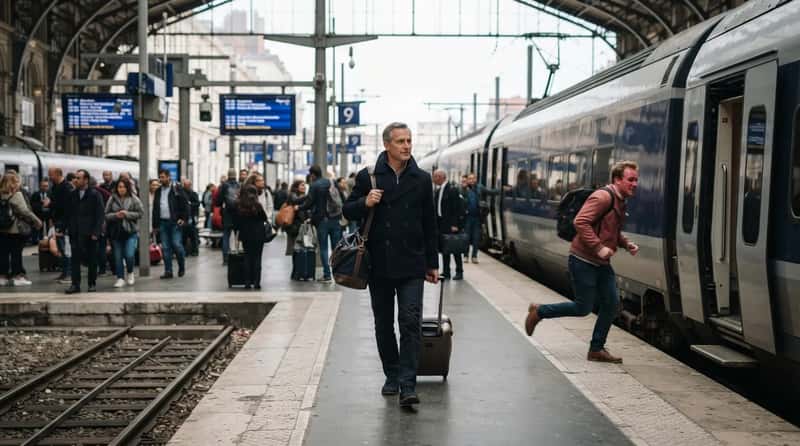
This is the most counterintuitive tell of all. A first-time or occasional traveller, spotting their train at the platform, breaks into a near-sprint. A regular – even running tight on time – walks at a brisk, deliberate pace.
Running through a station carries real injury risk, but beyond safety, the regular’s lack of panic comes from something deeper. They know a sprint rarely changes the outcome, and they’ve built enough buffer time into their journey that it’s almost never necessary. The calm walk isn’t complacency – it’s the product of meticulous planning.
This composure is visible from across the concourse, and it radiates competence. The regular’s heartbeat is normal. Everyone else’s is elevated.
Not running is visible from a distance. But the single most telling sign of all happens before the train even enters the station – and most people have never noticed it.
1. They Are Already Looking at the Right Point on the Platform Before the Train Appears
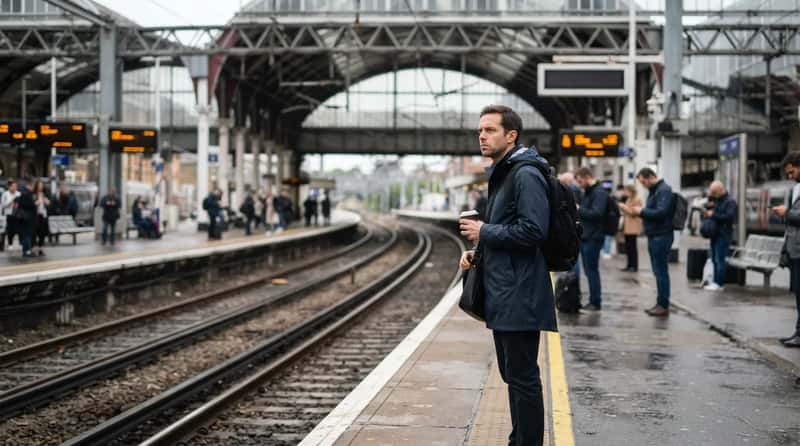
This is the one observers almost never catch the first time they look for it. It’s subtle, quiet, and completely automatic – a regular standing on the platform isn’t looking down the track in a general way. They’re fixed on one very specific point.
Experienced passengers make deliberate choices about where to stand based on accumulated habit, shaped by where the exit at their destination leads. Their eyes are locked on the exact door point that lines up with their carriage and their exit at the other end. They aren’t watching the train arrive – they’re waiting for their specific door to reach them.
This is the deepest form of rail fluency. It requires knowing the train’s layout, the platform markers, and the exit geometry of the destination station, all at once – while less experienced passengers position themselves based on their own starting point instead, and cues meant to guide them rarely override a regular’s habit.
It looks like stillness. It’s actually mastery. And once you know to look for it, you cannot unsee it.
The Bottom Line
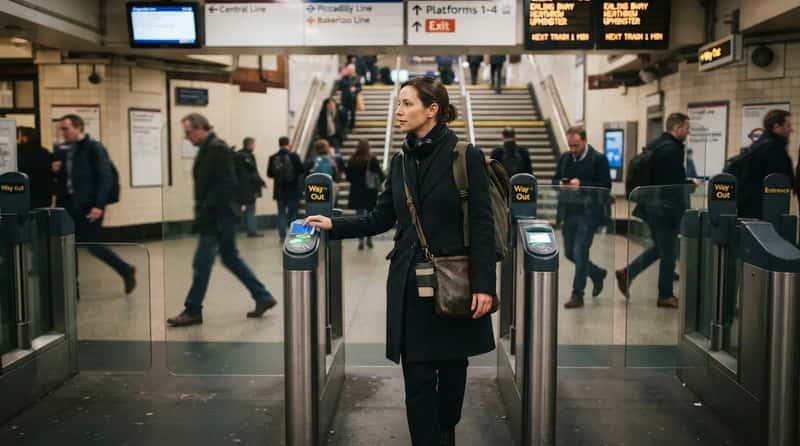
Frequent train riders don’t announce themselves – they reveal themselves through dozens of tiny behaviours sharpened by repetition. They stand at the right spot, glide through the gate, pack the right bag, never scramble for the door, and stay calm in a space that unsettles everyone else.
Most of these habits look effortless because they were built through trial, error, and enough journeys to stop making the same mistakes twice. The good news is that every one of them is learnable, sometimes in just a handful of trips.
The question is which one you’ll work on first. Did we miss a tell you’ve noticed at your own station? Drop it in the comments.