Cruise entertainment teams really do reshuffle the night behind the curtain, and the audience almost never catches it. The lights drop, the show opens exactly as the daily planner promised, and everything looks calm and planned.
But on a moving ship with a small cast, weather, illness and last-minute glitches can quietly rewrite a night’s lineup while guests are still at dinner. Here are 15 changes that happen out of sight, and the final one explains why a show can suddenly feel smaller than you expected.
#15 – The Comedian and Piano Player Rotate While the Big Show Stays Put
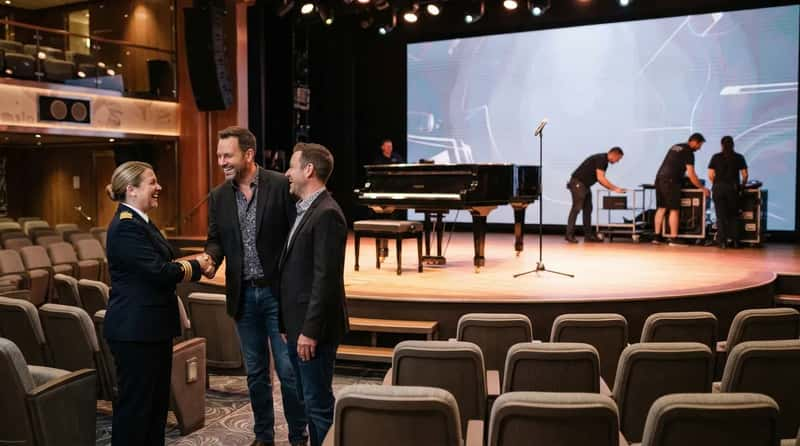
Many guests assume the whole entertainment lineup refreshes with every sailing. It doesn’t. In a Carnival thread on Cruise Critic, one poster said comedians, cruise directors and piano players change, while the Playlist production shows in the main lounge may stay the same. That is one cruiser’s account, and it varies by line.
The practical effect is that the “fresh” part of your week is often the live, human part. The polished production number may be identical to the one on last week’s sailing. Some cruisers shrug at that. Others call the repeat shows glorified screensavers, and the debate gets heated.
But the real shuffling starts when somebody can’t go on…
#14 – The Sick Performer Whose Slot Someone Else Quietly Fills
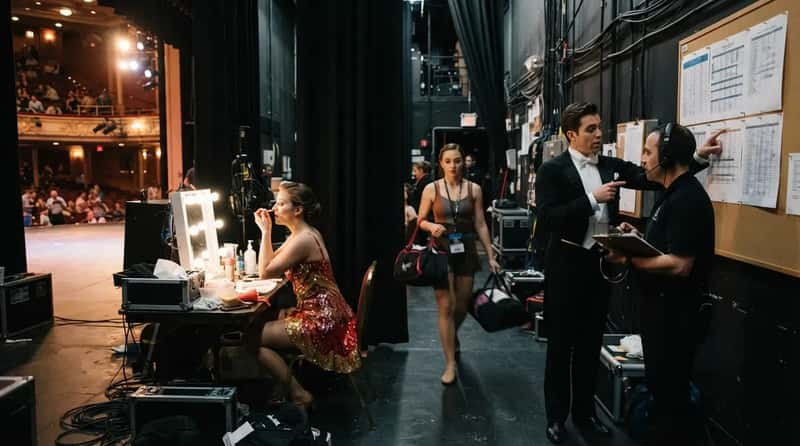
A cast member wakes up ill, and the show still has to go on. Ships plan for this. There are usually several guest entertainers and a show company aboard, so a sick performer can swap with another act.
So the slot you were promised can change without any announcement. Carnival’s John Heald has listed illness among the cast or the technical team as one of three main reasons a full production gets altered. Technical crew count too, because scenery, lighting and sound all depend on them. Most guests only notice if they were attached to one particular act.
And swapping acts is the easy fix. Fixing a full dance number is harder…
#13 – The Dance Lifts Rebuilt Around Whoever Is Still Standing
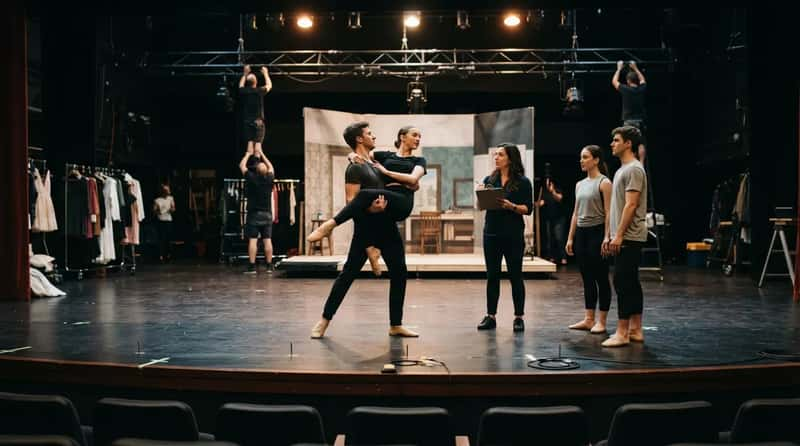
Production shows look locked in. Between performances, they aren’t always. The cast manager and performers rework the staging, someone covers a spot, and a lift gets changed to suit the partners available.
Think about a number with tight, synchronized formations. One missing dancer can mean the whole routine gets re-blocked in a few hours. The goal, as one travel site put it, is a show that still looks whole, even though the cast list on the wall no longer matches the stage.
Quick Compare
- Swap: another act takes the same slot, as with a sick performer.
- Re-block: the same number returns with new lifts and formations.
- Scale down: a full production becomes a simpler, safer version.
Sometimes the fix isn’t a new lift but a whole new format…
#12 – The Full Production That Becomes Singers on Stools

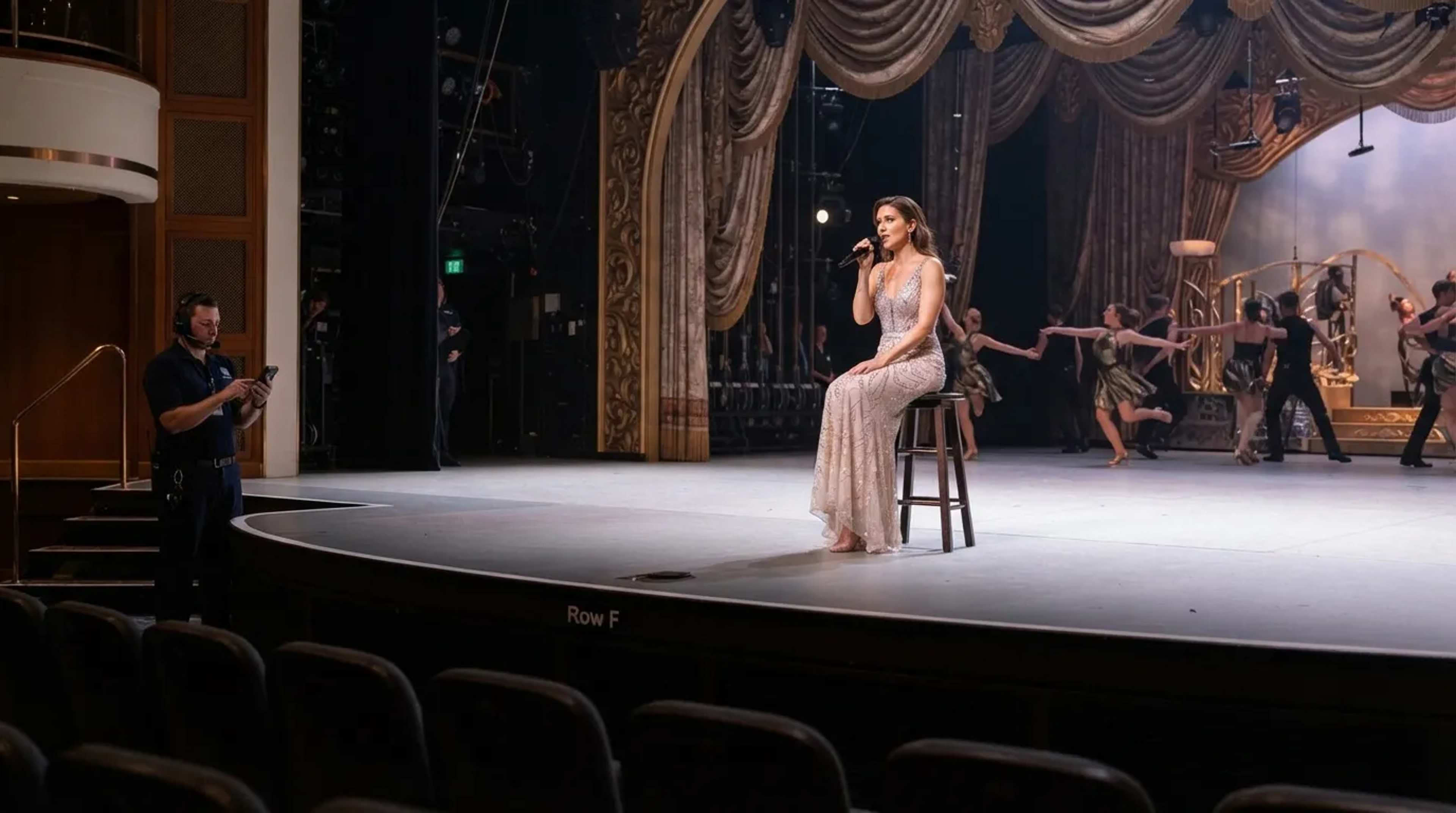
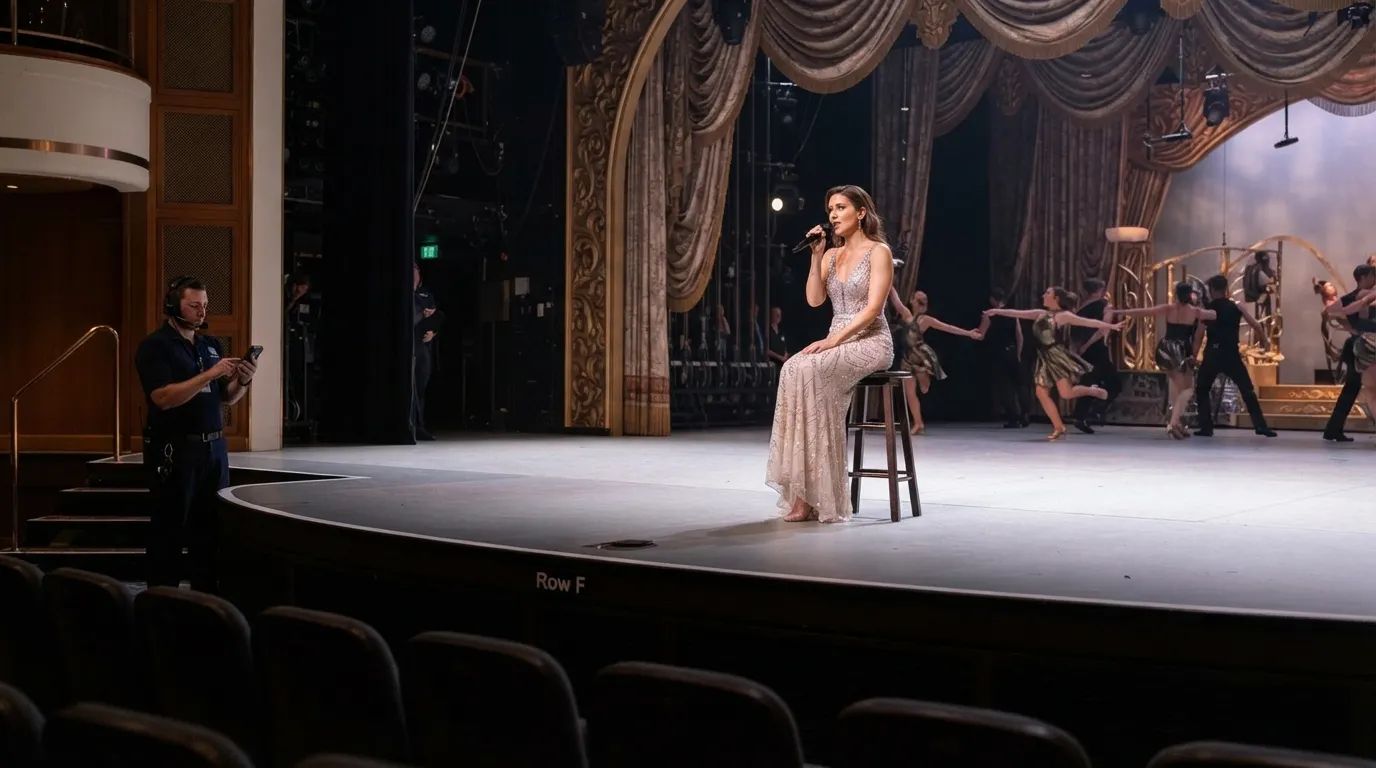
Ever watched a big production show where the cast just sat and sang? Carnival’s John Heald addressed this directly. He described a passenger’s complaint about performers sitting on stage on stools singing instead of doing the full show.
The reason isn’t laziness. Instead of cancelling a show, the cast sings rather than performing the full production, which is safer for the performers. The show you saw may have been a deliberately scaled-down version of the real thing. Disappointed guests might argue they deserved the full show. The safety argument is hard to beat, though.
A scaled-back show isn’t the only swap. Sometimes the whole genre changes…
#11 – The Acrobatic Spectacle Swapped for Cabaret

Acrobatics look dramatic from the seats. On a rocking stage, they are a different matter. One report says Celebrity Cruises canceled an acrobatic theater show for the performers’ safety and replaced it with a cabaret show.
That is a full change of act type, not a trimmed version of the same one. A show built on height and balance became a show built on voice and stage presence. Plenty of guests would have just assumed the cabaret was always the plan.
Outdoor shows have it even worse…
#10 – The Outdoor Dive Show That Waits for Better Weather
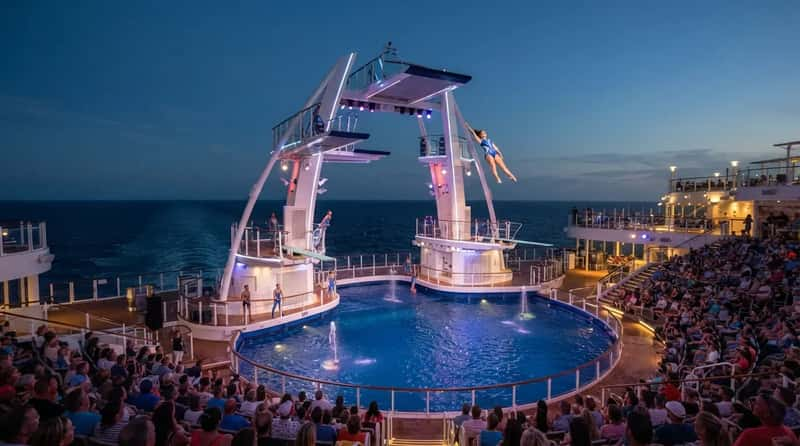
Open-air spectacles are the first to feel a bad forecast. On Royal Caribbean’s Oasis class ships, Aqua Theater shows have been canceled due to weather, and they feature divers who jump off 60-foot platforms on the aft of the ship.
Disappointment is common, and the same report notes the cruise line does its best to reschedule for another day. That means the show you caught on a later evening may have originally been planned for a different night. The daily schedule can quietly shift around it.
Weather isn’t the only thing that can go wrong at the last second…
#9 – The Glitch That Appears Minutes Before Curtain
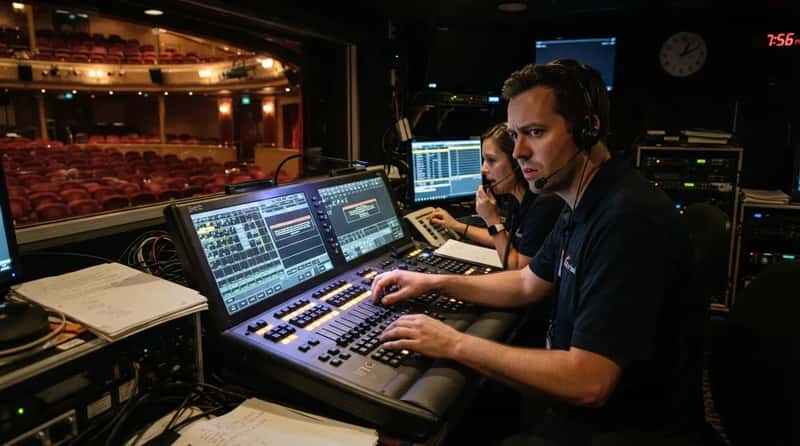
Sometimes the problem isn’t the sea. It’s the equipment. Carnival lists a technical problem just before the show started that the technicians weren’t able to fix as a reason a full production might not run as planned.
A lighting rig, sound system or automated set piece can fail with minutes to spare. When that happens, the team has to rebuild the show around what still works. Cues change. Numbers get trimmed. The audience just sees a show start on time.
At a Glance
- Rough seas: the most common reason a production gets scaled back.
- Illness: cast or technical crew can be out, and the lineup shifts.
- Last-minute tech failure: a problem that technicians can’t fix before curtain.
Behind the scenes, an invisible checklist keeps those glitches from getting worse…
#8 – The Gear Lashed Down on a Rolling Night
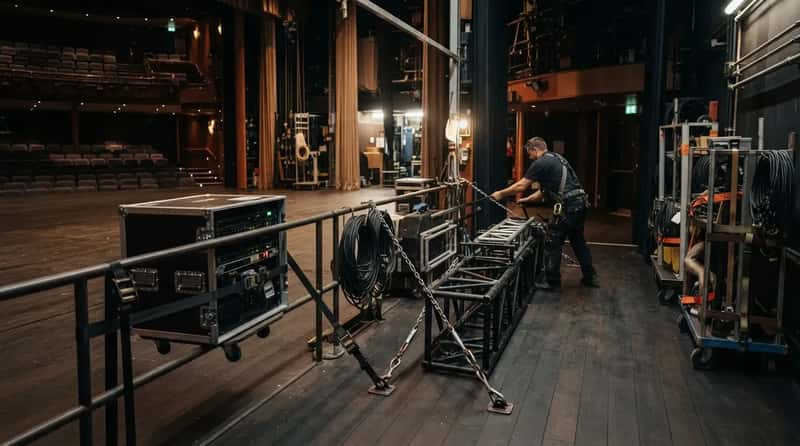
Ship theaters work differently from land theaters because the floor moves. One production manager job description says entertainment equipment must be secured, attached, or properly stored to limit damage in rough seas or high list. That covers props, rigging and loose gear.
On a calm night nobody notices. On a rough one, the stage may be set up differently than it was on a smooth evening. Props get fixed in place, and anything that could slide gets tied down. The audience just sees a tidy stage.
Now consider the people who weren’t on the original cast list at all…
#7 – The Replacement Performer Who Joined Mid-Contract

The cast you see isn’t always the cast who started the contract. According to one account of ship entertainers’ working terms, replacement performers are hired mid-contract, get a shorter contract and join the cast partway through.
That means a new face can slot into a familiar number. The audience sees a seamless show while the person in the middle has only just arrived. It’s a reminder that the cast list isn’t fixed in stone. It’s a living roster.
Nightly changes can also come down to the clock…
#6 – The Late Show That Doesn’t Match the Early One
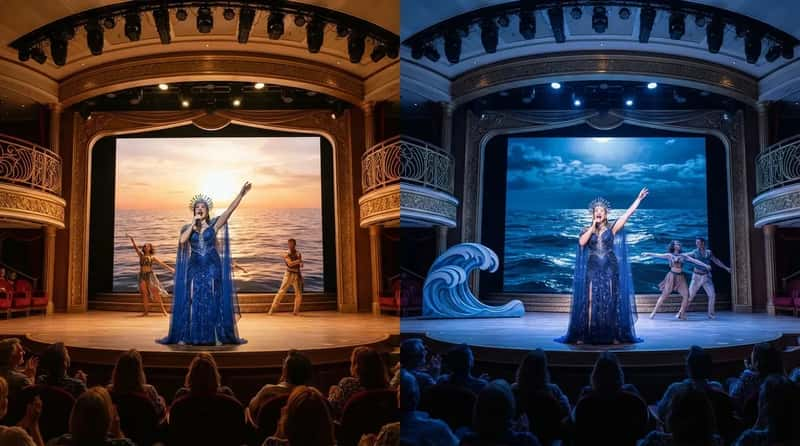
Many ships run a production twice in an evening. One former Disney performer described a 5 PM rehearsal with one tech run, a short dinner break, then two shows a night, six days a week.
That schedule leaves little room for error, and it explains why one report notes a late show can come out different from the early one. Two audiences in the same evening can see two slightly different versions of the same show. Neither would ever know.
But some shows can’t be reshuffled at all…
#5 – The Show That Needs Exactly Six Voices
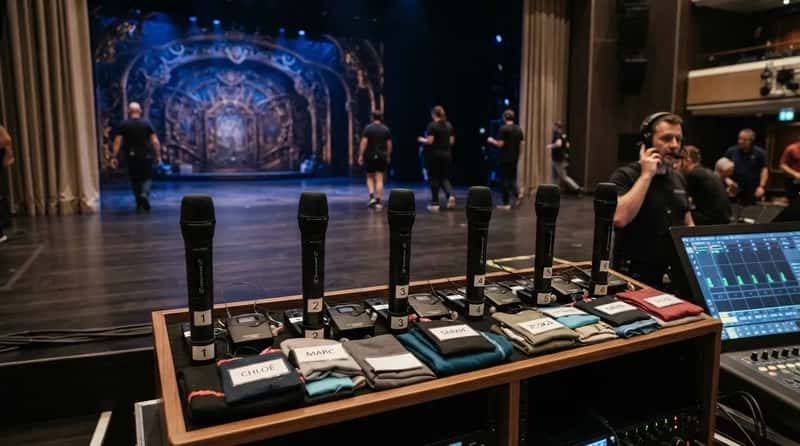
Not every production bends. One performer said his show is blocked for six performers, and he has never done one with five. His stance is blunt: he would rather postpone than perform with a missing voice.
That is a very different philosophy from the improvise-and-cover approach. In some productions, the harmony or the staging simply breaks if one person is gone. So the change isn’t in the choreography. It’s in the schedule, and guests may only see a different act in that slot.
Meanwhile, every performer has a second job nobody applauds…
#4 – The Entertainers Who Double as Safety Crew

Dancers and singers aren’t only there to perform. One career guide says safety drills are mandatory for all crew members, entertainers included. That shapes how a day gets scheduled.
The same guide notes that rehearsals and shows take place in limited spaces, sometimes in rough seas. The glamorous cast is also part of the ship’s safety system. When drills and rest periods compete with rehearsal time, the entertainment schedule has to give way somewhere.
So who actually decides when the plan changes? It’s not who you think…
#3 – The Cruise Director Doesn’t Make the Call
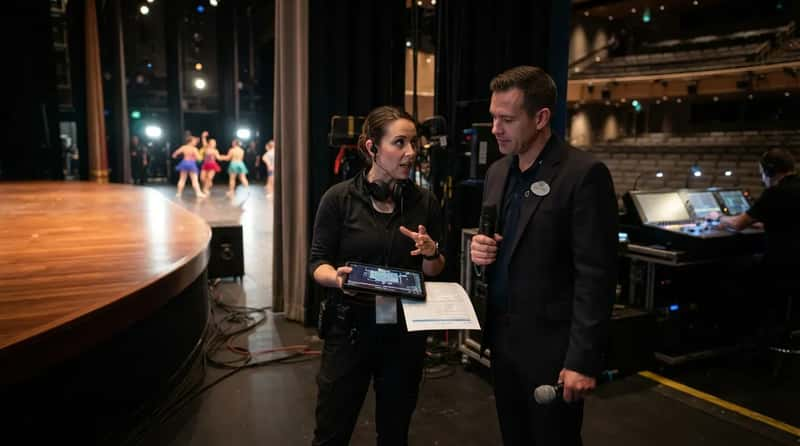
Most people assume the friendly cruise director decides whether a show happens. Carnival’s John Heald, himself a former cruise director, says otherwise. He said many people think it is the cruise director’s decision, and that it absolutely is not.
Instead, it is the dance manager who determines if a show can be performed. The person with the microphone isn’t the person with the final say. Heald says a cruise director always respects that decision, which says a lot about how seriously the call is taken.
So how can a replacement drop in so fast? The answer starts on dry land…
#2 – The Duplicate Stage That Lets Swaps Happen Fast
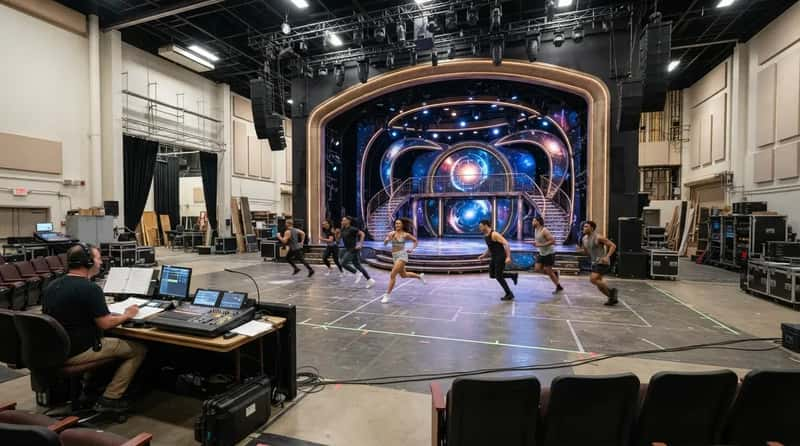
Ship shows are rehearsed on land. One Cruise Critic poster recalled a Carnival explanation that there is a stateside stage where singers and dancers are trained, a duplicate set to the ships. The same poster added that performers are expected to hit the ground running when they get to the ship.
That is one cruiser’s memory, so treat it as an anecdote. But it fits the wider picture: casts are rehearsed, then deployed. A performer who learned the show on a copy of the set can step into the real one with little warning. A standardized production is easier to patch than a one-off.
But the biggest rearrangement of all comes down to one question…
#1 – The Show Dropped Because One Fall Could End a Career
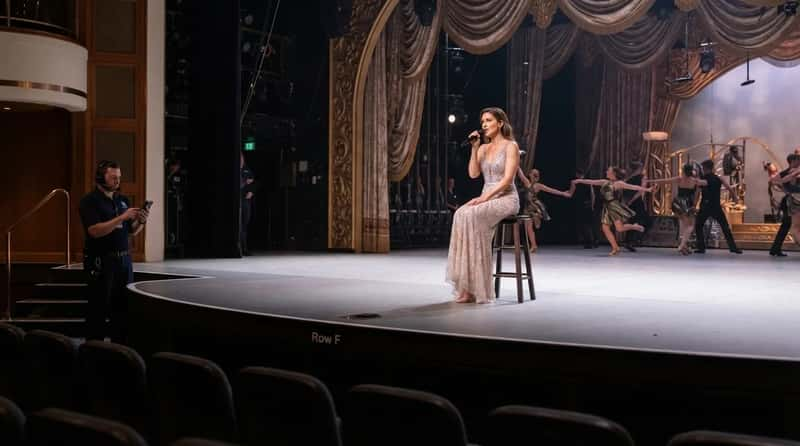
The most important change you’ll never see is the one where the show shrinks because the ship is moving too much. When a ship is rolling or pitching significantly, performers could easily be injured so severely as to end their entertainment career.
Heald says safety is always the most important consideration about whether or not a show moves forward. Most often, the call to scale back a show comes down to rough seas. Sitting on a stool and singing may look like a letdown from row F. From the stage, it can look like the right call.
Why It Stands Out
- Safety comes first, according to Carnival’s John Heald.
- Rough seas are the most frequent reason a show gets scaled back.
- A serious injury could end a performer’s entertainment career.
- A smaller show keeps the evening going instead of cancelling it.
So the next time a show seems a little smaller than you expected, picture what the cast just avoided. The magic you applauded may be the part you never saw: a team that rebuilt the night in a few hours so it would still feel effortless.