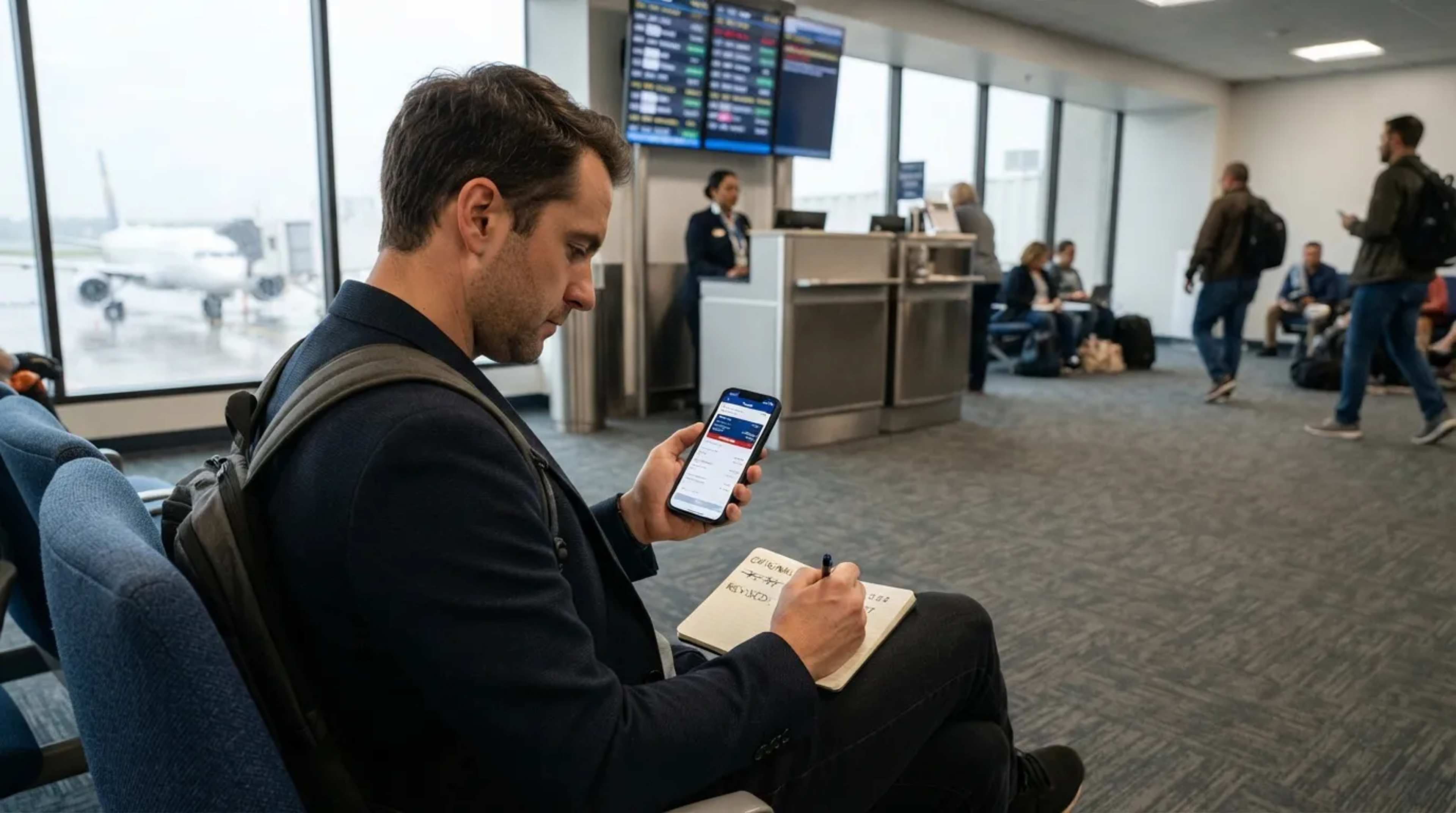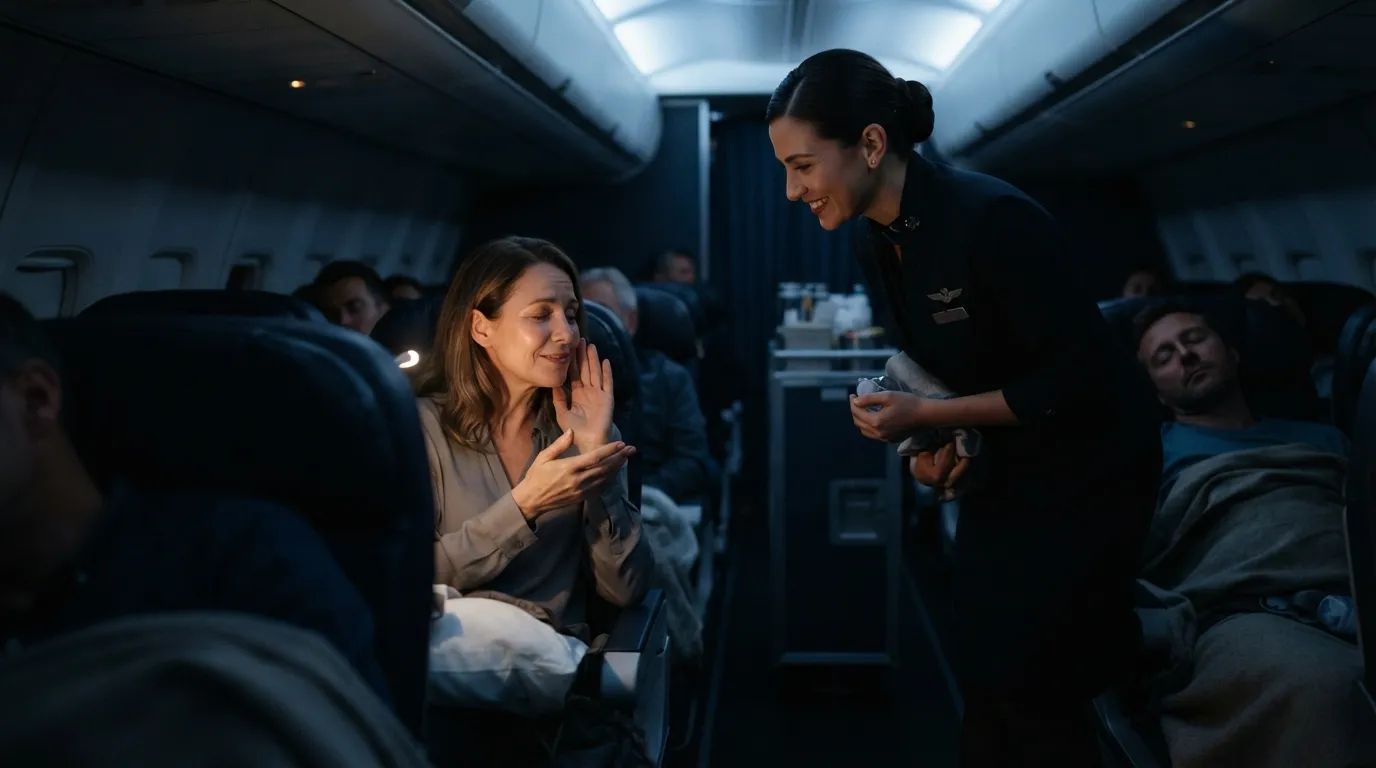
You probably think a red-eye is the one flight where nobody is watching you. The lights are low, the masks are on, and the cabin looks like a sleepover at 35,000 feet. But the crew is still working that dark aisle all night, and a sleeping passenger can tell them more than a wide-awake one.
Posture, shoes, headphones, a half-finished drink: they read all of it in seconds. Some of it is funny, some of it is about safety, and one detail near the end has nothing to do with either. Stay for #1, because it’s the one crews almost never talk about.
#15 – The Boarding Tell: Who Came Ready to Sleep and Who Came to Fight It
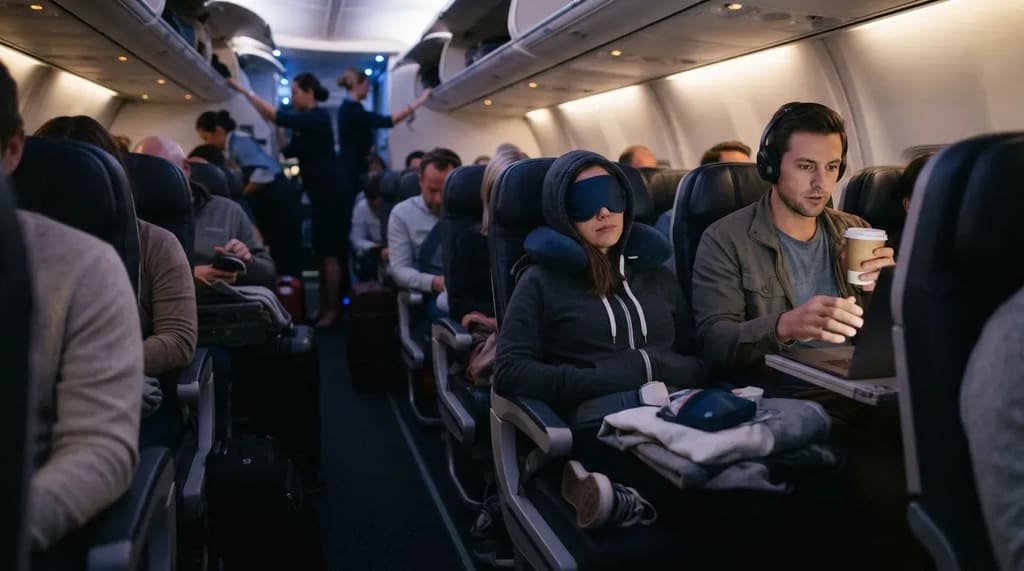
Before the door even closes, crews are quietly sorting the cabin into sleepers and stayers. The giveaways are easy to spot: an eye mask already in hand, a hoodie pulled up, shoes slipped off at the gate. Red-eyes typically leave late at night and land in the morning, so the whole plan is dim lights and a quiet cabin.
Then there’s the passenger who boards with a laptop open and a coffee in hand. Those travelers are often the ones pressing the call button at 2 a.m., when the crew is spread thin across a dark aisle. Nobody minds, but the crew quietly plans around it. And that’s tame compared to the blanket habit at #14.
#14 – The Blanket That Hides Your Seat Belt (and Why Crews Can’t Stand It)
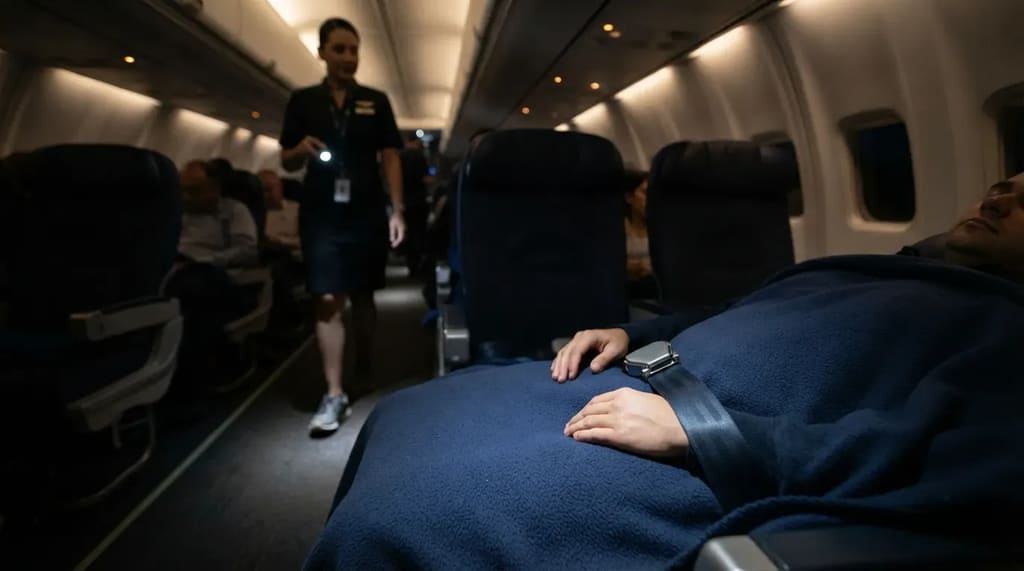
In a dark cabin, a seat belt buried under a blanket is invisible. That’s why many airlines ask sleepers to keep the belt fastened and visible on top of the covering. It isn’t fussiness. When the seat belt sign comes on, crews walk the aisle checking that everyone is secured.
Turbulence is the reason. Federal safety data have long listed it among the most common causes of injuries on airline flights, and it often arrives with little warning. If a flight attendant can’t see your belt, the only way to check is to wake you up. Buckling over the blanket makes that problem disappear. Next is a habit that makes the crew work twice as hard to reach you.
#13 – The Noise-Canceling Wall That Blocks Every Announcement
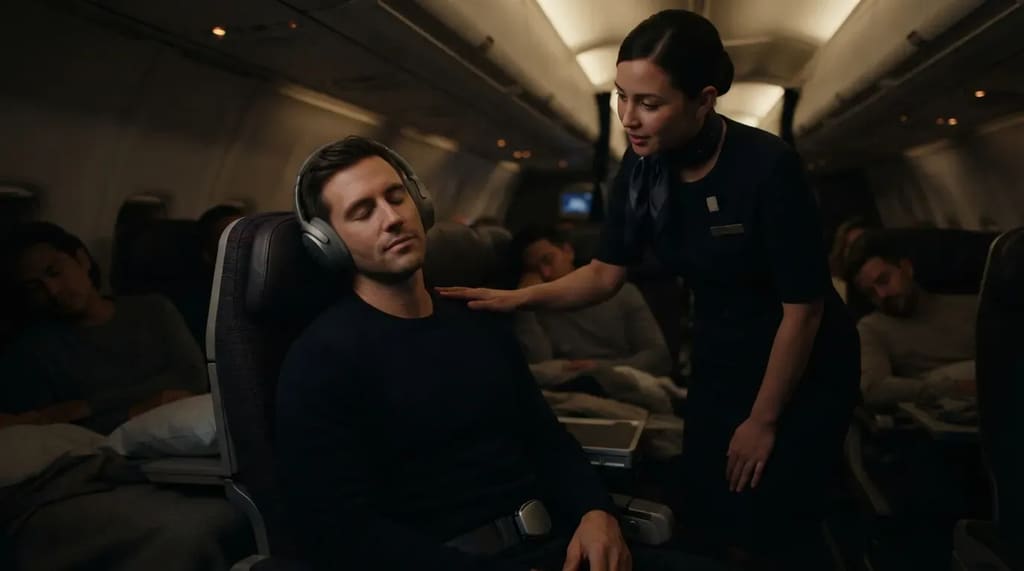
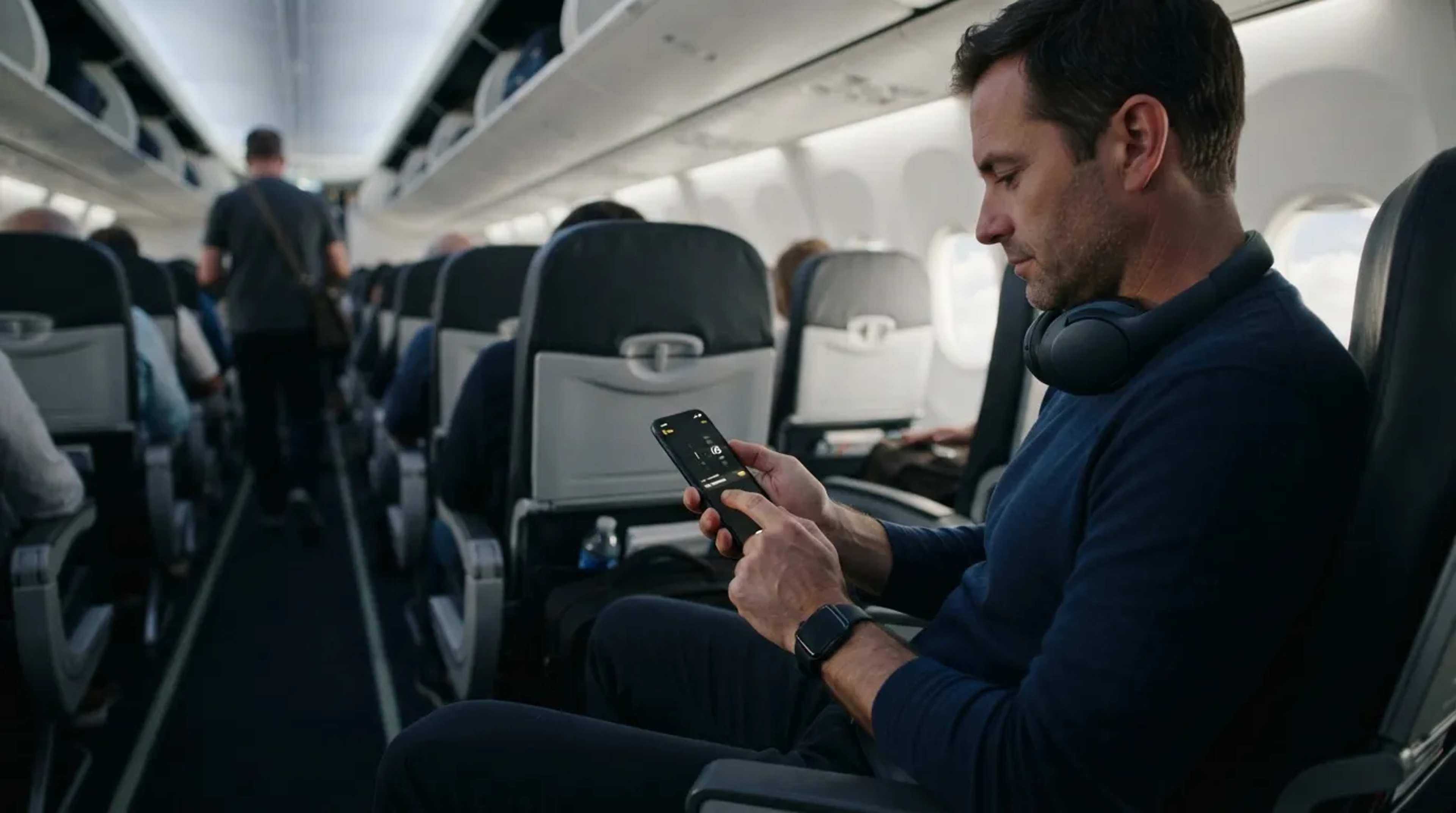
Headphones are one of the first things a crew member clocks on a night flight. It isn’t the music that matters. It’s what the music blocks. Safety announcements, turbulence warnings, and a quiet request to put your seat upright can all land on ears that can’t hear them.
Quick Compare: Headphones On vs. One Earbud Out
- Both ears covered: the crew has to tap your shoulder or lean into your sightline.
- One earbud out: a quiet word from the aisle is enough.
- Takeoff and landing: seats upright and tray tables stowed, so the request is coming either way.
Crews often handle it with a gentle tap on the shoulder or by leaning into the passenger’s line of sight. Nobody wants to startle a sleeper in the dark, so it takes extra time and a softer touch. A passenger who doesn’t respond to a tap may get a closer look than one who simply stirs. Pulling out one earbud when the cabin lights come up or the chime sounds saves a long walk down a dark aisle. But the next thing crews notice is far more physical.
#12 – Feet in the Aisle: The 3 a.m. Trip Hazard Nobody Admits To
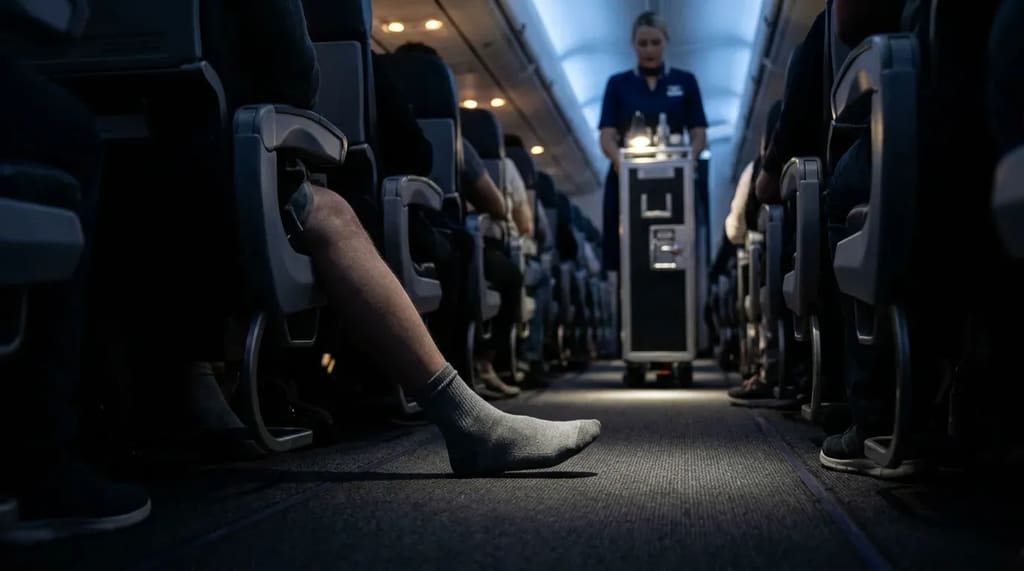
At 3 a.m. the aisle is a work zone, not a hallway. Carts, trays, and hot drinks move through low light, and the crew is steering around shapes they can barely see. A foot, an elbow, or a sprawled leg sticking out is exactly what they trip over.
Crews see it constantly: someone curled sideways across two seats, or an arm hanging into the walkway. Other passengers heading to the lavatory half-asleep are at risk too. A dangling arm on an aisle seat is one of the easiest ways to get clipped by a cart. Next up is a drink order that changes the crew’s tone.
#11 – The Midnight Nightcap That Gets a Second Look
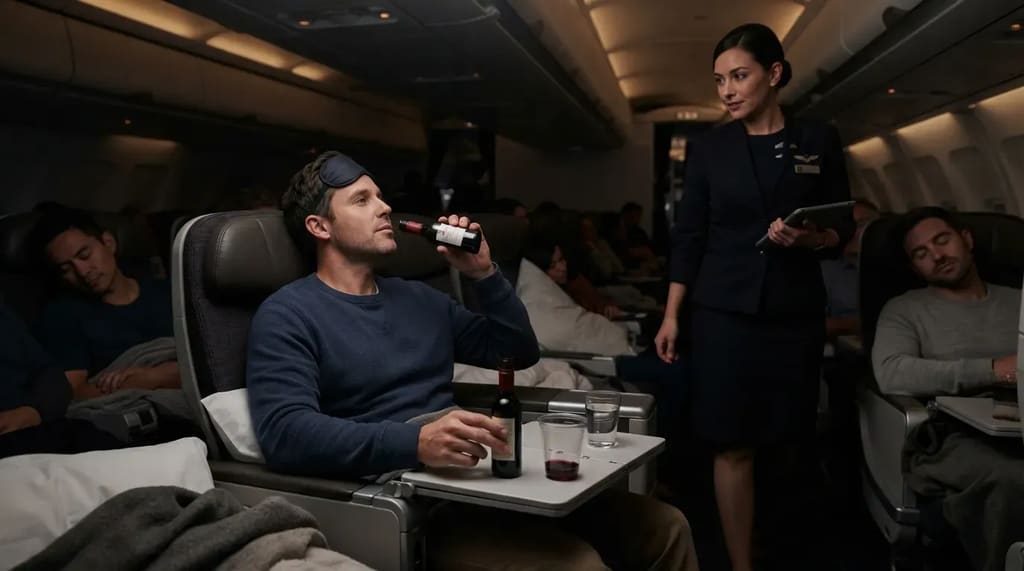
Alcohol on a red-eye gets extra attention from the crew. A drink that feels fine on the ground may land differently in a dry, pressurized cabin, though research on how much flying changes alcohol’s effects is mixed. Crews also know a nightcap is often a sleep plan, not a party.
What they watch for isn’t the first drink. It’s the pattern: slurred speech, unsteadiness in the aisle, a quick request for another round. U.S. federal rules prohibit airlines from serving alcohol to anyone who appears intoxicated. So crews can say no, and that “no” is a classic source of 2 a.m. arguments. But the passenger at #10 worries crews for a different reason.
#10 – The Sleeper Who Doesn’t Move for the Entire Flight
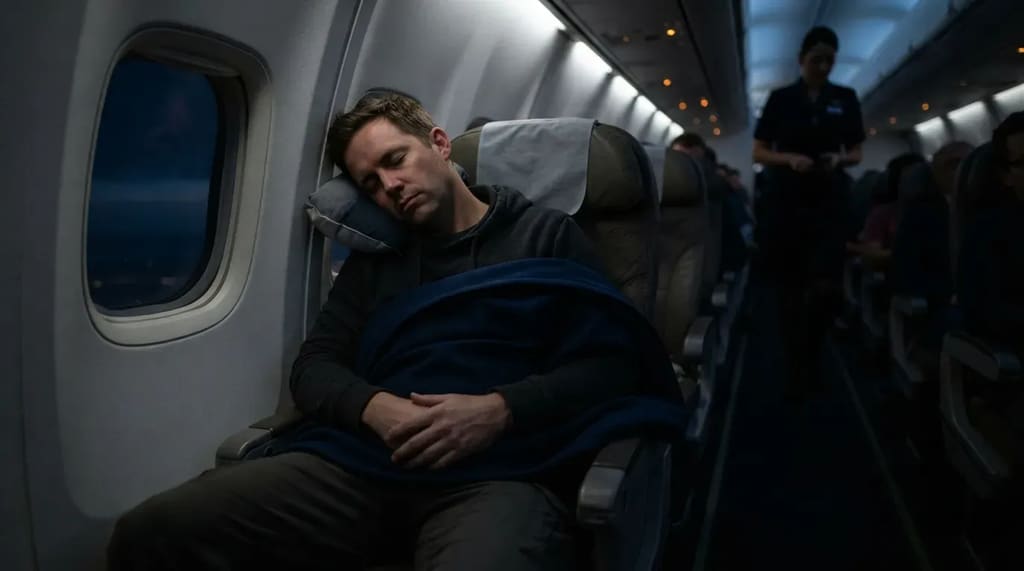
Plenty of sleepers stay in the exact same position from takeoff to touchdown. Crews notice, because long periods of sitting are a known health concern on longer trips. A coast-to-coast red-eye can run about five hours, which is plenty of time to go stiff.
Crews aren’t there to diagnose a sleeper, and they don’t try. Mostly they notice and keep walking. The standard advice from health agencies is to get up and move around periodically on long trips. Calf stretches in your seat count too. Then there’s the one thing half the cabin ends up begging for by hour three.
#9 – The Dry-Air Thirst That Sends Half the Cabin to the Galley
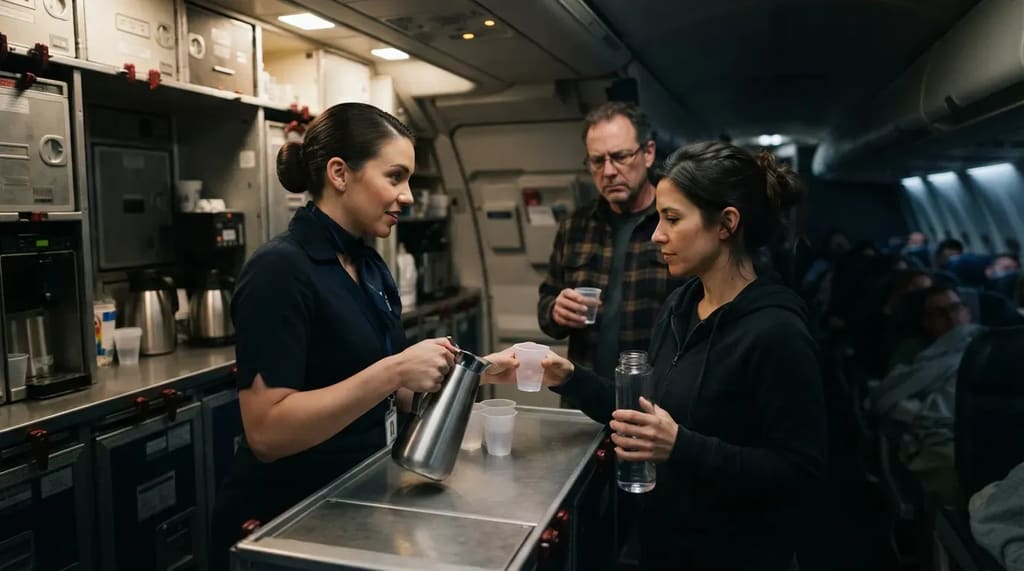
By hour three, the same faces keep showing up at the galley asking for water. Cabin air is famously dry, with humidity often cited at under 20 percent. Dry throats, cracked lips, and headaches follow.
Worth Knowing
- Dry air can leave lips, eyes, and throat feeling scratchy long before landing.
- TSA’s liquid limit is 3.4 ounces (100 ml) per container, but an empty bottle goes through the checkpoint just fine.
- Fill it at a fountain on the other side, and you can skip most of the 3 a.m. galley trips.
- Galley cups are small, so asking every hour is common.
Crews notice who planned ahead. Some passengers carry a refillable bottle, while others ask for tiny cups of water every hour. Plenty of travelers wake up thirsty and blame the snack, when the dry air did it. An empty bottle can go through airport security and be filled on the other side, which crews quietly appreciate. But what they notice about a passenger who looks wrong is no joke.
#8 – The “Sleeper” Who Might Actually Be in Trouble
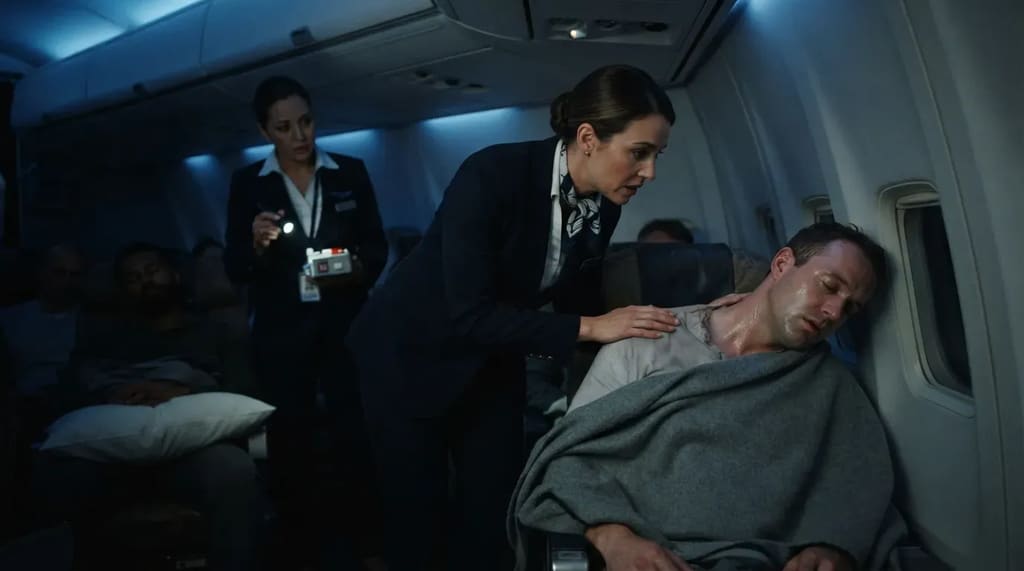
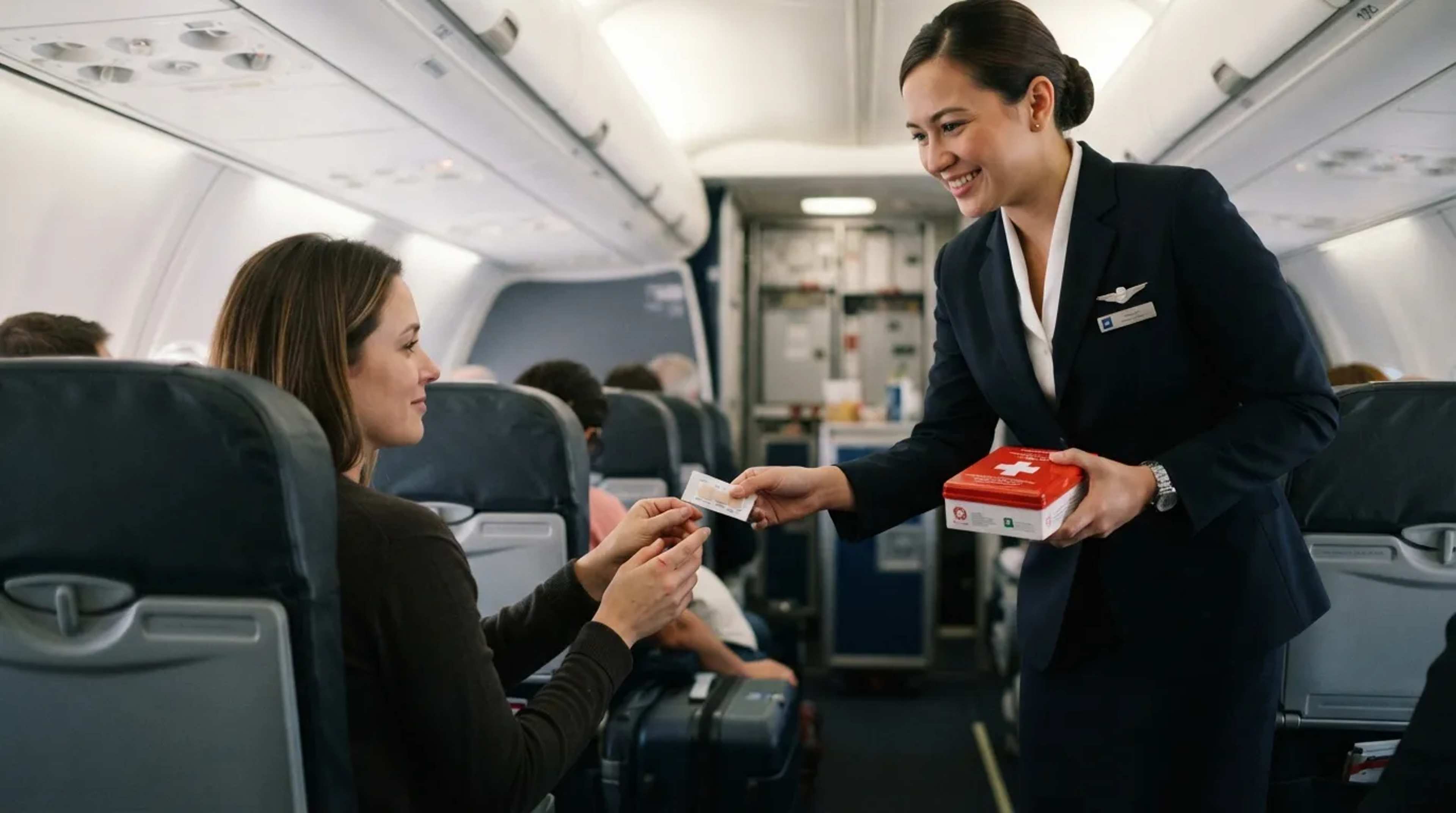
Sleeping and feeling unwell can look the same in the dark. Crews are trained to notice pale skin, heavy sweating, or a person who can’t be roused. They don’t need a medical degree to know that someone who can’t answer deserves a closer look.
That study, published in the New England Journal of Medicine, looked at calls to a ground-based medical support center. It found fainting to be the most common problem, ahead of breathing trouble and nausea. That’s why a pale, clammy passenger gets attention quickly, even if everyone else in the row is snoring. And the next risk comes from something in your pocket.
#7 – The Phone That Slid Into the Seat (Crews Dread This One)
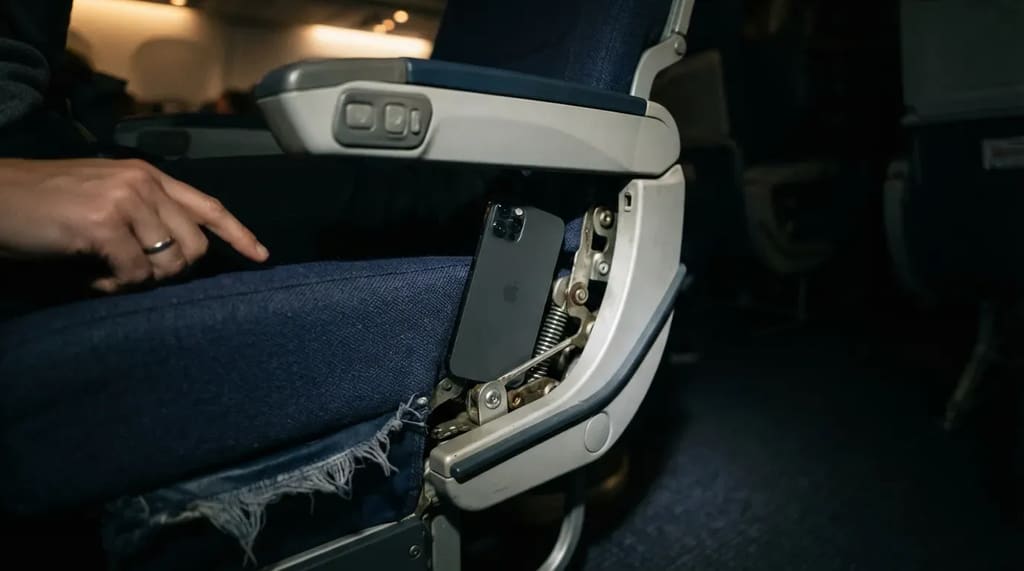
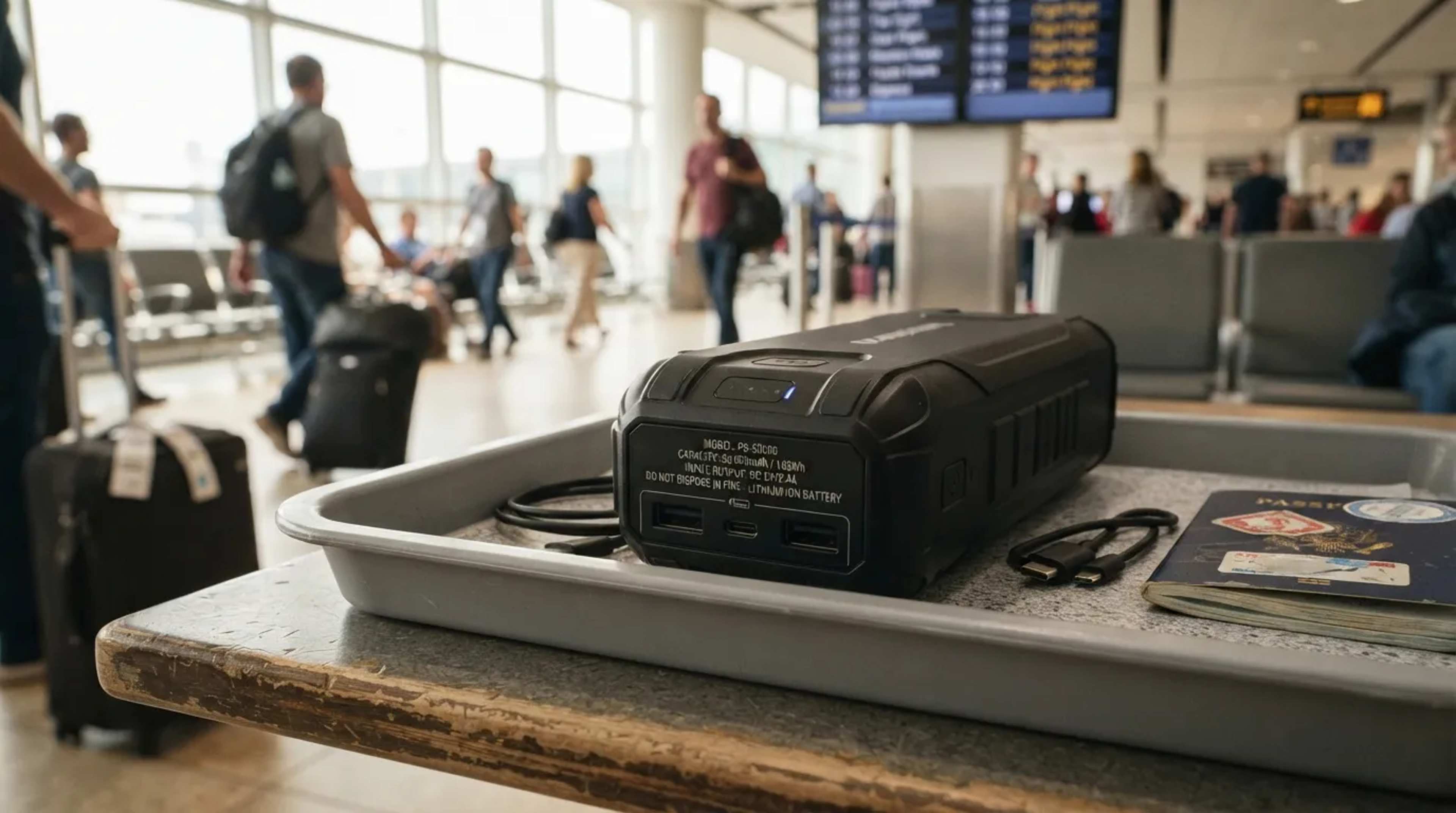
Overnight charging means gadgets end up in odd places. They slip between the cushion and the armrest, under a thigh, or deep into the seat pocket. Crews pay attention because lithium batteries can overheat if they are crushed or damaged. The FAA tracks these incidents in aircraft cabins, and crews train to respond.
The classic scene is a phone slipping into the seat mechanism just as someone reclines. FAA guidance says to stop moving the seat if a device falls into it. Crews would much rather be called right away than discover smoke at 3 a.m. Still, the next item has nothing to do with safety.
#6 – How You Treat the Crew When It’s Pitch Dark and Everyone’s Tired
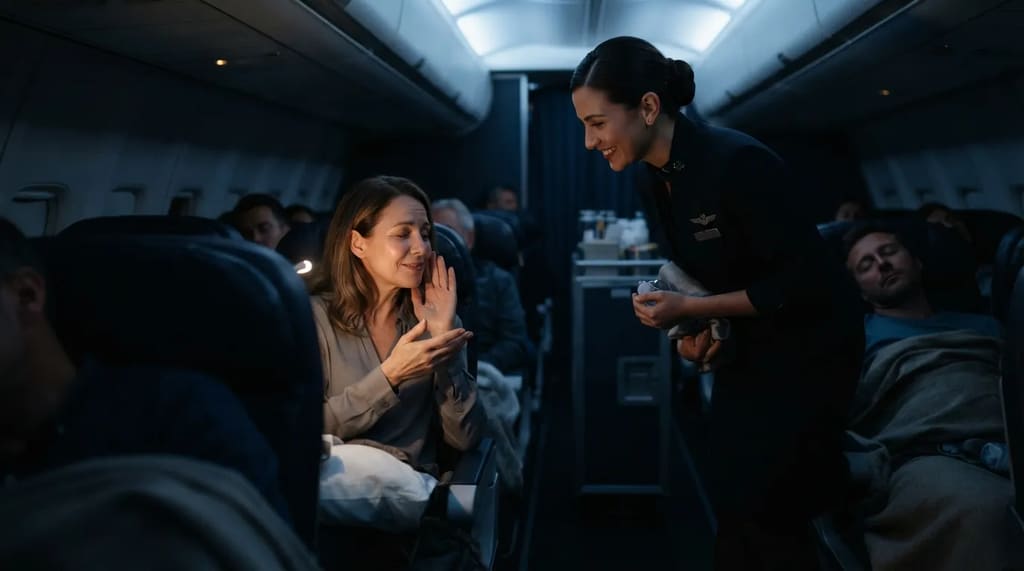
Crews are on the clock in the middle of the night too. Many are working through the hours when people are naturally sleepiest. The FAA Reauthorization Act of 2018 set a minimum of 10 consecutive hours of rest between duty periods for flight attendants, which shows how seriously fatigue is taken.
So they notice the small things. A quiet “thank you,” a low-voice request, and a passenger who waits until the cart passes all register. In a silent cabin, a sharp tone carries three rows in every direction. The crew remembers who stayed human at 3 a.m.
Why It Stands Out
- A whispered request feels like a favor in a dark, sleeping cabin.
- A single press of the call button, then patience, tells the crew you understand the night shift.
- A sharp tone or repeated button-jabbing wakes neighbors and gets remembered for the wrong reason.
Next is a quiet fight that plays out every morning.
#5 – The Window Shade Tug-of-War at First Light
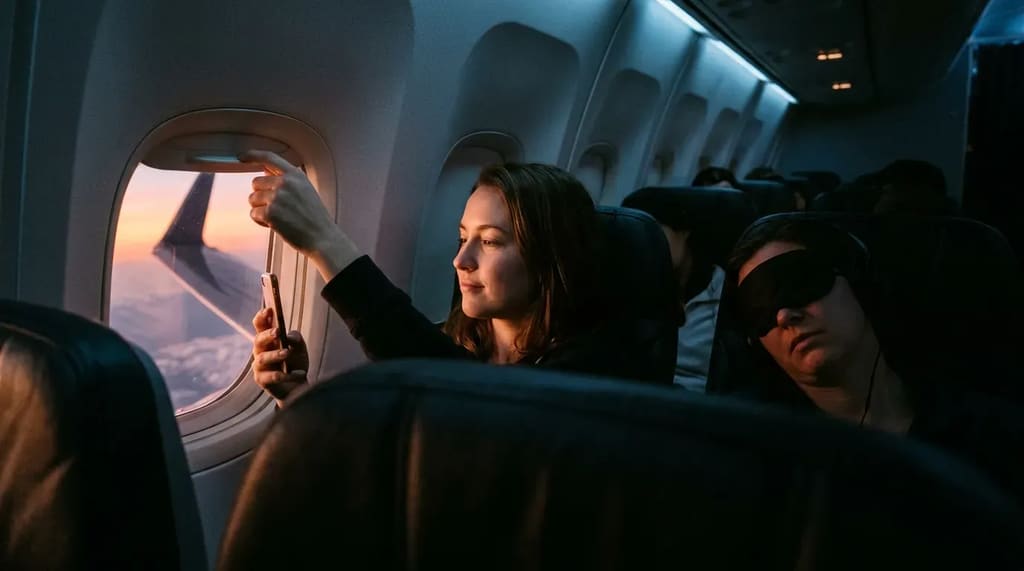
Shades are a quiet battleground. Airlines typically ask for them to be open during takeoff and landing, so people can see outside if something goes wrong. In between, red-eye passengers want it pitch black.
Trouble starts near dawn on eastbound flights, when the sun comes up well before landing. A passenger who lifts the shade at first light can flood an entire row. One person’s sunrise photo can wreck another person’s last hour of sleep. Crews see the standoff all the time. But the next seat-assignment issue has real consequences.
#4 – The Exit Row Passenger Who Looks Too Out of It to Help
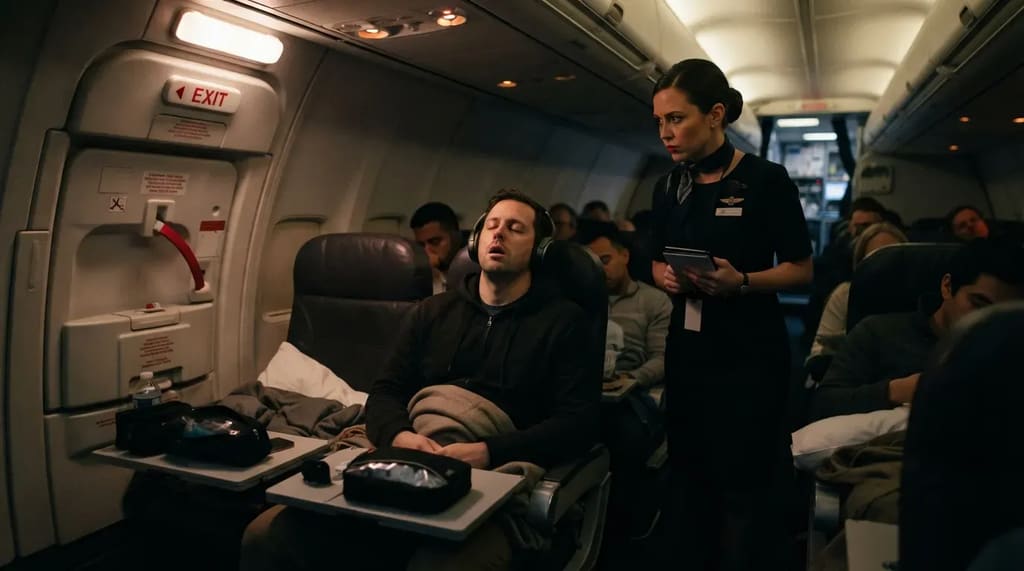
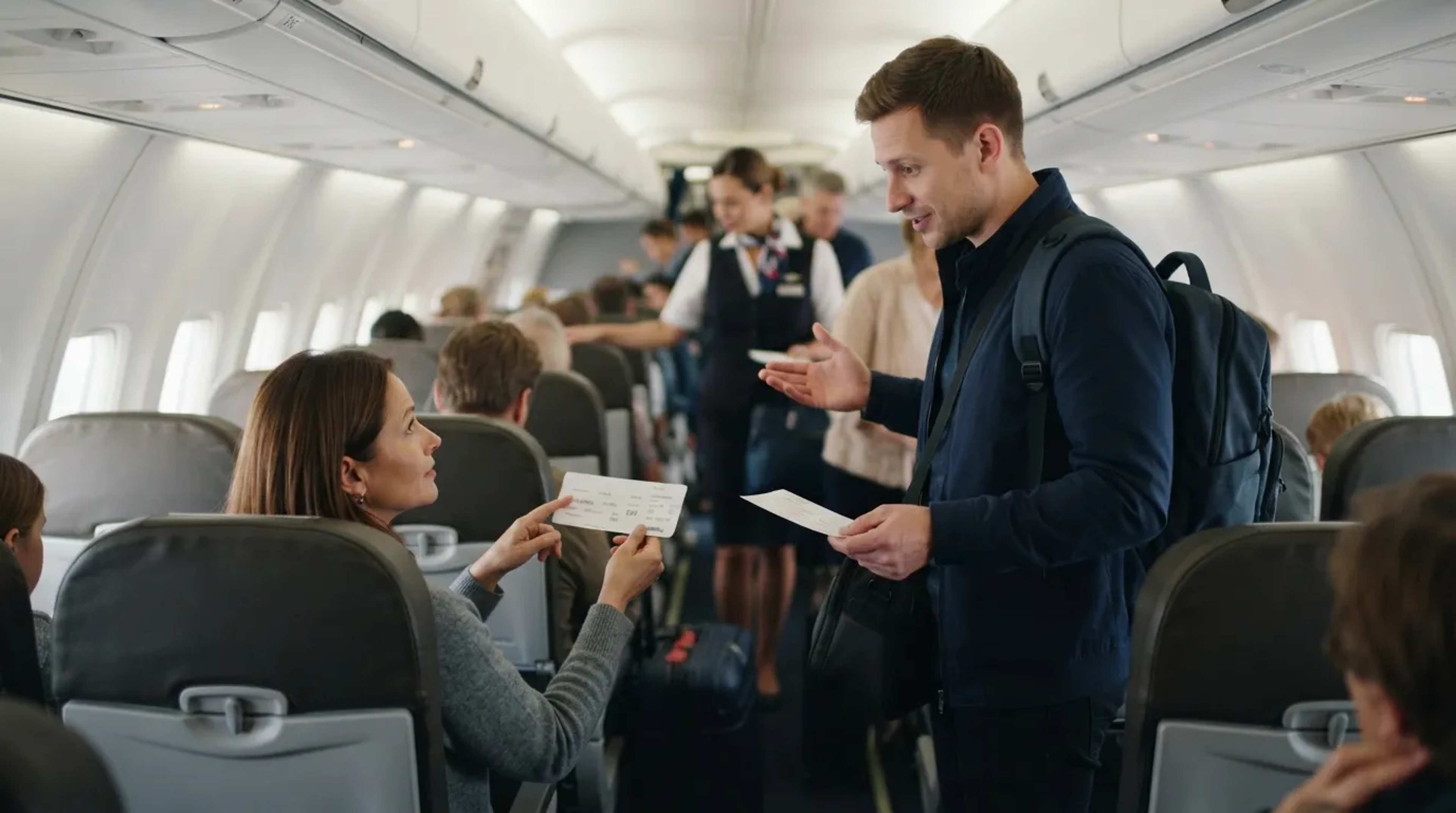
Exit row seats come with a job, and crews check. Federal rules require passengers there to be willing and able to help in an evacuation. Crews typically confirm it with a spoken yes. That’s why someone who’s already drifting off or wearing headphones gets a second look.
Anyone who can’t understand the briefing or isn’t willing to help can be moved. Extra legroom comes with a duty, and crews can reseat you if you can’t meet it. Plenty of travelers treat the exit row as a must-pay upgrade. Many crews say it’s only worth it if you’ll actually do the job. Now for the passenger who wanders at 2 a.m.
Related Stories From Travelbinger


#3 – The 2 a.m. Galley Wanderer Who Can’t Switch Off
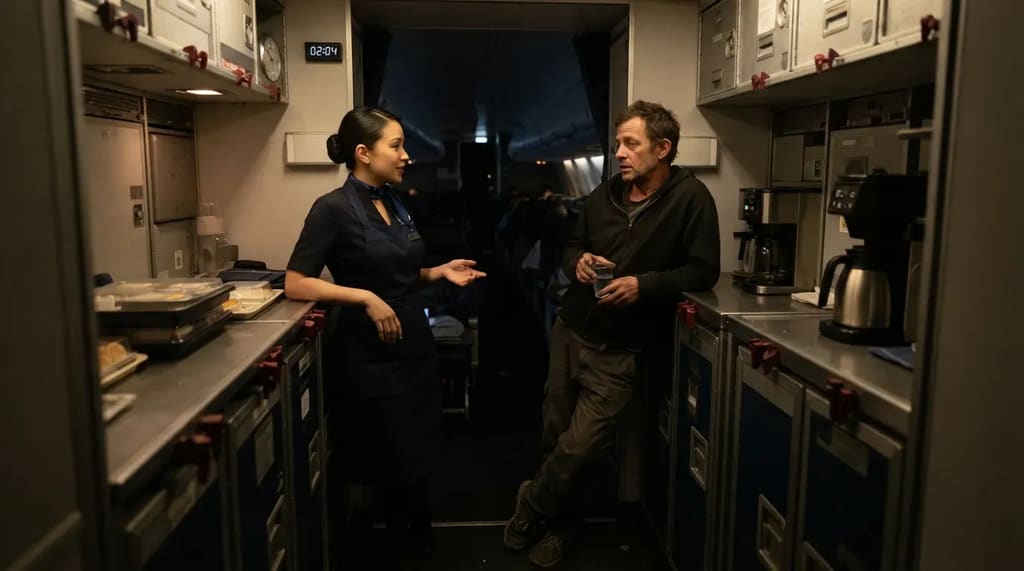
Every red-eye has one: the passenger who drifts to the galley because sleep isn’t happening. Crews notice quickly because the galley is a work area where they restock, prep, and take short breaks. Federal rules require at least one flight attendant for every 50 passenger seats, so the crew on a mid-size jet can be lean.
At a Glance
- Why crews notice: the galley is workspace, not a lounge.
- Usual response: a friendly chat, a cup of water, and a walk back to the seat.
- The hard line: once the seat belt sign is on, everyone returns to their seat.
- The math: one attendant per 50 seats means every extra body in the galley matters.
Often the wanderer is just restless, anxious, or running on a different body clock. Crews tend to respond with a quick chat and some water, then guide them back to their seat. The line gets drawn the moment the seat belt sign turns on. The galley isn’t a place to stand in turbulence. Still, the signal at #2 is one many passengers try hard to hide.
#2 – The White-Knuckle Flyer Who Swears They’re Fine
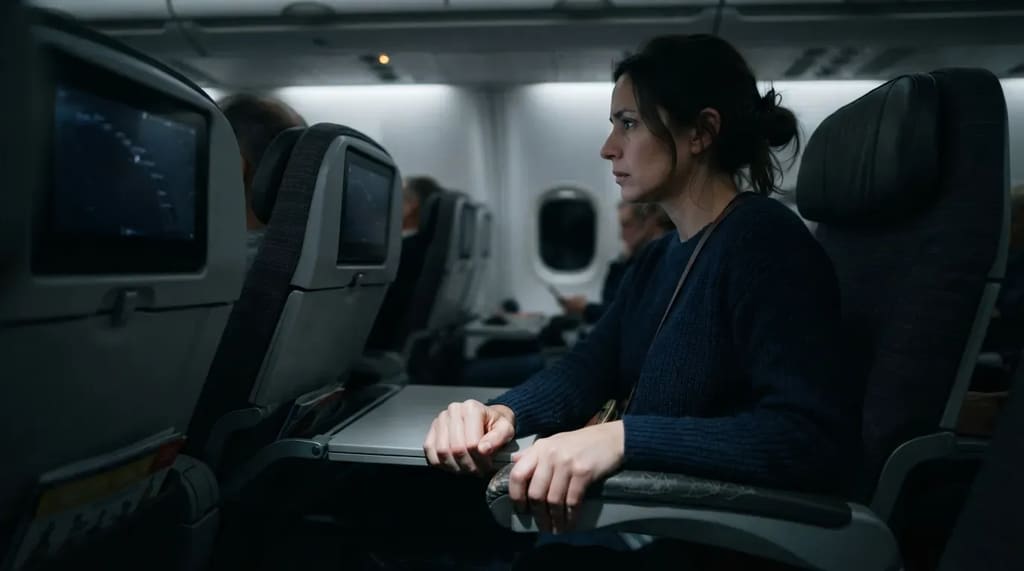
Nervous flyers have tells. They grip the armrest at every bump, stare at the seat-back map, and go silent. Crews see it on every flight. Red-eyes can make it worse because darkness removes outside reference, and every sound seems louder.
Crews are trained to stay calm, check in quietly, and explain what’s happening. Aircraft are designed to handle turbulence far stronger than most passengers will ever feel. The real risk comes from being unbuckled, not from the bumps themselves. The last item on this list isn’t a habit at all.
#1 – The Passenger Traveling Toward Something Heavy
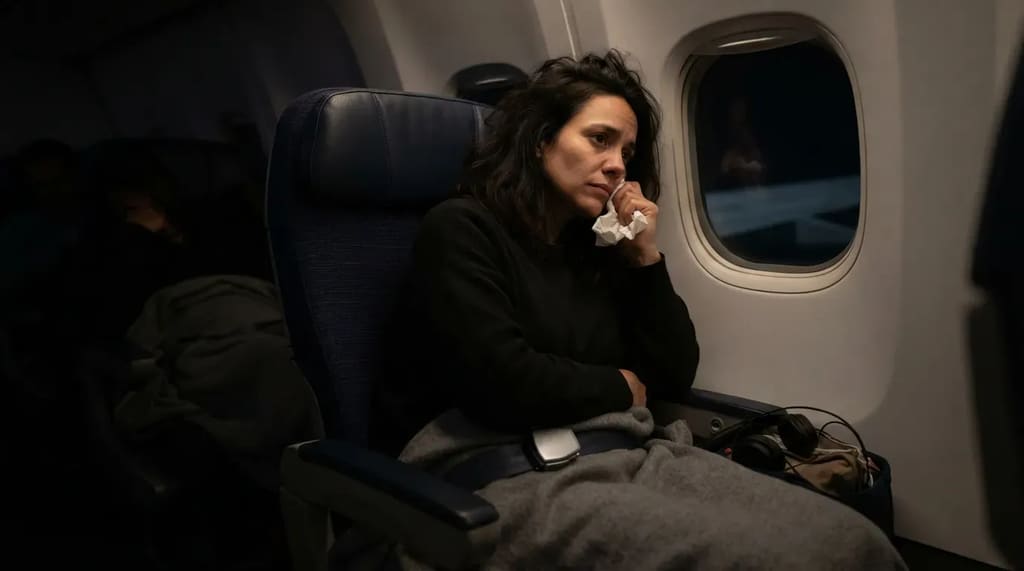
The thing crews notice most isn’t a habit. It’s a mood. Red-eyes are often booked when plans change fast: a family emergency, a funeral, a hospital waiting room. A passenger staring at a dark window with a tissue in hand reads very differently from one who’s simply tired.
Crews tend to respond with something small. It might be an extra blanket, a quiet check-in, or a glass of water nobody asked for. No rule requires it. It’s judgment. Nobody writes a policy for noticing a person on their worst night, and often the passenger never learns they were noticed at all.
So a red-eye isn’t invisible after all. The seat belt under the blanket, the headphones, the phone lost in the cushion all get noticed. But the details crews carry off the plane are the human ones: the nervous flyer, the sleeper who looks off, the stranger heading toward bad news.
Next time you pull the mask over your eyes somewhere over the dark middle of the country, remember that someone in sensible shoes is still awake, still walking the aisle, and quietly keeping an eye out for you.