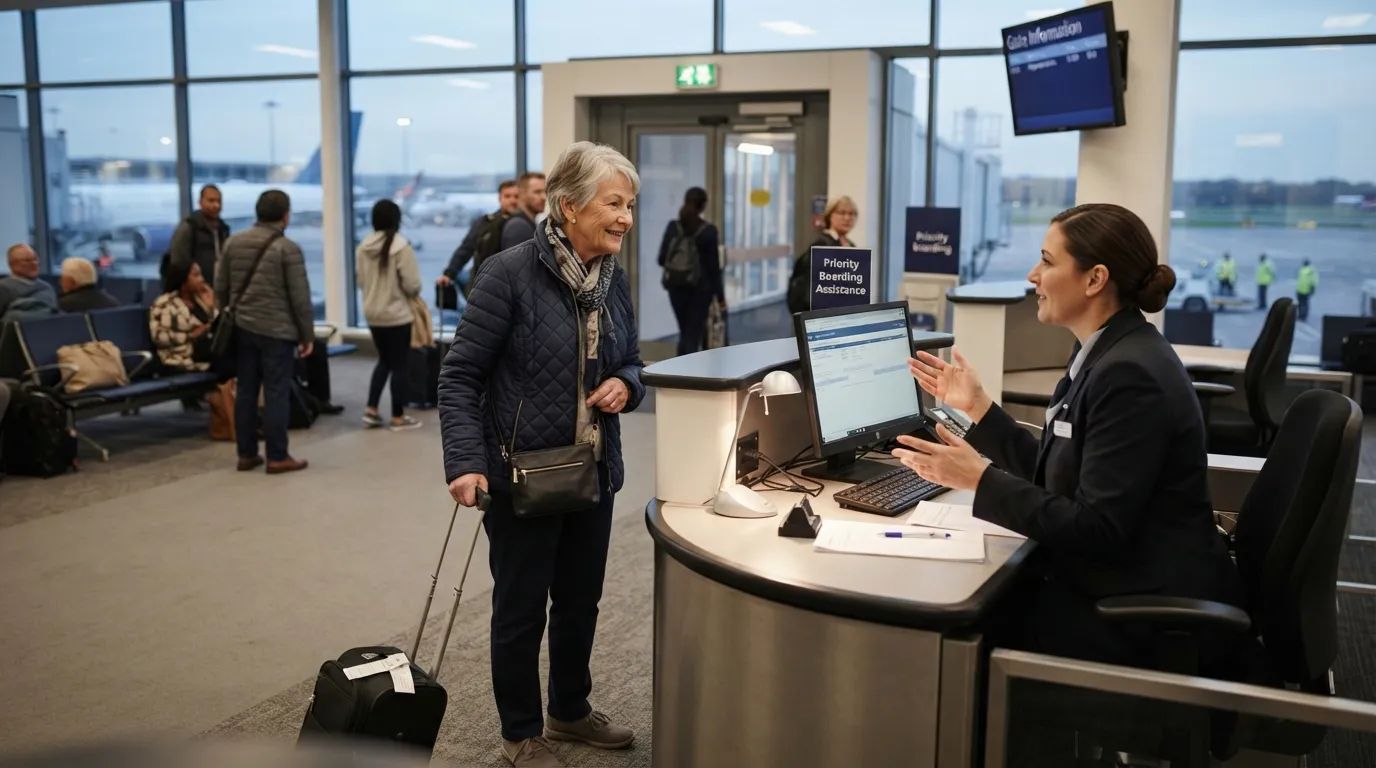
You’ve seen it at the gate. A solo traveler in their sixties or seventies strolls down the jet bridge, bag handled and seat waiting, while the rest of the crowd is still jammed around the podium. It looks like a secret perk, and in a way it is: a menu of real arrangements gate agents set up every day, one passenger at a time.
Here’s the twist. Most of these aren’t favors, and none of them switch on at a birthday. Some are required by federal rules, one comes with a hard 30-minute clock, and one is something airlines can’t force on you at all. The strangest part is that nearly all of them hinge on one thing that has nothing to do with your age.
#15 – The Early Boarding Nobody Announces Over the Speaker
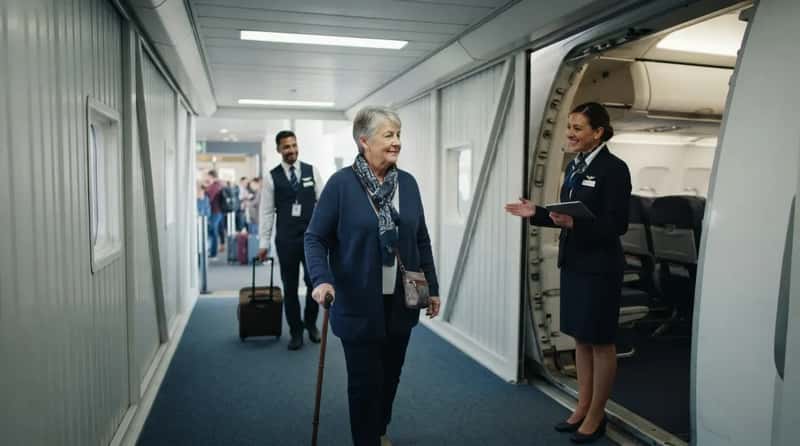
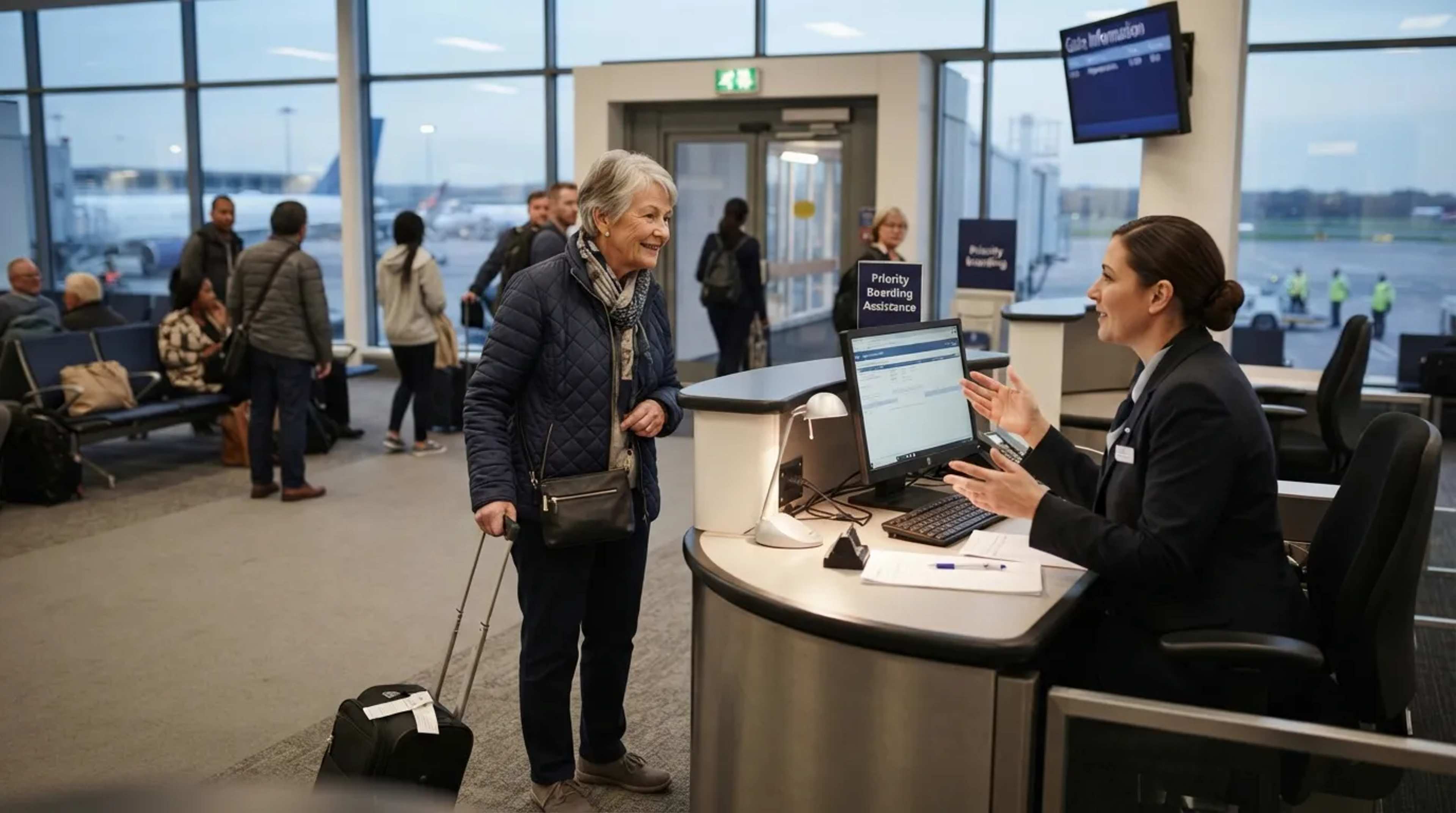
Early boarding isn’t reserved for elite-status flyers. Passengers who identify themselves at the gate as needing extra time or help to board, get seated, or stow equipment must be given the chance to preboard. The key word is “identify.” If you stay quietly in your seat, nothing happens.
Age 60 isn’t a legal category here. The need for extra time is what counts, and agents decide in the moment. Nobody at the gate will offer it first, because agents can’t guess who wants it. That’s why two identical travelers on the same flight can end up in very different spots, one settled in with empty overhead bins and the other waiting in the crush.
At a Glance
- Who it’s for: anyone who needs extra time or help to board, get seated, or stow equipment
- Age cutoff: none, because the need is what counts
- How to get it: tell the gate agent before boarding begins
- Who decides: the agent, on the spot
#14 – The Curb-to-Gate Escort That Isn’t Just a Wheelchair
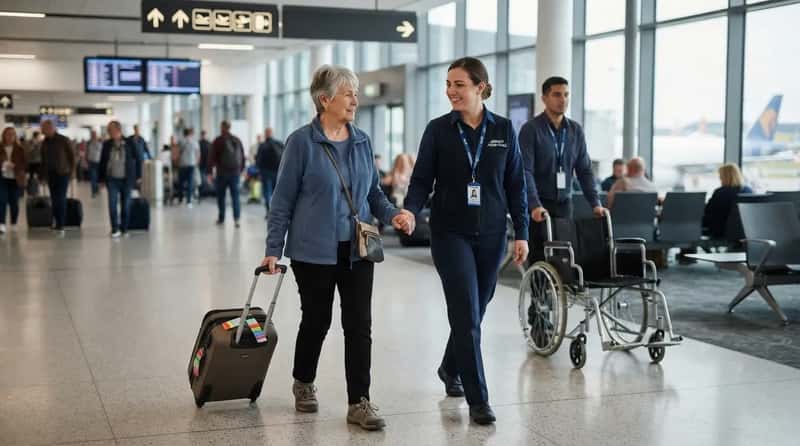
Many travelers hear “wheelchair request” and assume it’s only for people who can’t walk. In practice it covers much more. Assistance includes ground wheelchairs, boarding wheelchairs, and on-board wheelchairs, plus help from the curb to the departure gate and between gates on connecting flights. Agents and airport staff handle the handoffs.
It also costs nothing extra. Carriers generally can’t charge for services the Air Carrier Access Act requires. American Airlines, for one, recommends requesting help in advance by selecting “Add special assistance” when booking or managing a trip. Doing it online ahead of time means staff may already be expecting you.
The next one surprises people who still walk just fine at home.
#13 – The “I Can Walk, Just Not That Far” Option
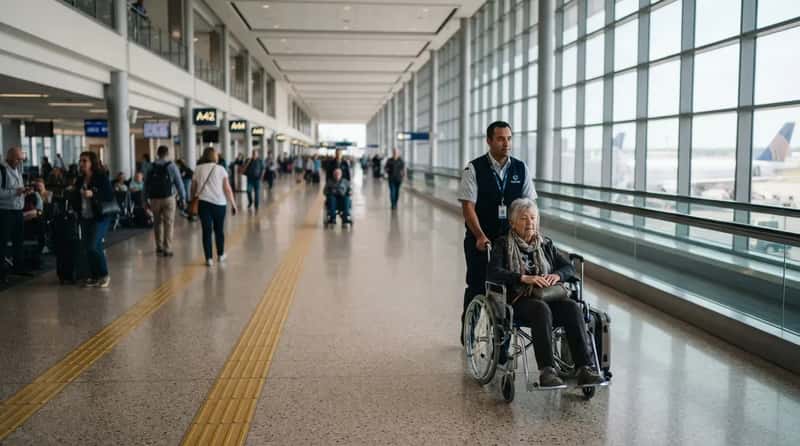
You don’t have to be unable to walk. Airlines describe wheelchair help as a way to handle long distances in big terminals, so travelers with difficulty walking long distances can use a chair to cross them. That fits plenty of solo travelers who are fine in the aisle at home but wiped out by a concourse that seems to go on forever.
Some people feel that asking for a chair while you can still walk is taking advantage. But the service is built around distance and stamina, not a diagnosis. Skipping the chair can mean arriving at the gate too drained to enjoy the trip you came for. A long hike from security to a far-end gate can be the hardest part of the whole day.
#12 – The Connection Handoff So You Never Face the Terminal Alone
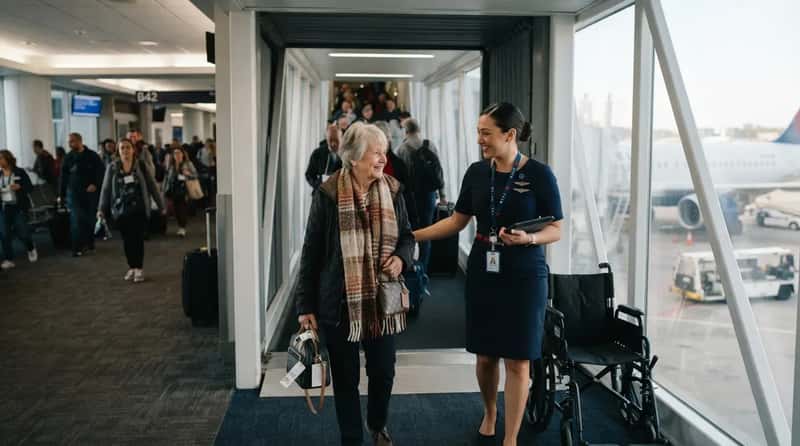
Connecting flights are where solo travelers sweat. Airlines must help passengers with disabilities with boarding, deplaning, making flight connections, and transport between gates. Gate agents can arrange that help so you aren’t squinting at a terminal map while the boarding clock ticks.
It works best when the agent at your first gate knows your plan. Tell them how tight the layover is and which gate you need next. That one heads-up can mean someone is waiting for you at the jet bridge door when you land.
But the next trick has nothing to do with walking at all.
#11 – The Seat Swap That Appears From Nowhere

Seat maps online rarely show the full picture. Gate and check-in agents can see more and can sometimes move you. The Department of Transportation says airlines must provide seating accommodation assistance that meets passengers’ disability-related needs. That might mean an aisle seat, or one closer to the front so there’s less walking.
There’s a limit. The airline does not have to upgrade you to a different cabin class. You’re asking for a different seat in the cabin you paid for, not a free first-class ride. Anyone promising “senior upgrades” is selling a myth. A calm, specific request (aisle, near the front) works far better than “anything nicer.”
#10 – The Quiet Help With Stowing Your Gear
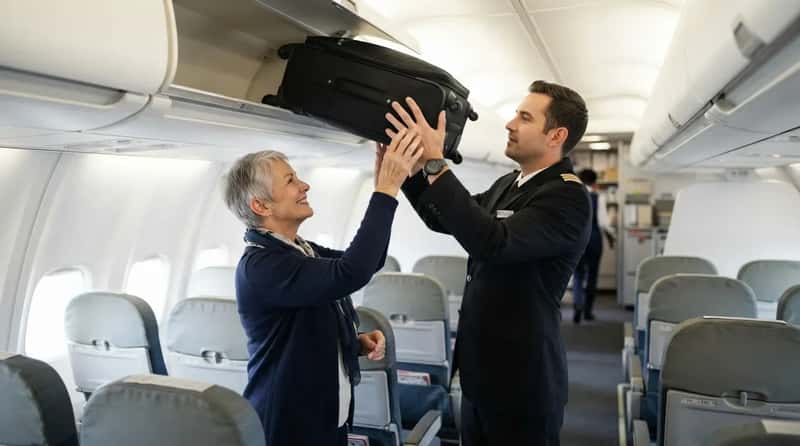
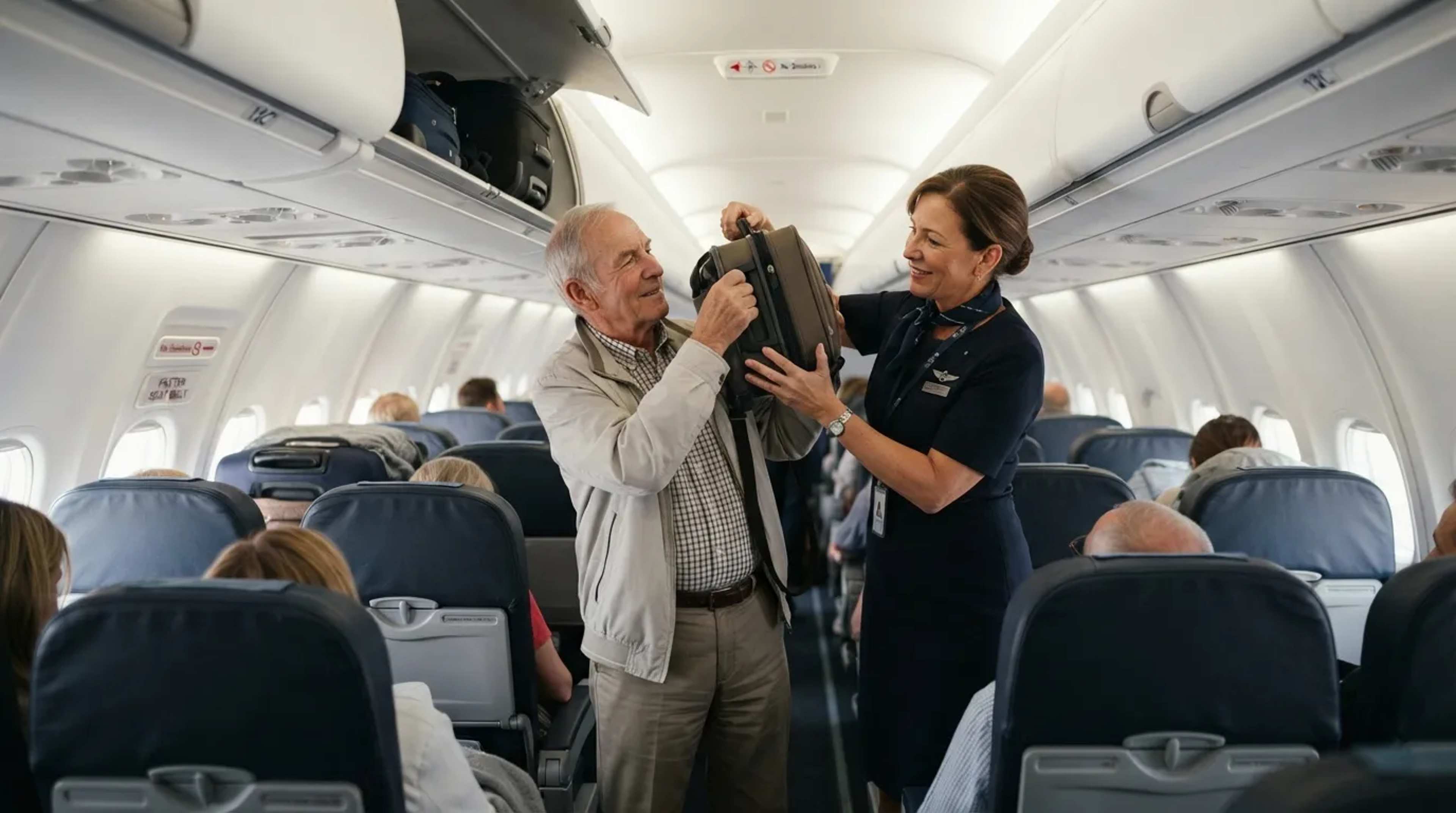
Lifting a bag overhead is where many solo travelers feel stranded. The legal piece is that airlines must assist with the loading and stowing of assistive devices. A foldable walker or wheelchair gets treated as a priority, not an afterthought.
Ordinary carry-on help is more of a judgment call. Crew often pitch in, but it isn’t the same kind of guarantee, and cabin items must still follow FAA rules on carry-on stowage. Preboarding matters here because the bins are still empty. Even when the rules are looser, an agent who knows you’re traveling alone can quietly pass that on to the crew.
And then there’s the odd-looking chair that shows up before anyone else boards.
#9 – The Narrow Chair That Rolls You Right to Your Seat
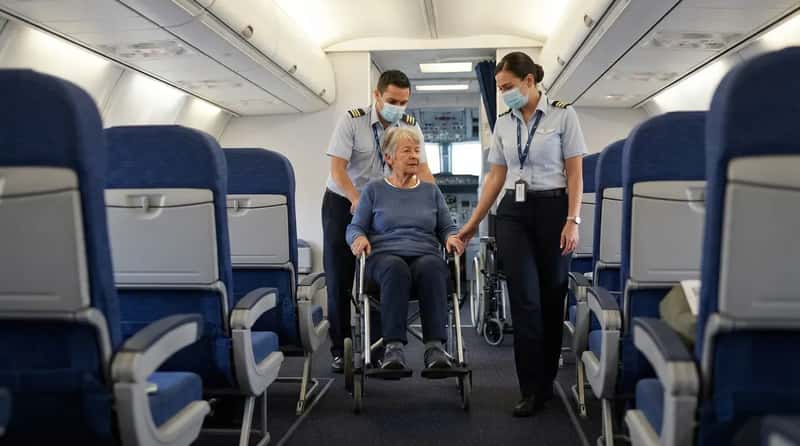
Regular wheelchairs don’t fit down an airplane aisle. For travelers who can’t walk the aisle, staff use a narrow boarding chair to get them to their seat. This usually happens before the general rush, so there’s no audience and no pressure.
There are firm boundaries on how it’s done. Airline and contract personnel aren’t allowed to hand carry a passenger on or off the plane, except in an emergency evacuation. That’s the rule that stops a “just lift her” shortcut. If the walk down the jet bridge is the hard part, ask for the boarding chair at the gate rather than waiting until you’re standing at the door.
Quick Compare
- Ground wheelchair: carries you through the terminal, from the curb to the gate
- Boarding chair: slim enough for the aisle, takes you to your seat
- On-board chair: gets you to the lavatory in flight, on planes with more than 60 seats and an accessible lavatory
#8 – The On-Board Chair for the Restroom
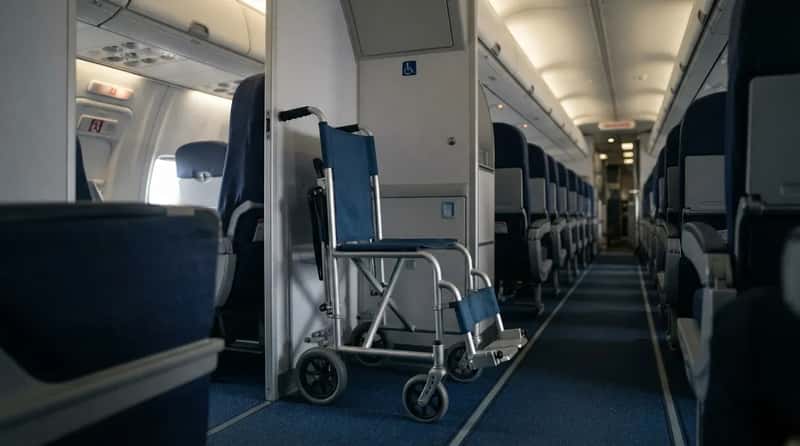
Long flights raise a question solo travelers rarely ask out loud: how do you reach the lavatory? On bigger planes there’s an answer. Aircraft with more than 60 seats and an accessible lavatory must have an on-board wheelchair.
On larger planes with an inaccessible lavatory, there’s a catch. If the passenger can use that lavatory but needs an on-board wheelchair to reach it, the airline must place one on the flight with 48 hours’ notice. That 48-hour window is the detail that trips people up. Confirm it with the agent at the gate anyway, since it never hurts to double-check.
The next item is about information, and agents take it seriously.
#7 – The Flag That Keeps You From Missing the Gate Change
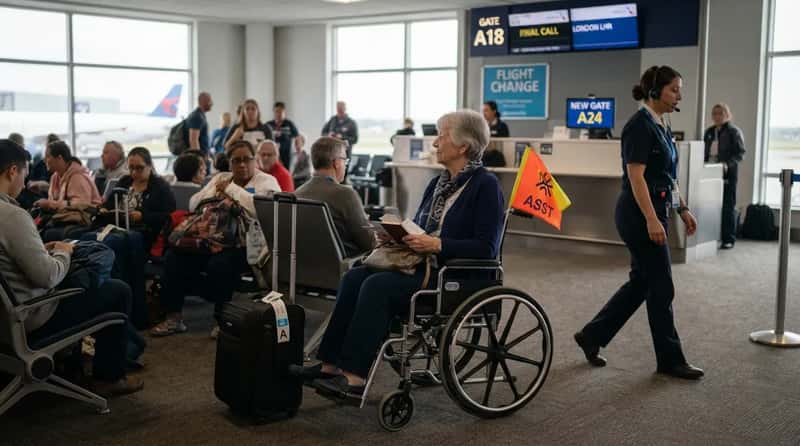
Gate changes and delays get announced fast, and not everyone hears them. Travelers with hearing or vision loss are encouraged to tell the gate agent so they don’t miss announcements of flight changes or delays. That matters even more for a solo traveler, who has no companion to catch what the speaker mumbled.
Crew have duties too. They must communicate safety information effectively to passengers with vision or hearing impairments, with the same prompt access to updates on weather, delays, and connecting gates. Most travelers who need this never ask for it. One sentence at check-in can mean someone walks over to tell you, instead of you hoping you heard the loudspeaker.
#6 – The Rule That Says It Has to Feel Dignified
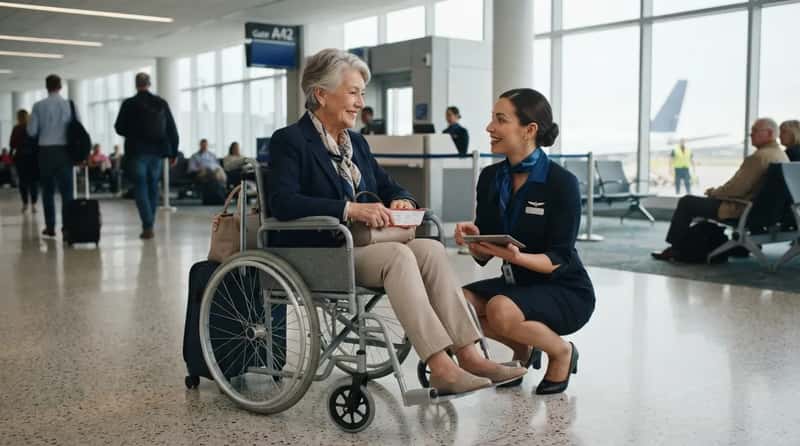
Rules about wheelchairs sound clinical. This one isn’t. DOT says the assistance airlines provide to passengers with disabilities must be performed in a safe and dignified manner. That includes how staff speak to you and how they handle your belongings.
Plenty of older travelers dodge help because they don’t want to feel like a burden. But the service is a legal entitlement, not charity. Many people skip assistance for exactly that reason, and the agent never even finds out. If someone talks over you to a relative, it’s fair to politely redirect the conversation. You’re the passenger, and the ticket is yours.
The next one can keep a solo trip from being split in two.
#5 – The Companion Who Boards With You
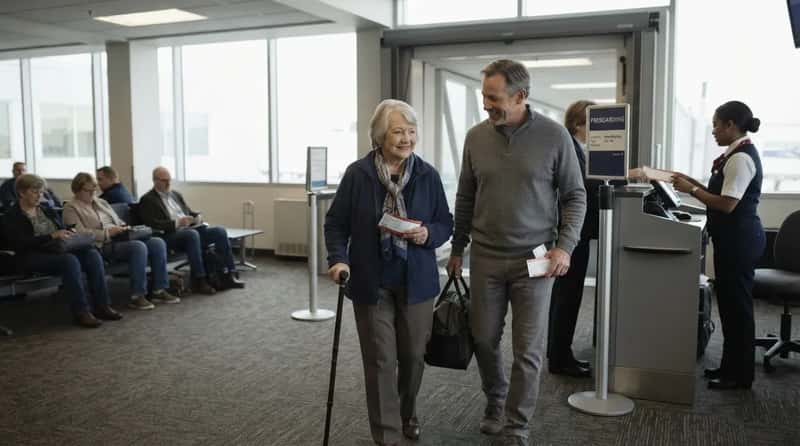
Some solo travelers are actually flying with a friend or relative on the same booking. Some airlines let one companion preboard alongside the passenger who needs extra time. You ask an agent at the ticket desk or the departure gate, and policies vary by airline, so check yours.
The money side is simple. A companion you choose to bring is still a passenger who needs their own ticket. Early boarding for two is a courtesy, not a free seat. That’s very different from the next item, which is where airlines actually can’t push you around.
#4 – The Right Not to Be Told “You Need Someone With You”
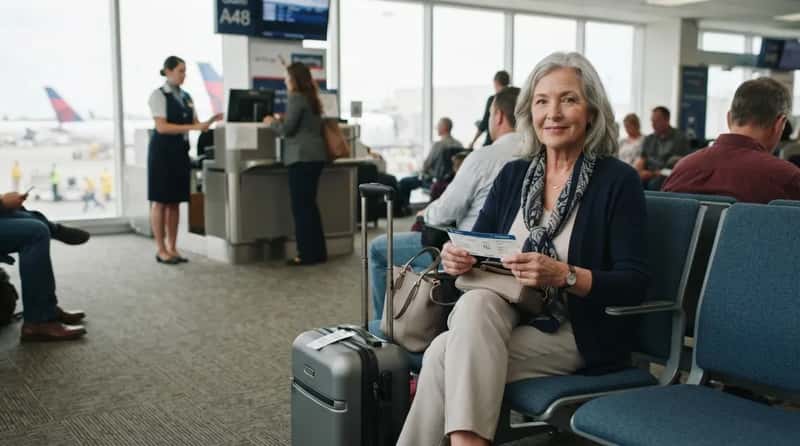
Traveling alone at 70 isn’t something airlines can simply forbid. An airline may not require a passenger with a disability to travel with another person except in very limited circumstances. The exception is narrow: a safety assistant can be required only when staff ask whether you can help in your own evacuation and the airline reasonably concludes that you cannot.
Even then, there’s a financial protection. If the airline overrides your decision to travel without an assistant, it may not charge for that assistant’s transportation. Gate agents who know this rule rarely need to invoke it, but it’s a quiet backstop. It also means age alone is no reason to be told you can’t fly by yourself.
A smaller, practical detail is up next, and it’s one that can save real money.
#3 – The Free Gate Check for Your Walker or Scooter
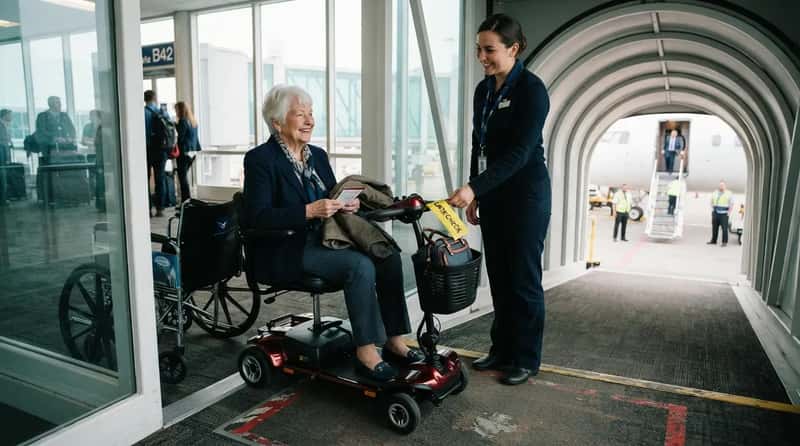
Mobility devices travel for free. Airlines let passengers check wheelchairs, scooters, walkers, and other assistive devices at the gate, and they don’t count against your checked-bag allowance. You typically keep using your own device until the jet bridge door.
A 2024 DOT wheelchair rule strengthened protections for these devices, though enforcement is in flux. DOT has said it paused enforcement of four requirements while it runs a new rulemaking, including one on airline liability when a device isn’t returned in the condition it was received. Photograph your device before you hand it over. That habit costs nothing and could matter later.
Fast Facts
- Cost: free, and it doesn’t count against your checked-bag allowance
- Covered: wheelchairs, scooters, walkers, and other assistive devices
- Where: checked at the gate, so you use it until the jet bridge door
- Smart move: take a quick photo before handing it over
#2 – The 30-Minute Rule Nobody Mentions Until It Matters
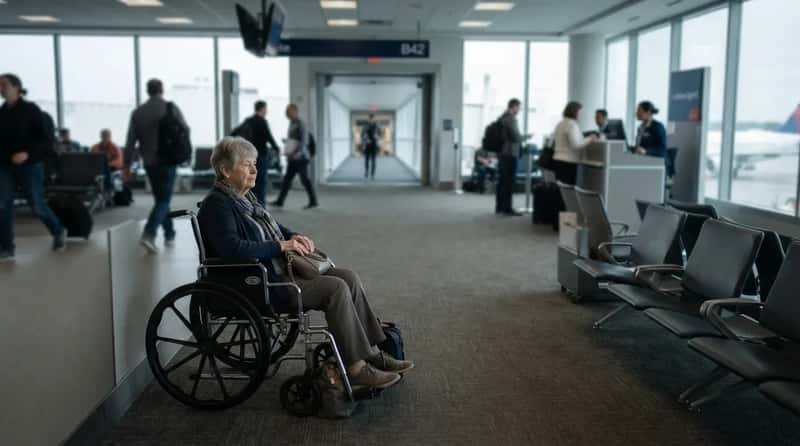
Being parked in a chair and forgotten is every solo traveler’s quiet fear. There’s a federal limit on it. Passengers who aren’t independently mobile may not be left unattended in a ground wheelchair, boarding chair, or aisle chair for more than 30 minutes.
That rule is a big reason agents check back on assisted passengers during busy periods. Thirty minutes is the hard ceiling, not a target. If you’ve been waiting near that long, you’re entitled to ask the agent to find your attendant. Most delays aren’t malicious, just a crowded shift, and speaking up early usually fixes it.
The final item is the thing that makes all the others work.
#1 – The Note on Your Reservation That Changes Everything
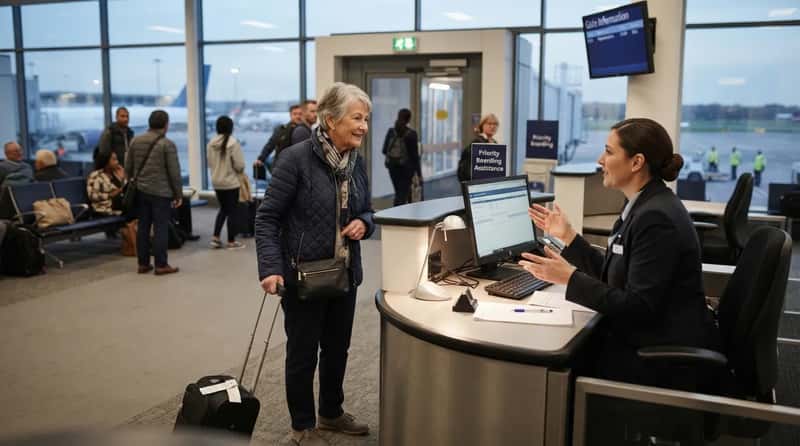
Here’s the truth behind every item above: none of it happens unless someone knows you want it. American Airlines tells travelers to request early boarding with the gate agent if they need extra time or help. The agent can’t read your mind, and the system can’t show your needs unless a request is on file.
A request made when you book puts a note on your reservation, so staff know to look for you. You can also tell a team member at the airport on the day of travel. Gate agents aren’t hiding these services. They’re waiting to be asked. That’s the real secret, and it’s an uncomfortable one, because it asks you to speak first.
Short, clear sentences work best at the gate. Say what you need, whether that’s extra boarding time, a seat near the front, or a chair for the long walk. Agents have heard it all before.
So the person strolling down the jet bridge while everyone else crowds the podium isn’t part of a secret senior club. They just said one sentence the rest of the line never thought to say. Age 60 doesn’t unlock anything on its own, but a clear request does.