You’ve watched it a hundred times. The plane lands, the cabin empties, and a new crowd shuffles on as if the aircraft simply took a breath. It looks like a quick sweep and a wave. In reality, a turnaround is a race with a dozen or more jobs running at once, and many domestic turns last only 30 to 60 minutes, depending on the airline and aircraft.
The strange part is that the most important jobs look like nothing at all. A rubber wedge, a wire clipped to a wing, a worker bending down for a bottle cap. Each one is guarding against something you’d never guess from your window seat. We’re counting down from the small stuff to the part that surprises people most.
#15 – The Little Orange Cones and Wedges That Keep a Jet From Rolling
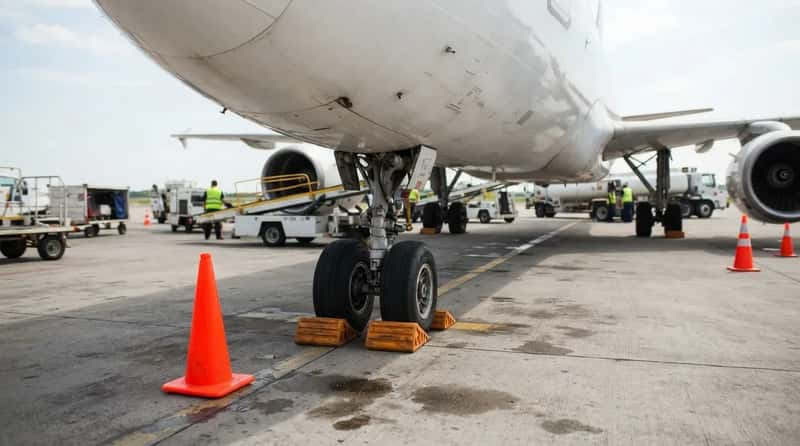
Those cones around the plane look like decoration. They aren’t. Chocks, the wedges pressed against the wheels, go in soon after the aircraft stops. They back up the parking brake so the plane stays put while people, carts and trucks swarm around it.
Cones mark off the zones around the wingtips, tail and engines, and ground vehicles are supposed to stay out of them. A bumped wing can ground a plane just as surely as a mechanical fault. Even minor contact usually means an inspection, and an inspection means a delay. That’s still nothing compared to what’s plugged into the plane at #14…
#14 – The Hidden Cable and Hose That Keep Your Cabin Cool With the Engines Off
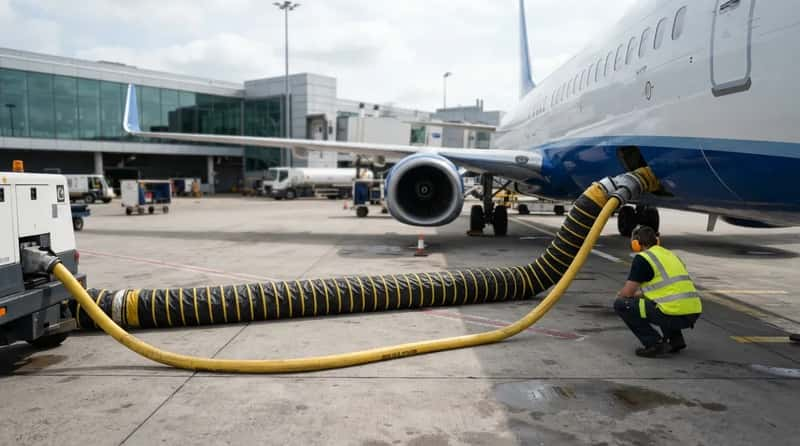
Ever board in July and find the cabin already chilly, even though the engines are silent? That’s ground equipment at work. A ground power unit feeds electricity through a heavy cable, and a big hose can pump in conditioned air.
Without them, crews would lean on the aircraft’s auxiliary power unit, a small onboard engine that burns fuel. Many airports encourage or require gate power and air instead of the APU where it’s available. It cuts fuel burn, noise and emissions right at the terminal. So that cold blast on your neck is the sound of the plane not burning jet fuel at the gate.
The next job is one nobody wants to talk about, but everybody depends on…
#13 – The Lavatory Truck Nobody Wants to Think About
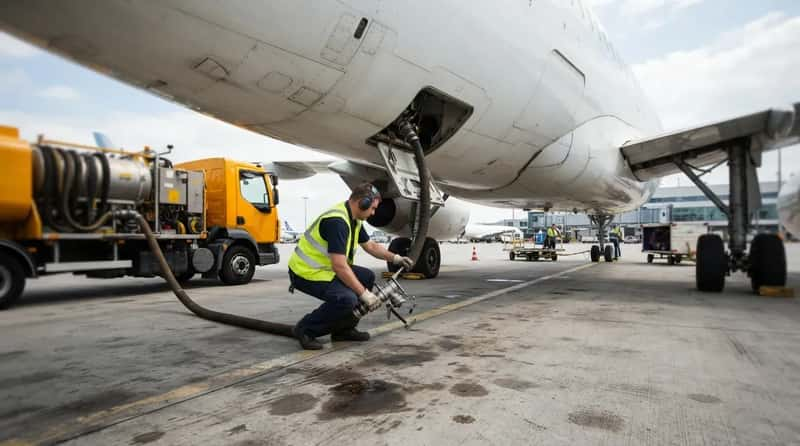
Every restroom you used on the last flight has to be emptied before the next one. A service truck or cart hooks up to a panel under the fuselage and drains the waste tanks. Then crews flush the system and add a disinfectant fluid, which is often blue.
Fresh water is a totally separate job. Drinking water goes in through its own dedicated hoses and equipment, kept apart from the waste side. That separation is deliberate, and it’s why servicing crews follow strict routines. It’s the least glamorous task on the ramp, and the one you’d notice fastest if it were skipped.
Worth Knowing
- The waste tank is drained through a service panel on the underside of the aircraft.
- Waste service and drinking water service use separate equipment and connections.
- After draining, crews rinse the tank and recharge it with a blue-tinted disinfectant.
- Ramp crews have a blunt nickname for the lav truck: the “honey wagon.”
Your snacks are next, and they’re more complicated than you’d guess…
#12 – The Catering Swap Through a Door You Never Notice
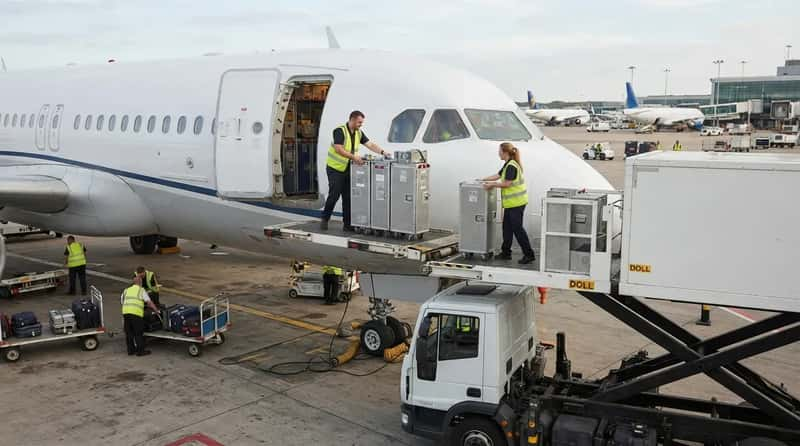
A catering truck lifts a boxy cab up to the aircraft door, almost like an elevator in the sky. Crews pull out the used galley carts and slide in fresh ones. On longer flights that can mean full meals, drinks and a mountain of sealed supplies.
On short domestic hops the load is usually much lighter, mostly beverages and snacks. Every item has to go back in a specific spot. Flight attendants rely on those locations to find things fast in the air, so a rushed restock can mean the cookies you wanted are mysteriously gone mid-flight.
Wait until you see what happens to the cabin itself in #11…
#11 – The Five-Minute Clean That Gets Squeezed First When Flights Run Late
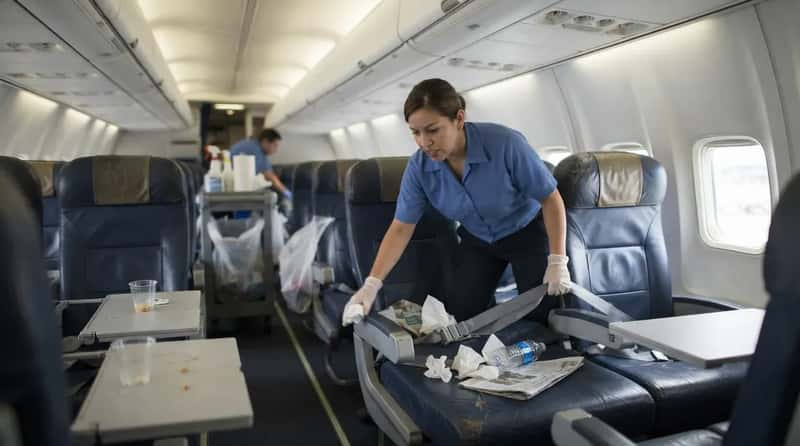
Between flights, cleaners usually do a fast tidy, not a deep scrub. They gather trash, straighten seat belts and check the seat pockets. Anything left behind, like a phone, charger or jacket, can end up in lost property.
Some in the industry argue this quick clean is the first thing to get squeezed when a flight is already behind. Deeper cleaning typically happens overnight, not between flights. So a crumb on your tray table isn’t always proof that someone ignored their job. Sometimes it just means the clock won.
But the real weather drama is about to show up in #10…
#10 – The Crews Working Through Storms, Scorching Pavement and Freezing Spray
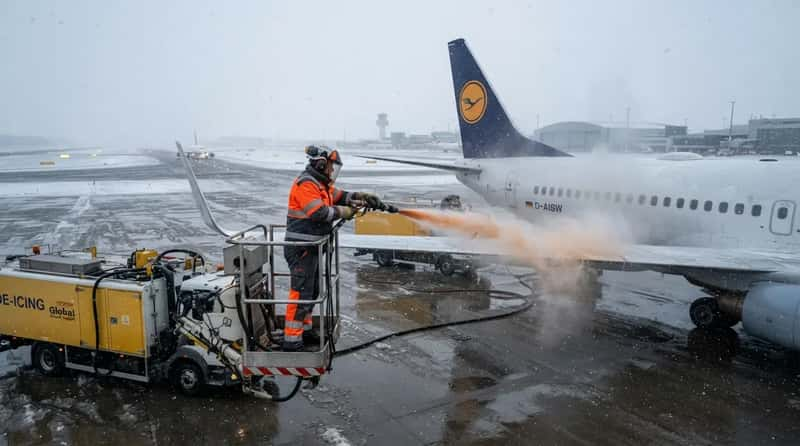
Ground crews don’t get to wait out the weather. In winter, de-icing crews spray heated fluid over the wings and tail to clear snow and ice. At many airports that happens in a dedicated area near the runway.
The fluid doesn’t last forever. Its protection runs out within a limited window, so timing matters as much as the spray itself. In summer, the same crews work on blazing pavement with jet noise roaring and hearing protection strapped on. When your flight is delayed by bad weather, someone is still outside doing the job.
Quick Compare
- Winter: Heated fluid strips off snow and ice, and a thicker, often green-tinted coating can add protection time before takeoff.
- Summer: Hot pavement, heavy noise and long shifts outdoors, with ear protection and heat breaks part of the routine.
- Storm days: Ramp work is often paused when lightning is close, which is why bags can sit longer than you’d expect.
And the next one involves the most flammable thing at the airport…
#9 – The Fuel Truck and the Wire That Stops a Spark
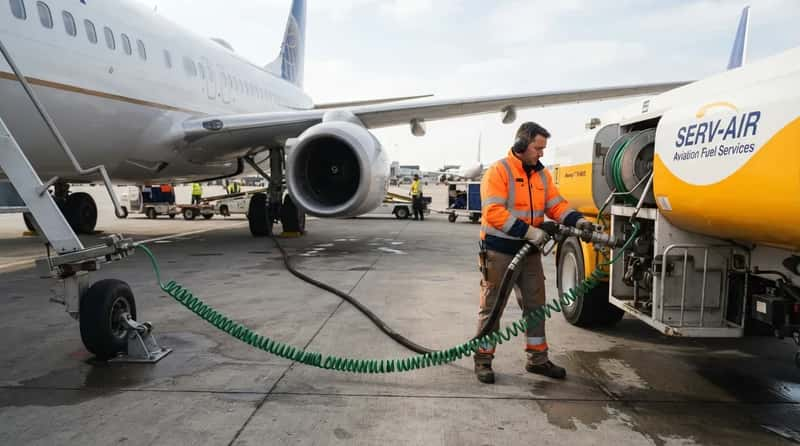
Fueling is a quiet routine with strict rules. A fuel truck or hydrant cart connects to the aircraft, and a bonding cable links the equipment to the plane. That cable evens out static electricity so a spark can’t jump anywhere near fuel.
The amount isn’t a guess either. Pilots and dispatchers decide it from the flight plan, weather and reserve requirements. In many cases passengers can stay on board during fueling, as long as safety procedures are followed and the crew is ready to react. It sounds startling, but it’s a standard, regulated practice.
Next up is a job you may have seen a pilot doing without knowing why…
#8 – The Walk-Around Where One Tiny Dent Can Cancel Your Flight
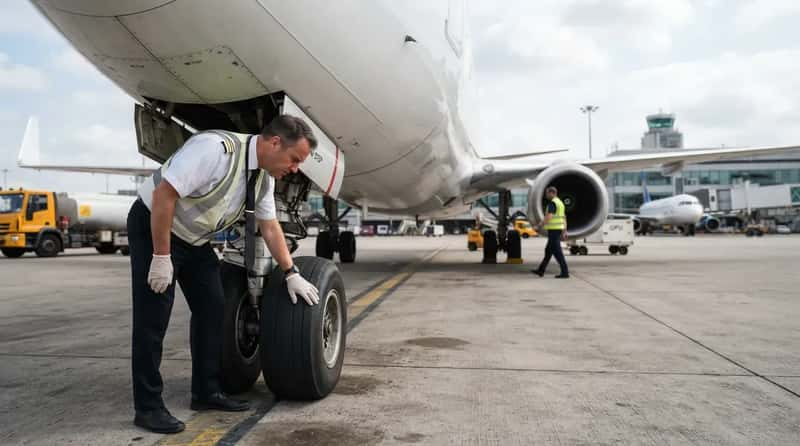
Before the plane leaves, someone walks a slow circle around it. It might be a pilot, a mechanic, or both. They check the tires, engine inlets, panels and sensors, and even glance at the ground beneath for leaks.
This quick look catches things passengers never hear about. A dent, a bird strike mark or a fluid stain can stop a departure. Even a small mark can mean maintenance has to sign off before the plane moves. It’s the real reason some “mystery” delays happen. The crew isn’t stalling, they’re making sure the plane is safe.
At a Glance
- Tires: Looking for cuts, flat spots and unusual wear.
- Engine inlets: Checking for damage, bird strike marks and anything lodged inside.
- Sensors and probes: Making sure covers are off and nothing is bent or blocked.
- Panels and latches: Confirming everything is closed and secure.
- Ground below: Scanning for fresh drips of fuel, oil or hydraulic fluid.
But the biggest hidden job at the gate might be the one under your feet in #7…
#7 – The Bag Shuffle Happening Right Beneath Your Seat
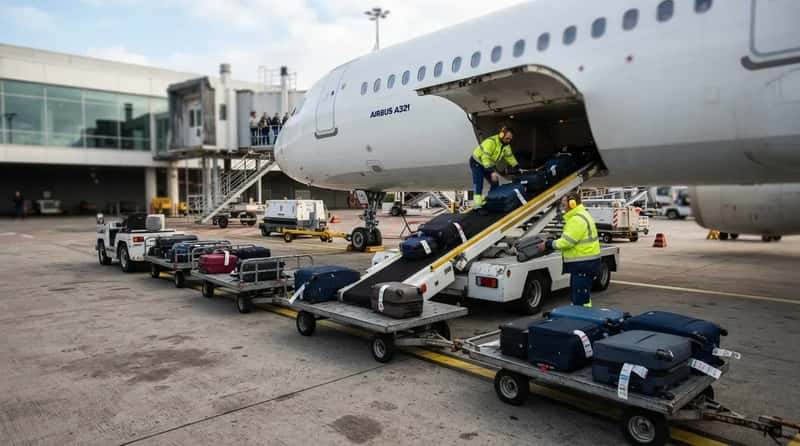
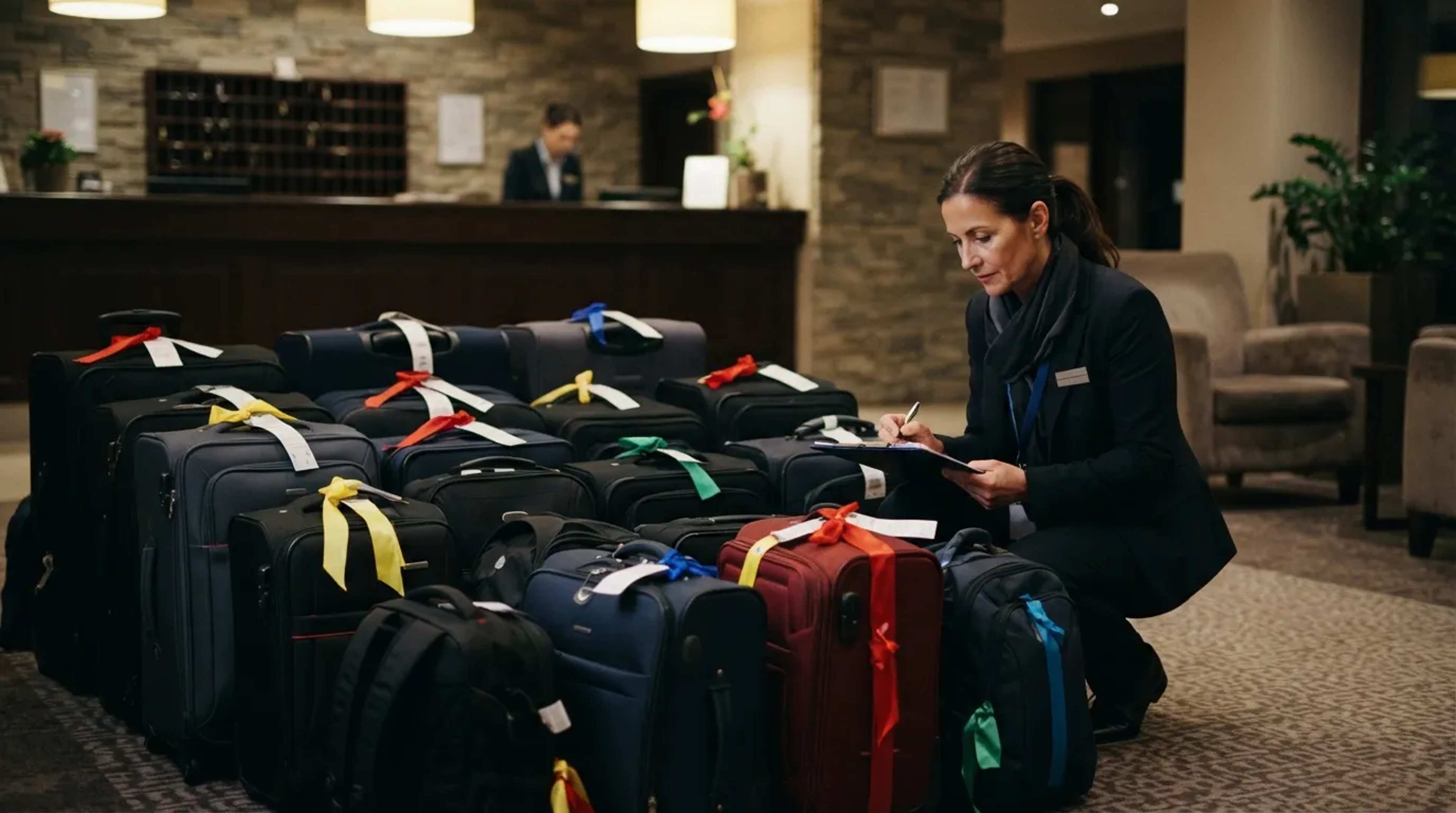
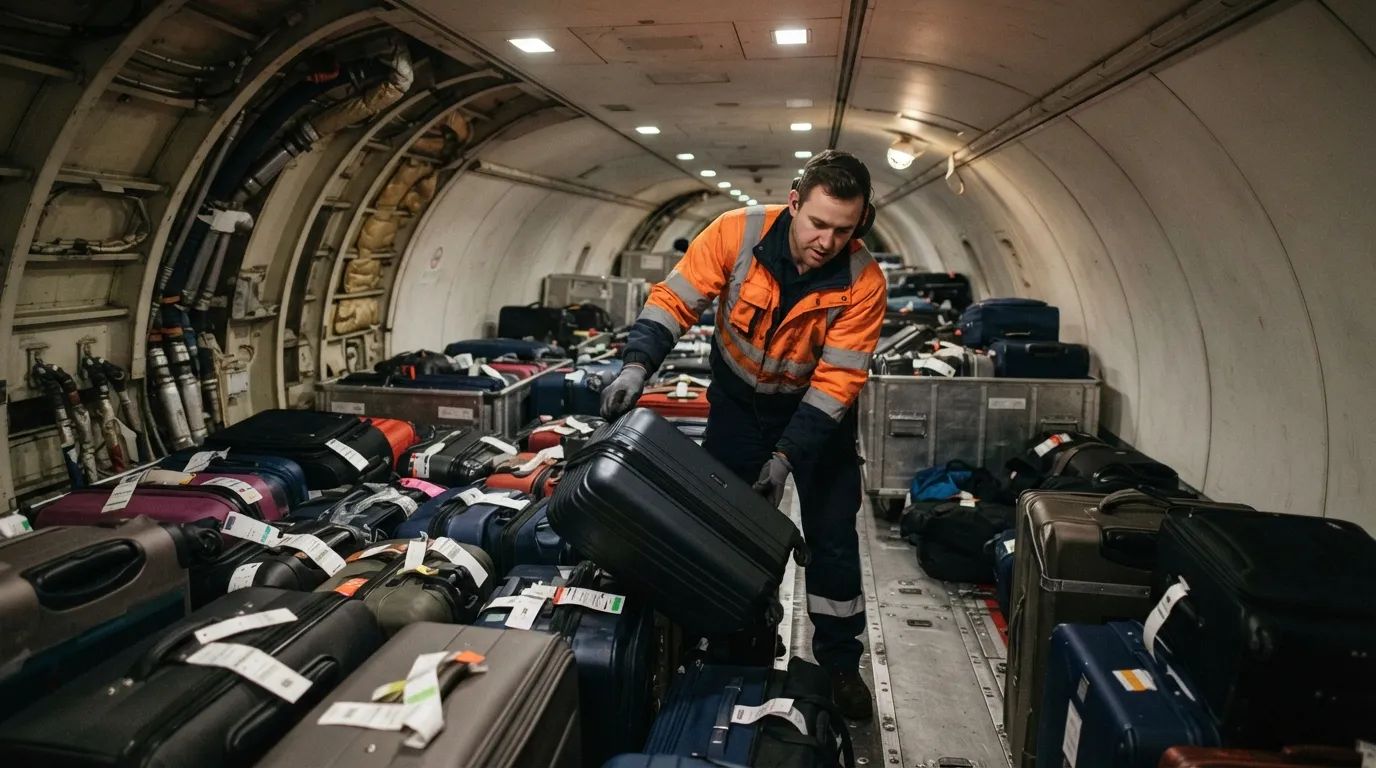
While you wait to deplane, ramp agents are already unloading the hold. Bags ride belt loaders and carts to the terminal or to connecting flights. Each tag is scanned and sorted by destination.
It works well, but it isn’t perfect. SITA reports the global rate fell to 4.9 mishandled bags per 1,000 passengers in 2025, and transfers remain the leading cause at 39 percent of cases. That’s why a tight connection puts your bag at more risk than a nonstop flight. The industry also puts the average cost of a mishandled bag at about US$260.
Some cargo in the hold gets special care, and it isn’t just suitcases…
#6 – The Strollers, Wheelchairs and Pets Riding Below Your Feet
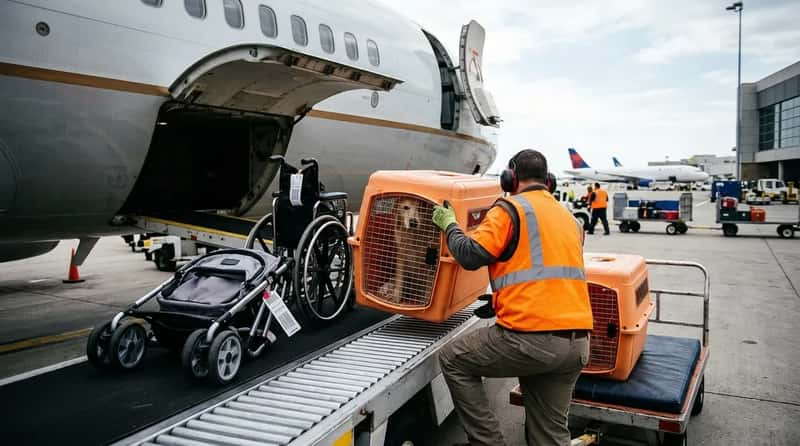
Gate-checked strollers and mobility devices are tagged and carried down to the aircraft. At many US airports they’re returned at the jet bridge when you land. For the people who depend on them, that handoff matters enormously.
Pets in the cargo hold get their own handling. Most airlines carry them in a pressurized, temperature-controlled section of the hold. Ramp crews are expected to load them last and unload them early where procedures allow. It’s a small detail, but for owners it’s the most nerve-racking part of the trip.
But the thing that worries engineers most is much smaller than a pet…
#5 – The Bottle Cap That Can Wreck a Jet Engine
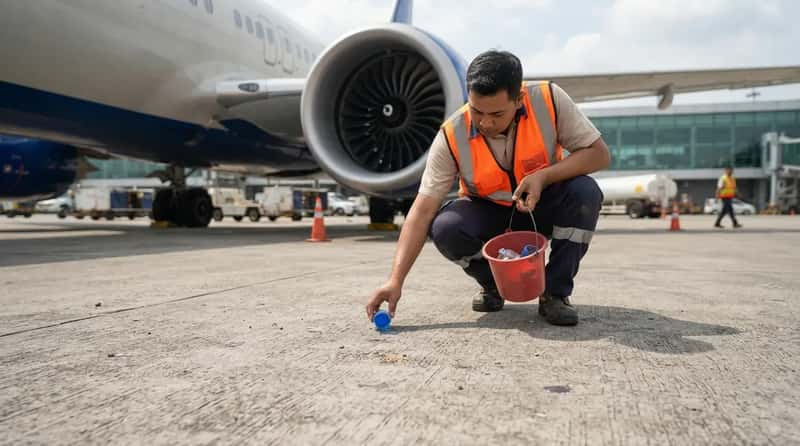
Ramp crews scan the pavement for foreign object debris, known as FOD. That means bolts, plastic, tools, cups and stray bags. Jet engines swallow enormous amounts of air, and a small object can do real damage on the way in.
That’s why the ground around the gate gets checked so often. Even a loose piece of hardware can damage an engine. Crews also keep well clear of the intake areas when engines are running. Picking up trash on the ramp looks like the dullest job out there, and it’s quietly one of the most important.
Now for the invisible math that keeps the plane level in the air…
#4 – The Load Plan That Decides How Your Plane Balances
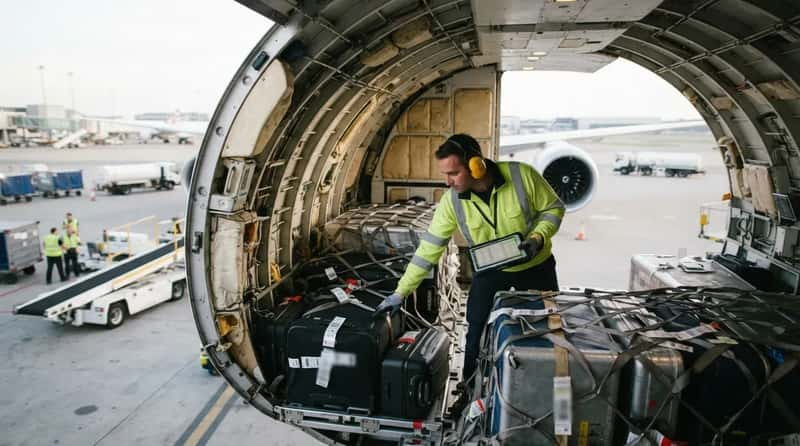
Bags and cargo don’t just go wherever there’s room. Aircraft are loaded to a plan that spreads weight so the plane stays balanced. That plan feeds the load sheet the pilots use before departure.
Ramp agents follow it closely. A plane’s center of gravity has to stay within safe limits for takeoff and flight. If the load doesn’t match the paperwork, the numbers have to be fixed before the plane goes. It’s one reason you might see crews moving bags around after boarding is done.
Fast Facts
- Every aircraft type has a published range where its center of gravity must sit.
- Holds are divided into compartments, and the plan says what goes in each one.
- Airlines often use standard average weights for passengers and bags in their calculations.
- Last-minute changes, like extra bags or a swapped seat, can mean an updated load sheet.
The next job starts before you ever reach the gate…
#3 – The Person With Glowing Wands Guiding a Jet That Weighs Tens of Tons
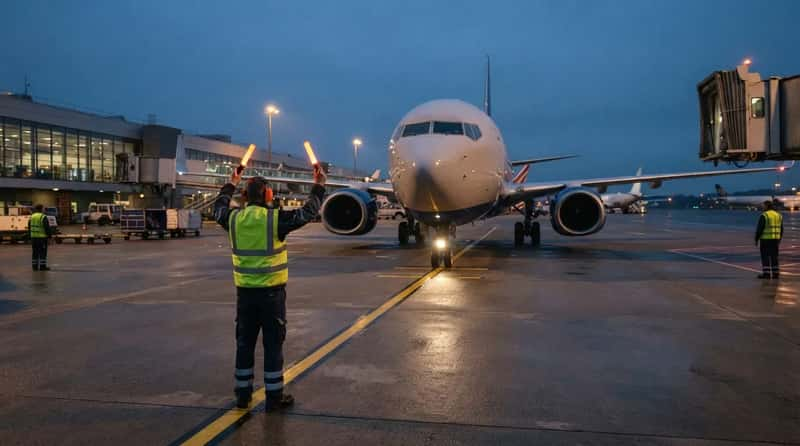
Many gates use automated docking systems, with lights or displays that tell pilots where to stop. At others, a marshaller uses standardized hand signals or lighted wands. Wing walkers may also watch the wingtips from the side.
It’s a precise job. Pilots rely on those signals to stop with the door lined up with the jet bridge. If the plane stops in the wrong place, the whole sequence slows down. Since one small delay can ripple through a whole day’s schedule, that first stop matters more than anyone watching realizes.
And the farewell wave at departure is more than a goodbye. It’s #2…
#2 – The Headset Voice and the Little Pin That Lets Your Plane Leave
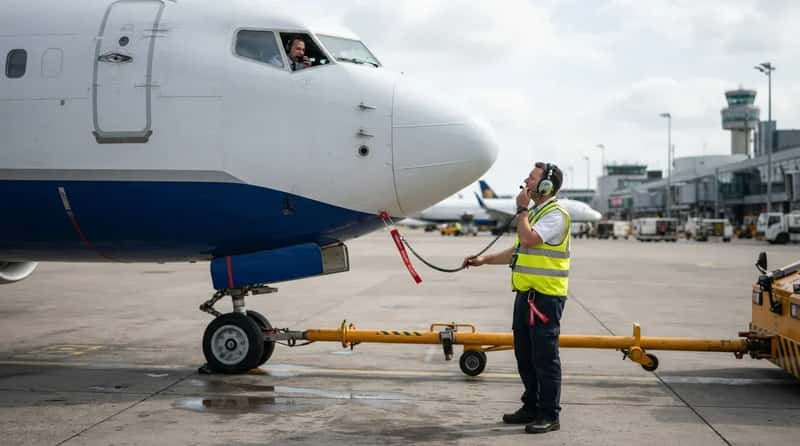
When it’s time to go, a tug connects to the nose wheel with a tow bar or a towbarless system. A ground crew member plugs a headset into the aircraft and talks directly with the cockpit. That person is the pilots’ main link to everything happening outside.
At the very end, the crew member pulls a safety pin and shows it to the pilots. That moment is the visual confirmation that the plane is safe to move on its own. Then comes the wave. It looks like a friendly goodbye, but it’s part of the procedure. And the number one job may have been caused by someone on your own flight…
#1 – The No-Show Passenger Whose Bag Crews Must Dig Out of the Hold
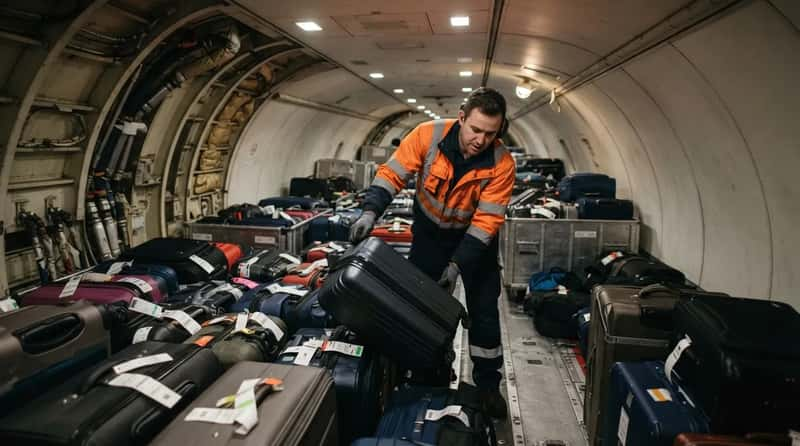
Here’s the one that surprises people most. If a checked-in passenger doesn’t make it onto the plane, their bag generally has to come off too. Airlines follow rules that match bags to the passengers on board, especially on international flights.
That can mean crews searching the hold, bag by bag, while the clock runs. One missing traveler can hold up a plane full of people. It’s the kind of hidden consequence nobody sees from the cabin. A late arrival at the gate can cost far more than their own trip.
Next time you’re stuck at the gate, glance outside. Chocks, cables, trucks, fuel lines and headsets are all working at once to turn one flight into the next.
Even with baggage mishandling at a record-low 4.9 per 1,000 passengers in 2025, millions of bags still go astray. When it all goes right, you never see any of it. That’s exactly how the crews outside your window like it.