You’ve heard the stories: the stiff pat-down, the barked orders, the 80-year-old hopping around in socks on a cold floor. So it’s a shock to learn the checkpoint has more give than most older travelers ever hear about. Seated screening, private rooms, a free helpline and special handling for medical gear are all real, written-down options.
The catch is that officers can only offer what you know to ask for, and the rules shifted in 2025 and 2026. One small mix-up now carries a $45 price tag, and the age cutoff for a screening break isn’t the one most people assume. Here’s what TSA’s own guidance says, counting down to the one habit that changes everything.
#15 – The Shoes-Off Rule Ended, But Officers Can Still Ask
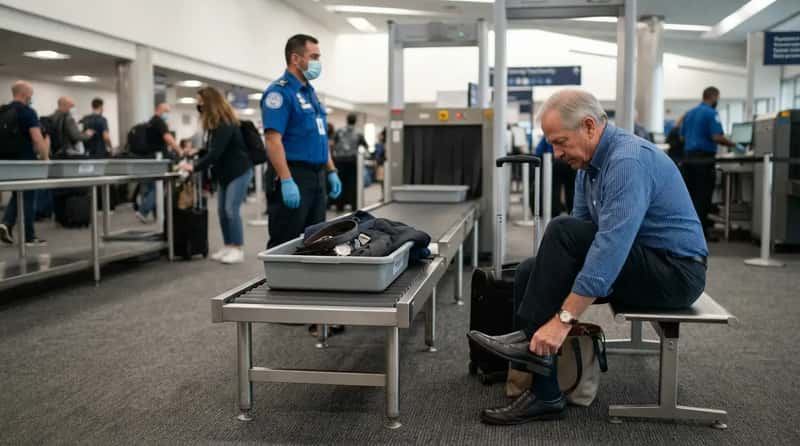
Since 2006, shoes in the gray bin has been the ritual everyone dreaded, especially anyone with a bad knee or shaky balance. TSA ended the shoes-off requirement on July 8, 2025, so most travelers can now walk through with their shoes on. Plenty of people still sit down and untie their laces out of pure habit.
The fine print is where people get caught. If an alarm goes off or a scan flags something, an officer can still ask you to take your shoes off. The old routine can come back in a second. Slip-ons beat lace-up boots every time, and a nearby chair makes the whole thing easier.
But the age rule most people get wrong is even trickier, and it’s next.
#14 – The “Senior Perk” Doesn’t Start at 65
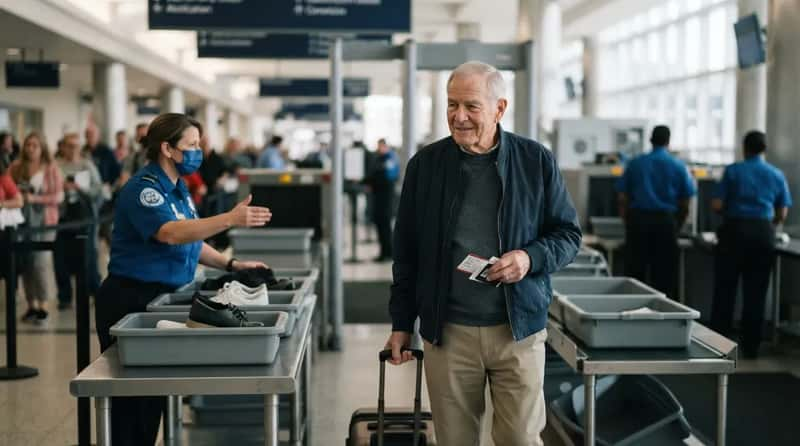
Ask around and plenty of people will tell you the senior break at security kicks in at 65. TSA’s guidance points somewhere else. It says passengers 75 and older can receive some form of expedited screening, and nothing in that guidance describes a special lane that starts at 65.
So a lot of 65-year-olds stand in line waiting for a break that was never theirs. At 75 and older, travelers may get expedited screening, such as keeping a light jacket on. It’s a hard age cutoff, not a sliding scale. The word “may” matters too, because officers still have discretion.
Fast Facts
- The age in TSA’s guidance is 75 and older, not 65.
- The break can mean expedited screening, like keeping a light jacket on.
- Officers still have discretion, so it isn’t guaranteed.
- No special lane starting at 65 is described in that guidance.
Then there’s the little document that trips up even seasoned flyers.
#13 – The Little Star on Your License Is Everything
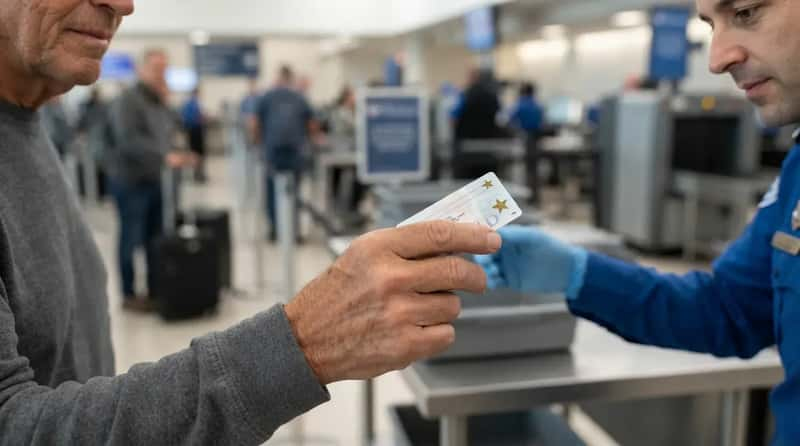
That small star in the corner of your driver’s license has become a gatekeeper. TSA began full REAL ID enforcement at domestic checkpoints on May 7, 2025. Plenty of people carrying decades-old licenses still haven’t noticed the star is missing.
It’s easy to assume your license is fine because it never caused a problem before. Now you need a REAL ID-compliant license or another accepted ID, such as a passport, to fly within the U.S. An old license or an expired ID won’t magically count. Check before you pack, not at the airport curb.
Skip that check and the price tag is stranger than you’d think.
#12 – The $45 Fee for Showing Up Without the Right ID
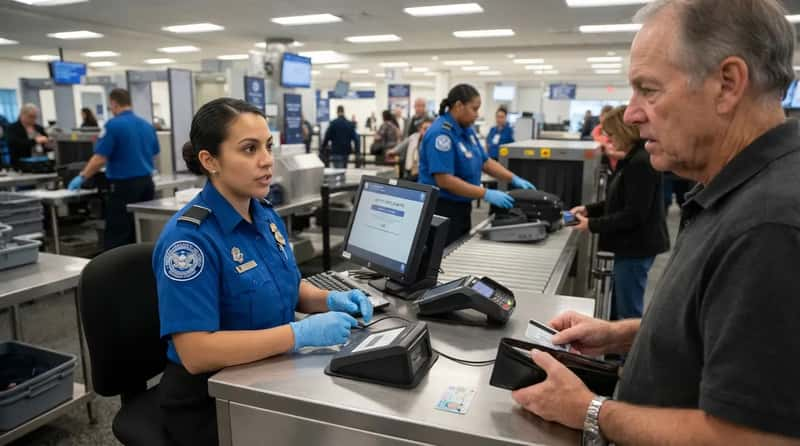
This one stings. Starting February 1, 2026, travelers without a REAL ID or other acceptable ID can pay $45 to use TSA ConfirmID. It’s an identity check, not a free pass.
TSA is blunt about the downside. Everyone who uses ConfirmID faces additional ID verification, screening measures and potential delays. Show up unprepared and you could miss your flight. Some travelers call the fee a tax on forgetfulness, while others say the REAL ID deadline was years overdue.
The next item is one almost nobody thinks to mention, and it’s about your ears.
#11 – Your Hearing Aids Can Stay In
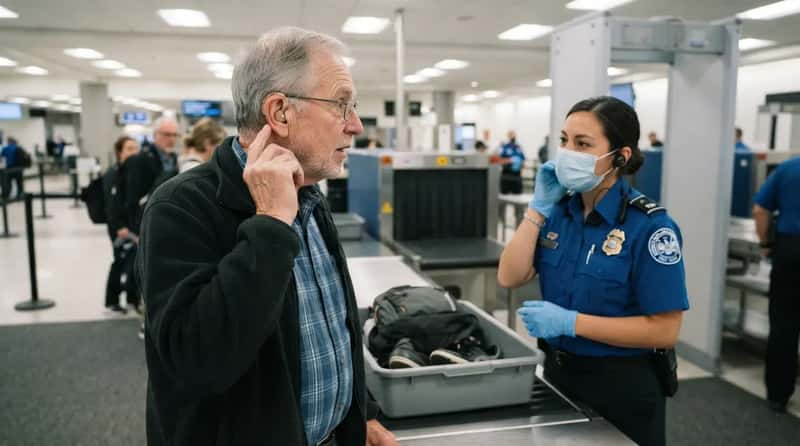
Millions of people quietly assume they have to pull out their hearing aids at the checkpoint, then fumble them into a tiny pocket. They don’t. Hearing aids and external cochlear implants do not need to be removed.
They can still cause a hiccup, and they may need extra screening if they set off an alarm. Telling the officer up front can head off a confused pat-down. It’s also worth saying you’re hard of hearing, because instructions get shouted across loud halls and are easy to miss.
Internal devices follow a very different playbook, as the next entry shows.
#10 – Pacemaker Owners Get a Say in How They’re Screened
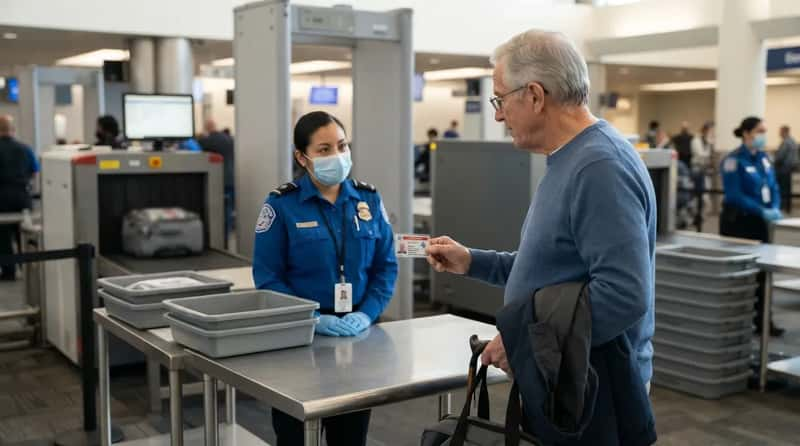
If you have an implanted device, a walk-through metal detector isn’t your only route. Tell the officer about your pacemaker or defibrillator before screening starts, and you can ask about alternatives such as advanced imaging technology or a pat-down.
If officers use a handheld wand, it shouldn’t be held over the device itself. Your pacemaker doesn’t get waved at like a suspicious suitcase. Most people don’t learn this until they’re already standing in line, nervous and guessing.
Canes and walkers raise a different question that surprises plenty of people.
#9 – Even Your Cane Gets Screened
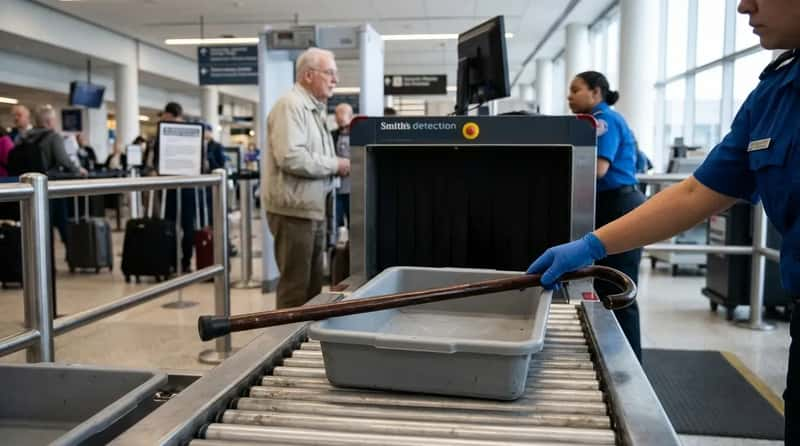
You might expect a mobility aid to get a free pass. It doesn’t. TSA requires everyone, including people with scooters, wheelchairs, walkers and canes, to be screened in some way.
The reason is practical. TSA says it has found unauthorized items hidden in wheelchairs and other mobility devices. Smaller items like canes usually go through the X-ray, while larger devices get inspected by an officer. If you can’t stand or walk through, ask about alternatives before you reach the front of the line.
Quick Compare
- Canes and smaller aids: usually go through the X-ray.
- Larger devices: inspected by an officer.
- Can’t stand or walk through: ask about alternatives early.
The next entry covers the most overlooked rule for anyone carrying pills or liquids.
#8 – Medical Liquids Break the Usual Size Rules
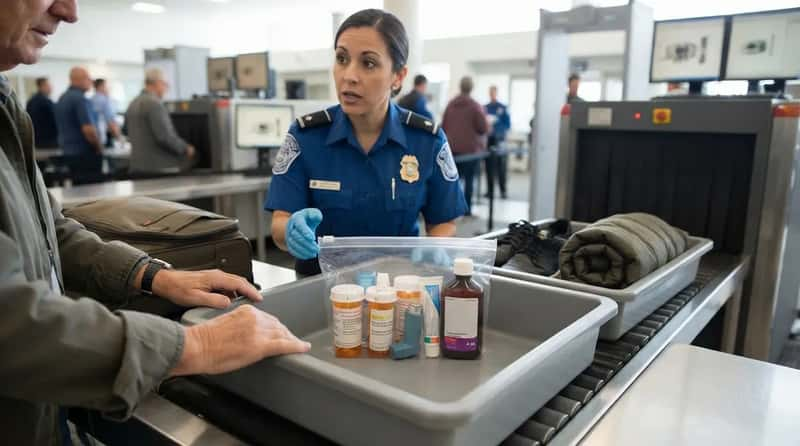
The 3.4-ounce liquid limit has a medical exception that most people never hear about. Medically necessary liquids, gels and aerosols are exempt from the 3-1-1 rule, though they may need additional screening.
Officers expect you to speak up. Reasonable quantities of medication over three ounces are allowed, and they don’t have to ride in the zip-top bag. Declare them so officers can open and test them if needed. Keep medications in your carry-on, because a lost checked bag could leave you without them.
Some medical items need an even clearer heads-up, and the list is longer than you’d guess.
#7 – Ice Packs, IV Bags and Syringes Need a Heads-Up
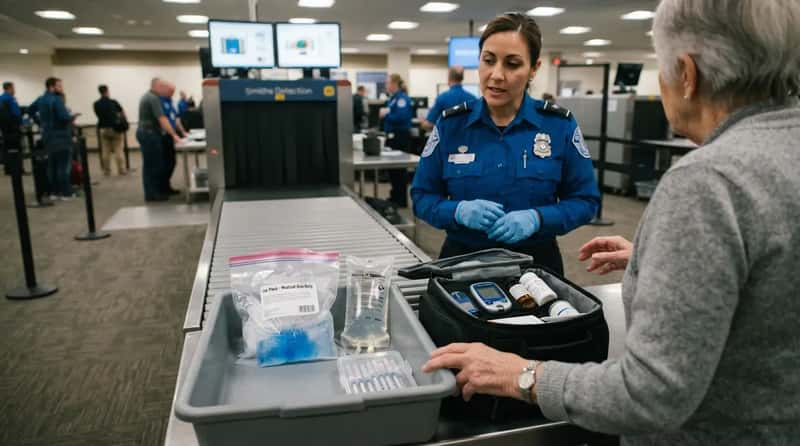
Medical supplies can look suspicious when they’re buried in a bag. That’s why officers want to hear about them first. Items to declare include freezer packs, IV bags, pumps and syringes.
Keeping things separate helps a lot. Tell the officer about your medically necessary items and set them apart from your other belongings before screening starts. Don’t be surprised if officers test your liquids for explosives anyway. That’s routine, not an accusation.
But you shouldn’t have to explain your health to the whole line, and the next entry fixes that.
#6 – A Free Card Does the Talking for You
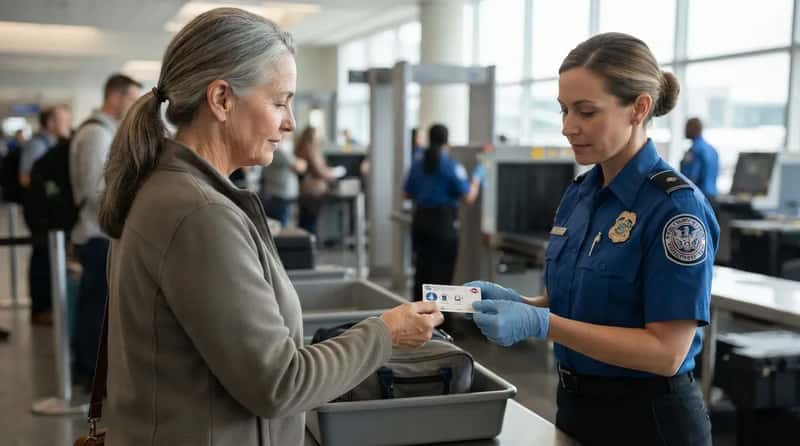
Most travelers with medical conditions try to explain everything out loud while a line builds up behind them. There’s a quieter way. TSA offers a free Notification Card you can download from TSA.gov, and it lists conditions, disabilities or devices that may affect screening.
It has limits, and officers will tell you so. These cards don’t exempt you from screening, but they do help communication with officers. It’s a conversation starter, not a skip-the-line pass. The card also points you to TSA Cares, the helpline you can call before you travel.
Why It Stands Out
- It’s free and downloadable from TSA.gov.
- It lists conditions, disabilities or devices that may affect screening.
- It helps you communicate without explaining out loud to the whole line.
- It doesn’t exempt you from screening.
If standing in the open is the problem, the next entry matters even more.
#5 – You Can Ask to Sit Down, or Go Private
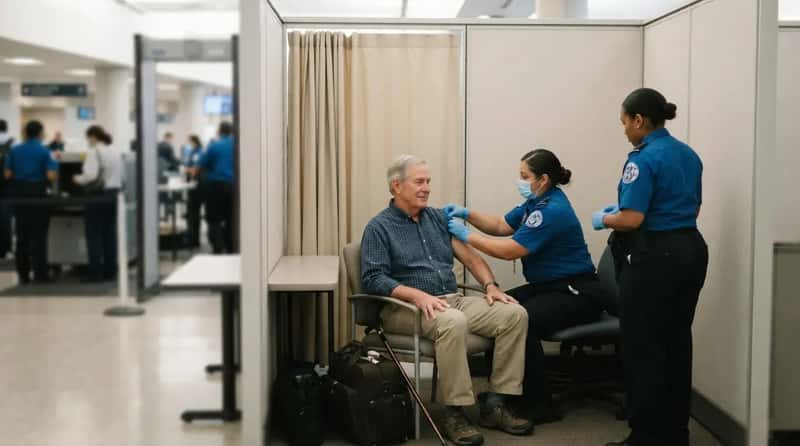
A pat-down in the middle of a busy checkpoint isn’t something you have to simply endure. If a pat-down is required, you can ask to be seated for that part. That’s a real option, not a favor.
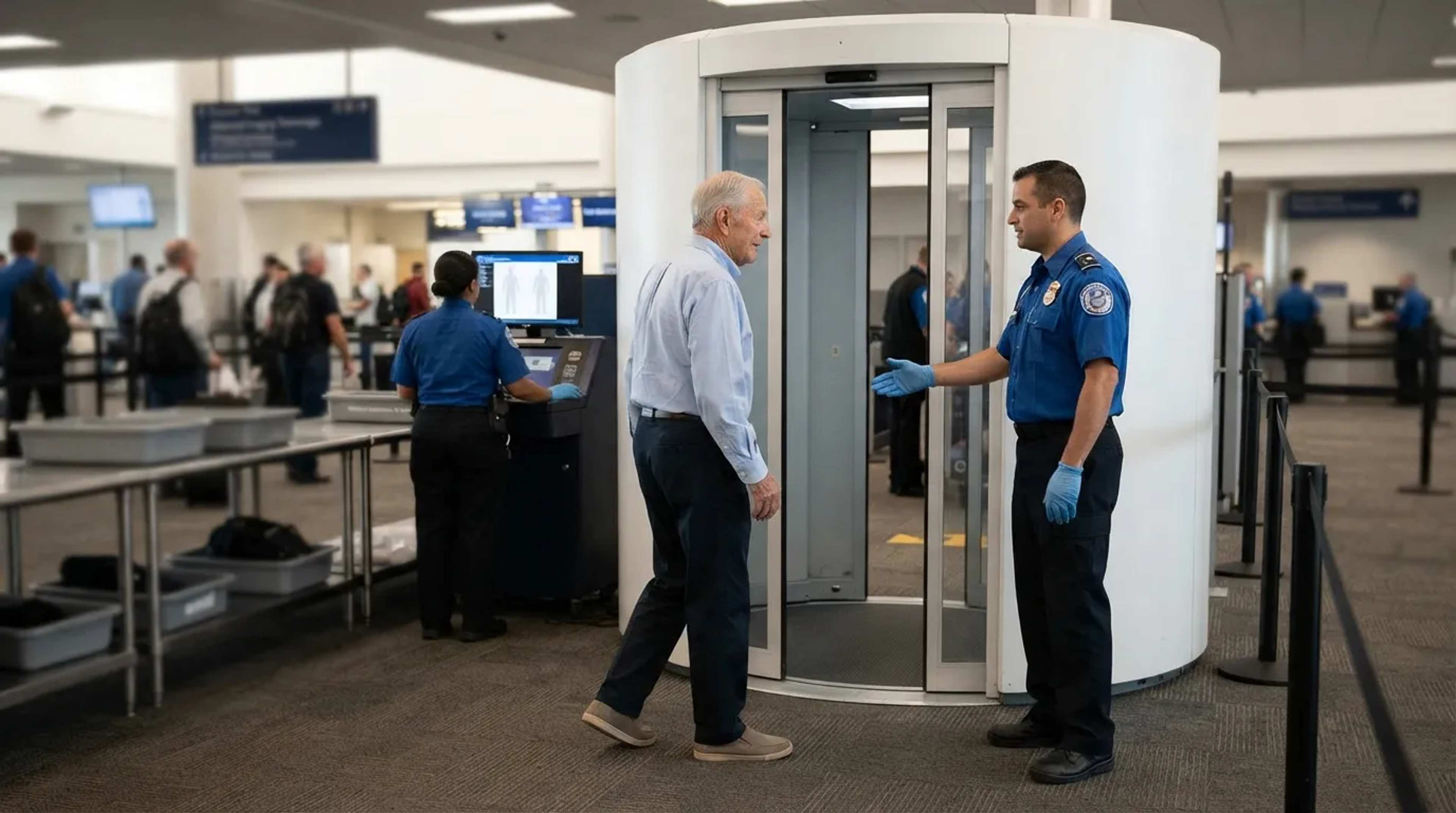
Privacy is on the table too. You can ask for a private screening, and a travel companion can come along if a medical device or disability complicates things. You don’t have to be examined in front of a crowd of strangers. If you can’t stand, officers can clear you through manual inspection.
One more rule applies to travelers 75 and older, and it can head off the pat-down altogether.
#4 – Travelers 75+ Get a Second Chance at the Scanner
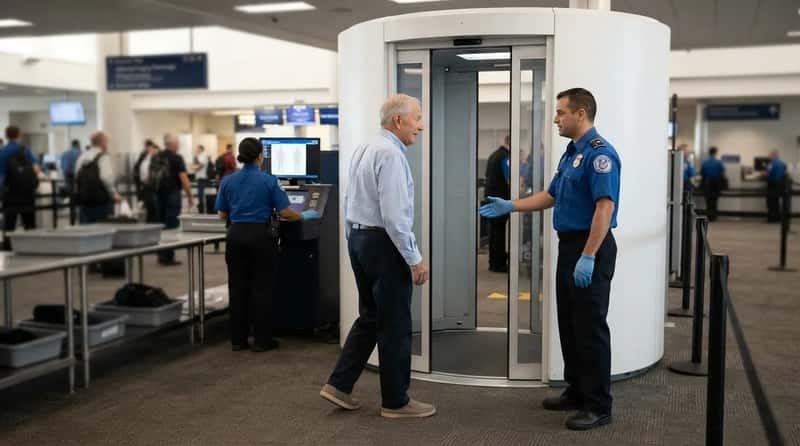
An alarm doesn’t always mean an immediate pat-down. For passengers 75 and older, TSA policy allows an extra pass through the scanner before a pat-down is required.
Few people know to expect this. The same guidance lets travelers 75 and older keep their shoes and light jackets on. One nervous alarm may not be the end of the story. If you’re helping a parent through the line, simply state their age and ask for modified screening.
And there’s a trained person you can request on the spot, which brings us to the next entry.
#3 – There’s a Specialist You Can Ask For on the Spot
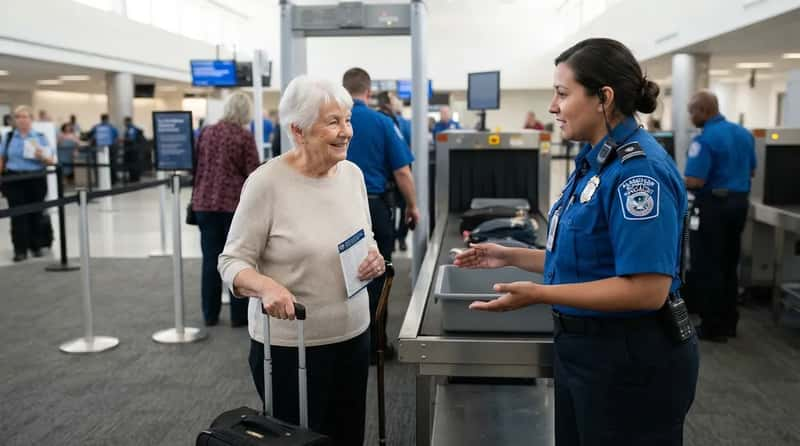
Most people have no idea screening has a specialist role built in. A Passenger Support Specialist is a TSA officer with specialized training in helping people with disabilities, medical conditions or anyone who needs extra help.
You don’t have to arrange it weeks ahead. At the checkpoint, you can ask any TSA officer for a specialist. Traveling with medical equipment? That’s exactly what they’re there for. Ask early, before you put anything on the belt.
But the biggest advantage of all happens before you leave the house.
#2 – A Free Helpline Can Meet You at the Door
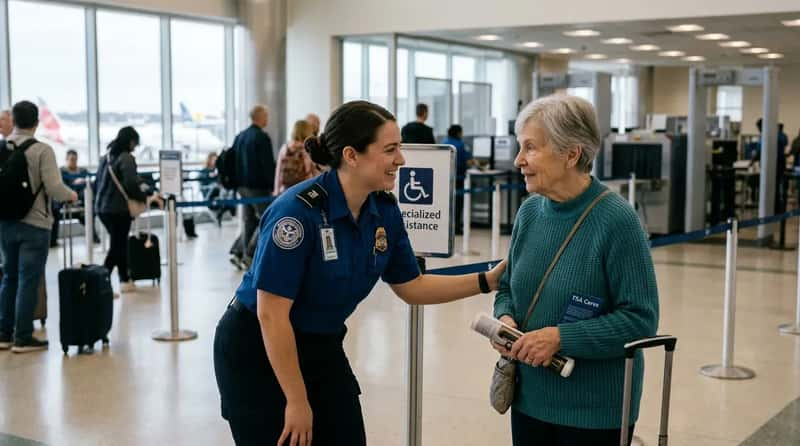
TSA Cares may be the most underused tool in the whole system. It’s free, built for travelers with disabilities and medical conditions, and it works best if you call at least 72 hours ahead at (855) 787-2227.
It can change the whole experience. TSA can arrange for a Passenger Support Specialist to help you through the checkpoint and explain what’s happening at each step. You don’t have to figure it out alone at the front of the line. The earlier you call, the more time there is to set things up.
Still, one sentence does more than any other, and it’s the last entry.
#1 – Five Words That Change Your Whole Screening
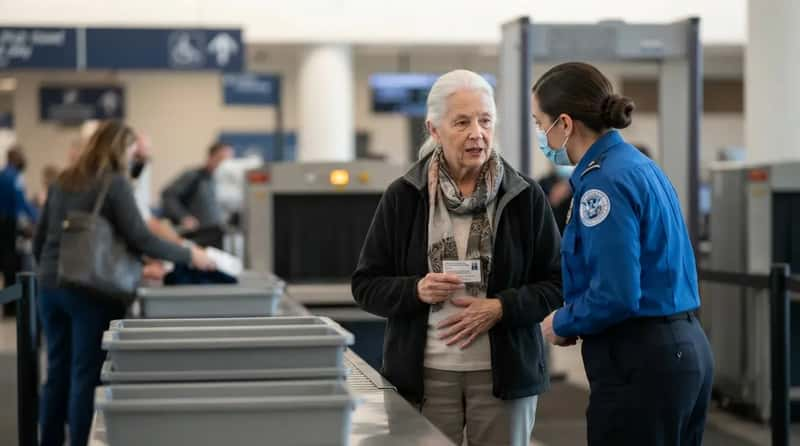
Everything above hinges on one habit: tell the officer before the scan, not after. If something is attached to or inside your body, say so. That includes a neurostimulator, port, insulin pump, ostomy or other medical device.
“I have a medical device” is enough to start. Officers can then pick the right method, offer a seat, or move you somewhere private. The biggest mistake is staying silent to avoid a fuss. Silence is what causes the awkward pat-down, the confused alarm and the long delay. A calm heads-up is what gets you a smoother trip through.
Worth Knowing
- Speak up before the scan, not after the alarm.
- Anything attached to or inside your body counts, from an insulin pump to an ostomy.
- Once officers know, they can choose the method, offer a seat or go private.
- One short sentence is enough to start the conversation.
Maybe the most surprising part is how much of this has been available all along. The ability to sit down, step aside or bring in a trained specialist was never hidden. It just never made it into the announcements.
So the next time a checkpoint line looms, remember it’s a process with room for people. The officer in front of you can only work with what they’re told. A calm sentence at the right moment is the one thing most travelers never think to say.