You’ve probably heard that airports quietly go easy on travelers once the big birthdays arrive. The rulebook barely cares about your age. Nearly every real accommodation runs on need, not a number, which is why so many travelers in their 70s walk right past help they’re entitled to.
Even the one famous age line, 75, just disappeared. What’s left are 16 allowances that still stand, from the security checkpoint to the aircraft door. Some of them will have you asking, “Wait, I could have asked for that?”
#16 – The Famous 75-and-Older Shoe Perk Quietly Vanished
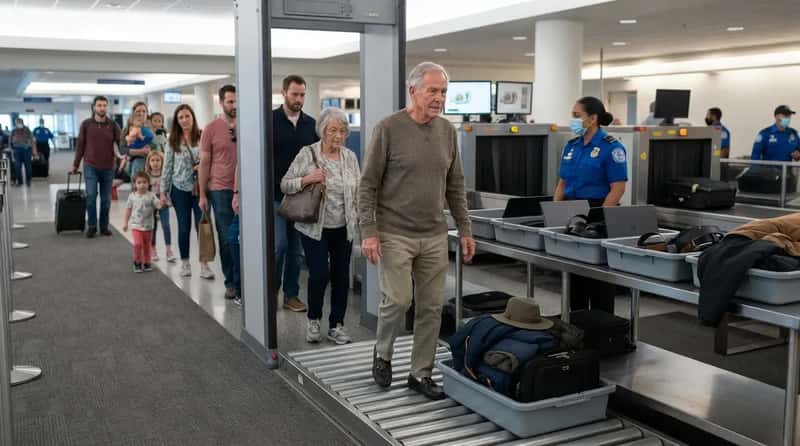
The best-known senior break at the airport is no longer a senior break. Children 12 and under and passengers 75 and older used to be exempt from shoe removal, and now everyone can keep their shoes on. TSA ended its shoe removal mandate on July 8, 2025.
There is still a catch. Officers can ask anyone to take shoes off if an alarm goes off or if you’re picked for enhanced screening. Some critics also say equipment varies by airport and footwear can hide items. Whether the change is smart or reckless is still being argued, but the age exemption is gone either way.
The rules that still depend on your situation are far more useful, starting with #15.
#15 – Can’t Stand in the Scanner? There’s a Separate Path
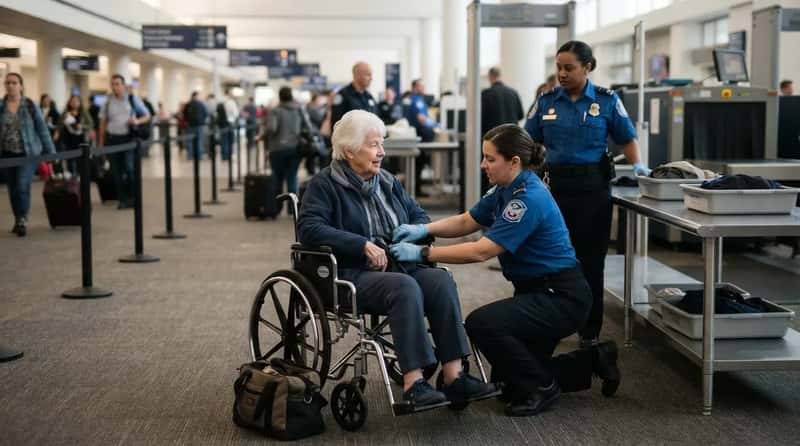
Standing perfectly still with your arms raised is not required of everyone. Travelers who can’t stand or walk through the scanner are screened by other methods, including a manual inspection. Passengers 75 and older who can’t stand for screening are handled through other security methods too.
This is not a way to skip screening. You are still screened, just in a way your body can manage. Many travelers push through a wobbly scanner pose because nobody told them there was another option. Ask the officer before you step in, not after you’re already struggling.
#14 – Your Cane or Walker Isn’t Left Behind at Security
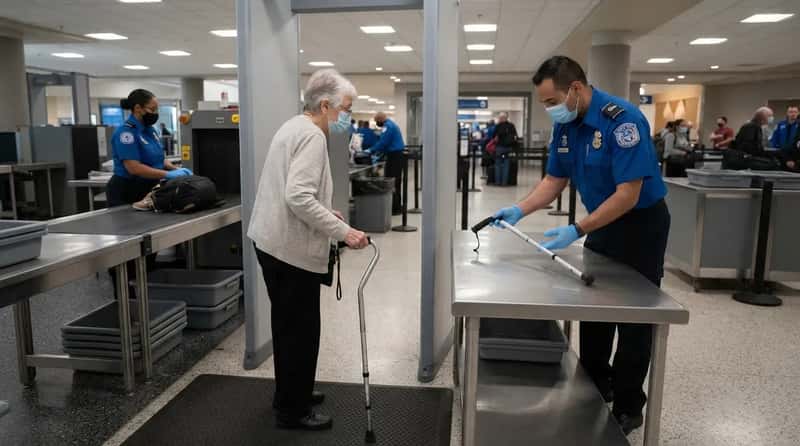
Nobody can make you walk through security without the aid you depend on. Walkers, canes, crutches, and other mobility aids are X-rayed or hand-inspected. Screening happens to the device, not instead of it.
Many people picture a cane sliding down a conveyor belt while they stand there unsteady. Tell the officer which aid you rely on before you reach the belt, and ask how they want to handle it. That keeps you from being left without support in the middle of the checkpoint.
Once you’re past security, the airline’s rules take over, and #13 is a big one.
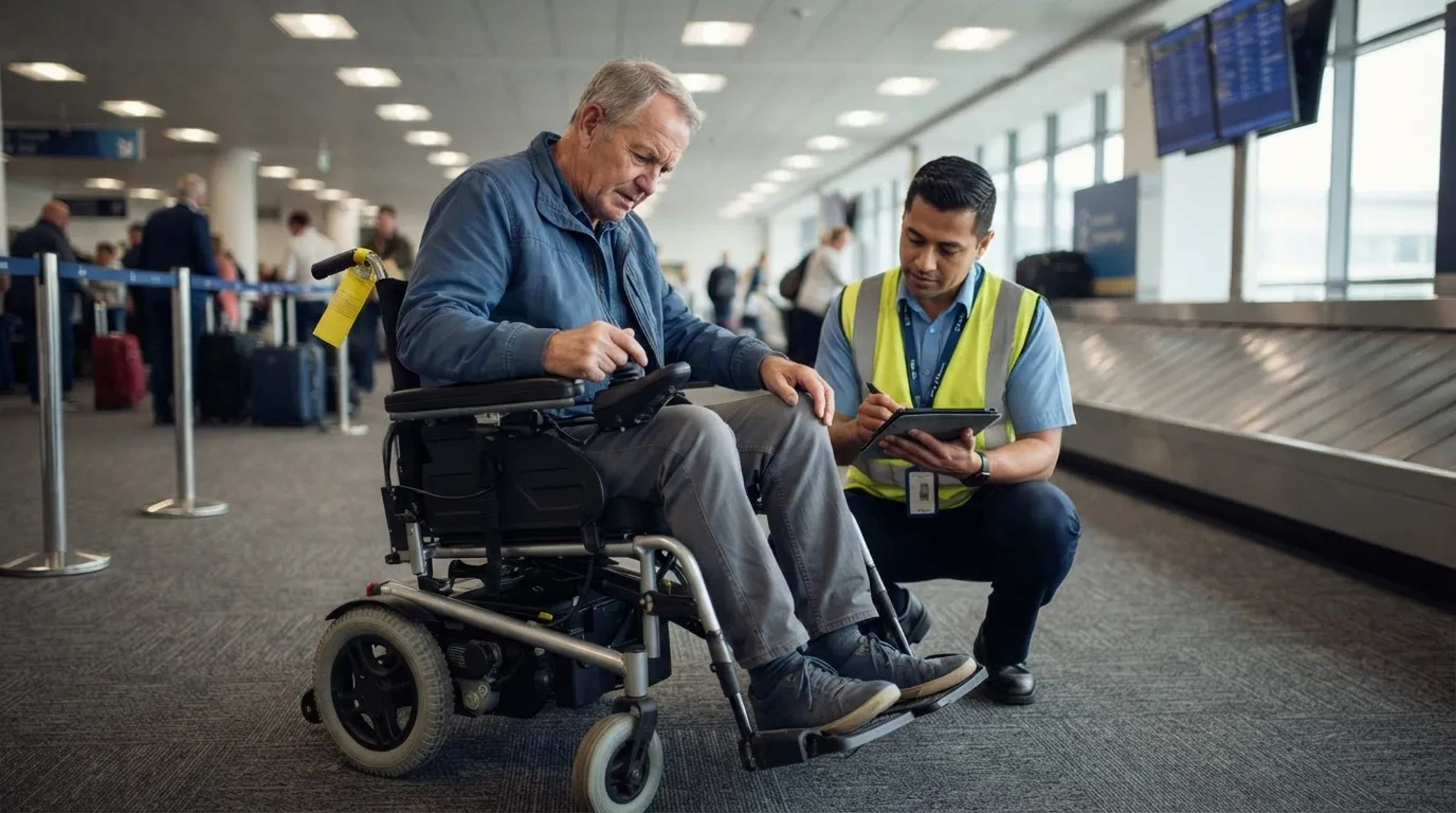
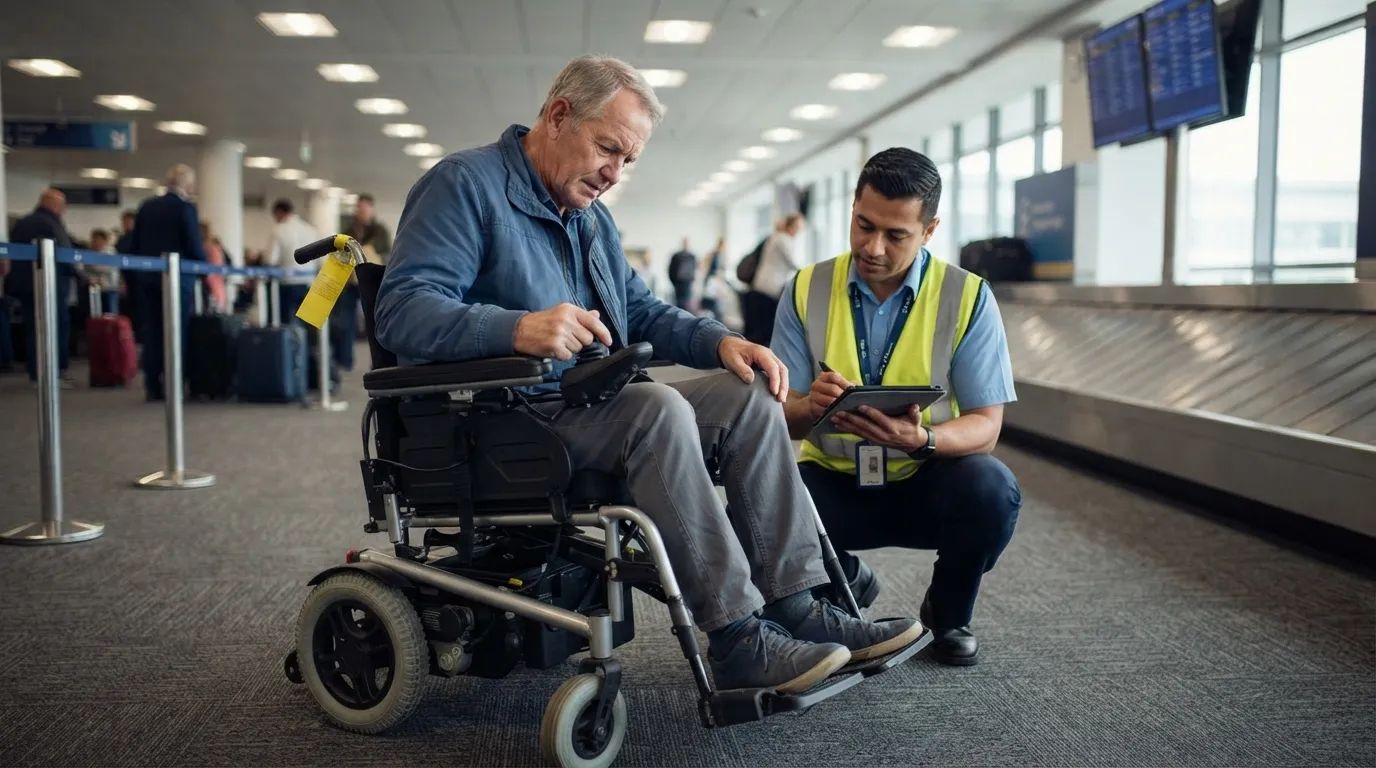
#13 – Airlines Must Let You Keep Your Wheelchair Until the Plane Door
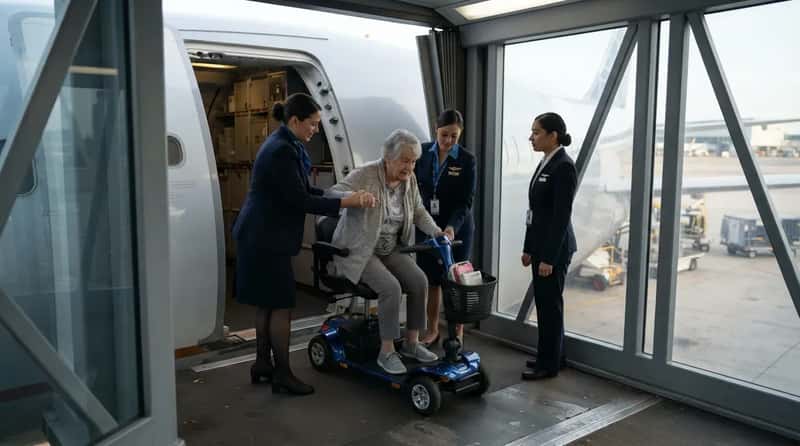
Your own wheelchair or scooter doesn’t have to be taken away at check-in. Passengers who use wheelchairs and other mobility equipment must be allowed to keep their devices until they are as close as possible to the airplane boarding door. Only then does it go into the hold.
That is only half of it. A checked device must get priority over other baggage and be returned as close as possible to the airplane door, in the condition it was received. The device is supposed to be waiting for you at the aircraft door, not at baggage claim. Hardly anyone knows to expect that.
Worth Knowing
- The Air Carrier Access Act covers U.S. airlines wherever they operate, plus foreign airlines on flights to and from the United States.
- Aircraft with 100 or more seats must have priority stowage space in the cabin for wheelchairs.
- Aircraft with more than 60 seats and an accessible lavatory must carry an on-board wheelchair.
- Taking a powered chair on a plane with fewer than 60 seats is one case where an airline may ask for up to 48 hours’ notice.
#12 – Medical Devices Ride Free in the Cabin and Don’t Count Toward Your Carry-On Limit
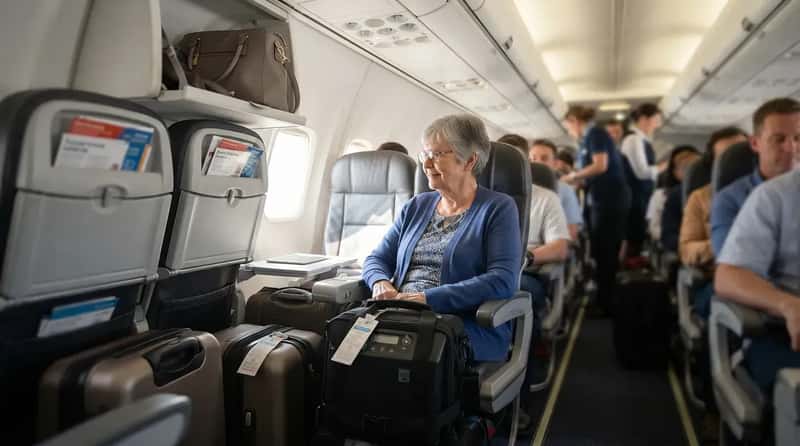
Your carry-on allowance isn’t supposed to be eaten up by medical gear. Airlines must allow assistive devices as carry-ons in the cabin free of charge, and they may not count against a passenger’s carry-on limit. Assistive devices include medical devices and medications.
There are limits. Passengers who use ventilators or respirators may use their equipment on the plane, but airlines may require 48 hours’ notice and one-hour advance check-in if it needs to connect to aircraft power. Airlines are not required to provide oxygen service, and many do not. Call the airline before you book, not at the gate.
#11 – Liquid Medicine Over 3.4 Ounces Gets a Pass
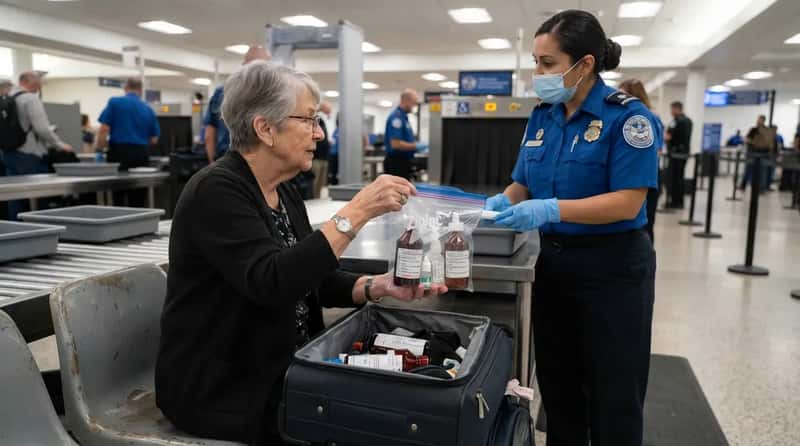
The famous liquids limit doesn’t apply to your medication. TSA’s own customer service team says you may bring medically necessary liquids in carry-on bags, and the containers can be over 3.4 ounces each. They don’t need to go in the quart bag.
That covers larger volumes of things like insulin, eye drops, or liquid antibiotics, as long as you declare them before screening begins. Over-the-counter liquids such as cough syrup follow the same exemption when declared. Plenty of travelers toss perfectly legal medicine out of fear, and they never had to.
The exemption goes further than the bottle itself, as #10 shows.
#10 – The Ice Packs, Syringes and Pumps Are Covered Too
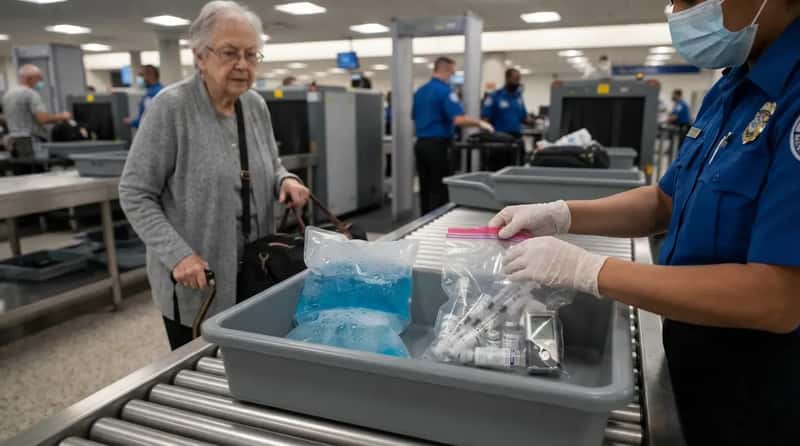
The cooling gear that keeps your medicine usable is allowed too. Ice packs, gel packs, syringes, and pumps needed to administer medically necessary liquids can all come along. Frozen packs are permitted even if they’re partially melted.
Many travelers assume a half-thawed gel pack will be thrown out and leave it at home. For any medication that has to stay cold, that’s a mistake with a real consequence. Declare the pack along with the medicine, and expect a little extra screening.
Quick Compare
- Pills and tablets: allowed, screened with the rest of your bag, and generally no declaration needed.
- Liquid medicine over 3.4 ounces: declare it and take it out of the bag for separate screening.
- Ice and gel packs: allowed for medicine, even partly melted, but declare them.
- Syringes and pumps: tell the officer at the start, and keep them with the medication they serve.
#9 – You Can Ask to Keep Your Medication Out of the X-Ray
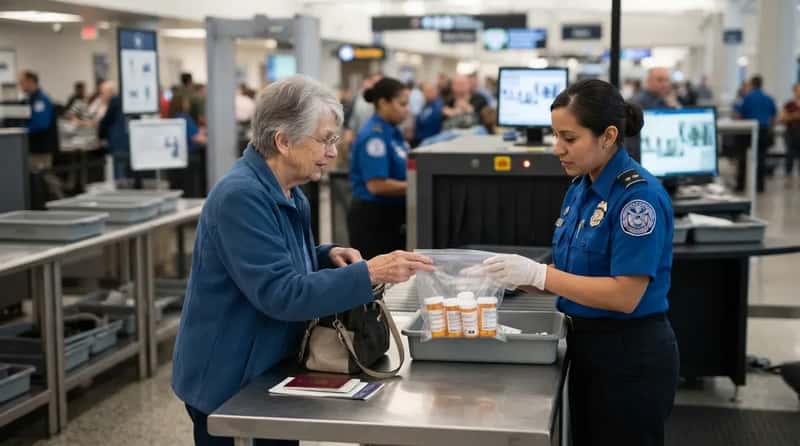
You don’t have to send every bottle through the machine. Travelers who don’t want their medication to pass through X-ray may request a manual inspection. There is a trade-off. TSA advises that additional procedures will apply, including Advanced Imaging Technology screening, a pat-down, and further carry-on inspection.
So it’s a real choice, not a free pass. Some people accept the extra steps to protect sensitive medicine. Others decide the X-ray is fine. Either way, you’re allowed to ask, and few people do.
Before you even leave home, there’s a phone number that makes all of this easier, at #8.
#8 – A Free TSA Helpline Exists for Exactly This
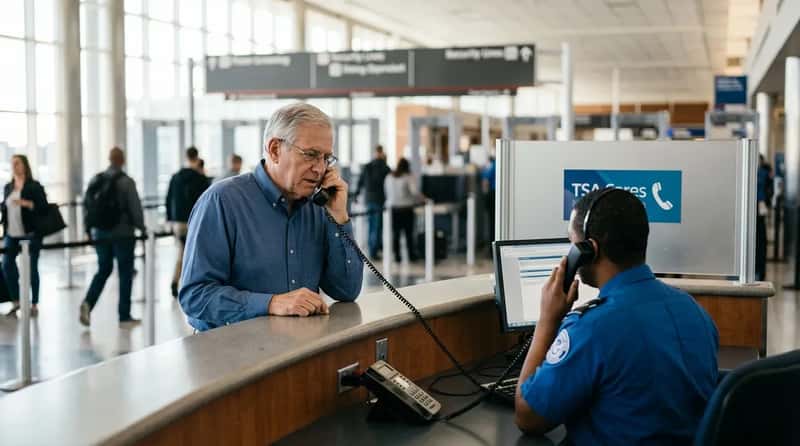
You can get answers from TSA before you ever reach the airport. TSA Cares is a helpline for travelers with disabilities, medical conditions, and other special circumstances who need extra help during screening. The number is (855) 787-2227. It’s staffed weekdays from 8 a.m. to 11 p.m. ET, and weekends and holidays from 9 a.m. to 8 p.m. ET.
It isn’t only for the traveler. Family members and travel companions can call too, so a son or daughter can do the legwork for you. TSA recommends calling ahead, and the next box explains why.
That coordination can include a specially trained officer, which is #7.
#7 – A Trained Passenger Support Specialist Can Walk You Through
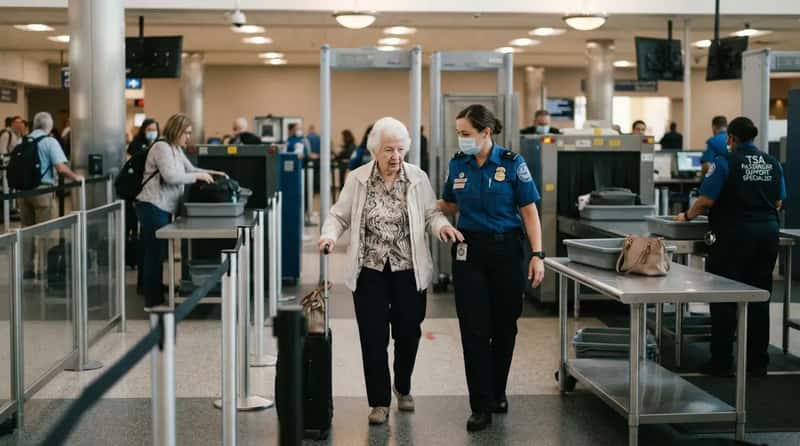
You can ask for a guide at the checkpoint. TSA has specially trained Passenger Support Specialists who help coordinate and walk you through screening. You can request one in advance online, or ask someone from TSA at the checkpoint.
A specialist can explain the process, communicate with other TSA officers, and support you as you move through. It doesn’t mean every screening step is removed, because TSA still decides what screening is necessary. Think of it as a guide, not a bypass.
At a Glance
- Before you go: call TSA Cares at (855) 787-2227, ideally 72 hours ahead.
- At the checkpoint: ask for a Passenger Support Specialist if one hasn’t been arranged.
- No specialist free? A Supervisory TSA Officer is the next person to ask for.
- Who can call: you, a family member, or a travel companion.
#6 – A Simple TSA Card Does the Explaining for You
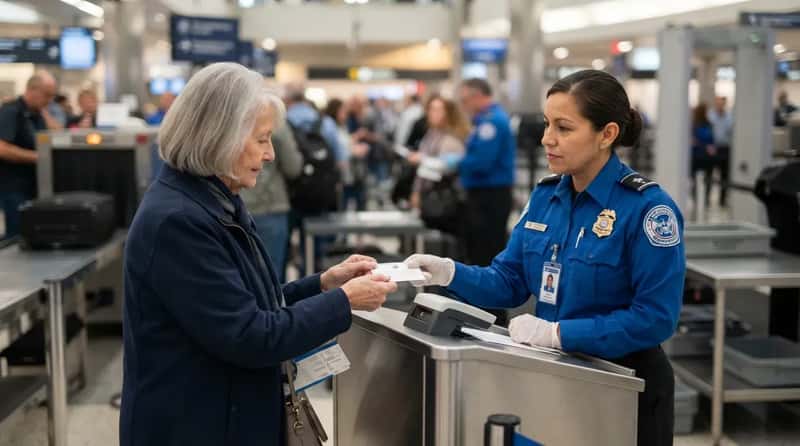
You don’t have to describe your health to a stranger in a crowded line. TSA offers a notification card where you note the health condition, disability, or medical device that may affect your screening. It’s a free form you can fill in ahead of time.
You can hand it, or other medical documentation, to the TSA officer to support the screening process. And if a Passenger Support Specialist isn’t available, the card says you may ask for a Supervisory TSA Officer. It’s a small piece of paper that does a lot of talking.
The airline side of the journey has even bigger perks, starting at #5.
#5 – Wheelchair Help From Curb to Gate Costs Nothing
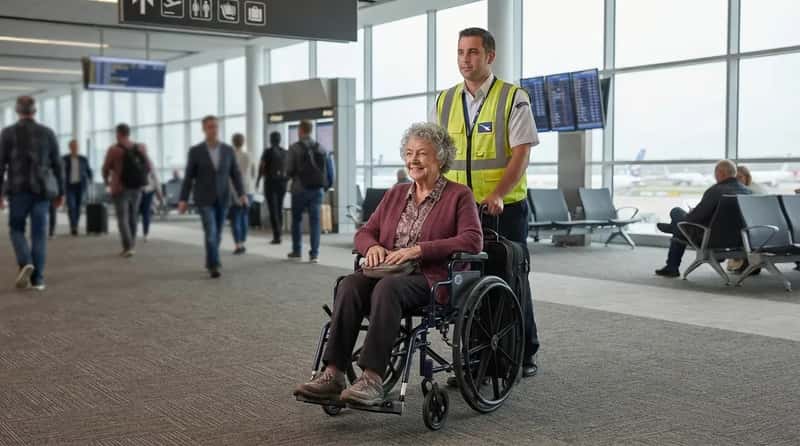
Plenty of people in their 70s treat airport wheelchair help as a sign they’re giving up. The rules treat it as a service. It includes help moving from the curb to the departing flight, between gates for connections, and from the arriving flight to the curb for pick-up. Airlines must provide free gate-to-gate wheelchair service.
The key word is disability. The law covers passengers with disabilities who request help, and age alone isn’t the test. If you request assistance in advance, you still need to identify yourself to airline personnel when you arrive at the airport or gate. Don’t skip that step.
#4 – You Pick the Kind of Help, Not the Airline
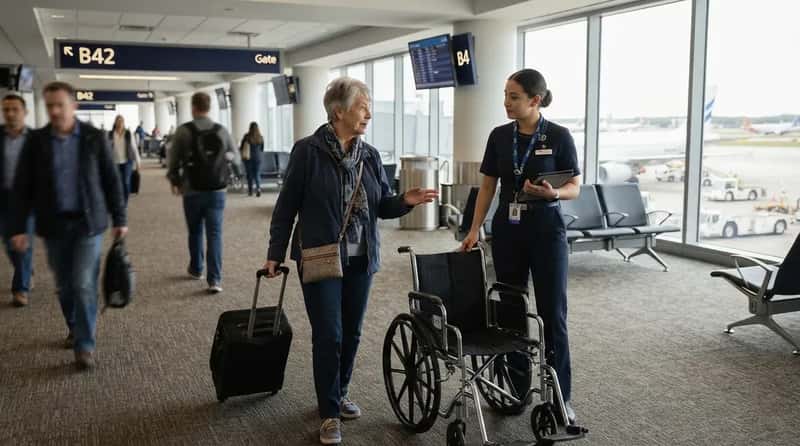
An agent can’t decide how much help you need. Airlines cannot require a passenger to accept a specific form of assistance he or she does not request, for example requiring a wheelchair when a sight guide was requested. That means you’re allowed to say no to a wheelchair you don’t need.
Maybe you only want someone to guide you through a huge terminal. Or only a ride across one long concourse. Say exactly that. The point is that the help fits you, not a one-size-fits-all script.
What happens if the help is slow? #3 sets a hard limit.
#3 – Nobody Can Park You in a Wheelchair for More Than 30 Minutes
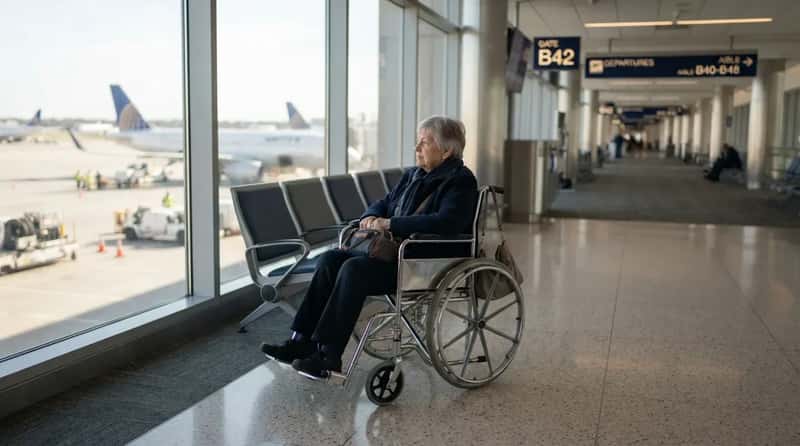
An airline can’t just leave you sitting. An airline cannot leave a passenger unattended for more than 30 minutes in a wheelchair or other device in which the passenger is not independently mobile. The clock is built into the rules.
Anyone who has waited at a far gate for a staffer who never came knows why that matters. The limit exists because people have been left stranded. Knowing it exists lets you speak up politely but firmly.
#2 – Early Boarding and In-Cabin Help Are Yours to Request
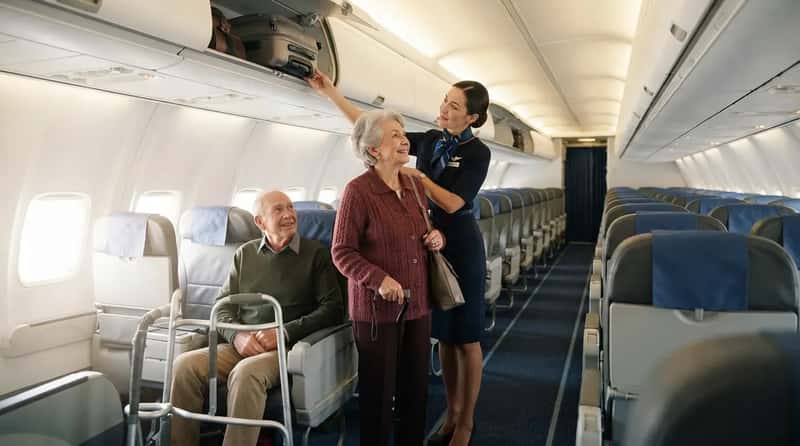
Some travelers grumble about the early boarding line, but the rule exists for a reason. Carriers must offer preboarding to passengers with disabilities who self-identify at the gate as needing additional time to board. You only have to ask.
The help doesn’t end at the jet bridge. Airlines must assist with loading and retrieving carry-on items, including mobility aids and other assistance devices stowed on board. If there is an on-board wheelchair on the aircraft, they must help you use it to get to and from a lavatory.
Fast Facts
- Airlines may not limit how many passengers with disabilities travel on a single flight.
- They may not require you to travel with another person, except in limited cases where a safety assistant is allowed.
- They may not make you sit in a particular seat because of a disability, except to meet FAA or foreign-government safety rules.
- Exit rows are reserved for people who can perform emergency evacuation tasks, so that seat is the main exception.
One last allowance matters most when things go wrong.
#1 – If an Airline Breaks Your Wheelchair, It Owes You a Repair or Replacement
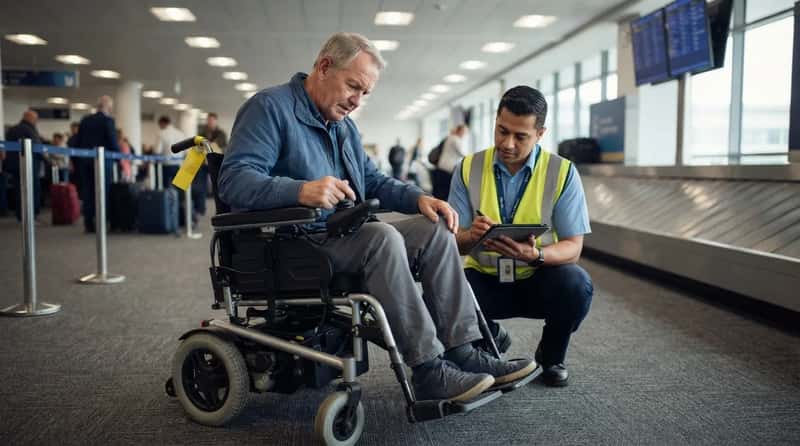
Airlines must cover the full cost of repairing or replacing a damaged wheelchair or scooter, up to its original cost, and the passenger may choose who repairs it. For someone who depends on that chair to move through the world, it’s the protection that counts. In October 2024, DOT fined American Airlines $50 million over unsafe wheelchair assistance between 2019 and 2023.
A caution: this area is in flux. A 2024 rule created a presumption that the airline mishandled the device if it comes back in worse condition. But in September 2025, DOT delayed enforcement of several provisions, including mishandling liability. Check the current status before you fly.
The biggest surprise was never a secret perk for people over 70. The 75-and-older shoe break is gone, and the protections that really matter turn on need and on asking.
Medication exemptions, a free TSA helpline, no-cost assistance, a 30-minute limit, and repair rights are all real. Most go unclaimed because nobody mentions them at the counter. Now you know to ask.