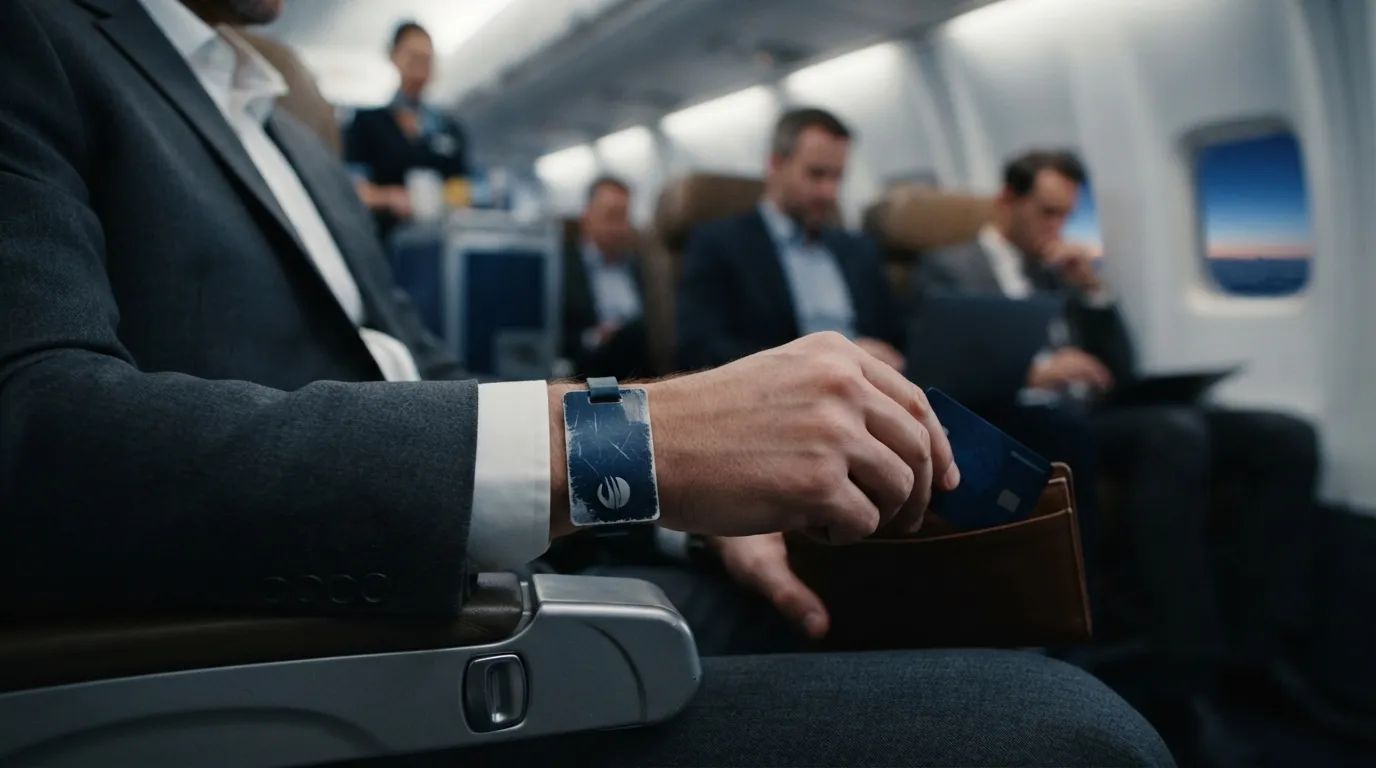
Think you can spot a road warrior by the sleek carry-on and the noise-canceling headphones? Flight attendants say that’s usually the wrong guess. The real giveaways have less to do with what someone carries and more to do with how they move through the cabin.
Crews watch hundreds of people walk past every trip, and the patterns jump out fast. Some tells take two seconds to notice. One is so quiet that most passengers never realize they’re giving it off, and one popular “sign” turns out to be overrated. Here’s what crews actually say.
#16 – The Row Number They Never Hunt For
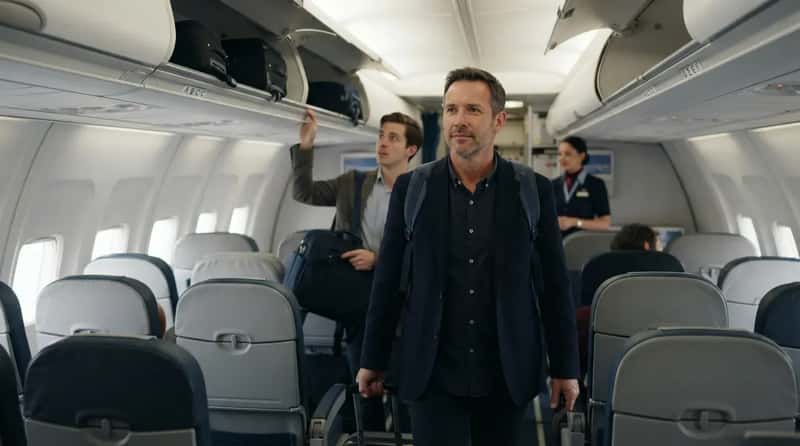
The first tell shows up before anyone sits down. Experienced flyers usually know roughly where their row will be and keep moving once they’re inside the aircraft. A first-timer freezes mid-aisle, squinting at overhead numbers while a line builds behind them.
One travel outlet reports that crews are trained to size up passengers in roughly three to four seconds, about as long as it takes someone to walk past the galley. The bag goes up, the jacket comes off and the seat belt clicks. Nobody gets held up.
The next clue isn’t about behavior at all. It’s hanging off the handle of a bag…
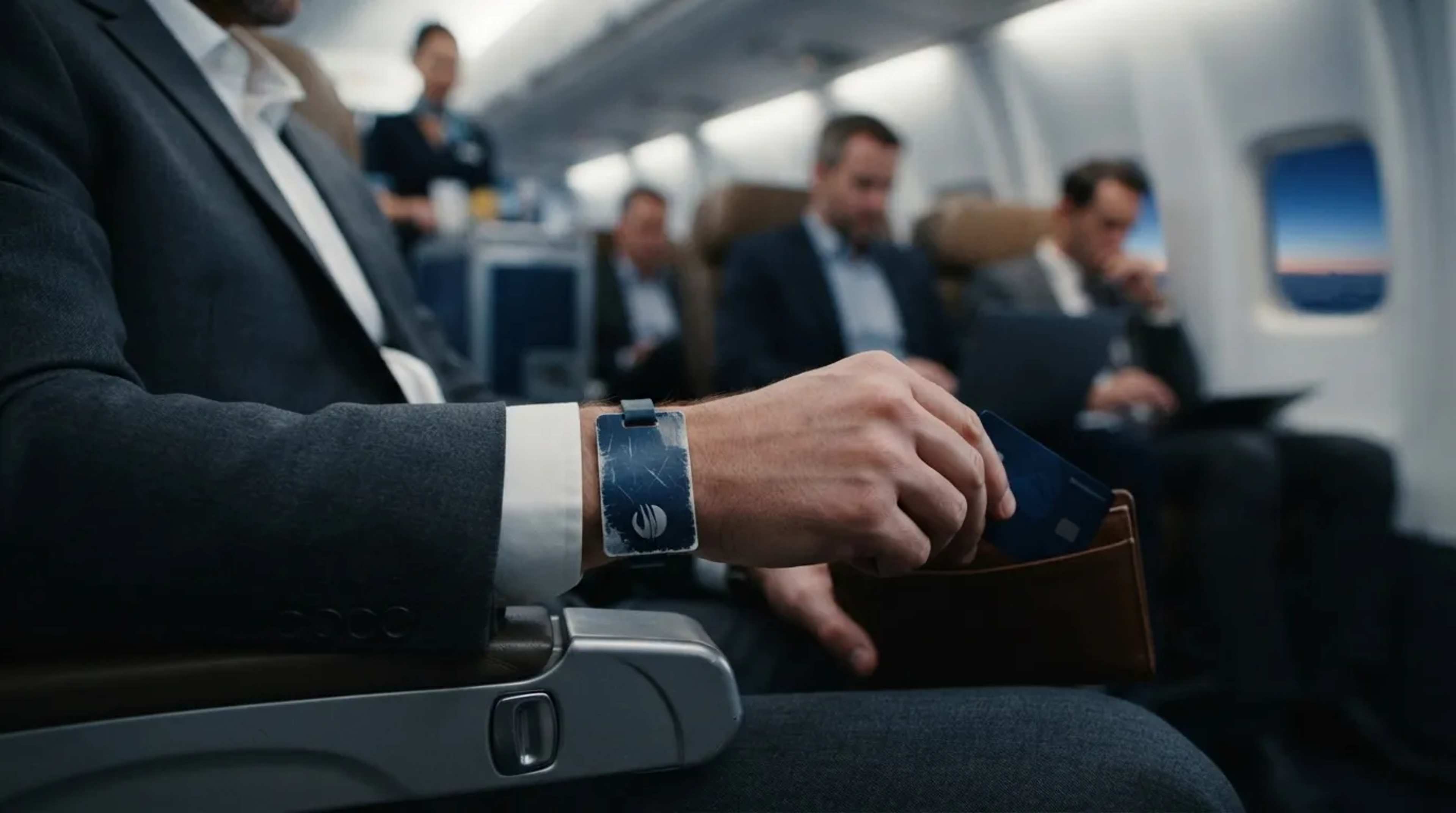
#15 – The Luggage Tag That Quietly Says “I Do This Every Week”
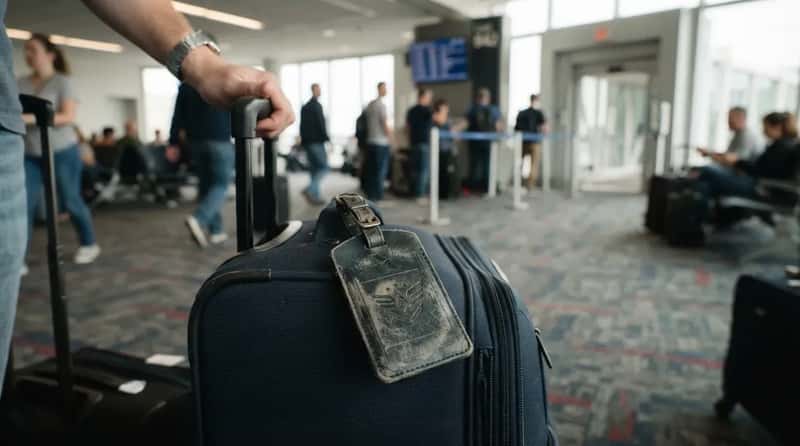
Cabin crew member Honorine Uwase says one of the first things she checks is the luggage tag. Some tags carry a mileage number, such as a 50K or 100K miler, or a platinum or silver level. Some travelers even carry Million Miler tags. They aren’t the flashiest accessory, but crews read them like name badges.
Status can show up in other places too. Many frequent flyers are enrolled in loyalty programs, so their status often appears right on the boarding pass. Crews see that line again and again, and it tells them who has stayed loyal to the airline for years. A tag can say more about someone’s travel life than their entire outfit.
Tags are easy to read. Phones, though, tell a different story…
#14 – The Wi-Fi Scramble They Skipped Before Boarding
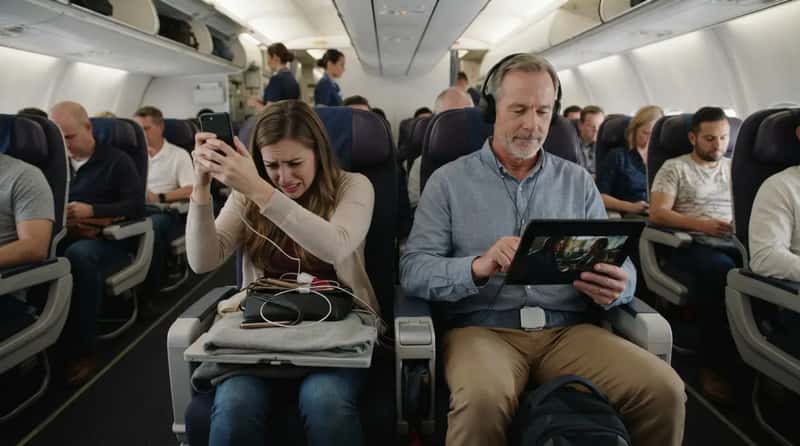
Watch who is frantically hunting for a signal before the door even closes. One travel roundup calls this one of the clearest signs of inexperience, because pros know onboard Wi-Fi can be spotty, slow or unavailable. Seasoned flyers have already prepared for that.
Their shows are downloaded, their podcasts are queued and their maps are saved offline. They treat connectivity as a bonus, not a guarantee. The calmest person on the plane is often the one with no signal at all. Crews tend to remember them as the passengers who settle in and disappear into a movie.
And the next tell happens the moment the engines roar…
#13 – The Takeoff Roar They Barely Notice

The engines spool up, the cabin shakes and some passengers grip the armrests. Frequent flyers usually glance up once and go back to reading, working or scrolling. Crews register that non-reaction almost instantly.
It goes beyond takeoff. Veterans don’t flinch at normal bumps, chimes or the hum of the air system. They’ve heard those sounds so many times that the sounds have stopped meaning anything. To a crew member who knows what a normal flight sounds like, a relaxed face says a lot.
A calm face isn’t the only clue. Crews also read what people wear, and this is where they split…
#12 – The Outfit Debate Crews Can’t Agree On
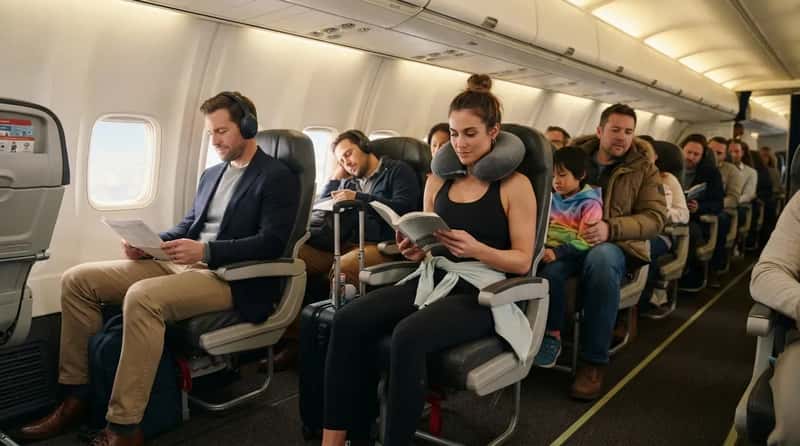
One roundup says crews notice how practical your clothing is. Comfort can hint at whether you’re a frequent flyer, a vacation traveler or someone who underestimated airplane temperatures. Frequent flyer guides often point to layers and no bulky coats.
Yet one former flight attendant says travelers might wear a yoga set or a suit, and it’s not really a sign. So the “road warrior uniform” may be partly a myth. Some crew say clothes tell you everything, while others say they tell you almost nothing. Where do you land?
Quick Compare
- Team “clothes matter”: practical layers and no bulky coat can hint at experience.
- Team “clothes don’t”: a yoga set and a suit can both be worn by veterans.
- The safer read: how fast someone settles in, not what they’re wearing.
The next clue is something crews hear instead of see…
#11 – The Connection Question They Never Ask
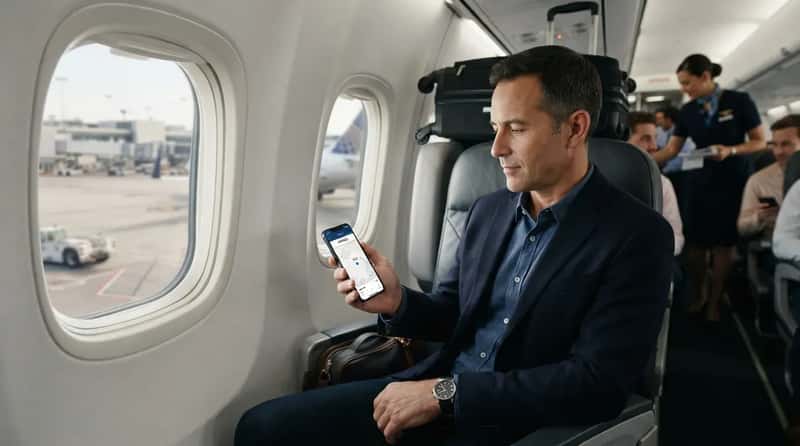
Panic is loud, and crews hear it during boarding. Experienced travelers are time-conscious but not frantic. They already know their connection gate, or at least the airport layout, and they don’t bombard crew with “Will I make my connection?”
They also understand a simple truth: crew can’t magically speed up the plane. Instead, they check the app, note the gate and move on. The most seasoned passengers plan for a tight layover before the flight, not after it.
Planning shows up in the bag, too, long before anyone reaches the aisle…
#10 – The Packing Job That Looks Almost Too Easy
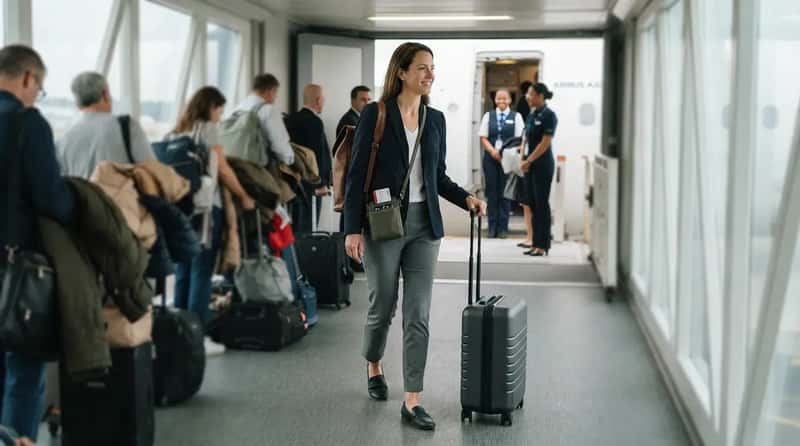
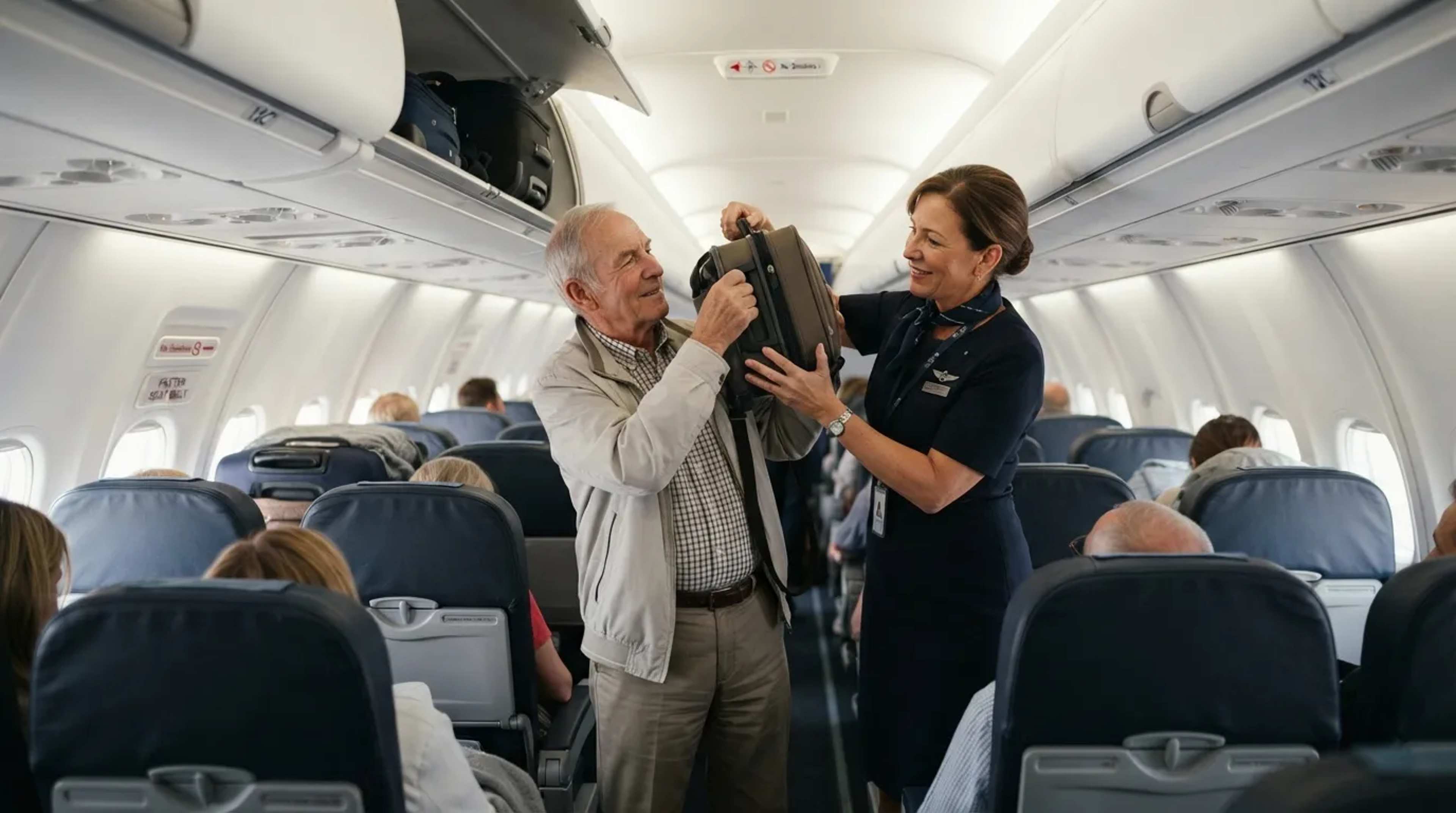
Frequent flyers pack like they’ve been burned before. The Points Guy describes their setup as strategically packed bags, with the fewer the better, and an efficient travel outfit. Everything has a spot, and nothing needs digging for.
Contrast that with the person at the checkpoint fumbling with shoes, a pocketed phone and a half-finished water bottle buried in a bag. The same few snags slow down the line every single day. Crews often see the downstream effect at the door, where a bulging bag turns into a jam in the aisle.
Then comes a boarding clue that happens before anyone reaches the jet bridge…
#9 – The Passenger Already Waiting at the Gate
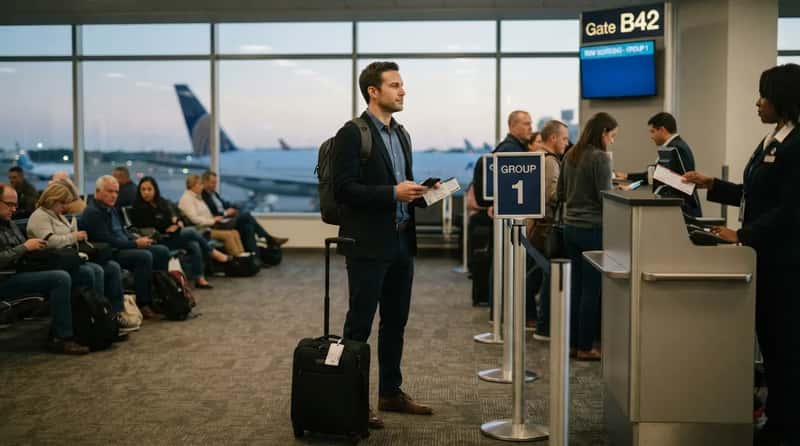
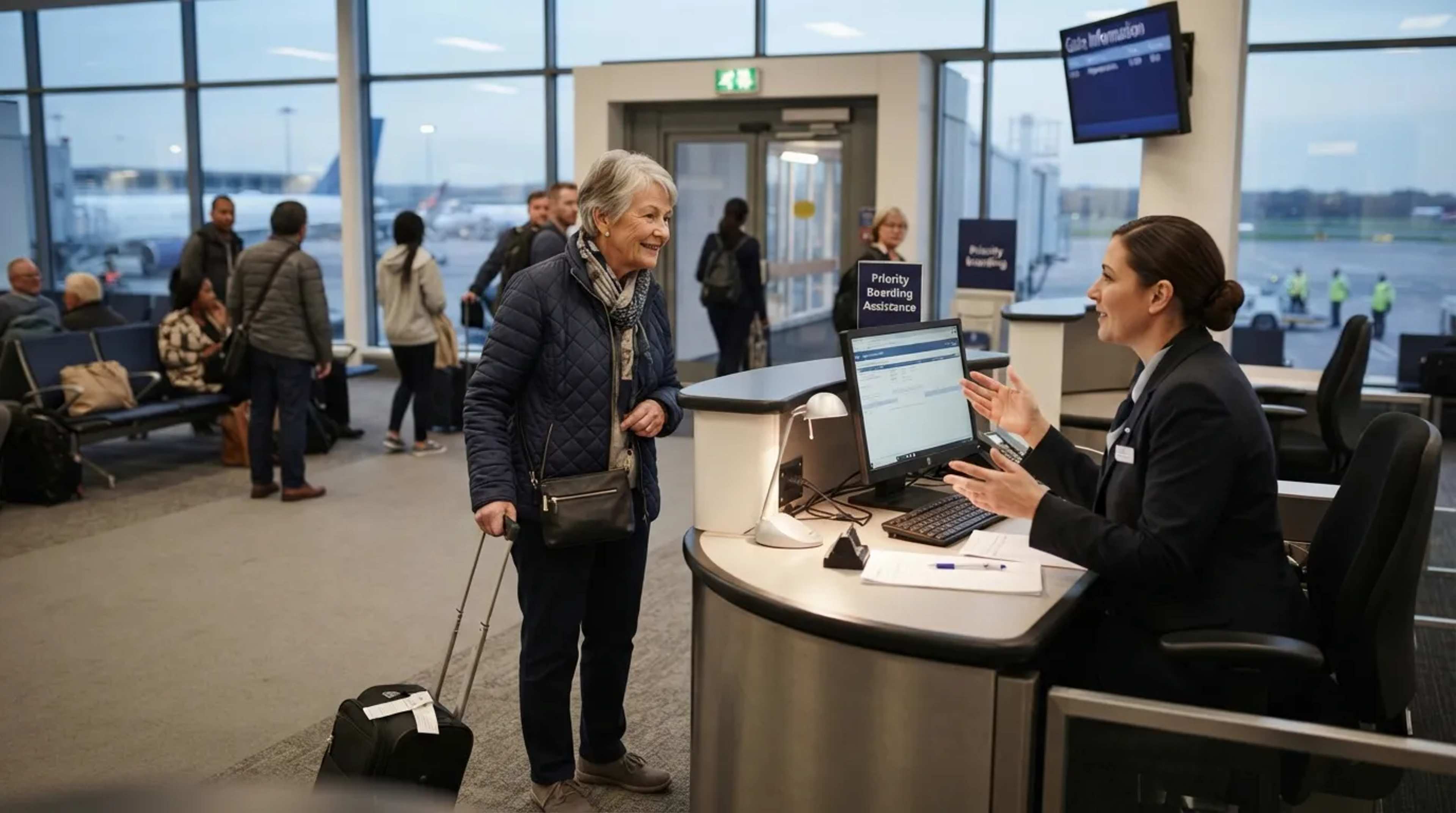
Uwase says early gate presence is another giveaway. Once families and passengers needing assistance have boarded, frequent flyers are typically already standing nearby. They didn’t sprint there. They simply know when their group is called and plan around it.
Status also usually buys an earlier boarding group, which means overhead-bin space and a faster exit later. Crews say they can often tell the boarding order just by watching who stands up first. It looks like confidence, but it’s really just scheduling.
At a Glance
- First on: families and passengers who need assistance.
- Already nearby: frequent flyers who know when their group is called.
- The perk: status usually means an earlier boarding group.
- The payoff: better overhead-bin space and a faster exit later.
Not everyone who boards early is special, though. The next clue is on the crew’s screens…
#8 – The Name That Lights Up on the Crew’s Tablet
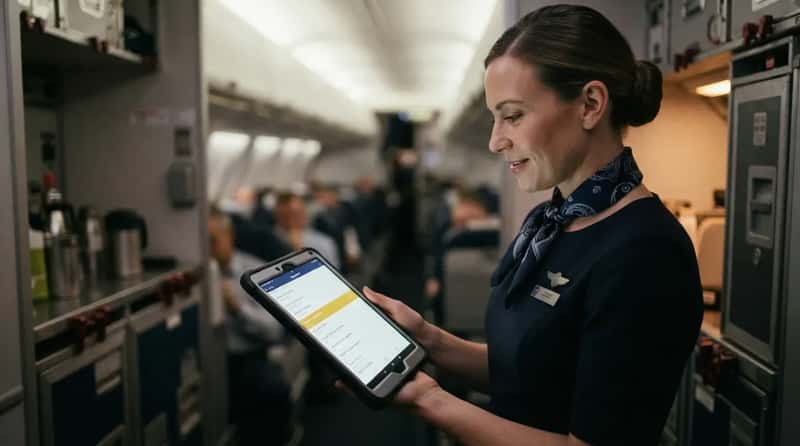
A veteran flight attendant told NBC News that crews can see who holds status. Names of elite members are highlighted in a different color on the tablets, and crews know where those passengers are sitting. You can be recognized before you say a word.
The perks aren’t a myth either. Free drinks and sometimes better food options can be extended to frequent flyers. What you get depends on the airline and the cabin, and it’s never guaranteed. Still, crews say loyalty is noticed.
Yet there’s one habit crews say matters even more than status. It involves the safety card…
#7 – The Safety Demo They Still Actually Watch
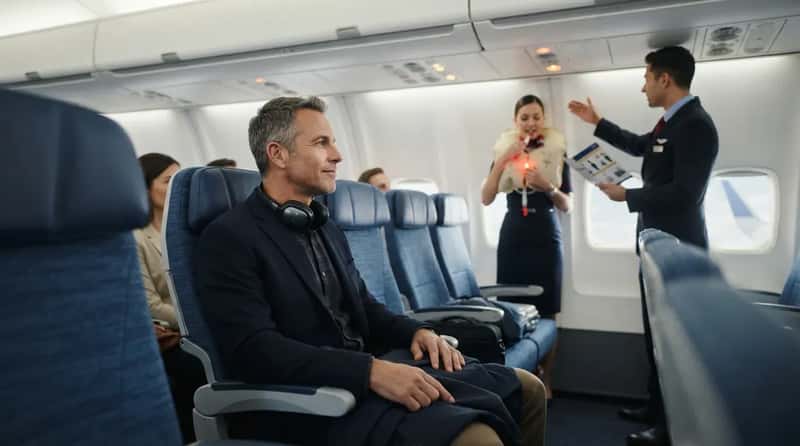
You’d expect a frequent flyer to tune out the safety demo. Many do. But one roundup says the smart ones still listen, even after hearing it a hundred times.
That matters, because crews are watching the audience as well. Flight attendants are trained to notice when passengers aren’t paying attention. Some crews argue that ignoring the demo is the biggest mistake a frequent flyer can make. Even a quick glance at the card earns respect.
The passenger who looks up and nods tells the crew they’re a pro. The one buried in a phone tells them they think they are. The next clue is far simpler than any of that…
#6 – The Smile and the Two-Second Hello
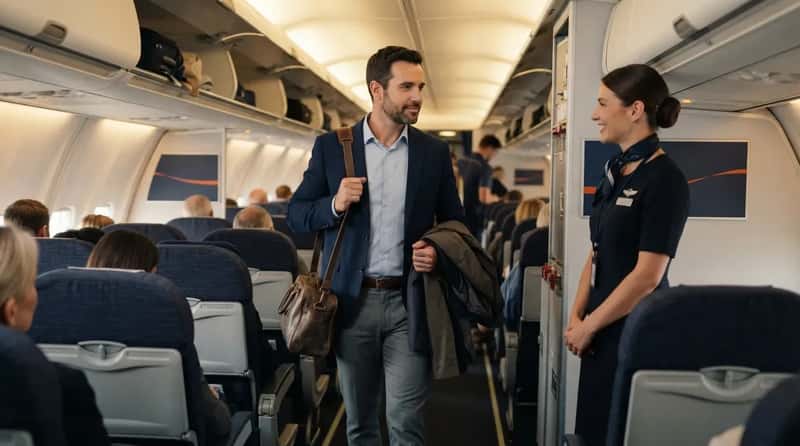
It’s the least dramatic tell on the list, and crews notice it every time. One former flight attendant says experienced flyers are confident, smile, say hello and go to their seat. There’s no scanning, no fuss and no drama.
Another roundup says crews identify frequent flyers less by luggage and more by calm, confident demeanor and familiarity with the boarding process. The tell isn’t the greeting itself. It’s the total lack of urgency around it. It looks like someone walking into a familiar room.
The real test, though, comes when something goes wrong on board…
#5 – The Polite Ask That Quietly Gets Results
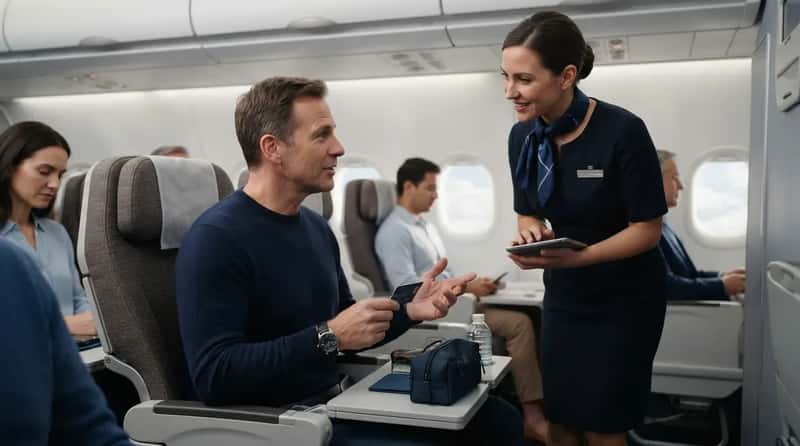
Things break on planes. Seats jam, screens freeze and special meals go missing. The attendant NBC interviewed says passengers shouldn’t be afraid to politely speak up. Crews can give bonus miles to make up for broken seats, glitchy entertainment systems or a missing pre-ordered special meal.
Frequent flyers tend to know this. They ask once, calmly and with specifics, instead of complaining loudly to everyone nearby. One attendant said crews can push a button labeled “Customer Inconvenience” to add miles on the spot. Policies vary by airline, so it’s never guaranteed.
The next clue is about where the passenger just came from…
#4 – The “Just Left the Lounge” Glow

Former flight attendant Maddie says crews can sometimes tell when a passenger has come straight from the club to the airport gate. The likely giveaways are a relaxed pace, a settled look and no sign of a rush. Nobody looks like they’re chasing a gate.
Her list also includes a boarding clue. She says crews can tell you’re a frequent flyer because you know where to put your luggage and get settled quickly. The lounge crowd is the group that has already eaten, charged up and sorted out their gate. They board like people with nothing left to do.
Worth Knowing
- The look: a relaxed pace and a settled expression.
- The boarding habit: they know where the bag goes and sit down fast.
- The backstory: food, charging and gate details are usually handled before boarding.
- The caveat: crews say they can sometimes tell, so it’s a clue, not proof.
So can you really spot a pro by the gear? The next entry may surprise you…
#3 – The Overhyped Carry-On Myth
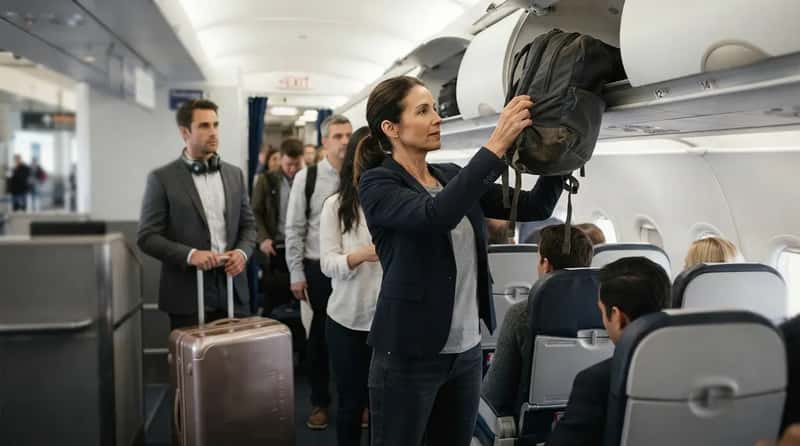
This one is likely to start arguments. Many travelers believe the sleek spinner and the premium headphones scream “frequent flyer.” Crews say that’s overrated. A fancy carry-on or high-end headphones could be a sign, but flight attendants say it’s rarely that simple.
A seasoned flyer might arrive with a tiny backpack. A first-timer might arrive with a brand-new designer suitcase. Some crew say the more expensive the bag looks, the less it tells you about how often someone flies. What matters is how quickly the bag goes up and the person sits down.
There’s one clue crews call far more reliable than the bag. It involves where the plane is going…
#2 – The 6 a.m. Commuter Flight Plus the Loyalty Tag
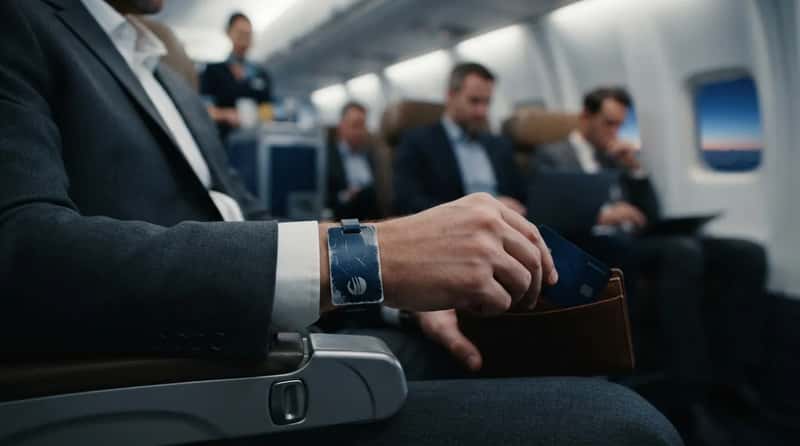
Context matters. Uwase says signs of airline loyalty combined with a business-heavy route can be a pretty big “tell.” A loyalty tag on a 6 a.m. commuter flight says more than the same tag on a holiday charter.
Another clue is the credit card. Frequent flyers often carry an airline-affiliated credit card so they can maximize their points. There’s a twist, though. Premium cabins are no longer used almost exclusively by corporate travelers, so cabin crews are regularly serving first-timers up front. Sitting in business class doesn’t make someone a road warrior anymore.
Why It Stands Out
- It’s a combo clue: loyalty signs plus a business-heavy route.
- Timing counts: the same tag reads differently at 6 a.m. than on a holiday charter.
- Cards help: an airline-affiliated credit card often points to a points-maximizer.
- Cabin isn’t proof: first-timers now sit up front too.
And the number one tell? Crews say it’s something you can’t buy…
#1 – The Passenger Who Needs Nothing Said
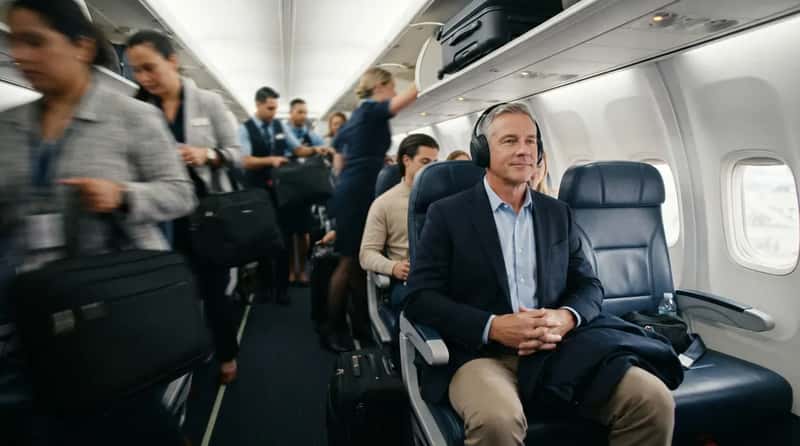
This is the one crews keep coming back to. A recap of Travel + Leisure’s reporting calls it probably the biggest “tell.” Uwase says people who fly often know what to expect from a flight and plan accordingly.
One crew member described it as “they put their stuff away, [and] boom, they’re seated.” Nothing else has to be said, and that’s the whole point. For the crew, it’s a rare moment of ease in a busy boarding process.
The surprise is how little the tells have to do with status symbols. Crews say the clearest signs are calm faces, ready bags, quiet planning and a passenger who doesn’t need to be managed. Tags and credit cards help, but plenty of veterans carry neither, and plenty of first-timers carry expensive luggage.
Mostly, crews read ease. Which of these gave you away, or gave away the person in 14C?