Watch a front desk at 4 p.m. on a Tuesday and you’ll see two kinds of guests. One group hovers, digs through bags for a confirmation email and asks where the elevators are. The other group moves through the lobby like they’re walking into their own kitchen.
Those people usually aren’t richer or fancier than anyone else. They’ve just done this so many times that every step has been trimmed down to almost nothing. Some of the tells are about technology and some are about timing. But one of them has nothing to do with either, and it’s the one nobody can fake.
1. They Checked In From the Parking Lot While Everyone Else Is Hunting for an Email
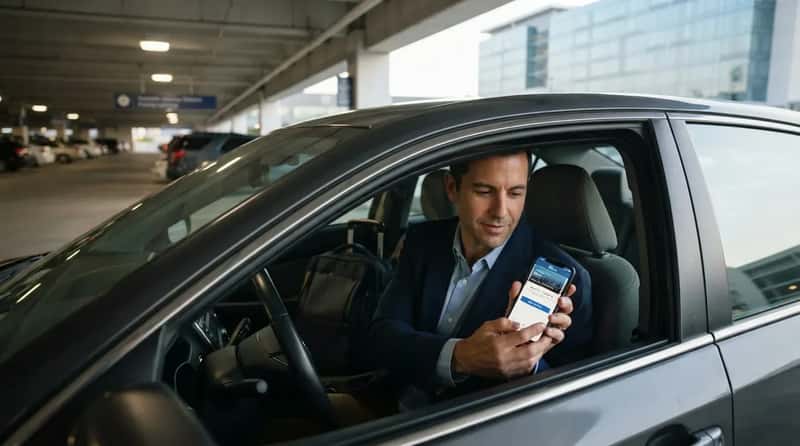
The weekly traveler is already holding a phone with the reservation open. They didn’t check in at the counter. They did it in the parking lot, in the Uber or at the airport gate. With the Hilton Honors app, guests can book, select a room, check in, unlock the door with a Digital Key and check out, all from their phone.
Plenty of hotels now run this way, and the road warriors adopted it first. For them, the desk is optional. If they do stop there, it’s usually because there’s a problem to fix or a question to ask.
2. They Say Their Last Name Before the Agent Finishes “Welcome To…”
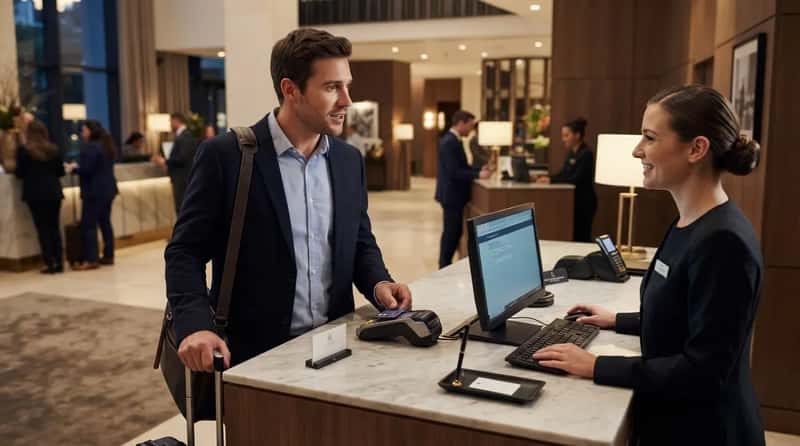
It sounds trivial, but it’s a real tell. The frequent guest leads with the name on the reservation, clearly and once. There’s no “I think it’s under my wife’s name” and no “hang on, let me check my email.” The agent doesn’t have to dig, and the line keeps moving.
Weekly travelers know the desk runs on rhythm. Every second spent hunting for details costs the people behind them. They’ve also learned that the faster they hand over the information, the more likely the agent is to look for a favor to give back.
3. They Walk Straight Past the Desk Like It’s Not There

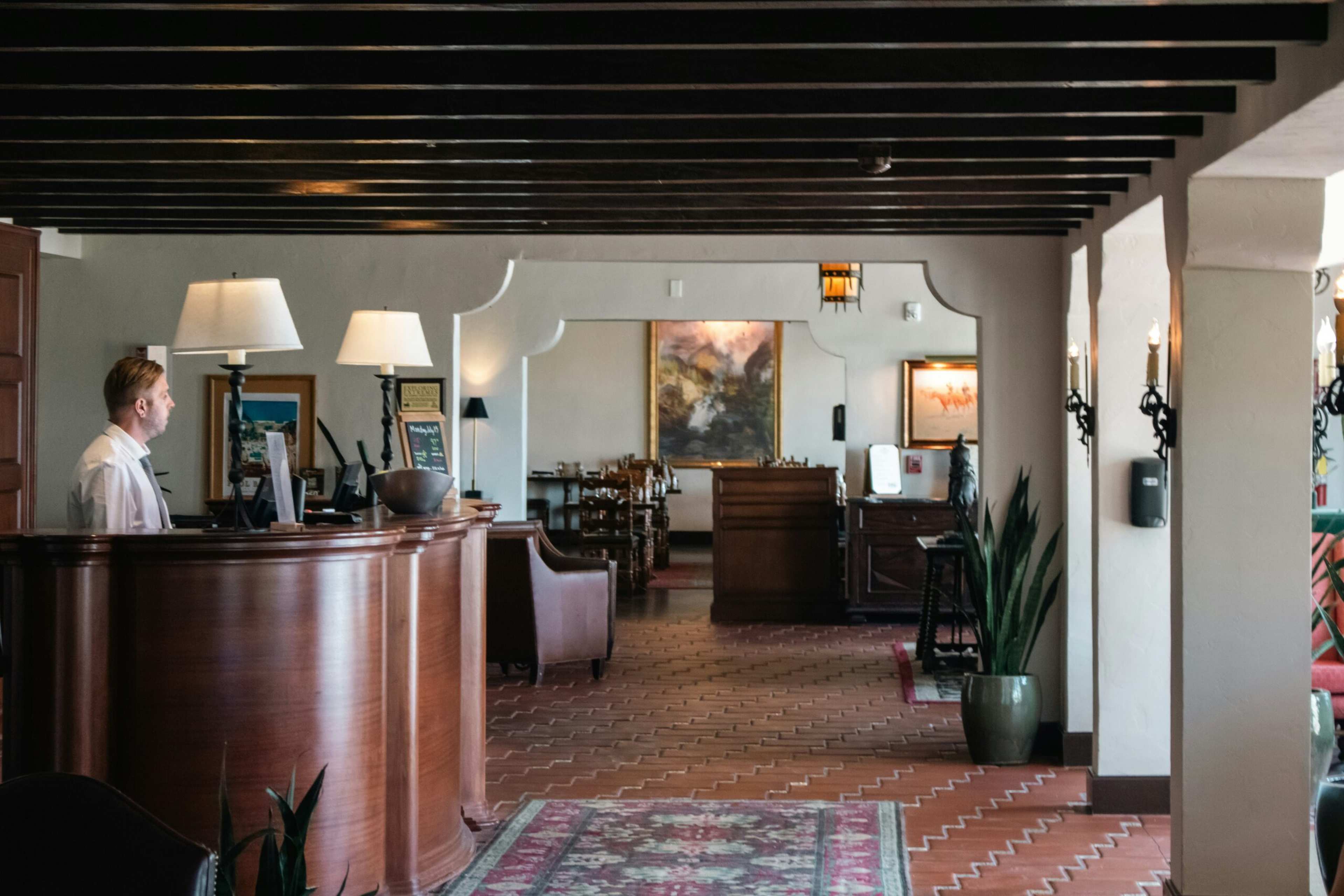
This might be the clearest tell of all. The weekly guest doesn’t slow down in the lobby. They go from the door to the elevator bank without looking left or right, because their phone is the key. Digital keys let guests bypass the front desk and go straight to their room.
For a first-time guest, watching this feels a little like watching someone skip the airport security line. The tech has been around for years, but it only works if you set it up before you arrive. Regulars set it up on the ride over.
4. The Luggage Is Suspiciously Small
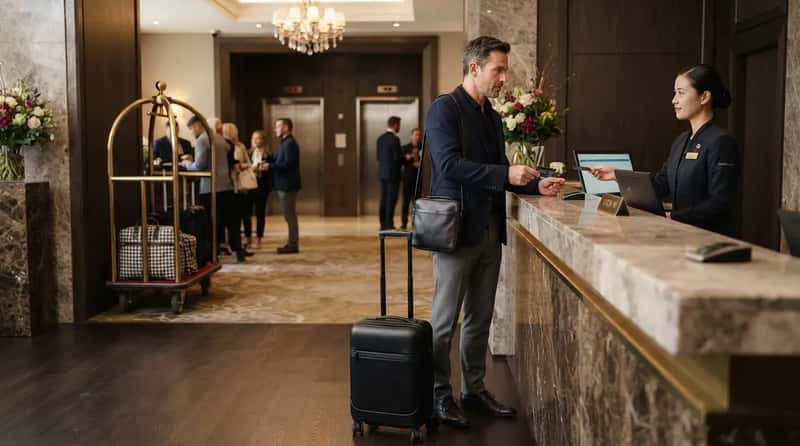
Many people who sleep in hotels every week roll in with one carry-on and a bag that fits under a seat. There’s no luggage cart, no bellman and no negotiating over where to stash anything. The whole trip fits in their hands.
The size is a strategy. A small bag means no waiting at baggage claim and no hauling anything across a marble lobby. It also means they can leave at 6 a.m. without losing a thing. Most people consider the bellman part of the experience, but many frequent travelers see him as a delay.
Quick Compare
- Occasional guest: checked bag, luggage cart, a wait at the bell stand.
- Weekly guest: one carry-on, straight to the elevator.
- Morning exit: the regular is gone in minutes, while the cart crowd is still sorting out bags.
5. They Show Up Outside the Rush, On Purpose
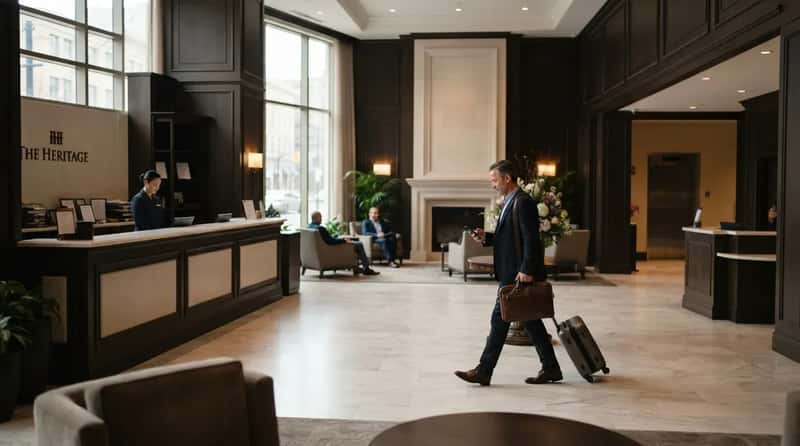
Regulars know the lobby has a crowded window. Peak check-in is typically 3:00 to 6:00 p.m., when flights land and conference crowds pour in. If their schedule allows, they show up before or after it. Or they skip the desk entirely.
When they can’t avoid the rush, they’ve already done the digital steps, so the line doesn’t matter. Occasional travelers arrive at 4:15 sharp because that’s what the confirmation email says. Weekly travelers treat that number like a suggestion.
6. They Rattle Off a Loyalty Number in Two Seconds Flat
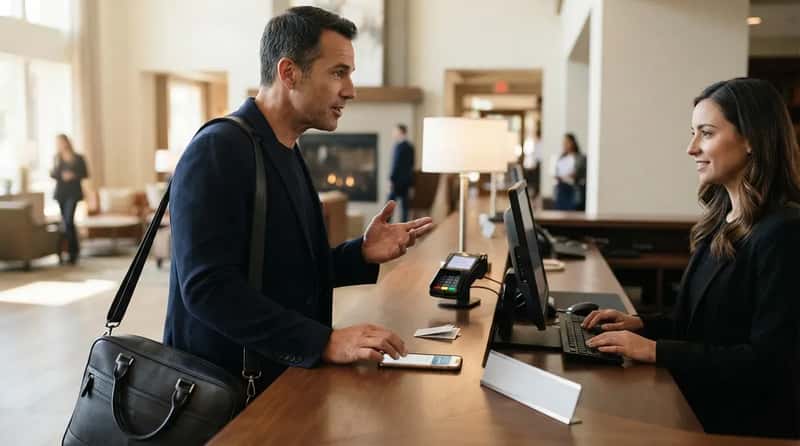
Ask a weekly traveler their rewards number and you’ll get an answer almost before you finish the question. Or they don’t need one, because it’s attached to their app profile. Either way, the agent never has to say, “Do you have a membership?”
That matters because the perks are real and often tied to the profile. Even entry-level Hilton Honors members get digital check-in, digital key and free Wi-Fi. Frequent guests treat the program as a standing deal, not an afterthought at the counter.
7. The Upsell Gets a Friendly “No, Thanks” Before It Even Lands
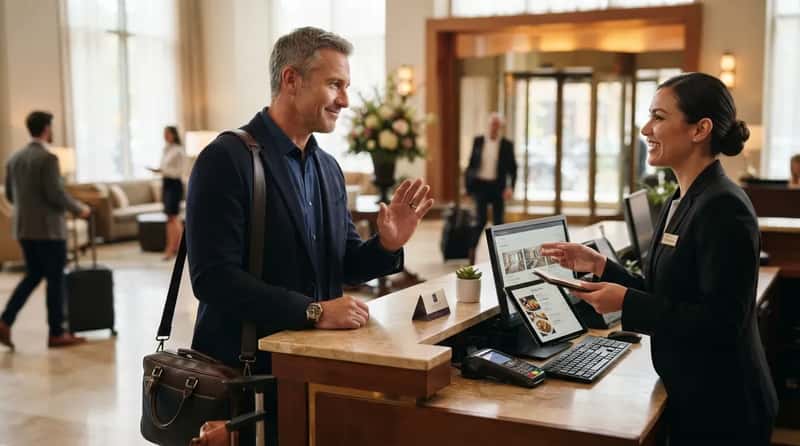
Check-in is a sales moment. Mobile check-in flows put upgrade offers, dining packages and spa bookings in front of guests at peak engagement. The front desk does the same thing in person, with a smile and a very reasonable-sounding pitch.
The regular has heard every version of it. They decline kindly, in one breath, and keep moving. First-time guests often feel obliged to listen, ask questions and then say yes to something they didn’t need. That small pause is an easy way to tell who has been through this before.
8. They Never Ask for the Wi-Fi Password
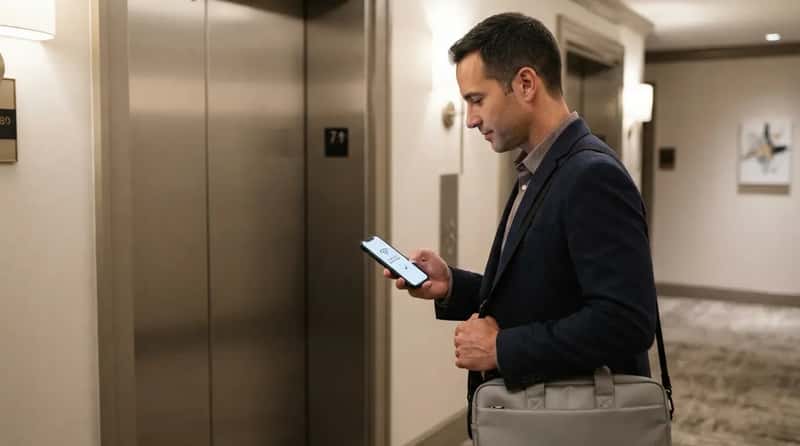
This is one of the quietest tells. The frequent guest doesn’t ask for a network name or a code. They connect on their own, using the loyalty login or the sign-in page, often before the elevator doors open on their floor.
That’s because programs commonly bundle internet access with membership. IHG One Rewards elite members, for example, receive free internet among other perks. Weekly travelers know which brands include it, and which ones try to charge extra for a “premium” tier.
9. They Ask for a Specific Room, Not “Whatever You Have”
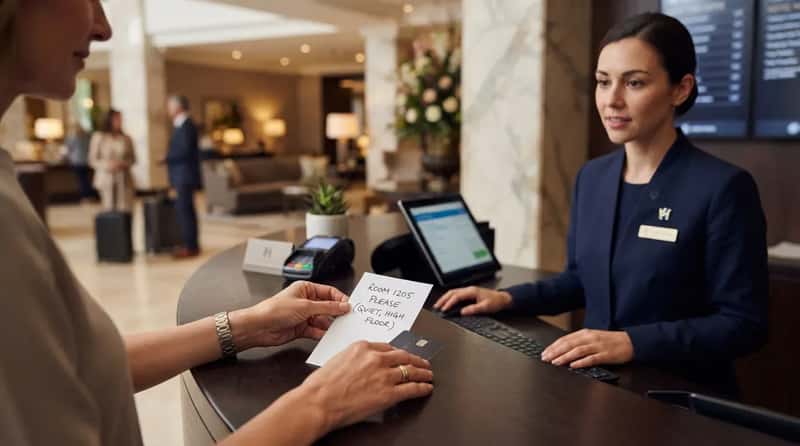
A frequent guest rarely accepts “whatever’s available.” They ask for a quiet room, a high floor or a spot away from the ice machine. They say it politely and specifically, so the agent can actually act on it.
Here’s the part that stings for everyone else. A request made at the desk can be too late, because rooms may already be assigned. Weekly travelers usually ask beforehand through the app or the reservation notes, and at some hotels mobile check-in lets guests choose room type or preferences before they arrive.
Worth Knowing
- Name the exact thing you want, such as a high floor or a room away from the elevator.
- Ask early through the app, reservation notes or a call ahead of arrival.
- Requests are usually “subject to availability,” so a polite backup preference helps.
- A short, specific ask is easier for an agent to act on than a long list.
10. They Test the Key Before They Leave the Lobby

Few things are more annoying than reaching the ninth floor and finding a dead card. Regulars know this, so they check. They tap the card on the elevator reader or ask the agent to confirm it before walking away.
This isn’t paranoia. Keys fail for plenty of reasons, from encoding mistakes to a card getting cracked in a wallet. Many people blame their phone for demagnetizing a card, but many newer hotel cards aren’t magnetic at all. A ten-second test is cheaper than a long ride back down.
11. They Ask About Fees Before They Hand Over a Card
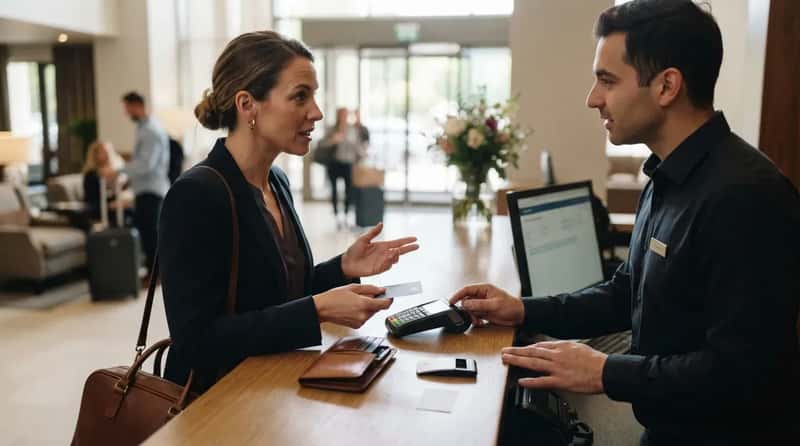
Experienced travelers know the nightly price isn’t always the final price. They ask about resort, destination or parking fees at check-in, and they ask directly. Some programs give members a built-in advantage here. Hilton Honors members pay no resort fees on reward stays.
The rules have shifted too. The Federal Trade Commission’s rule on hidden fees took effect in May 2025 and covers short-term lodging, requiring the total price to be shown up front. Weekly guests still check, because a rule on paper doesn’t always match what shows up on the final bill.
Fast Facts
- The FTC fee rule took effect in May 2025 and applies to short-term lodging.
- It requires the total price, including mandatory fees, to be shown up front.
- Hilton Honors members pay no resort fees on reward stays.
- Regulars still confirm resort and parking charges at the desk before the card goes down.
12. They Ask About Late Checkout on Day One, Not Moving-Out Morning
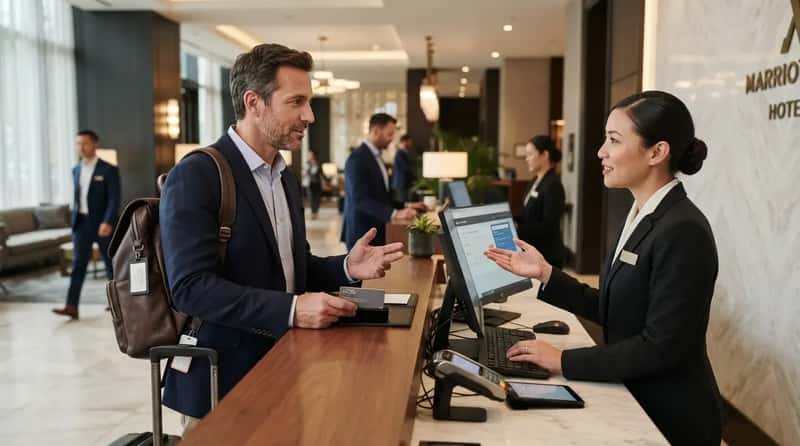
Here’s a move most people don’t realize is a move. A seasoned traveler brings up late checkout at arrival, when the agent has time and the schedule is still open. On the last morning, rooms are already being flipped and the answer is usually a polite “we’ll see.”
Status can make this easier. IHG Platinum Elite status offers late checkout up to 2 p.m., subject to availability. Without status, the request is more of a favor. Weekly guests ask early, ask kindly and let the hotel plan around it.
13. They Talk in “Nights,” Like Vacation Days Are a Scoreboard
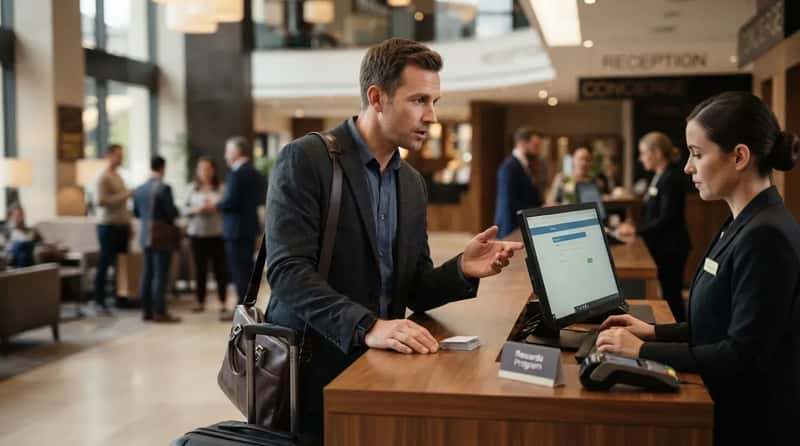
Listen closely and you’ll hear a different vocabulary. Weekly guests say, “I need two more nights to hit Gold,” or “that stay counts toward status.” They track qualifying nights the way other people track steps.
The thresholds are public. IHG’s Silver tier starts at 10 nights, Platinum at 40 and Diamond at 70. Hilton Silver requires 10 nights, four stays or $2,500 in annual spending. Bluntly, it’s a game, and the front desk is where the scoreboard gets checked.
14. ID and Payment Card Are Out Before Anyone Asks
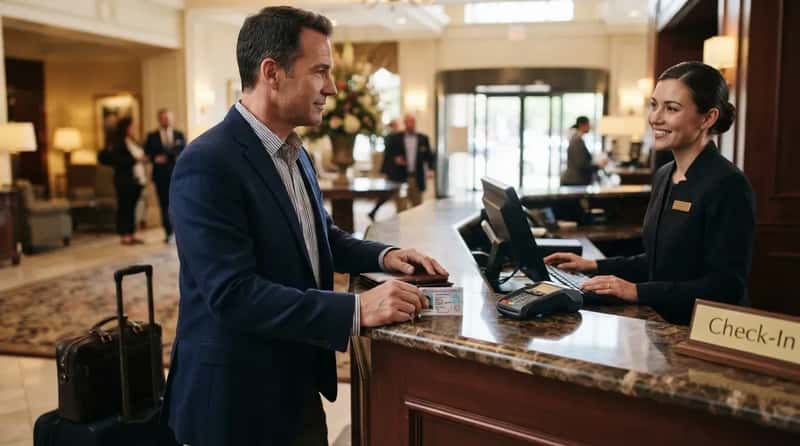
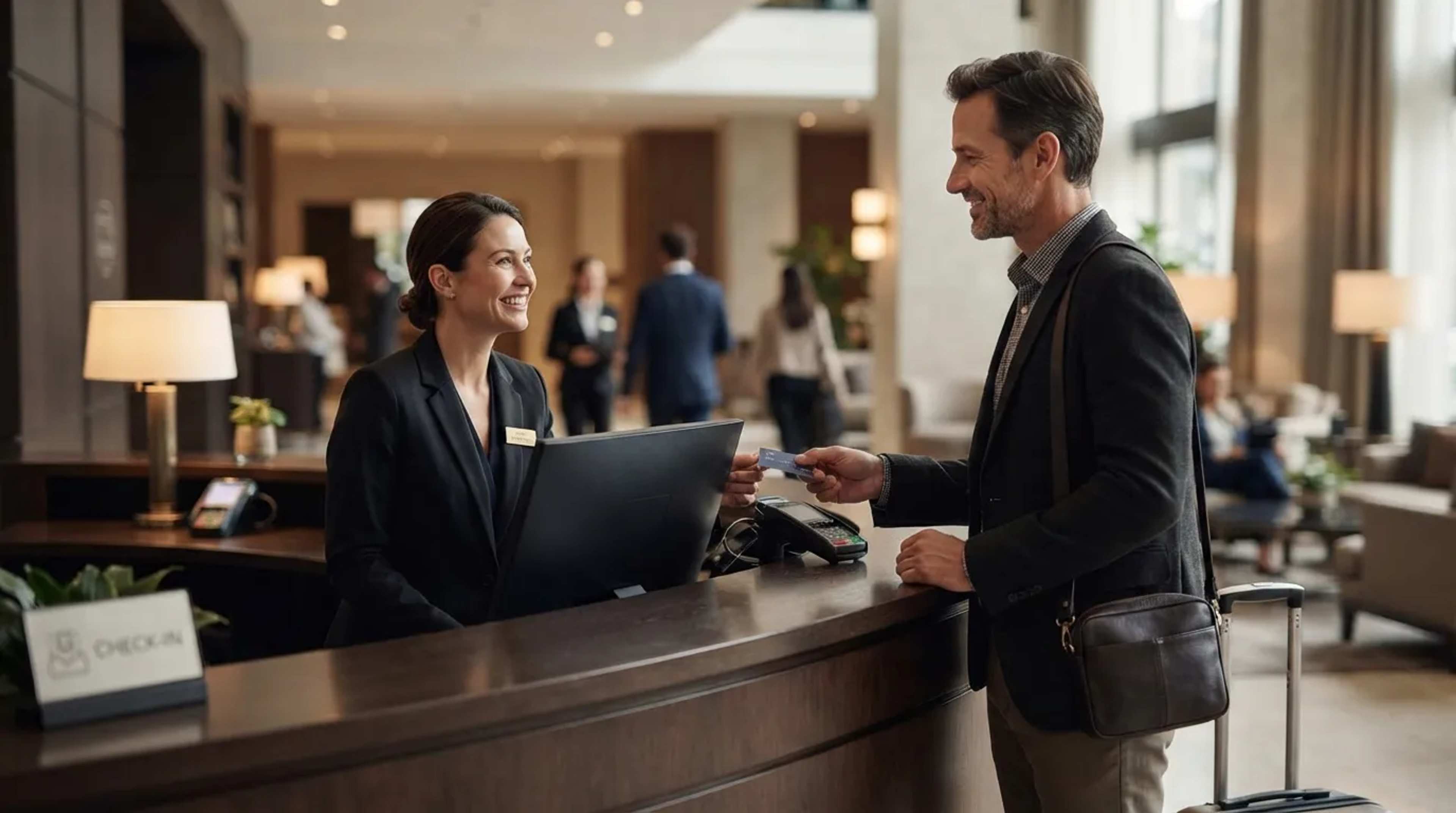
They don’t wait for the agent to request identification. A government ID and the payment card used for the booking are already in hand, ready to slide across the counter. There’s no purse excavation and no jacket-pocket search.
This is more than politeness. Hotels typically need to verify who is checking in, and mobile check-in can let a guest register, verify identity and get a digital key from their phone before arrival. Weekly guests either do that ahead of time or have the physical items ready, so nothing slows the line behind them.
15. The Folded $20 Stays in Their Wallet
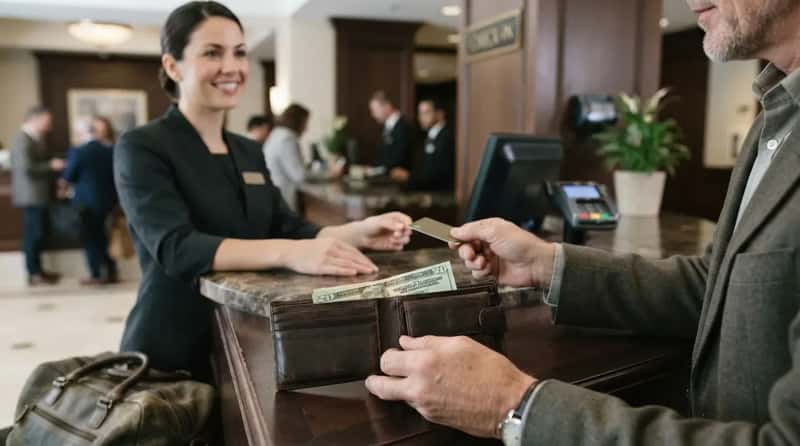
Popular travel lore says slipping cash across the desk gets you a better room. Frequent guests are often skeptical. In their experience, a clear request, a loyalty profile and a polite tone do more than a bill ever could, and there’s little solid evidence the cash trick works reliably.
Agents don’t all agree on it. Some say a tip is a nice gesture, while others say it creates an awkward moment. What most seem to appreciate is kindness. A regular who remembers the agent’s name and says thanks gets remembered right back.
16. The Agent Looks Up, Smiles and Says, “Welcome Back”
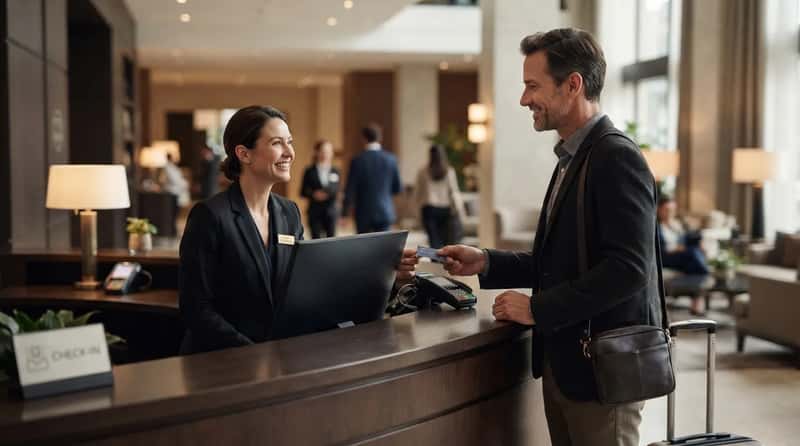
This is the real mark of a weekly guest, and nobody can fake it. The agent recognizes the face. Sometimes it’s a nod, sometimes a name, sometimes “same room as last time?” It takes about one second and says everything.
It comes from repetition, politeness and simply showing up. Front desk teams tend to remember the guests who make their shift easier, and regulars quietly become part of the building’s routine. A hotel lobby is a place full of strangers, until the day it isn’t.
None of these habits make someone a better traveler. They just show a person who has stopped treating a hotel as an event and started treating it as a routine. The phone check-in, the small bag, the early requests and the “welcome back” all point to the same thing: they’ve done this many times before.
Next time you’re in a hotel lobby, watch who walks past the desk. Odds are you’ll spot the pro in action. Did we miss a tell that you notice every time?