
By 11 p.m., the security lines at many American airports are empty and the food court gates are pulled down. The terminal looks finished for the day. The airfield is not finished, not even close. Runways get scrubbed, parked jets get picked over by technicians, and cargo planes land by the dozen while the passenger side sleeps.
One airport on this list becomes the busiest in the world during exactly these hours, and most of its night traffic carries no passengers at all. But the strangest part of the night begins on the pavement, where every single landing leaves a mark.
#16 – Every Landing Leaves Rubber the Airport Must Scrub Off
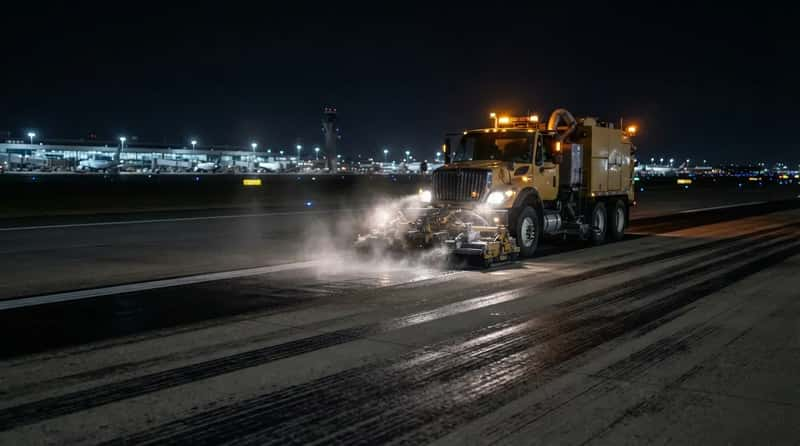
The operator of Amsterdam Schiphol puts the rubber from one landing on fresh pavement at about 22 pounds. As deposits build up on a well-used runway, each landing adds about 9 to 13 pounds.1 That layer matters because buildup can reduce braking effectiveness, increase the risk of hydroplaning, and obscure runway lights.2 So the cleaning trucks go out after the last departure, and the job is worth more than its dull reputation suggests.
Large international airports clean their runways three to five times a week, and each session takes up to four hours, typically at night when the runway is closed. FreightWaves, citing an airport authority, puts a slow-moving truck’s night at six to eight hours.
Rubber coats more than the pavement, because it also dims the lights set into the runway.
#15 – Runway Lights Get Blasted With Soda Powder
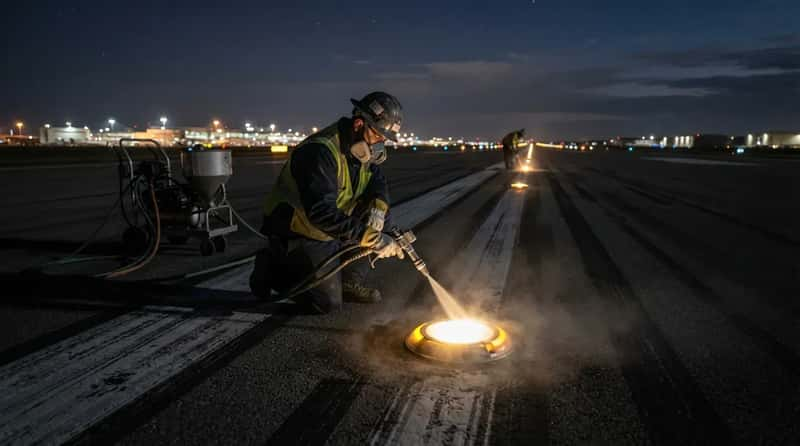
Crews clean the edge and centerline lights with dry soda blasting. Workers spray fine soda powder at the light surfaces to remove rubber without damaging the lenses. A runway has far too many lights to finish in a single night, so teams work through them on a rotating schedule. All of it has to fit between the last evening departure and the first morning arrival.
Lights and pavement are two halves of the same problem, which is why they share the overnight window. A runway that grips well but has murky edge lights still causes trouble for a pilot landing at 2 a.m. in poor weather.
#14 – A Test Wheel Decides When the Scrubbing Starts
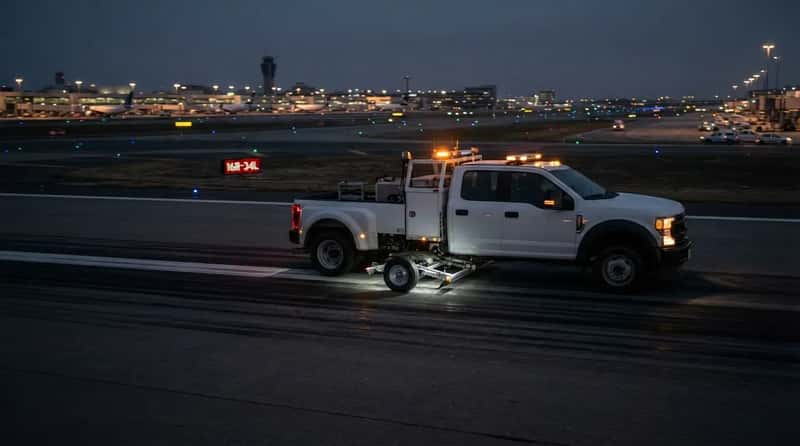
Airports don’t clean on a calendar alone. Specialized vehicles with a test wheel measure grip along the runway, and if friction falls below acceptable limits, cleaning teams are dispatched. The rubber truck from earlier is a response to a measurement, not a habit. That explains why busy airports clean several times a week while quieter ones can clean at scheduled periods through the year.
Hub airports with connecting flights around the clock have the tightest squeeze, so they rely on runway shutdowns or scheduled maintenance periods. Airport Technology quotes an equipment maker saying even a short 30 to 40 minute window makes a difference if it is used regularly.
At a Glance
- The trigger is a friction reading, not a date on the calendar.
- The tool is a specialized vehicle with a test wheel that measures grip.
- Busy airports clean several times a week, while quieter ones clean on a periodic schedule.
- A short 30 to 40 minute window helps if it is used regularly.
Cleaning leaves the pavement as it is, whereas resurfacing replaces it a small section at a time.
#13 – Resurfacing Happens a Small Section at a Time
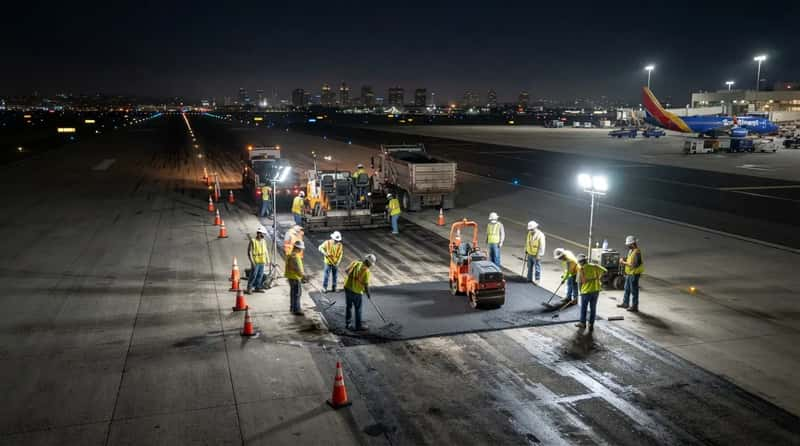
When a runway needs real repair, airports use the overnight hours when the airport is closed and do a small section at a time. Daytime closures would cut into constant takeoffs and landings, and working at night also gives crews a longer uninterrupted stretch. Before the work starts, the airport issues a Notice to Airmen, or NOTAM, telling pilots and airlines which runway will be out of service and for how long.
The stakes are highest where there is only one runway. San Diego has North America’s busiest single runway, and closing a runway can cause traffic delays and affect an airport’s finances.
The same quiet hours that free a runway for crews also free the parked planes beside it for inspections of their own.
#12 – Parked Jets Get Their Own Inspection Shift
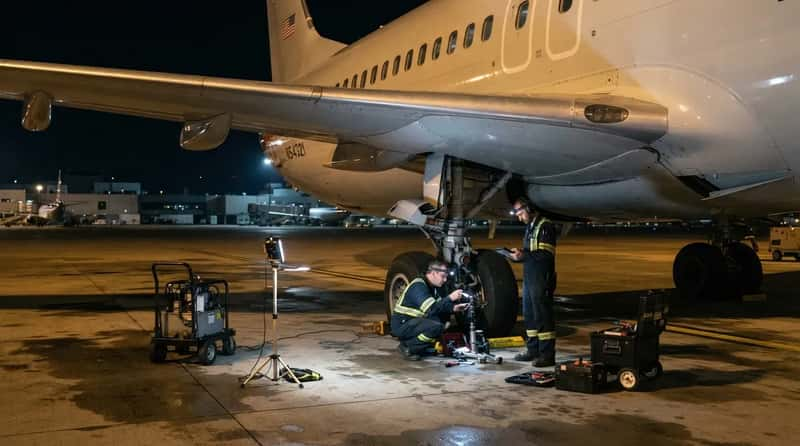
When a plane finishes its last flight, the passengers’ story ends, but the aircraft’s does not. Airlines use the overnight hours for line maintenance: scheduled inspections of landing gear, brakes, hydraulic oil levels and onboard systems. A daytime turnaround is short, so the plane is usually back in the air before anyone could do that kind of check. At night it has hours to spare.
This is routine work, not a repair after something went wrong. The point is to catch wear while the aircraft isn’t scheduled to fly.
Technicians share the aircraft with a second crew, whose job is the cleaning that a quick daytime turnaround never allows.
#11 – Cleaning Crews Finish What Daytime Turns Skip
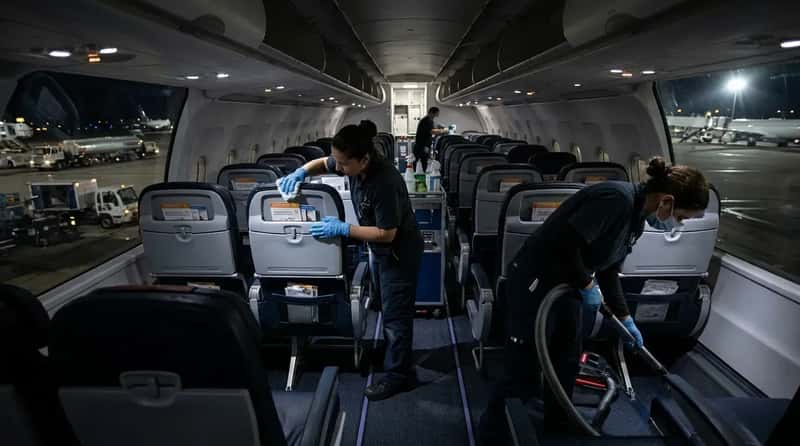
Between flights, cleaners have only enough time to clear trash and reset the cabin. At night the crew does the work there is never time to do properly: seat pockets are emptied and restocked, panels are cleaned, and restrooms are thoroughly sanitized. The first flight in the morning starts from that cleaner baseline, because the cabin has had hours without passengers.
Cleaners and technicians work on the same aircraft during the same hours, which makes the overnight ramp busier than the empty terminal suggests. Neither crew is anywhere near the gate area, so a traveler waiting inside never sees either.
Quick Compare
- Daytime turn: clear the trash and reset the cabin before boarding starts again.
- Overnight clean: restock seat pockets, clean panels and sanitize the restrooms.
Meanwhile, back in the terminal, the checkpoint that screens passengers by day has gone dark.
#10 – The Checkpoint Goes Dark and the Concourse Splits in Two
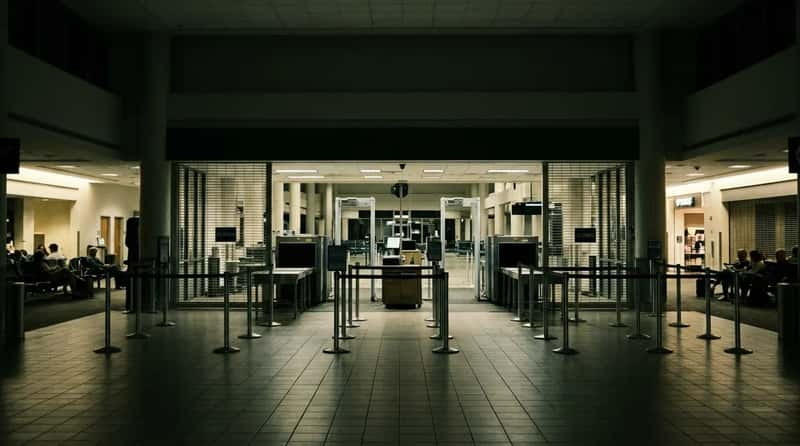
After the TSA checkpoints close at night, only passengers already through security can stay airside. Everyone else waits in the public landside areas until TSA reopens in the early morning. The same terminal at 2 a.m. is really two spaces divided by a closed checkpoint, and which side you land on depends on where your last flight left you.
If you arrive early for a morning departure, security is usually closed at night, and once it opens you need a valid boarding pass to get through. Closing and reopening times vary by terminal, so look them up before you plan the night.
Even on the landside, the public areas have their own rules, and some airports enforce them with a walk-through.
#9 – Around 11 p.m., Security Walks the Floor Asking for Boarding Passes
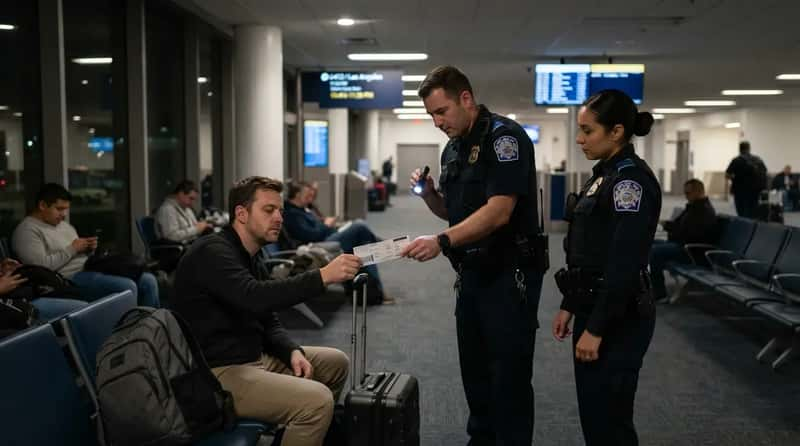
At some large airports, security comes around and asks to see your boarding pass. Your departure time should be within 24 hours, since staff don’t allow multi-day stayovers. These checks are usually done in the evening, around 11 p.m. Airports in the New York area and elsewhere have also restricted after-hours terminal access to ticketed passengers, in response to people living in terminals.
Those rules cost a ticketed traveler nothing as long as the boarding pass stays handy. If a cancellation strands you, the rebooked pass is what keeps you in the building.
Worth Knowing
- The walk-through checks usually happen in the evening, around 11 p.m.
- Your departure should fall within 24 hours.
- Multi-day stayovers are not allowed at these airports.
- A rebooked boarding pass counts as your proof of travel.
A ticket only helps if the doors are open, and at some airports they are not.
#8 – Some Terminals Simply Lock Up for the Night
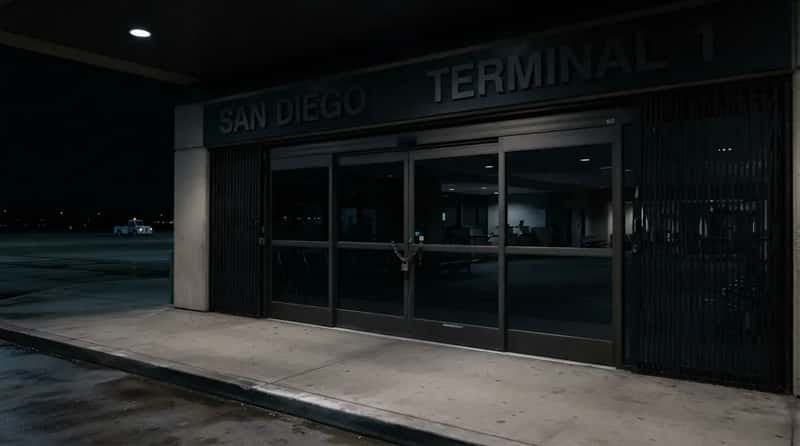
San Diego International observes an overnight curfew from 11:30 p.m. to 6:30 a.m., which makes it one of the largest U.S. airports that goes quiet at night. At New York’s LaGuardia, terminals might be shut down overnight if maintenance is scheduled. Some smaller regional airports close the terminal overnight and ask everyone to leave.
If your plan depends on a terminal chair at 1 a.m., confirm the airport is actually open at that hour. At a regional airport a locked door means waiting outside, and arriving at midnight for a 6 a.m. flight rarely pays off.
At airports that do stay open, the question becomes where a tired traveler can actually lie down.
#7 – O’Hare Has a Hotel Reached by Tunnel, Sacramento Sends You Out
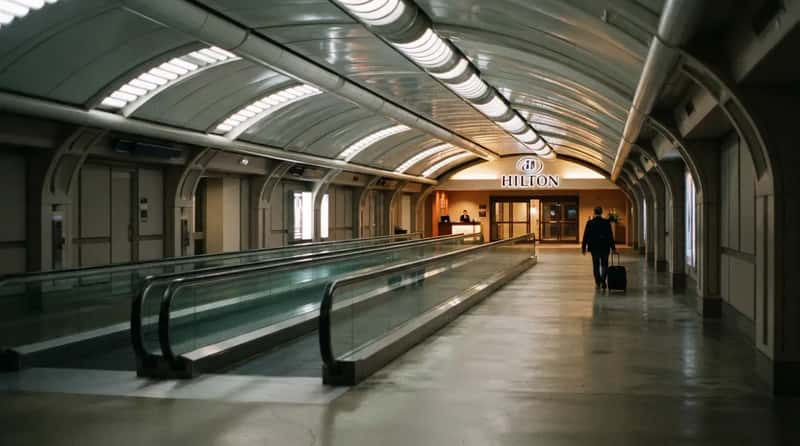
Overnight options differ a lot from airport to airport. A hotel room beats the terminal floor at any airport that has one close by, so the floor is best saved for a delay nobody planned. Here is how a few U.S. airports compare:
- Chicago O’Hare has an on-site hotel reached by underground walkways from the domestic terminals.
- Dallas Fort Worth’s Terminals B to E all have lounge areas, and Terminal D even has a space for yoga.
- Sacramento says its terminal public areas are open 24 hours, but it has no sleeping pods and points overnight travelers to hotels.
Detroit stays open around the clock, so you can find a spot and settle in. Settling in is different from sleeping well, as the next entry shows.
#6 – The Lights Stay On and the Cameras Keep Watching
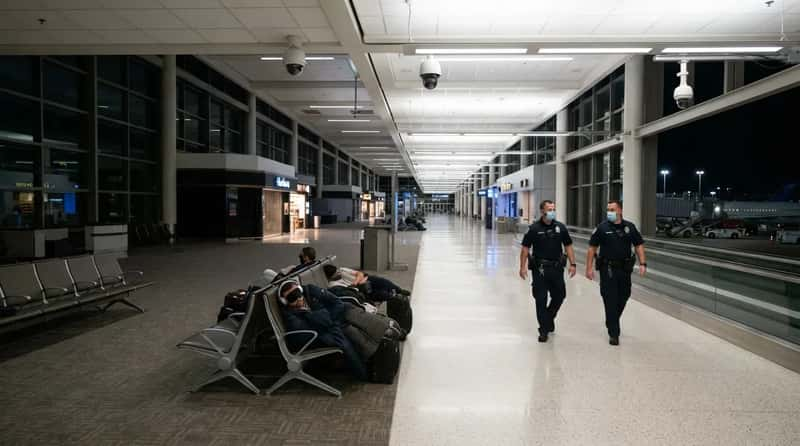
Terminals don’t switch off like an office. At big hubs the lights generally stay on all night, and the noise carries, which is why sleep masks and headphones are standard kit for anyone bedding down. Airports have security staff and cameras around the clock.
Staff and security patrol throughout the night, and they will not bother you as long as you are not causing problems or blocking walkways. The floor is lit, watched and never quite quiet, so a night in a terminal chair costs more sleep than most people expect. A room beats it, as the earlier entry argued.
All of that is the passenger side of the night, and at a few airports it is the smaller side. The larger one began with very few packages.
#5 – The First Night Sort Carried Just 186 Packages
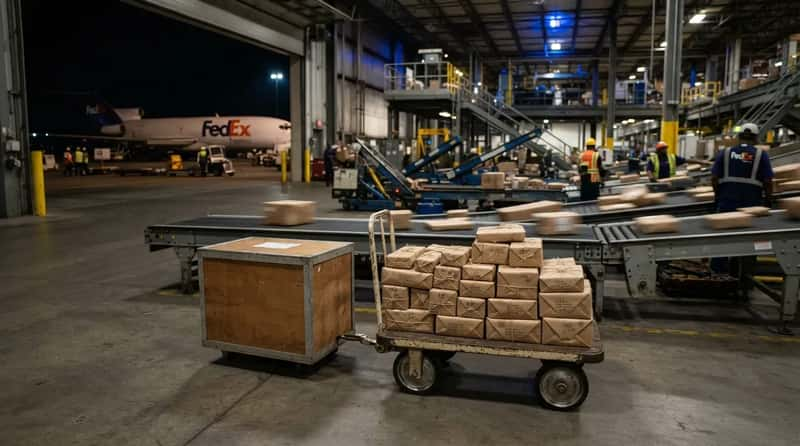
FedEx began overnight operations on April 17, 1973, and carried 186 packages that first night.3 By 1976 the company was profitable, averaging 19,000 parcels a day. UPS’s Louisville operation also started small: in the early 1980s it was a facility sorting about 2,000 air packages a day.
The idea behind both was the same. All packages converge on a single central point each night, are sorted, and are redistributed to their final destinations. Freight suits the dark hours because parcels don’t need daylight, and the runways are less crowded with passenger jets.
The Louisville descendant of those early sorts now covers an area the size of 90 football fields.
#4 – Louisville’s Worldport Sorts 115 Packages a Second
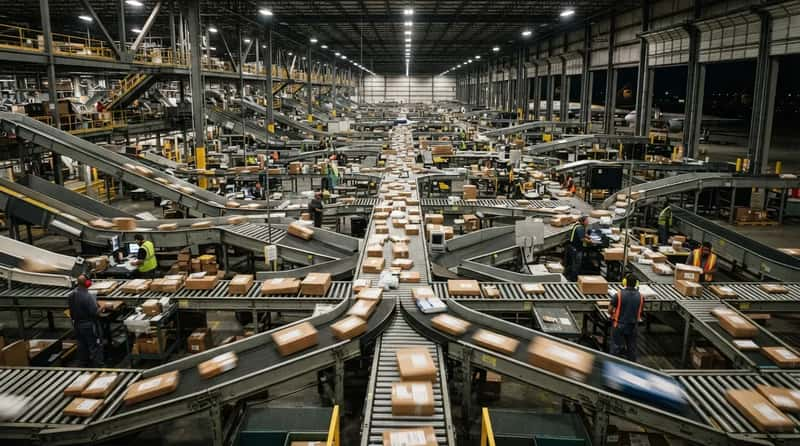
UPS Worldport covers 5.2 million square feet, about 90 football fields, and can sort 416,000 packages per hour, about 115 a second, on 155 miles of conveyor belts.4 On an average day it handles about 2 million packages. A 2010 expansion raised sorting capacity to that level and added gates for more wide-body aircraft.5
The people count is as striking as the machinery. About 20,000 people work at the center, which makes UPS the largest employer in the Louisville area, the company said.6 The center has room for 125 aircraft to park.
The ground numbers are huge, but the airport’s flight schedule shows the hub’s weight even more clearly.
#3 – At Louisville, Cargo Flights Outnumber Passenger Flights
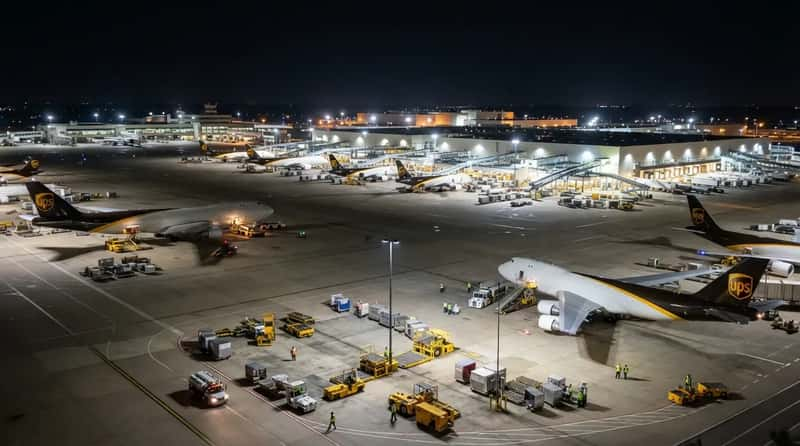
Worldport sees about 360 inbound and outbound flights a day, compared with about 150 passenger flights to and from the airport, according to a Reuters factbox.7 Louisville also ranks among the busiest U.S. airports for cargo by weight, in the same conversation as Memphis and Anchorage. The airport most people picture is the smaller business in that building.
The overnight sort also gives local shippers extra time. Because the main sort runs after dark, fulfillment centers near Louisville can take next-day air orders later in the evening than shippers in other cities.
Louisville is a cargo giant, though, and the airport that tops the overnight story opened a new building in 2024.
#2 – FedEx Built a Four-Story Sorting Hub in Memphis
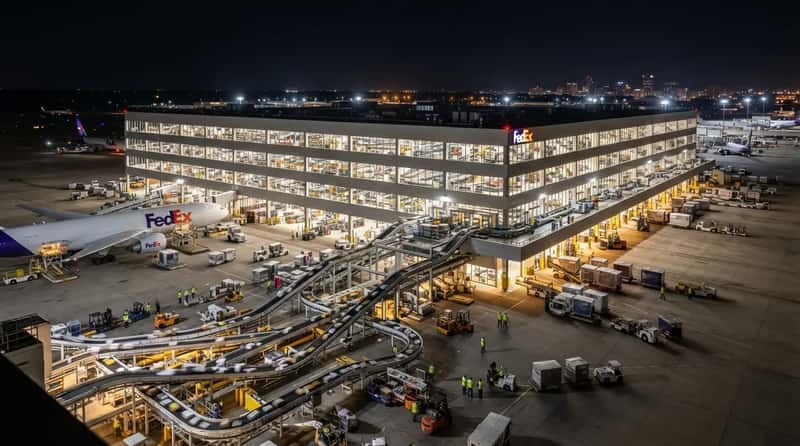
In October 2024, FedEx announced that a new sorting facility at its Memphis hub had become fully operational. The building covers 1.3 million square feet across four levels, holds 11 miles of conveyor belts, sorts up to 56,000 packages per hour, and has 1,000 cameras monitoring package movement. It is one piece of a larger site, since Inbound Logistics describes roughly 15 million square feet of sorting space across the hub.
Packages move by belt and robotic arm, with scanners reading labels along the way. After a box leaves the main sorting system, it is typically sorted two more times before it is placed in an outbound container.
A building that size only pays off because of the planes that fill it every night.
#1 – Memphis Becomes the Busiest Airport on Earth After 10 p.m.
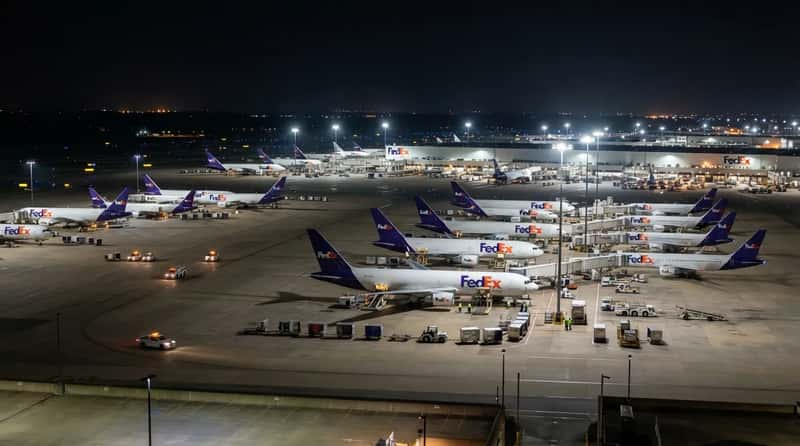
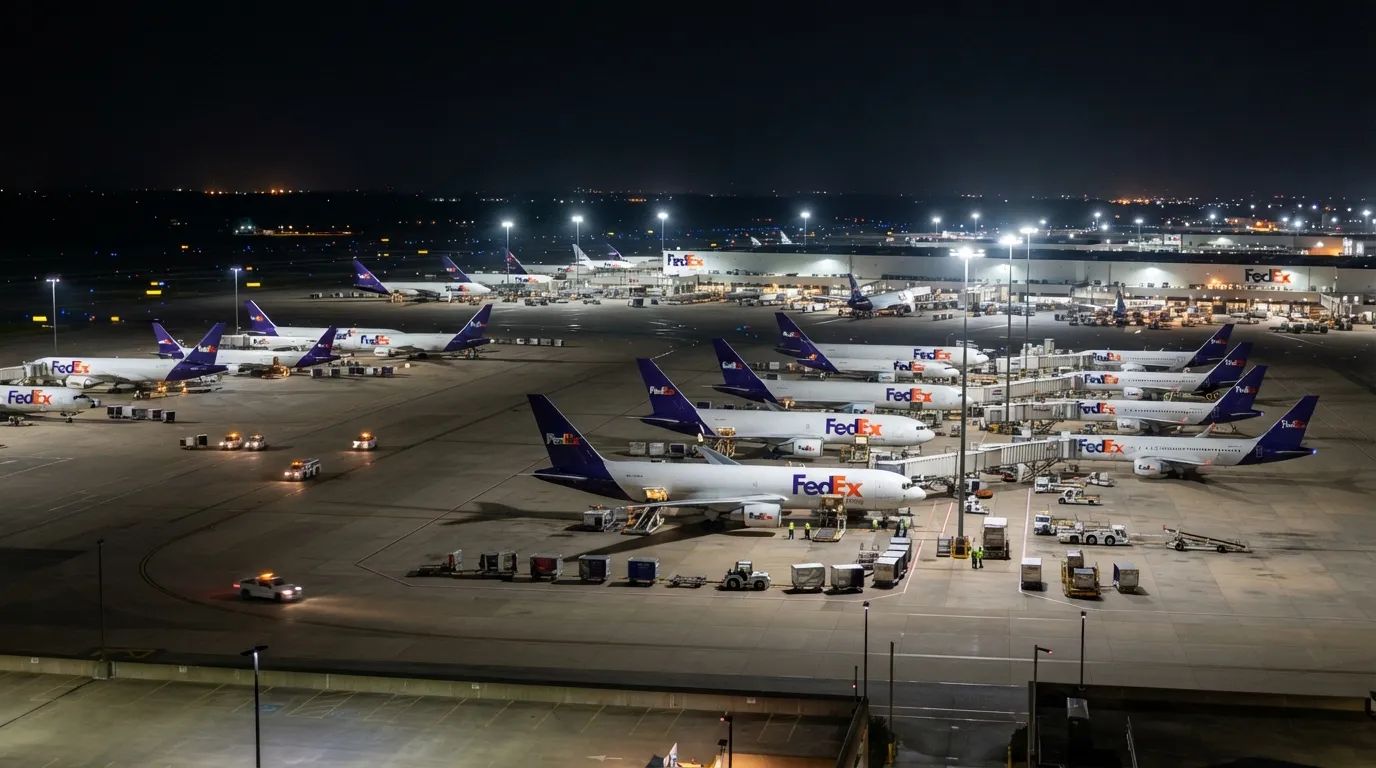
As the evening wears on, passenger flights at Memphis wind down and the city goes quiet apart from Beale Street. Then between 10 p.m. and 6 a.m., the airport turns into what FedEx describes as the busiest in the world, handling about 150 airplanes and 1.5 million shipments on an average night, and 2.2 million at peak.8 It is the mirror image of the closed checkpoint from earlier: the passenger side is dark while the freight side runs flat out.
The operation begins around 10:30 p.m. when the first FedEx Express aircraft touch down, and arrivals continue until about 1 a.m., after which the hub shifts to departures. Planes taxi to parking stands, crews offload the containers, and within minutes the cargo is on conveyor belts. By morning the same packages are on trucks, and the daytime traveler has seen only the tidy end of the process.
Fast Facts
The next time you walk through a quiet terminal late at night, treat the quiet as a sign of where the work has moved, not as a sign that the work stopped. The runway crews, the cleaners and the freight ramps are all on the clock while the concourse sleeps, and that hidden schedule is why the morning flights run so smoothly.
Have you ever spent a night in an airport terminal, and which airport was it?
- FreightWaves Runway Cleaning: https://www.freightwaves.com/news/do-airports-clean-runways
- Airfield Rubber Removal: https://en.wikipedia.org/wiki/Airfield_rubber_removal
- FedEx Company History: https://www.fedex.com/en-us/about/history.html
- UPS Worldport Overview: https://www.startuplouisville.com/articles/ups-worldport-louisville-largest-air-hub
- Louisville Airport SDF History: https://www.flylouisville.com/corporate/sdf-history/
- AP Worldport Facts: https://www.marketscreener.com/news/ups-distribution-hub-in-louisville-has-300-flights-per-day-what-to-know-ce7d5cdfd180ff25
- Reuters UPS Worldport: https://www.marketscreener.com/news/ups-air-hub-closure-to-create-delivery-delays-across-its-global-network-ce7d5cddd88ff623
- Inbound Logistics Memphis Hub: https://www.inboundlogistics.com/articles/on-the-road-midnight-in-memphis/