You’d expect the big regrets from a first Atlantic crossing to be about the itinerary or the food. Read enough cruise guides and traveller write-ups, though, and the same thing keeps coming up: the cabin. It’s usually a detail that looked harmless on a booking page.
This isn’t a formal survey of retirees. It’s a set of patterns that experienced cruisers, cruise guides and ship-by-ship reviews keep flagging, and most of the examples come from Cunard’s Queen Mary 2, the best-known regular crossing. Some regrets will sound obvious. A few are the opposite of what the brochure suggests.
#17 – The Inside Cabin That Turned Seven Nights Into a Windowless Blur
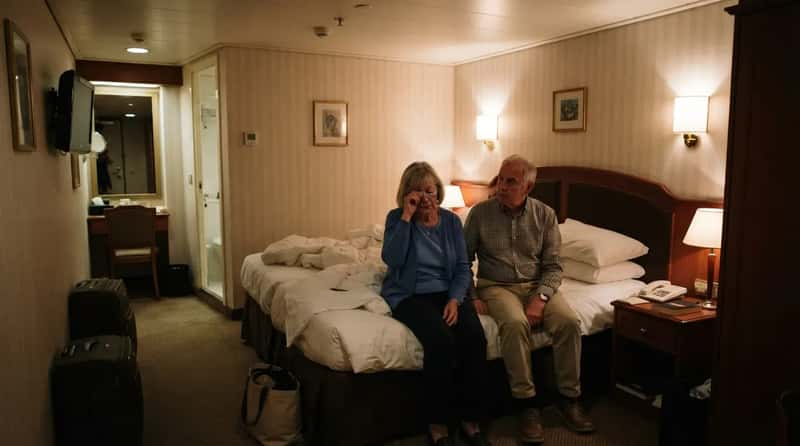
A cheaper fare can quietly become the thing people mention first afterward. The Queen Mary 2 crossing between New York and Southampton is a 7-night passage, and Britannia interior fares start around $1,500 per person. Of the ship’s 1,363 staterooms, 286 are inside rooms, so plenty of people end up there.
Seasoned travellers don’t agree on this one. Some say a window is unnecessary with no coastline or islands to look at, yet the Seat61 author, who has crossed both ways, thinks the extra cost of a porthole is well worth it. The Points Guy adds a comfort angle: a window or balcony can help offset seasickness with fresh air and a view of the horizon. But the next mistake is the one that fools people who did pay for a balcony…
#16 – The “Balcony” With a Lifeboat Parked Right in Front of It
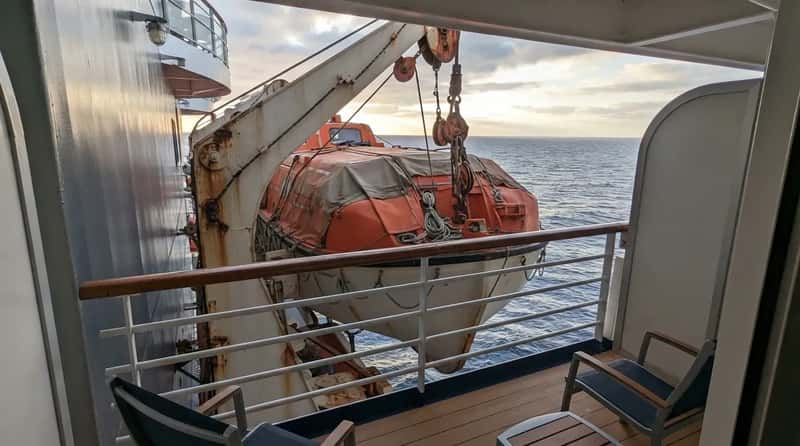
Having a balcony doesn’t guarantee a view. On Queen Mary 2, certain balcony categories, mainly on Deck 8, have lifeboats directly in front of them. Someone who booked “an ocean balcony” can feel misled the moment they step outside.
The ship does flag this. The cheapest cabin type with its own balcony is the Britannia Balcony (Obstructed View), and Cunard’s sailing listings also mark staterooms with lifeboat-blocked views. For some people that’s a smart saving. For others it’s the first thing they notice at sunrise, and the regret comes from not knowing which group you’re in.
#15 – The Fabulous Suite Up High That Sent a Traveller Hunting for Calmer Ground
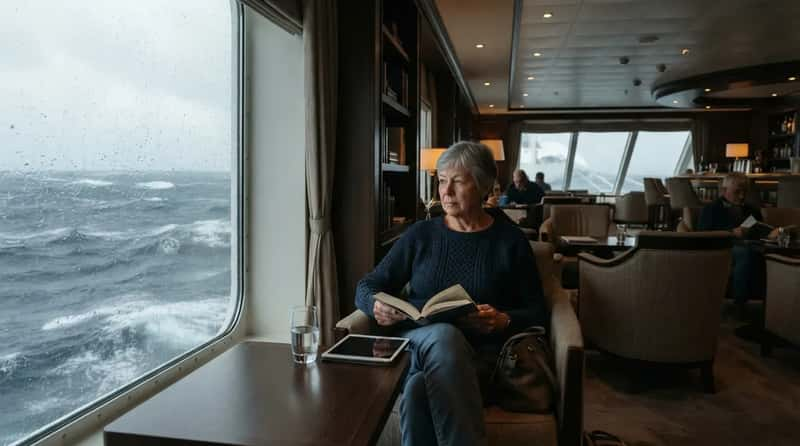
Paying more doesn’t buy more stability. One travel blogger called her Silver Wind Medallion Suite fabulous, but it sat high and toward the front, which was not good for stormy seas. She ended up finding a midship seating area on a lower deck just to read and work.
That detail is the whole lesson. A ship pivots around its centre, so the bow and stern move the most, and the gap between a high forward cabin and a low midship one can be substantial in real seas. The most expensive cabin can be the one you spend the least time in when the weather turns. Meanwhile, another story shows what happens when you can’t escape the motion at night…
#14 – Trusting One Ship’s “Best Deck” Number on Another Ship
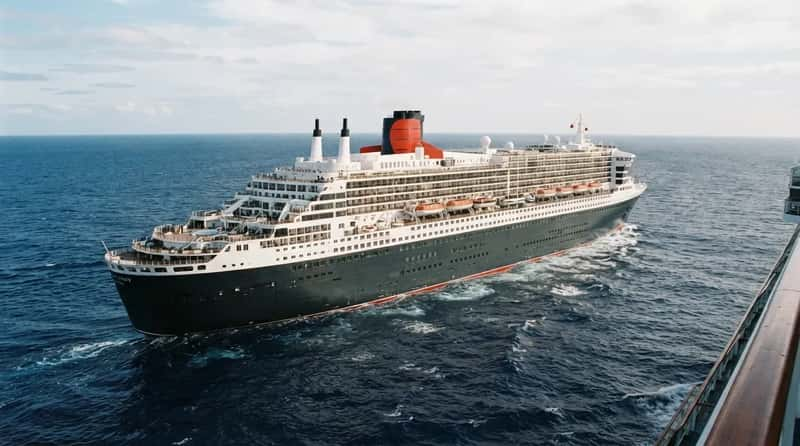
Deck advice isn’t universal, and it’s easy to copy the wrong number. For Celebrity’s Solstice and Edge classes, one guide suggests a balcony on deck 8 or 9 midship. For Queen Mary 2, a different guide points to roughly Decks 4 to 7, midship, to cut motion without sitting on top of the loudest venues.
Cruisebound states the principle plainly: a lower passenger deck near midship is the place to start, but the ideal deck number varies by ship. Applying a friend’s deck number to a different ship is a quiet way to book the wrong cabin. The fix is dull but it works: open that ship’s own deck plan.
#13 – The Open-Air Balcony Nobody Sat On in November
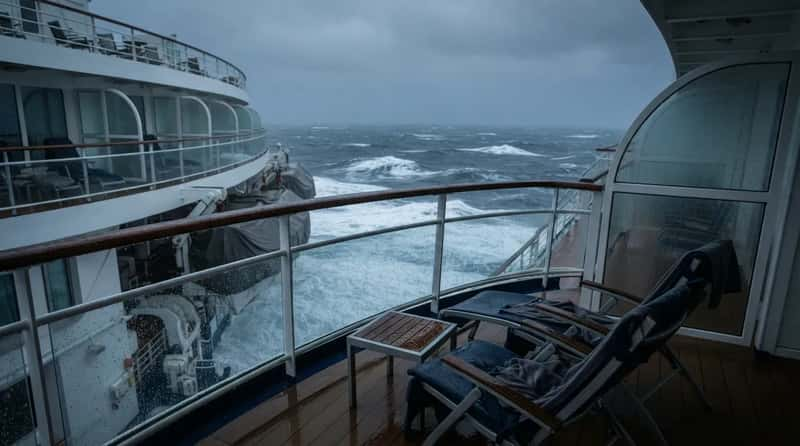
The open balcony is the first thing many first-timers book. On a cold-weather crossing it may be the first thing they stop using. One QM2 guide argues that on a winter sailing, protection and stability matter more than an open-air view you may rarely enjoy.
Quick Compare
- Open-air balcony: the classic view and fresh air, but fully exposed to winter weather.
- Sheltered balcony: sits closer to the water, so it tends to feel steadier, but the view is partly blocked.
- Best season for each: open for calm summer sailings, sheltered for rougher shoulder months.
Sheltered balconies are the alternative. On QM2 they sit on the three decks immediately below the promenade deck, closer to the water, which means more stability. Peak crossings run May through October, with shoulder sailings in April and November. Plenty of experienced cruisers say an unused open balcony is the most expensive door on the ship. Others disagree, and the next mistake shows why…
#12 – The Sheltered Balcony That Felt Like a Steel Box in July
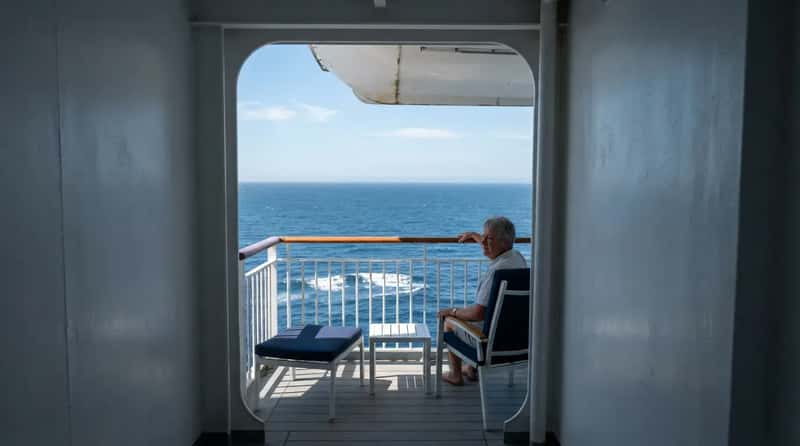
The cure for rough seas can become the complaint on a calm, sunny crossing. QM2’s lower sheltered balconies partially obstruct the view, with solid steel hull walls on each side. One reviewer’s verdict: great on a transatlantic crossing, perhaps less so on a sunny summer sailing.
These balconies are mainly on Decks 4 to 6, with the forward section of Deck 4 in particular. It’s a trade between comfort in bad weather and the open feeling people picture when they book a balcony. The same steel wall that keeps you cosy in January can feel like a cage in July.
#11 – The Wrong Side of the Ship for the Moment Everyone Photographs
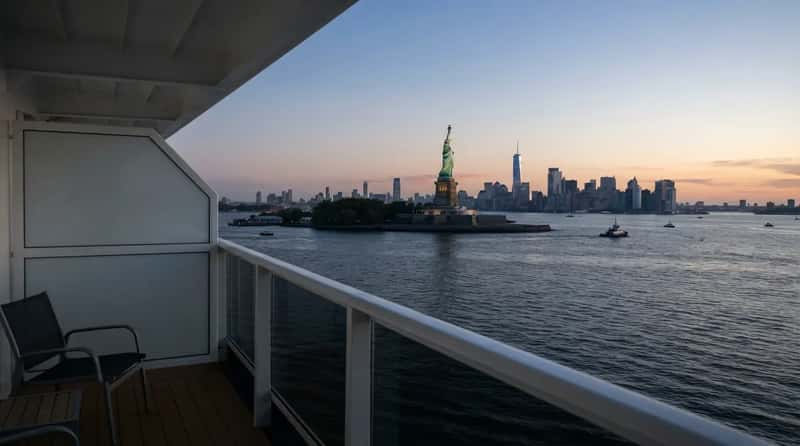
Port or starboard can decide which view you wake up to. The Points Guy notes that if you’re entering New York Harbor before dawn and want the Statue of Liberty from your cabin, you should book the port side. On a northerly route from Europe, a starboard cabin may give you an earlier look at Greenland or Newfoundland.
Here’s the catch: guides don’t fully agree. The Points Guy suggests port side for a U.S.-to-Europe eastward crossing, while a QM2 traveller guide recommends port westbound and starboard eastbound to maximise sun on your balcony. One guide’s best side is another guide’s second choice, because they’re optimising for different things. Side is still a minor factor next to the next one, which is about what’s above and below you…
#10 – The Quiet-Looking Cabin Directly Under the Party
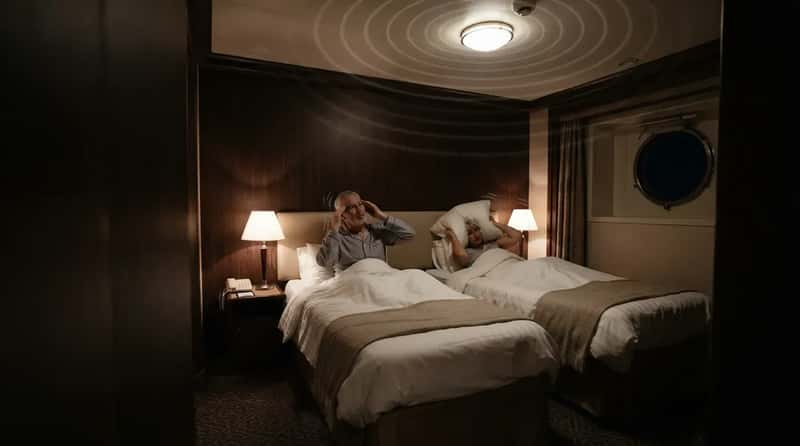
A cabin can look ideal on the deck plan and still keep you up. One cabin guide advises that if you’re sensitive to noise, choose a cabin with passenger decks both above and below. That simple rule isn’t on most booking pages.
Sound travels from entertainment venues and public rooms, and guides link this to position. A middle-deck midship cabin sits away from the noise sources at either end of the ship, and one reviewer described a quiet Britannia Balcony cabin with no noise from public areas or venues. On a long crossing, there’s no port day to catch up on missed sleep.
#9 – The Big Aft Balcony at the End of a Very Long Hallway
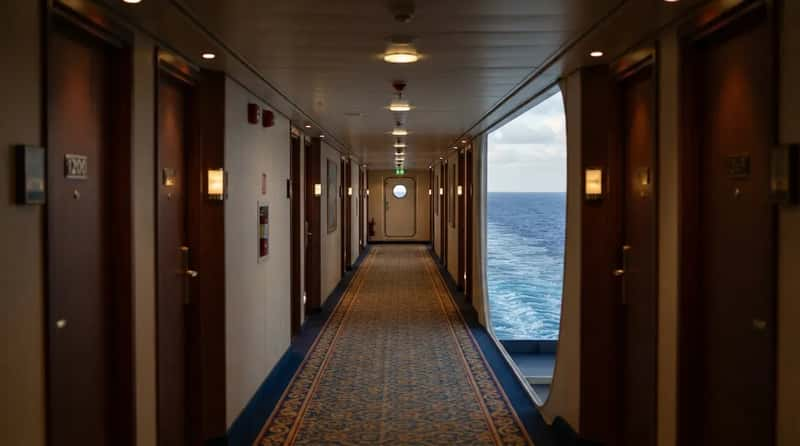
Everyone loves the idea of a huge back-of-ship balcony. If you want the biggest balcony, go aft, one guide says, but that advice comes with fine print. Aft cabins also tend to pitch more than midship, though slightly less dramatically than the bow in head-on seas.
The other cost is distance. A midship middle-deck cabin is a short walk to most public areas, and for travellers who tire on long corridors, that matters on day four as much as day one. The extra balcony space can come with extra steps and extra movement. Many travellers say they’d trade the square footage for steadier footing.
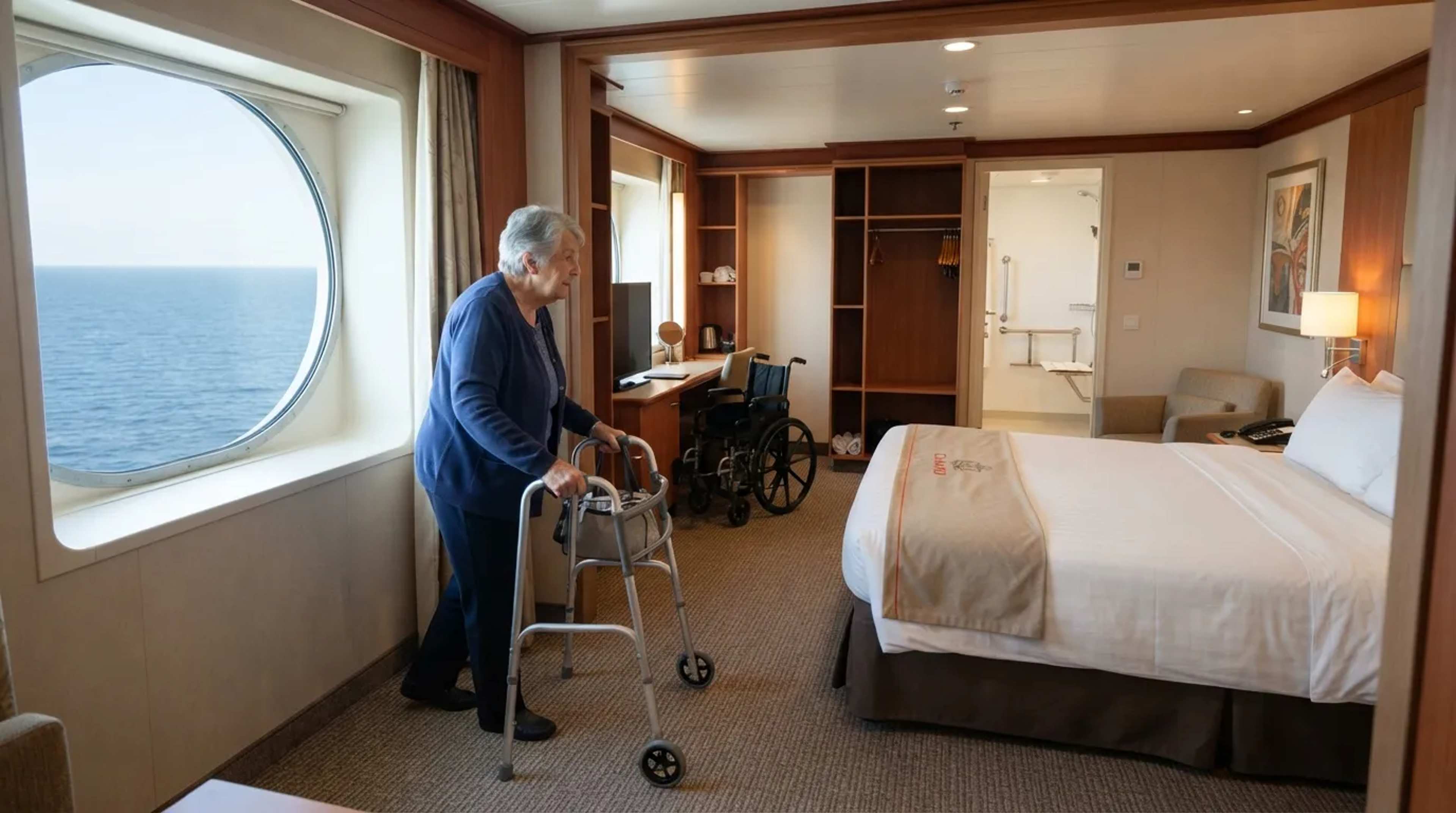
#8 – The Cabin Nobody Checked for a Walker or Wheelchair
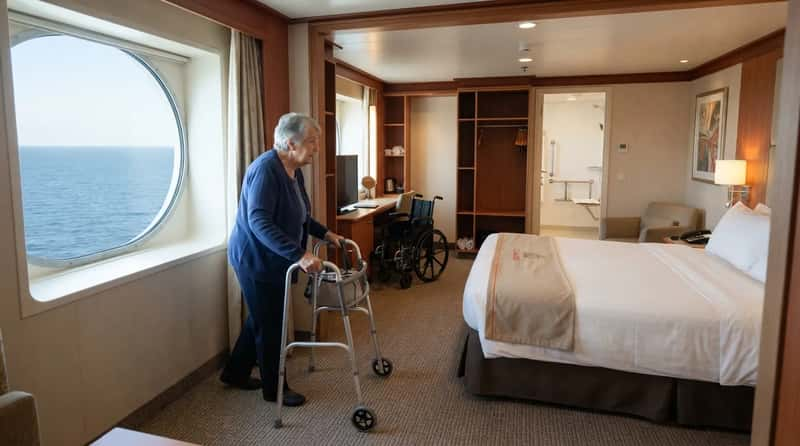
Accessible cabins are scarce. Queen Mary 2 has 26 wheelchair-accessible cabins among its 1,363 staterooms. If you need one, waiting to book can shrink your choices fast.
The layout is different too. Cunard’s sailing listings note that wheelchair-accessible staterooms have roll-in showers and no walk-in closets, and that accessible layouts may differ from cabin to cabin. Some accessible grades are only available to guests who need them. The practical lesson is to ask exactly what’s in the room before you pay.
Fast Facts
- 26 wheelchair-accessible cabins out of 1,363 staterooms on Queen Mary 2.
- Roll-in showers are standard in these staterooms.
- Walk-in closets are not part of the accessible layout.
- Layouts can differ from one accessible cabin to the next.
#7 – Paying Double for a Solo Crossing When Single Cabins Exist
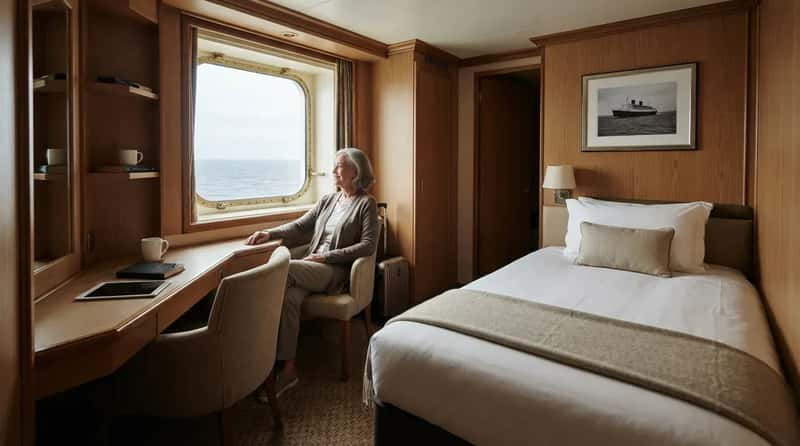
Solo travellers can assume every cabin is built for two. Queen Mary 2 does offer single-occupancy studios, and a Single Oceanview category exists, typically located on Decks 2 and 3 in a central position.
That location is interesting because low and central is the steadiest part of a ship, according to the motion guidance above. The catch is supply, since these cabins can sell out. A solo cabin can combine a lower price with the steadiest location, but there are very few of them. Check live fares, because the gap changes by sailing.
#6 – The Cabin That Quietly Picked Their Restaurant and Their Crowd
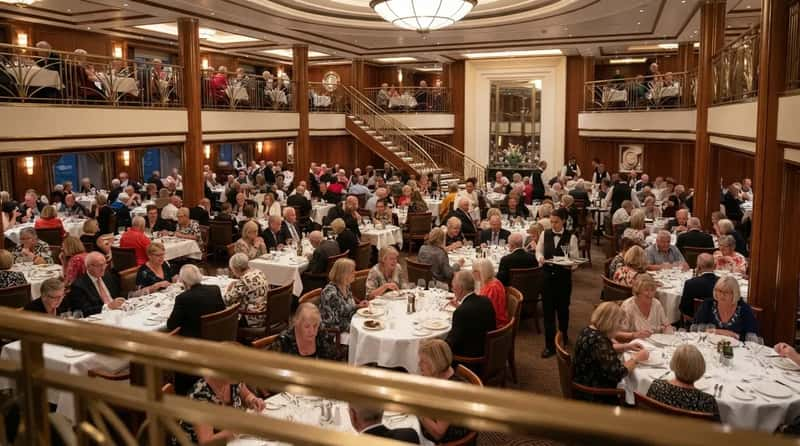
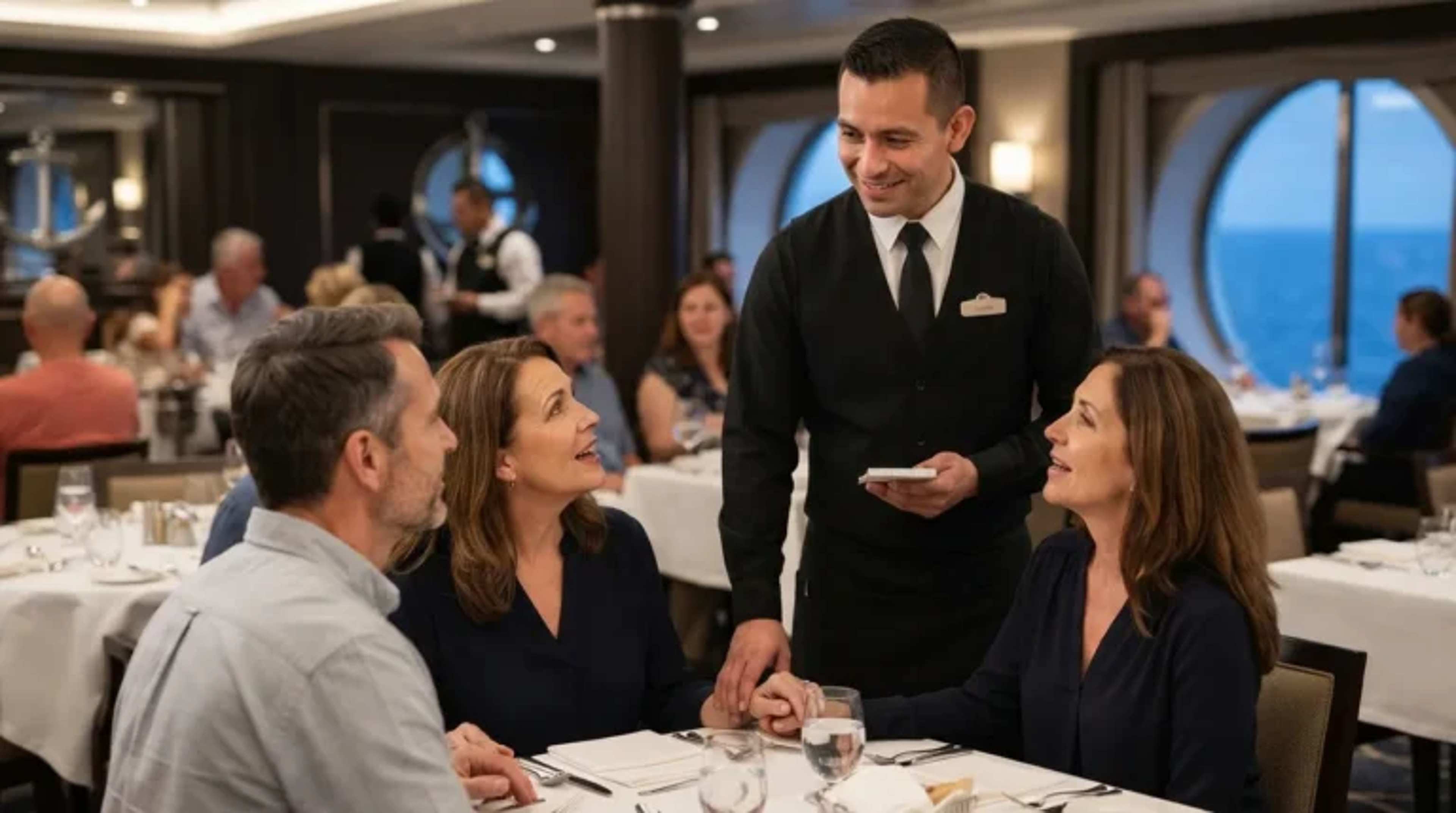
Cabin class shapes the social side of the crossing. On Queen Mary 2, it determines your restaurant, your service level, and to a meaningful degree your social world onboard. Many first-timers only discover this after booking.
The setup is concrete. Most cabins are allocated to the two-story Britannia restaurant with 1,300 seats, while pricier staterooms go to the Princess Grill on deck 7, and the best to the Queens Grill. Your cabin category effectively decides where you eat every night. Some people love that structure, and some wish they’d known sooner.
#5 – The Compact Cabin That Felt Smaller by Day Five
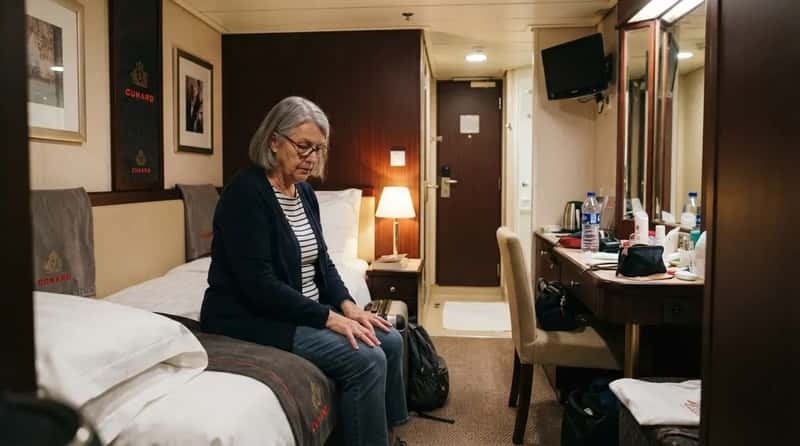
Square footage looks abstract until you live in it. On Queen Mary 2, a Britannia Inside cabin is about 155 square feet, while Britannia Oceanview cabins run 180 to 200. That’s not a huge difference on paper, but it adds up over a week.
Opinions vary, and Seat61 describes the inside staterooms as spacious and beautifully designed despite being the cheapest option. Some crossings also run longer, such as a 14-night Southampton sailing in September 2026. The longer the sailing, the more a small room can matter. Now for the regret tied to weather luck…
#4 – Betting the Season Would Keep the Sea Flat
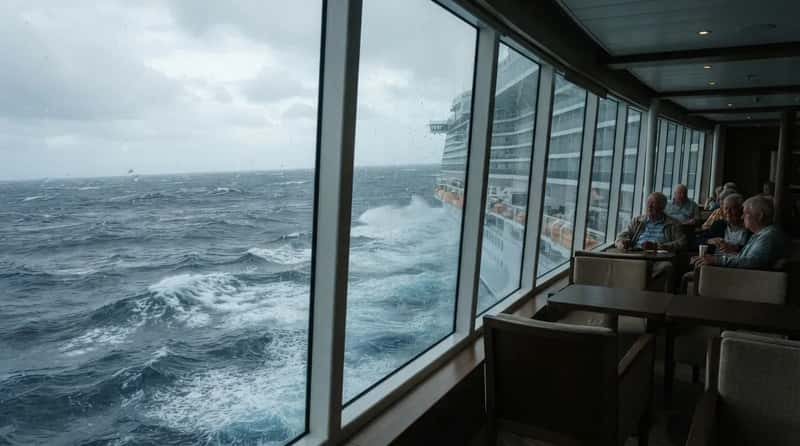
“We’ll go in a calm month” is a common assumption. The Points Guy says the Atlantic can be smooth even in spring and fall, yet unpredictable wind and currents can create rough seas any time of year. A seasonal bet doesn’t remove the risk.
Cruisebound adds that Atlantic conditions can be rougher than many Caribbean or Mediterranean itineraries. One guide goes further: for a rough route, pay the midship premium. The calm-season bet is one of the cheapest ways to book the wrong cabin.
#3 – Dismissing the Lowest Midship Decks as “the Basement”
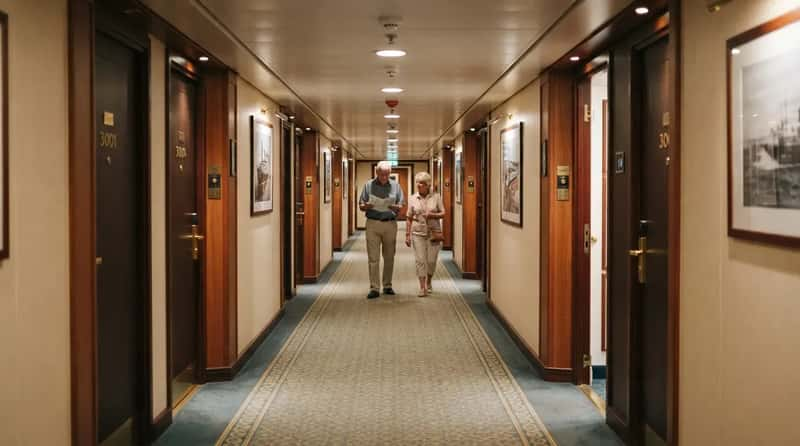
Many first-timers want a high deck for status or views. Veterans often argue the lowest midship decks are the real prize. One forum poster claims cabins on Deck 3 or 4 in the middle of the ship experience almost zero perceptible motion, even in moderately rough Atlantic crossings. That’s one person’s claim, so treat it as anecdotal.
Broader guidance backs the idea. One guide calls midship on a low deck the steadiest spot on the ship, and a QM2 guide suggests decks 3 and 4. The trade-off is the view, as with the sheltered balcony cabins. The deck that sounds like the least glamorous can be the one people stop complaining about. The last two stories are the ones that tend to stick…
#2 – The Deck 11 Forward Balcony Where Sleep Became the Casualty
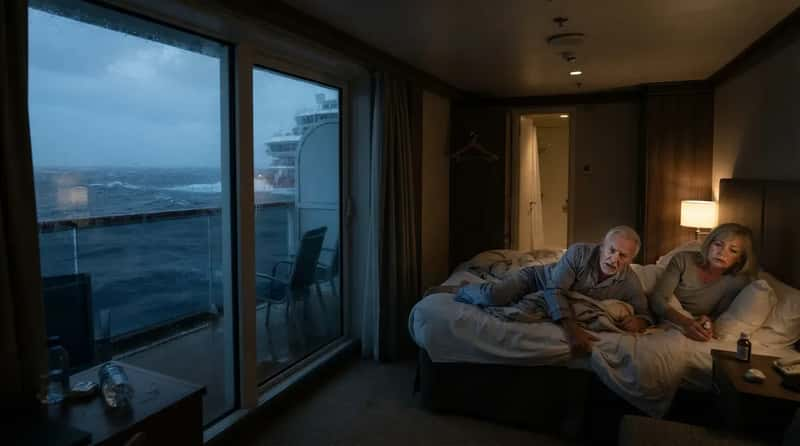
This is the cautionary tale cruise guides keep repeating. In a widely shared review, a forward-facing Deck 11 balcony stateroom on a winter crossing with 20-foot swells left the occupants struggling to sleep as the ship pitched all night. It was the kind of cabin many people dream of booking.
Relief came from a relative’s cabin. One traveller retreated each day to a centrally located, lower stateroom on Deck 6 because the motion there was gentler. The best-looking cabin on the plan wasn’t a place to rest. It’s a single account, not a rule, but it matches the usual guidance that forward or aft cabins on Decks 9 to 13 feel the strongest pitching and rolling.
#1 – Choosing the Cabin From a Photo Instead of the Ship’s Motion

The biggest regret is also the simplest. People pick the cabin that looks best on a screen instead of the one that suits a week on the open Atlantic. Cruisebound’s advice is blunt: on a transatlantic or repositioning voyage, put extra effort into securing a low midship cabin.
The stakes are different from a Caribbean week. Seat61 points out that there’s no coastline or islands to see on a transatlantic crossing, so the cabin is your base for days. On a crossing, there’s no port to step off at when the cabin isn’t working. Travellers planning a once-in-a-lifetime trip tend to say the same thing afterward: they should have booked for the sea, not the photo.
At a Glance
- Steadiest ground: low and midship, where pitching and rolling are gentlest.
- Roughest ground: forward or aft cabins on Decks 9 to 13.
- Peak season: May through October, with shoulder sailings in April and November.
- Deck numbers: they vary by ship, so use that ship’s own deck plan.
Most of these regrets come down to motion, light, noise and distance, not luxury. Pick for the roughest day, check the real deck plan, and be honest about how you’ll use the space. Which of these would have caught you out?