Walk into a hotel breakfast room at 7:10 on a Tuesday and you’ll see two kinds of guests. One group wanders around with a tray and a confused look. The other group moves like they’ve done this a few hundred times, because they have. The tells are small, and once you know them you can’t stop spotting them.
The crowd is big enough to study. GBTA projects global business travel spending will climb to roughly $1.7 trillion in 2026, so plenty of people are perfecting these routines. Some habits look like pure common sense. A few look almost rude until you understand the reason. And the last one on this list is so simple that most frequent flyers admit they still forget to do it.
17. The Early Arrival That Beats the Rush Before It Forms
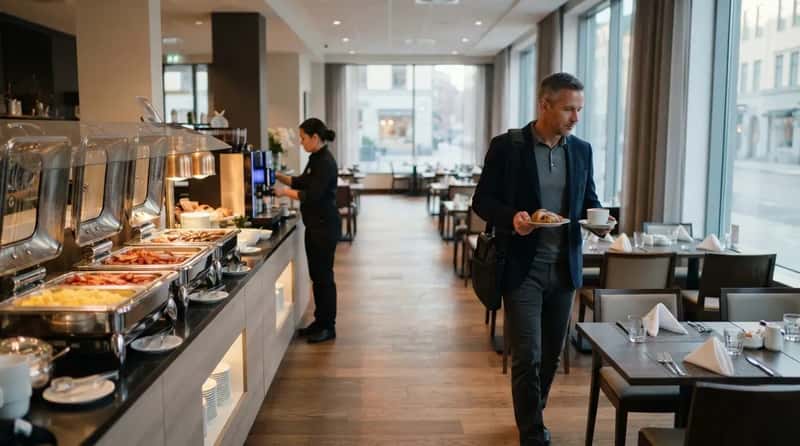
Seasoned travelers tend to walk in right when the doors open. Hotels near conference centers and office parks often see a wave of guests at about the same hour on weekday mornings. The early crowd gets fresh trays, hot eggs, and open tables.
First-timers show up at 8:10 and meet a line at the toaster and nowhere to sit. Veterans pay for that head start with a little lost sleep, and they accept the trade. The first fifteen minutes of a trip morning are the only ones they fully control. But the clock isn’t the biggest tell. What they do after they walk in matters more, and that’s #16.
16. The Corner Seat That Looks Random but Is Not
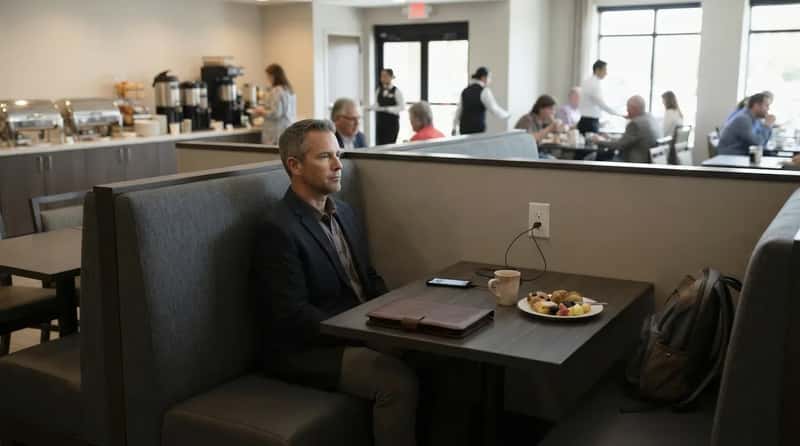
Watch where experienced travelers land. They head for a corner table, ideally near a wall outlet, and often with their back to the wall. A dead phone at 9 a.m. can wreck a travel day, and the middle of the room is the noisiest and most crowded place to eat.
The seat also keeps the exit and the coffee station in view, so it’s easy to slip out when a text arrives. It’s a quiet bit of strategy that nobody else in the room notices. The next move, though, would get you booed at a family reunion: #15.
15. Walking Straight Past the DIY Waffle Maker
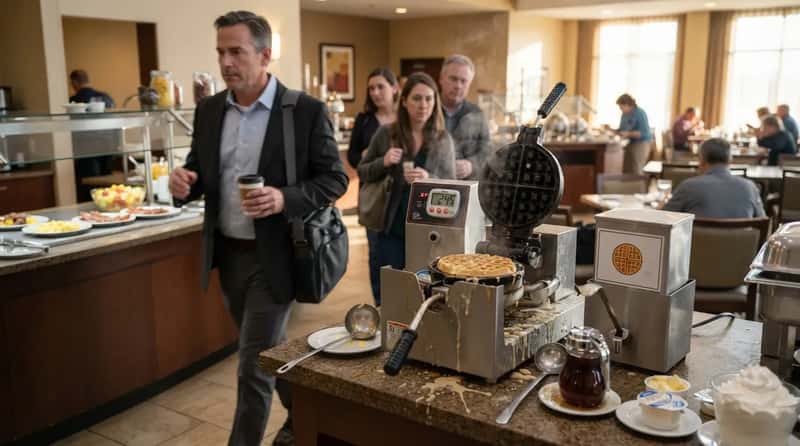
Here’s a take that may start an argument. Plenty of frequent travelers think the build-your-own waffle station is the most overrated thing in the hotel. It looks like fun, but it means a four-minute wait, a sticky counter, and a pool of syrup before a long day. Veterans see a time sink, not a perk.
Quick Compare
- Waffle station: a four-minute wait, a sticky counter, and a sugar-heavy start.
- Eggs-and-fruit plate: a quick scoop-and-go, with protein that carries into late morning.
- The real difference: one costs you time and the other buys you some.
They’d rather spend those four minutes eating something that lasts until lunch. The hopeful waffle-watchers lined up behind them never notice the discipline it takes to walk past. What goes on the road warrior’s plate instead is the real giveaway, and it’s #14.
14. The Boring Plate That Is Boring on Purpose
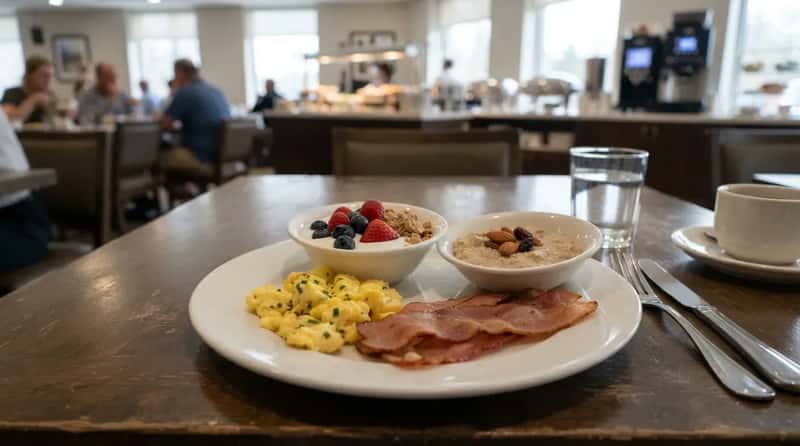
Look at a road warrior’s plate and you’ll often see eggs, plain yogurt, fruit, and maybe oatmeal. It’s not exciting, and that’s the point. A protein-heavy start tends to keep hunger steadier than a pastry and juice combo. That matters when your first meeting runs long and lunch gets pushed back.
Many travelers learned this the hard way, with a sugar crash halfway through a 10 a.m. presentation. One bad morning is usually enough to change the habit for good. Next up is a drink most people pour without thinking, and it’s #13.
13. The Juice Machine Veterans Quietly Ignore
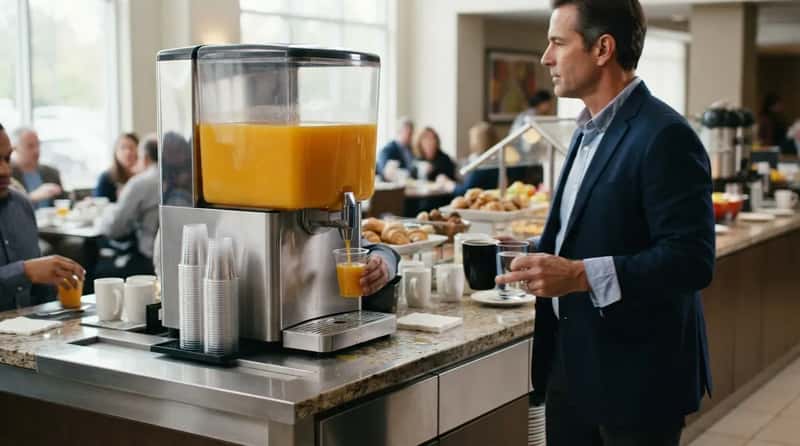
The orange juice dispenser looks healthy, but it’s closer to dessert. A standard 8-ounce glass of orange juice has roughly 20 grams of sugar, based on typical USDA nutrition figures. That’s a quick spike that can fade right around the first conference call.
Fast Facts
- 8 oz orange juice: roughly 110 calories and about 20 grams of sugar.
- 8 oz black coffee: about 2 calories and no sugar.
- 8 oz water: zero calories, zero sugar, and no crash.
- One medium orange: far less sugar than the glass, and it comes with fiber.
So seasoned travelers pour water or coffee and move on. It’s not a rule they preach, and the people at the next table never hear a word about it. Meanwhile, one of the costliest decisions of the morning happens before they even reach the buffet, and that’s #12.
12. Knowing Exactly What Their Loyalty Status Covers
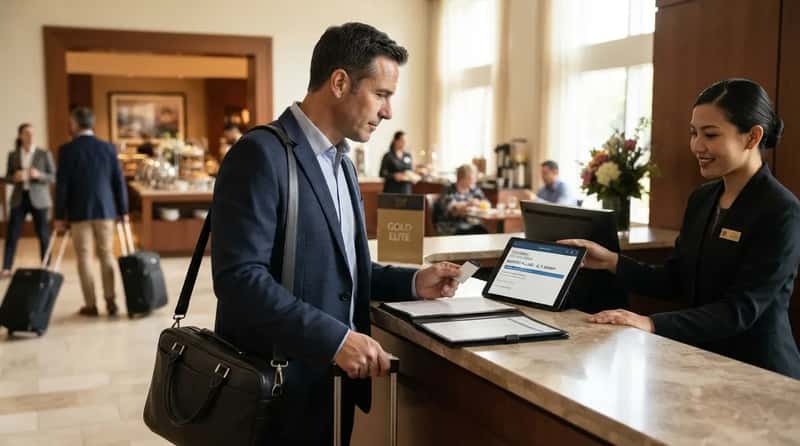
Before they sit down, frequent travelers already know whether breakfast is included. Some hotel loyalty programs offer breakfast or a food credit to higher-tier members, but the rules vary by brand, country, and property. Experienced guests check the fine print instead of assuming, and that saves them from a surprise charge on the room bill.
It’s an easy mistake, and over a year of trips it adds up to real money. Veterans treat the fine print like part of the itinerary. Their next habit is far more visible, and it’s sitting in their bag at #11.
11. The Travel Mug That Never Leaves Their Bag
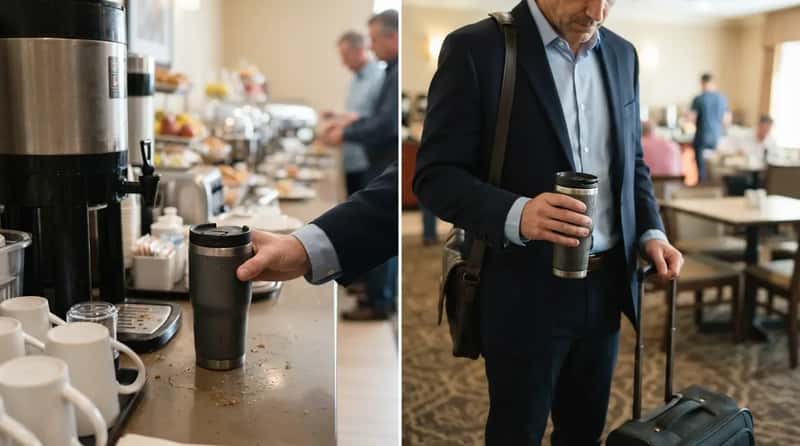
Many road warriors carry a lidded cup or a small insulated tumbler. Hotel breakfast rooms often stock thin paper cups that cool off fast and leak on the walk to the elevator. A sturdy mug means the coffee survives the trip to the rideshare or the meeting room, and it means no more hovering at the coffee station.
It’s a clear sign of someone who has been burned before, probably with a lukewarm refill and a stained cuff. Some hotels may not love guests carrying drinks out, so experienced travelers refill quietly and keep moving. Just as practical is what they do with their phone before the eggs cool, which is #10.
10. Booking the Ride Before the Omelet Arrives
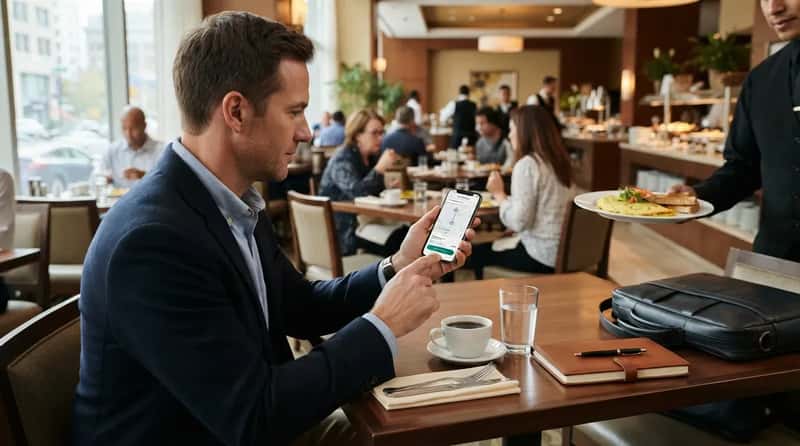
Seasoned travelers often schedule their morning ride while still at the table. Rideshare prices can jump when everyone leaves the same hotels for the same office district at once. Booking a few minutes early, or choosing a slightly earlier slot, can sidestep the worst of it.
Plenty of newcomers wait until they’re standing in the lobby, staring at an app that suddenly shows a longer wait and a higher price. Veterans have seen that screen before and refuse to see it twice. What they do with a ringing phone in that room is the next giveaway at #9.
9. Taking the Call in the Lobby, Never at the Table
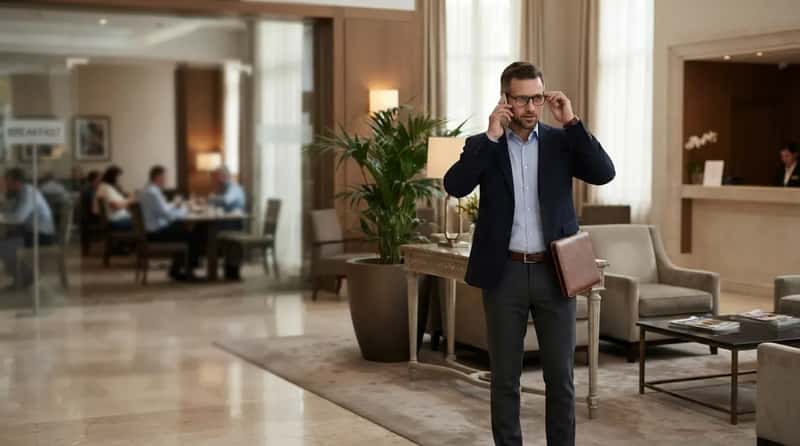
Everyone has overheard a stranger on speakerphone discussing quarterly numbers over a bowl of cereal. Seasoned travelers almost never do this. They step into the lobby or a quiet hallway, or they let the call go to voicemail and return it after they finish eating.
Worth Knowing
- Breakfast rooms are usually hard-floored and echoey, so a normal speaking voice carries farther than you’d think.
- A quick text such as “Call you in 20” buys calm without sounding dismissive.
- Client names, deal terms, and pricing are the details most worth keeping out of earshot.
- Headphones don’t fix it. The people nearby still hear your half of the conversation.
There’s a practical side, too. Sensitive work details are easy to leak in a crowded room, and the people at the next table may work for a competitor. Veterans keep those details out of earshot. Next comes a quirky habit tied to jet lag, and it’s #8.
8. Water First, Coffee Second

Airplane cabins are famously dry, and travelers often step off a flight feeling a bit parched. Experienced guests tend to pour a glass of water first and have coffee second. Nobody in the room will notice, but your own head might at 11 a.m.
The coffee still comes, and often more than one cup. The water just goes first, as a quiet reset. But the next habit involves another person entirely, and it’s #7.
7. Learning the Name of the Person Refilling the Coffee
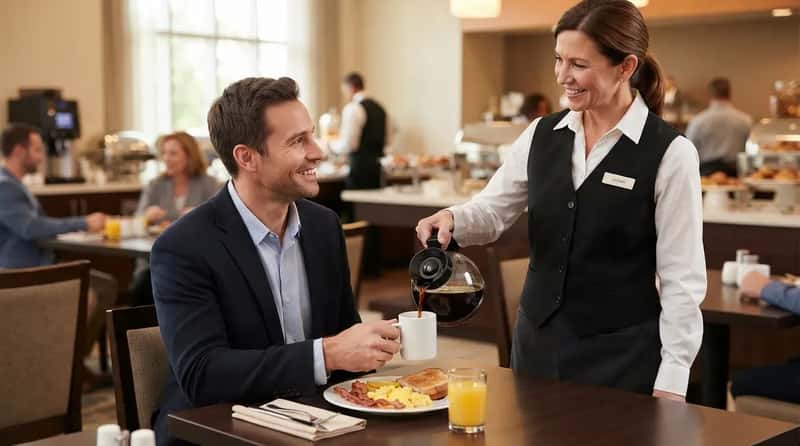
Seasoned travelers treat breakfast staff like people, not scenery. They say good morning, glance at the name tag, and use it. That isn’t just politeness. Staff are often the best source for the quietest hour in the breakfast room or whether the kitchen can make something that isn’t on the buffet.
It turns a generic stay into a better one, and it costs nothing. Staff also tend to remember the guests who were kind on a rushed morning. Of course, kindness sometimes comes with cash, and that’s the next habit at #6.
6. The Small Tip Nobody Brags About
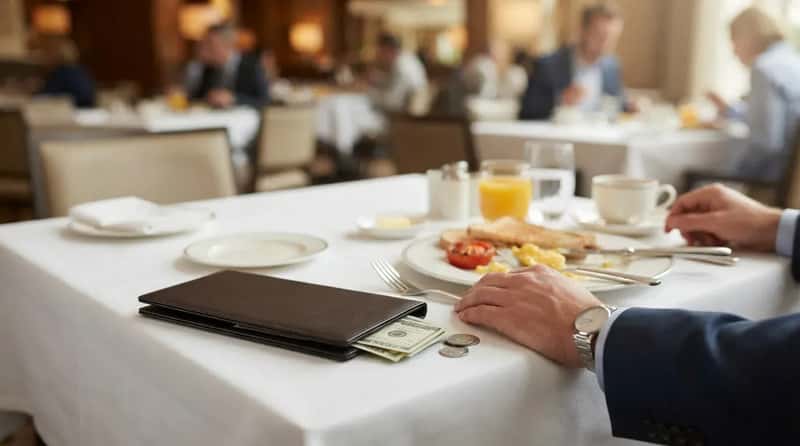
If a hotel has table service or a made-to-order egg station, many frequent travelers leave a small tip. Tipping customs vary by country and by hotel, so they check before assuming. A dollar or two in the right place is often appreciated.
Some hotels fold service into the price, and travelers who know this don’t double-pay. It’s a small gesture, but it separates people who travel often from people who simply travel. The next move turns breakfast into a business tool, which is #5.
5. Turning the Buffet Into a 7:30 Meeting Room
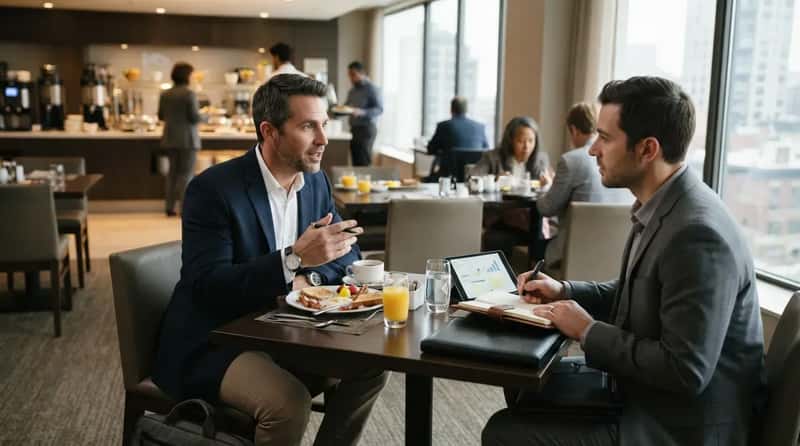
Veteran travelers know the hotel breakfast room can double as a free meeting space. Instead of booking a restaurant, they invite a colleague or client for a quick coffee downstairs. It’s relaxed and easy to schedule, and it avoids the awkward wait for a table across town.
Plenty of deals and hiring decisions get shaped over eggs and bad toast. The setting lowers the pressure, and the early hour keeps the conversation short. Still, the quietest habit of all happens on the way out, and it’s #4.
4. The Banana in the Jacket Pocket
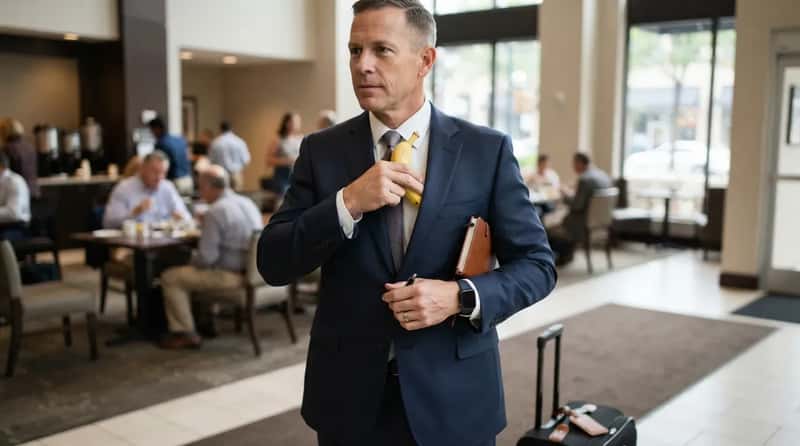
Many seasoned travelers grab a piece of fruit on their way out the door. A banana or apple costs the hotel almost nothing, and it can save a $6 airport snack later. Policies on taking food vary, and some hotels frown on loading up a bag. Experienced travelers stick to one easy piece and skip the rest.
It’s practical, not greedy. A long meeting or a delayed flight can turn that small snack into a lifesaver. But the next habit is the one expense managers notice, and it’s #3.
3. Saving the Receipt Even When Breakfast Is Free
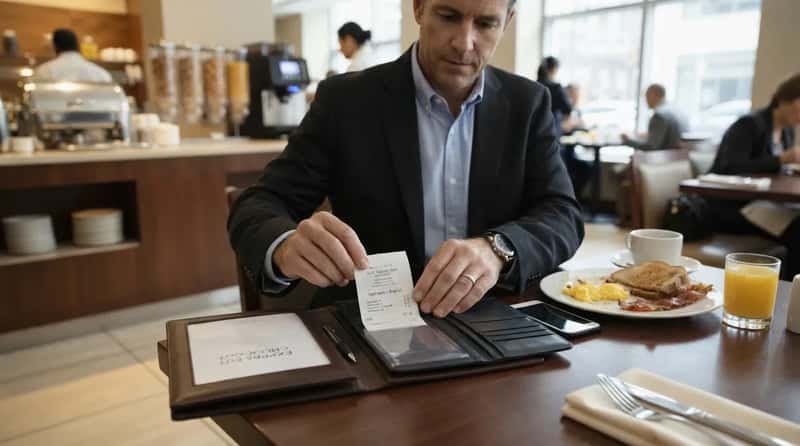
Experienced travelers treat paperwork as part of the trip. They look at the folio the night before, confirm what’s charged to the room, and keep proof of any meal their company reimburses. GBTA’s CEO has described companies as more selective and productivity-focused, which means expense reports tend to get a closer look. A missing receipt can mean a missing refund.
At a Glance
- IRS baseline: documentary evidence is generally expected for expenses of $75 or more, and for lodging of any amount.
- Company rules: many employers set a stricter limit, so check your own policy.
- The folio check: review it the night before checkout, while errors are still easy to fix.
- The photo habit: snap the receipt on the spot, before it vanishes into a jacket pocket.
It sounds dull, but it keeps real money from disappearing. Veterans also know that a quick photo of the receipt on the spot beats digging through a bag two weeks later. The habit near the top of this list has nothing to do with money, so on to #2.
2. Asking the One Question Guests Never Think to Ask
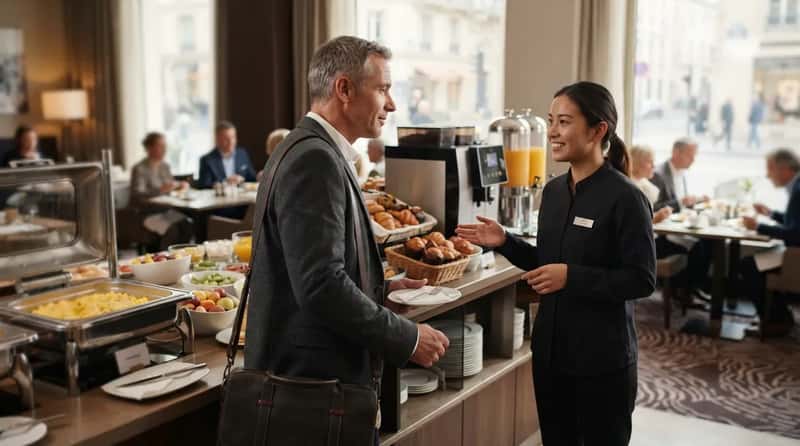
Seasoned travelers often ask the person behind the counter a simple question: “What’s actually good today?” Or they ask which local spot has the best coffee within walking distance. Hotel staff see the same neighborhood every morning, so they tend to know things a review site misses.
A thirty-second chat can improve the whole trip. Guests who talk to staff sometimes get small favors, such as a quiet table or a heads-up about a late checkout. Now for the habit that may matter most of all, and it’s #1.
1. Protecting the Twenty Quiet Minutes

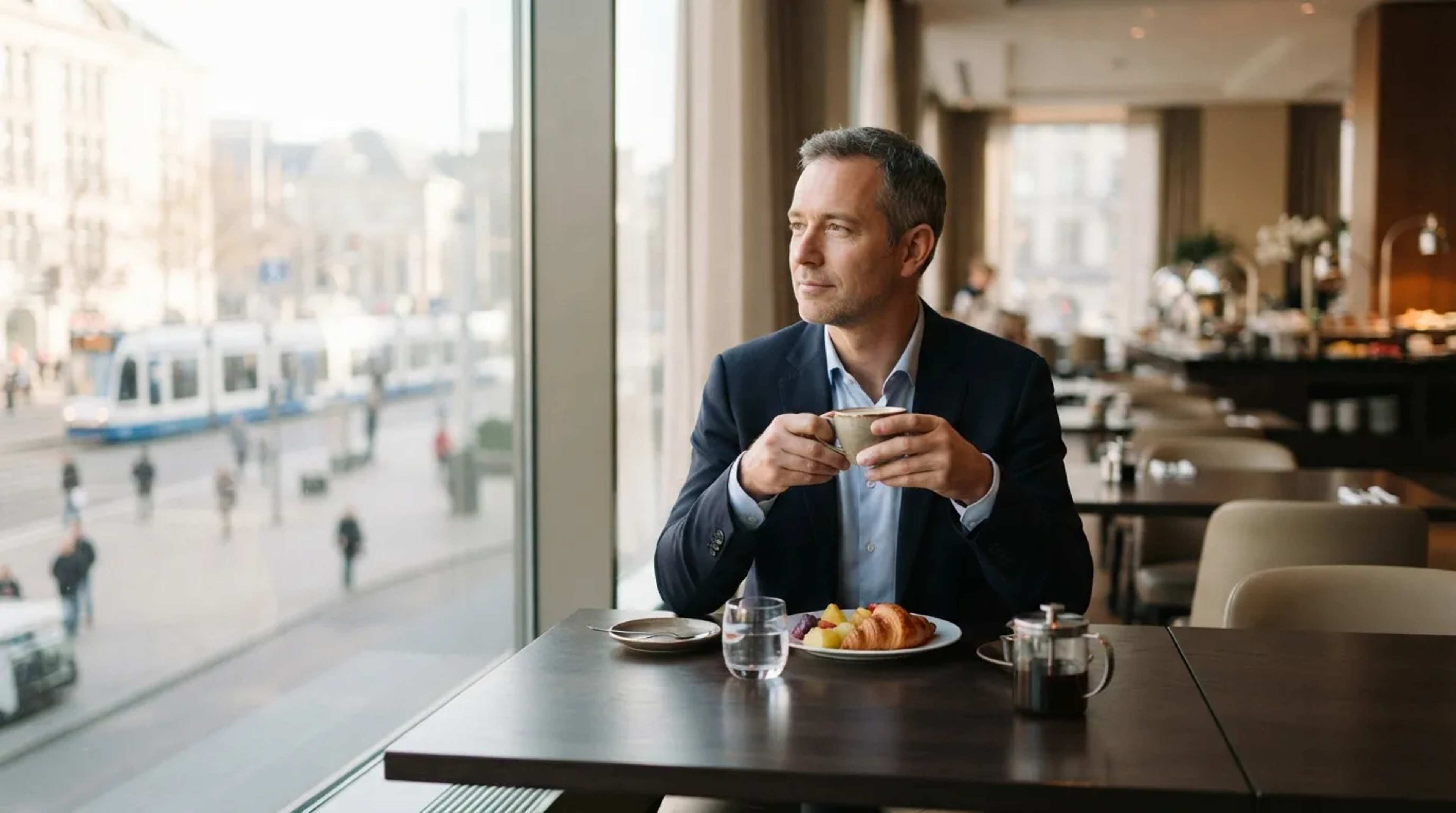
This is the one that gives it all away. The most seasoned travelers treat breakfast as the only calm stretch of the day. They don’t open email. They look out the window, drink their coffee, and let the trip start slowly. It’s the one habit that costs nothing and changes how the entire day feels.
Newcomers rush it, scroll through their phone, and arrive at the first meeting already tired. Veterans learned that the day goes better when it begins on their terms. Twenty minutes is all it takes, and almost nobody gives themselves the time.
None of these habits is flashy. Arriving early, picking the outlet seat, skipping the waffle line, and keeping the receipt are small moves that add up over hundreds of mornings. The real giveaway isn’t a fancy suitcase or a status badge. It’s how calm someone looks when everyone else is scrambling.
Which of these have you spotted at your own hotel breakfast, and which one did we miss?