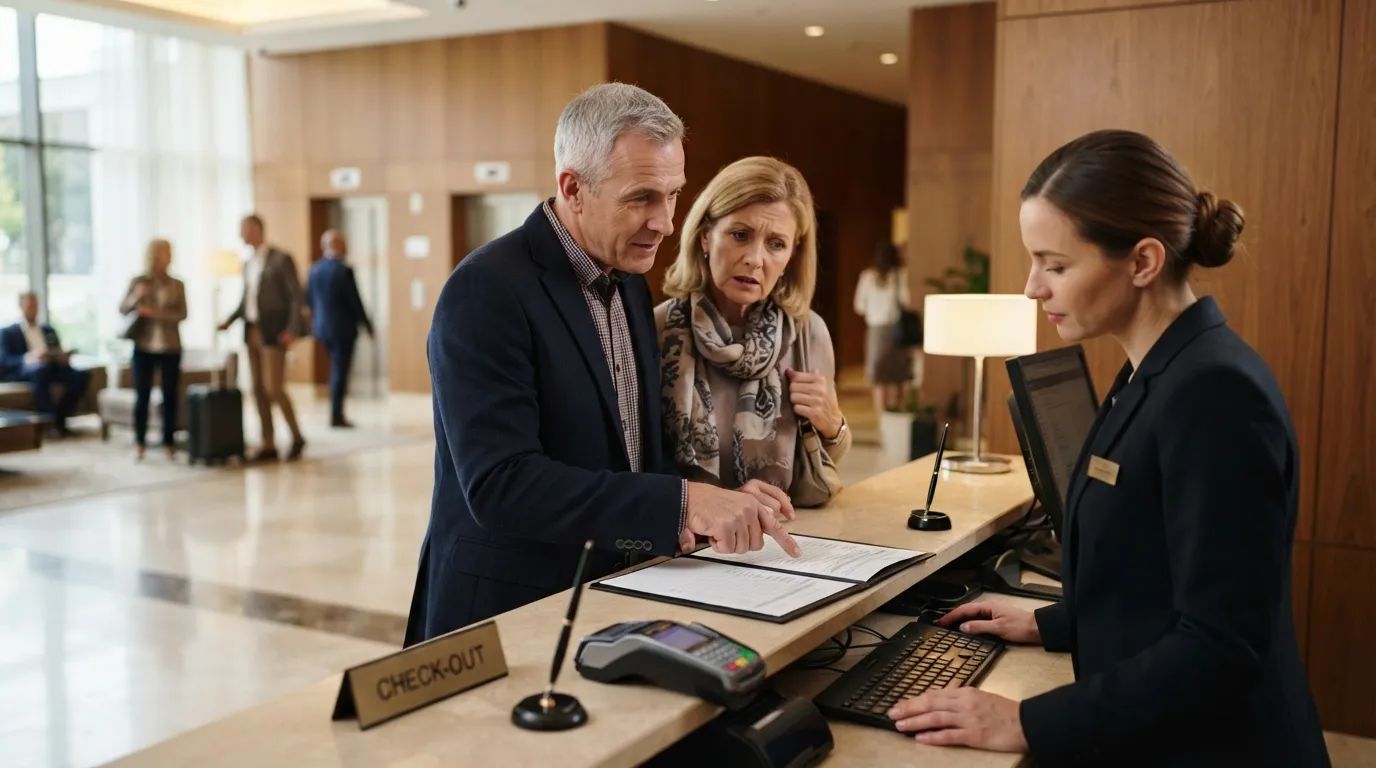
A hotel can have an elevator and still put your room at the far end of a long corridor. It can promise “comfort” and hand you a pillow that wrecks your neck by morning. Both problems usually have fixes that cost nothing, and neither fix appears on a booking page.
These 17 requests aren’t limited by age, but they pay off most for guests past 70, and each depends on what’s open when you ask. They run from a ten-second favor at check-in to a federal rule that changes what a hotel owes you. Stay for the last one, because it’s the only item here that works as a right rather than a favor.
#17 – The Exact Pillow Your Neck Needs

Asking for “an extra pillow” is the weak version of this request. Pillow menus are becoming common, with choices running from ultra-soft to extra-firm and hypoallergenic. One Four Seasons resort’s upon-request list includes down alternative, foam, memory foam, orthopedic and neck pillows. Name the type you want: firm, soft, memory foam or hypoallergenic.
A hotel may first point you to the spare pillow in your closet, which can be the same kind already on the bed. Ask whether the hotel can supply the exact type you need, because any additional pillow may not do. Many hotels will also add a blanket or comforter when supplies allow. An extra pillow isn’t the same thing as a rollaway bed, so don’t assume a fee is coming.
Your head is sorted, but the air and noise around it may not be, and some hotels keep the fixes for both behind the front desk.
#16 – The Humidifier and White Noise Machine Behind the Desk
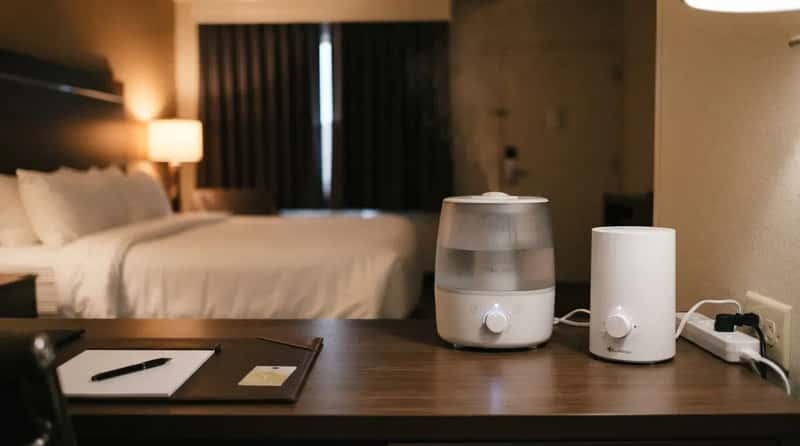
Some hotels stock more sleep gear than any room page admits. White noise machines and humidifiers are frequently available, along with extra blankets, air purifiers, and blackout curtains or sleep masks. The desk can’t offer what it doesn’t know you want, so the request has to come from you.1
Describe the problem instead of guessing at the gadget. Say the heating leaves the room dry, or that the hallway is loud at night, and let the staff send up what they have. A humidifier helps with dry heated air, and a white noise machine covers the sound of doors and voices. Ask for the machine by name: humidifier, white noise, purifier or blackout curtains.
The 3 a.m. walk to the bathroom is a different problem, and the fix is a small plug-in light the staff can send up.
#15 – A Nightlight for the Walk to the Bathroom
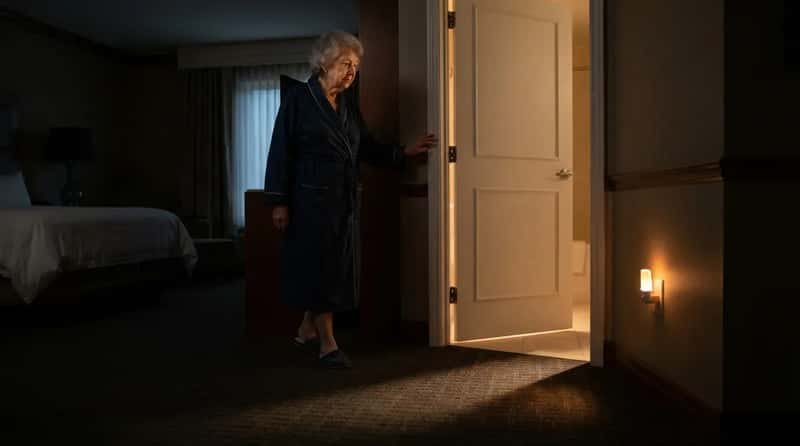
An unfamiliar room puts the bathroom in a different spot than at home, and you walk to it in the dark. Hotel staff will usually provide a nightlight if you ask. Say it’s for the path to the bathroom, and housekeeping can bring one when you check in.
If the hotel has none, leave the bathroom light on with the door open just a few inches. That gives a dim strip of light across the floor without lighting up the whole room. Ask for a nightlight at check-in, before the first night.
#14 – Bathroom Helpers Housekeeping Keeps Off the Menu
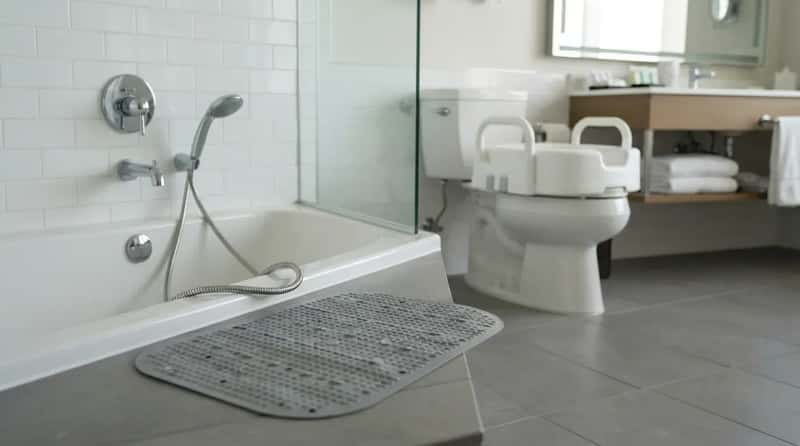
A wet tile floor is where a hotel stay can go wrong fastest. Standard housekeeping supply lists include items given on request, such as a handheld shower attachment, a raised toilet seat and hearing equipment. The same Four Seasons upon-request list includes an anti-slip mat.
Whether a particular property stocks these items varies, so ask at booking rather than after you’ve unpacked. A mat or a handheld shower head can be delivered in minutes, but a tub can’t be swapped for a roll-in shower on the spot. Ask for a non-slip mat, a handheld shower head or a raised toilet seat.
At a Glance
- Non-slip mat: usually a quick delivery to the room.
- Handheld shower head: also fast, when the property stocks one.
- Raised toilet seat: stock varies, so ask at booking.
- Tub swapped for a roll-in shower: not a same-night fix.
Where your room sits matters even more than the bathroom gear, and the worst spots are defined by what’s next door.
#13 – A Room Far From the Ice Machine
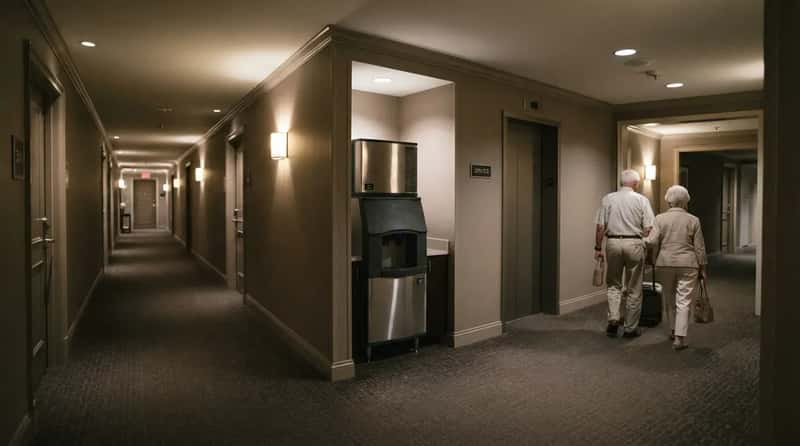
The ice machine is the loudest neighbor in many hotels. Fodor’s notes that ice machines can be notorious for their noise,2 and a room beside the service elevator, the pool bar or a late-closing restaurant carries the same risk. A hotel with a perfect lobby can still give you a bad night.
At check-in, ask where the ice machine and service elevator are, then ask for a room away from them. A corner room is a more niche request, and it can help because it has neighbors on fewer sides.2 Ask for a corner room, or one away from the ice machine.
Timing is the other free variable, and one half of it costs nothing while the other half may carry a fee.
#12 – Early Check-In Is Often Free, Late Checkout Isn’t
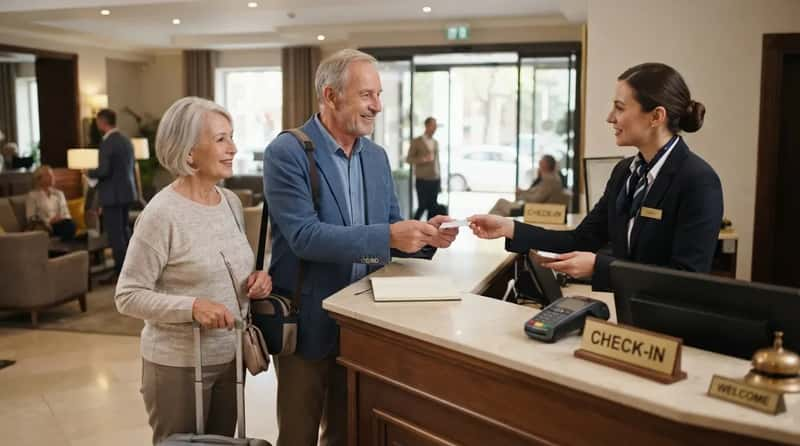
Arriving off a long drive or an early flight is easier with a room that’s ready. Early check-in requests are often granted free of charge. Late checkout may cost a fee, though it’s worth asking when you need an extra hour or two. The first is a favor, and the second can show up on your bill.
Ask for early check-in when you book and again the day before. For late checkout, find out the price before you agree to anything. Some loyalty and membership programs include late checkout as a perk, so check yours before you pay. Ask for early check-in; late checkout may cost extra.
Your choice of floor comes with a number worth knowing, and it has to do with how high a fire ladder can reach.
#11 – A Lower Floor, and the Tenth-Floor Mark
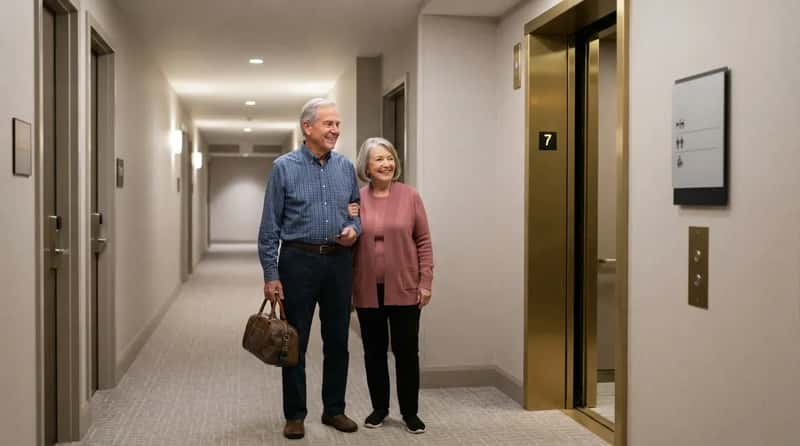
A high floor sounds like an upgrade, but it can mean a longer wait for the elevator. Fodor’s points out that the lowest floor possible avoids idle waiting around for the elevator. For safety, it suggests a room below the 10th floor, which is around the limit for fire service ladders.2
That makes a high floor a poor trade if you rely on elevators or worry about getting out in an emergency. The view rarely pays for it. Request a room below the 10th floor. Hotels usually grant a floor request at no extra charge, but only when rooms remain open at check-in.
Fast Facts
- The magic number is 10: the floor around which fire service ladders top out.
- A lower floor means a shorter wait for the elevator.
- Floor requests are usually free, but only if rooms are open.
- Pair it with a spot near the elevator for the least walking.
A low floor is half the plan, and the other half is how far the room sits from the elevator.
#10 – Four Elevator Questions Worth Asking at Booking
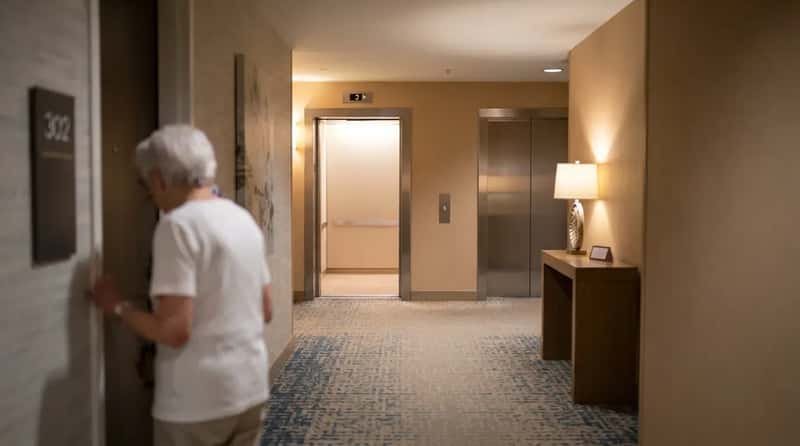
A hotel can technically have an elevator and still require a surprisingly long walk to reach it. A lobby photo won’t show you that. These four questions will:
- How many elevators are there?
- Is there an elevator from the parking garage?
- How far is the elevator from the lobby?
- Can you request a room close to the elevator?
Use specific phrases such as “close to the elevator” or “short walk from the lobby.” Ask roughly how far the room is from the elevator before you accept it. That’s a different request from the lower floor in #11, so you can stack them and ask for a second-floor room by the elevator.
The ground floor looks like the obvious answer to all of this, but an elder-law firm points to a security catch.
#9 – Why the Ground Floor Isn’t Always the Safe Pick
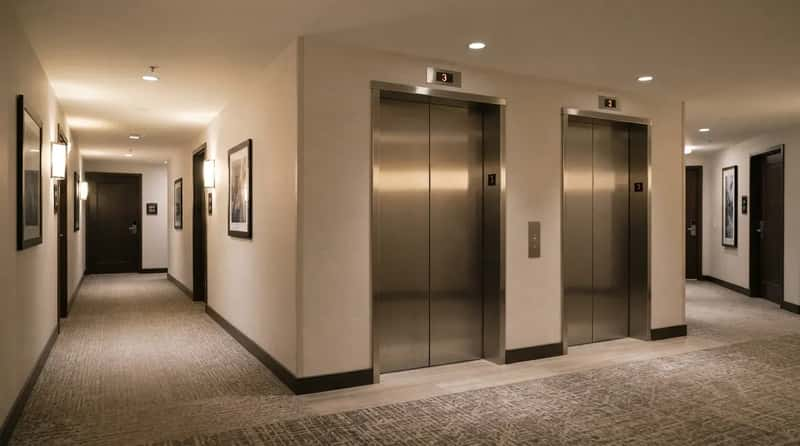
Ground-floor rooms are not the automatic choice for older guests. One elder-law firm warns that ground-floor rooms may be more vulnerable to window break-ins.3 Rooms near parking lots, pools or entrances can also be noisier.
The firm’s compromise is a second or third-floor room close to the elevator, in a hotel with good security.3 For a guest who can ride an elevator, that beats the ground floor on both safety and quiet. A second or third floor near the elevator balances access and security. If stairs are a real barrier, though, a first-floor room can help.
Whatever you choose only counts if it’s still on the reservation when you arrive, and a vague request is easy to lose.
#8 – A Room Note With One Priority and One Fallback
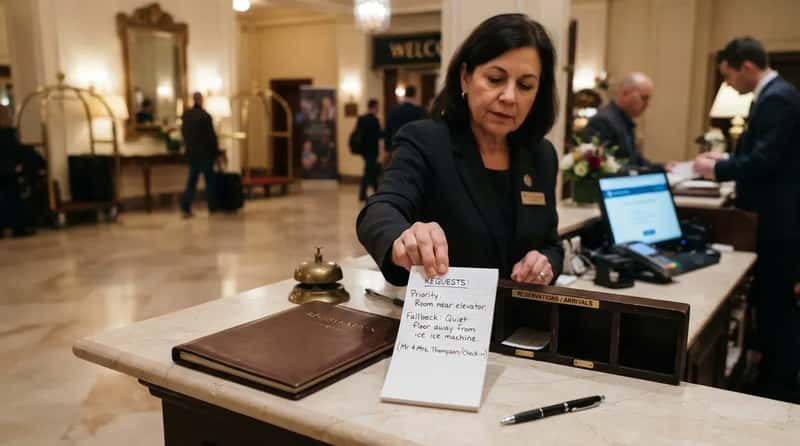
A note that says “nice quiet room” gives the desk nothing to act on. A better one says “low floor, close to the elevator, away from the pool.” Staff change at shift change, and a specific note is easier to pass along.
Lead with one priority and name one fallback. For example: “My priority is a room near the elevator. If that’s taken, a quiet floor away from the ice machine is my second choice.” Ask when you book and again at check-in, so the request is on file and fresh. Put one priority and one fallback in the note.
#7 – The Medication Fridge Set Up Before You Arrive
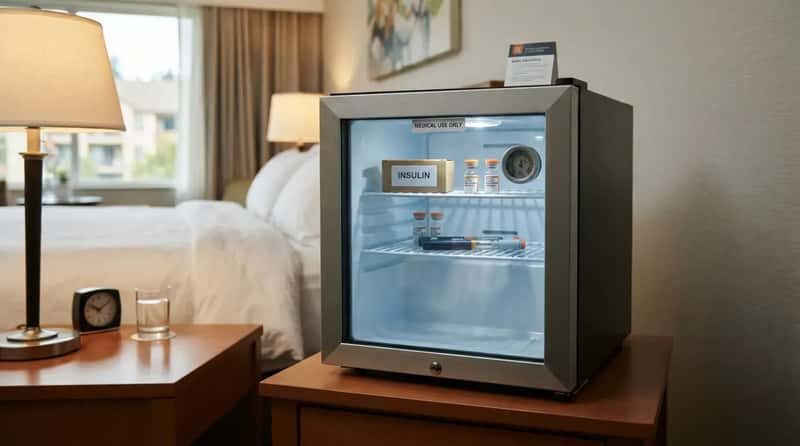
Mini fridges aren’t standard everywhere. Some hotels place a refrigerator in every room, while others offer them only on request or in certain room categories. If you carry insulin or another cold-stored medication, you want one that’s already cold when you walk in.
Call two or three days ahead and say you travel with medication that needs refrigeration. Some hotels charge a daily fee for a fridge, but many will waive it or bring one up once you explain what it’s for. Policies differ, so ask about the fee in the same call. Also confirm that the equipment suits your specific storage requirements. Call two or three days ahead and ask that the fee be waived.
Cold storage solves one half of the medication problem, and the other half is who can see the bottles while you’re out.
#6 – Where Your Pills Should Sit While You’re Out
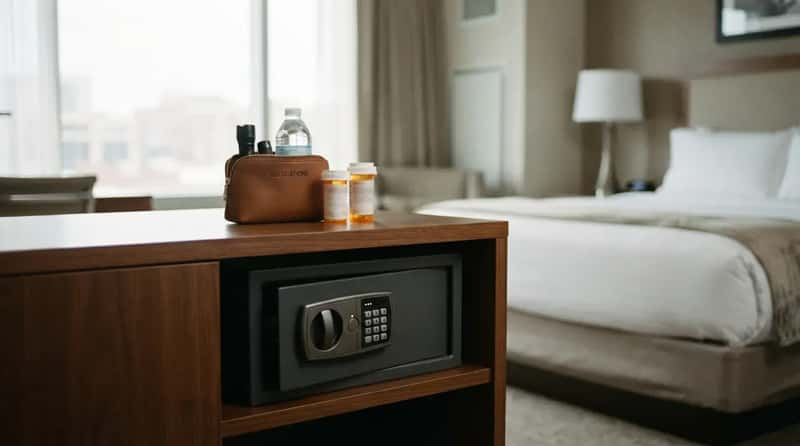
One elder-law firm advises against leaving medications in the open in a hotel room, because prescriptions have monetary and street value.3 Housekeeping comes in every day, and a room is a shared space during your stay. A pill organizer on the counter is easy for anyone to see.
Ask at check-in whether your room has a safe. If it doesn’t, ask whether the front desk can hold small items. Don’t leave prescription bottles on the counter while housekeeping is in.
Worth Knowing
- Keep bottles in their original labeled containers.
- Carry only what you need for the day.
- Pack a small kit with prescriptions, a flashlight and water where you can reach it.
- A room safe is the first choice, and the front desk is the backup.
Staying safe costs nothing, but staying cheaply depends on a number that changes with every chain.
#5 – Senior Rates That Start Between 55 and 62

There’s no universal age for a senior hotel rate, and the ages range widely by chain. Here are some examples:
Senior-rate ages run from 55 to 62, depending on the chain. A senior rate isn’t automatically the cheapest price on the page. Omni’s rate for guests 55 and older may be prepaid and non-refundable, so a flexible rate can be the better deal. Compare before you book.
AARP is the second route to a lower rate, and the age bar there is lower.
#4 – The AARP Rate Sitting Beside the Senior Rate
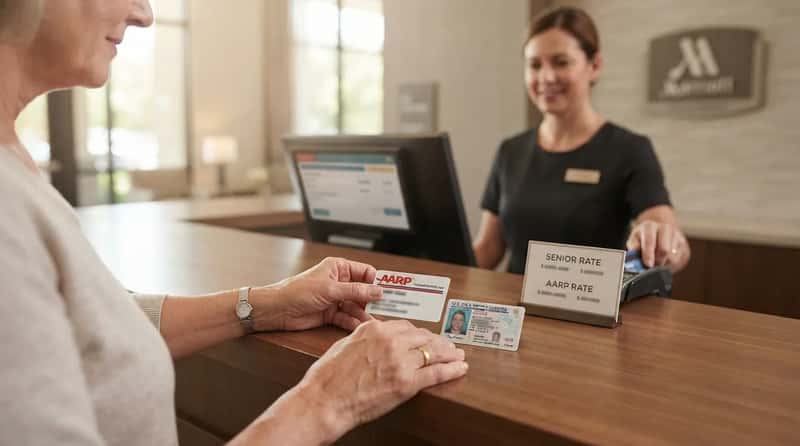
Several chains sell an AARP rate as a separate product alongside the senior rate, so it’s worth pricing both. At Choice, the senior rate and the AARP Member Offer use different codes. A guest who’s 61 might not qualify for one but could still book the other.
Mention AARP when you book even if you haven’t reached a chain’s senior age. You may still get the discount, and sometimes it beats the senior rate.4 5 AARP hotel discounts typically run 5 to 10 percent off the standard room rate. Membership has its own fee, so weigh it against how often you travel. Price the senior rate and the AARP rate side by side.
A lower rate helps the bill, but it does nothing for a guest who can’t hear the fire alarm, which brings up equipment most front desks hold.
#3 – A Hearing Kit With Flashing Alarm and Door Alert
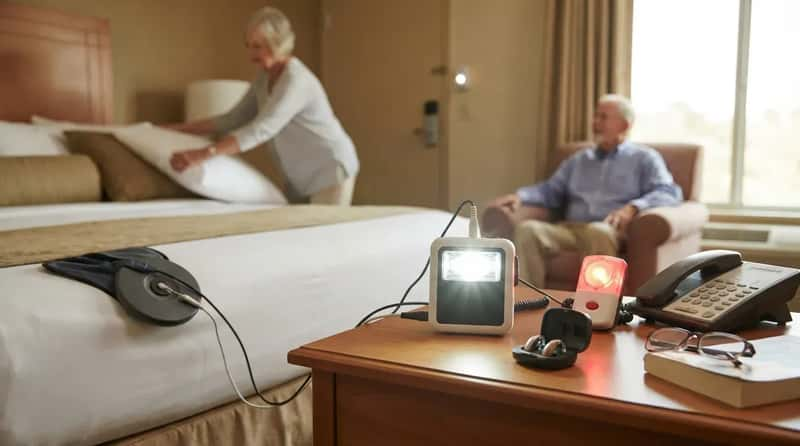
A smoke alarm you can’t hear is a safety problem, and hotels have equipment for it. A hearing accessible room prioritizes visual alarms, door knock indicators and text-capable phones. If your hearing has dulled enough that you might sleep through an alarm or a knock, ask at booking whether the room is set up this way.
If the room you’ve been given isn’t equipped, ask for help. Hotels may be able to move you or provide a portable solution, such as a hearing kit. If you also have mobility needs, confirm whether your category is a mobility room, a hearing room or a combined one. Ask for a hearing accessible room, or a portable hearing kit.
#2 – Which Kind of Accessible Bathroom You’re Getting
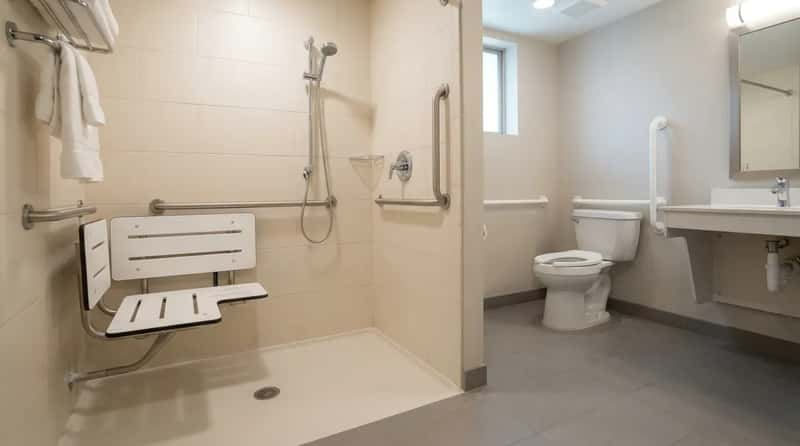
“Accessible” doesn’t mean one bathroom. Hotels set them up in a few distinct ways, and the difference decides whether the room works for you.
Quick Compare
- Tub with grab bars and a seat: may suit you if you can step over the edge.
- Roll-in shower with a seat: built for walker or wheelchair users.
- Communication equipment: aimed at guests with hearing and sight loss.
Don’t accept a vague label. “Accessible room available” isn’t enough, since hotels must specify which features are actually present. Ask for photos to verify the roll-in shower or tub configuration. Ask which kind of bathroom it is, and request photos. The hearing equipment from #3 can come in the same room, so ask about both together.
Which bathroom you get depends on a reservation rule that works in your favor only if you ask.
#1 – The Accessible Room Held Back in Your Name
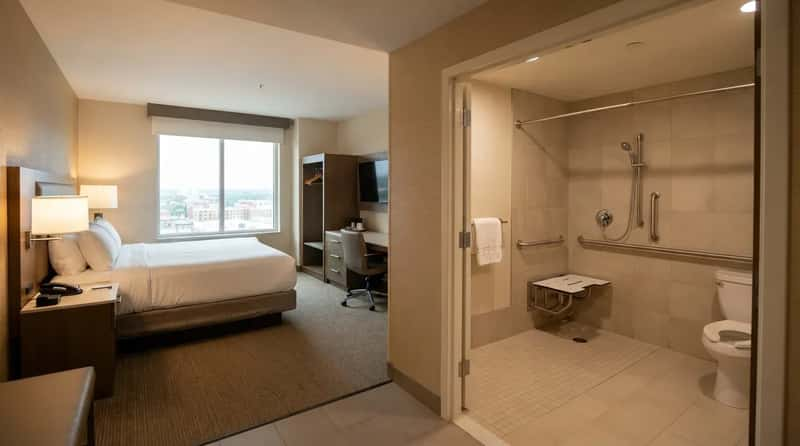
Every other request on this list depends on luck and availability. This one doesn’t. Under ADA rules, hotels must hold accessible rooms for guests with disabilities until all standard rooms of that type are sold. Once an accessible room is reserved, it has to come out of inventory, so the hotel can’t hand it to someone else.6 7
The same rules mean you can book in the usual way. Guests with disabilities must be able to reserve accessible rooms during the same hours and in the same manner as everyone else.7 After you book, call the hotel to confirm a room with a roll-in shower or tub. Ask the clerk to note the features in your reservation, and keep the confirmation. Accessible rooms must be held back until every standard room of that type is sold.
This protection applies to guests with disabilities, such as limited mobility or hearing, so it won’t fit every traveler. If it fits you, it beats any favor on this list, because the room is held for you instead of left to chance. If a hotel can’t honor the booking, ask to speak with a manager before you travel.
A hotel’s brochure lists what it sells. Pillows, floors, fridges and bathroom seats sit in a different category, and the desk can arrange them if the request is specific and early.
Before your next trip, pick two items from this list and put them in the special requests field. Then call a few days ahead to confirm they’re in the notes.
What’s the one thing you’ve asked a hotel desk for that they granted without a fuss?
- NBC Sleep Better Hotel: https://www.nbcnews.com/news/amp/wbna44247439
- Fodor’s Hotel Special Requests: https://www.fodors.com/news/photos/most-important-special-requests-to-make-when-booking-a-hotel
- Kraft Elder Law Hotel Safety: https://kraftelderlaw.com/safety-steps-seniors-should-take-when-staying-in-hotels/
- Clark Hotel Senior Discounts: https://clark.com/travel/hotels-senior-discounts/
- ConsumerAffairs Senior Hotel Discounts: https://www.consumeraffairs.com/news/you-may-qualify-for-a-senior-hotel-discount-at-55-here-are-the-hotels-to-ask-091526.html
- ADA Hotel Reservation Rules: https://wheelchairtravel.org/hotels-ada-room-reservations/
- ADA Standards Hotels Guide: https://adalegallink.com/standards-guide/guide/hotels-lodging