


Most of us have swallowed a request at an airport because we assumed the answer would be no. TSA’s liquid limit is 3.4 ounces per container, yet formula, breast milk, baby food pouches and liquid medicine are all allowed through in larger amounts.
That gap between the rule and the habit shows up at the gate and in the cabin too, where free help and free equipment go unclaimed until someone asks. Some requests go to the flight crew and some to TSA or the gate agent, and the wrong counter is where a yes turns into a shrug. The biggest one costs nothing and has to be asked before you reach the aircraft door, while the smallest needs only an empty water bottle.
#17 – An Empty Water Bottle Past the Checkpoint
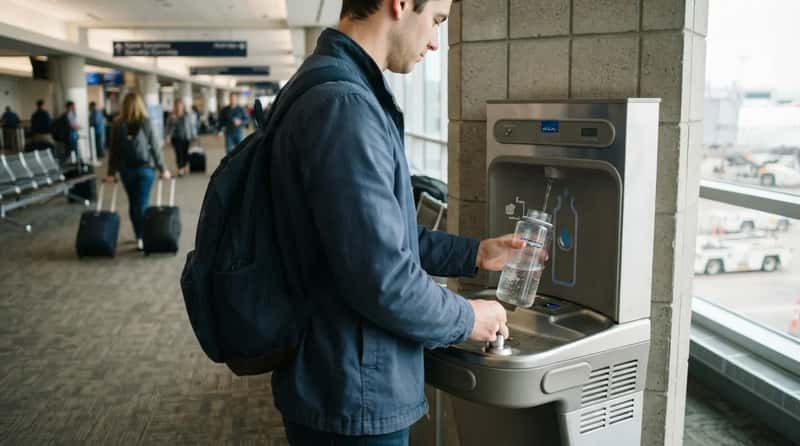
The 3.4-ounce limit applies to the container, so even a half-empty 6-ounce bottle will not pass as a normal carry-on liquid. An empty bottle has no such problem.
Carry it through empty and fill it at a fountain on the far side of security instead of paying airport prices at the gate.
Once you are airborne, asking a flight attendant for a cup of water, or a second one, needs no explanation. That matters if you take pills on a schedule, since the beverage cart can be slow to reach your row.
A bottle is easy to carry, but the bag that holds it becomes a problem once the overhead bins fill.
#16 – Gate-Checking a Bag When the Bins Fill
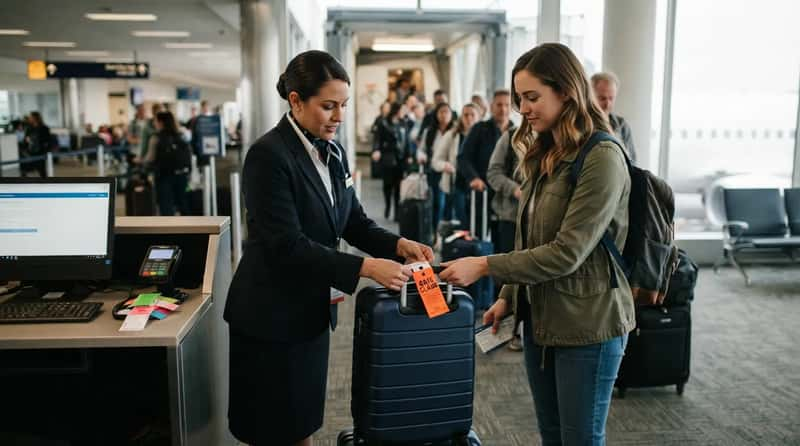
When overhead space runs out, the airline checks carry-on bags at the gate or the aircraft door, and you can volunteer before it comes to that. If lifting a suitcase over your head is hard on your shoulder or back, asking at the gate beats struggling in the aisle with a line forming behind you.
I would take the gate check over the struggle every time. Ask two things before you hand the bag over: whether there is a charge for the way it is being checked, and where it will come back. Both vary by airline and fare.
A bag is sorted at the gate, but changing seats once you are aboard depends on someone else’s say.
#15 – Moving to an Empty Row After Boarding
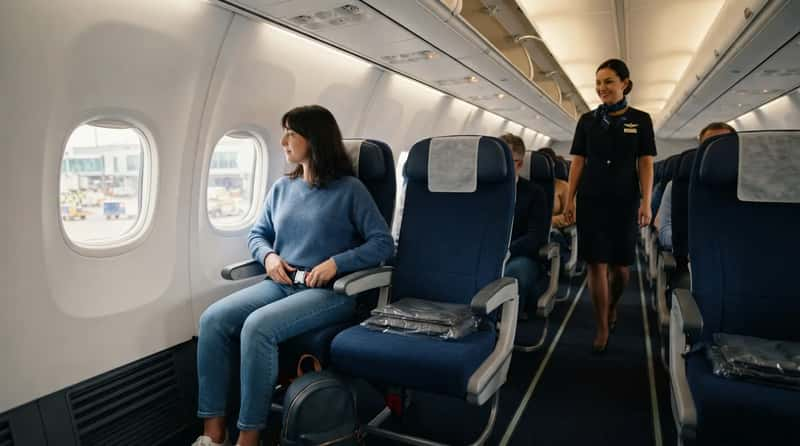
A row that stays empty after the door closes may be yours to take, but ask the cabin crew before you move. On smaller aircraft the crew may need passengers seated where they were assigned.
Exit rows also come with their own requirements, so a seat that looks better is not always one you may take.
The same request works for a bigger problem, such as a seat being kicked behind you. Crews can often find another place when they know about it.
Worth Knowing
- Ask first. Moving first and explaining later is the version that goes wrong.
- Smaller aircraft may need everyone seated as assigned.
- Exit rows have requirements a passenger must meet.
- A kicked seat is a fair reason to ask for a new spot.
Moving first and explaining afterward is the version that goes wrong, and it can cost you the goodwill you need for the next favor.
#14 – Ice Packs With No Milk Inside
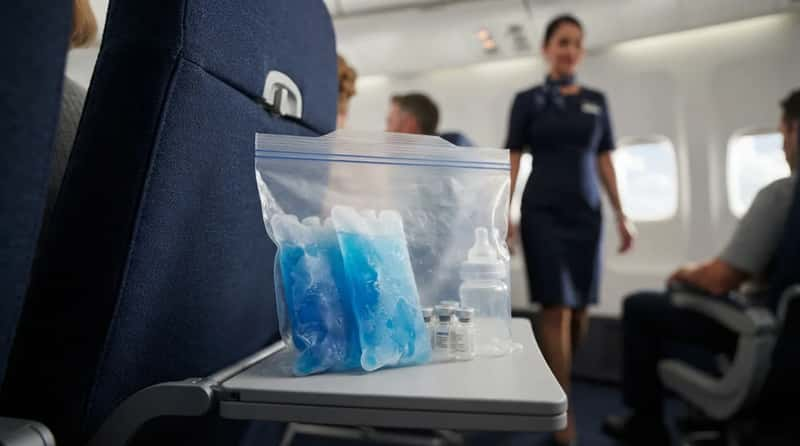
TSA allows cooling accessories such as ice packs, freezer packs and gel packs whether or not breast milk is present.1 You do not have to rush to fill them at the last minute to justify bringing them.
The same allowance covers the gel packs that keep medically necessary liquids cool. If you travel with a refrigerated medicine, that makes the packs part of the plan rather than an extra.
The packs usually travel with the bottles and pouches they protect, and those have their own exemption.
#13 – Formula and Puree Pouches Over the Limit
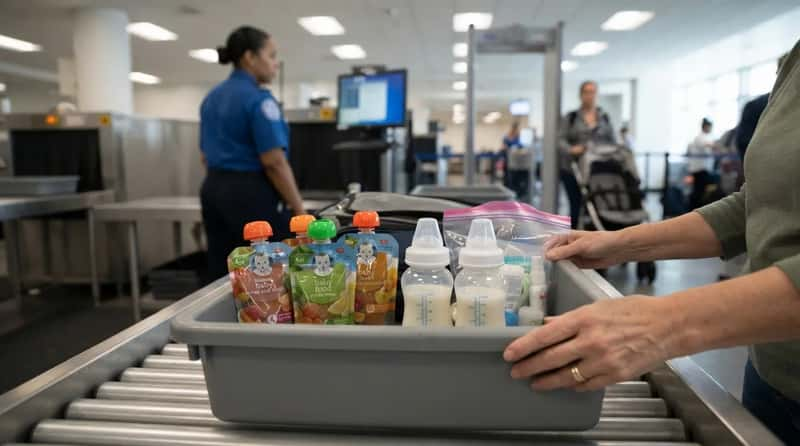
If you are flying with a grandchild, the 3.4-ounce rule does not apply to what the child eats and drinks. TSA allows formula, breast milk, toddler drinks and baby or toddler food, including puree pouches, in amounts over 3.4 ounces.1
None of it has to fit in the quart-size bag.1 Pack what the trip needs plus a cushion for a delay, since a long wait on the tarmac comes with no store nearby.
Breast milk falls under the same exemption, though it goes a step further, because the baby does not have to be on the trip at all.
#12 – Breast Milk on a Trip Without the Baby
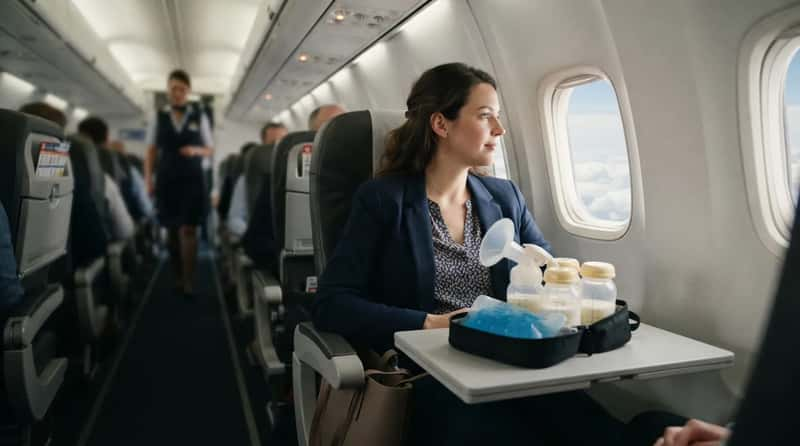
TSA says a child or infant does not need to be traveling with you for you to bring breast milk and cooling accessories.1 A parent flying home from a work trip can carry milk through the checkpoint like anyone else.
The rule does not depend on who is in the seat beside you.
The exemption also applies to breast milk pumping equipment, whether or not milk is present. So the pump and its parts do not have to be explained away at the checkpoint.
Quick Compare
- Formula, breast milk, toddler drinks, baby food: allowed over 3.4 ounces, outside the quart bag.
- Ice, freezer and gel packs: allowed with or without milk inside.
- Liquid medicine and creams: allowed in reasonable quantities, and best declared at the checkpoint.
- Empty water bottle: no limit at all, as long as it is empty.
Liquid medicine falls under a similar exemption, with a bit more caution about quantity.
#11 – Liquid Medicine in Bottles Over 3.4 Ounces
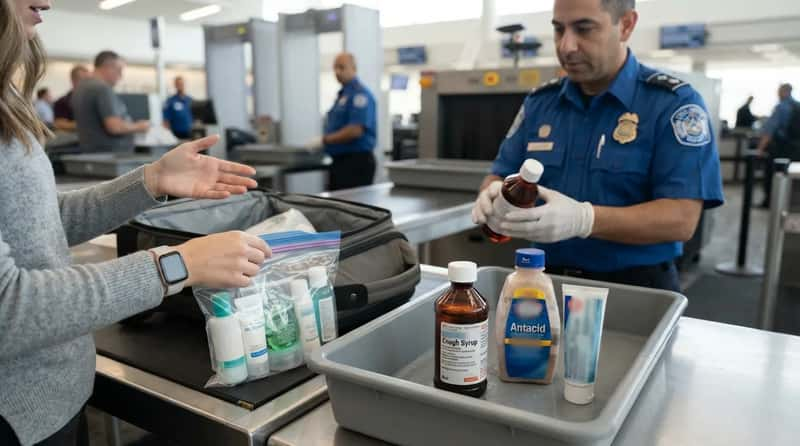
TSA allows medically necessary liquids, medications and creams in reasonable quantities above 3.4 ounces, and they do not have to fit in the quart-size bag. That covers the cough syrup, the liquid prescription and the larger tube of medicated cream that many travelers carry.
Such items may need additional inspection, so declare them at the checkpoint. If a screening officer opens the bottle or tests it, that is routine handling, and a few extra minutes of slack keeps it painless.
That covers what goes through the checkpoint, while seating for a child on the plane is decided by the airline.
#10 – Free Seats Together for a Child Under 14
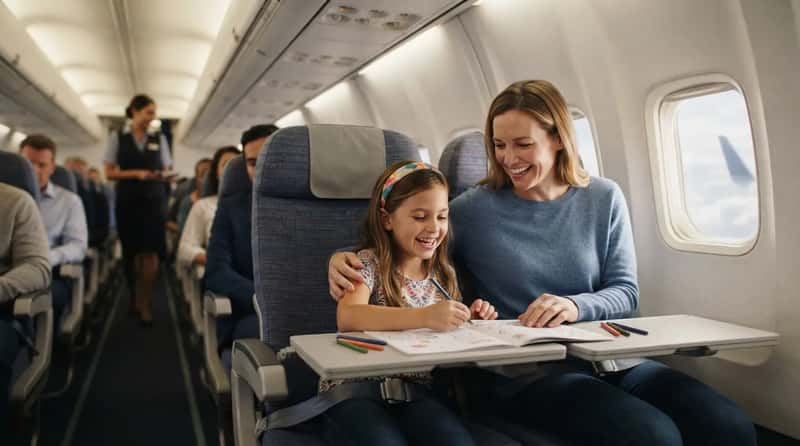
In August 2024 the Department of Transportation proposed a rule that would require airlines to seat parents next to their young children for free when adjacent seats are available at booking.2 At last report the rule had not been finalized, so today the promise comes from airline policy.
Alaska, American, Frontier and JetBlue guarantee free family seating for children 13 and under.3 The guarantee holds when seats are available at booking and all travelers share one reservation.
On those airlines I would not pay a seat fee for a grandchild, and I would book everyone on one reservation. DOT’s dashboard at flightrights.gov shows which airlines have committed.
Seats together help a child, but an adult who cannot fasten the belt in the assigned seat needs something else.
#9 – A Seat Belt Extender Handed Over Quietly
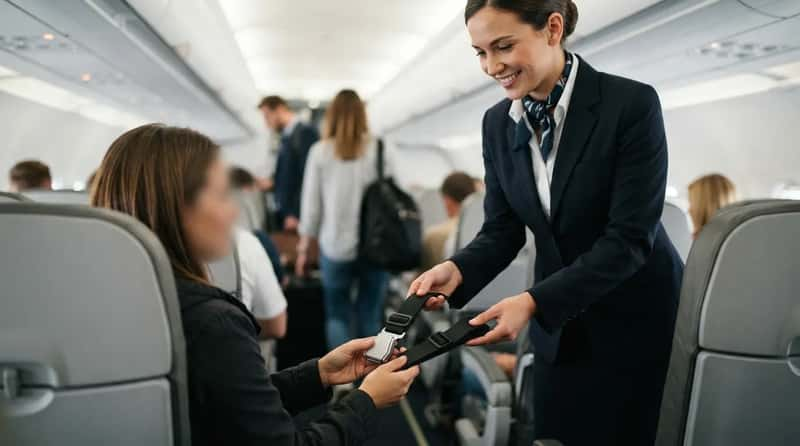
Airlines provide seat belt extenders and are required by law to do so at no charge.4 You only have to ask a flight attendant.
The request takes a few seconds, and you can make it quietly as you board.
I would not buy your own. The FAA has not tested or approved any third-party extenders on the market, and it advises airlines not to allow personal ones.4
You could be told to take it off during boarding, while the airline’s own extenders are inspected under its maintenance program.
An extender fixes the belt but does nothing about where in the cabin you sit, which is its own request.
#8 – A Seat Chosen for a Disability
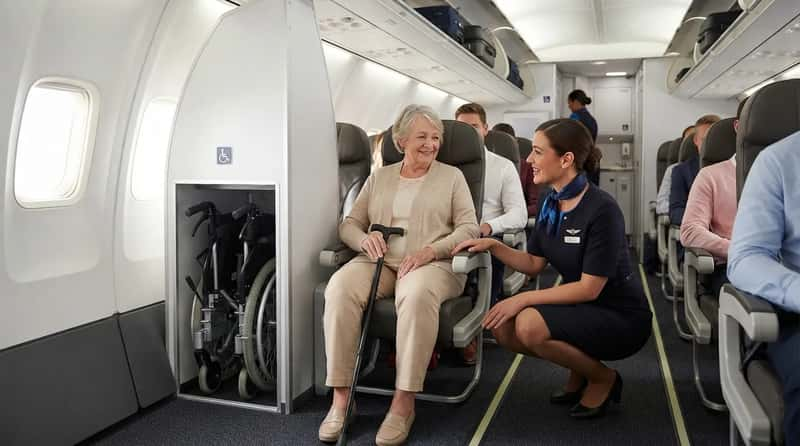
Airlines must provide accessible seating and let passengers request seats that suit their needs, such as proximity to restrooms or room for a mobility aid. The timing varies.
Depending on the airline’s seating method and your need, you may have to ask more than 24 hours ahead or check in an hour earlier than usual.
That is the reason to ask when you book rather than at the gate. If your airline does not assign seats in advance, you can ask to board before other passengers to find a seat that fits.
Some needs begin before the seat, with the limits of the aircraft itself.
#7 – An Onboard Wheelchair for the Lavatory
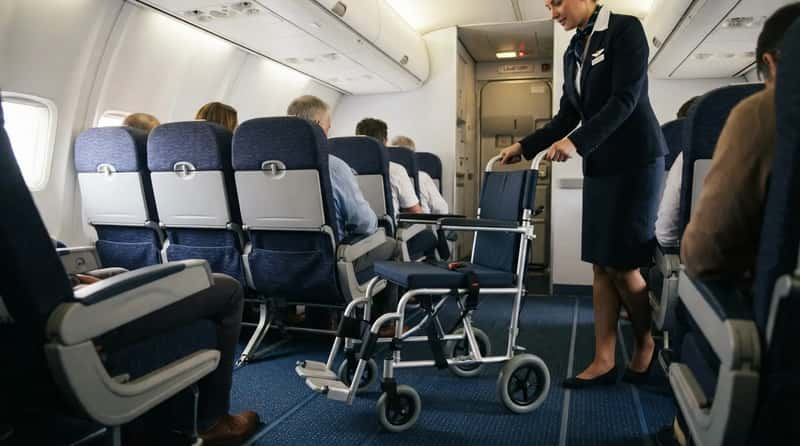
The Department of Transportation lists an onboard wheelchair, for aircraft without an accessible lavatory, among the accommodations to arrange with the airline ahead of time.5 Passengers are generally not required to give advance notice for disability accommodations, but this is the one case where I would call anyway.
You cannot fix the gap once the plane is in the air. One travel guide says the chair is not offered automatically, so request it when you book and confirm at the gate.
Fast Facts
- The onboard chair is for aircraft without an accessible lavatory.
- Advance notice is generally not required for disability accommodations, but this is the exception worth making.
- Ask when you book, then confirm at the gate.
Ten minutes on the phone settles it before you leave home. A folding wheelchair of your own raises a different question, which is where it rides.
#6 – Stowing a Folding Wheelchair in the Cabin
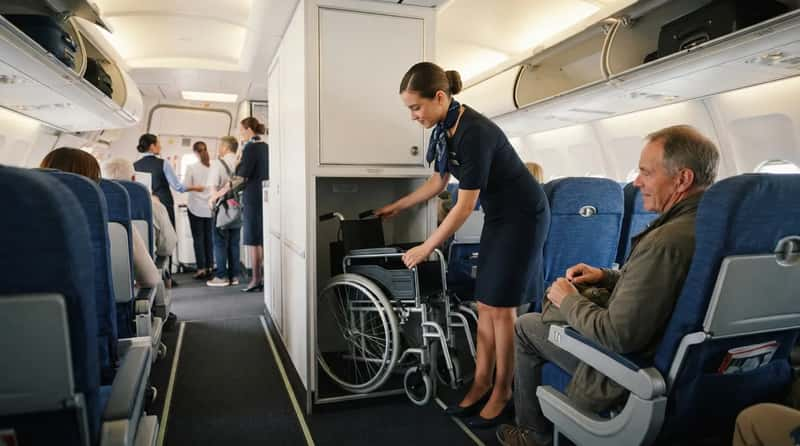
Aircraft with 100 or more seats must have priority space for at least one folding manual wheelchair, and you must request to pre-board to have the chance to stow yours in the cabin. If you wait to board with your group, the space may already be gone.
The request costs nothing and has to be made at the gate. Chairs that stay in the cabin avoid the delay of getting one back from below.
Chairs that do not fit in the cabin travel below, and then the question is how far you can use yours first.
#5 – Your Own Wheelchair Up to the Aircraft Door
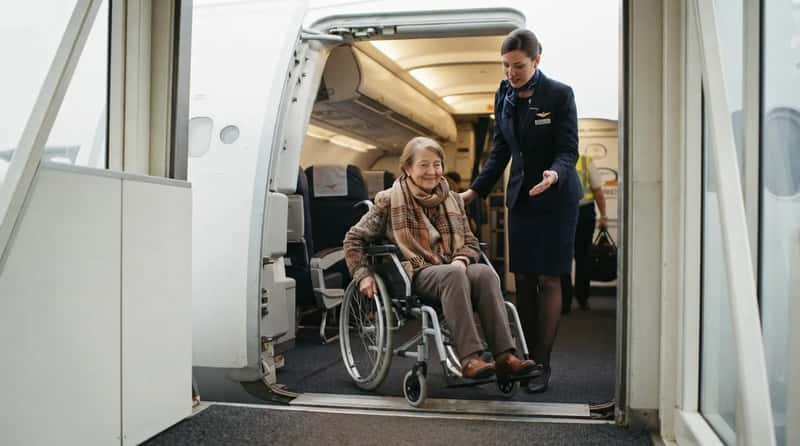
Airlines must allow passengers to use their own wheelchairs up to the aircraft door when possible. That keeps you in a chair you know until the last moment, instead of switching to a borrowed one in the terminal.
Airlines must also help with transfers in a way that limits the risk of injury.
Ask the gate agent how your chair will be handled before you board. That is where the arrangement is made, not with the cabin crew.
When the chair is not waiting where it should be, a particular person at the airline is supposed to hear about it.
#4 – Asking for a Complaints Resolution Official
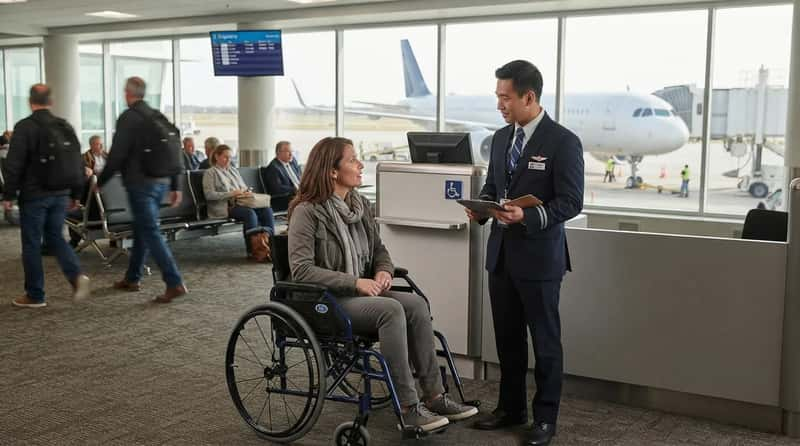
If you think an airline is not following the rules, you can ask to speak with a Complaints Resolution Official, or CRO. The request exists for the moment something goes wrong, so you can raise it at the airport rather than writing a letter later.
I would use it in the moment, since a problem at the gate can still be fixed before the plane leaves.
Enforcement shows the rules carry weight. DOT fined US Airways $1.2 million over wheelchair assistance in Philadelphia and Charlotte, and it fined Frontier $50,000 in 2019 for violating disability rules.6
Even a request already in the reservation does not announce itself to the staff on duty.
#3 – Wheelchair Help Asked For at the Curb
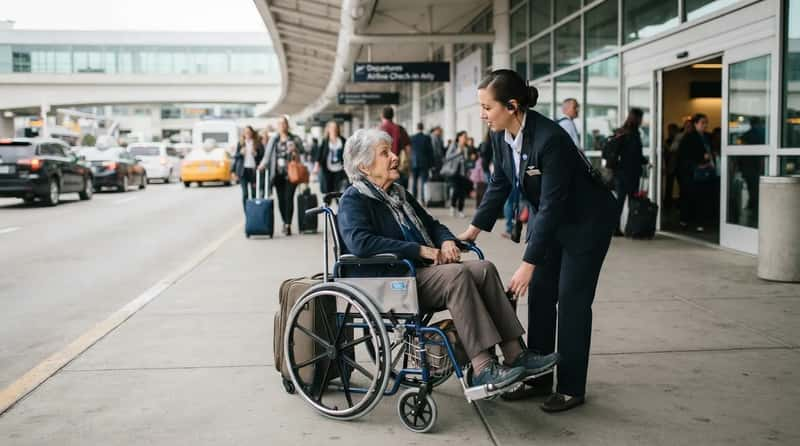
Under DOT’s disability rules, passengers are generally not required to give advance notice. Airlines must provide free, prompt wheelchair assistance on request.6 7
So if your knees give out on the walk from the parking garage, you can ask the first airline employee you meet.
Tell the check-in agent or a staff member at the curb that you need wheelchair assistance. Calling ahead still helps, because detail in advance lets staff give you the right help on time, but it is a convenience, not a condition.
The trip does not end at the first gate, and connections are covered by the same rule.
#2 – Help Through a Connection, Not Just to the Gate
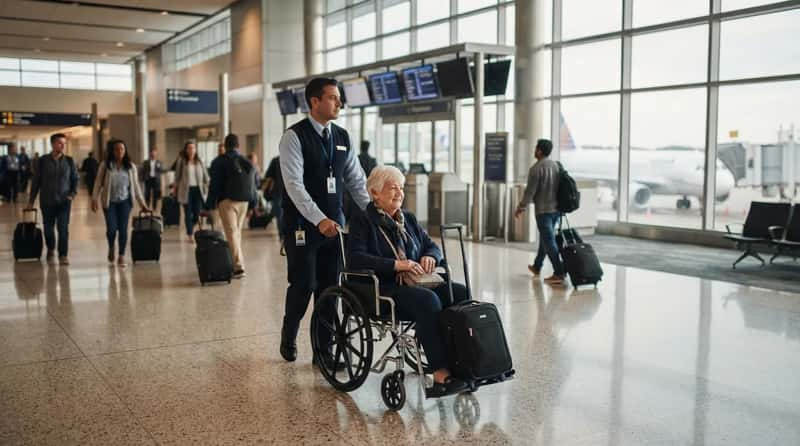
DOT lists a wheelchair or guided assistance to board, deplane or connect to another flight among the things to arrange.7 The connection is where a long trip tends to get hard.
A large terminal can be a long walk, and the next gate may be on the other side of the building. Airports can also be confusing, so you may need help finding your way even if you do not use a wheelchair.
At a Glance
- Covered: a wheelchair or guided assistance to board, deplane or connect.
- Not just for wheelchair users. Help finding your way counts too.
- More than one airline means confirming with each one.
- The hardest leg is usually the walk to the next gate.
If your itinerary has more than one airline, confirm the request with each of them, because a request made to the first does not necessarily carry to the second. All of it hinges on one sentence said to a gate agent before anyone else is seated.
#1 – Pre-Boarding, Asked For at the Gate
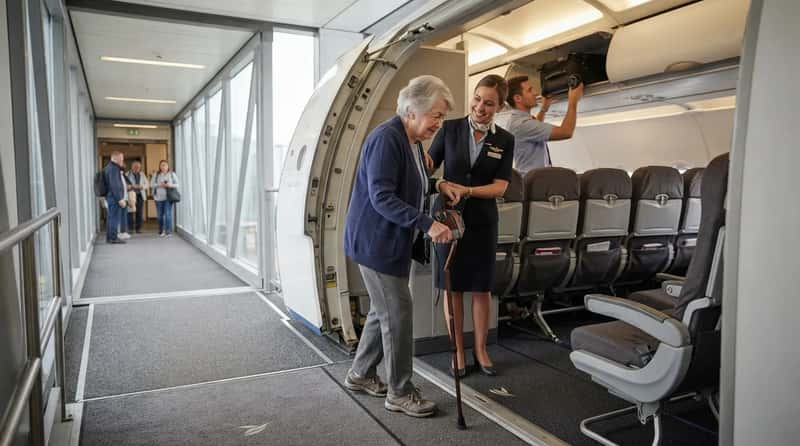
Airlines must allow passengers with disabilities to pre-board when they self-identify at the gate as needing extra time or assistance to be seated or to stow accessibility equipment. You must make the request to the gate agent.
Nobody offers it for you, and the cabin crew will not know to.
The need is wider than wheelchairs. Extra time to find a seat, to settle a cane or walker, or to get a bag into a bin all count.
Pre-boarding also makes several earlier items easier, because you reach the cabin before the bins fill and before the aisle crowds. A request made after boarding starts is too late to use.
Each request on this list has a place where it can be granted. The checkpoint handles liquids, the gate handles boarding and seats, and the cabin crew handles a seat belt or a move to an empty row.
Ask at the wrong counter and you may get a shrug that sounds like a no. Before your next trip, write down what you want from each of those three places, then ask there, out loud, before you are in the way.
Sources
- U.S. Department of Transportation, General Travel Tips for Persons with Disabilities: https://www.transportation.gov/individuals/aviation-consumer-protection/general-travel-tips-persons-disabilities
- U.S. Department of Transportation, Seating Accommodation Interactive Guide: https://www.transportation.gov/resources/individuals/aviation-consumer-protection/seating-accommodation-guide/seating
- U.S. Department of Transportation, Developmental Disabilities Guide: https://www.transportation.gov/sites/dot.gov/files/docs/Developmental_Disabilities_Guide.pdf
- U.S. Department of Transportation, US Airways fine: https://www.transportation.gov/briefing-room/dot-fines-us-airways-failure-provide-wheelchair-assistance-passengers-disabilities
- U.S. Department of Transportation, Frontier fine: https://www.transportation.gov/briefing-room/frontier-fined-violating-rules-protecting-air-travelers-disabilities
- U.S. Department of Transportation, family seating proposal: https://www.transportation.gov/briefing-room/biden-harris-administration-proposes-ban-family-seating-junk-fees-charged-airlines
- TSA, Traveling with Children: https://www.tsa.gov/travel/tsa-cares/traveling-children
- TSA, breast milk, formula and juice exemption: https://www.tsa.gov/travel/frequently-asked-questions/breast-milk-formula-and-juice-exempt-3-1-1-liquids-rule
- U.S. News & World Report, seat belt extenders: https://travel.usnews.com/features/airplane-seat-belt-extenders
- TSA Traveling with Children: https://www.tsa.gov/travel/tsa-cares/traveling-children
- DOT Family Seating Proposal: https://www.transportation.gov/briefing-room/biden-harris-administration-proposes-ban-family-seating-junk-fees-charged-airlines
- Federal Register Family Seating: https://www.federalregister.gov/documents/2024/08/09/2024-17323/family-seating-in-air-transportation
- US News Seat Belt Extenders: https://travel.usnews.com/features/airplane-seat-belt-extenders
- DOT ABCs of Accessible Travel: https://www.transportation.gov/sites/dot.gov/files/docs/ABCs_of_Accessible_Travel-Brochure.pdf
- DOT US Airways Fine: https://www.transportation.gov/briefing-room/dot-fines-us-airways-failure-provide-wheelchair-assistance-passengers-disabilities
- DOT Disability Travel Tips: https://www.transportation.gov/individuals/aviation-consumer-protection/general-travel-tips-persons-disabilities
