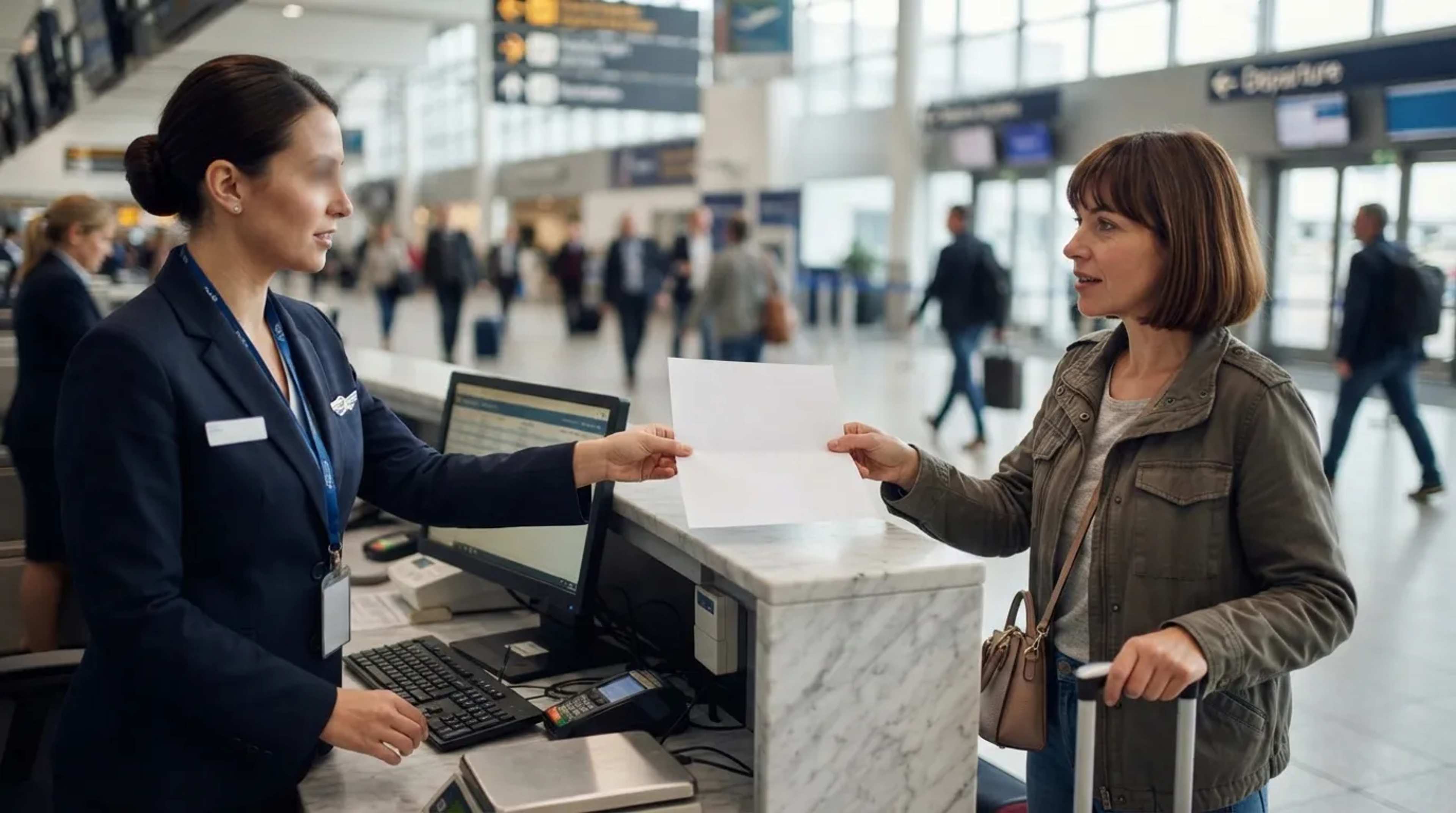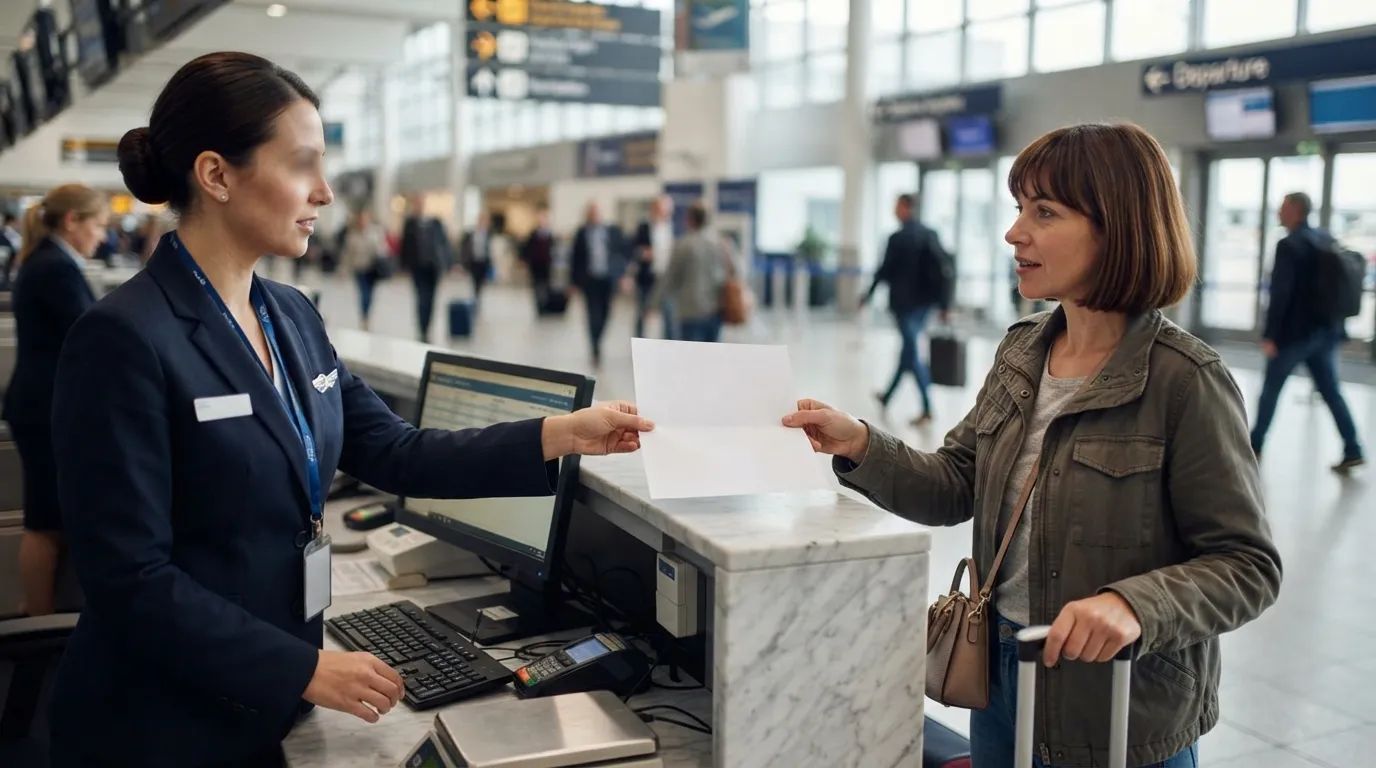
You probably picture the check-in counter as the place where someone walks you through everything you’re entitled to. It usually isn’t. Agents tend to answer the exact question in front of them, often with a restless line stretching behind you, so a surprising number of refunds, fee fixes and free perks stay quiet until a passenger speaks first.
Some of these are federal rules. Others are airline policies almost nobody advertises. And one of them, waiting at #1, can be worth more than the ticket in your hand.
#17 – The Stroller and Car Seat That Fly Free
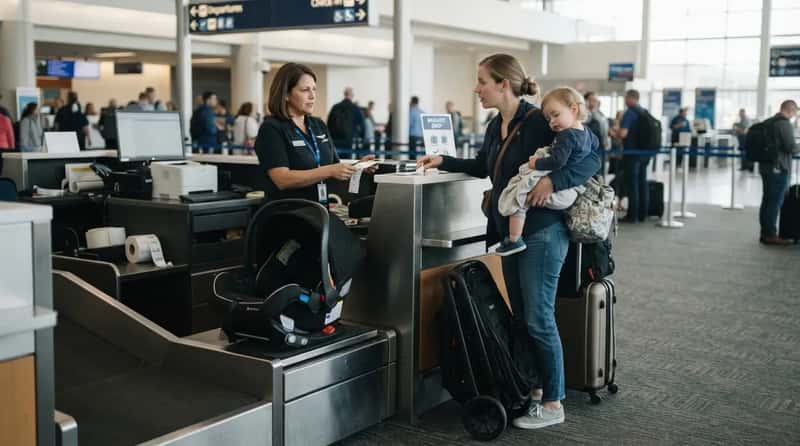
Picture a parent at the counter with a toddler on one hip, a diaper bag on one shoulder and a folded stroller leaning on their leg. Most major U.S. airlines let families check a stroller and a car seat without a fee. Agents rarely say so out loud, because “is this free?” is a question many parents never think to ask.
You can usually keep the stroller until the aircraft door, then gate-check it. That means a child can nap through a long security line instead of being carried for a mile. Policies differ slightly by carrier, so one quick question beats an assumption.
#16 – Free Wheelchair Help Nobody Announces
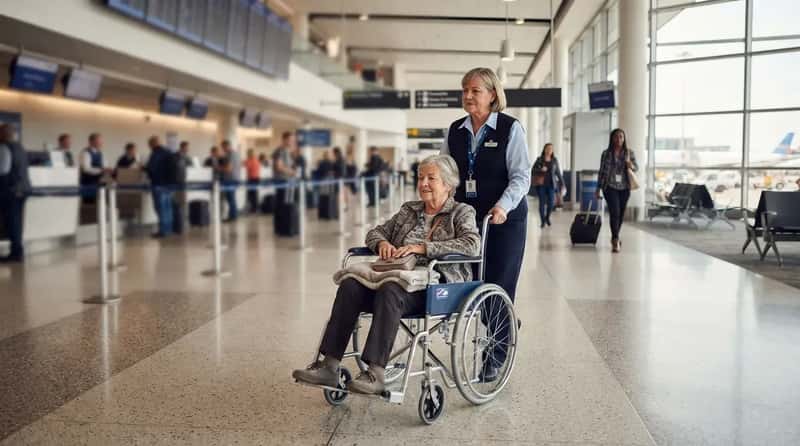
Needing a hand in a giant airport isn’t a luxury request. Under U.S. disability-access rules, airlines provide wheelchair and mobility assistance at no charge. Agents may not volunteer it, especially to travelers who don’t look like they need it.
Plenty of people white-knuckle their way through long terminal walks without ever learning the service exists. You can request help getting to the gate, between connections or onto the plane. It covers bad knees, recovering injuries and health conditions nobody can see.
If your connection is tight, ask before you leave the counter. Waiting until you’re exhausted at the gate makes everything harder.
Fast Facts
- The service is free, and airlines can’t charge you for it.
- You can ask when you book, before you travel, or at the airport.
- Help can cover the walk to the gate, connections, boarding and getting off the plane.
- You don’t have to be unable to walk. Plenty of users simply can’t manage long distances.
#15 – The 24-Hour Window That Erases a Booking Mistake
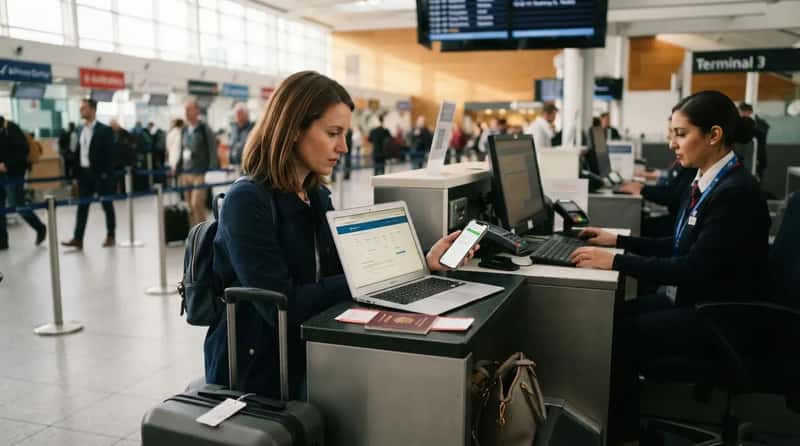
Booked the wrong date? Typed the wrong city? Federal rules say airlines must either hold a fare for 24 hours or let you cancel within 24 hours of booking for a full refund. The ticket generally has to be bought at least seven days before departure.
Agents seldom bring it up, because nobody asks until they’re already panicking. This is a rule, not a courtesy, and a mistake caught within a day can cost you nothing. Once the window closes, you’re usually back to the airline’s own fare rules and any change fees.
#14 – The Military Bag Perk Hiding in Plain Sight
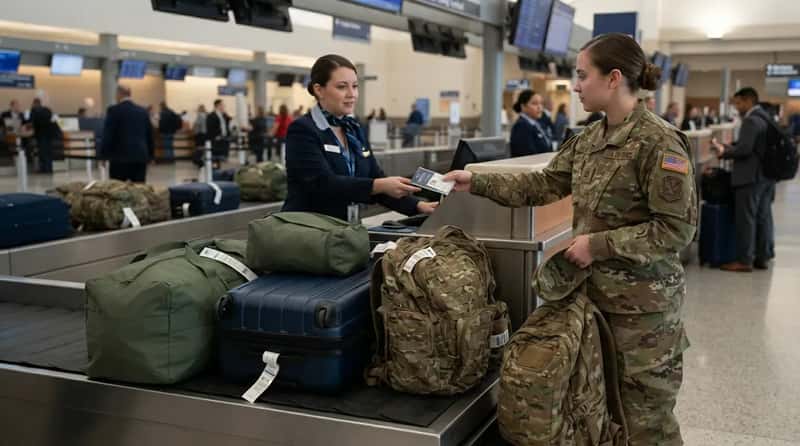
Service members can check far more luggage for free than most travelers realize. American Airlines lists up to 5 free bags at 100 pounds each for active U.S. military and dependents traveling on orders. Alaska Airlines also offers active-duty military up to five free checked bags.
Agents may not mention any of it unless you hand over ID. The details matter, though. On American, the free bags don’t apply to codeshare flights operated by partners, and the terms can depend on whether you’re traveling on orders.
Bring your military ID and orders to the counter, and confirm the rules for your specific airline before you pack.
#13 – The Full-Size Carry-On That Flies Free When the Bins Fill Up
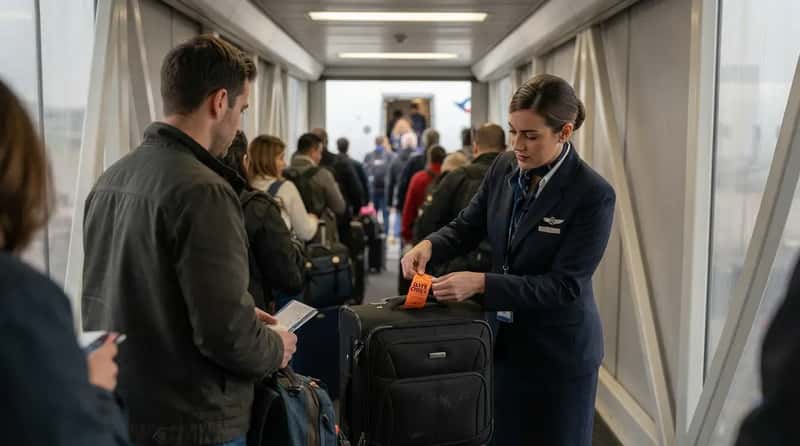
Everyone has heard the announcement: “The overhead bins are full, so we’ll be gate-checking bags.” What agents rarely mention is that gate-checking in that situation is typically free. People still pay for a checked bag at the counter because they assume they have to, then watch the gate agent tag the same bag for nothing.
It’s not guaranteed on every ticket. But when you’re a late boarder on a packed flight, a free gate-check can save a fee entirely. Your bag will ride below, so keep medication, chargers and valuables in your personal item.
#12 – The Seat Map Trick That Only Works in Person
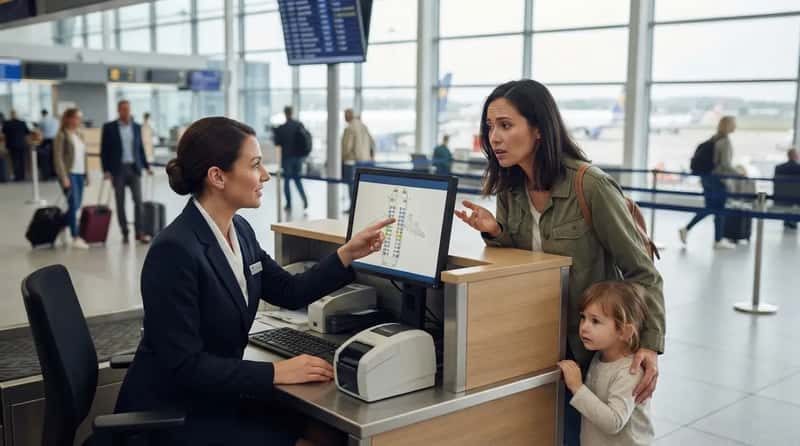
Seat maps online can look hopeless, especially on budget fares. Yet a human at the counter can sometimes see options a screen won’t show. Agents tend not to offer seat help unless you explain the situation, like a parent separated from a young child.
A polite, specific request can open seats the website kept locked. There’s no guarantee, and agents can’t always override fare rules. But asking costs nothing.
One related note: a child under two can travel as a lap infant on a domestic flight without paying for a seat, though the FAA recommends a separate seat with an approved child restraint. Ask about both when you check in.
#11 – The Overweight Bag You Can Fix on the Spot
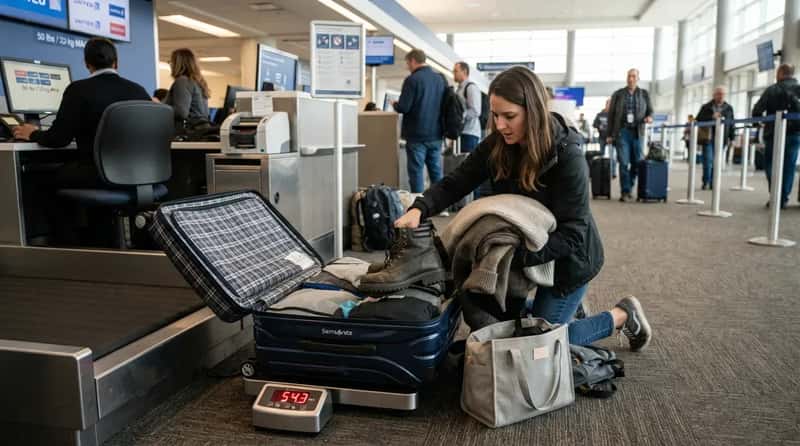
You’re a few pounds over, and the agent announces a fee. What they often don’t mention is that you can open the bag and move items right there. United, for example, lists 50 pounds as its standard checked-bag weight, and overweight fees often cost far more than a normal bag fee.
Moving a heavy pair of shoes into your carry-on can turn a steep fee into zero. Agents won’t usually suggest it, because the fee is the default outcome. Pack a spare tote or a small luggage scale so you aren’t stuck repacking in the middle of the lobby.
#10 – The Medical Device That Doesn’t Count Against Your Bag Limit
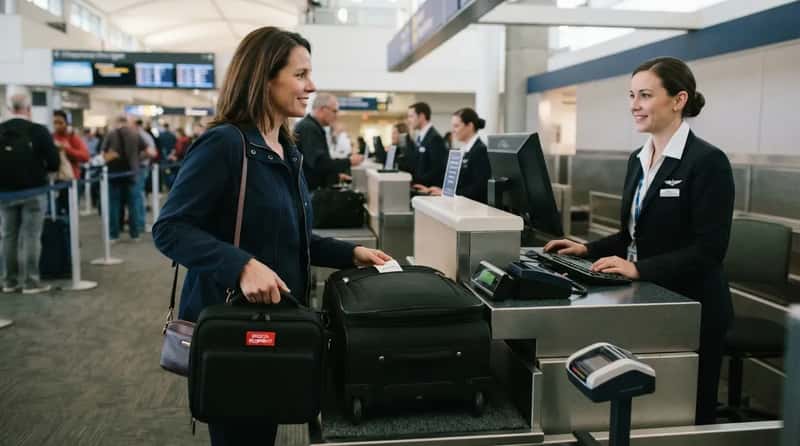
Travelers with CPAP machines or similar equipment often worry they’ll be charged as if it’s an extra carry-on. Most airlines don’t count medical devices against your carry-on allowance. Agents don’t always say so, which leaves people cramming a device into an already stuffed bag.
A CPAP machine typically rides in its own case without eating into your bag limit. It’s smart to carry it onboard rather than check it, since checked devices can be damaged or lost. If anyone pushes back, ask politely for a supervisor and point to the carrier’s own medical-device policy.
Worth Knowing
- Tell the TSA officer about your device before screening starts, so it isn’t a surprise at the belt.
- Medically necessary liquids can exceed 3.4 ounces in reasonable quantities, but you should declare them.
- Keep medication and key supplies in your carry-on, not your checked bag.
- Screenshot the airline’s medical-device policy before you leave home, just in case.
#9 – The Same-Day Switch That Skips the Big Fee
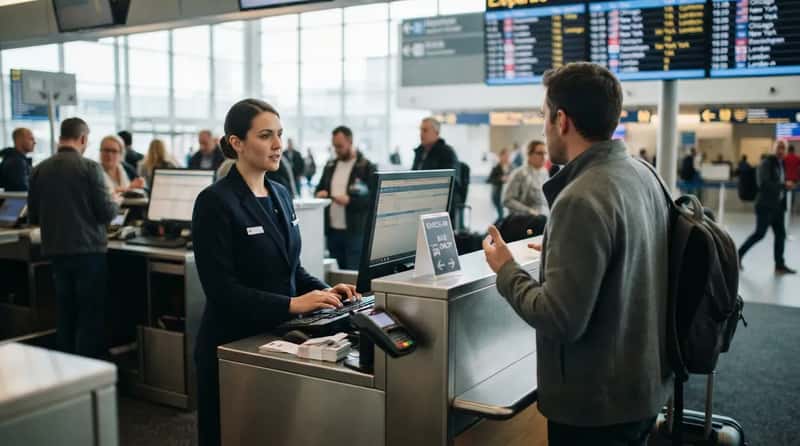
Finished your meeting early and want to catch an earlier flight? Several major carriers offer same-day standby or same-day confirmed changes, sometimes at low cost or no cost, depending on fare type and status. Agents seldom mention it. Many travelers just assume that changing a ticket means a painful fee.
The seat on the earlier flight can be as close as one question at the counter. Basic fares are often excluded, so check your fare rules before getting your hopes up. Ask what the airline’s same-day policy is and whether standby is free for your ticket.
#8 – The Upgrade and Lounge Deals Sold Only at the Airport
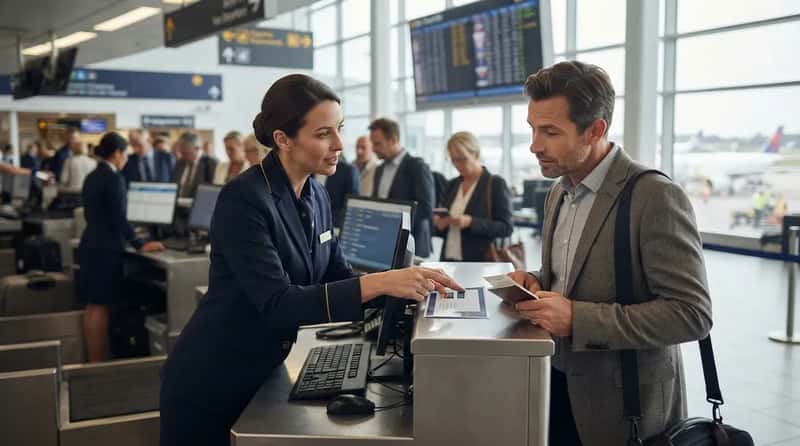
Some airlines sell discounted upgrades and lounge day passes at the airport. Agents rarely volunteer them. They aren’t hiding it, exactly. A busy counter just isn’t where most people expect to be upsold.
An empty premium cabin can mean a price you’d never see online. Whether a lounge pass is worth it is an honest debate. On a long layover, a quiet seat, food and a working outlet can beat a crowded gate. On a short one, probably not.
Ask about price and availability, then compare it to what a sandwich and a coffee cost in the terminal.
#7 – Your Bag Fee Back When Luggage Arrives Late
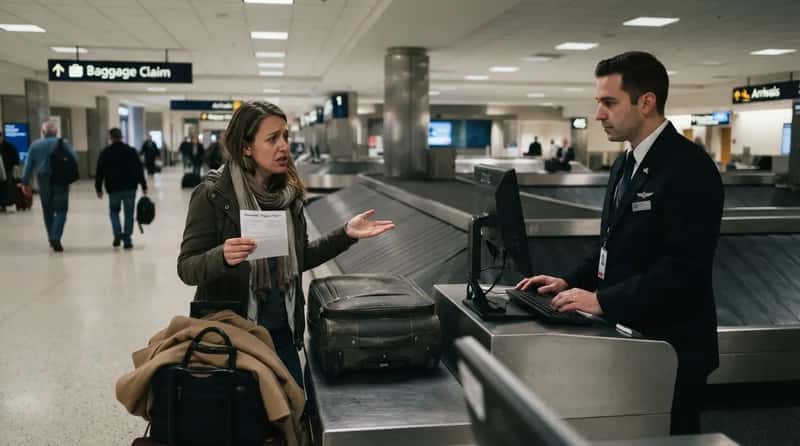
When a checked bag shows up late, most people file a report and walk away angry. What’s less known is that a DOT rule requires airlines to refund the checked-bag fee when a bag is significantly delayed. Agents tend not to offer it unless you ask.
The fee you already paid can come back to you. For domestic flights, the threshold is 12 hours after arrival. International flights have longer thresholds, 15 or 30 hours depending on flight length.
File the mishandled-baggage report before you leave the airport. Without that paperwork, a refund claim gets harder.
#6 – The Partner Airline That Could Get You Home Tonight
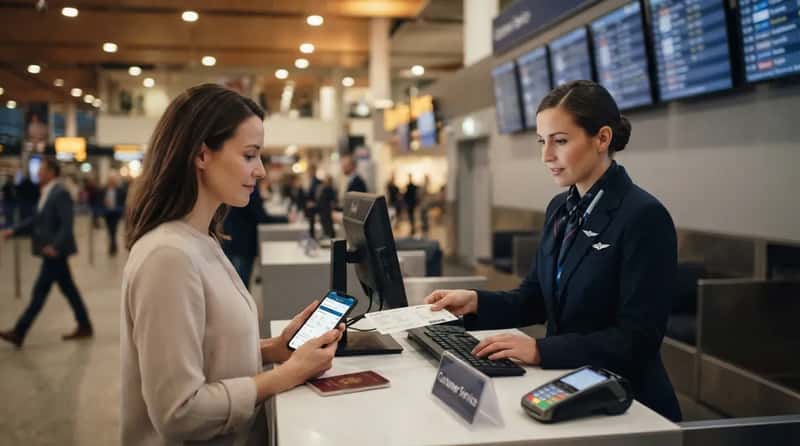
When a flight is canceled, the agent usually offers the next seat on their own airline, which could be tomorrow afternoon. What they may not mention is that some airlines can rebook you on a partner carrier. It isn’t a legal requirement, and policies vary.
Asking about a partner flight can turn a lost night into a short delay. You’ll have better luck if you do the research first. Look up alternate flights on your phone and ask for that specific one.
Agents are more likely to say yes to a precise request than to a vague “can you get me anywhere?” Stay calm and be kind. The agent has a crowd of frustrated people behind you.
Quick Compare
- Next flight on the same airline: The easiest ask for an agent, but it may leave you waiting until tomorrow.
- A named partner-airline flight: Can get you home sooner, but it’s not guaranteed and varies by carrier.
- A refund: If the airline cancels and you decline the alternative, you’re entitled to your money back, not just a voucher.
#5 – The Bump List You Can Volunteer For
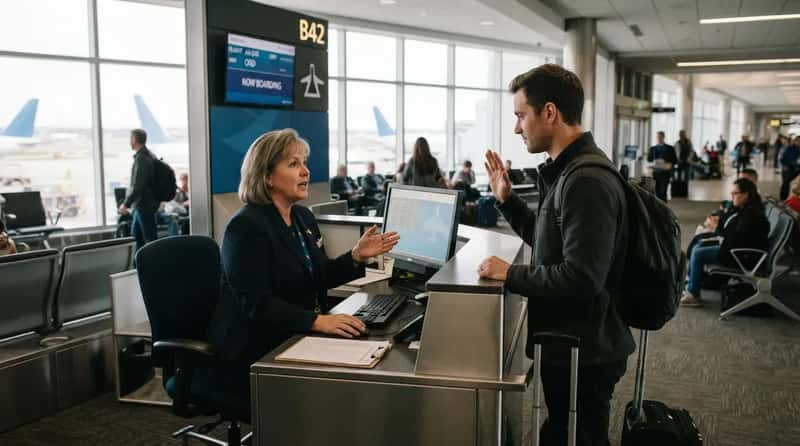
On crowded flights, gate agents often look for volunteers to take a later flight. Many travelers don’t realize they can raise a hand early. There’s no federal minimum for voluntary compensation, so the amount is whatever you and the airline agree to.
That means the first offer often isn’t the final one. Airlines frequently raise offers in volunteer rounds before resorting to involuntary bumping. Ask about hotel, meals and rebooking too, and get the terms in writing.
#4 – Meals and Hotels During a Long Delay
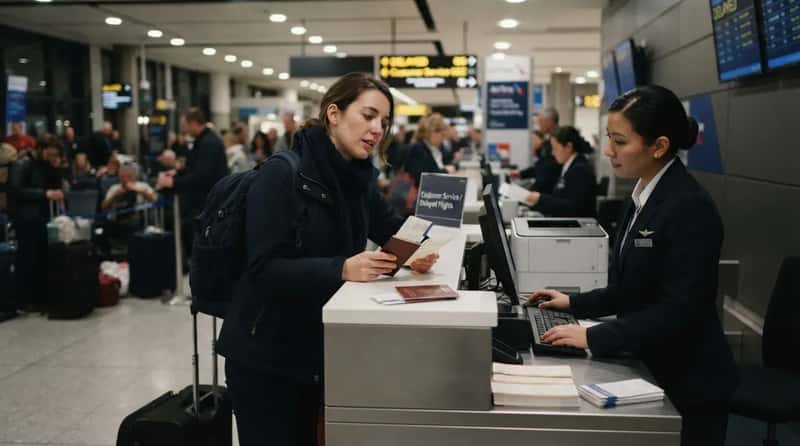
Here’s the part that surprises people: U.S. rules don’t require compensation for delays. But several major airlines have publicly committed to providing meals or hotel help when a delay is within their control. Agents don’t hand these out unprompted, especially in a crowd.
The answer is often “yes” only after someone asks. Controllable causes, like crew or maintenance problems, are the usual trigger. Weather usually isn’t.
Ask the agent what the airline’s policy says about your delay and why it happened. Keep every receipt, because that evidence matters if you need reimbursement later.
#3 – The Automatic Cash Refund You Shouldn’t Have to Beg For
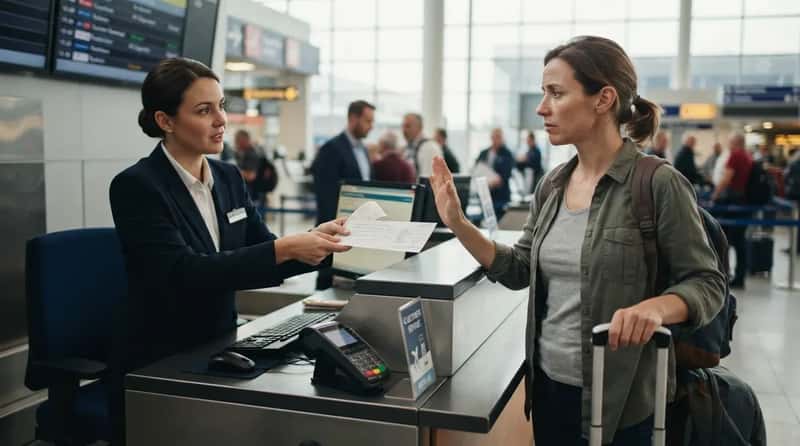
Under the DOT’s refund rule, a significant change includes a departure or arrival time shifted by more than 3 hours domestically or 6 hours internationally. It also includes a different airport, added connections or a downgrade in class. If you don’t accept the alternative, the refund is yours.
It must arrive within 7 business days for credit card purchases or 20 calendar days for other payment methods. Agents often lead with a travel credit or a rebooking, because that’s easier. A voucher isn’t the same as your money back.
You’re entitled to a refund when you reject the changed flight, a rebooked flight, a voucher or other compensation. Rules can change, so check the DOT’s refund page before you travel.
#2 – The Written Statement of Your Bumping Rights
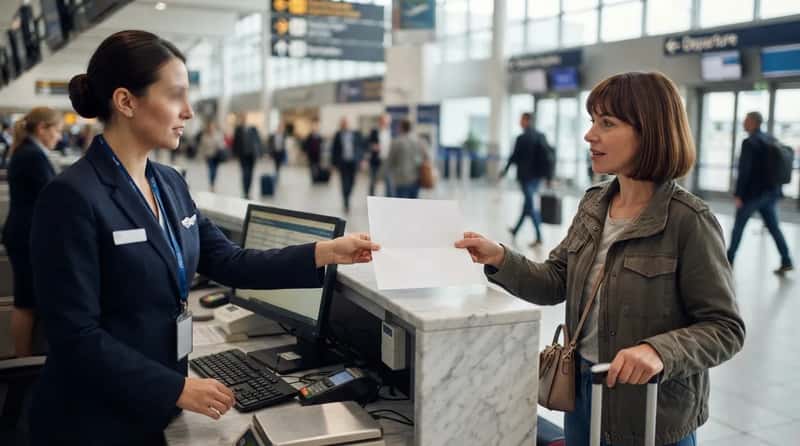
When an airline bumps someone involuntarily, it’s required to hand over a written statement explaining the passenger’s rights and how the airline decides who gets bumped. Many agents don’t offer it until you ask. That paper lays out exactly what the airline owes you.
Think of it as the receipt for your rights. It shows how compensation is calculated and what the airline’s boarding priorities are.
Ask for it politely and early, before anyone slides a voucher across the counter. If things go wrong later, that document is your evidence.
#1 – The Cash Payout They’d Rather Pay in Vouchers
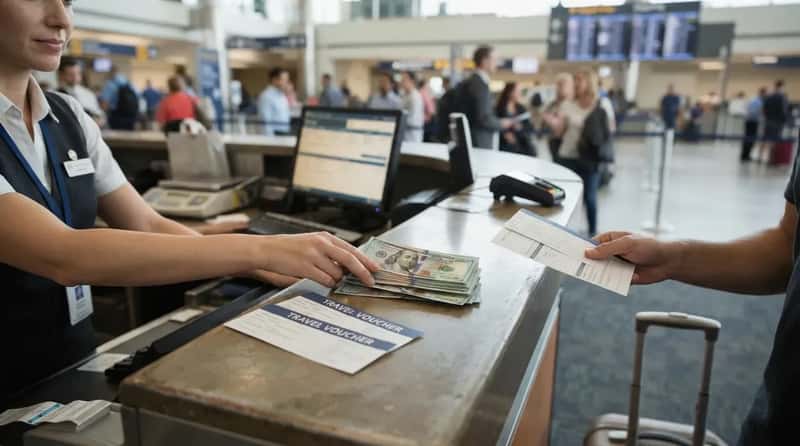
If you’re bumped against your will after checking in on time, you may be owed cash, not just a voucher. For domestic flights, the DOT lists 200% of the one-way fare for a 1 to 2 hour arrival delay, and 400% for a delay of more than 2 hours. Those amounts are capped at $1,075 and $2,150 respectively.
That means a bumped passenger facing a long delay can be owed up to $2,150 in cash. The catch is that nobody tells you. Many airlines won’t raise it unless you ask, and may steer you toward a voucher instead.
At a Glance
- Arrive within 1 hour of your original time: no compensation is required.
- Arrive 1 to 2 hours late: 200% of your one-way fare, which airlines may limit to $1,075.
- Arrive more than 2 hours late, or get no alternate flight: 400% of your one-way fare, which airlines may limit to $2,150.
- This covers involuntary bumping. Volunteers negotiate their own deal.
Ask for the cash, ask for it in writing, and don’t sign away your rights at the gate. That one sentence could be worth more than the ticket itself.
Most of these perks aren’t secrets. They’re rules and policies that sit quietly until somebody speaks up. The big ones involve real money: a refund you’re owed for a canceled flight, a bag fee that comes back, a bumping payout that can reach $2,150.
The next time you’re standing at that counter, remember that the person behind it is answering questions, not reading your mind. Ask the right one, and the whole trip can change.