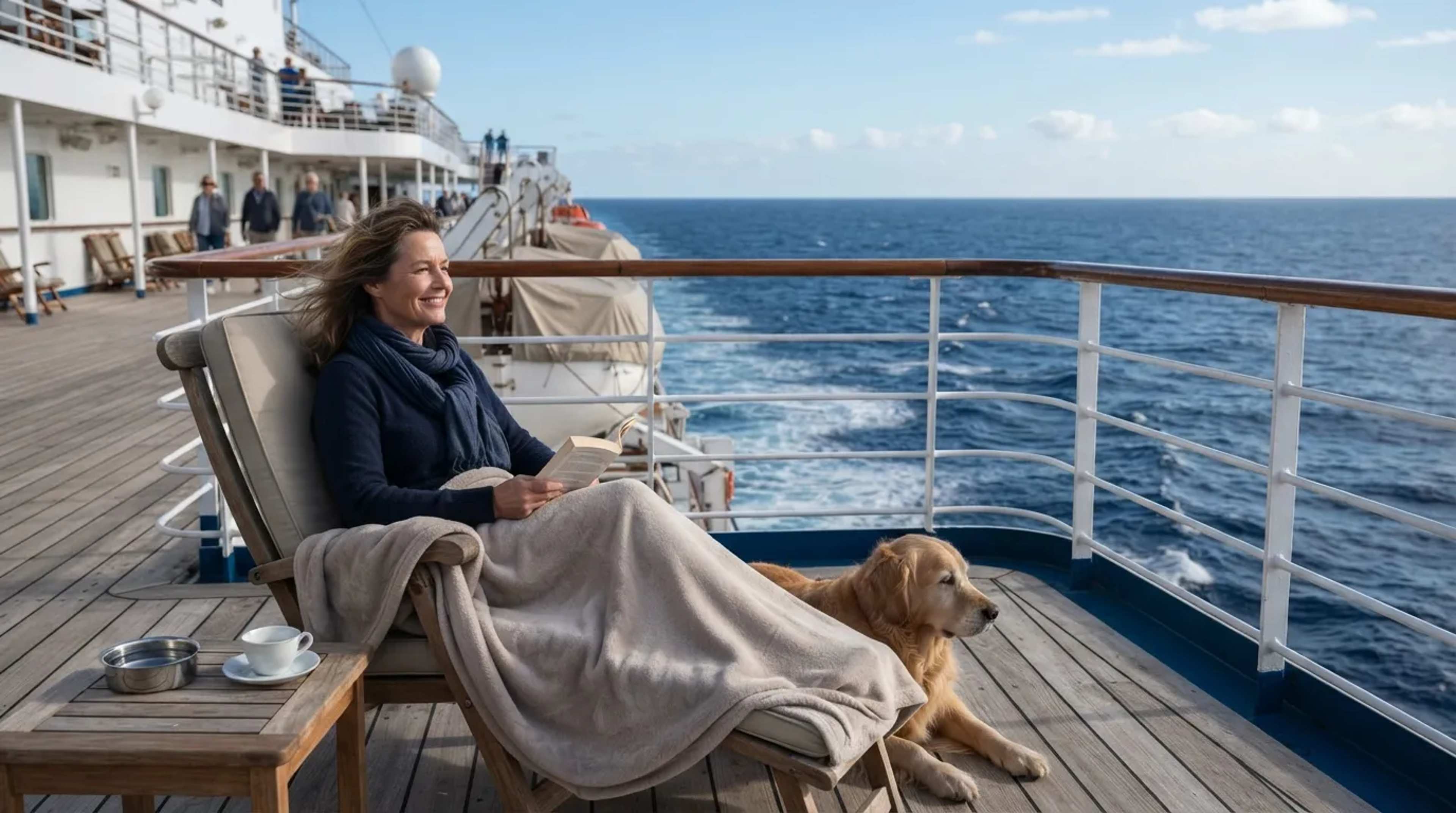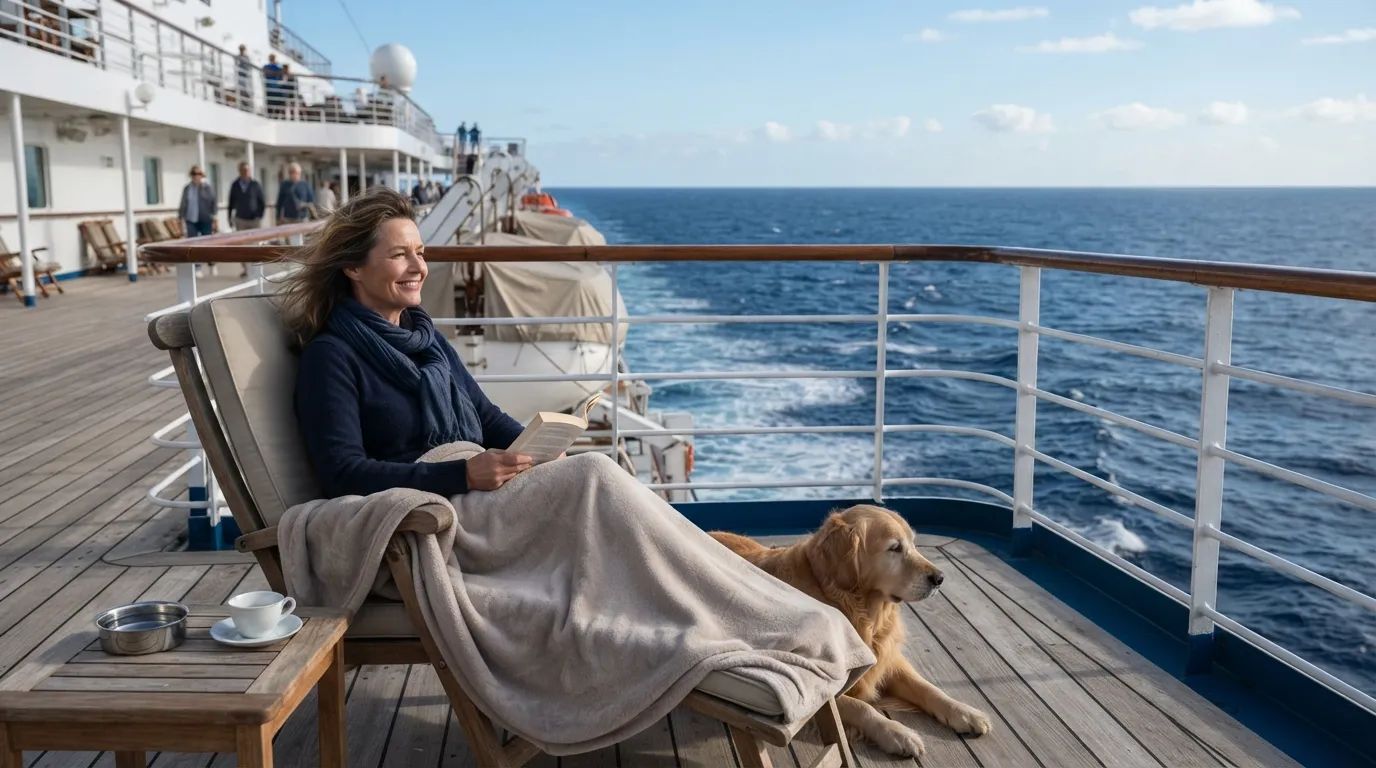
The brochure version of a transatlantic crossing is easy to picture: champagne at sail-away, a week of lounging, a smooth arrival. Then the second night comes. The coastline is long gone, the clocks have started shifting, and it sinks in that you are sealed in with the ocean for a full seven nights, with no port stops at all.
Most of what follows applies to Cunard’s Queen Mary 2, the liner that runs the best-known scheduled crossing between New York and Southampton. Passenger accounts and the 2026 schedule reveal some odd, funny and surprisingly moving details. A few of them may change which way you’d choose to cross, and one of them might make you want to book the return trip before you’ve even landed.
#17 – The Clocks Quietly Change on Five of Seven Nights
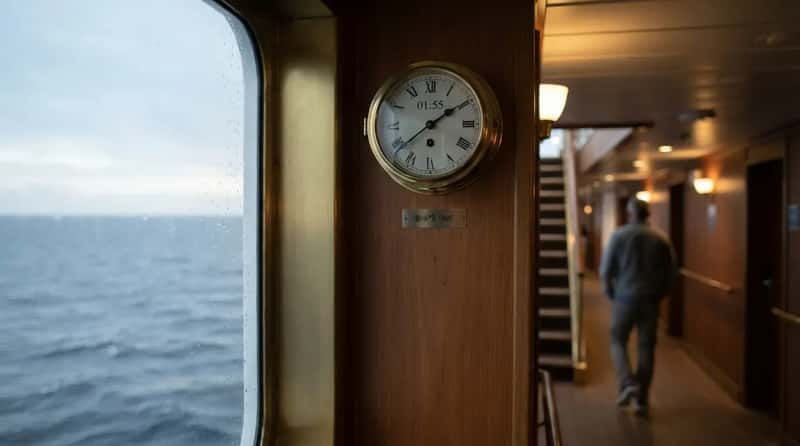
Nobody warns you at boarding that your days won’t stay 24 hours long. On a westbound sailing, the ship’s clocks go back an hour at 2am on five of the seven nights. By the second night you’re already collecting a bonus hour of sleep. Over the week, that adds up to a run of 25-hour days.
Accounts differ by a night or so depending on the sailing. One reviewer was told to move clocks back on five nights out of seven, while another writer counted six 25-hour days. Either way, you spend the week living in a time zone that is slowly sliding out from under you.
But the eastbound version of this trick is a very different story…
#16 – Eastbound, the Ship Takes an Hour of Sleep Back, Five Nights Running
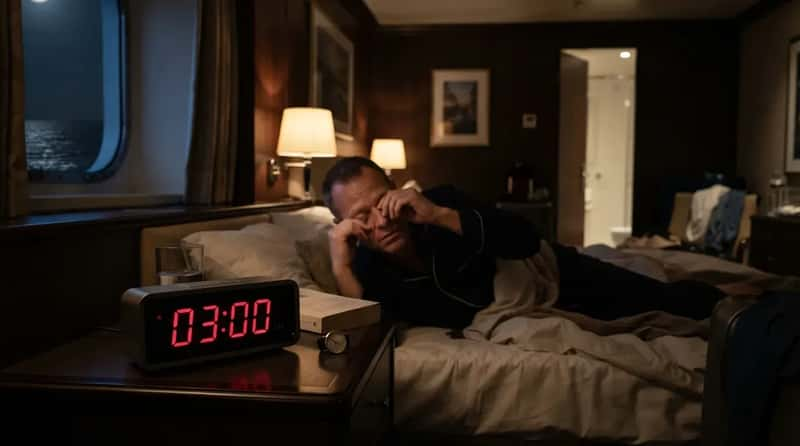
The same clock magic works against you in the other direction. Eastbound, the clocks move forward an hour at 2am on five of the seven nights. That means one hour less sleep, again and again, for most of the week.
Here’s the contrarian take. Many travelers call the eastbound crossing the classic one, but plenty of seasoned voyagers argue it’s the harder trip. After late evenings of dinner, dancing and one more drink, those 23-hour days can hit hard. One guide’s advice is blunt: choose westbound if you want extra sleep.
Quick Compare
- Westbound: Clocks go back an hour on five nights, so you get 25-hour days and extra sleep.
- Eastbound: Clocks go forward an hour on five nights, so you get 23-hour days and a shorter night.
- The trade-off: Westbound is gentler on sleep, while eastbound is the version many people call the classic.
Still, the ship has a smart way of handling the change, and it happens in broad daylight…
#15 – The Captain Moves Time at Noon, but Your Phone Never Got the Memo
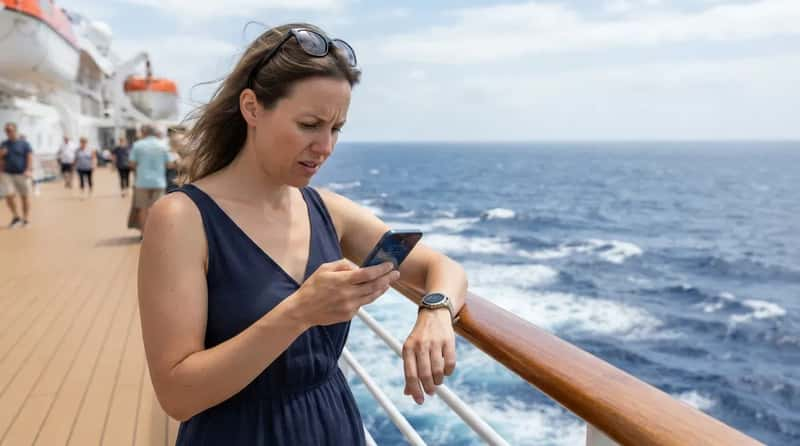
The time change isn’t a midnight ambush. On the days a change is needed, the captain announces it over the PA system just before noon. That way you don’t have to remember to adjust your watch right before bed.
Here’s the catch. The ship’s clocks move on their own, but your phone and watch may not, especially in airplane mode. Passengers end up with the ship on one time and their pocket on another. It sounds small, but it’s exactly how people miss dinner reservations and wake up confused about what meal they’re late for.
And the bigger surprise is what happens when you realize you can’t leave the ship at all…
#14 – There Is No Port, No Exit, and No Quick Day Ashore
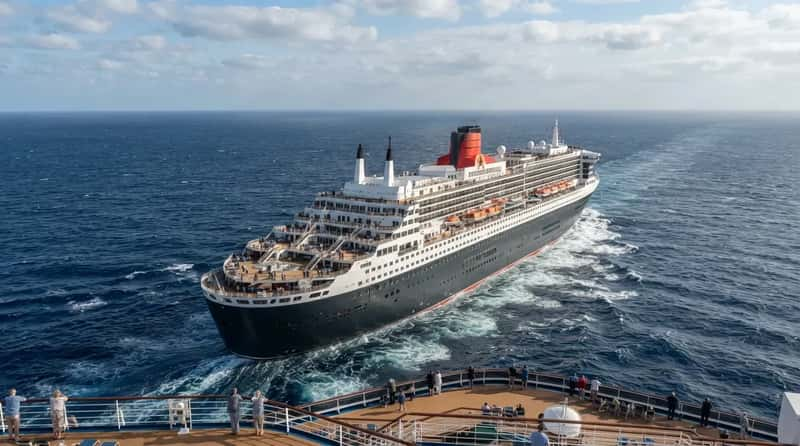
A regular cruise hands you a beach or a market every few days. This one doesn’t. The QM2 makes no stops during its transatlantic crossing. Cunard’s schedule lists days 2 through 7 simply as at sea.
A Washington Post writer who sailed it in 2025 said the main difference from a regular cruise was that there was no getting off the ship. That’s the thing nobody mentions. For six straight days, your world is the ship and the horizon. Some people find it freeing, and others feel the walls closing in by day three.
Stranger still, this ship was built for speed, and the slow week is a choice…
#13 – The Ship Is Built to Race, but the Week Is the Whole Point
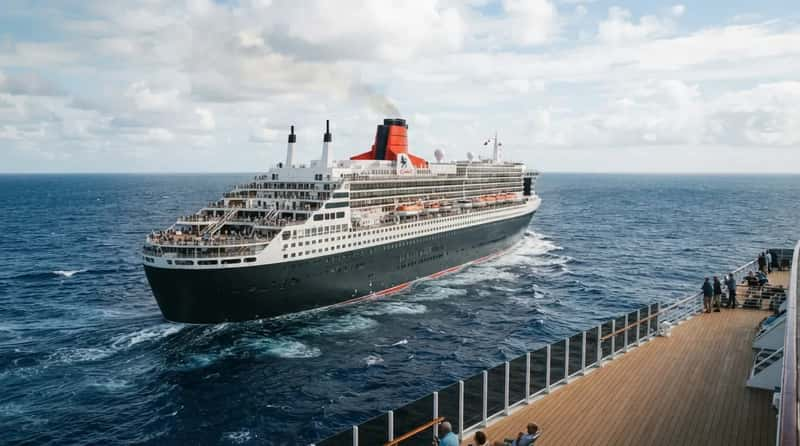
The unhurried pace is deliberate. Queen Mary 2 was designed with a top speed of around 30 knots, yet the scheduled crossing is built around a leisurely seven nights. Cunard, founded in 1840, has priorities other than getting you there fast.
That’s why the week feels spacious instead of rushed. You’re paying for the full week on purpose. The point of the trip is the days at sea, not the destination.
That leisurely pace does raise one nervous question about the sea itself…
#12 – The Scary Atlantic Reputation Is Mostly Overblown
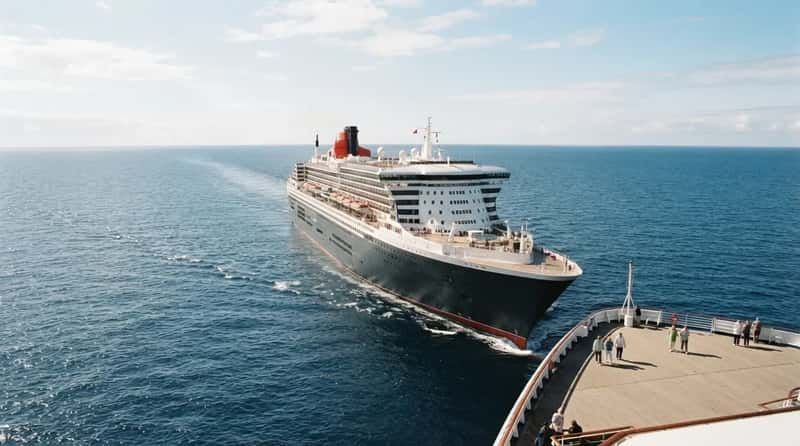
Everyone braces for violent swells. Reviewers describe something calmer. One travel writer said only one of three crossings had a couple of rough days, and the other two were mostly as calm as a pond. Fellow passengers on another sailing called it the smoothest ship they’d ever been on.
Part of it is the engineering. The ship has four stabilizers and crosses about 20 times a year, often through stormy winter swells. A typical cruise ship can rock noticeably in the mid-Atlantic. This one is built for the crossing in a way most cruise ships simply aren’t.
But smooth doesn’t mean warm, and the weather is the next surprise…
#11 – The Deck Weather Can Swing From Sweater to Sunscreen in One Day
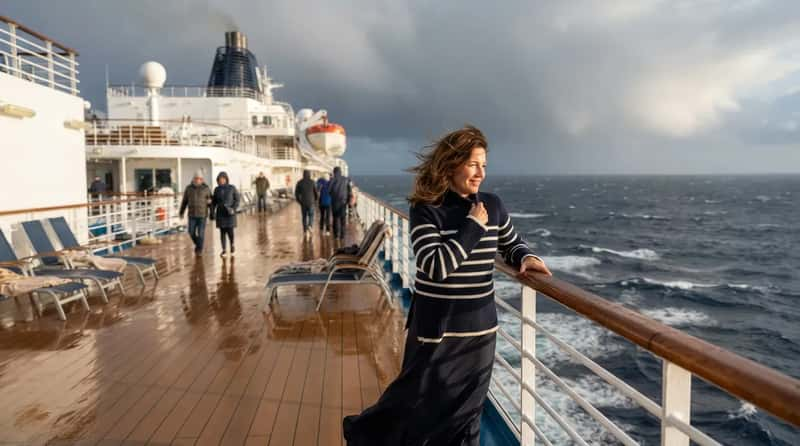
Nobody mentions the temperature rollercoaster. One guide says North Atlantic temperatures can swing from 50°F to 75°F depending on route and season. A sunny afternoon can turn into a wet, windy evening before the dinner bell rings.
One passenger described a crossing day as very windy outside, and wet. That account dates from 2009, but it matches the general reputation of the North Atlantic. Passengers often end up wearing a sweater over a gown within the same day. It’s why layering shows up on every packing list.
And speaking of gowns, the dress code is its own surprise…
#10 – Formal Nights Are Real, and the Suitcase Pays for It
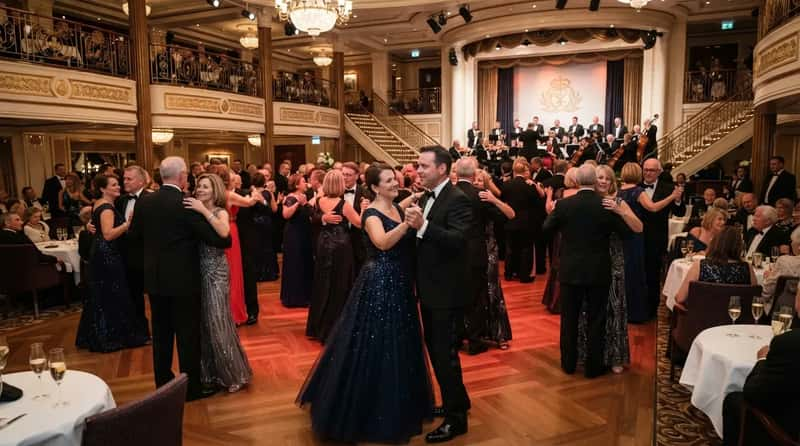
On many cruises, formal night is a polite suggestion. On Cunard, it’s part of the culture. Cunard advertises glittering Gala Evenings as a signature part of the experience, and plenty of passengers show up in tuxedos and ball gowns.
Here’s where opinions split. Many guests say dressing up is half the charm of an ocean liner. Others call it the biggest suitcase tax at sea, especially on a seven-night trip with no port days to find a laundromat. The second night is often when people first realize how much they packed, or didn’t.
Even your dinner table is decided before you step on board…
#9 – Your Ticket Quietly Decides Where You Eat
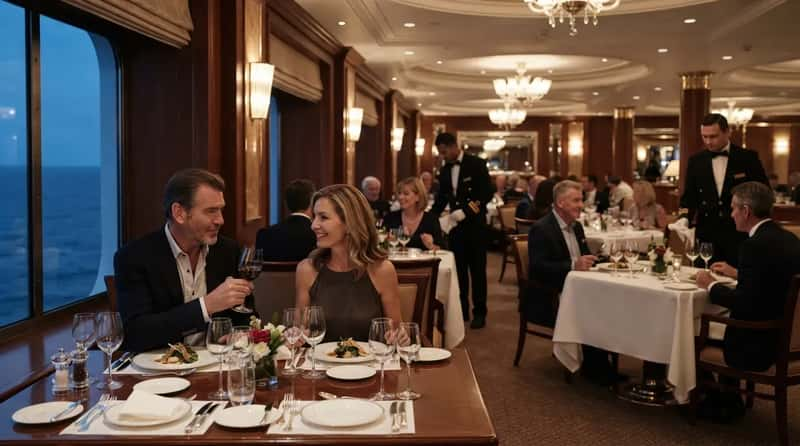
Dining isn’t a free-for-all on this ship. Your main restaurant is determined by your accommodation grade. That means the cabin you picked on the booking screen shapes the room where you spend your evenings.
Outside the main dining room, the ship’s social life spreads out. Cunard says music drifts around every corner in the evening, and bars like the Chart Room serve zodiac-themed cocktails with live music. Where you eat is fixed, but where you spend the rest of the night is up to you.
Worth Knowing
- Your accommodation grade, not your mood, sets your main dining room.
- Cunard’s restaurant lineup includes Britannia, Princess Grill and Queens Grill.
- Evenings are the social peak, with live music in several venues.
- The Chart Room is one stop where the cocktails follow a zodiac theme.
Then there’s the passenger list nobody expects: the four-legged ones…
#8 – There’s a Kennel Aboard, and Dog Owners Live by a Visiting Schedule

Yes, pets cross the Atlantic too. Queen Mary 2 is famous for its onboard kennels, a rarity among ocean liners. One passenger who brought a dog described visiting hours from 8am to noon and 3pm to 6pm.
The hard part is the paperwork. For travel to the UK, that passenger listed USDA paperwork, vet visits and tapeworm treatment, all within a 10-day window including weekends. Coming back to the U.S. was reportedly much easier, with only a rabies certificate upload to the CDC website.
Even without a dog, staying connected becomes its own puzzle…
#7 – You Can Check Your Home Cameras From the Middle of the Ocean
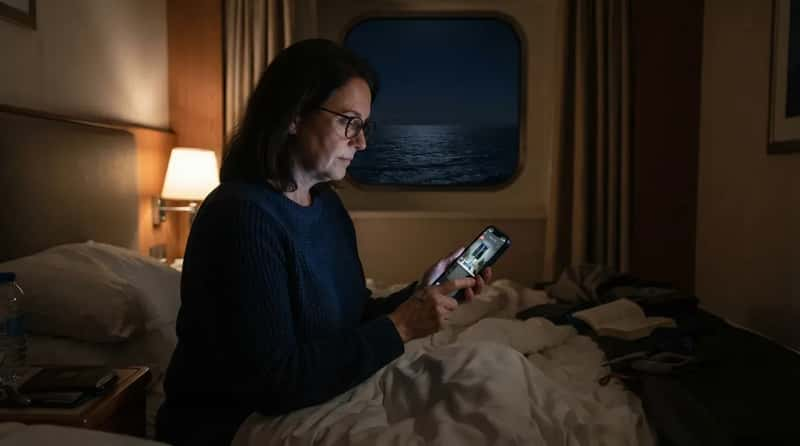
Being cut off isn’t quite true anymore. One reviewer noted that technology has advanced enough to check your home security cameras from the middle of the Sargasso Sea. That’s a strange sentence to read, and a stranger one to live.
The trap is your phone’s roaming settings. Airplane mode is what protects you from massive fees at sea. The ship feels isolated, but the data meter can still run up if you’re careless. Most seasoned crossers set up their phones on day one, long before the second night.
Once the phone goes in a drawer, you start to notice what the ship offers instead…
#6 – A Floating Town With a Planetarium, a Casino and Some Questionable Art
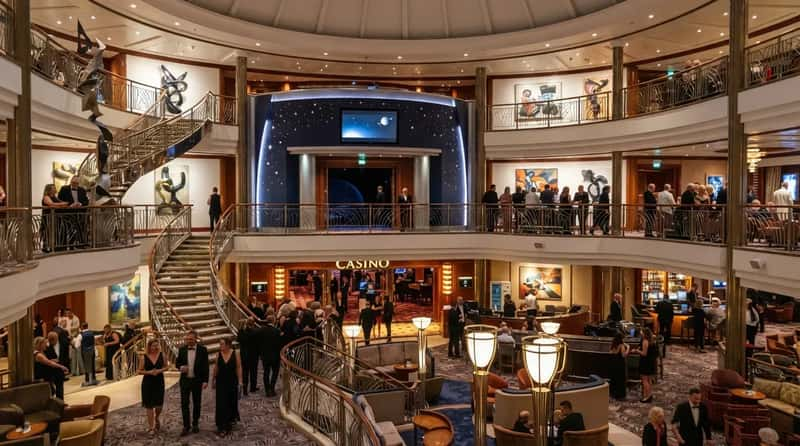
This is no simple ferry. A Washington Post writer listed at least three pools, a gym, dog kennels, a planetarium, a casino and much more. There’s even a fine-art gallery, though that writer didn’t love the work on display.
That’s one critic’s opinion, and it shows how personal the onboard experience is. A ship with no ports has to be its own entertainment district. Cunard also advertises libraries, film screenings, planetarium shows and Cunard Insights talks as part of the offering.
Some 2026 sailings take that idea even further…
#5 – Some Crossings Come With a Full Theme, From Theatre to Orchestra

Not every crossing is a blank week. A May 2026 westbound sailing was billed as London Theatre at Sea with the Olivier Awards. A September 2026 sailing was built around Anthony Inglis and the National Symphony Orchestra.
The biggest milestone lands in November. Cunard is marking Queen Mary 2’s 450th transatlantic crossing on a 7-night sailing from November 10 to 17, 2026. Even the calendar can change the flavor of your week. The same ship can feel like a concert hall or a history museum depending on the date.
All that entertainment still doesn’t compete with the final morning…
#4 – The Sunrise Arrival Is the Moment Everyone Ends Up Talking About
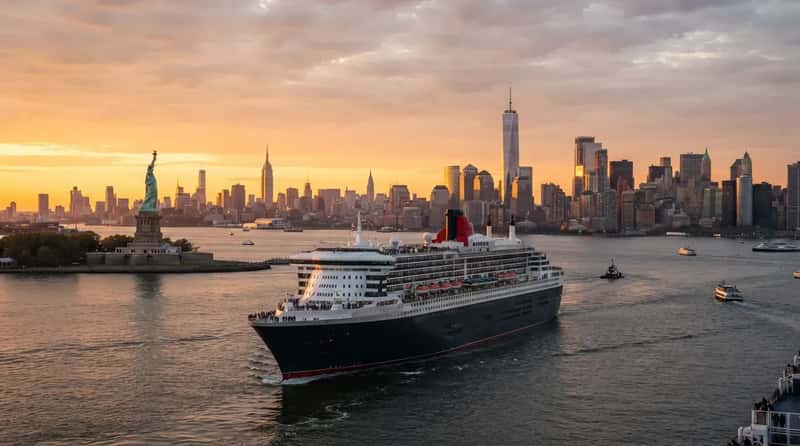
Westbound passengers get the grand finale. One rail-travel expert describes a spectacular early-morning arrival into New York harbour, with the Manhattan skyline lit by the rising sun. It’s the payoff for six days of open water.
The practical details matter too. Departures run from Southampton and New York’s Brooklyn Cruise Terminal at Pier 12. Eastbound, travelers reach London from Southampton by train in around 80 minutes. Where you land shapes how the whole trip ends.
At a Glance
- Length: 7 nights, with days 2 through 7 at sea.
- U.S. terminal: Brooklyn Cruise Terminal, Pier 12.
- UK port: Southampton, about 80 minutes from London by train.
- Best view: A westbound dawn arrival with the Manhattan skyline catching the sun.
Which is exactly why some people never want it to end…
#3 – Some Passengers Book the Return Trip Before They’ve Even Landed
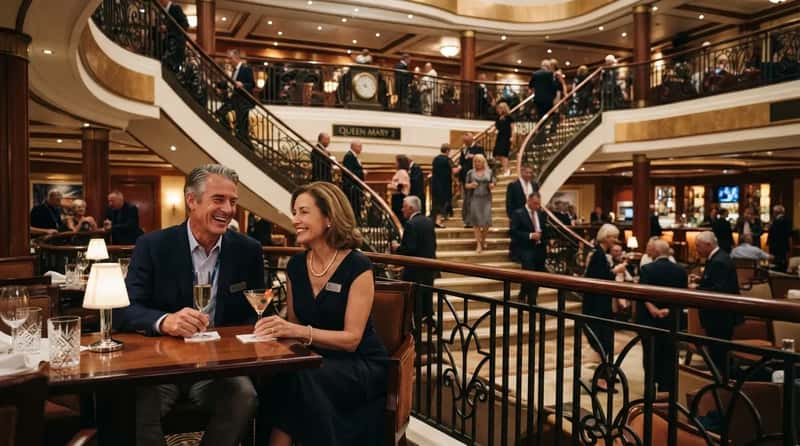
Here’s a quirk you’ll hear on the second night. Many Queen Mary 2 passengers book back-to-back transatlantic crossings. One veteran writer has done 14 of their 22 transatlantic crossings on the QM2.
Their reasons aren’t about luxury alone. They cite long relaxing days at sea, quiet moments of reflection, interesting people to meet, and entertainment and enrichment. For repeat crossers, the voyage isn’t a way to get somewhere. It is the vacation.
And that loyalty has a very practical reward waiting at the other end…
#2 – Jet Lag Mostly Disappears
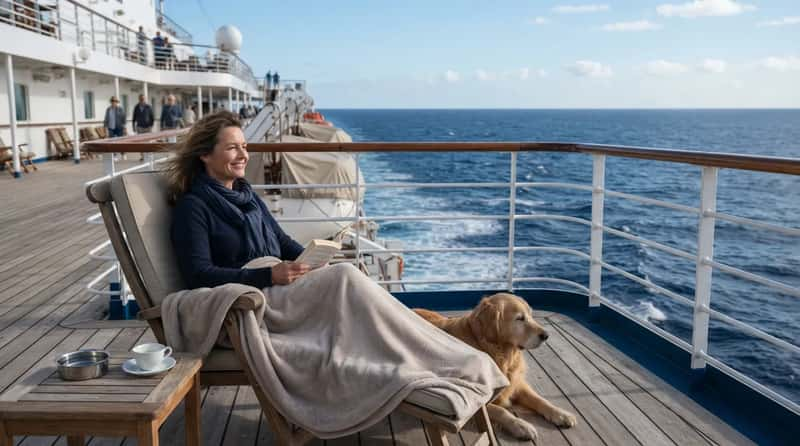
This is the benefit nobody believes until they feel it. One veteran says to expect to arrive on either side of the Atlantic refreshed, without the usual jet lag. A passenger who traveled with a dog said the gradual clock changes largely eliminated jet lag on arrival.
The reason is the slow shift. A flight drops you into a new time zone all at once, while a non-stop crossing spreads the change across the whole week. Your body gets seven nights to catch up instead of seven hours. It’s the opposite of stepping off a plane into the wrong day.
But the strongest reason to cross might not be about sleep at all…
#1 – You May Be Sailing on the Last One of Its Kind
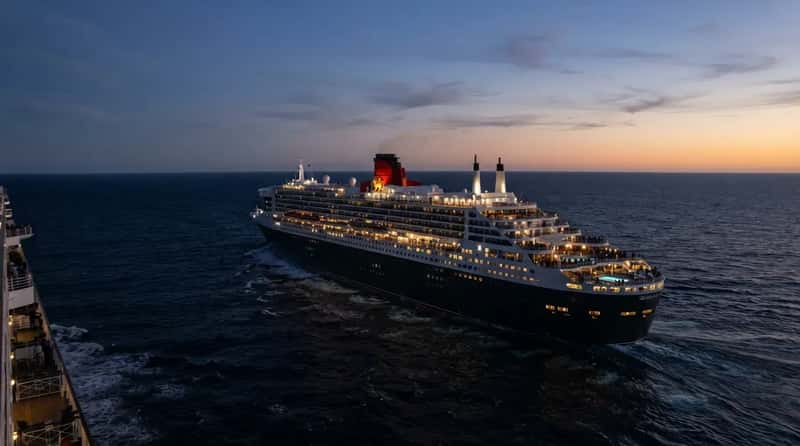
The Washington Post called Queen Mary 2 the only remaining passenger ship of its kind. It is the largest ocean liner ever built and among the most expensive, weighing three times what Titanic did and costing nearly $1 billion. That sinks in around the second night, when the ship starts to feel like a small city.
Cunard’s listing puts it in human terms: 2,683 guests and 1,173 crew share the ship. You’re not on a cruise. You’re on a working relic of the age of ocean liners. One older passenger account describes the bittersweet feeling of an amazing experience coming to an end as the voyage winds down.
The first night is champagne and sail-away. The second night is when the ship stops feeling like a trip and starts feeling like a place. The clocks shift, the land disappears, and the ship’s rhythm takes over.
Most of these surprises are quiet ones: an extra hour of sleep, a jet lag that never shows up, a dinner room chosen by your ticket. They explain why some passengers sign up again before they’ve even landed. Westbound or eastbound, which crossing would you choose?