Most people treat their carry-on like a soft-sided trash compactor – shoving in whatever fits and hoping for the best at the gate. But the travelers who never check a bag, never pay a surprise fee, and glide through security while everyone else scrambles? They’re operating on a completely different system. It’s not that they pack less. They pack smarter, and the gap between those two things is massive.
Some of what’s below is genuinely counterintuitive – things most travelers would never think to do, or things they actively avoid out of habit. A few of them will make you rethink trips you’ve already taken. every single one. Here’s what the road warriors actually do.
#1 – Get TSA PreCheck – It Changes Every Single Trip
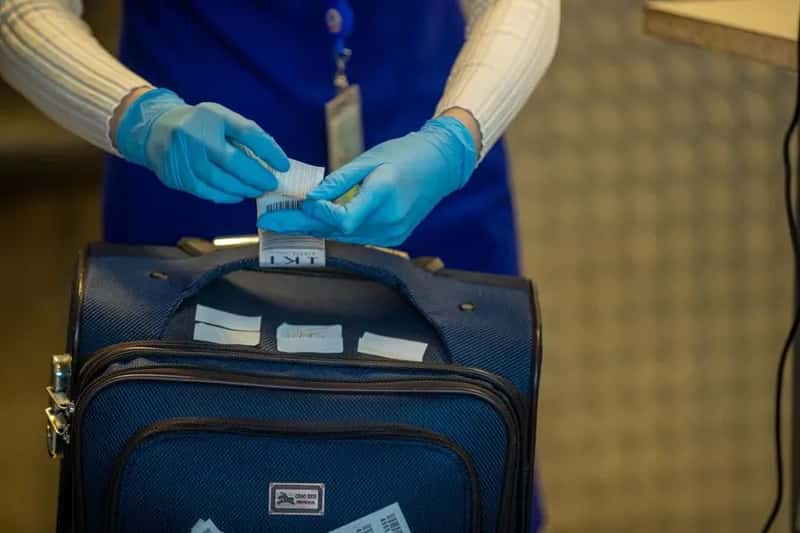
Everything else on this list makes your carry-on smarter. This one makes your entire airport experience faster, calmer, and less stressful than the vast majority of people around you. In a PreCheck lane, you keep your shoes on, your laptop stays in your bag, and your liquids stay packed. You walk through a dedicated lane that almost never has a line. As of September 2025, 99% of TSA PreCheck passengers waited less than 10 minutes at airport security.
The standard enrollment fee for TSA PreCheck is around $80, and it covers five years of membership – that works out to about $16 per year for faster, simpler airport screening. Beyond time savings, PreCheck substantially reduces traveler stress – members rate screening stress at 3.3 out of 10, versus 7.3 for non-members. Frequent flyers consistently call it the single best travel investment they’ve ever made. If you do nothing else on this list, do this one first.
At a Glance
- Cost: ~$78–$85 for 5 years (varies by enrollment provider)
- Wait time: 99% of PreCheck passengers through in under 10 minutes
- Perks: Shoes on, laptop in bag, liquids stay packed
- Coverage: Available at 200+ U.S. airports, accepted by 90+ airlines
- Pro tip: Many travel credit cards reimburse the enrollment fee entirely
#2 – Keep a Full Change of Clothes in Your Personal Item – Always
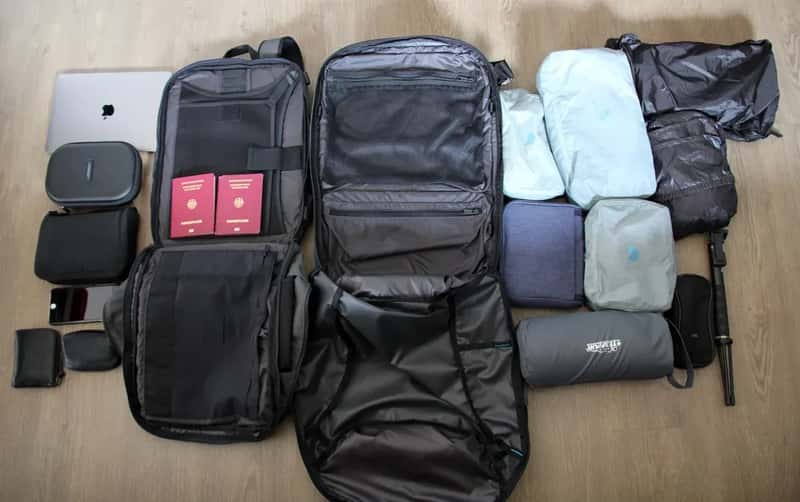
Checked bags get lost, delayed, and misdirected every single day. Carry-ons get gate-checked when bins fill up. Even the most carefully packed bag can vanish somewhere between the departure gate and the destination carousel. The insurance policy frequent flyers carry costs nothing extra: one spare outfit, clean underwear, a toothbrush, and a travel-sized toothpaste tucked into your backpack or personal item. It fits in less space than most people imagine.
This hack rewrites the emotional math of travel entirely. When you have a clean outfit and basic toiletries on your person, a delayed bag shifts from a crisis to a minor inconvenience. The travelers who look eerily calm at baggage claim when the carousel stops and their bag never appears? They packed this way. Roll a day’s worth of clothes tight, add a spare charging cable, and the whole kit disappears into one large zippered pocket. Two minutes of preparation. Potentially trip-saving.
#3 – Order a Special Meal in Advance to Get Served First
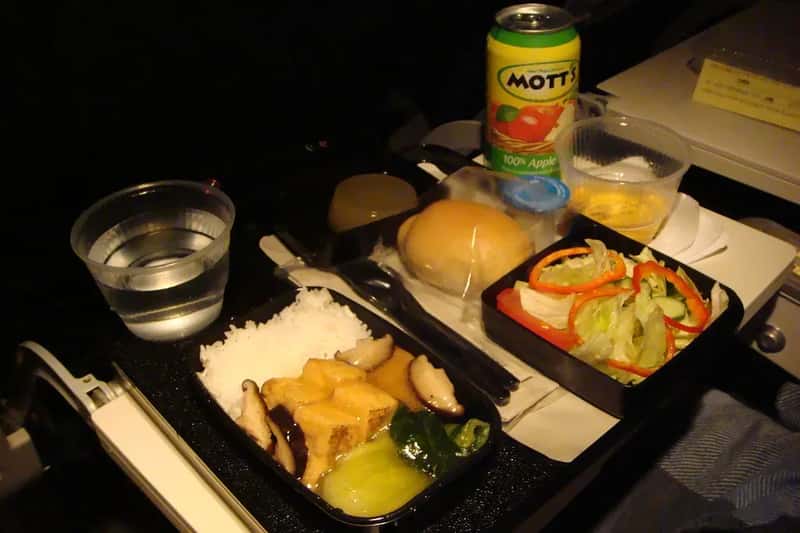
This one sounds too good to be true – and yet frequent flyers on long-haul routes have been quietly using it for years. Special meals (vegetarian, kosher, gluten-free, low-sodium) are served before the standard meal service begins, which means you eat earlier, finish earlier, and can fall asleep before everyone else is still waiting on their tray. On a red-eye or overnight international flight, that timing gap can translate to a meaningful extra hour of rest.
Beyond the timing, special meals are frequently fresher and lighter than the default options. The fruit platter and Asian vegetarian options, in particular, have a loyal following among flight attendants and frequent flyers who’ve quietly figured this out. It’s completely free – you just request it at least 24 hours before departure through the airline’s website or app. Most travelers don’t even know this perk exists.
#4 – Use the KonMari Vertical Folding Method for Maximum Capacity
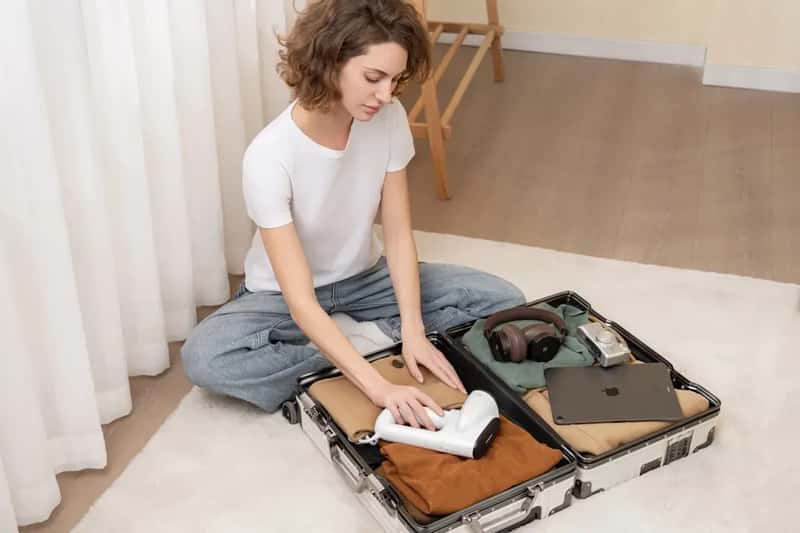
Most people stack clothes flat in their carry-on like lasagna layers, which means finding anything requires excavating through every item on top of it. The vertical folding method flips that completely. Instead of stacking, you fold clothes into compact rectangles and stand them upright side by side – so you can see every single item in the bag at a glance without touching anything. It’s faster to pack, faster to unpack, and dramatically reduces wrinkles.
Travelers who switch to vertical packing routinely report fitting noticeably more into the same bag – not because they packed lighter, but because they stopped wasting the vertical space that flat stacking ignores entirely. The method works best in the main compartment of a carry-on, paired with compression cubes for bulkier items. Try it once on your next trip and it’s almost impossible to go back to the old way.
#5 – Bring a Reusable Water Bottle and Fill It After Security
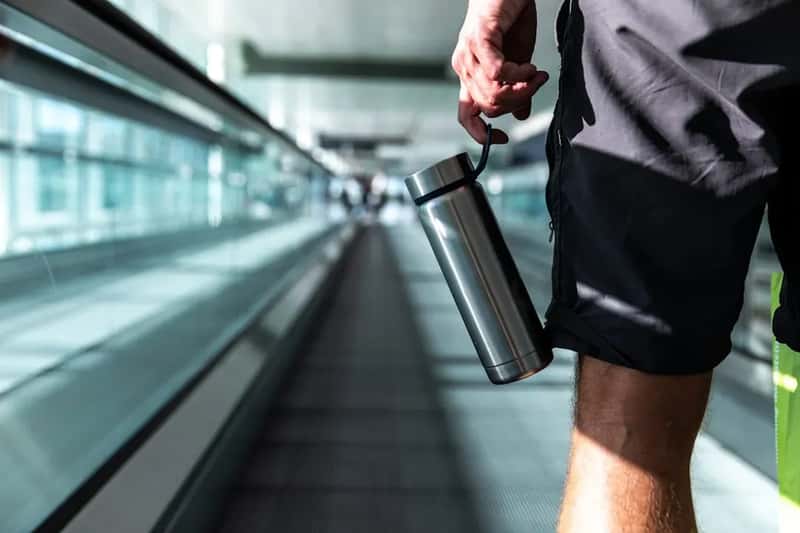
A single bottle of water past airport security can cost four dollars or more. On a long layover with a delay, that adds up fast. The move every frequent flyer makes: empty the bottle before TSA, then refill it at one of the bottle-filling stations immediately after clearing the checkpoint. Most major U.S. airports now have dedicated hydration stations near restrooms and gate areas – they’re faster than water fountains and completely free.
Cabin air is notoriously dry. Airplane cabins maintain just 10–20% humidity – the Sahara Desert sits at 25%, while your comfortable home hovers around 40–50%. On a 10-hour flight, you may lose up to 1.5 to 2 liters of water through breathing alone. Arriving dehydrated is one of the primary reasons travelers feel sluggish and jet-lagged when they land. A full bottle at the gate is one of the simplest, highest-impact habits a traveler can build.
Worth Knowing
- Cabin humidity often sits well below the Sahara Desert’s 25% average
- You can lose up to 2 liters of water on a 10-hour flight just from breathing
- Most large U.S. airports have free bottle-filling stations past security
- Salty airline snacks (pretzels, chips) accelerate in-flight dehydration
- Staying hydrated is one of the most effective ways to reduce jet lag on arrival
#6 – Pre-Download Entertainment and the Airline App Before You Leave the House
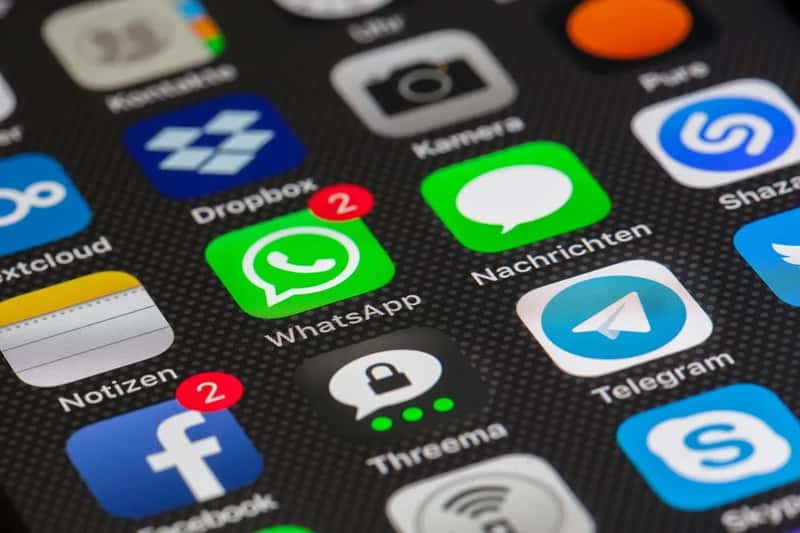
There’s a version of airport chaos that’s entirely self-inflicted: arriving at the gate to discover your boarding pass is buried in an email, the airline app isn’t installed, and you’re burning through mobile data trying to download a movie before wheels up. Downloading the airline app before you travel gives you instant access to your boarding pass, real-time gate updates, and the seat map – all things that are much harder to manage with weak airport Wi-Fi and a boarding queue forming behind you.
The seat map angle is underrated. Most airline apps let you monitor open seats right up until boarding closes, which is exactly how frequent flyers snag exit rows or suddenly-vacant window seats an hour before departure. A downloaded boarding pass, a downloaded movie or podcast, and a fully charged phone costs you five minutes of preparation the night before and reliably saves twenty minutes of gate-area stress.
#7 – Pack Neutral, Mix-and-Match Clothes Only – No Exceptions

The most common carry-on mistake isn’t a packing technique failure – it’s a clothing selection mistake made before packing even begins. A statement piece that only works with one other outfit is a space trap. Five tops that go with three bottoms give you fifteen outfit combinations from eight total items. The math makes packing light feel less like sacrifice and more like strategy.
The average traveler packs significantly more clothing than they actually wear because they pack for every possible scenario instead of the most likely ones. Frequent flyers pack for the itinerary they have, not the one they imagine. Two or three pairs of bottoms, tops that layer, one slightly dressier option – that discipline alone can eliminate the need for a checked bag entirely. The wardrobe edit happens at home, not at the gate.
#8 – Use a Separate Laundry Cube Inside Your Carry-On
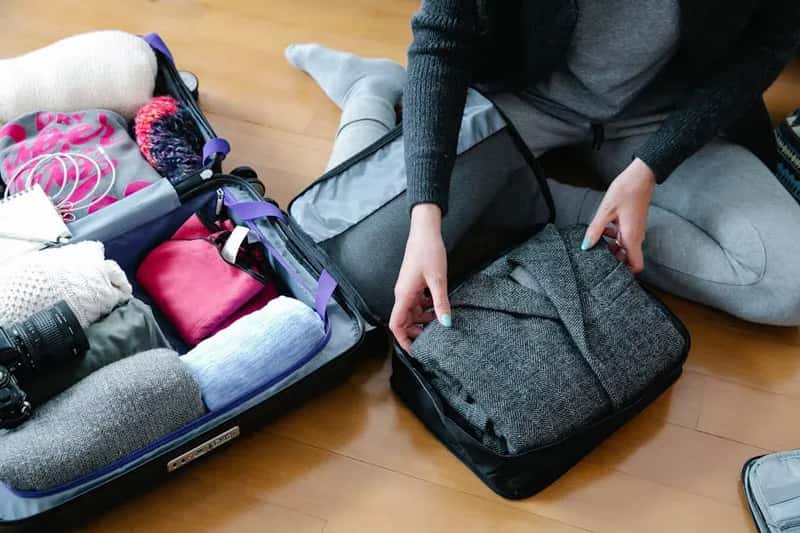
By day three of a five-day trip, most travelers’ bags have turned into a swamp – clean and dirty clothes mixed together, odors building, repacking becoming a guessing game. The fix is almost embarrassingly simple: dedicate one packing cube exclusively to dirty laundry. Used items go in as the trip progresses, odors stay contained, and the rest of the bag stays organized. Mesh cubes work especially well because they allow airflow and reduce moisture buildup.
The laundry cube also doubles as a compression tool for the return trip. Worn fabrics compact tighter than freshly folded ones, so you can squeeze the cube hard on the way home and free up room for anything you picked up along the way. Travelers who discover this system almost universally say they’ll never go back to mixing clean and dirty in the same compartment. It’s the kind of small habit that makes a trip feel less chaotic from the inside out.
Fast Facts
- One dedicated laundry cube keeps odors contained without sealing in moisture
- Mesh cubes allow airflow – better than solid-sided alternatives for worn clothes
- Worn fabrics compress tighter than fresh ones, freeing return-trip space
- Works alongside outfit cubes (#9 below) for a fully organized carry-on system
#9 – Dedicate One Packing Cube Per Outfit
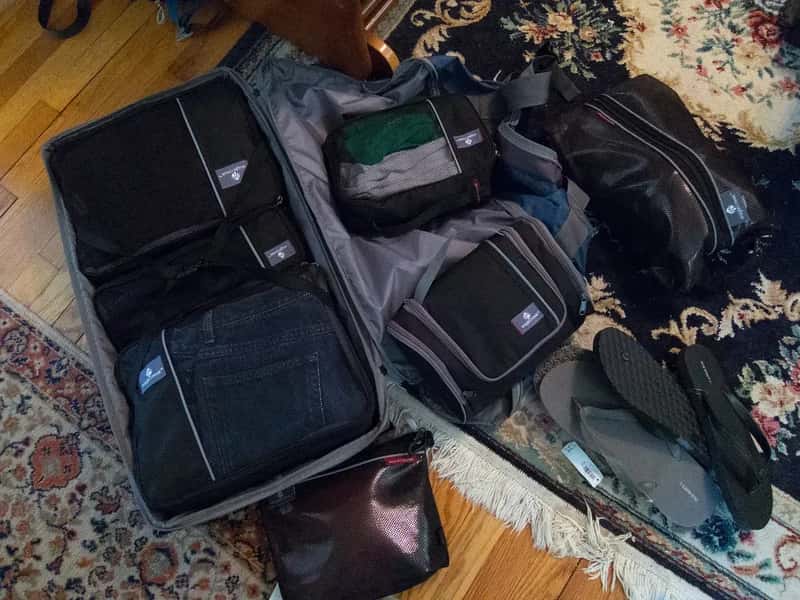
Digging through a bag at 6 a.m. in a dark hotel room looking for a matching top is a special kind of travel misery. The cure is organizing by outfit rather than by clothing category. One cube holds one complete outfit – top, bottom, undergarments – so you grab a single cube and walk to the bathroom ready to get dressed, no searching required. It sounds like it would waste space, but it doesn’t; items that are meant to be worn together compress against each other efficiently.
The real payoff comes at the end of the trip. Repacking is instantaneous. Used an outfit? Fold it back into its cube. The cube goes back in the bag. You don’t spend forty minutes trying to reconstruct the packing puzzle before a 7 a.m. checkout. Frequent flyers on multi-city trips consistently call this the single biggest quality-of-life upgrade in their entire packing system – and it requires no extra gear beyond the cubes most travelers already own.
#10 – Wear Your Bulkiest Items Onto the Plane, Not in the Bag
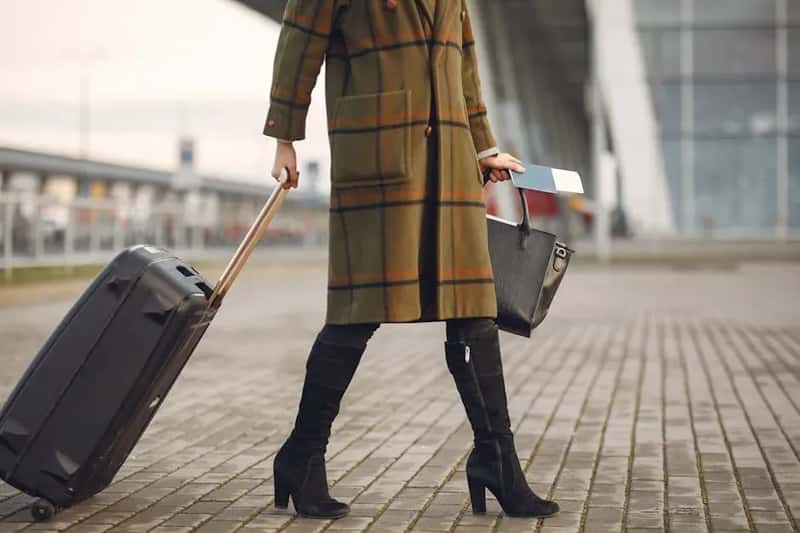
A heavy jacket, thick-soled boots, a chunky knit sweater – these items punish carry-on packers more than almost anything else. The fix isn’t leaving them home. It’s wearing them through the gate. Your body doesn’t count as carry-on space, and no airline policy charges you for what you’re wearing. Wear the boots, carry the sneakers in the bag. Wear the heavy fleece, pack the light cardigan. The cabin is usually cold anyway – you’ll want the layers.
Once you’re on the plane, the jacket goes in the overhead, the boots come off under the seat, and you settle in comfortably. The bag, meanwhile, has room for things that actually need to be packed. This works especially well in winter when heavy outerwear is expected at both ends of the trip. It’s not glamorous advice, but frequent flyers who do it consistently say it’s how they turned a two-bag trip into a one-bag trip.
#11 – Use Compression Packing Cubes, Not Regular Ones
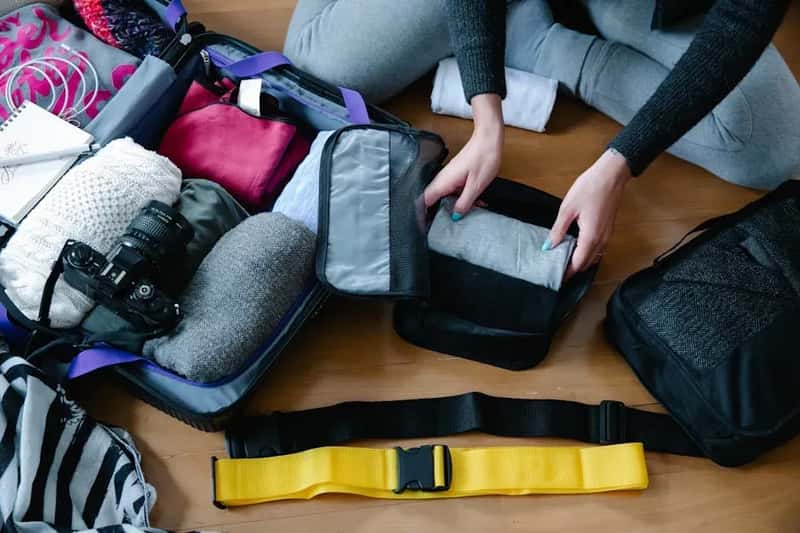
Standard packing cubes are useful. Compression packing cubes are a different category of tool entirely. They have a second zipper that forces air out of the cube after you’ve packed it, dramatically shrinking bulky items like hoodies, sweaters, and jackets. They don’t reduce weight – but they reduce volume, and volume is the enemy when you’re working within carry-on size limits. Airlines charge by weight on checked bags but restrict by size on carry-ons, so volume compression is exactly what you need.
Flight attendants who spend weeks at a time living out of a single bag rely on compression cubes as a core part of their system. A full set can realistically turn what would have been a checked-bag packing list into a carry-on trip. The investment is modest – a quality set runs between $30 and $60 – and the payoff compounds across every trip you take afterward.
Quick Compare
| Feature | Regular Cubes | Compression Cubes |
|---|---|---|
| Volume reduction | Minimal | Significant (extra zipper) |
| Best for | Organization | Bulky fabrics + organization |
| Weight impact | None | None |
| Typical cost | $15–$30 a set | $30–$60 a set |
#12 – Pack Large Electronics on Top for Faster TSA Screening
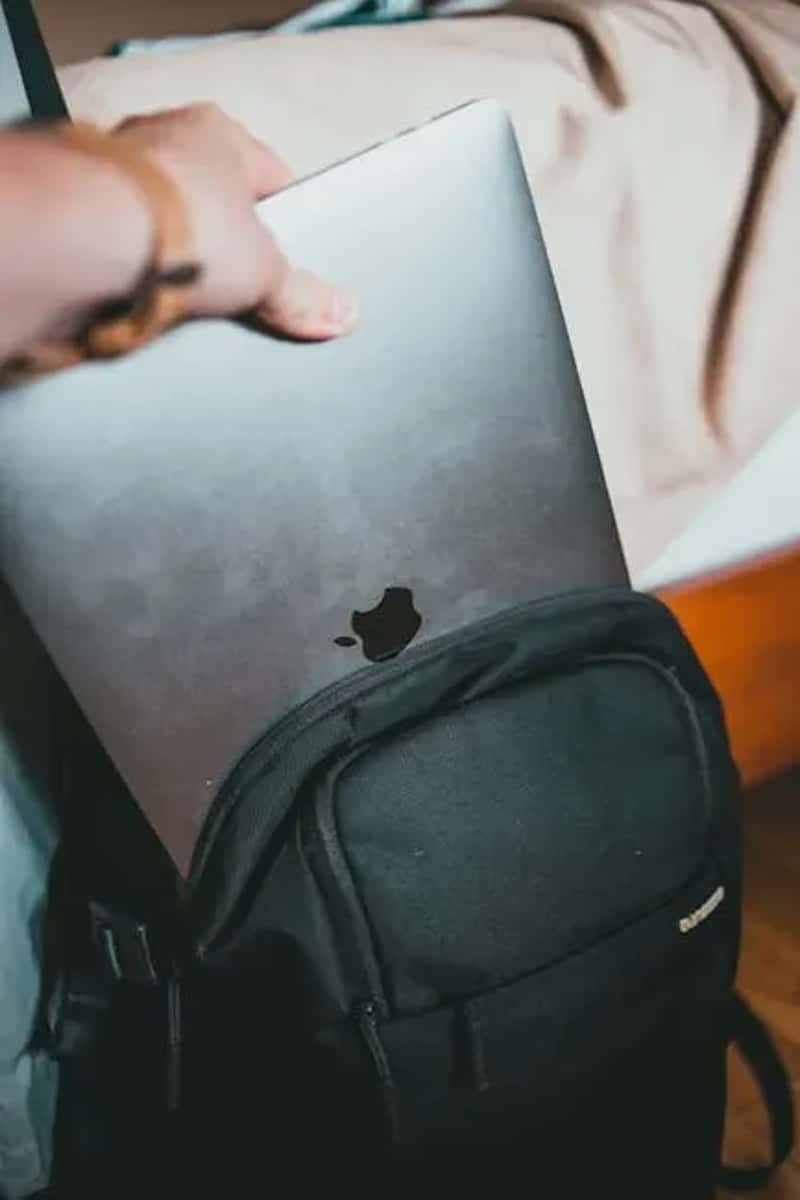
The TSA literally tells you to do this – and almost no one actually does it consistently. When your laptop is buried under three rolled T-shirts and a toiletry cube, you create a backup at the X-ray belt that ripples through the entire checkpoint. The agent flags the bag, your bin gets pulled, and suddenly twenty people are sighing behind you. You’re required to remove electronics larger than a cell phone from your bag and place them in a separate bin – so there’s no reason not to make that as fast as possible.
The simplest system: keep a dedicated electronics packing cube at the very top of your carry-on, holding your laptop, tablet, power bank, cables, and adapters in one organized layer. At security, one zip and the whole cube comes out cleanly. No digging, no scrambling, no hold-up. It takes thirty seconds to set up when you pack and saves five minutes (plus a lot of embarrassment) every time you go through a checkpoint.
#13 – Board Last When Seats Are Pre-Assigned
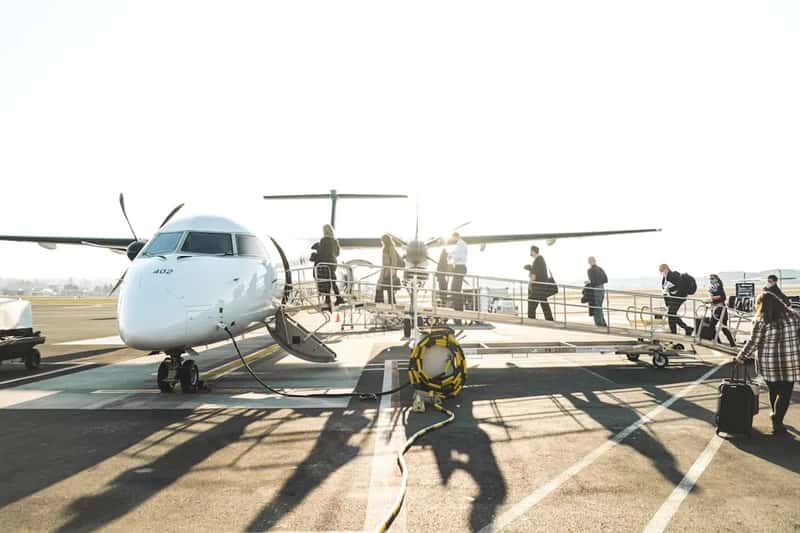
Conventional wisdom says board as early as possible to secure overhead bin space. But on flights where seats are already assigned, early boarding is mostly just sitting on a parked plane for an extra 30 minutes while everyone else files past you. Boarding last means you’ve been comfortable in the gate area longer – and if any seats have opened up (a window seat whose occupant switched, a row with an empty middle), you’re the last one on and have your pick of what’s available.
The overhead bin concern is real but overstated on most domestic routes. Gate agents routinely offer free gate-checks at the end of boarding when bins are full – meaning your bag goes under the plane at no charge, which is honestly the best possible outcome if you’re not carrying anything fragile or time-sensitive. The travelers who board last are almost always the most relaxed people on the plane. That’s not an accident.
#14 – Stuff Your Shoes With Socks and Small Items – Every Single Time
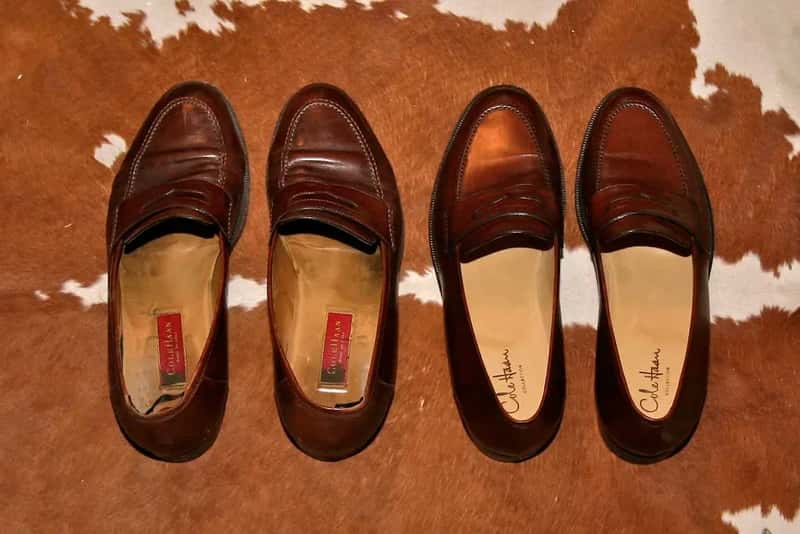
Shoes are hollow. Most people pack them hollow anyway, which is the packing equivalent of leaving an empty room in your suitcase. Stuffing shoes with rolled socks, charging cables, or small adapters is one of the most consistently repeated tips among experienced carry-on travelers. It keeps shoes from getting crushed, maintains their shape, and reclaims real estate inside a bag that’s already fighting for every cubic inch.
The trick compounds quickly. A pair of rolled ankle socks per shoe, a charging cable coiled into the toe box, a small adapter tucked alongside – suddenly your shoes are pulling double duty as an organizer. Most travelers waste several inches of usable carry-on space per trip just by leaving shoes empty. Pack them toe-first with soles facing outward against the bag wall, and you’ll be surprised how much room opens up around them.
#15 – Put Your 3-1-1 Liquids Bag in the Front Pocket, Not Buried Inside
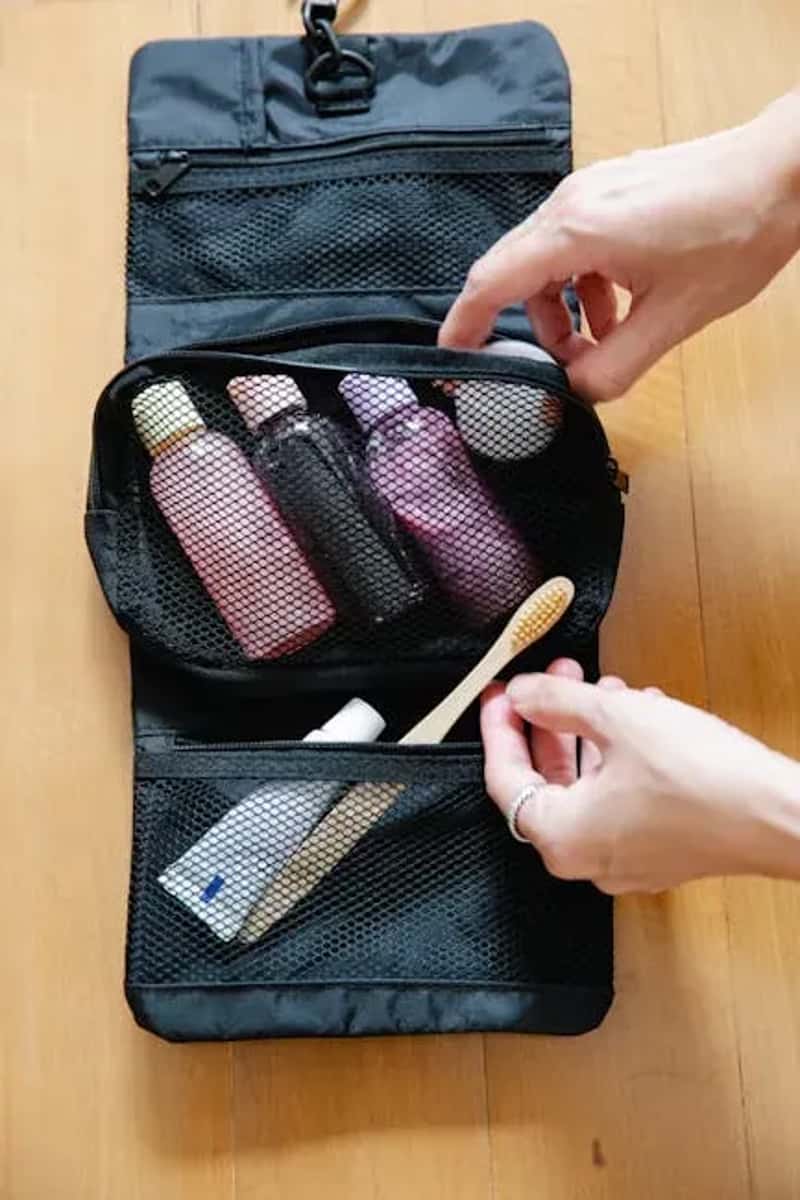
Every year, thousands of travelers hold up security lines because they packed their liquids bag at the bottom of their carry-on and have to excavate it in front of an impatient crowd. The TSA recommends placing your 3-1-1 bag – liquids, gels, and aerosols in containers of 3.4 ounces or less – in the front pocket of your carry-on for easy access. It sounds obvious. Almost nobody does it consistently.
If you want to sidestep the hassle of the 3-1-1 bag entirely, solid toiletries are the move: shampoo bars, solid perfumes, and toothpaste tablets bypass the liquid rule completely. Frequent flyers who’ve switched to solid toiletries say it’s the single biggest TSA checkpoint time-saver most travelers haven’t adopted yet. They’re also lighter, they don’t leak, and they last longer than their liquid equivalents. Worth the switch even before the convenience factor.
Why It Stands Out
- Solid shampoo bars, conditioner bars, and toothpaste tablets skip the 3-1-1 rule entirely
- Solid toiletries are lighter, won’t leak, and typically last longer than liquids
- Front-pocket placement of your liquids bag cuts checkpoint time by 30+ seconds
- One quart-size bag is still the limit – but it goes farther than most people realize
#16 – Roll Soft Clothes, Fold Structured Ones – Never Mix Them Up
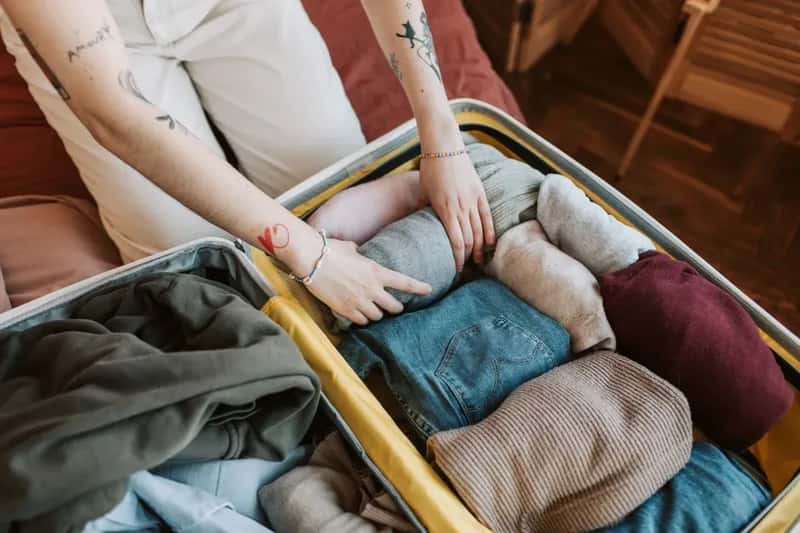
Most packing advice tells you to roll everything or fold everything, as if the same rule applies to a linen blazer and a cotton T-shirt. It doesn’t. Rolling works beautifully for soft, flexible fabrics – T-shirts, leggings, underwear, thin sweaters – because it compresses them evenly and saves real space. Rolling those same items can save around 15–20% more space compared to flat folding, and the effect is even more pronounced inside compression cubes.
Structured pieces – blazers, dress shirts, jeans with stiff denim – fold better than they roll, because rolling creates creases in fabric that was designed to hold a shape. Arriving at a business meeting with a rolled blazer that looks like a paper towel tube is a specific kind of avoidable problem. Roll the T-shirts tight, fold the dress shirt sharp, and suddenly a week’s worth of clothes fits where three days used to. The distinction matters more than most people realize until they get it wrong once.
#17 – Use a Multi-Pocket Travel Vest as Wearable Carry-On Space

Airlines weigh your bag. They almost never weigh your jacket. That structural blind spot in baggage enforcement is something frequent flyers exploit constantly and unapologetically. A travel vest – sometimes called “wearable luggage” – is engineered with deep interior pockets designed to hold electronics, chargers, cameras, snacks, documents, and small clothing items. Some vests, like the SCOTTeVEST, are built to hold up to 20 separate items. That’s essentially a personal item you’re wearing through the gate.
Beyond the space savings, the vest simplifies security. Everything small and electronic is already on your body in organized pockets, so there’s less to pull out of your bag at the checkpoint. It also means your actual carry-on has room for things that genuinely need to be packed. It looks a little utilitarian – but so does paying $35 to check a bag that didn’t need to be checked.
#18 – Store Your Carry-On in the Bin Across the Aisle, Not Above Your Seat
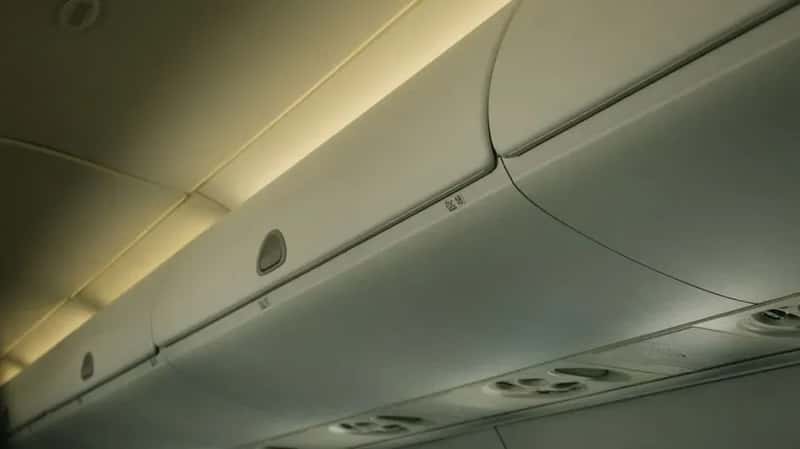
Almost every traveler automatically loads their bag into the overhead bin directly above their row. It turns out, that’s one of the least efficient things you can do when it’s time to deplane. Placing your carry-on in the bin on the opposite side of the aisle eliminates the awkward suitcase swing across your own body, lets you pull the bag straight down without blocking the person behind you, and shaves real seconds off your exit. On a full flight, seconds multiply.
It also lets you keep a clear sightline to your bag throughout the flight, which matters more than most people think on crowded short-haul routes. The move works best when you board early enough to claim the space. Board, take one step past your seat, stow the bag across the aisle, sit down. Deplane like you’ve done this a thousand times – because now you have the system of someone who has.
Frequent flyers aren’t operating on luck or extra time at the airport. They’ve built a carry-on system that removes friction from every stage – packing, security, boarding, deplaning, and unpacking on the other end. These hacks aren’t tricks so much as habits that compound. Use one and your next trip is slightly better. Use ten and you start moving through airports like someone who genuinely belongs there. Which one did you already know – and which one surprised you?