Think today’s motel room is bare-bones? A 1970s one had a coin-operated shaking bed, an ashtray on every surface, a phone that mostly reached the front desk, and a glowing sign you could spot from a mile away. These are the 19 things that were once standard on the roadside and are now close to impossible to find.
Some were killed off by lawsuits and some by smartphones, and a few just slipped away while nobody was watching. The strangest part is that the thing travelers lost most can’t be packed in a suitcase or sold at a flea market. It’s waiting at number one.
#19 – The Heavy Metal Key With a Giant Plastic Tag

Before keycards, your room key was a real piece of metal. It dangled from an oversized plastic tag stamped with the motel’s name and your room number. The tag was huge on purpose, so you’d feel it in your pocket and not drive off with it. Many of these tags carried a printed promise to cover the postage if you dropped the key in any mailbox.
Plenty of travelers forgot anyway, and the U.S. Mail did the rest. Motels moved on as electronic card locks spread, because changing a lock’s code is far easier than re-keying a door.
But the thing sitting right next to your bed was far more dangerous than a lost key…
#18 – The Ashtray on Every Nightstand (and the Burn Marks to Match)

In the 1970s, a motel room without an ashtray would have looked broken. Heavy glass or metal ones sat on nightstands, dressers, and bathroom counters. Smoking wasn’t a special request. It was the default.
That default left scars. Cigarette burns on nightstands, carpets, and bedspreads were so common they became part of the room’s character. Today most lodging brands run smoke-free or tightly restrict smoking, and the ashtray has quietly left the room.
Fast Facts
- In 1965, about 42.4% of U.S. adults smoked cigarettes, according to the CDC.
- The Surgeon General’s landmark smoking and health report came out in 1964, and rates have fallen ever since.
- By 2024, the adult rate was down to 9.9%, the first time the CDC survey recorded it under 10%.
- Preliminary 2025 figures put it even lower, at 9.1%.
Next up is a phone that didn’t quite work the way you’d expect…
#17 – The Rotary Phone That Mostly Called the Front Desk

A heavy rotary phone sat beside the bed, but it wasn’t always a clean line to the outside world. In many motels, picking it up got you the front desk or an operator, and long-distance calls could show up as extra charges on your bill. The person at the desk often knew exactly which room was calling before you said a word.
Mobile phones ended all that. Nobody dials the lobby for extra towels when a text does the job, and the dial phone became a relic.
The next item was the 1970s idea of luxury, and it ran on loose change…
#16 – Magic Fingers, the Quarter-Powered Shaking Bed

Drop a quarter in the box on the nightstand and the whole mattress shook for a few minutes. That was Magic Fingers, a coin-operated vibrating bed attachment that first caught on in the late 1950s. Motels loved it because it was a fun extra and a steady little earner.
Most people remember it as more novelty than comfort. The bed rattled, the timer ran out, and you were left wondering what you’d just paid for. A few vintage setups survive, but the coin-box vibrating bed is now a rare find.
The next item sat on the same nightstand, and you probably never questioned it…
#15 – The Flip-Number Clock Radio Bolted to the Nightstand

Time moved in tiny cards that flipped over with a soft click. Many motel rooms had a plug-in clock radio with fold-over numerals, sometimes bolted down so it couldn’t walk away. It was your alarm, your radio, and your only way to know how much sleep you had left.
The tradeoff was trust. Setting the alarm was fussy, and you had to hope the last guest hadn’t left it set for 4 a.m. Most travelers now skip the room clock entirely and use their phone. But the sound of those cards flipping is something plenty of people remember fondly.
The next one wasn’t for sleeping at all. It was pure advertising…
#14 – The Free Matchbooks and Postcards That Did the Advertising

Motels used to hand out free advertising by the handful. Printed matchbooks sat in a dish at the front desk or in the room, and picture postcards showed the building in its best light. A guest would light a cigarette, mail a card home, and spread the motel’s name without even trying.
It worked because so many people smoked, and smoking needed matches. As smoking declined, the matchbook went from smart marketing to collector’s item. Postcards survive in souvenir shops, but the motel’s own handout is mostly gone.
The next entry is a strange one, and it lived in the bathroom…
#13 – The Paper Band Across the Toilet and the Glasses Wrapped Like Gifts

You opened the bathroom door and found a strip of paper stretched across the toilet seat, promising it was sanitized for your protection. The drinking glasses sat in paper sleeves or wrappers, sealed like tiny presents. It was a cheap way to tell guests that somebody had cleaned.
Here’s the awkward truth: the paper told you very little. It said a room was cleaned, but not how well. Some places still use the toilet band, but most motels dropped it, and the wrapped-glass ritual faded as sealed cups and in-room coffee setups took over.
The next item turned the motel pool into a liability battle…
#12 – The Diving Board That Liability Fears Took Away

A kidney-shaped pool with a diving board was the pride of a roadside motel. Kids begged their parents to stop for it. For many families, it was the whole reason they picked one motel over the one down the road.
Then the lawsuits and insurance worries caught up. Many motel and hotel pools quietly pulled their diving boards, because one serious injury claim could be devastating for a small owner. Plenty of people call it a safety win. Others say the fun left with it, and a flat pool with a ‘no diving’ sign just isn’t the same.
Now for the look of the room itself, which was loud…
#11 – Harvest Gold, Avocado Green, and Wall-to-Wall Shag

The 1970s palette was bold: orange, brown, harvest gold, and avocado green. Motel rooms leaned on dark wood paneling, thick carpet, and patterned bedspreads that hid stains like a magician. Heavy drapes blocked every bit of daylight so travelers could sleep off a long drive.
Most of it was practical as well as trendy. Dark, busy patterns were a cheap way to hide wear. Today’s motels favor pale walls, clean lines, and washable surfaces, and the earthy 1970s look survives mainly in old photos and a few lovingly preserved properties.
The next one wasn’t inside the room at all. It was next door…
#10 – The Coffee Shop Steps Away From the Office

Plenty of motels had a diner or coffee shop on the property, or sat right beside a family restaurant. You’d check in, walk across the lot, and order eggs without starting the car again. For tired road-trippers, that was a huge selling point.
It’s mostly gone now. Howard Johnson’s, once famous for pairing orange-roofed restaurants with motor lodges, has shrunk to almost nothing. Delivery apps and gas-station food replaced the on-site diner, and many of those old dining rooms became offices or sat empty.
Worth Knowing
- The first Howard Johnson’s motor lodge opened in Savannah, Georgia, in 1954.
- By the late 1970s, the chain had more than 1,000 restaurants and over 500 motor lodges.
- The last Howard Johnson’s restaurant, in Lake George, New York, closed in 2022.
- The hotel brand lives on under Wyndham, with roughly 300 properties.
Check-in itself used to look very different, too…
#9 – The Handwritten Guest Register and Paper Registration Card

You signed your name in ink. A clerk copied your license plate onto a paper card, maybe pressed your credit card through an imprinter, and slid a key across the counter. Some motels kept bound guest books you could flip through.
The paper trail felt personal, but it was slow and easy to lose. A fire, a flood, or a misplaced box could wipe out years of records. Digital property systems replaced the book, and the old register is now mostly decoration in nostalgic lobbies.
Some motels made the building itself the attraction, and a few still do…
#8 – Wild Themed Rooms and Buildings You Could Sleep Inside

Roadside lodging competed by being unforgettable. Some motels offered Western, Polynesian, or Old World theme rooms, and a few were built in the shape of teepees. The point was to make travelers pull over for the novelty.
Most chains stripped that out for sameness. The Wigwam Motels, with their concrete teepee rooms, are among the few still renting beds. The Madonna Inn in California is another survivor, famous for its elaborately themed rooms.
The next one used to be a person, and now it’s a phone app…
#7 – The Wake-Up Call From a Real Human Voice

You told the front desk what time you wanted to get up. A person wrote it down, and the next morning the phone rang with a cheerful voice on the line. It was a tiny service that felt almost like being looked after.
A phone alarm is more reliable, of course. A human could forget; your phone won’t. But the courtesy faded as everyone started carrying their own alarm, and a stranger calling to say good morning now feels like a lost kind of hospitality.
Quick Compare
- 1970s: A clerk jotted your time on a slip of paper, and a live voice woke you up.
- Today: You set a phone alarm in seconds, and no one else is involved.
- The trade: You gain reliability and lose the small human touch.
One item in the nightstand drawer has been there for over a century…
#6 – The Gideon Bible and the Phone Book in the Drawer

Open the nightstand and you’d find the same two items: a Gideon Bible and a thick telephone directory. One offered comfort, the other offered pizza and a taxi. Between them, you were covered for almost anything.
The phone book is mostly extinct, since search engines took its job. The Bible has lasted longer, but it turns up less often than it once did. Both were once as standard as the bed.
The next item stood outside, in the weather, waiting for coins…
#5 – The Pay Phone Booth Outside the Office

Most motels had a pay phone near the lobby, ice machine, or parking lot. Travelers used it to call home, check on a flight, or report a flat tire. Locals used it too, which made it feel like a small public square.
Mobile phones wiped it out. A fixture that once stood on nearly every motel lot is now something most kids have never used. You can still spot an empty frame or a pale outline on a wall, a ghost of how people used to stay in touch.
Planning a trip used to mean something completely different…
#4 – The AAA Sign and the Guidebook That Decided Where You Slept

Before online reviews, travelers trusted guidebooks. A motel with an AAA sign or a listing in a respected travel guide carried a quiet stamp of approval. Mobil’s guides and AAA’s tour books shaped where families stopped for the night.
Then reviews took over. The Mobil Travel Guide eventually became the Forbes Travel Guide, which now focuses on luxury. Guests read ratings from strangers instead of waiting on a single inspector’s verdict. That’s democratic, but not always more honest.
Now the entertainment, which was limited, to put it kindly…
#3 – A TV With Rabbit Ears and Only a Handful of Channels

The TV was a boxy set with dial knobs and a pair of rabbit-ear antennas. You got the major networks, a local station or two, and a lot of fuzz. Turning the antenna a few inches could change the picture completely.
Cable changed things quickly, and motels bragged about it on their signs. Premium channels like HBO became a selling point that motels put right on the roadside marquee. Now every guest brings a screen with unlimited streaming, and the in-room TV matters less than it ever did.
The second-to-last item was the first thing you saw, and one of the first things to go dark…
#2 – The Neon Sign That Glowed Over the Highway

The neon sign was the motel’s handshake. It buzzed in red, blue, and gold, and a tired driver could spot it from far down the road. ‘Vacancy’ lit up, ‘No Vacancy’ took over, and every sign tried to outshine the next.
Interstates pulled traffic away from old highways, and chain branding replaced individual personality. Many of the great neon signs came down or went dark, though preservation groups have restored some. Where they still glow, they’re a reminder of when the sign was the whole pitch.
But nothing on this list disappeared as quietly as the last thing…
#1 – The Family Who Lived Behind the Office
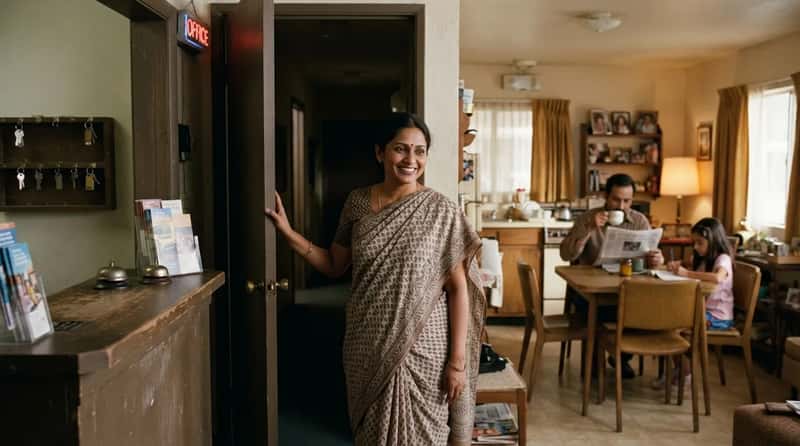
The most important feature of a 1970s motel wasn’t an object. It was the owner. Many independent motels were family-run, with the owners living in an apartment behind the lobby, answering the bell at any hour, and knowing the regulars by name.
That model still exists, but it has shrunk. Starting around this era, many Indian American families, many of them named Patel, bought independent motels and came to own a large share of them. Even so, big brands and franchise rules now shape most of the business. The personal touch that made roadside lodging feel like a home has become the rarest amenity of all.
At a Glance
- The Asian American Hotel Owners Association was formed in 1989, after owners faced discrimination from banks and insurers.
- It now has roughly 20,000 members, and a 2021 Oxford Economics study it commissioned found they own about 60% of U.S. hotels.
- That study put member ownership near 90% of hotel properties in Arkansas, Louisiana, Oklahoma, and Texas.
- Many of the original owners have handed the business to their U.S.-educated children.
Most of what vanished from the 1970s motel had a clear reason. Smoking declined, phones went mobile, lawsuits grew, and technology got cheaper, so ashtrays, pay phones, and rotary dials never stood a chance.
What stings is what went with them: the glowing sign, the wake-up call, and the family living behind the office. We gained convenience and lost some character. Which one do you miss most, and which would you gladly never see again?