Most people assume a sleeper ticket means dinner just shows up, no planning required. That’s technically true – but dining car staff will tell you the passengers who skip a few quiet advance steps are the ones who end up disappointed, hungry, or stuck eating cold cereal at 8 p.m. on a three-day trip.
The gap between what sleeper passengers expect and what actually happens in the galley is bigger than almost anyone realizes until they’re already rolling through Nebraska with no options left. Here’s what dining car crews actually wish you’d handled before boarding.
#22 – The Vegan Meal Phone Call Nobody Makes
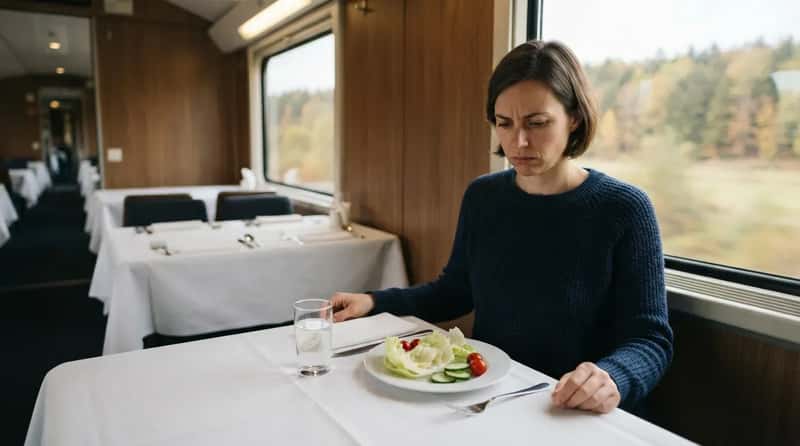
Vegan travelers usually assume every long-distance train works the same way, and that single assumption causes more mix-ups than any other dietary request dining crews field. On trains running Cafe or flexible dining service, vegan meals are available in limited quantities with no advance notice required at all. It feels simple, so nobody bothers to call ahead, even on routes where the rules are completely different.
Traditional dining routes flip that script entirely. Advance notice is required 24 hours before departure for Acela and 72 hours before departure for long-distance trains running traditional dining service. Skip that call, and a vegan sleeper passenger can end up staring at a dinner roll and a granola bar for three straight days while everyone else enjoys a full plate.
#21 – Kosher Meals That Need 72 Hours, Not 72 Minutes
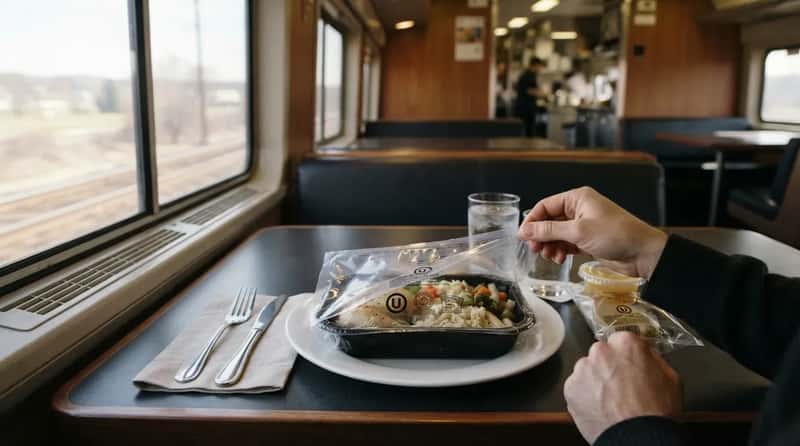
Kosher requests run on one of the most rigid systems anywhere on the train, and dining teams say passengers routinely underestimate how much lead time it actually needs. These meals are prepared under rabbinical supervision, sealed at the source, and never opened until they reach the passenger’s table. That sealed wrapper isn’t for show – it’s the only proof the kitchen has that nothing was compromised along the way.
Overnight trains require 72 hours’ notice, while Acela First class only needs 24 hours. Call an hour before boarding, or worse, ask once you’re already rolling, and the kitchen simply has nothing to hand you. Dining crews say this is one of the gentlest requests to plan for and one of the harshest to fix once missed.
Quick Compare
- Vegan, Cafe/flex service: no notice required
- Vegan, traditional dining: 24 hrs (Acela) / 72 hrs (long-distance)
- Kosher, Acela First: 24 hours’ notice
- Kosher, overnight trains: 72 hours’ notice
#20 – The Passover Swap Nobody Sees Coming
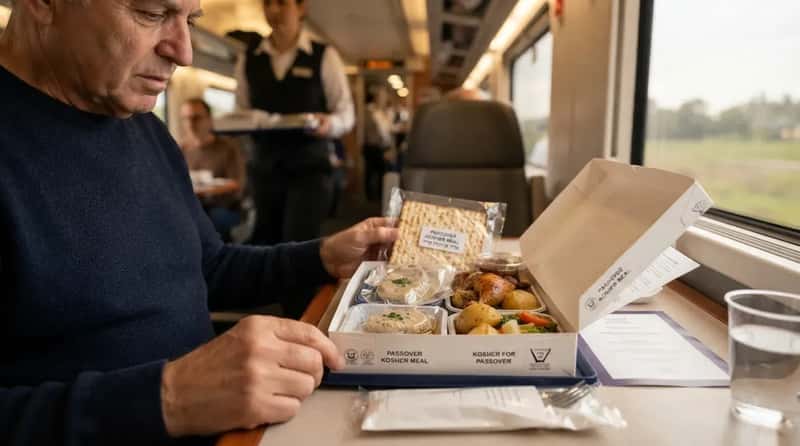
Timing matters more than most travelers realize when religious dietary needs collide with the calendar. During the Passover period, regular kosher orders get automatically replaced system-wide, whether or not the passenger who booked months earlier remembers that detail buried in the fine print. Nobody flags it at checkout, so the switch feels like a surprise even to travelers who plan carefully.
A passenger who requested a standard kosher meal back in March for a May trip can open their tray expecting the usual selection and find a completely different Passover-specific meal instead. The packaging looks different, the ingredients are different, and dining teams say the confusion isn’t malice – it’s just a seasonal scheduling quirk nobody explains until you’re holding the tray.
#19 – Severe Allergies And The Promise Dining Cars Can’t Make
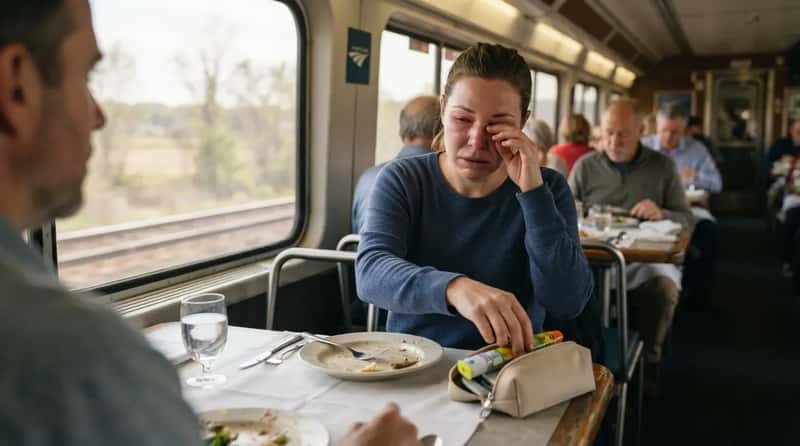
Allergy sufferers sometimes assume that calling ahead guarantees a sterile kitchen somewhere down the line. It doesn’t, and dining staff wish more people understood that limitation before boarding instead of after the first meal arrives. Amtrak cannot guarantee a completely allergen-free environment anywhere onboard, and cross-contamination is always a real possibility in a working kitchen car.
Passengers with severe allergies are advised to bring all necessary medications and be ready to self-administer them if something goes wrong. Crews genuinely wish more travelers packed an EpiPen instead of leaning entirely on a phone call made weeks earlier. A moving train is not the place to discover that a promise had limits nobody mentioned.
#18 – The Gluten-Free Meal That Technically Doesn’t Exist
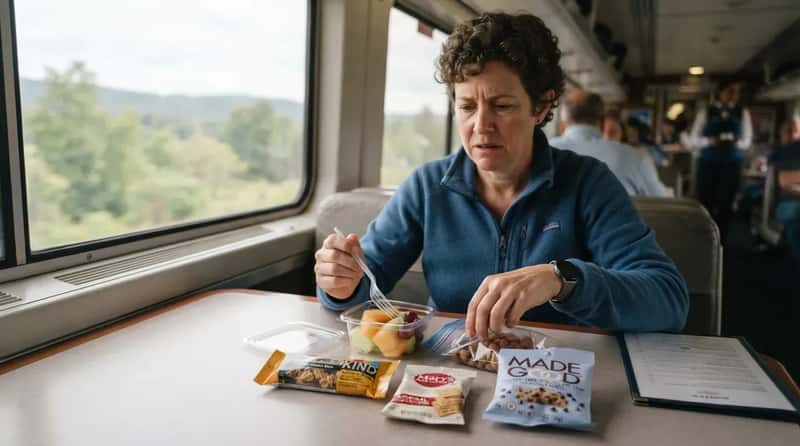
This one catches out even seasoned riders who assume “special dietary” covers everything under the sun. Amtrak does not offer meals specifically labeled low fat, low cholesterol, low sodium, gluten free, wheat free, or peanut free anywhere in its system. That means calling ahead and requesting a gluten-free tray won’t actually produce one, because there’s no labeled option built into the ordering process at all.
Dining staff say the smarter move is packing shelf-stable gluten-free snacks before departure rather than hoping the kitchen can improvise something safe mid-route. It’s not that the crew doesn’t care – it’s that the system was never built to sort ingredients that specifically. Passengers who figure this out in advance eat far better than the ones who find out the hard way at dinner.
#17 – Diabetic Passengers Skipping The Backup Snack Bag
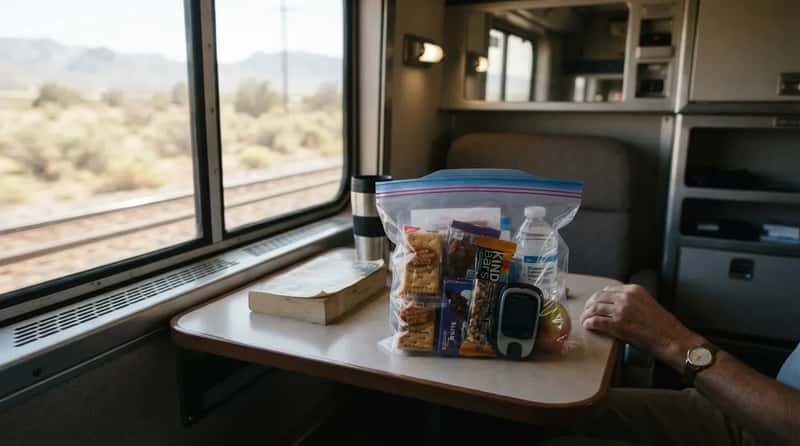
Delays happen on long-distance trains more often than the printed schedule ever admits, and dining crews say diabetic passengers feel the squeeze first when supplies start running thin. Amtrak’s own guidance says that due to events beyond its control, trains are sometimes delayed and supplies may become limited, so travelers with diabetes or other special dietary needs should carry enough nourishment to cover the gap. That’s an official warning printed for a reason, not a casual suggestion.
Yet plenty of passengers still board with nothing extra tucked away, assuming the dining car will always have exactly what they need exactly when they need it. A snack bag packed the night before departure is the one piece of “advance booking” that costs nothing and can save an entire trip. Crews say it’s the single easiest fix on this whole list.
#16 – The Cooler Rule Half The Train Gets Wrong
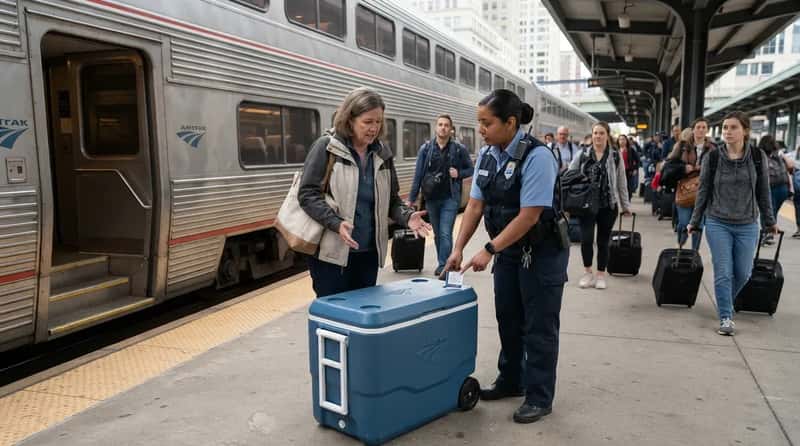
Passengers with strict diets often assume they can bring a full cooler onboard and skip the dining car altogether. That’s only half true, and the fine print matters more than most people expect when they’re packing the night before. Amtrak allows a small soft-sided cooler with ice packs, as long as it fits underneath the seat without spilling into the aisle.
Dry ice comes with its own separate safety rules, and full hard-sided coolers frequently get flagged and questioned at the platform. Sorting out the right cooler type before travel day saves an awkward, public conversation with staff right as boarding starts. It’s a five-minute fix that avoids a genuinely embarrassing scene.
#15 – Why Staff Can’t Warm Up Your Leftovers
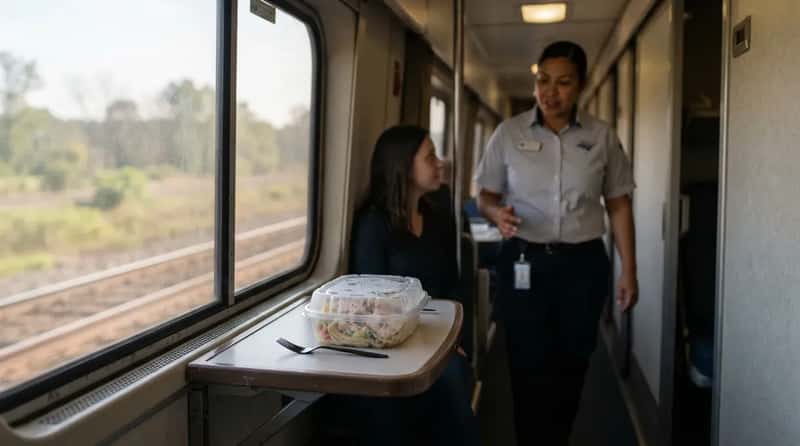
Passengers sometimes bring homemade meals expecting the dining crew to heat them up like a quick microwave favor between courses. Staff wish this expectation got corrected before boarding, because federal rules leave absolutely zero flexibility on this point. Federal health regulations flatly prohibit Amtrak personnel from handling passenger food, heating it in the train’s ovens, or storing it in the crew’s refrigerators.
That means anything brought onboard stays exactly as cold, warm, or room temperature as it was the moment it was packed – for the entire trip. A hot lunch packed in Chicago is a lukewarm lunch by Omaha and a cold one by Denver. Dining crews say this single rule causes more disappointed faces than almost anything else they see.
#14 – The Food You Can’t Carry Past The Dining Car Door
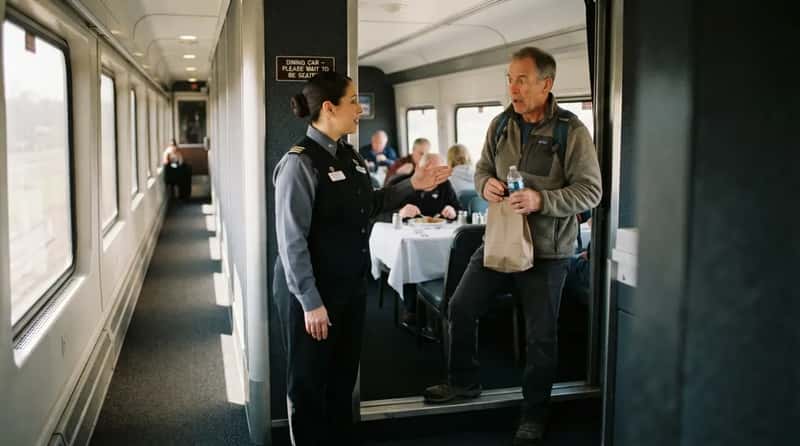
Sleeper passengers often assume their private accommodation status lets them eat anywhere onboard, including the dining car itself. It doesn’t stretch nearly that far, and the boundary catches people off guard mid-meal more often than staff would like. Personal food and beverages are welcome at your seat or inside your private sleeping accommodation, but they’re not allowed inside the Dining or Lounge cars.
There’s one small exception – personal food can be brought to the upper level of Superliner Sightseer lounges, though not the main lounge floor below. Knowing that boundary before boarding avoids an awkward redirect from staff halfway through a sandwich. It’s a small rule, but it’s enforced consistently across routes.
#13 – Breakfast Walk-Ins vs. The Reservation Everyone Forgets
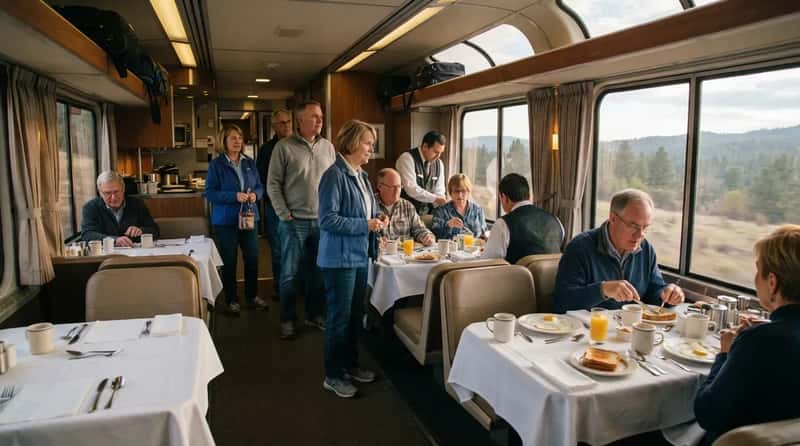
Here’s a scheduling detail that trips up first-timers constantly, no matter how many other details they’ve planned for. Not every meal on the train works the same way – reservations are typically required for lunch and dinner, while breakfast usually runs on a first-come, first-served basis instead. Passengers who show up expecting a reserved breakfast table sometimes find themselves waiting in a line they never anticipated.
Dining teams wish more sleeper passengers understood which meals are actually worth locking in early. Lunch and dinner reward advance reservations, while breakfast rewards simply showing up promptly when the car opens. Mixing up which strategy applies to which meal is one of the most common – and easily avoidable – mistakes on the whole train.
At A Glance
- Breakfast: first-come, first-served, no reservation needed
- Lunch: reservation typically required
- Dinner: reservation typically required
- Best move: show up early for breakfast, book ahead for the other two
#12 – The Time Slot That Vanishes Before You Even Ask
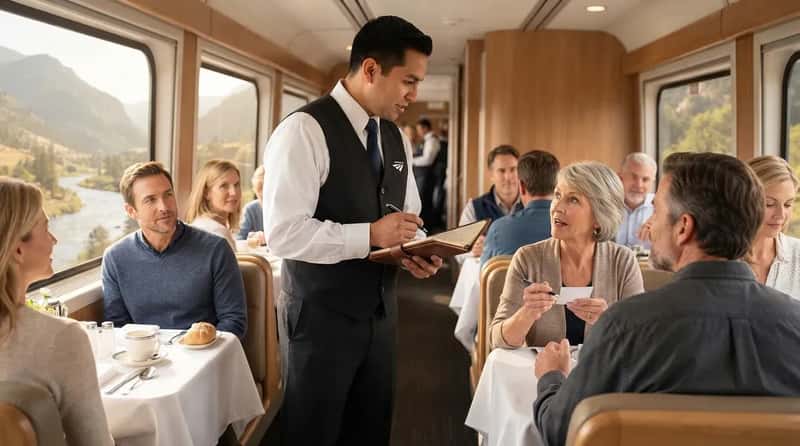
Reservation windows fill up faster than most passengers ever expect, especially on popular scenic routes during peak travel season. Dining car reservations typically open right after an announcement plays over the intercom, and staff then walk the length of the train distributing time slots to whoever asks first. On luxury or high-demand routes, that window can close within minutes of opening.
Passengers who wait until they’re actually hungry to flag down staff often end up stuck with the least convenient slot left on the entire train. Crews say the travelers who ask the second that announcement plays get first pick every single time, no exceptions. It rewards attention, not luck.
#11 – The Off-Peak Table Nobody Requests
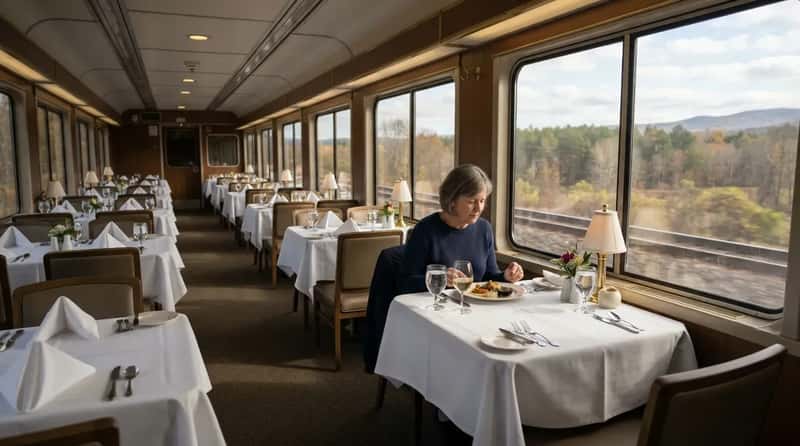
Most travelers default to the standard dinner rush without realizing there’s a much quieter option sitting right there for the asking. The best times to dine are generally the off-peak hours, earlier or later than the standard meal windows, when the dining car is noticeably less crowded and far more relaxed. Fewer elbows, shorter waits, and a calmer pace change the entire feel of the meal.
Dining crews genuinely wish more sleeper passengers requested these odd-hour slots instead of crowding into the same 6 p.m. rush every single night of a multi-day trip. It’s a small ask, made once at booking or once onboard, that quietly upgrades the whole dining experience. Staff say the passengers who figure this out never go back to the crowded slots.
#10 – The Entree That Runs Out By Day Two
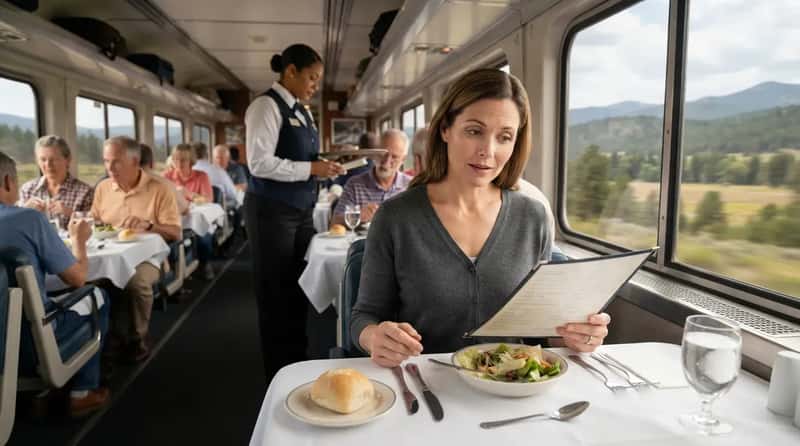
Multi-day routes have a hidden expiration problem most passengers never think about until it’s already too late to fix. Popular menu items can sell out during longer trips, particularly as the route stretches into its second or third day on the rails. The kitchen only stocks so much of any one dish, and nobody restocks mid-journey.
Passengers who ask about supply on night one, rather than assuming the menu stays constant the entire trip, are the ones who actually get their first choice. Everyone else finds out the hard way, usually on day two, that the dish they were looking forward to is already gone. Crews say the disappointment is completely avoidable with one early question at the very first meal.
#9 – Dessert Cart Regret On The Long Hauls
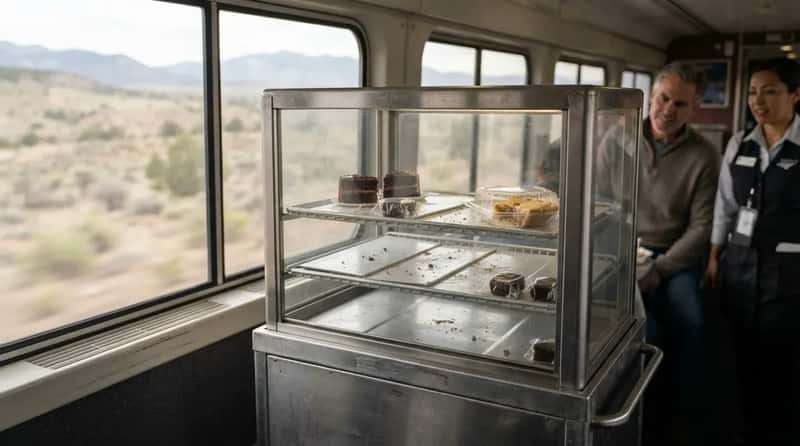
Desserts feel like a harmless afterthought right up until they’re gone, and on cross-country routes that moment arrives faster than most passengers expect. Staff say the sweet options thin out noticeably by the second or third day of a trip like the Empire Builder or the Coast Starlight. By the final leg, the dessert case can look almost bare compared to day one.
Sleeper passengers who mention a favorite dessert to their attendant on the very first night sometimes get it quietly set aside for later. Everyone else discovers the case picked nearly clean by the time they think to ask. It’s a small, informal request that dining teams wish happened far more often, because it costs nothing and works almost every time.
#8 – The Seating Chart Surprise Solo Travelers Never Book Around
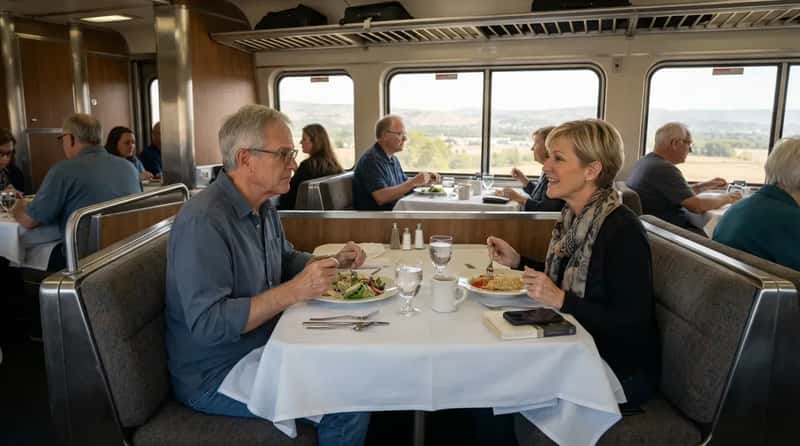
Solo sleeper passengers frequently expect a private table to themselves and don’t realize what’s actually standard practice in the dining car. The dining car runs on communal seating, which means solo travelers are seated with other riders as a matter of course, not an exception. It’s built into how the space works, not a fallback for busy nights.
Some travelers genuinely love this and end up swapping stories with strangers for hours. Plenty of others feel blindsided mid-meal, especially quieter or more introverted riders who expected privacy. Staff genuinely wish more passengers knew ahead of time that solo dining still usually means a shared table, so they can mentally prepare instead of reacting in the moment.
#7 – Room Service Requests That Never Get Made
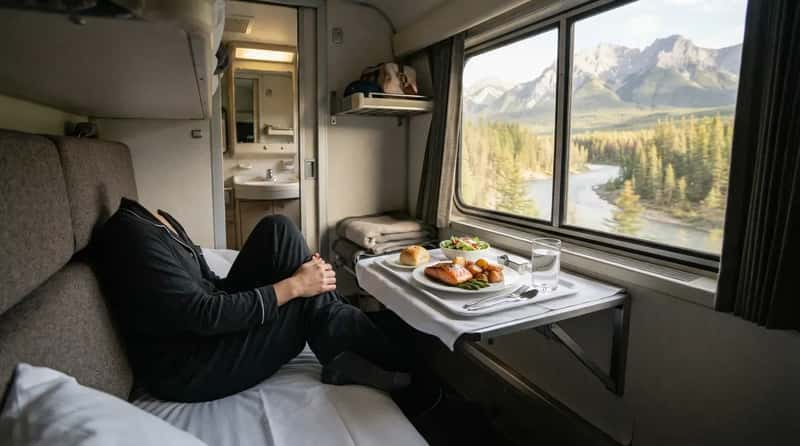
On routes running Flexible Dining service, sleeper passengers have an option many never use simply because nobody tells them it exists. Premium riders in bedrooms and roomettes can have their meals delivered straight to their room, or they can choose to walk down and sit in the dining car instead. It’s entirely their call, but only if they know to make it.
Crews say the majority of eligible passengers default to walking to the dining car every single meal, even when they’re exhausted, seasick, or just want to stay in pajamas. Nobody told them room delivery was on the table, so they never asked. A quick request made right at boarding solves this completely, for the whole trip.
#6 – The Free Wine Pour Passengers Forget To Claim
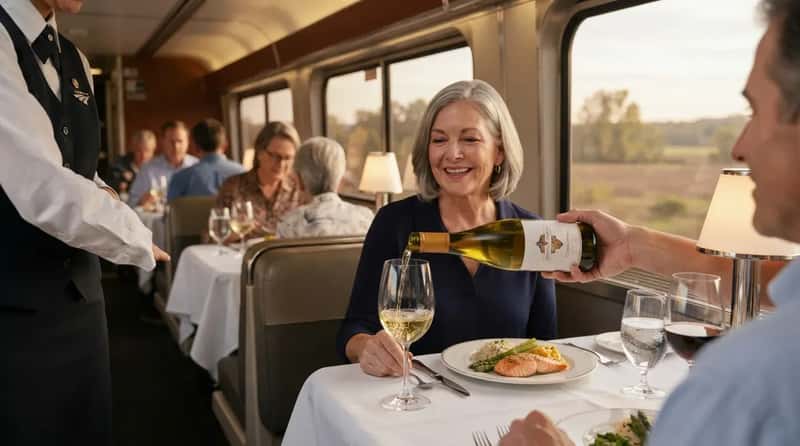
Auto Train dinners come with a perk most riders never think to mention until it’s already been skipped without them noticing. Dinner entrées are served with a complimentary alcoholic beverage, including selections like a Kendall-Jackson Chardonnay poured tableside. It’s built into the price of the ticket, not an upsell staff are pushing.
Dining teams wish more passengers spoke up about their preference before the tray even arrives, rather than accepting whatever gets poured or missing the perk entirely because they assumed it cost extra. It’s genuinely included – but only if you ask for it by name. Staying quiet is the only way to actually lose out on this one.
#5 – Private Stock Rules That Trip Up First-Timers
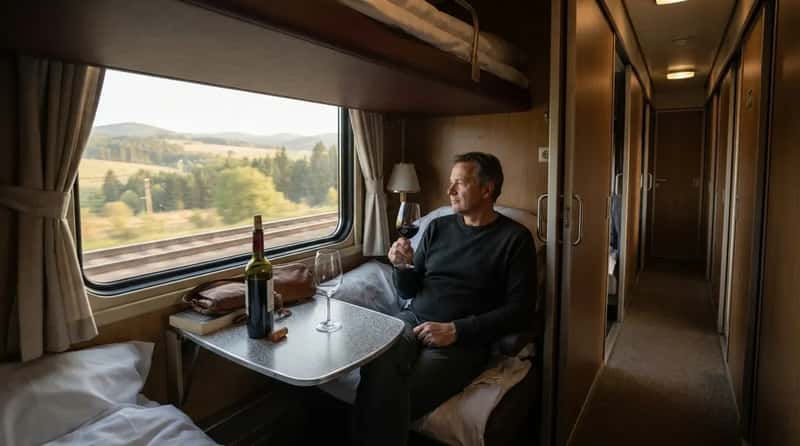
Passengers who bring their own wine or spirits onboard often assume they can drink it anywhere they please on the train. That’s not how the policy actually works, and it catches out more first-timers than staff would expect. Private stock alcoholic beverages may only be consumed inside sleeping car accommodations for which the passenger holds a valid ticket – never in any public area of the train.
Crews wish more passengers understood this before opening a bottle in the lounge car and getting quietly, politely redirected by staff in front of other riders. The rule isn’t about the alcohol itself – it’s about where it’s legally allowed to be consumed onboard. Knowing the boundary in advance avoids a genuinely uncomfortable moment.
#4 – The Welcome Drink Nobody Asks For At Boarding
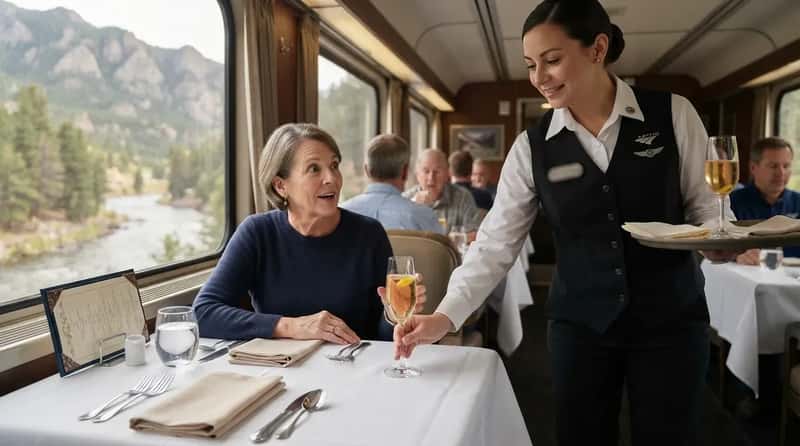
Sleeper passengers on select routes are entitled to a small complimentary perk that frequently goes unclaimed simply because nobody mentions it out loud. Sleeper car passengers get their first alcoholic drink free as part of the complimentary beverages served during meals. It’s a quiet little bonus built into the ticket price, not something staff advertise unless asked.
Staff say most riders never bring it up, so it slips quietly into the background of a busy dining car service. Mentioning it at your very first meal is the only real way to make sure it actually happens before the moment passes. Crews say it’s one of the easiest wins on the entire trip, if you just say something.
#3 – The Menu Swap Between Trains Nobody Warns You About
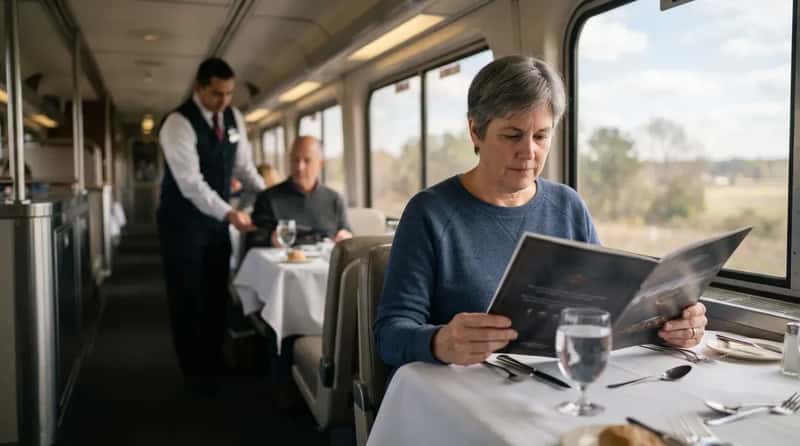
Passengers who’ve ridden one long-distance route naturally assume every sleeper menu across the network looks the same. It doesn’t, and the difference catches even frequent riders off guard almost every single time they switch trains. The menu stays consistent across Superliner trains running traditional dining, but the Auto Train runs its own separate menu entirely.
A rider who fell in love with a specific entree on the California Zephyr can be genuinely disappointed to find it missing completely on their next trip aboard the Auto Train. Nothing about the ticket or the route name warns you about this ahead of time. Checking the specific menu for your specific train avoids a very avoidable letdown.
#2 – Traditional Dining’s Comeback Passengers Still Don’t Know About
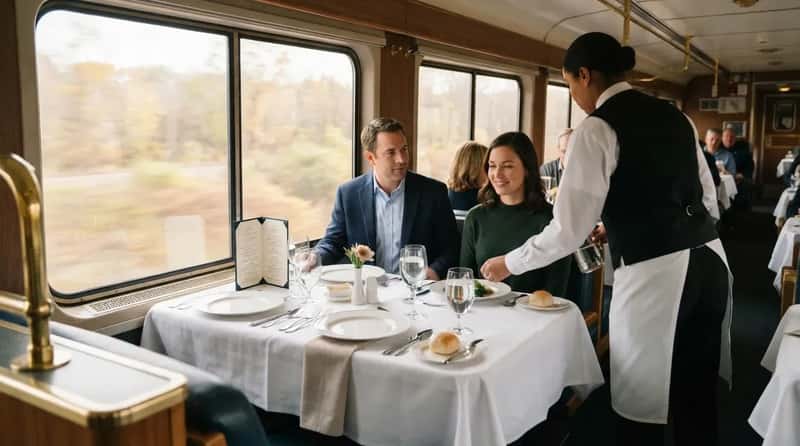
Here’s a shift that surprises even loyal Amtrak riders who haven’t traveled in a few years and assume nothing has changed. Traditional dining service is still offered on seven remaining overnight routes: the California Zephyr, Coast Starlight, Empire Builder, Southwest Chief, Sunset Limited, Silver Star, and Texas Eagle. That’s real white-tablecloth service, printed menus, and multi-course meals, not the stripped-down flexible model some travelers remember.
Plenty of passengers still book expecting that scaled-back flexible dining experience from a few years back, then find themselves pleasantly surprised – or occasionally a little confused – by full table service instead. Checking which dining format your specific route actually uses before boarding avoids showing up with the wrong expectations entirely. It’s a detail worth five minutes of research before any of these seven trips.
Fast Facts: The Seven Traditional Dining Routes
- California Zephyr
- Coast Starlight
- Empire Builder
- Southwest Chief
- Sunset Limited
- Silver Star
- Texas Eagle
#1 – The Gratuity Nobody Books For
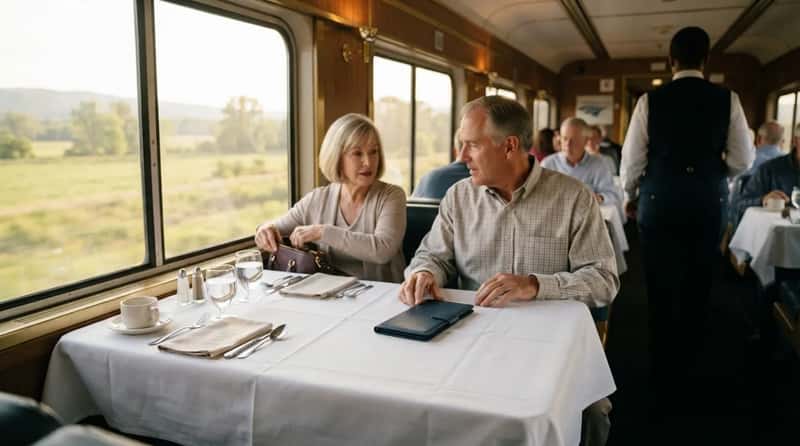
This is the one dining car teams say catches nearly everyone, no matter how many trips they’ve already taken. If you’re traveling in a private sleeper, all meals in the dining car are included in the price of your ticket, but gratuities are never part of that bundle. It’s easy to assume “included” means everything, and that assumption is exactly where the surprise comes from.
Passengers who budget only for the ticket often reach the end of a three-day cross-country trip with no cash or card set aside for the staff who fed them every single meal along the way. Dining crews say this is the single biggest advance step nobody plans for, and the one that matters most to the people actually serving the food. A little planning here goes further than almost anything else on this list.
Worth Knowing
- Sleeping car attendants: commonly tipped $10 to $20 per night, usually given at the end of the trip
- Dining car staff: often tipped roughly 15 to 25% of the set menu price, similar to restaurant tipping
- Cafe car: smaller cash tips, typically a dollar or two per order
- Best practice: set aside small bills before boarding, since dining car card tipping isn’t always available at every stop
None of this requires a travel agent or a complicated app to sort out. A phone call placed early, a snack bag packed the night before, and a few honest questions asked right at boarding solve almost everything on this list. The passengers who end up with the smoothest trips aren’t the lucky ones – they’re the ones who asked first.
Next time you book a sleeper cabin, remember that the dining car isn’t guessing what you need. It’s waiting for you to tell it.