The brochure sells the sunset, the campfire and the open road. It never mentions the torn awning, the shredded tire or the $900 tow bill waiting for people who skipped the boring stuff. The travellers who log thousands of miles every year without drama aren’t luckier. They just follow a set of quiet habits that no dealer ever hands over with the keys.
These routines cost almost nothing, yet they prevent the breakdowns, tow bills and 2 a.m. surprises that sink road trips. Some take 90 seconds. One of them sounds almost too lazy to be smart, and one has nothing to do with the vehicle at all. Start at #23 and keep going, because the best ones are waiting near the end.
#23 – The Walk-Around That Saves Roofs, Hoses and Marriages
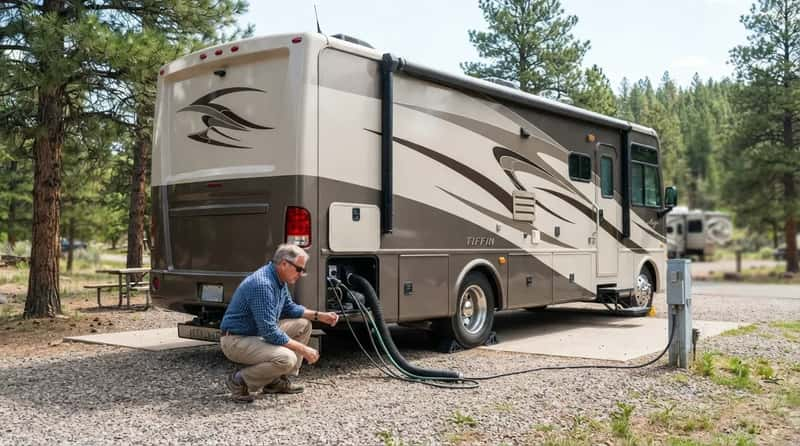
Before every departure, veterans circle the rig like a pilot checking a plane. One forgotten item, like a raised antenna, an open hatch or an extended step, can cause expensive damage in seconds. Stories of dragged power cords and torn awnings fill RV forums for a reason.
They check the steps, awning, outside storage doors, hookup cables and hitch connections, in the same order every time. Many also snap a quick phone photo of the campsite before leaving. A fixed order makes it much harder for distraction to hide a mistake.
But that’s nothing compared to what’s hiding on your tires in #22…
#22 – The Four-Digit Code on Your Tires That Reveals Their Real Age
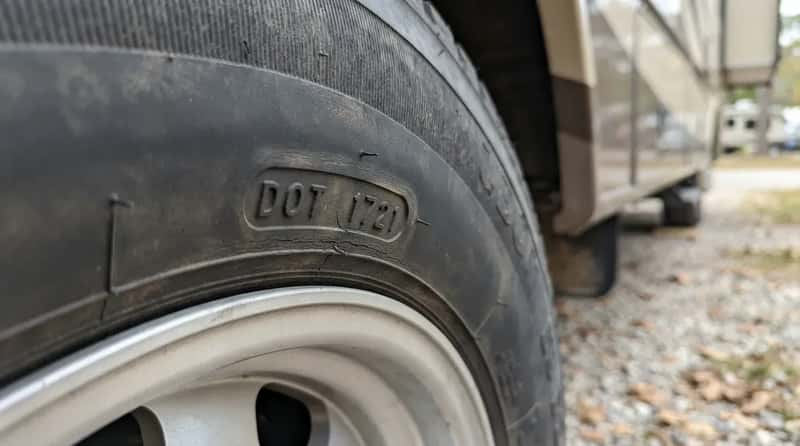
Tread depth can fool you, because RV tires often age out before they wear out. Every sidewall carries a DOT code, and the last four digits show the week and year the tire was made. A tire that looks nearly new can still be years past the age many tire shops recommend replacing it.
Experienced travellers check pressure cold, before driving, and set it for their actual loaded weight. They also scan the sidewalls for cracks and bulges. A blowout on a heavy RV can rip apart wheel wells and wiring in seconds, which is why many owners replace tires by age rather than tread.
Next up is a danger your GPS has never heard of…
#21 – Why Veterans Distrust Regular GPS Around Low Bridges
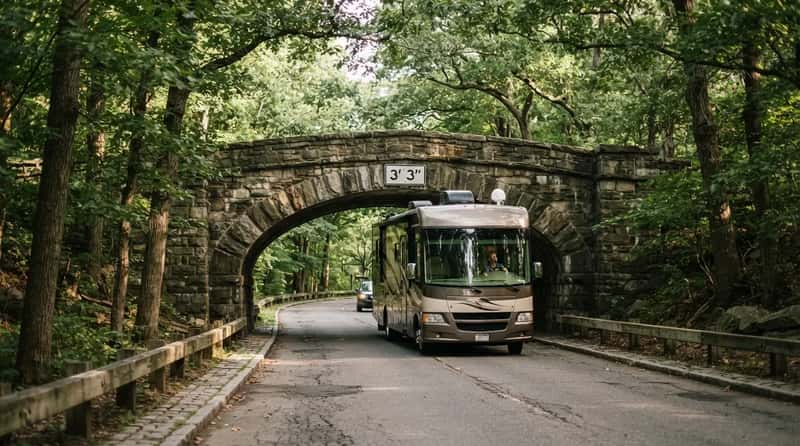
A standard car GPS has no idea how tall you are. Low stone bridges on older roads, especially in the Northeast, have peeled the roofs off vehicles for decades. Many parkways around New York City are infamous for arches too low for tall vehicles.
Seasoned RVers measure their true height with everything on the roof, then keep that number on a sticky note by the wheel. They use RV-specific routing apps and still watch for posted clearances. Gas station canopies and drive-through awnings are the other quiet roof killers.
Fast Facts
- Many Class A motorhomes stand roughly 11 to 13 feet tall.
- Rooftop air conditioners, vents and satellite domes all count toward your true height.
- Interstate overpasses are generally built tall enough for big rigs, but older local roads and parkways can be far lower.
- Posted clearance signs can be out of date after repaving, so veterans leave themselves a safety margin.
The next habit sounds lazy, but it explains why veterans always seem relaxed…
#20 – They Stop for the Night Hours Before Dark
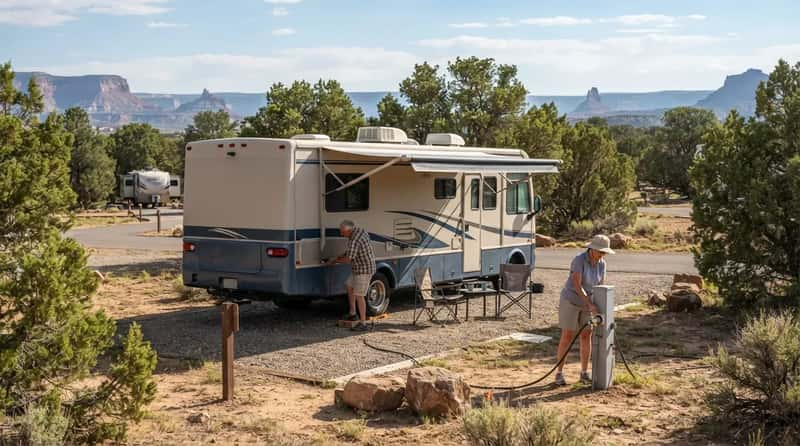
Newcomers push on until sunset, then hunt for a campsite in the dark. Veterans do the opposite. Backing into an unfamiliar site at night is where many fender-benders and tangled hookups begin.
Arriving by mid-afternoon leaves time to check the site, level the rig and spot hazards like low branches. It also means a filling campground hasn’t already claimed your best spot. Late arrivals often get the leftovers, usually the ones with the worst slope.
And there’s a mileage rule that first-timers openly argue with…
#19 – The Daily Mileage Cap That Cross-Country Newbies Hate
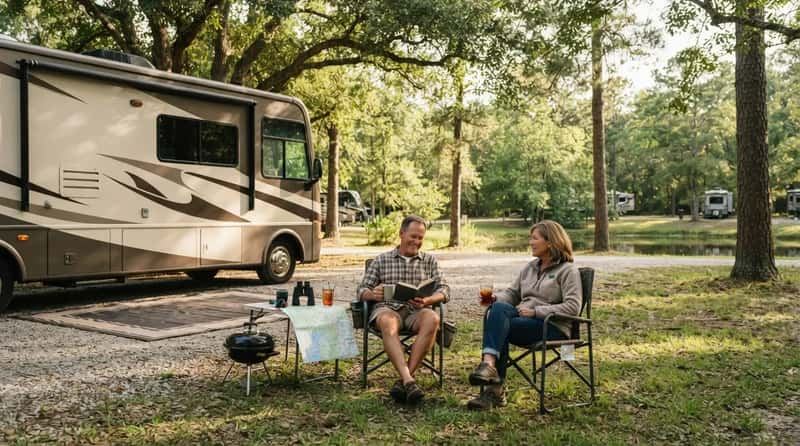
Plenty of first-timers brag about 500-mile days. Many full-timers see that as the fastest way to hate your own vacation. A common rule of thumb among veterans is to keep driving days short enough that you still enjoy where you land.
Here’s the controversial part. Plenty of experienced RVers would rather skip a famous park than race across three states to reach it. Fatigue, fuel costs and rushed setups pile up fast. A slower pace is how people stumble onto the small-town diner or the county park nobody posts about.
Quick Compare
- Sprint style: A 500-mile day at an average of 55 to 60 mph means roughly 8 to 9 hours behind the wheel, before fuel and rest stops.
- Veteran style: Shorter hops, daylight arrivals and more than one night in each place.
- A popular guideline: The “3-3-3 rule” suggests about three hours of driving, arriving by 3 p.m. and staying three nights. Versions vary, but the idea is the same.
Fuel stops are where the next surprise lives…
#18 – Why They Skip the Easy Gas Pump
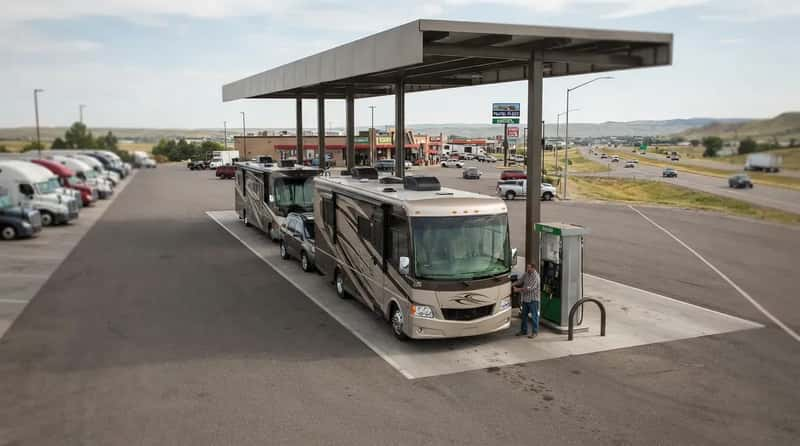
The pump closest to the exit often comes with a low canopy and brutal turns. Veterans scout fuel stops the way pilots scout runways. Many truck stops have dedicated RV lanes with taller canopies and room to pull through.
They also avoid fueling on the way into a busy town, and they never make a tight U-turn to catch a cheap price. Pull-through access means no backing a 35-foot rig out of a crowded lot. A few minutes of planning can prevent a blocked lane and a very long walk of shame.
Mountains test a different habit entirely…
#17 – The Downhill Trick That Keeps Brakes From Cooking
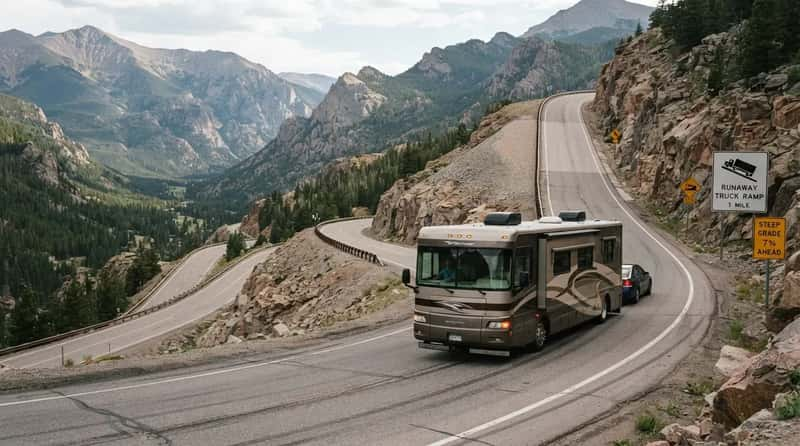
Long mountain descents punish heavy vehicles. Riding the brakes all the way down can overheat them and cause fade, which is the loss of stopping power. That’s the moment the pedal goes soft and the road keeps dropping.
Experienced drivers let the engine do most of the work. They shift into a lower gear before the descent begins, not halfway down, and diesel owners often use an exhaust brake. Then they tap the brakes in short, firm bursts instead of dragging them. Runaway-truck ramps exist on steep grades for a reason, and veterans respect every warning sign.
Wind brings its own rules, and the forecast matters more than you’d think…
#16 – Treating Wind Forecasts Like Road Closures
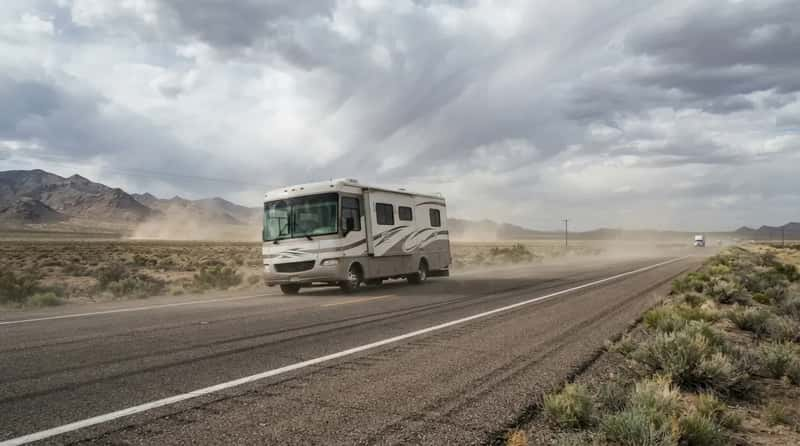
A tall, flat-sided RV catches the wind like a sail. A strong crosswind can make it feel as if the road itself is sliding sideways. High gusts, especially across open plains and desert passes, can push a lightweight trailer out of its lane.
Veterans check wind forecasts along the whole route, not just at the destination. They retract awnings before they travel and whenever they leave the site for the day. If gusts spike, they wait a few hours in a safe lot instead of white-knuckling it.
The next habit decides whether you sleep in a park or a parking lot…
#15 – Booking Famous Campgrounds Before You Book Anything Else
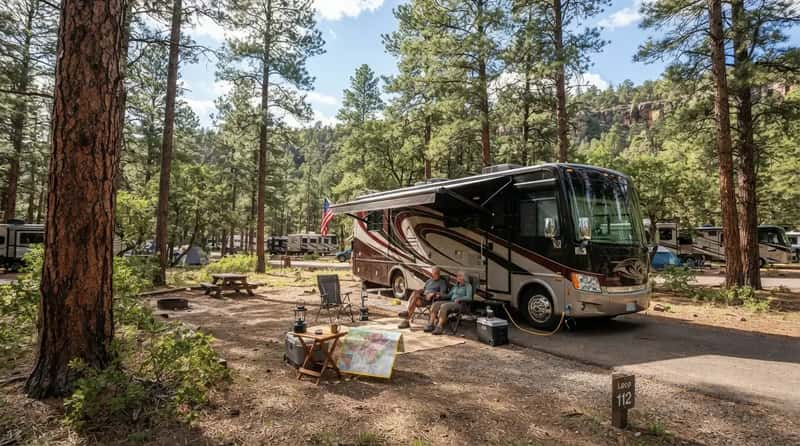
Popular national park campgrounds can fill within minutes of reservations opening. Many federal campgrounds on Recreation.gov release sites up to six months ahead, and prime dates vanish fast. Veterans mark that booking day on the calendar like a concert on-sale date.
They lock in the big stops first and let everything else flex around them. Cancellations do appear, so they check back often. Smart travellers also research nearby national forest and county options as backups in case the headline destination is booked solid.
Then there’s the cell signal problem nobody mentions in the brochure…
#14 – Downloading the Map Before the Signal Dies
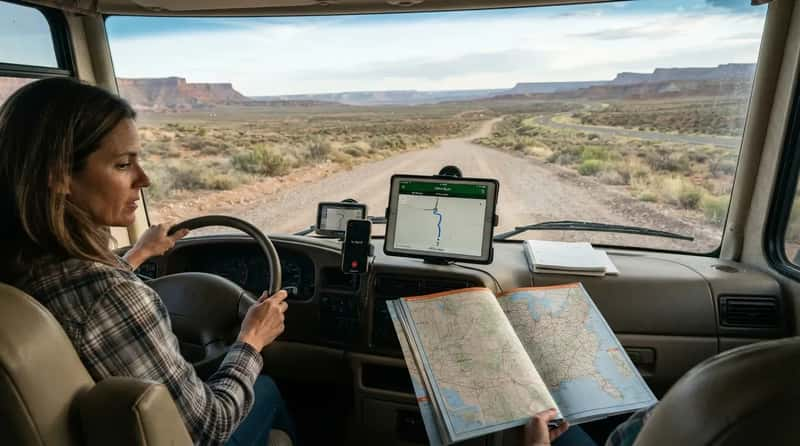
Large parts of the American West have little or no cell service. Wide stretches of national forest and desert road leave phones with no signal at all. A spinning wheel on a map screen is a bad sign when the next turn is 40 miles away.
Experienced RVers download offline maps for the whole route and carry a paper road atlas as a backup. Many also save campground addresses and phone numbers in advance. When a detour appears and the bars vanish, they already know where they are.
The next habit prevents a very expensive crunch at the campsite…
#13 – Getting Out and Looking Before Backing In
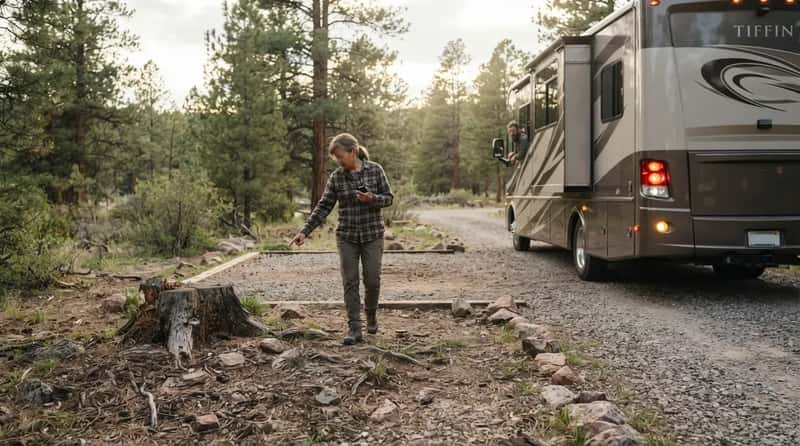
Backing up is blind driving. Veterans live by the mantra “get out and look,” and they do it every single time. Rocks, stumps, low branches and sloping ground often hide in plain sight until you walk the site.
They agree on hand signals with a partner before anyone moves. If something feels off, they stop and walk back again. Pride has crushed more RV corners than bad weather ever has. Walking twice costs two minutes, while repairing damage can cost thousands.
But the real weight problem isn’t in the driver’s seat at all…
#12 – Hauling Less Water Than You Think You Need
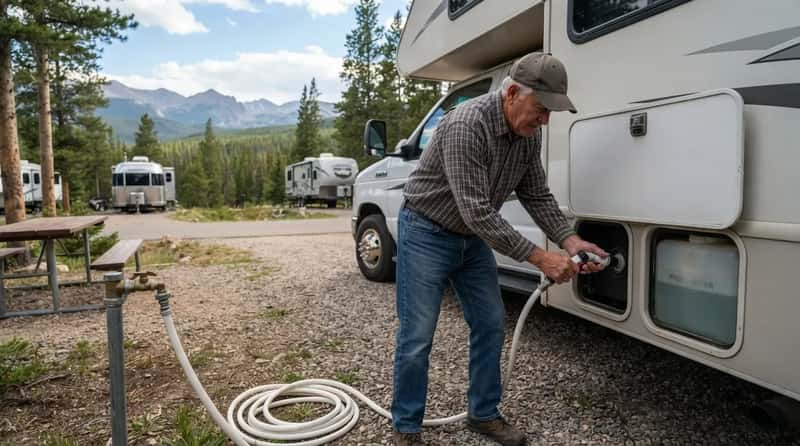
A full fresh water tank adds serious weight before you pack a single suitcase. Veterans often travel with the tank mostly empty and fill up on arrival. Weight, not space, is what limits many RVs.
They keep a drinking-water jug handy for the road, then fill at the campground. That takes strain off tires, axles and brakes. It also improves handling, especially on long mountain climbs where every pound counts.
The hookup at the campground matters more than most people think…
#11 – The Little Brass Regulator That Protects Your Plumbing
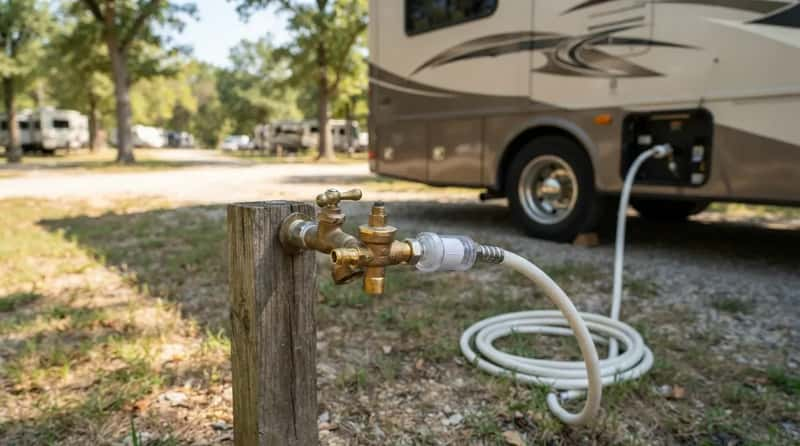
Campground water pressure can run much higher than RV plumbing is built to handle. A high-pressure spike can burst lines hidden inside the walls. Experienced owners fit an inline regulator at the spigot, before the hose.
They also use a drinking-water-safe hose, usually white or blue, and keep it separate from the one used for tank flushing. Some add a small filter. After each stay, they drain and coil the hose so it doesn’t collect bacteria or kink in the heat.
At a Glance
- RV plumbing is commonly designed for roughly 40 to 60 psi.
- Many RV regulators are preset to around 40 to 50 psi.
- Campground spigots can run well above that, and some are commonly reported to top 100 psi.
- The regulator goes on the spigot, so the hose is protected too.
Electricity brings an even quieter danger…
#10 – Plugging In Through a Surge Guard, Every Time
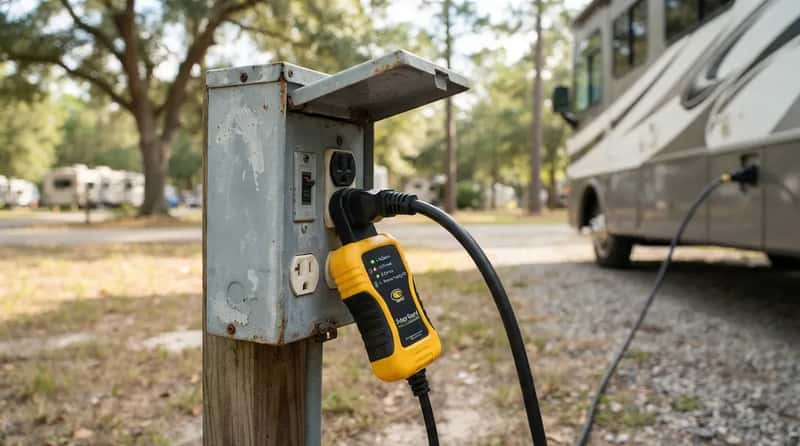
Campground pedestals can be worn, miswired or overloaded. A surge protector with an electrical management function checks for problems before power ever reaches your rig. It can shut off power when it detects a bad connection or unsafe voltage.
Veterans also test the pedestal before plugging in and know whether their rig runs on 30 amp or 50 amp. Using the wrong adapter can overload circuits. It’s a cheap box standing between a bad pedestal and an expensive air conditioner.
Next comes the least glamorous chore, and the order really matters…
#9 – Dumping Black First, Gray Second
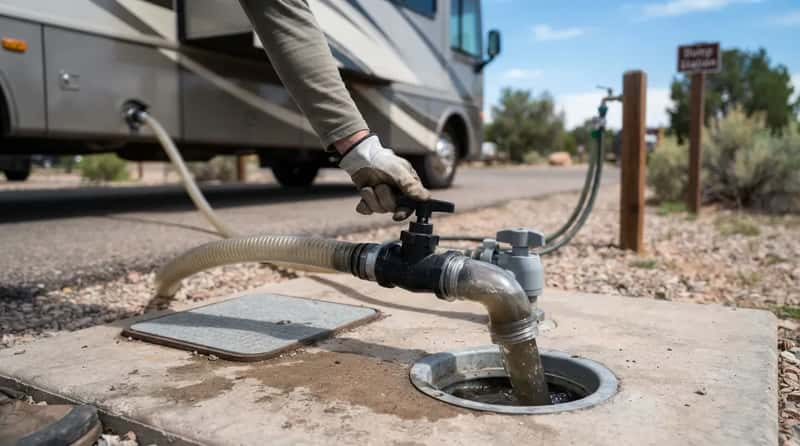
Dump stations aren’t glamorous, but the sequence is simple. Experienced RVers empty the black tank first, then the gray. The gray water rinses the sewer hose on its way out.
They also avoid leaving the black tank valve open at a full-hookup site. That lets liquid drain while solids stay behind and build up. Gloves, a clear elbow fitting and a dedicated hose make the job cleaner. It’s a gross habit that prevents an even grosser clog.
The next rule involves a tunnel, and it surprises almost everyone…
#8 – Turning Off Propane Before the Tunnel
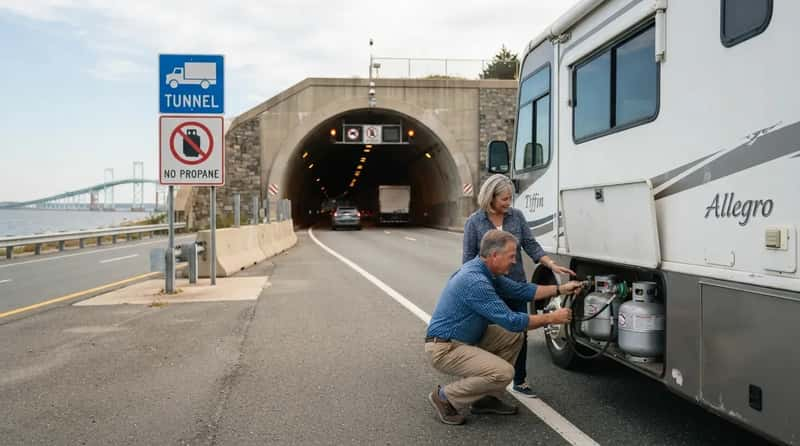
Some tunnels restrict propane, and the rules vary by location. Certain major tunnels require RVers to turn off cylinders or prohibit them entirely. Veterans check before they commit to the route, not when they’re already in line.
They also shut off the propane when fueling or crossing a ferry, since many operators require it. Then they remember to turn it back on afterward, or the fridge pays the price. A quick look at the tunnel’s official website before the trip avoids a forced detour.
Now for something that moves while you drive: your kitchen…
#7 – Locking Down the Kitchen Before the First Mile
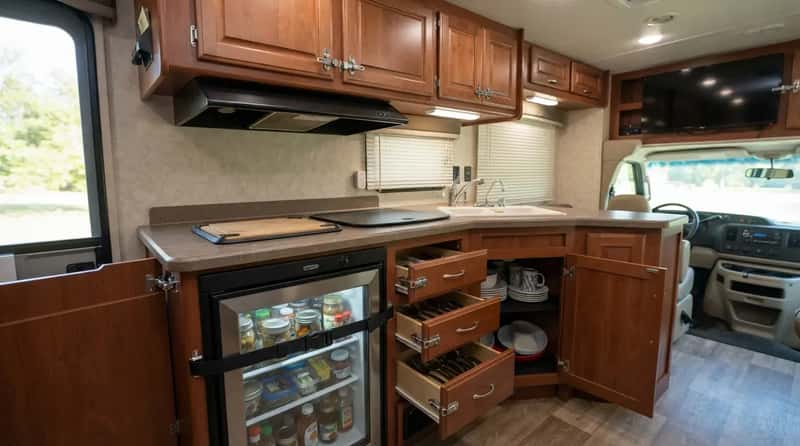
Roads are rougher than a living room floor. Cabinets pop open on bumps, and a jar of pickles can end up across the bed. Even a short drive can turn loose items into projectiles.
Veterans use shelf liners, bungee cords and latch locks. They secure the refrigerator door and TV, and they close the vents and windows. They also stash heavy items low and in the middle, which helps both stability and sanity when the road gets rough.
Free camping has a clock that most beginners don’t see…
#6 – Knowing the Fourteen-Day Rule Before Boondocking
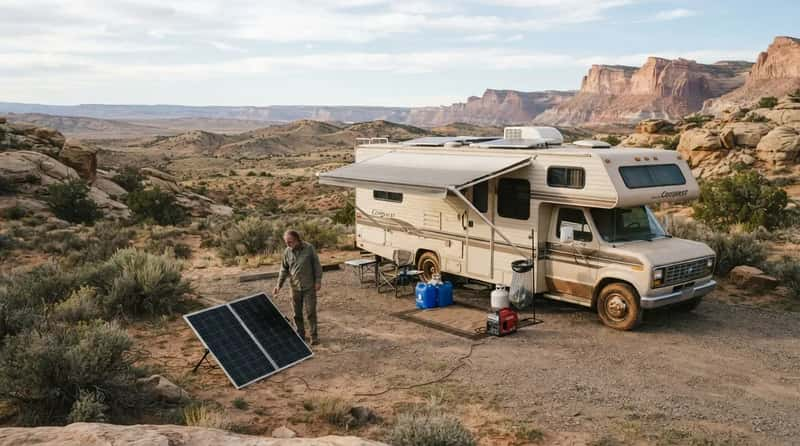
Free camping on public land is a major draw for RVers. Many Bureau of Land Management areas cap stays at 14 days, and you generally have to move well away afterward. Rules differ by field office, so veterans verify locally.
They carry extra water, a solar setup or generator, and trash bags to pack out waste. They avoid camping in dry washes, which can flood. And they stay on existing campsites to protect fragile ground. Free camping is great, but it isn’t lawless.
Worth Knowing
- At many BLM sites, the limit is 14 days within a 28-day period, then a move to a new area.
- The required move distance is often around 25 miles, but local field offices set the details.
- National forests commonly have their own dispersed camping limits, often 14 days as well.
- Always confirm current rules, fire restrictions and road closures with the managing office before you go.
A famous parking lot habit divides opinion, and you may see why…
#5 – Why Many Veterans Don’t Rely on the Walmart Lot
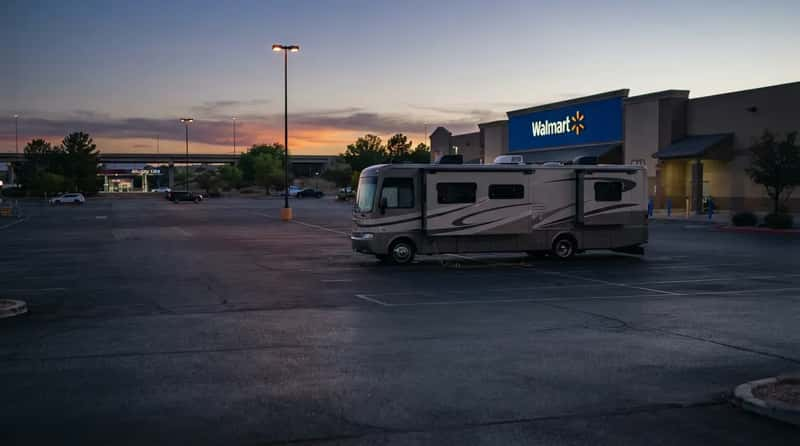
Overnight parking at big-box stores is a classic RV legend. But plenty of seasoned travellers call counting on it a rookie gamble. Whether you can stay depends on the individual store and local ordinances.
Veterans call ahead and ask a manager. They look for signs banning overnight parking and never assume. If it’s allowed, they stay one night, keep slides in and avoid cooking outdoors. Many treat the lot as a last resort and prefer rest areas, truck stops or campgrounds.
Next is the number most owners are afraid to learn…
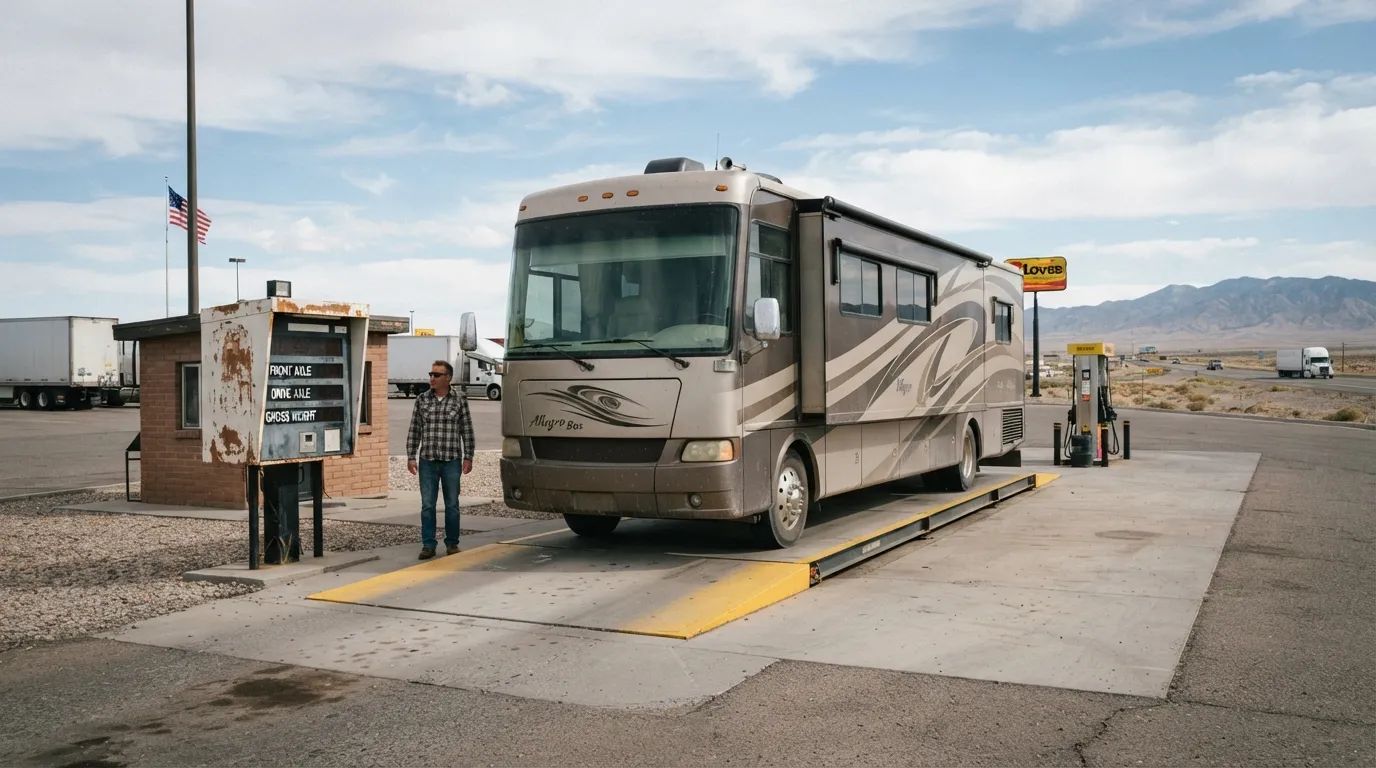
#4 – Weighing the Rig Instead of Trusting the Brochure
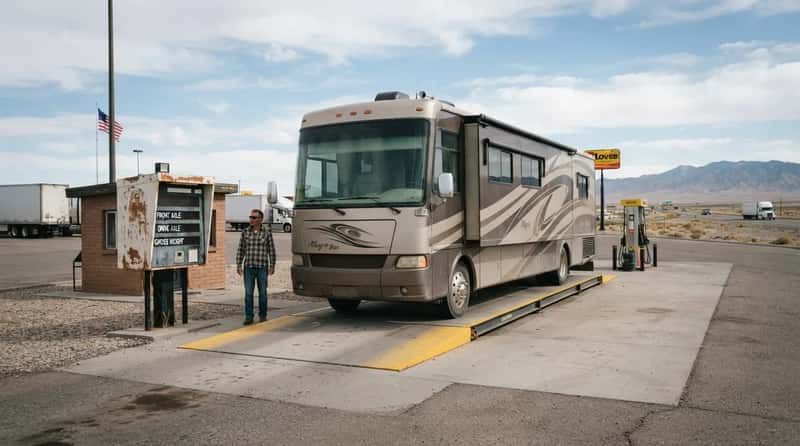
Brochure weights describe an empty RV. Your RV, loaded with people, gear and full propane, is another story. Many owners discover they’re close to or over their weight ratings only after they visit a scale.
Veterans stop at a certified truck scale and weigh each axle, then compare the numbers to the ratings on the sticker. Overloaded axles wear tires faster and strain brakes. The scale costs a few dollars. Ignorance costs far more, sometimes on a mountain pass.
And what you carry in the basement might matter more than what’s in the cabinets…
#3 – Carrying the Kit That Turns a Disaster Into a Delay
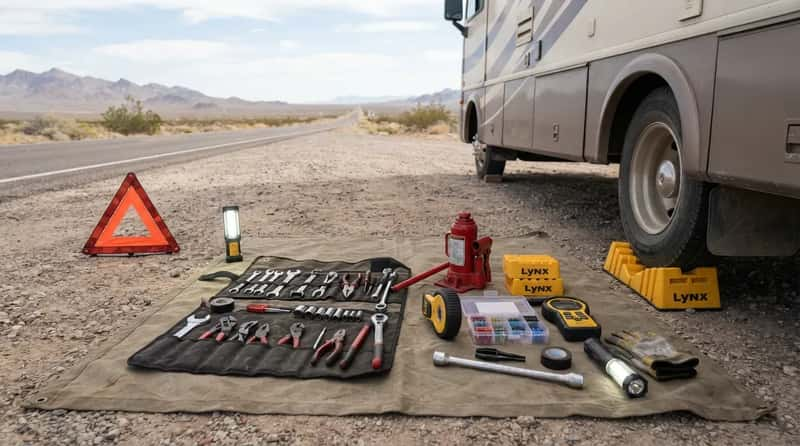
Breakdowns happen far from help. Experienced travellers carry tools, spare fuses, a tire gauge and a reliable jack or leveling blocks. It’s boring gear until the day it saves the trip.
They also re-check lug nuts after any wheel service, usually after the first stretch of driving. A flashlight, gloves, reflective triangles and a first-aid kit sit near the door. When a roadside repair is on the line, small practical items beat fancy gadgets every time.
The next habit is paperwork, and it’s the one people forget until they’re stranded…
#2 – Having RV-Specific Roadside Help Before the Tow Truck Quote
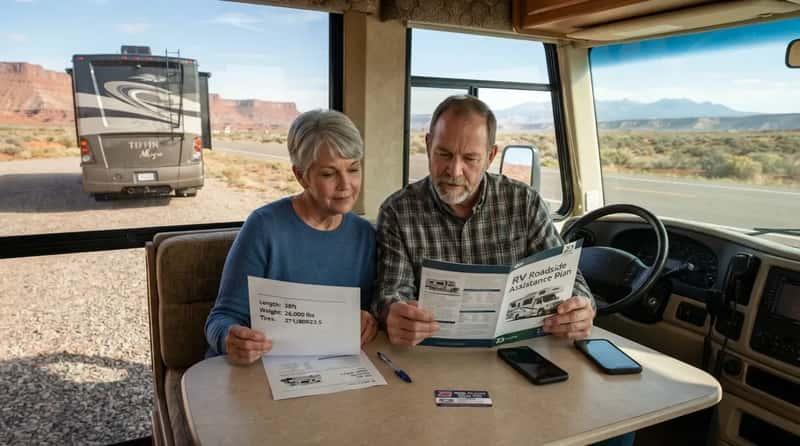
Regular car policies often don’t cover towing a big rig properly. Heavy-duty RV towing can cost far more than a standard car tow. Veterans read their coverage details at home, not on the shoulder of a highway.
Many buy a roadside plan designed for RVs and keep the phone number in several places. They know their tire sizes, rig length and weight. That makes the call to dispatch faster, and a faster call can mean the difference between a short wait and a long, hot afternoon.
But the habit that matters most has nothing to do with the vehicle at all…
#1 – Leaving One Empty Day in the Plan
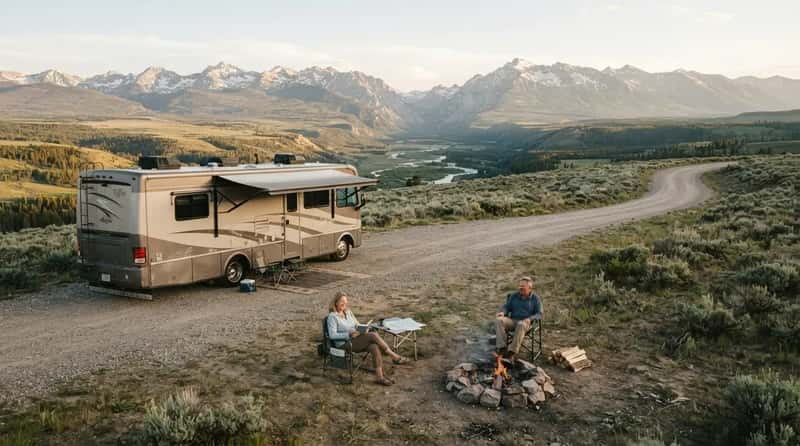
The strongest veterans build in slack. An open day on the schedule often saves the trip when a storm, a repair or an unexpected detour hits. It also gives you somewhere to land when the road wears you out.
Many say their best memories came from the unplanned days: a roadside stand, a campfire with neighbors, a sunrise at an overlook nobody mentioned. Packed itineraries leave no room for any of that. The rig will get you there, but the empty day is what makes you remember it.
Look back at the list and notice how small the winning habits really are: a 90-second walk-around, a tire date code, a surge guard, a scale ticket and one open day. Most breakdowns, bills and bad nights trace back to skipped basics, not bad luck.
The veterans aren’t braver than anyone else, just better prepared. None of it takes special gear or big money, only the patience to repeat the small stuff every trip. That’s how a long American road stays a story you want to tell instead of one you’re trying to forget.