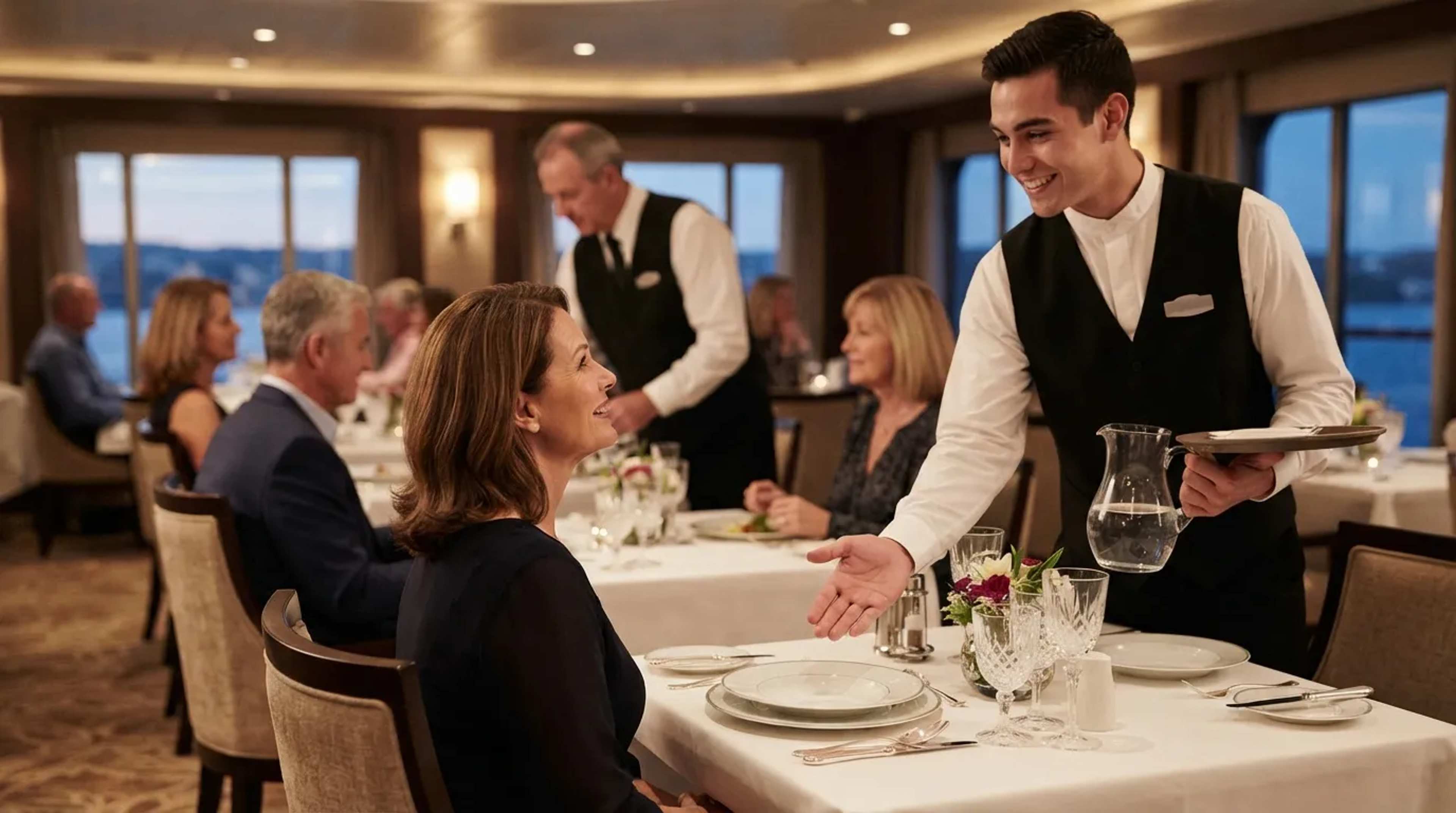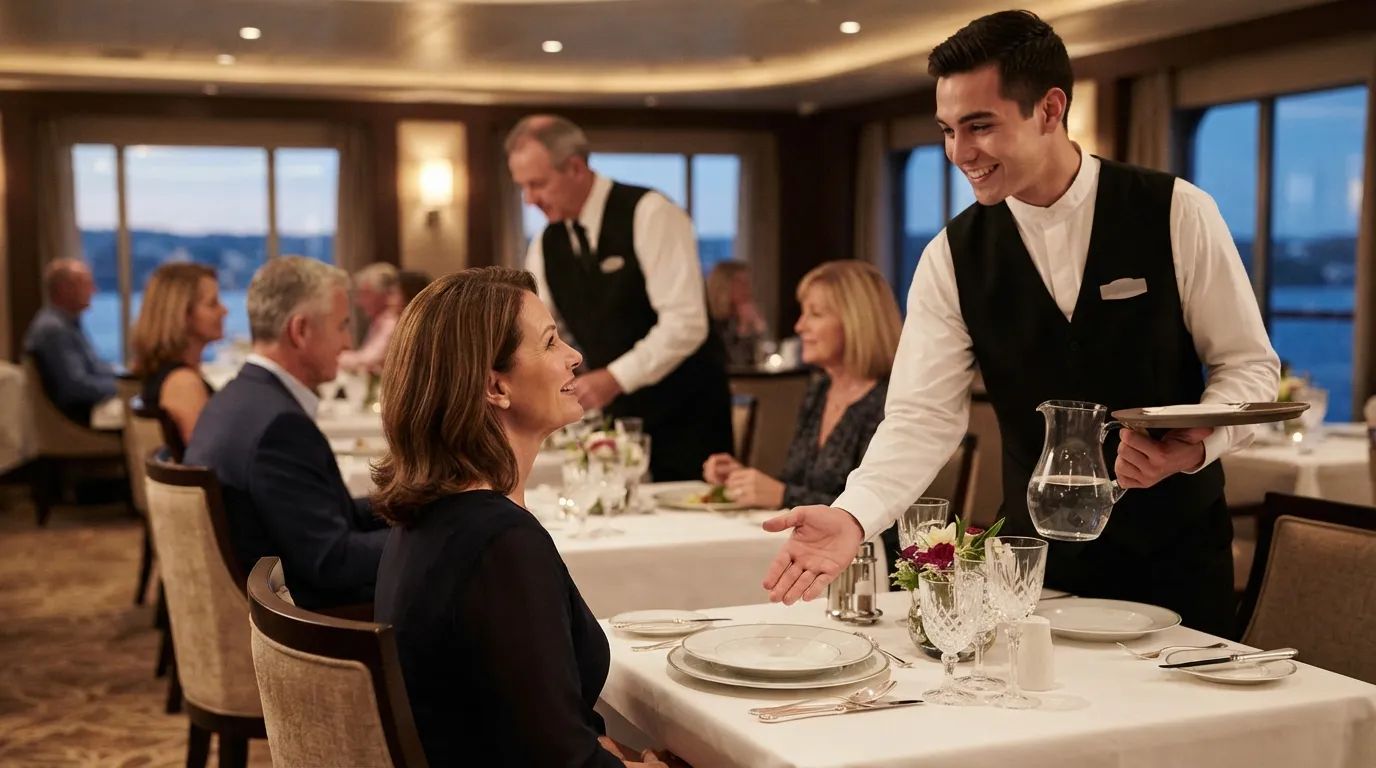
Most passengers assume the dining room forgets them the second dessert plates are cleared. Waiters say it doesn’t work that way. On a contract that can run six to nine months, a waiter serves hundreds of dinners, and a few tables stay sharp in memory long after the ship has sailed on. Here are 23 of them, and they’re not all the ones you’d guess.
The table nobody forgets is rarely the fanciest one, the loudest one, or the one with the biggest order. Some are remembered with a laugh, some with a wince, and one lands hard enough to stop a waiter mid-sentence. Keep scrolling, because the table at #1 has nothing to do with food.
#23 – The Table That Arrived Before the Doors Even Opened
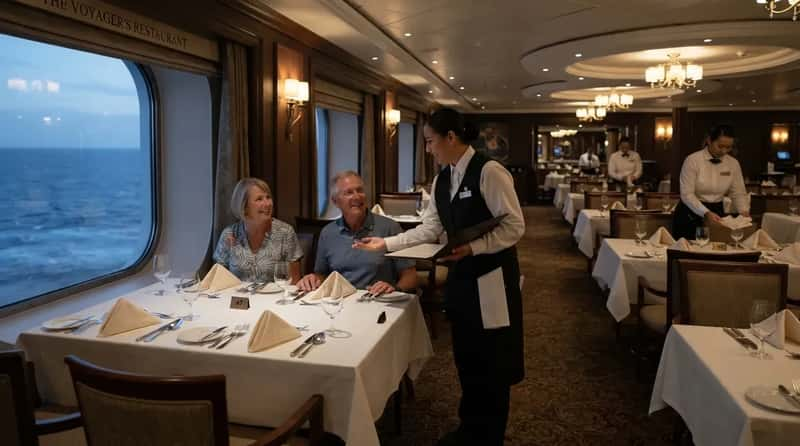
The first guests in the room often set the mood for the whole night. Dinner is the busiest shift of the day, and the team is usually still folding napkins and checking stations when the early crowd walks in. A table that waits patiently and says hello gets noticed fast.
A table that drums its fingers gets noticed too, just differently. Waiters say the first two minutes tend to decide how the next ninety feel. It’s a tiny window, and it sticks.
But that’s nothing compared to the next table, which arrived with a lot of small people.
#22 – The Family Table With Five Kids and Zero Free Hands
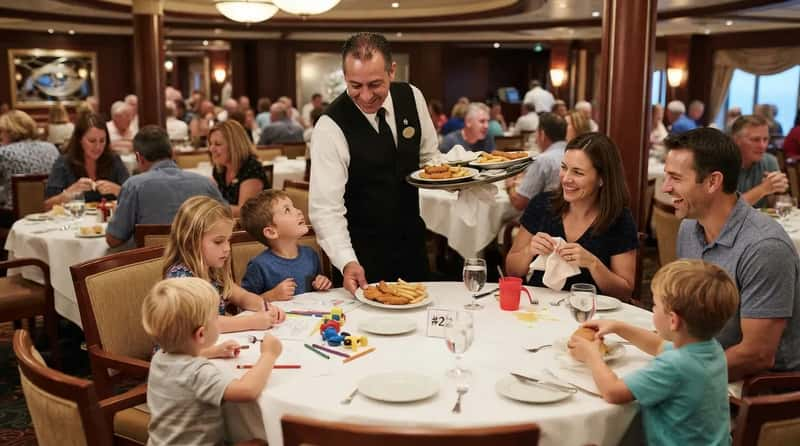
Few tables test a waiter’s reflexes like a family with young children. Juice tips over, crayons roll under the next table, and somebody suddenly needs a different fork. The server has about six jobs and only two hands.
The waiters who remember these tables usually remember them fondly. Getting the kids’ food out first often wins over the whole table, because worn-out parents notice that kind of kindness. Plenty of adults end up remembering the waiter longer than the dinner.
Next up is a table that treated the menu like a challenge.
#21 – The Table Where Everyone Ordered Two Appetizers and Nobody Blinked
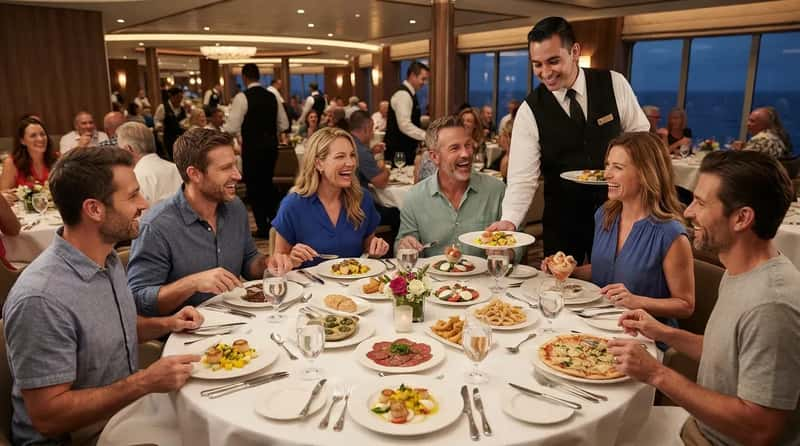
Here’s the secret behind the biggest orders at sea. On most mainstream ships, the main dining room courses are included in the cruise fare, so ordering extra is common. Nobody is watching a running tab.
That means one table can try five starters and a second entrée without a flicker of guilt. Waiters say these guests are some of the most fun to serve. The kitchen, however, has a different opinion by the third round.
The next table arrived with a card that changed how the whole meal worked.
#20 – The Table With the Allergy Card
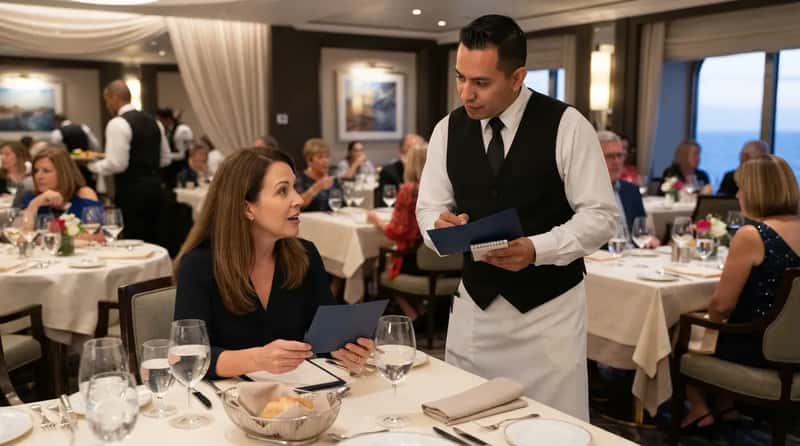
Few moments sharpen a waiter’s focus like a guest saying, “I have a serious allergy.” Cruise lines typically ask guests to share dietary needs before sailing so the staff can plan ahead. Still, the waiter is the last checkpoint between the kitchen and the guest.
That’s why these tables stay in memory. The waiter double-checks every plate, talks to the galley, and tracks each course. One missed detail could turn a dinner into an emergency, so the guests who stay calm and specific earn real gratitude.
Worth Knowing
- Sharing dietary needs before you sail gives the galley time to plan.
- Repeating the allergy to your waiter on night one keeps everyone on the same page.
- Specifics beat generalities: name the ingredient, not just "I can’t eat that."
- Waiters say a calm, clear guest is the easiest one to protect.
But the next table made waiters laugh for a different reason.
#19 – The Table That Ignored Formal Night Completely

Many lines still schedule a "formal" or "elegant" evening. Plenty of guests show up in shorts anyway, and plenty of waiters just shrug. The dress code is a hot topic on every ship.
Some veteran cruisers say dress codes are the soul of the experience. Others say they’re outdated and should disappear. Either way, the waiters just want everyone seated and happy. The photos usually decide who regrets it.
The next table had a plan that only the waiter knew about.
#18 – The Anniversary Table With a Secret Cake Plan
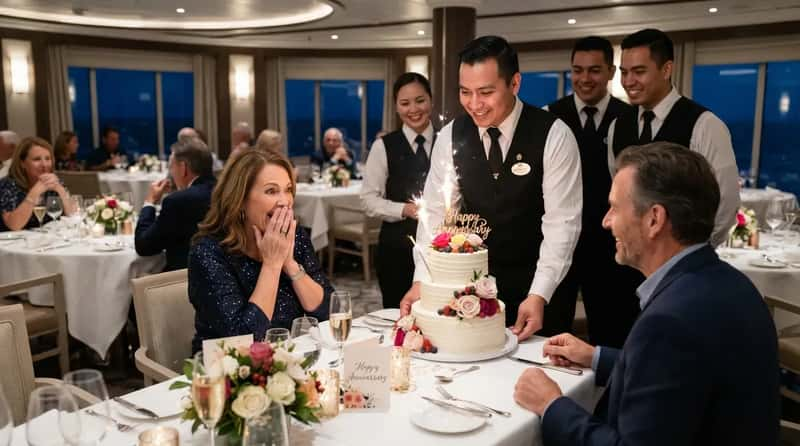
Some of the best moments in a dining room are quietly organized. A spouse tells the staff ahead of time, and suddenly the waiter is a co-conspirator. The whole team is in on it.
Waiters say the pressure is real. They have to keep the secret, time the cake, and gather colleagues without tipping off the guest of honor. The surprised face is the payoff, and it’s the part crews say they remember.
The next table started as strangers.
#17 – The Strangers Who Turned Into a Wedding-Party Level of Close

On ships with fixed seating, you may share a table with people you’ve never met. It sounds risky, and sometimes it is. But waiters see the same faces every night, so they get a front-row seat to what happens next.
Strangers become friends by night three and swap phone numbers by night seven. The table can start to feel like a small town. Anytime-dining fans argue that freedom beats routine, but fixed-seating fans say this is exactly what they’d miss.
The next table did something rarer: it sat alone and loved it.
#16 – The Solo Traveler Who Became the Whole Section’s Favorite
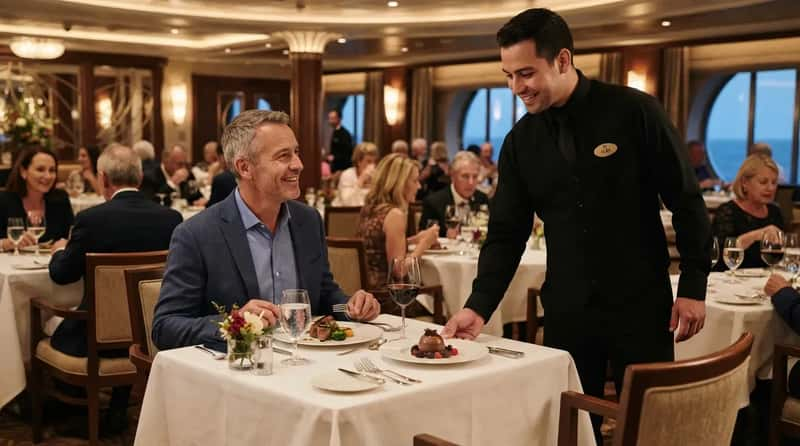
Dining alone at sea can feel awkward at first. The room is full of couples and families, and a table for one can seem very exposed. Many solo travelers admit they dread that first walk in.
Waiters often step in without being asked. They learn the guest’s name, their usual drink, and their favorite dessert. By midweek, the quietest table in the room can have the warmest service, and plenty of solo cruisers say that’s what brought them back.
The next table did one thing right from the first night.
#15 – The Table That Learned the Waiter’s Name on Night One

It sounds small, but it isn’t. Waiters wear name tags, and most guests never read them. The few who do stand out immediately.
A guest who says "Thanks, Maria" gets a different night than one who says "Hey, you." Using a name in the first five minutes can change how the whole week goes. Crew call it the cheapest kindness at sea.
The next table asked a question about money that most guests are too shy to ask.
#14 – The Table That Asked How Tipping Actually Works
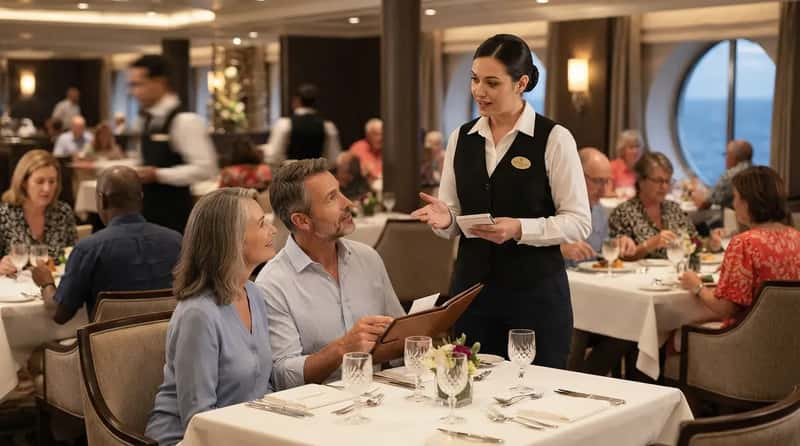
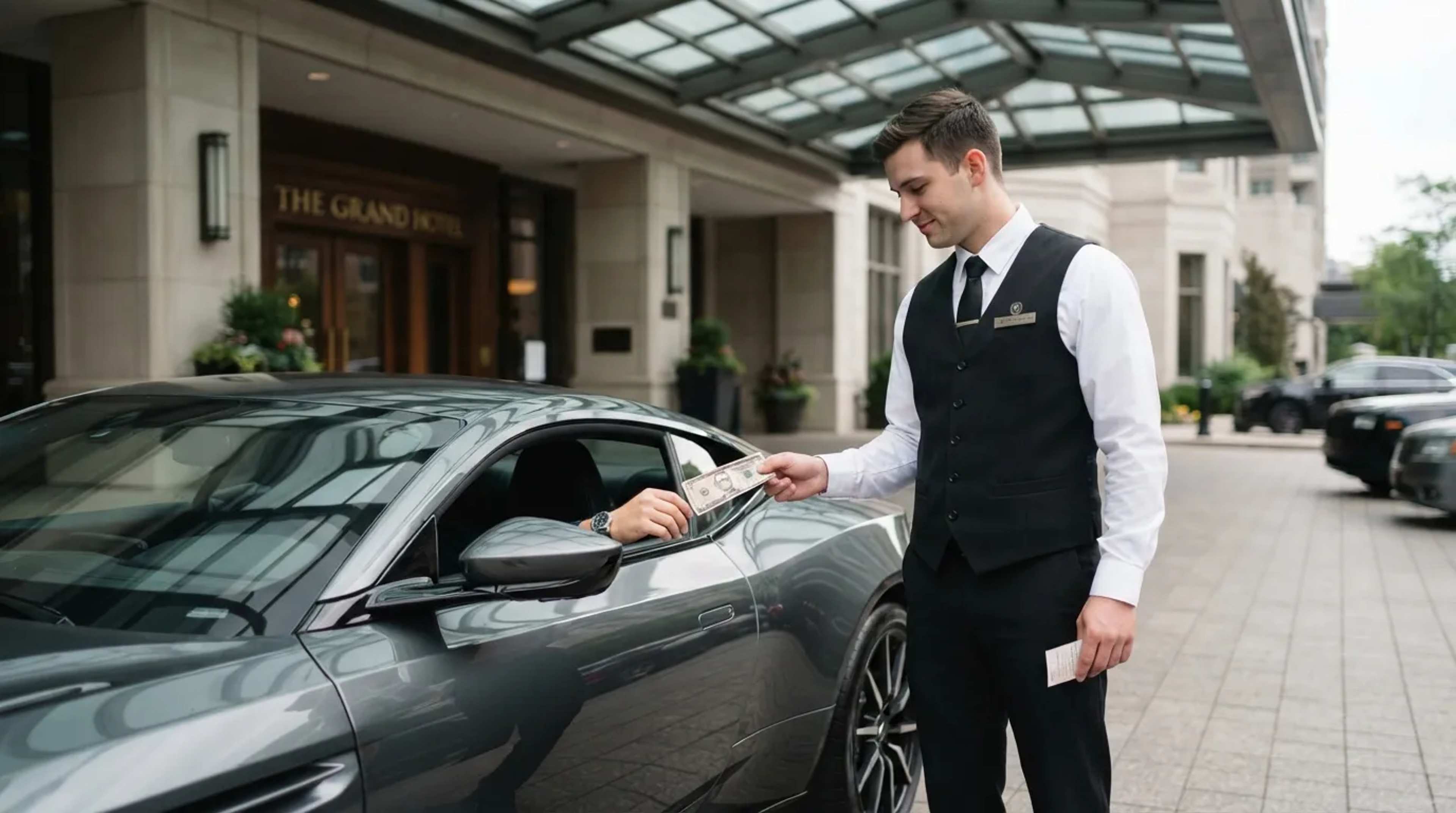
Here’s what many passengers don’t realize. Most major cruise lines add an automatic daily gratuity to each guest’s account, and a large share goes to the dining team and other service crew. For a lot of people, it’s the first time they’ve seen where that money goes.
The charge is typically billed per person per day, often somewhere between the mid-teens and mid-twenties in dollars depending on the line and cabin category. It also tends to creep upward over time. The guests who ask how it works are usually the ones who tip with confidence.
Quick Compare
- Carnival: $17 per person, per day in standard cabins (since April 2026)
- Princess: $18 per person, per day in standard cabins (since March 2026)
- Royal Caribbean: $18.50 per person, per day in standard cabins
- Norwegian: $20 per person, per day in standard cabins
The next table is the one that lit up the whole section.
#13 – The Table Where Dessert Came First
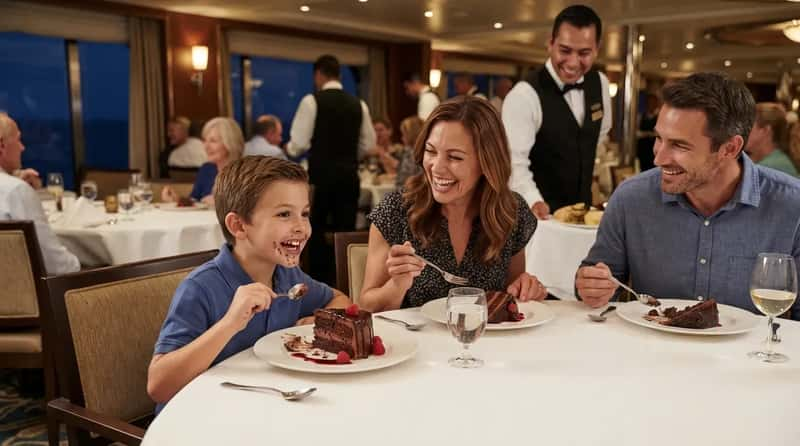
Rules are looser than people think. Plenty of waiters will happily bring dessert early if a guest asks. Nobody in the galley is going to call the dessert police.
These tables tend to produce the best stories. A kid orders the chocolate cake first, and a few adults quietly join in. Nobody on the crew minds, and the night gets more fun for it.
But the next table had to deal with the one thing no waiter controls.
#12 – The Table During the Roughest Night at Sea
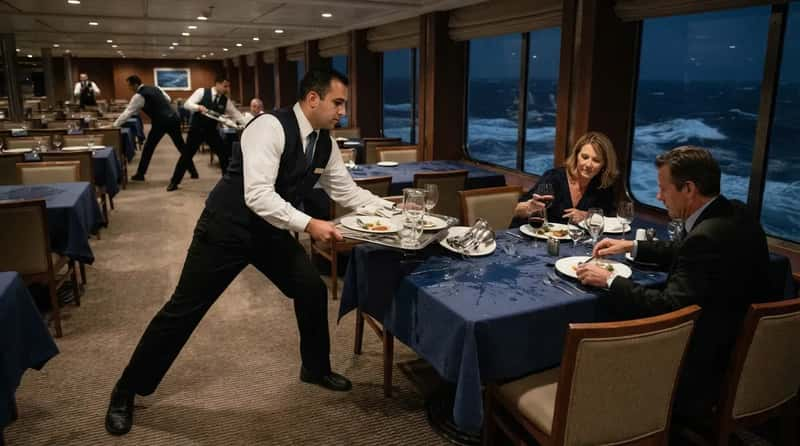
Heavy swells turn serving into a balancing act. Trays tilt, glasses slide, and servers walk with a wider stance. Every step becomes a small negotiation with the ocean.
Crews often use tricks to keep things steady, such as damp tablecloths that help plates grip. The room can look half empty while the waiters work twice as hard. The guests who show up anyway are the ones they talk about afterward.
The next table went off-script, and the kitchen loved it.
#11 – The Table That Ordered Off the Menu
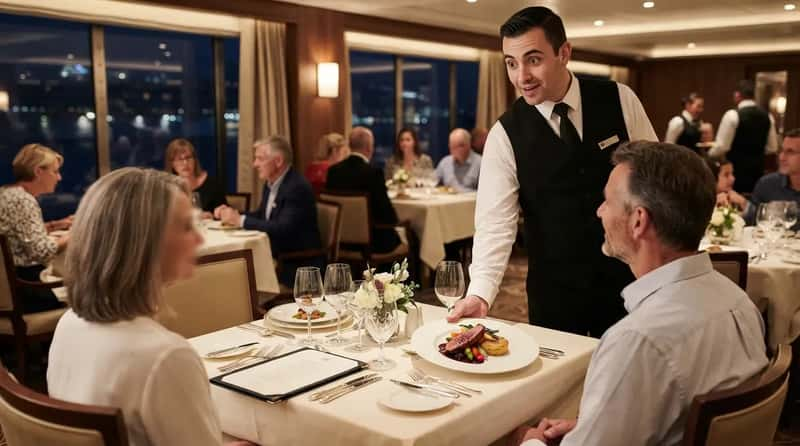
Many lines keep a handful of classic dishes available every night, such as a Caesar salad or a steak. Experienced cruisers know to ask for them. It’s one of those quiet perks that regulars pass along.
Waiters say these requests are fine as long as they’re reasonable. A polite "could the chef do this?" often gets a yes. It also tells the waiter that this guest knows the ship, and those guests tend to be remembered.
The next table tried something that surprised the waiter.
#10 – The Table That Came Back After a Week of Specialty Dining
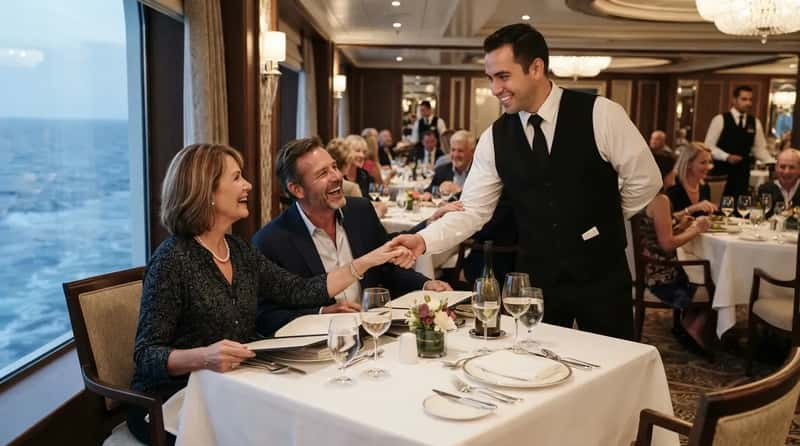
Here’s a hot take. Many travelers say specialty restaurants are the only way to eat well at sea. Plenty of crew and regulars disagree and say the main dining room is the better value.
Some guests find that out the hard way. They pay for several upcharge dinners, then drift back to the main room and admit they missed it. Waiters notice who returns, and they welcome them like old friends.
The next table is the one that makes a ship feel like home.
#9 – The Regulars Who Requested the Same Waiter Again
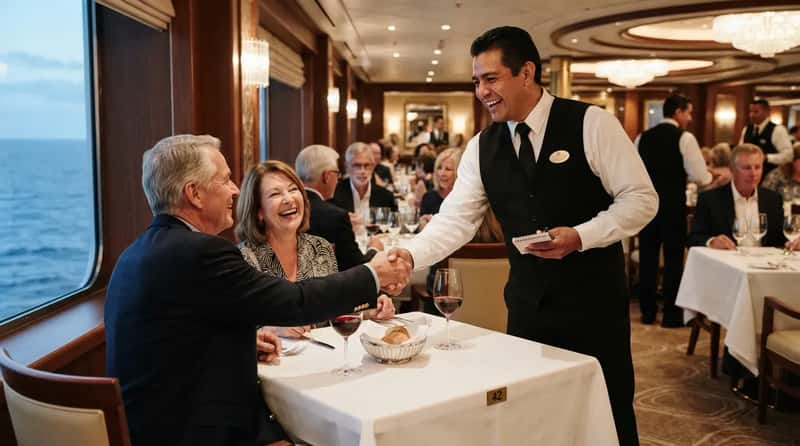
Repeat cruisers are a real thing. They book the same ship, the same season, and sometimes the same section of the room. To them, the dining room is less a restaurant than a neighborhood.
Waiters say these guests are unforgettable. They know the routines, the jokes, and who takes sugar in the coffee. Some even ask for a particular waiter before they board, and that kind of loyalty is rare in any restaurant.
Why It Stands Out
- The waiter already knows the guest’s drink before they sit down.
- Inside jokes carry over from one sailing to the next.
- Guests feel like insiders, and crews feel genuinely appreciated.
- Few restaurants on land can match that level of familiarity.
But the next table brought the whole world to one round of drinks.
#8 – The Table That Asked "Where Are You From?"
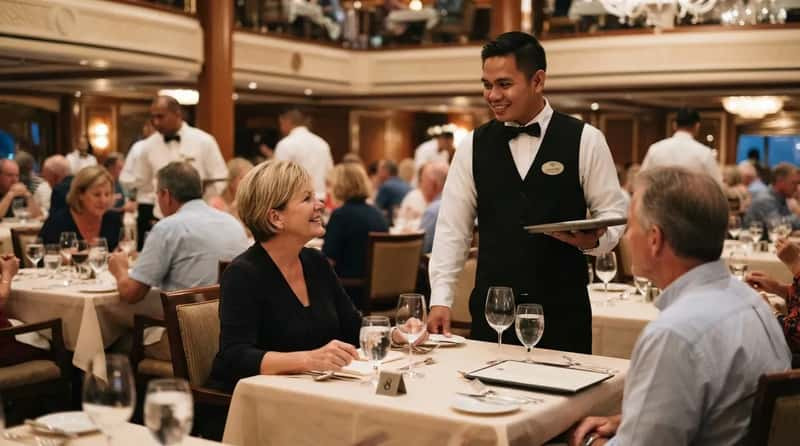
Cruise crews come from many countries, and a dining room can feel like a small United Nations. Servers may come from the Philippines, India, Indonesia, Eastern Europe, and beyond. Most guests never think to ask.
The ones who do get surprising answers. A short chat can turn into a story about a hometown thousands of miles away, and a family waiting at the other end. Waiters say those conversations are the ones that stick.
The next table filled the room with the most off-key sound at sea.
#7 – The Birthday Table That Sang Louder Than the Staff

Birthday songs are a dining room tradition on many ships. A waiter brings out a dessert, the team gathers, and the guest turns bright red. It’s cheesy, and everyone secretly loves it.
Sometimes the table is louder than the crew. The loudest singers often get the biggest cheer, even when they’re off key. Waiters say nights like that make a long shift feel shorter.
The next table did something that many guests never think about.
#6 – The Table That Stayed After the Lights Dimmed
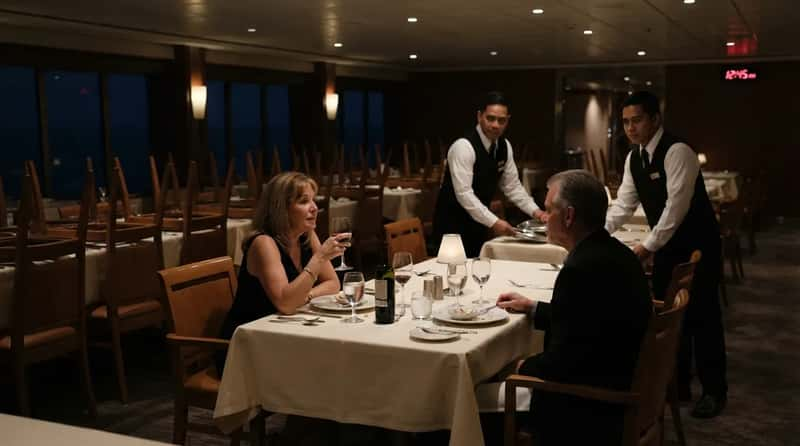
When the last course is served, the work isn’t over. There are still tables to reset, side stations to organize, and cleaning tasks to finish before the team can call it a night. All of it happens around the guests who haven’t left yet.
A table that lingers makes that job longer. Most waiters don’t mind a good conversation, but they remember the guests who were kind enough to notice the clock. A simple "we’ll let you go" earns real goodwill.
The next table shows how long those days really are.
#5 – The Table That Thanked the Waiter in His Own Language
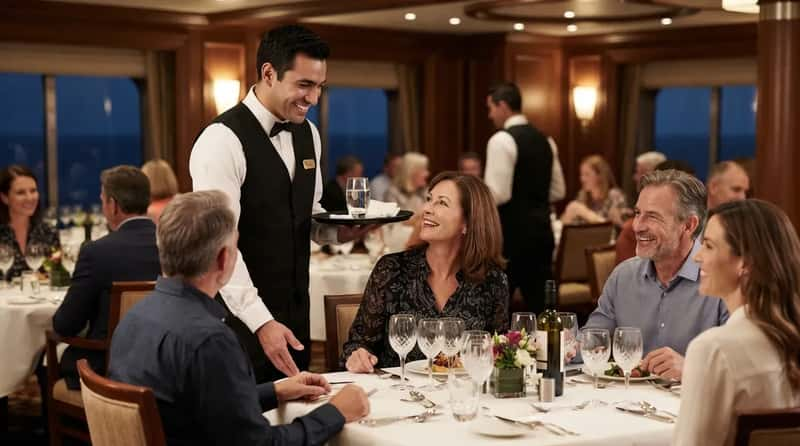
A single phrase can change a night. Guests who learn how to say "thank you" in a waiter’s language get a smile that’s hard to fake. It usually lands before they’ve even finished the word.
It costs nothing and takes about ten seconds. Crew say it can feel like being seen for the first time that day. Given the hours they work, that’s no small thing.
The hours behind that moment might surprise you.
#4 – The Table That Never Saw the Hours Behind the Smile
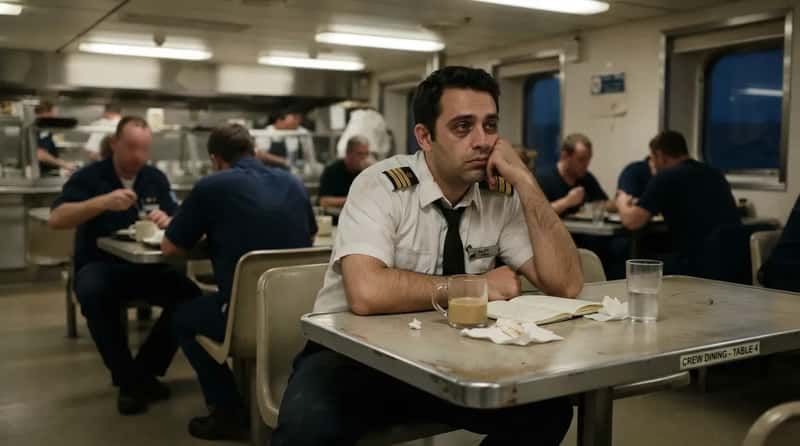
A waiter’s day often looks calm from the table. Behind it is a very long shift. The smile you see at dinner is usually the tail end of a day that started hours earlier.
Many waiters work ten hours or more a day, and crew accounts say seven days a week is normal during a contract. The shifts are often split, with a break in the afternoon before the dinner rush. Guests who understand that tend to be kinder.
The next table came near the end of a very long contract.
#3 – The Table in the Final Week of a Contract
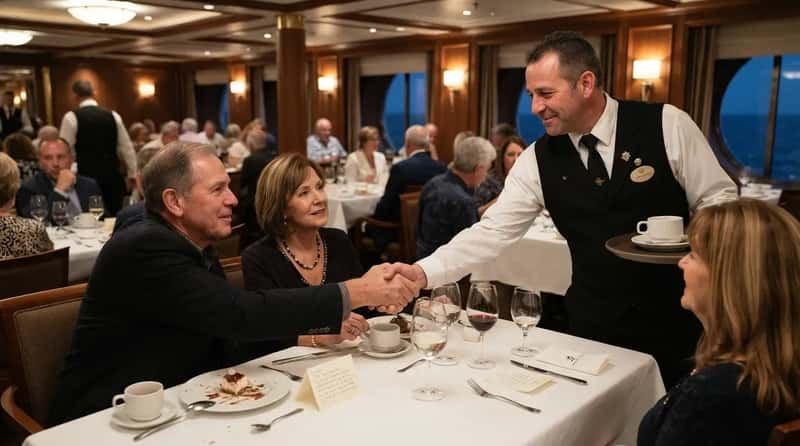
By the last week, a waiter has served the same dining room for months. Every table feels a little more precious. Even the small talk starts to carry weight.
These guests tend to get a different kind of service. The waiter is exhausted but also sentimental, and many crew say the last tables of a contract are the ones they remember best. They’re a checkpoint on the way home.
At a Glance
- The waiter has been away from home for months.
- The routine is familiar, but the goodbyes are close.
- Small kindnesses land harder than they did in week one.
- Many crew say these final tables are the ones they replay on the flight home.
The next table did the one thing nobody expects.
#2 – The Table That Thanked the Assistant Waiter First
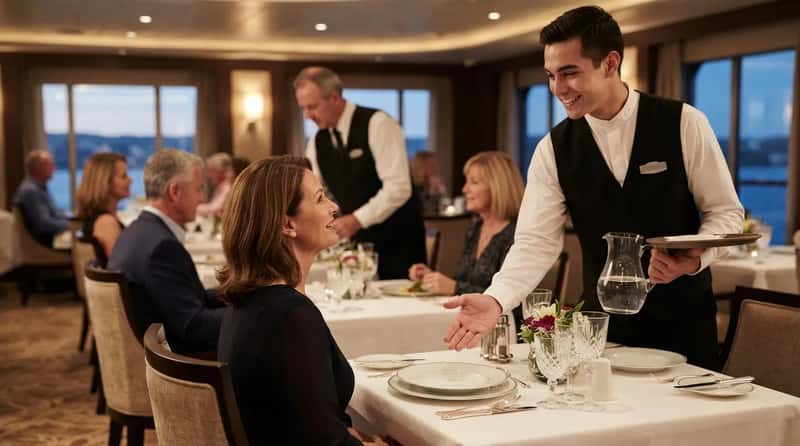
Most guests talk to the main waiter. The assistant waiter, who clears plates and refills water, often goes unnoticed. They work just as hard, just more quietly.
Guests who thank the assistant first stand out right away. Traditional tipping guides list the assistant waiter separately from the waiter for a reason. A thank-you to the quiet one often means more than people think, and crew say it’s a small gesture with a long memory.
But the table waiters mention most is the one that asked a very simple question.
#1 – The Table That Asked How Long Until You Go Home
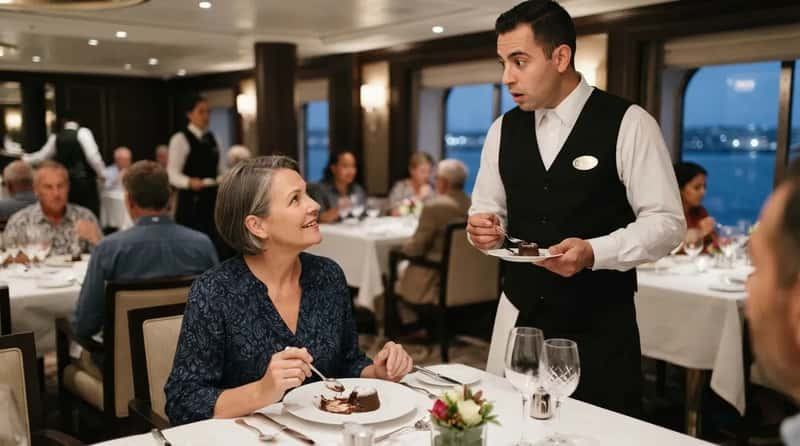
Out of every table, this one lands hardest. A guest looks up from dessert and asks, "When do you see your family again?" It’s not about the food, the wine, or the service.
The answer can be months, and many crew get roughly two months off between contracts, though it varies by line and role. A question like that can stop a waiter mid-sentence. It means someone saw the person behind the apron, and that’s the table they carry through the rest of a very long season.
The tables waiters remember are rarely the fanciest ones. They’re the ones where someone was curious, patient, or simply kind. Long hours and months away from home are exactly why small gestures hit so hard out there.
So the next time a waiter sets down your plate, remember that they will probably remember you. The only question is how.