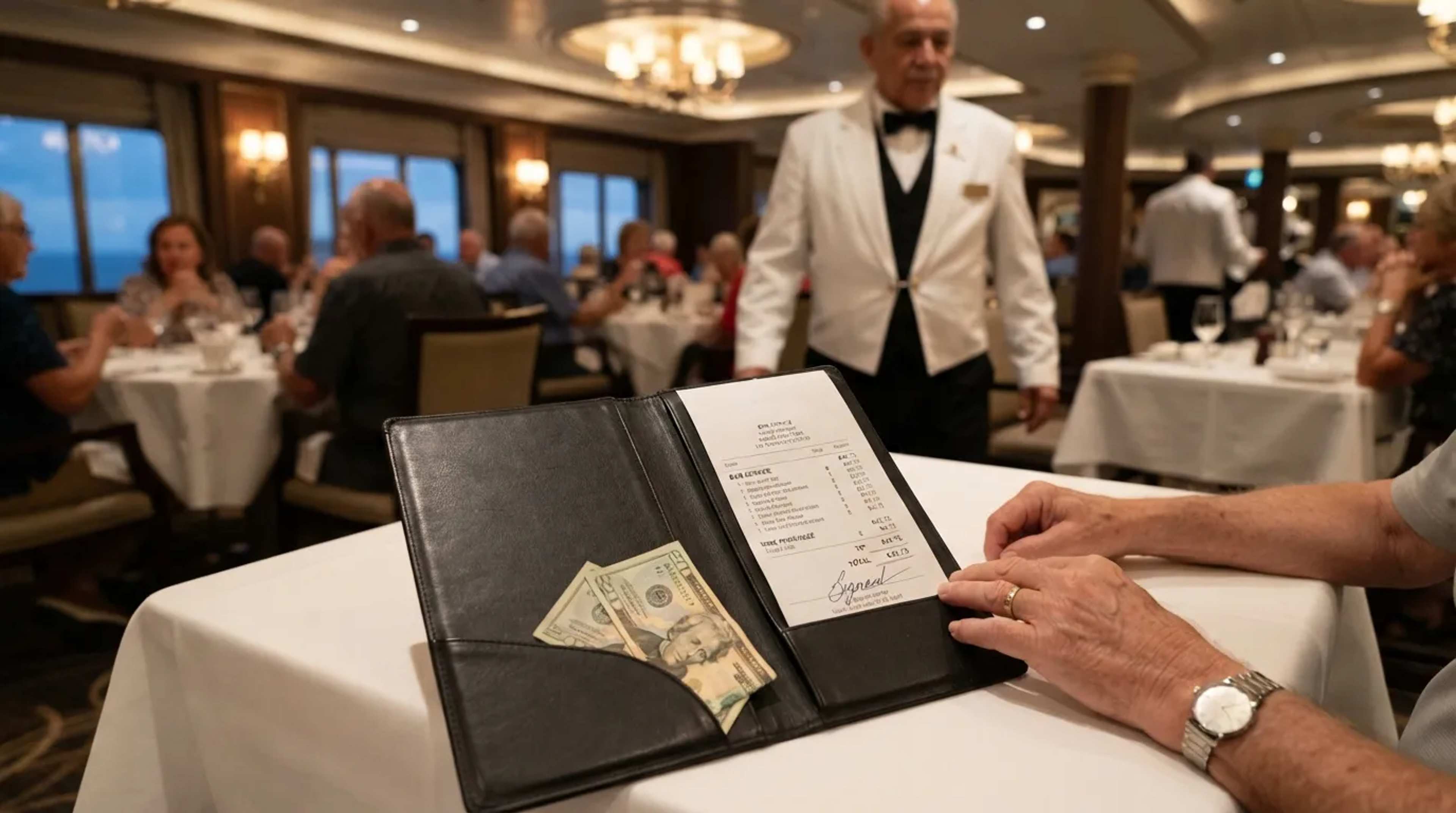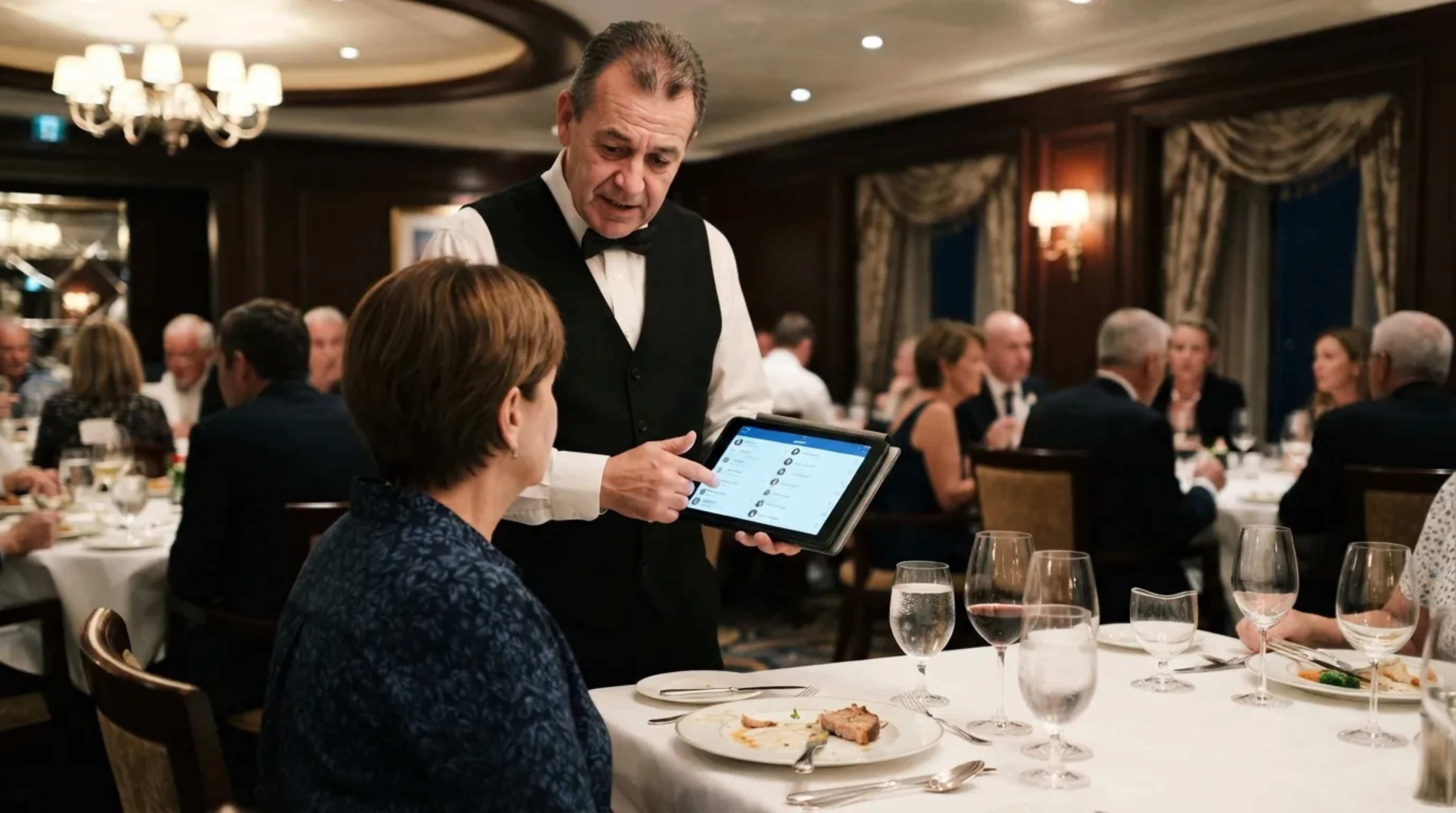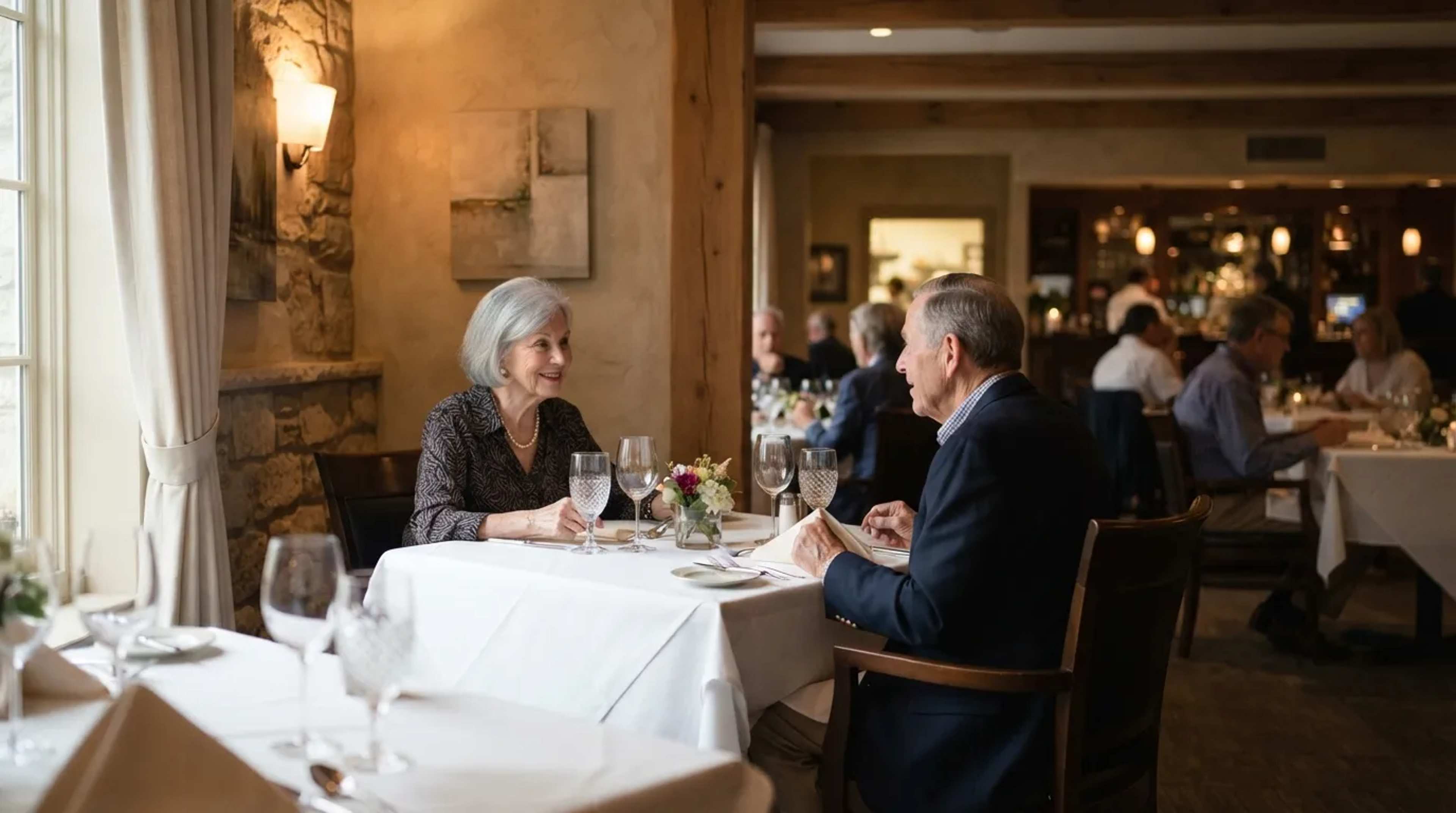
A cruise waiter at second seating can read a table in the time it takes to unfold a napkin, long before anyone says a word. These are the 14 small habits that make a seasoned table stand out, and waiters spot every one of them.
None of them require fancy manners or insider knowledge. But the habit at the end of the list changes everything for the staff, and most guests never realize they are doing it.
1. They Are in Their Chairs on Time
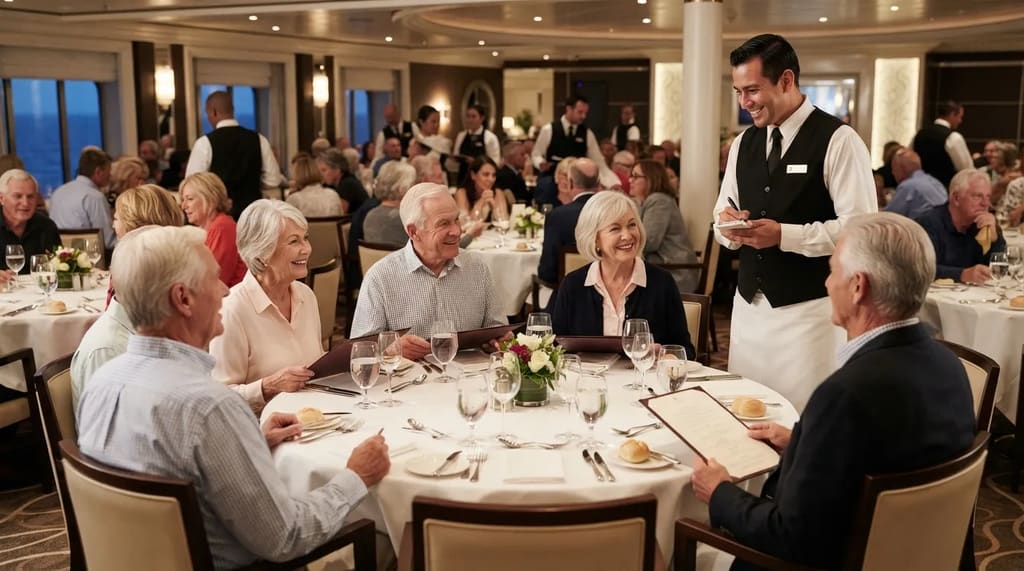
Waiters notice the clock before they notice faces. Second seating is the later of two fixed dinner times, often somewhere around 8:00 p.m., and the entire dining room is choreographed around it.
Here is the catch that surprises first-timers: waiters are often reluctant to take orders until everyone at the table has arrived.1 One empty chair can hold up the whole table.
Regulars treat the dinner time like a promise.2 They tend to arrive a few minutes early and are settled well before the first basket of bread lands.
You can almost see the difference from the galley doors. A table that starts together tends to stay together, course after course, right through to coffee.
That small bit of punctuality quietly tells the waiter what kind of evening is coming. Nobody has to say a word about it.
But being on time is only the first thing a waiter sees. The first ten seconds at the table tell them even more.
2. They Greet the Table Before Touching the Menu
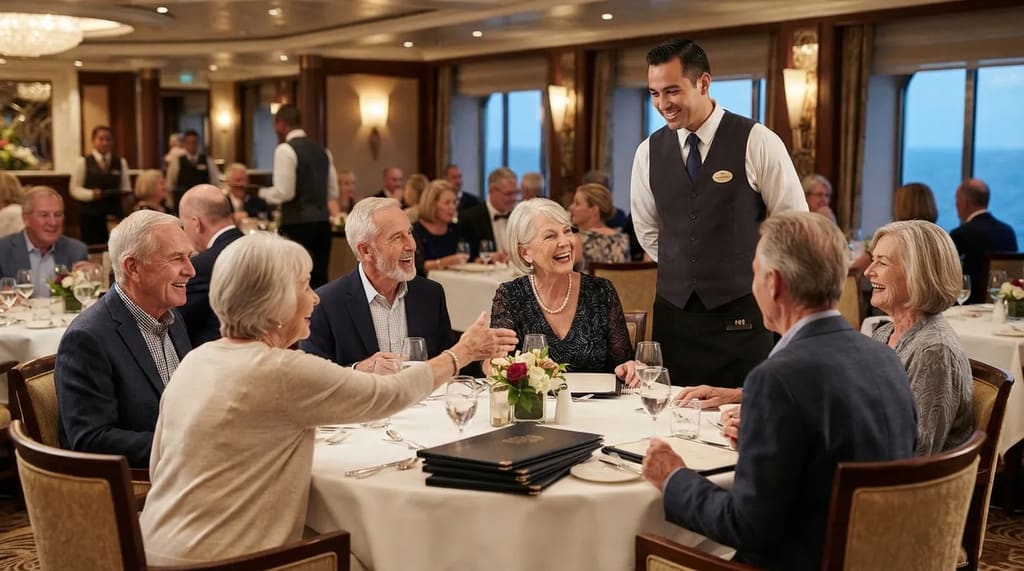
The best tables start with people, not paperwork. A regular says good evening to the waiter and to every tablemate before anyone opens a menu.
Ship etiquette treats the first night as the night for introductions. A name offered and a name repeated lets everyone begin the week on equal footing.
The table’s mood is often set in the first two minutes. A warm greeting, a name remembered, and a nod to whoever arrives last all count for more than they seem to.
Guests who skip this step can end up in polite silence for days. The waiter then plays host to people who never quite met.
At a Glance: The Opening Minute
- Say good evening to the waiter first, then to the table.
- Offer your name and repeat the names you hear.
- Give a nod or a smile to whoever arrives last.
- Open the menu only after the greetings are done.
Veterans know a friendly table is worth more than any single dish on the menu. It also turns the waiter’s job from a performance into a pleasure.
Once the greetings are done, the next habit shows up the moment the menus open. It is all about pace.
3. They Read the Menu at the Table’s Speed
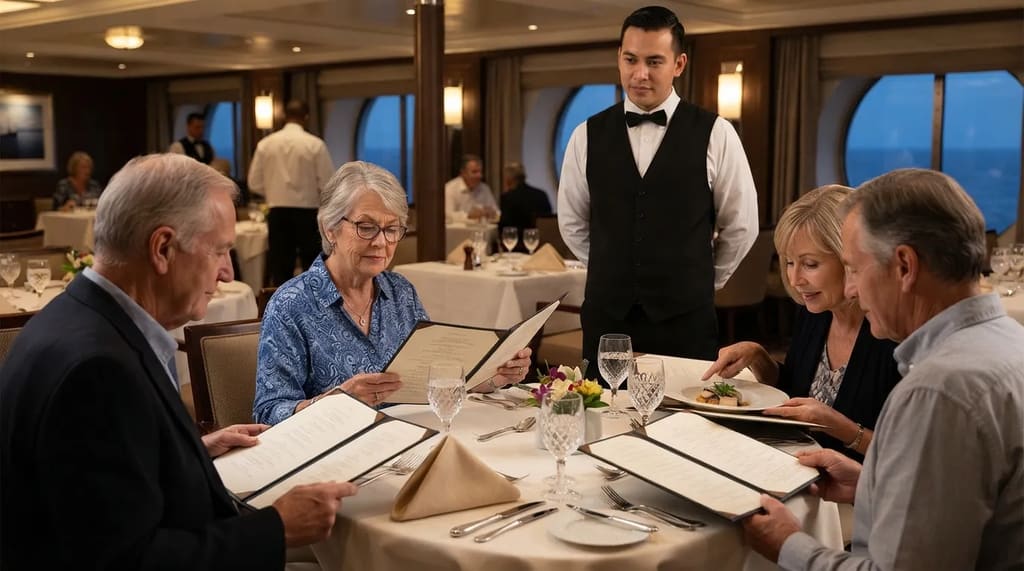
Regulars treat the menu as a plan, not a puzzle. On many ships the week’s menus are set before sailing, so dishes tend to come around in a familiar pattern.
Experienced guests glance over the whole page once. They pick a course, ask one clear question if they need to, and quietly close the menu.
Often the slowest part of any order is a single person’s indecision. Waiters notice when a table reads together and decides together.
They notice the opposite too. A guest who reads every line aloud and changes their mind three times slows the whole group without meaning to.
Menu pace is only part of the story, though. What happens when a guest wants more than one plate is where many tables go wrong.
4. They Ask Before Sharing or Ordering Extra Plates
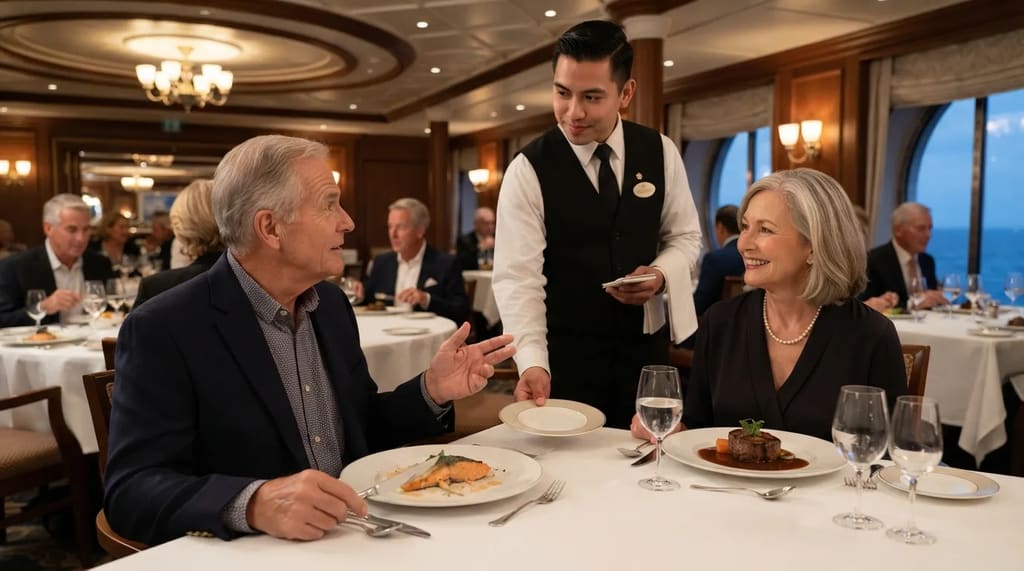
Sharing a plate at a sit-down dinner is a quiet art. Regulars offer a taste across the table, then pass it back without fuss.
Ordering more than one starter is common too. In many main dining rooms you can order more than one appetizer or entrée, though policies vary by line.1 2
The polite move is to ask, not assume. A short, friendly question beats an awkward refusal, and the rules can differ from ship to ship.
A modest second plate lands better than a table crowded with extras. Waiters notice who asks calmly and who simply points.
Now look at the glasses on the table. They are a small detail, and waiters read them in a blink.
5. They Know Which Glass Is Theirs
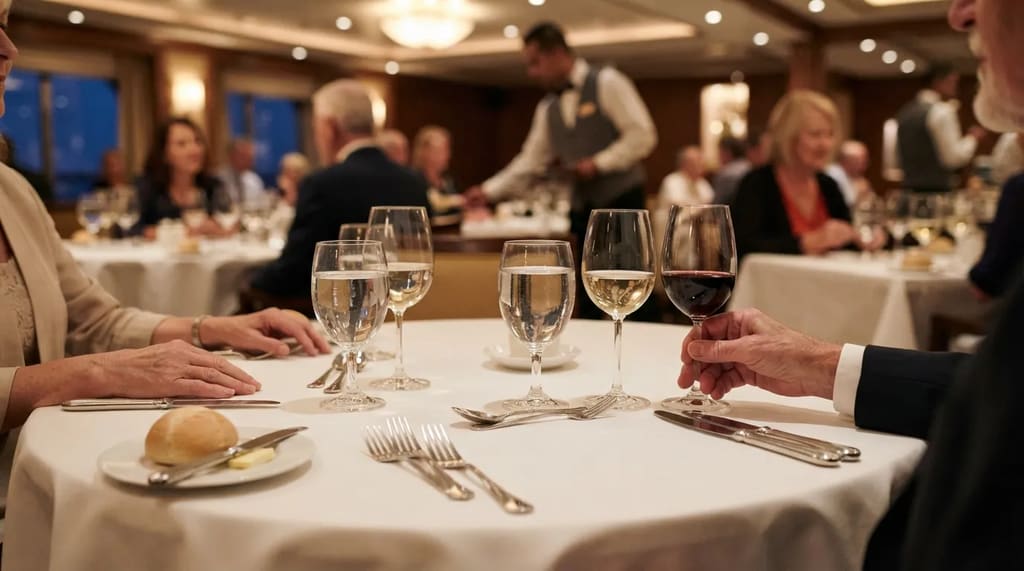
Look above the knives on the right side of each setting and you will find the glasses. Regulars drink from the glass to their right and never borrow a neighbor’s.3 4
This is simply table etiquette, and it keeps the whole setting orderly. It also lets the waiter pour without reaching across anyone’s lap.
A misplaced glass is often the first sign a table is out of rhythm. When glasses drift to the middle, the waiter has to guess whose is whose.
Experienced guests leave glasses exactly where they were set. If they do not want a pour, they say so with a smile or a light hand near the rim.
Glasses are one signal. The napkin sends a different message, and waiters read it without even looking up.
6. They Use the Napkin as a Signal
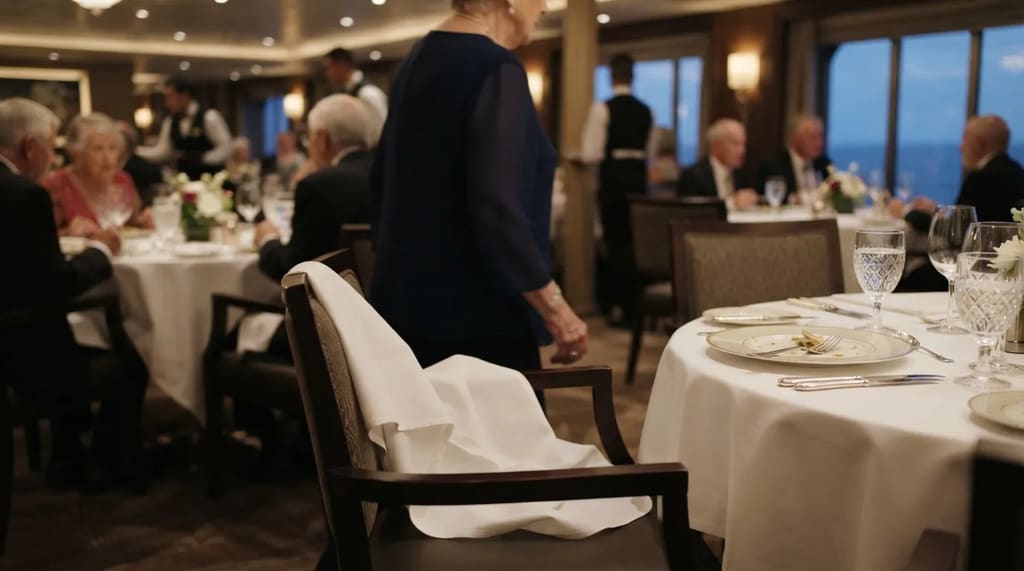
A napkin goes on the lap when the guest sits down. That small act tells the waiter the guest is settled and ready for service.5
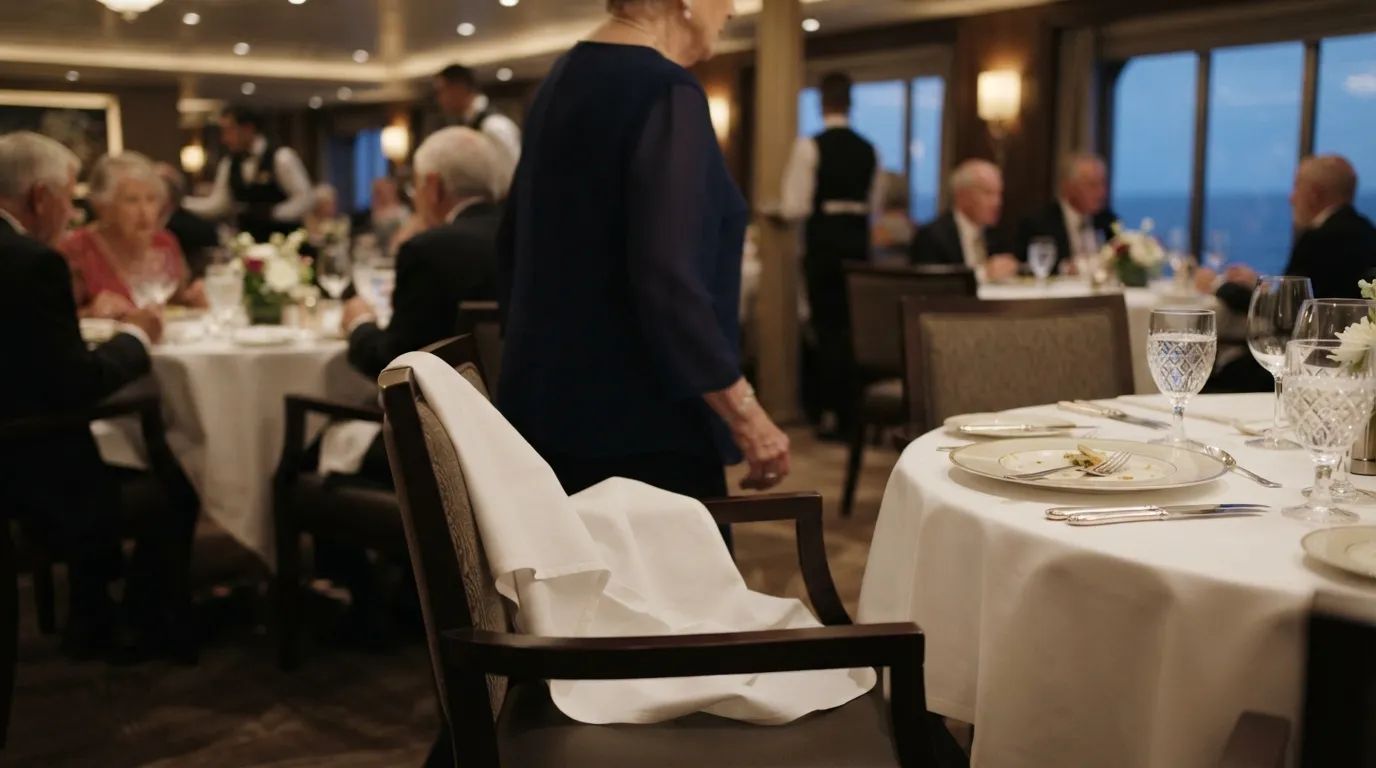
When a regular steps away mid-meal, the napkin goes loosely on the chair. A napkin on the chair says the guest is coming back, so the plate stays.
At the end of dinner, the napkin rests loosely to the left of the plate. It is not crumpled, and it is not refolded into a neat little square.
Waiters see these cues all night long. They learn quickly which tables speak this quiet language and which ones leave them guessing.
The napkin tells a waiter what you plan to do. The chair tells them how much room they have to work in.
7. They Handle the Chair and the Aisle With Care
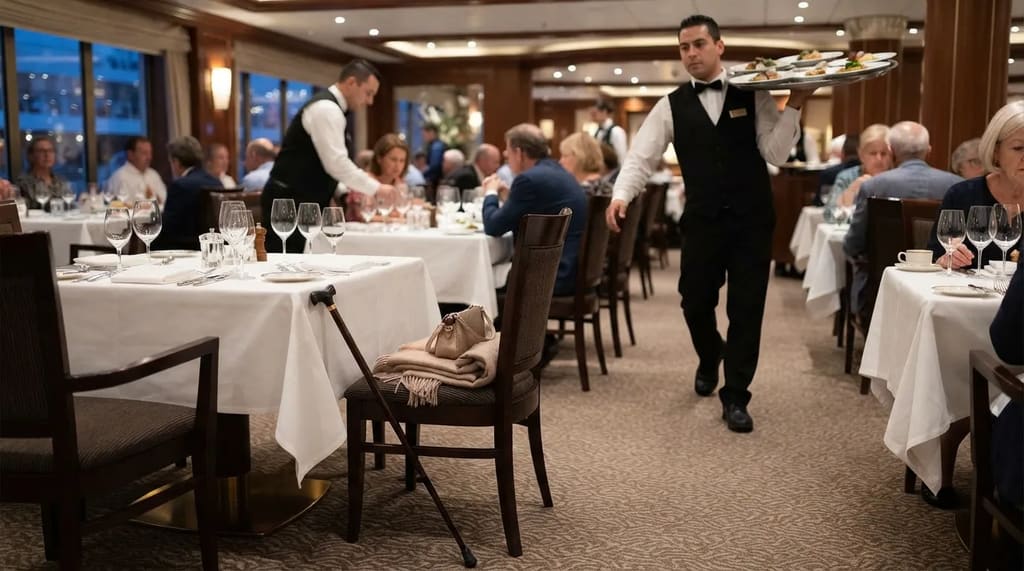
Waiters work in tight spaces with heavy trays balanced overhead. A chair pulled too far back becomes an obstacle in a narrow aisle.
Regulars slide in quietly and push the chair back in when they leave. They also keep bags, shawls, and walking sticks well out of the path.
An aisle kept clear is the easiest way to help a team you never see working. Waiters do not comment on it, but they remember it.
Worth Knowing: Keeping the Path Clear
- Bags and shawls are better on the lap or tucked beneath your own chair.
- Walking sticks stay close to you, never across the aisle side.
- Pushing in your chair when you leave keeps the lane open for trays.
- A quick glance behind you before standing helps avoid a collision.
Dress is part of the picture too. The main dining room is typically rather formal, and formal nights are a staple of many voyages.
Guests who arrive settled and tidy fit the room and its rhythm. Everything flows a little easier around them.
Chairs and aisles are about space. The next habit is about sound, and it divides tables more than any other.
8. They Keep the Conversation at Table Volume
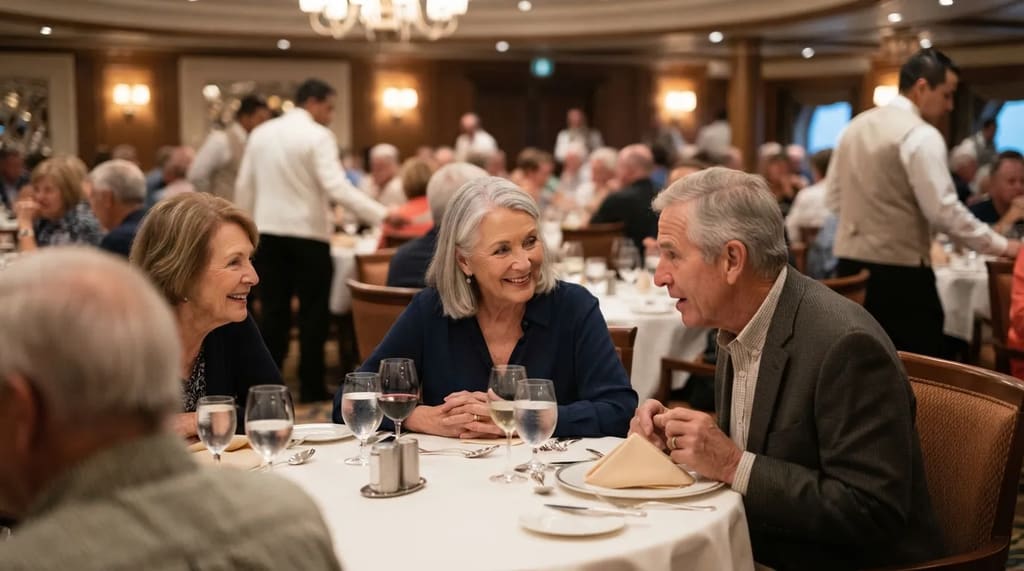
A dining room with hundreds of guests is loud, and the sound builds as the evening goes on. Regulars adjust by leaning in, not by raising their voices.
The loudest table is not always the happiest one. Waiters notice who talks over the room and who talks to the table.
Some guests find the room too noisy to hear their tablemates at all. That is a seating question, not a personal failing.
The maitre d’ handles table assignments, so a quieter spot is often just a matter of asking. Experienced travelers make that request early rather than straining through the whole week.
Volume shows how a table talks. The next habit shows how it tells the waiter it is ready, without saying a word.
9. They Signal They Are Ready Without Waving
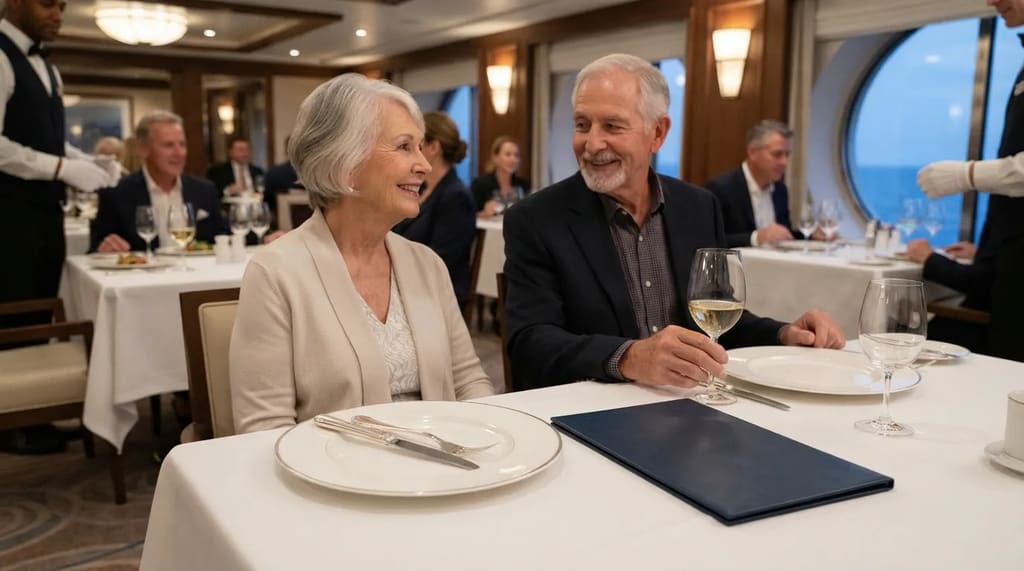
Nobody snaps fingers in the main dining room. Regulars use quiet cues that waiters learn to read at a glance.
A closed menu set on the table means ready to order. A small nod and a moment of eye contact does the rest.
At the end of a course, the knife and fork rest together on the plate.5 A finished plate is one of the clearest signals in the room, and a few guests never learn it.
Quick Compare: Silent Signals
- Closed menu on the table: ready to order.
- Knife and fork together on the plate: finished with the course.
- Napkin loosely on the chair: stepped away, coming back.
- Light hand near the glass rim: no more pouring, thank you.
The staff have signals of their own. Waiters will not rush you with words; they clear plates promptly or offer coffee a touch early.6
Learn the language and the evening runs on its own. Nobody has to ask, and nobody has to wait.
Notice how much of this is a conversation without words. The next habit is about the person most guests overlook.
10. They Treat the Assistant Waiter as Part of the Team
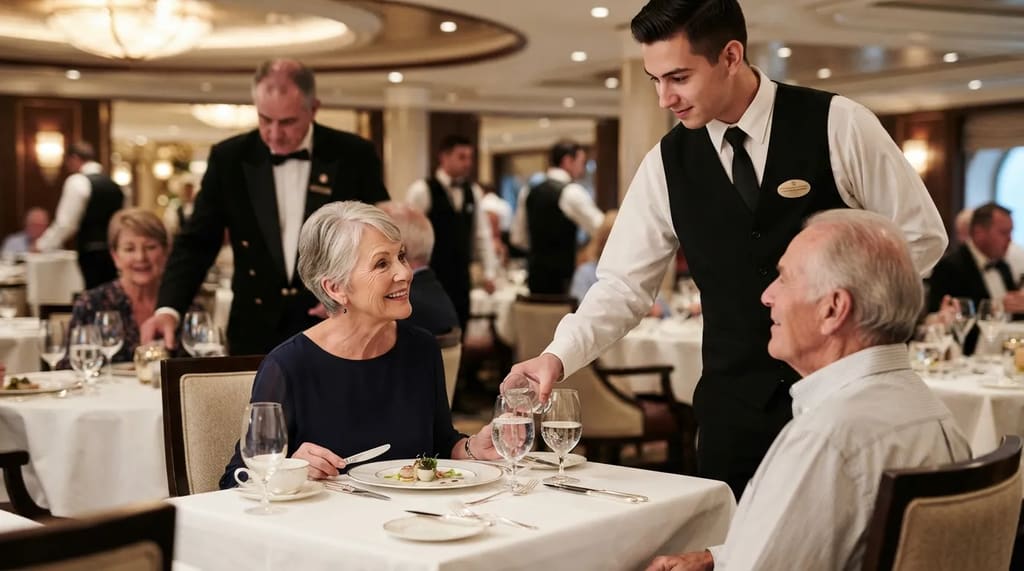
Most guests learn one name at the table. Waiters notice who learns two.
Main dining rooms typically run on teams, with a head waiter and an assistant sharing a station.6 The person filling your water and clearing your plate is doing as much work as the one taking your order.
Regulars say thank you to both. They also look up when the assistant arrives, instead of talking over them.
Some say the assistant waiter is the real engine of the table. Anyone who has watched a station in the middle of a rush would understand why.
If the assistant is overlooked, the bread basket is usually the first place it shows. And bread tells its own story.
11. They Pass the Bread Basket the Right Way

The bread basket is a small test of table manners. Regulars offer it to a neighbor before taking a piece for themselves.
They take one piece at a time and set it on the bread plate, not on the tablecloth. Butter goes on the plate first, then onto the bread, one bite at a time.
Passing goes in one direction, usually to the right, so the basket does not zigzag across the table.3 4 Waiters notice when it travels cleanly.
They also notice who fills up on bread before the first course arrives. A guest who saves room for the meal makes the kitchen’s work feel worthwhile.
It is a tiny ritual, but it shows whether a table is thinking about each other. That is exactly what waiters read from across the room.
Bread comes first, and dessert comes last. How a table handles the end of dinner may be the clearest clue of all.
12. They Plan Dessert Before the Plates Are Gone
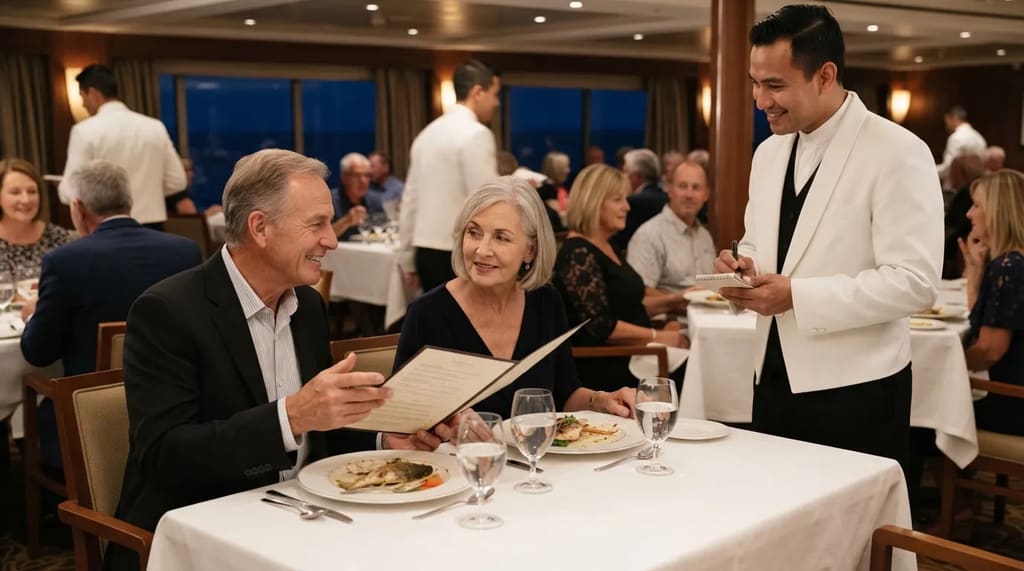
Regulars decide on dessert while they are still finishing the main course. That lets the waiter bring it right after the plates are cleared.
At second seating, no other party is waiting for your table. Still, the staff have a room to reset, and guests who notice that earn real goodwill.
Related Stories From Travelbinger


Ordering a second dessert is a familiar ritual on many ships. It is wise to ask first, since practices differ by line.
Coffee is the quiet closer. Guests who say yes early are often the same ones who say goodnight as the room thins out.
Dessert closes the meal, but it does not close the evening. The next habit is the one waiters remember best.
13. They Thank the Team, and Mean It
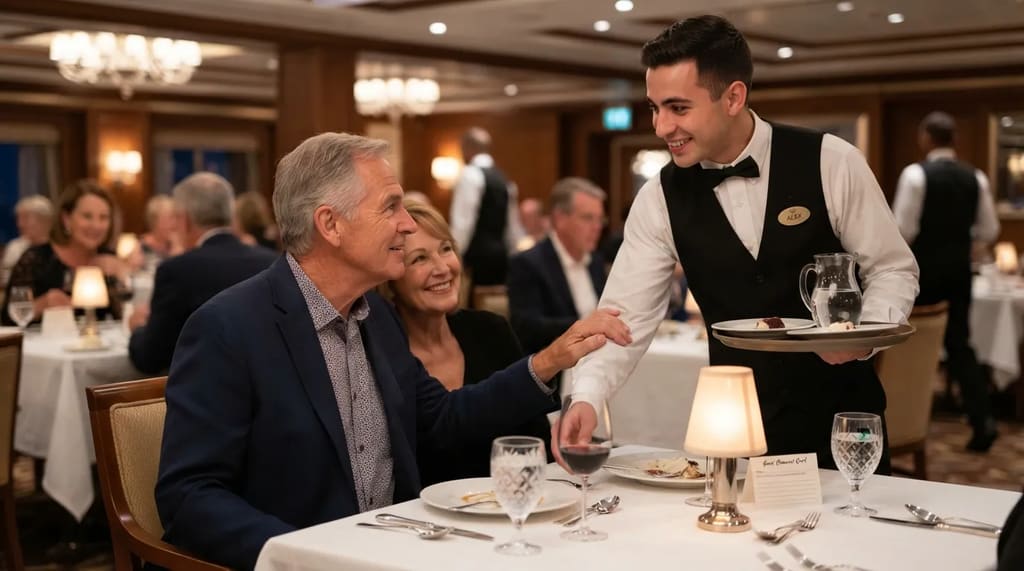
Waiters hear thank you all night, so they can tell the real ones apart. Regulars say it with eye contact and use the person’s name.
They thank the team at the start, not only at the end. A thank-you on the first night can change how the whole week feels.
A word to the head waiter about a good evening also travels. Guests who take a moment to say so often find the staff remember them.
A short note on the guest comment card, naming the people who looked after the table, is another quiet habit. Waiters notice who takes the time.
Gratitude like that is never loud. It lands because it is specific and unhurried.
Why It Stands Out: A Thank-You That Lands
- It uses a name instead of a general wave.
- It points to something specific, like a remembered preference or a well-timed course.
- It comes early in the week, not only on the last night.
- It is spoken calmly, with eye contact, never shouted across the room.
Thanks matters, but one more habit makes a table truly easy to serve. It is the one that ties all the others together.
14. They Run the Table as One Unit
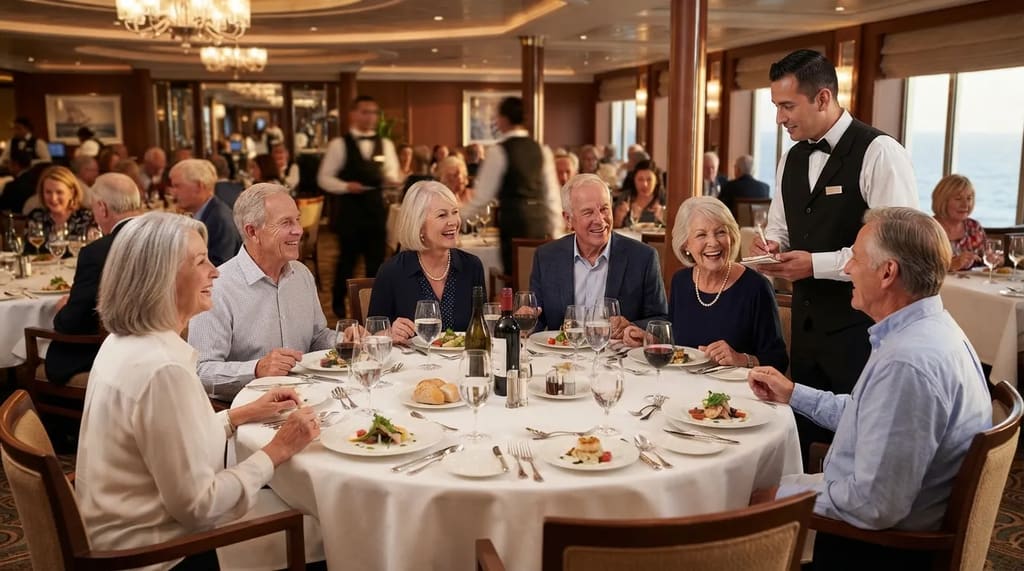
The best tables act like a small crew. They arrive together, order at a similar pace, and finish together.
They also talk to each other about plans. If someone will be absent, tablemates know in advance and can let the waiter know.
That one habit means the waiter never has to guess, and an empty chair is never a surprise. Staff can plan the evening around the people actually there.
Everything else on this list feeds into it. Timing, greetings, pace, and thanks all come easily when a table thinks like a team.
Taken together, the table behaves like a group of friends who happen to share a waiter. That is the habit that makes service easy and the week memorable.
Closing Thoughts
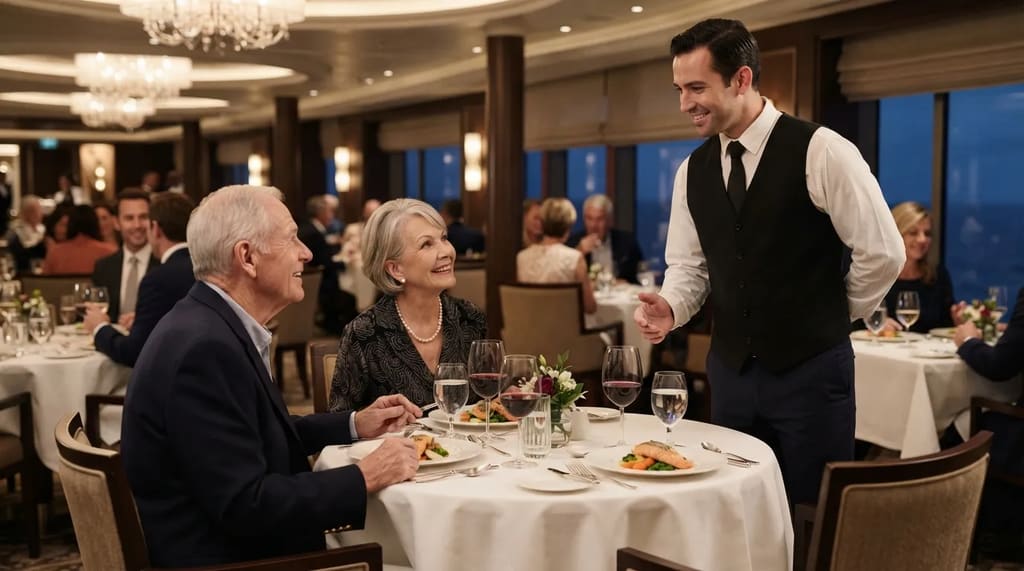
None of these habits take special skill, and none need more than a little attention. Arriving on time, greeting the table, reading signals, and thanking the team can all be learned in a single dinner.
Waiters notice them because they make a long evening easier for everyone. If your next voyage has a set seating, try one or two and watch how the table settles around you.
The waiters will probably never mention it. But they will remember the table that made the dining room feel like home.
Bonus: The First-Night Move Nobody Tells You
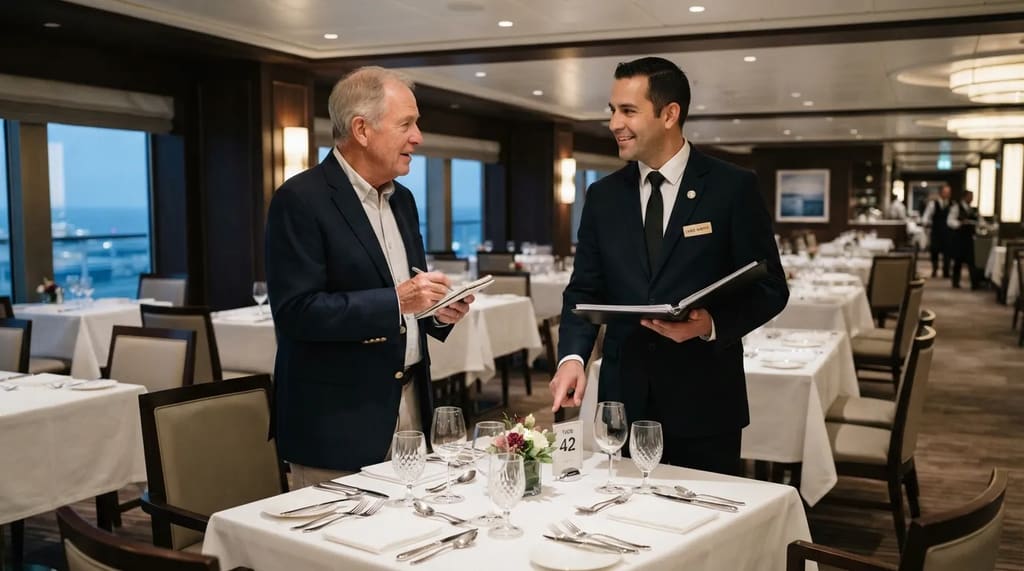
Don’t wait for the first dinner to find out how your table will feel. Make a short visit to the dining room before second seating on embarkation day, or early on the first evening, and speak to the maitre d’ or head waiter directly.
Most guests only meet the staff once the meal has started, when everyone is busy. A quiet word beforehand lets the team plan around you instead of reacting to you.
- Step 1: Give your name and say which table you have been assigned. Ask the name of your head waiter and assistant waiter, and write both down.
- Step 2: Mention your preferences in one calm sentence. That might be a relaxed or brisk pace, a seat away from the band or the kitchen doors, or an easy path to your chair.
- Step 3: If your table needs to change, ask on this first visit. Changes are far easier before the seating chart settles.
- Step 4: At dinner, greet both waiters by name. Then tell your tablemates their names too.
Staff plan around guests they already know. When you walk in on night one, the team already knows your name and what you like, and that tends to set the tone for the whole week.
- Cruise Dining Etiquette Rules: https://travelbinger.com/12-cruise-dining-etiquette-rules-repeat-guests-over-65-already-know
- Royal Caribbean Blog Dining Rules: https://www.royalcaribbeanblog.com/2021/11/29/7-cruise-ship-main-dining-room-rules-follow-1-break
- Kitchn Table Manners: https://www.thekitchn.com/table-manners-23656070
- Dining Etiquette Refresher: https://ala-apa.org/newsletter/2008/11/14/dining-etiquette-a-refresher-course/
- Seasoned Cruisers Dining Habits: https://travelbinger.com/9-dining-room-habits-seasoned-cruisers-follow-on-every-sailing
- Cruise Waiters Dining Room Teams: https://travelbinger.com/15-things-cruise-waiters-never-say-to-guests-in-the-dining-room