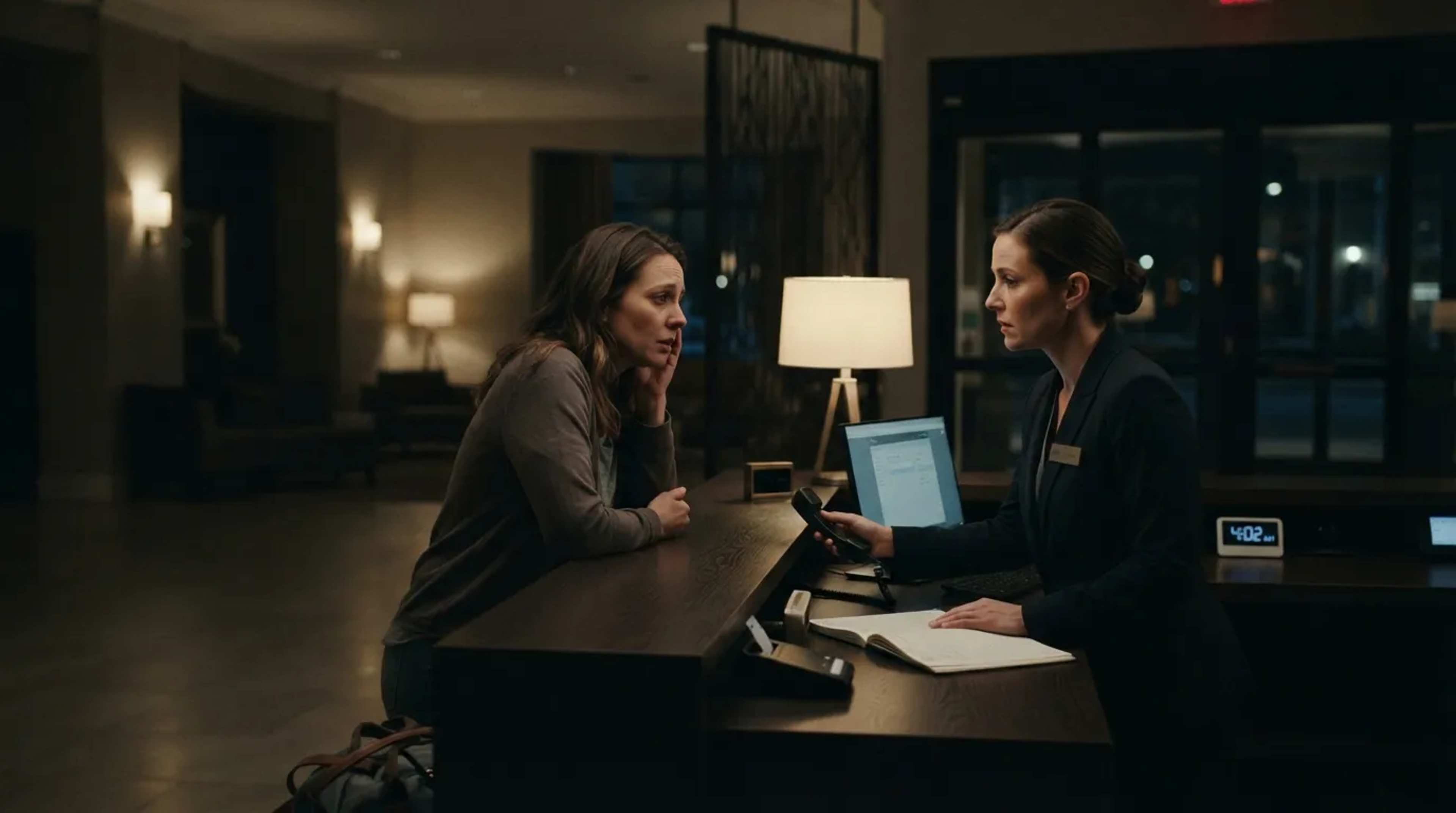
You checked in at 3 p.m., flipped on the TV and were asleep by eleven. Somewhere below your feet, one person was running the entire building. That’s the real overnight shift, and it looks nothing like the guy-with-a-paperback image most guests carry around.
What actually happens is a rolling stream of small emergencies, strange requests and split-second judgment calls. Almost none of it reaches the review you write at checkout. Some of these 23 are funny, a few are tense, and the last one has nothing to do with comfort at all.
#23 – The “Sold Out” Hotel That Fills Up After Midnight

Some of the most urgent guests show up when everyone else is asleep. A canceled flight or a closed highway can send a crowd to the desk at 1 a.m., all hunting for a room. The night manager decides who gets one.
That means checking inventory fast, spotting likely no-shows and sometimes finding rooms that weren’t going to be sold. Each arrival is also an unplanned late check-in the hotel has to record correctly. “Full” on the screen isn’t always the final word.
#22 – The Stranger Jiggling Your Door Handle at 2 A.M.
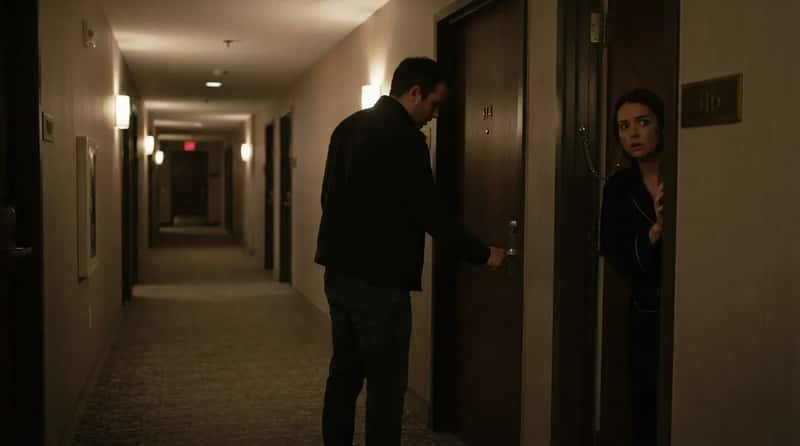
Every hotel has had someone rattling a handle that isn’t theirs. Tired travelers, late-night drinkers and people on the wrong floor all do it. The guest inside is understandably terrified, and the desk phone lights up.
The night manager has to calm the caller, send someone to check and sort out who belongs where. Often the person at the wrong door is simply a confused guest from the floor above. The harder part is making the room’s real occupant feel safe enough to fall back asleep.
#21 – The Moment the Hotel’s “Day” Quietly Ends
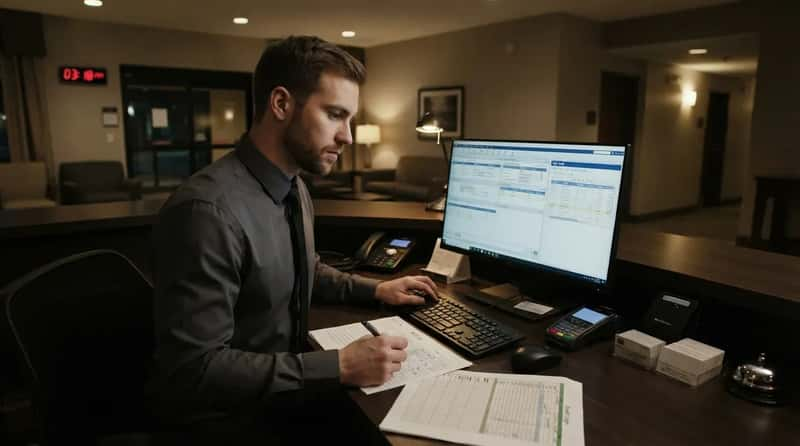
For the front desk, a new day doesn’t begin when you wake up. It begins when the books close, and that happens overnight. Guests who arrive after midnight still have to be recorded against the right business night.
One hospitality-tech guide says the night auditor checks in late arrivals and makes sure each stay lands on the correct night. A mistake there can ripple through reports and billing for days. It’s the most boring-sounding duty on this list, and it’s the one hotels can’t skip.
#20 – The 2:40 A.M. Fire Alarm Caused by Something Totally Harmless
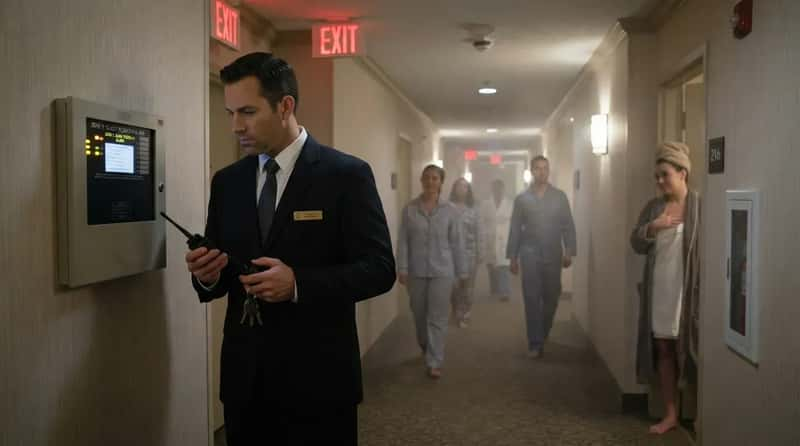
A fire alarm in the middle of the night is never “just” anything. Steam from a long shower, burnt toast or a cloud of vape can set one off. The night manager still has to treat every alarm as real until it’s proven otherwise.
That means checking the panel, finding the device and following the property’s emergency steps. Guests shuffling through the hallway in pajamas rarely realize that someone is walking toward the alarm while everyone else walks away. Plenty of these end with an apology to a few hundred annoyed sleepers.
#19 – The Noise Complaint Where Nobody Is Technically Wrong
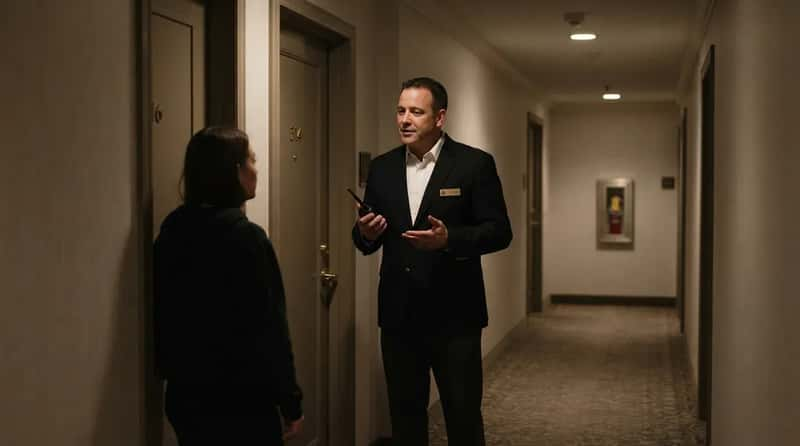
The 1 a.m. call goes the same way every time: “The room next door is loud.” The neighbors swear they’re being quiet. Both sides are exhausted, and both think the hotel owes them.
The night manager usually starts with a phone call to the noisy room, then a visit if it continues. Tone matters more than rules here. A calm voice solves more problems than a warning ever does. Some veterans argue that “quiet hours” signs do little unless someone actually knocks.
#18 – The Guest Locked Out in a Towel
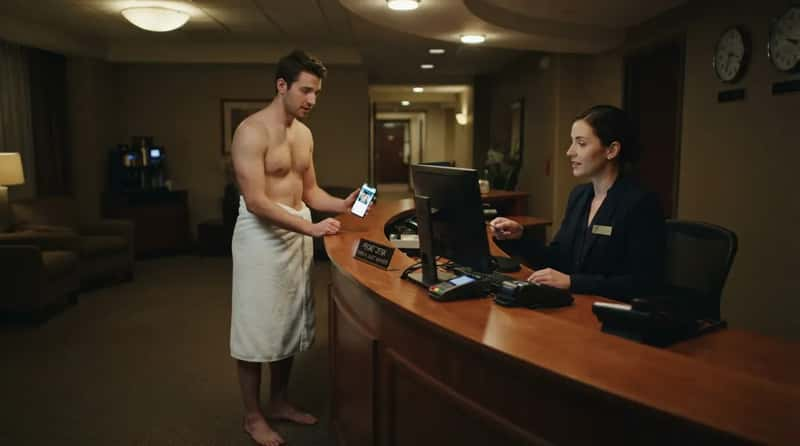
It happens more than hotels like to admit. A guest steps into the hallway, the door clicks shut, and suddenly they’re barefoot at the front desk. Everyone involved wants this to be over quickly.
But the night manager can’t just hand over a key. ID has to be checked against the registration, and that’s a real security step. Without it, anyone could claim a room that isn’t theirs. Most guests turn gracious once they understand why.
Worth Knowing
- The name on your ID usually has to match the name on the reservation.
- A new key card often replaces the old one, so a lost card stops working.
- Staff may walk you back to the room instead of handing over a card at the desk.
- Keeping a photo of your ID on your phone can speed things up, though not every desk will accept it.
#17 – The 4 A.M. Wake-Up Call Nobody Can Afford to Miss
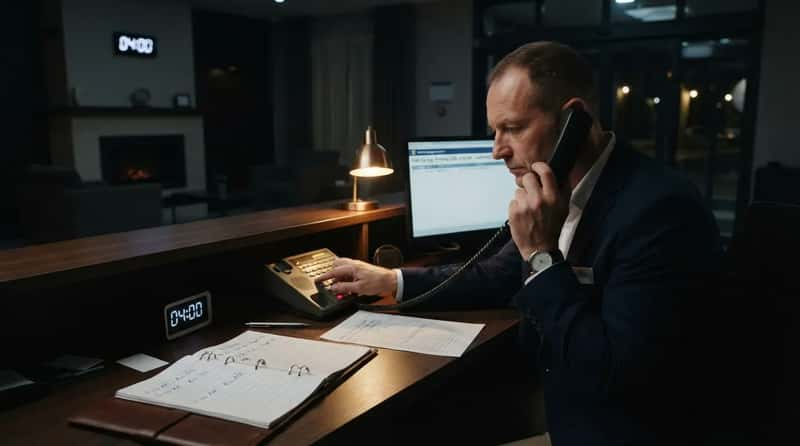
Somewhere in your hotel, a guest has a flight, a funeral or a job interview in a few hours. They’re counting on a phone call from the desk. If it never rings, the consequences land on a stranger.
Scheduling these is a standard part of the job. One career guide lists early morning wake-up calls among the night auditor’s duties. A missed call can turn into a missed flight, so plenty of desks double-check the list before dawn.
#16 – Being the Only Employee in the Entire Building
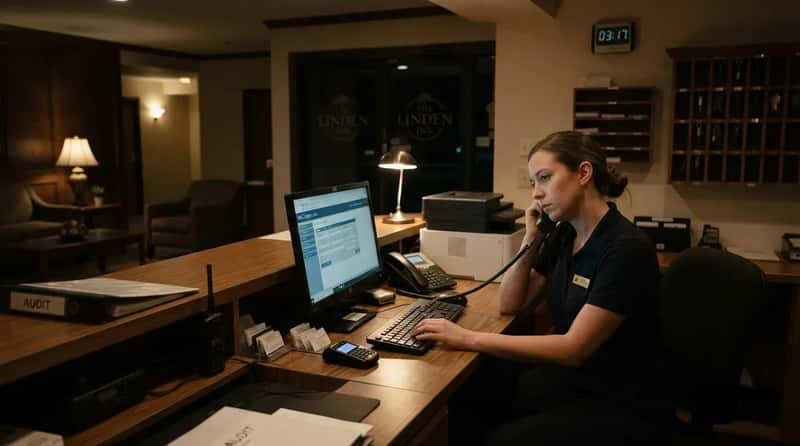
This is the part daytime guests almost never picture. In smaller properties, one person can be the whole staff after midnight. Billing, security, complaints and check-ins all land on the same desk.
One industry explainer notes that in many smaller hotels the night auditor is the only staff member present. A job posting adds that a manager may only be on call. That puts a huge amount of authority on one tired person.
#15 – The Leak, the Dead AC and the Ice Machine From Hell
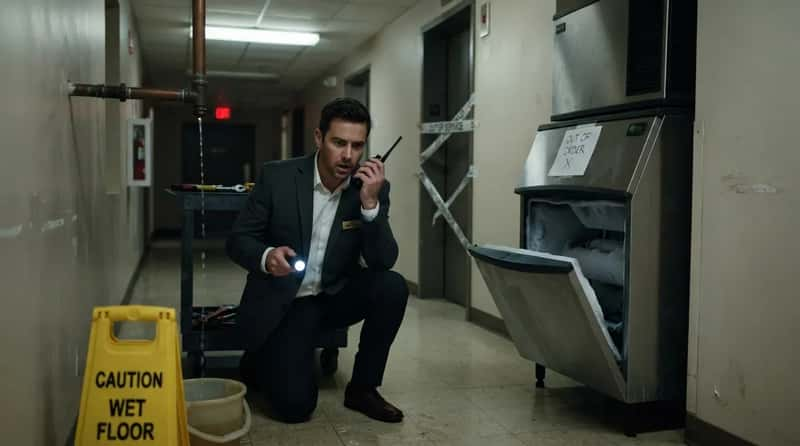
Buildings break at night. A pipe drips, a room goes hot, an elevator sticks. The maintenance team is asleep, and the guest on the phone is very much not.
The night manager’s job is to triage. Fix it if it’s simple, log it if it isn’t, move the guest if it’s urgent. One hotel platform notes that the night auditor makes sure maintenance requests get processed. The paperwork matters because the day team inherits everything.
#14 – The Person in the Lobby Who Isn’t Staying Here
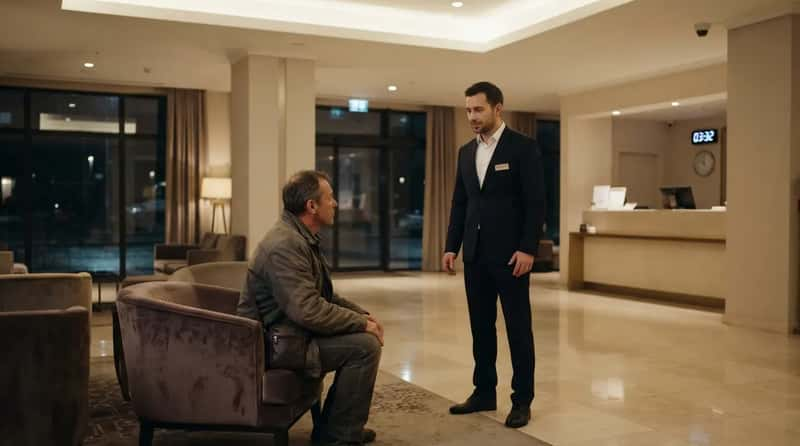
Hotel lobbies are warm, bright and open all night. That attracts the occasional visitor who just needs somewhere to sit. Some are waiting for a ride, some are cold, and some are simply lost.
The night manager has to decide quickly who is a guest and who isn’t, then handle it kindly. Policies vary from one property to another. The hard part is staying polite while still protecting the guests asleep upstairs. It’s judgment, not a script.
#13 – The “Do Not Disturb” Sign That’s Been Up Too Long
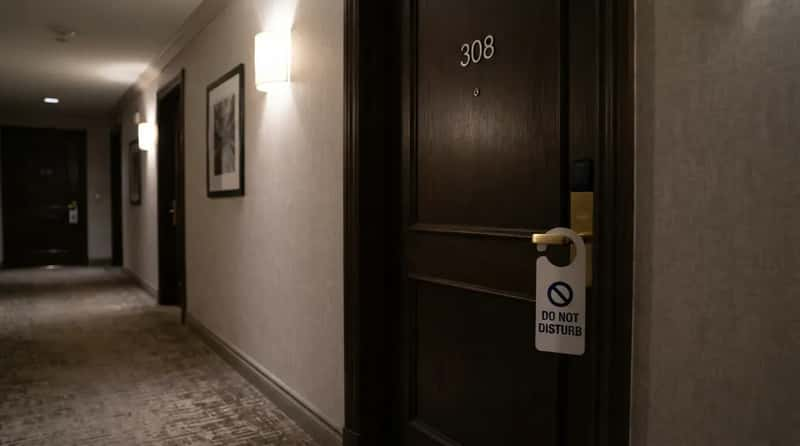
A sign on a door for several days can mean privacy. It can also mean something is wrong. Hotels have different policies about when staff should check, and that call often lands on the night desk.
A welfare check is delicate. Staff knock, call the room, and escalate only if there’s no response. Most of the time the guest is simply sleeping or working. But managers know the rare exceptions are exactly why those policies exist.
#12 – One Reservation, Suddenly Six Visitors
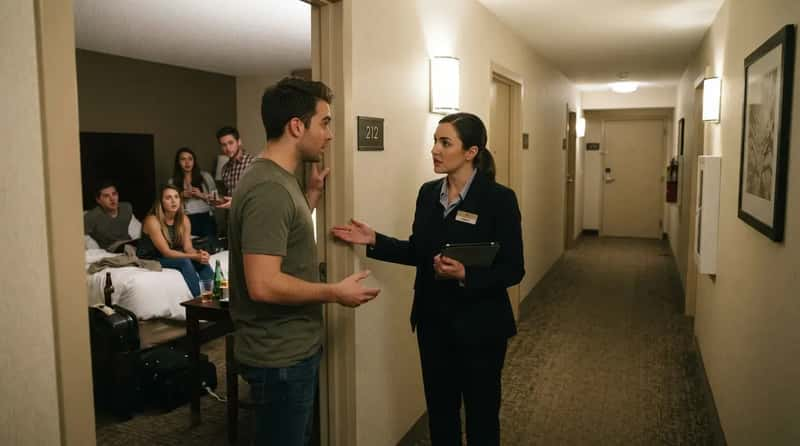
A room booked for two. A knock-knock-knock parade of friends at midnight. By 1 a.m. the hallway sounds like a party, and the reservation still says “double.”
The night manager has to sort out who is registered, who is a visitor and what the property allows. Extra-person charges, fire-capacity rules and the neighbors’ sleep all collide. Many hotels simply ask visitors to leave by a set hour. Guests often discover that rule only when it’s enforced.
Quick Compare
- Registered guest: named on the booking and counted toward the room’s occupancy limit.
- Visitor: welcome for a while, but usually expected to leave by the property’s cutoff hour.
- Unregistered overnight guest: can trigger extra-person fees or a request to register.
#11 – The Mystery Charge That Doesn’t Add Up
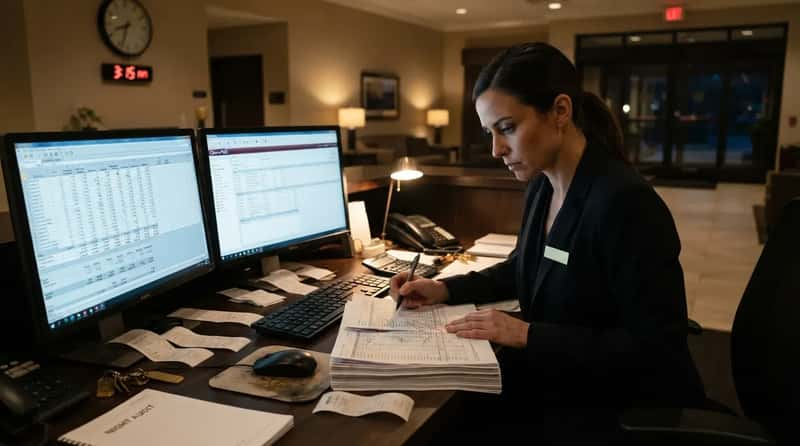
Every night, someone has to make the day’s money match. Room charges, payments, adjustments and restaurant bills all have to line up. When they don’t, the night shift goes hunting.
Job descriptions describe this as reconciling daily transactions while also handling guests. The same person who checks you in is often the one tracking down a mismatch. It’s detective work disguised as bookkeeping.
#10 – The Frantic Call About the Thing Left Behind
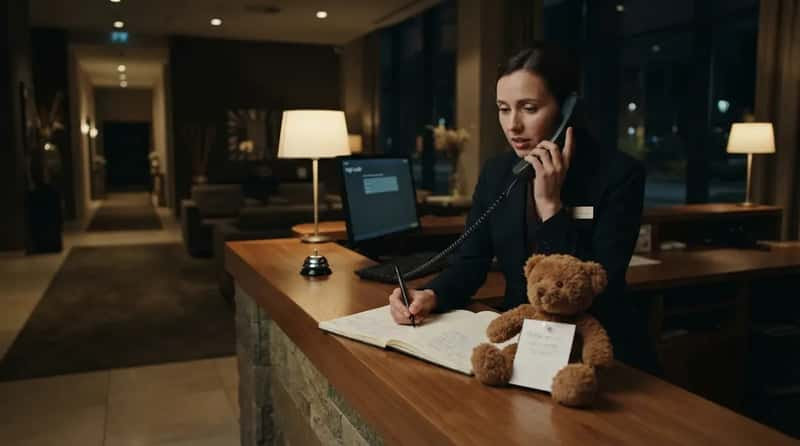
It’s always a phone charger, a wedding ring or a child’s stuffed animal. The caller is at an airport or on a highway and wants an answer right now. The night manager is the one who picks up.
Staff can log the item, note the room and pass it to housekeeping in the morning. They usually can’t go room-hunting while guarding the desk. The stuffed animal is the one that makes everyone try harder. A clear written note is often the best thing the night shift can offer.
#9 – The 2 A.M. Room Change That Reshuffles the Whole Floor
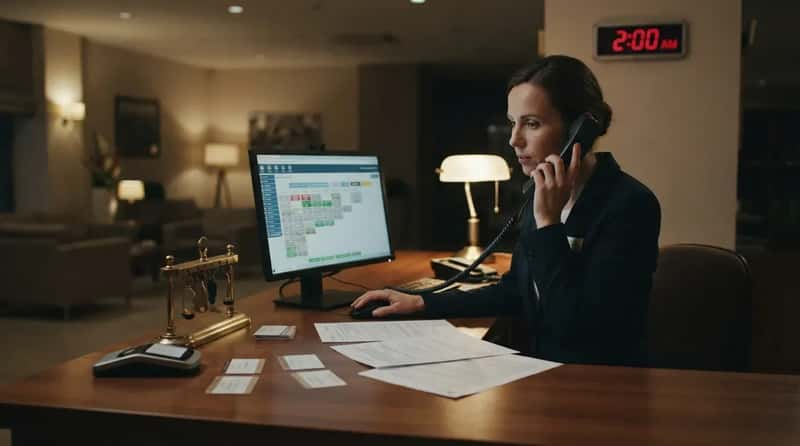
A guest calls to say the room smells off, the heater is stuck or the bed is awful. Now the night manager has to find another room that’s actually ready. That turns the inventory system into a small puzzle.
Some veterans say the middle of the night is the best time to ask for a change, since fewer rooms are in play. Others say the opposite, because clean rooms are scarce. Either way, the desk has to update the inventory and tell housekeeping. Guests rarely see that part.
#8 – The 3 A.M. Bug Report Every Hotel Dreads
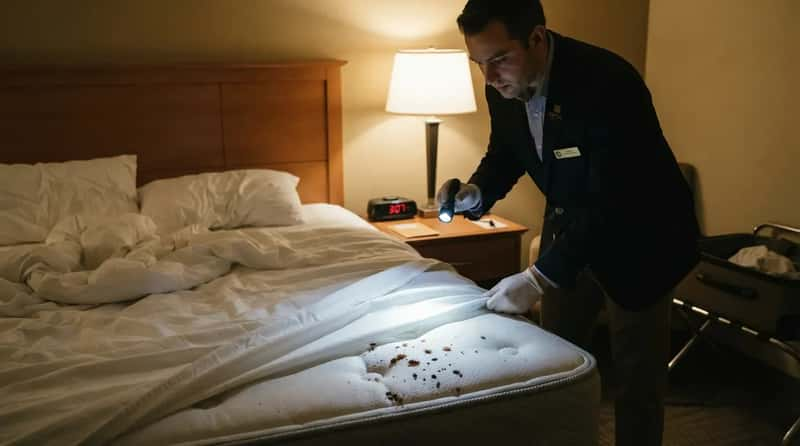
“There’s something in my bed.” Few sentences make a night manager’s stomach drop faster. A bed bug report is both a guest crisis and a business problem.
The usual response is to move the guest, pull the room from inventory and notify management so someone can inspect it. The room can’t be resold until it’s properly cleared. Hotels take these reports seriously because one room can quickly become several.
#7 – The Medical Emergency That Changes Everything
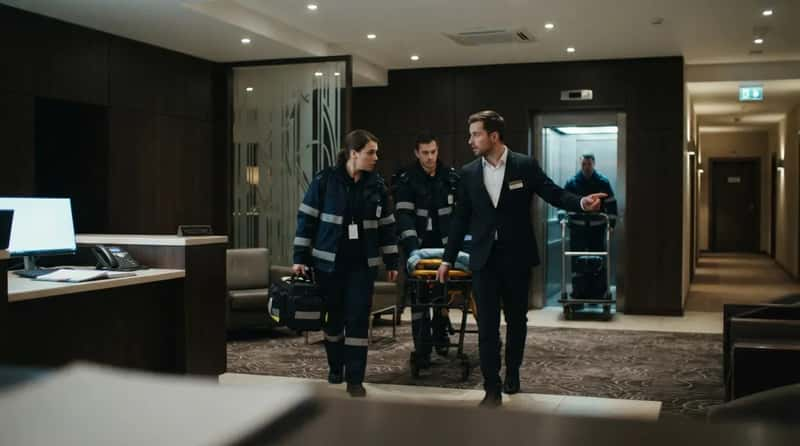
When a guest collapses or a caller can’t breathe, the hotel’s calm vanishes in an instant. The night manager calls 911, unlocks doors and guides paramedics through the building. Nobody else is awake to hand off to.
Hospitality sources describe following emergency protocols as a core front-desk skill. The most important job is often just meeting the ambulance at the door. Staff also hold elevators, clear hallways and keep other guests calm.
Fast Facts
- The 911 call comes first, with the hotel’s exact address and the room number.
- Doors, side entrances and elevators get unlocked or held for responders.
- Someone has to stay at the desk, which is hard when you’re the only one on duty.
- Once things settle, an incident note goes to the day team.
#6 – The Food Delivery Driver Who Can’t Find the Room
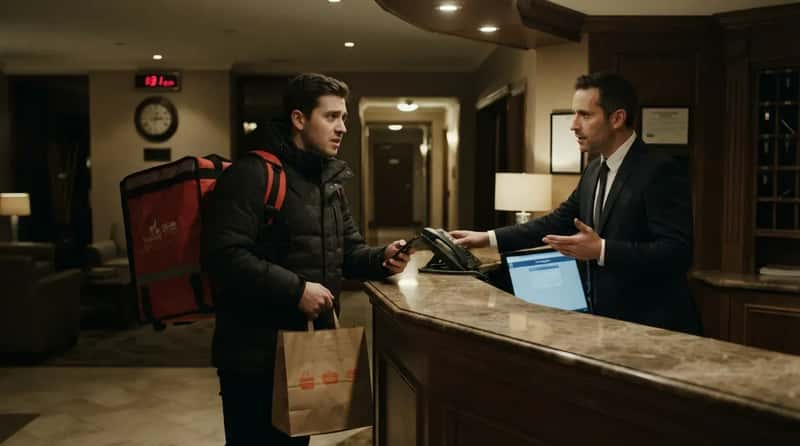
It’s 1:30 a.m. A driver is standing in the lobby holding a warm bag, and the guest isn’t answering. The night manager gets asked, “What room is this person in?”
Most hotels won’t share that. Staff will usually call the guest’s room instead. That protects guests who never asked to be found. It also explains why your burger sometimes arrives cold.
#5 – The Caller Who Insists, “I Know They’re Staying There”

Someone phones the desk and asks to be put through to a particular guest. They sound urgent. Sometimes they’re a worried relative, and sometimes they aren’t.
Standard practice at most hotels is not to confirm a guest’s name or room number to a stranger. Staff offer to take a message or ring the room without revealing who’s there. That can feel cold, but it’s how hotels protect people who don’t want to be found. Night managers hear the frustrated reaction all the time.
#4 – The Camera Wall Only One Person Is Watching
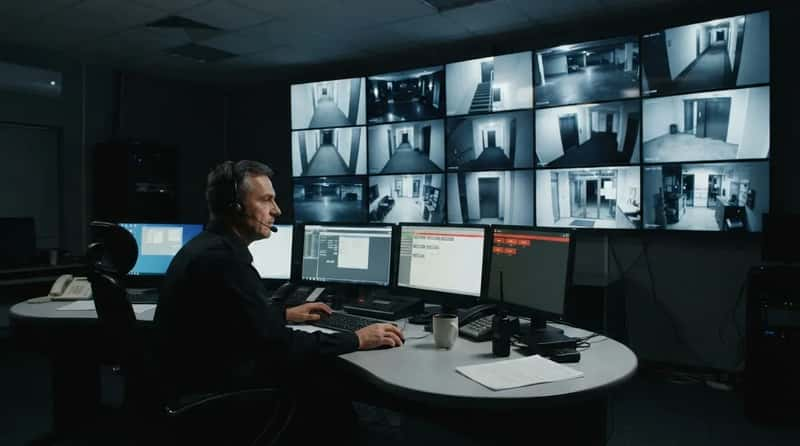
While you sleep, someone keeps an eye on the building. Job listings for luxury properties describe monitoring surveillance cameras, alarm systems and access control systems during the night shift. That’s a lot to watch alone.
A propped door, a stranger in a stairwell or an unfamiliar car can all show up on a monitor. Most of what the night manager notices never becomes an incident, because they caught it early. Prevention is invisible work.
#3 – The Quiet Prep Work That Makes Your Morning Look Easy
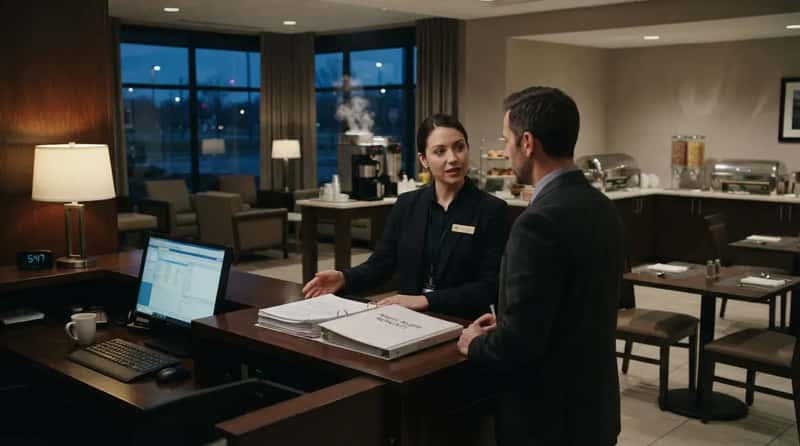
The lobby smells like coffee, the reports are ready and the breakfast area looks perfect. That didn’t happen by magic. Someone worked on it while you slept.
Job descriptions mention keeping the front desk and lobby area clean and organized. When the day team arrives, the night auditor briefs them on anything important before heading home. Guests see a smooth morning. The staff see a handoff.
At a Glance
- Reports: finished and ready for the morning managers.
- Lobby and desk: tidied and organized.
- Open issues: logged so the day team doesn’t start blind.
- Handoff: a quick briefing before the night manager clocks out.
#2 – The Storm, the Outage and the Decision Nobody Wants to Make
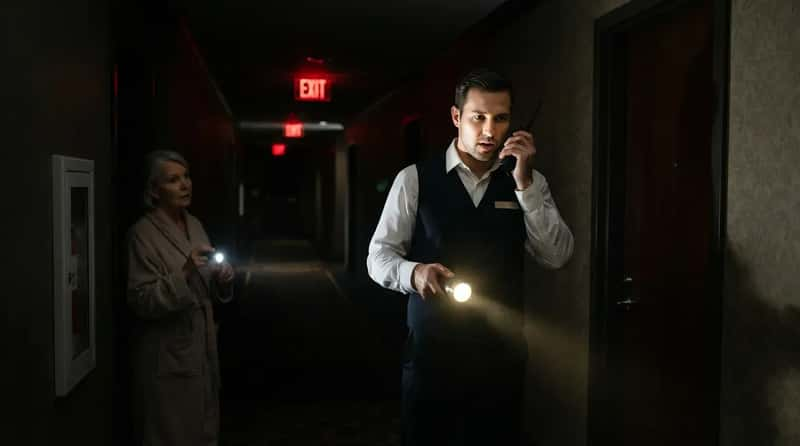
Bad weather doesn’t wait for daylight. A power cut, a burst pipe or a snowstorm can arrive at 3 a.m. The night manager may have to decide what to do before any executive picks up the phone.
That can mean using flashlights, knocking on doors to notify guests, or calling the utility and management. Often the person making that call has only a few minutes to decide. It’s the point where the job stops being front desk work and becomes crisis management.
#1 – The Guest Who Needs Help but Can’t Say So Out Loud
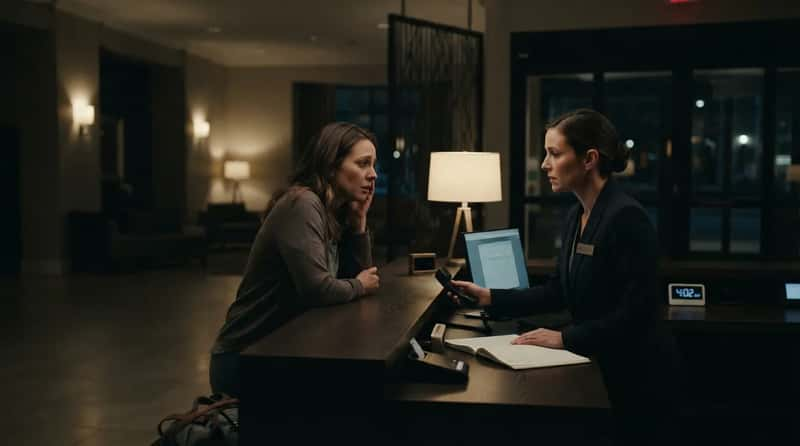
Every so often someone walks in at 4 a.m. who doesn’t act like a normal guest. They ask odd questions, glance at the door or ask for a room “quietly.” The night manager may be the only person who notices.
Hotel groups, including the American Hotel & Lodging Association, have promoted staff training on recognizing signs of human trafficking and abuse. Sometimes the most important thing a night manager does is notice and make one careful call. It isn’t glamorous, and it’s rarely mentioned at checkout. Staff say that’s exactly why it matters.
You booked a bed, but the night shift quietly supplied a lot more. They balanced the books, answered the phones, watched the cameras and caught problems before you ever woke up. Some nights it’s a wrong key and a towel. Other nights it’s an ambulance, or a quiet signal for help.
So when the lobby looks calm at 6 a.m., remember that the calm was built. Someone stayed awake so you didn’t have to.