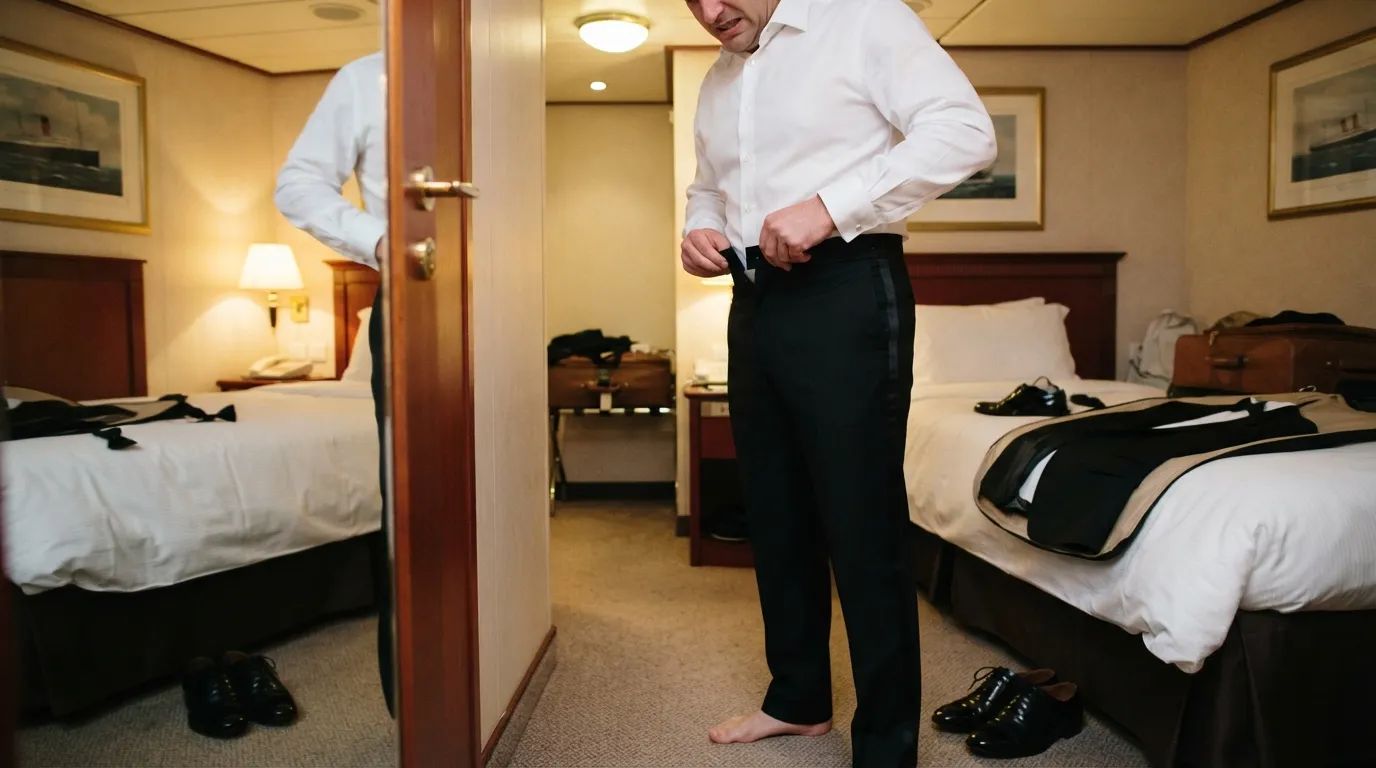
Picture day two of a crossing. The coastline is gone, the horizon is a flat gray line, and there is no gift shop, pharmacy or corner store anywhere in reach. Most first timers pack for this trip like a regular cruise with a longer commute, then discover that sunhats and flip-flops don’t help much out there.
Seasoned crossers carry a quiet little list that newcomers skip. A few items are cheap and boring, and a couple are oddly emotional. One of them is the item people still mention years after they’ve stepped off the ship, so keep scrolling for it.
#23 – The Winter Hat That Secretly Belongs in a July Suitcase
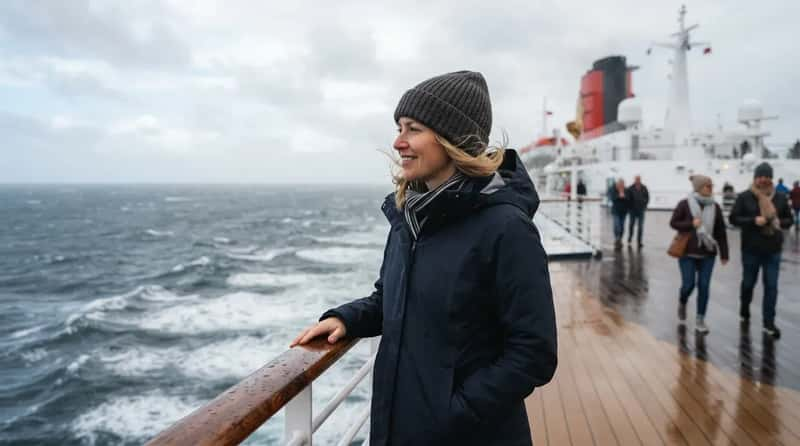
The North Atlantic ignores the calendar. First timers see “summer sailing” and pack for a beach. AARP’s Queen Mary 2 guide notes that even in summer the ocean can be blustery outside while the air-conditioning runs chilly inside.
Veterans plan for both extremes. One cruise guide suggests windbreakers and even winter caps for walks on the outer decks. A beanie belongs on the packing list for a summer crossing, and it weighs almost nothing. It’s also the item people end up wishing they could borrow from a stranger by day three.
But a hat only fixes the wind. The next item handles what the wind carries in with it…
#22 – The Waterproof Shell Seasoned Crossers Never Check Into the Bag

Mist, drizzle and spray don’t ask permission at sea. First timers bring a cardigan and call it a jacket. Then they step onto an open deck and learn the difference in about ninety seconds.
Experienced travelers advise packing layers for rapid weather swings and bringing waterproof clothing, especially for misty or rainy days. One cruise guide says the bow observation deck in mid-Atlantic is no place for a light cardigan. A thin shell is what lets you stay outside when everyone else retreats indoors.
Staying warm is one thing. Staying upright is another, and that’s next…
#21 – The Seasickness Remedy That Lives in Your Pocket, Not Your Suitcase
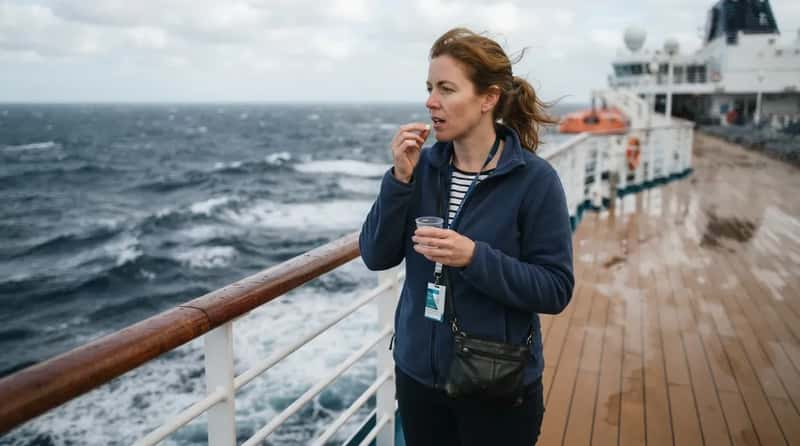
Here’s the truth about big ships and big water. Stabilizers are excellent, but the ocean is not impressed. First timers often pack remedies deep in a bag that won’t reach the cabin for hours.
One regular advised carrying seasickness medication around the ship at all times, especially on fall and winter trips. Many travelers also bring ginger or other remedies, since seas can swing from calm to choppy without much warning. One guide warns that the first two days of an autumn crossing can be rough. Day one is when you need it most, and that’s exactly when your bag is somewhere in the hold.
Right behind that is a piece of paper that can make or break your arrival…
#20 – Printed Documents for the Moment Your Phone Dies in Line
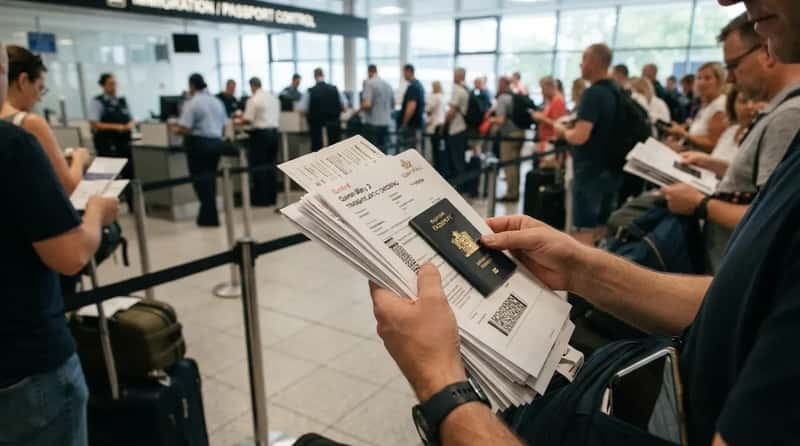
Everyone assumes their phone holds everything. Seasoned cruisers print it anyway. Cruise Critic’s packing guide for the Queen Mary 2 lists printed cruise documents and IDs among the extras not to forget.
There’s a second reason, and it’s waiting. One crossing guide notes that immigration waiting areas can be crowded and suggests bringing a book or snacks. A dead phone at a border line is a very quiet kind of panic. Paper never needs a battery.
And speaking of paper, the next one is a small slip that keeps your bags from getting stuck at the curb…
#19 – Luggage Tags Printed at Home, Not Scrambled for at the Pier
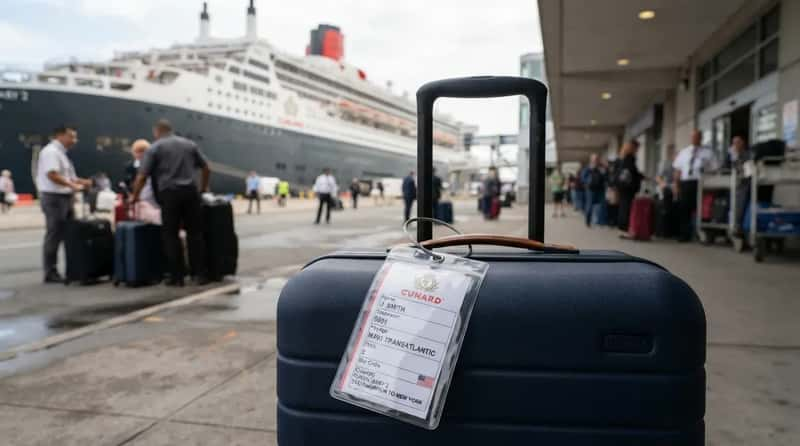
Embarkation day rewards the people who did their homework. One Queen Mary 2 traveler tells passengers to print luggage tags in advance and attach them before arrival, because bags are collected curbside.
First timers show up without them and join a slow, shuffling line while their luggage sits waiting. Your bags can’t board until they’re labeled. Veterans arrive with tags already on, hand over the bags and walk straight to the terminal.
Next up is something you’ll want in your hand long before your bags arrive…
#18 – A Fold of Small Bills Nobody Warns You About
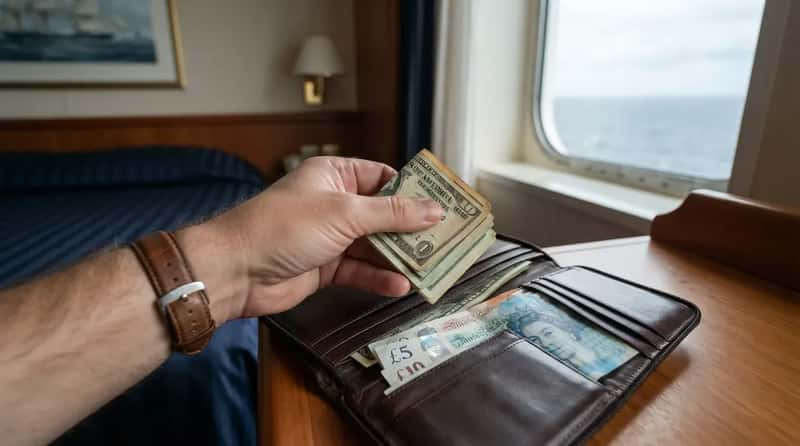
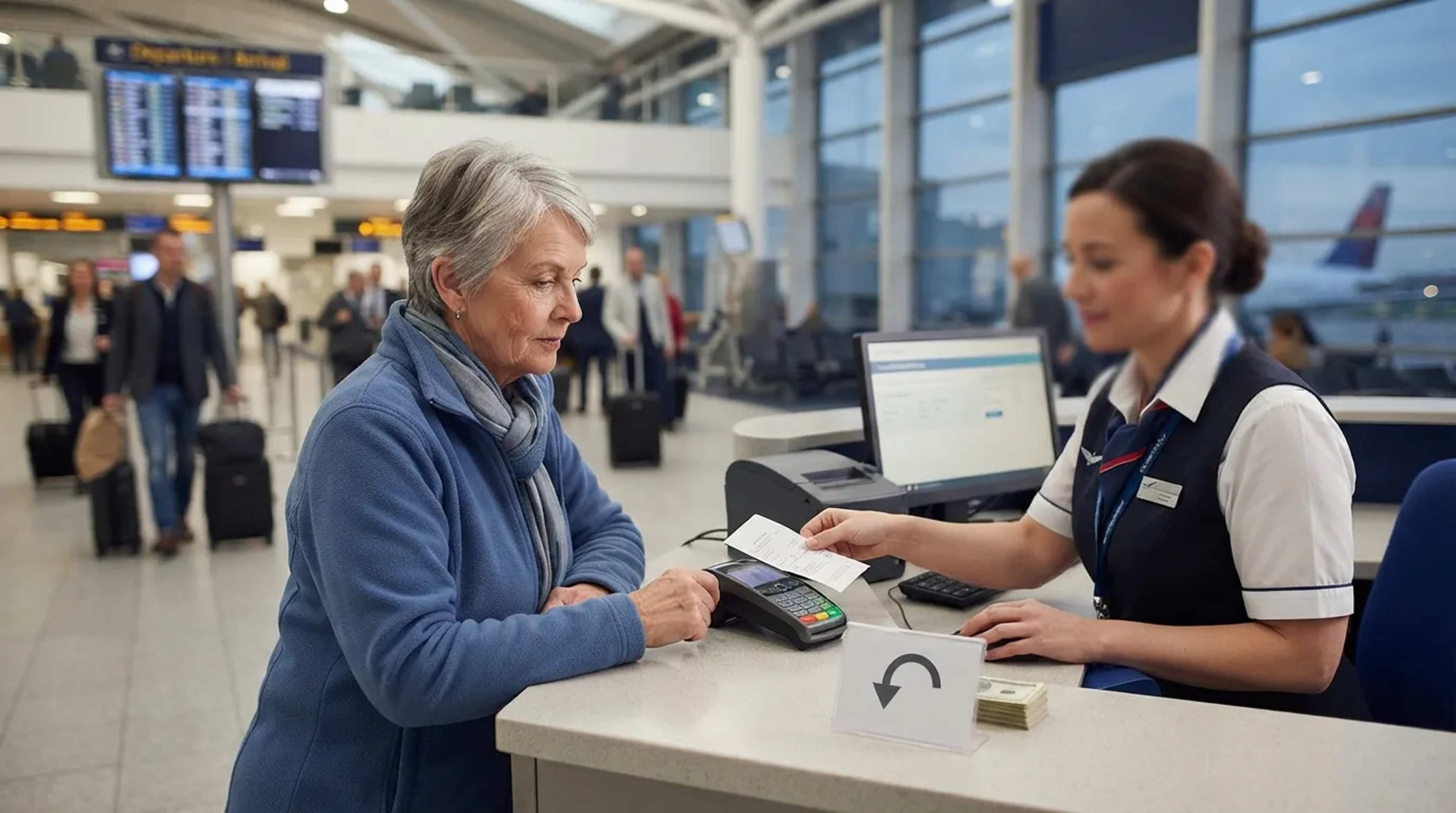
Cashless doesn’t always mean cash-free. Seasoned travelers tuck a little paper away for the edges of the trip. One Queen Mary 2 regular packs $100 or more in dollars, maybe $200, in small bills.
The same traveler also brings a travel wallet holding British pounds for the other side of the ocean. Small bills are the first thing people wish they had at the pier. Check what your own voyage requires before you go.
Worth Knowing
- One regular carries $100 to $200 in small U.S. bills.
- A separate travel wallet holds British pounds for arrival.
- Keep cash apart from your main wallet, so one loss doesn’t take everything.
- Requirements vary by voyage, so confirm yours before you pack.
Cash is practical. The next item is a bit more celebratory…
#17 – The Bottle of Wine That Divides Every Cruiser Forum
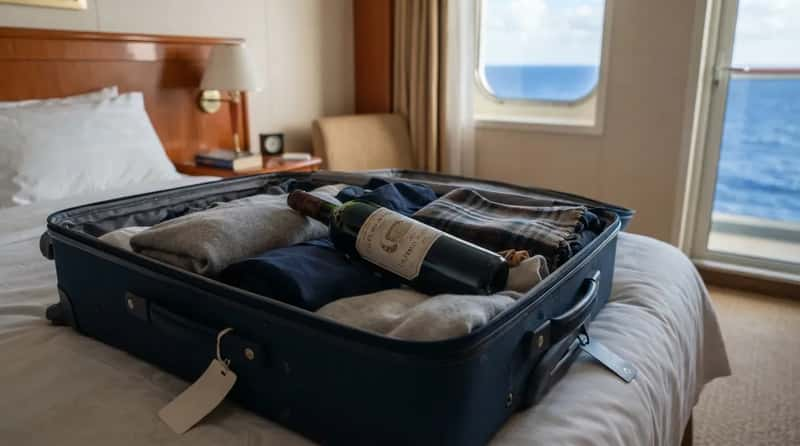
One camp calls it the smartest savings on board. The other calls it a hassle. One Cunard packing guide says passengers can bring wine aboard on embarkation day, up to one case per stateroom.
Another traveler lists fine wine as a must-pack for a crossing. Rules change, so confirm the current policy and any corkage fees before you pack a single bottle. Cruisers argue endlessly about whether hauling glass across the ocean is worth it. Seasoned crossers say yes, if it’s a bottle you’ll actually enjoy.
The next item sounds trivial until the moment you can’t find it…
#16 – A Second Pair of Reading Glasses You’ll Be Glad to Own
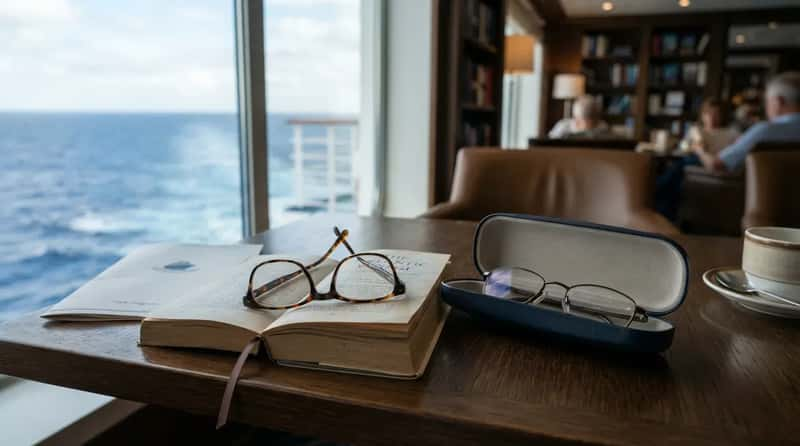
On a ship with no shops, one cracked lens can wreck a week. One veteran crosser admits that without a spare pair, he’d break or lose the only pair he brought.
It’s a cheap fix for a very expensive annoyance. Reading glasses are the quiet backbone of a sea-day routine. Menus, daily programmes and paperbacks all depend on them.
Speaking of reading, the next item is the one seasoned crossers plan around…
#15 – A Reading List Built Before You Board, Not After

A crossing is a rare stretch of days with nowhere to be. One guide describes it as a chance to read in a way modern life rarely allows. First timers assume the ship’s library will cover it.
The library is excellent, the guide says, but you should still bring your own list, because seven nights is enough for two or three books. Pick the ones you keep postponing at home. They tend to be the ones you finish.
Reading keeps you still. The next item keeps you moving…
#14 – A Water Bottle and Gym Towel for the Promenade Deck Habit
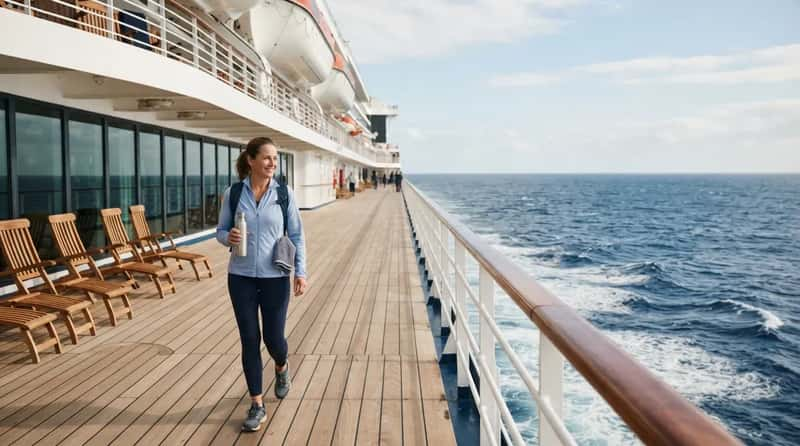
Sea days run together fast. Seasoned crossers build one small routine, and it’s usually walking. The Queen Mary 2’s promenade deck lets you log real miles without ever leaving the ship, with roughly three laps making a mile.
One packing guide also recommends a refillable water bottle and a small towel for gym sessions. A bottle in your hand is the best excuse to do another lap. First timers skip both, then lose their routine by day three.
That’s the body sorted. Now for the screen…
#13 – Downloaded Shows, Because Ship Wi-Fi Isn’t a Guarantee
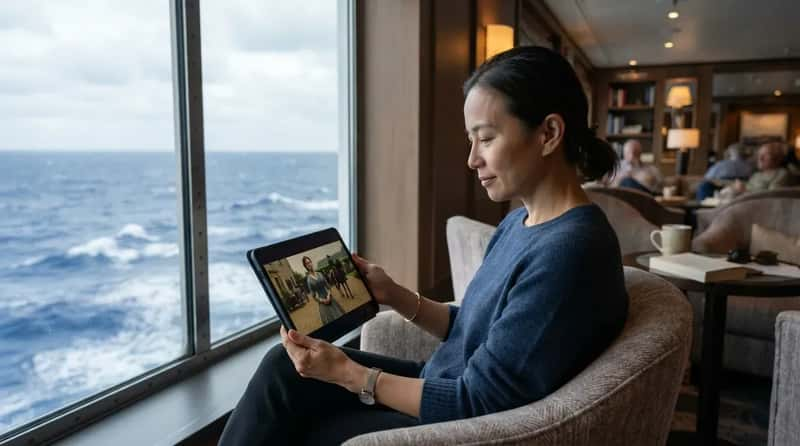
Connectivity at sea has improved a lot. One 2024 trip report calls the Starlink Wi-Fi surprisingly fast, even in the middle of the Atlantic. First timers hear that and pack nothing offline.
Seasoned crossers still download. Speeds can vary, packages cost extra, and a busy ship is a busy network. Some travelers argue the real luxury is leaving the laptop home entirely. Either way, a few downloaded films are a smart backup for a gray afternoon.
Quick Compare
- Ship Wi-Fi: Can be fast, but speeds vary and packages cost extra.
- Downloaded shows: Load before you sail and play no matter how busy the network gets.
- Going offline: No cost, no scrolling, and a surprisingly quiet week.
Then there’s the one time-related item nobody remembers…
#12 – A Plain Wristwatch for the Hour That Keeps Disappearing
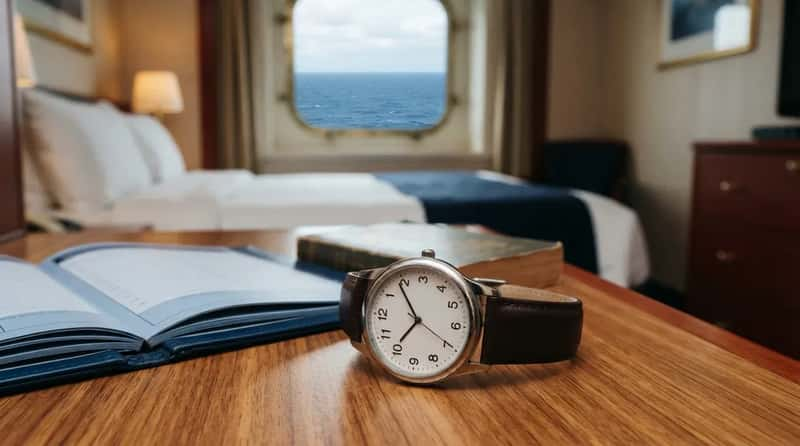
Crossing the Atlantic means crossing time zones, a little at a time. Heading east on Queen Mary 2, the clocks jump ahead an hour on several nights, but you arrive in Britain without jet lag.
That’s wonderful for your body and confusing for your schedule. The ship moves your clocks while you sleep. Veterans carry a watch they control, so dinner seatings and show times never turn into a guessing game.
Next, a tiny item that quietly turns a cabin into a home…
#11 – Magnetic Hooks That Turn a Cabin Wall Into Storage
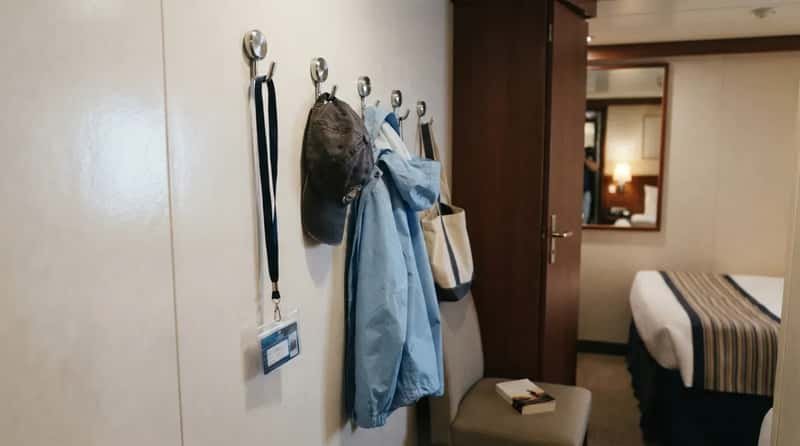
Cabins are compact, and the space runs out quickly. Seasoned cruisers use the walls. Many ship cabins have metal walls, so magnetic hooks can hold lanyards, hats and wet jackets.
First timers pile everything on the one chair. Your wet shell has to dry somewhere. A couple of hooks near the door solve that, and they cost little and fit in a pocket.
Of course, hooks can’t help with what you’ll be washing…
#10 – A Mesh Laundry Bag for the Launderette Most First Timers Never Find
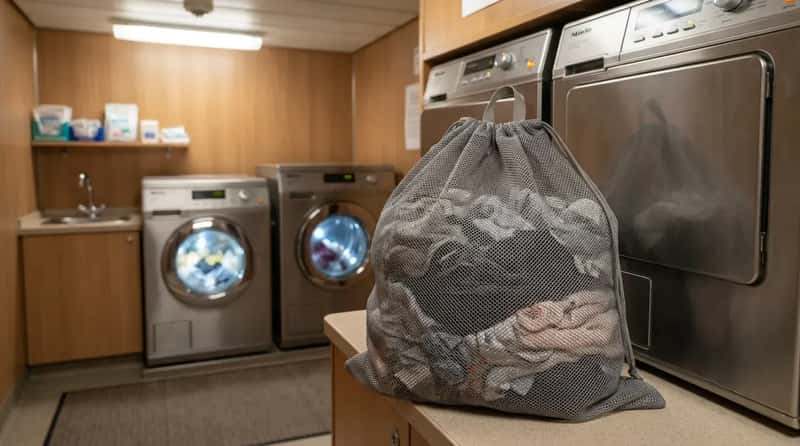
Here’s the secret that lets veterans pack light. Queen Mary 2’s self-service launderettes are free, with washers, dryers, ironing facilities and complimentary detergent sheets.
First timers pack ten outfits for seven nights. Free laundry means you can bring far less. A mesh bag keeps dirty clothes contained and makes the walk to the launderette easy.
Clean clothes are only half the story, because the next item is about your feet…
#9 – Dress Shoes Already Broken In, Not Fresh Out of the Box
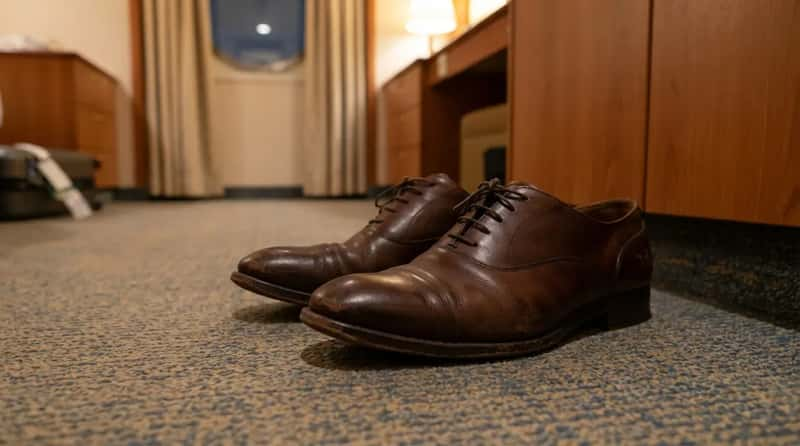
Formal evenings come with dancing and long walks to the dining room. One traveler was told that dress-up clothes for balls and dancing were expected. Brand-new shoes make that very long evening feel even longer.
Seasoned crossers wear their shoes around the house for weeks first. AARP also recommends comfortable shoes for the rest of the voyage. A blister on night one can follow you across the ocean.
Now for the item that sparks the biggest argument on board…
#8 – Formalwear Checked Against the Gala Schedule
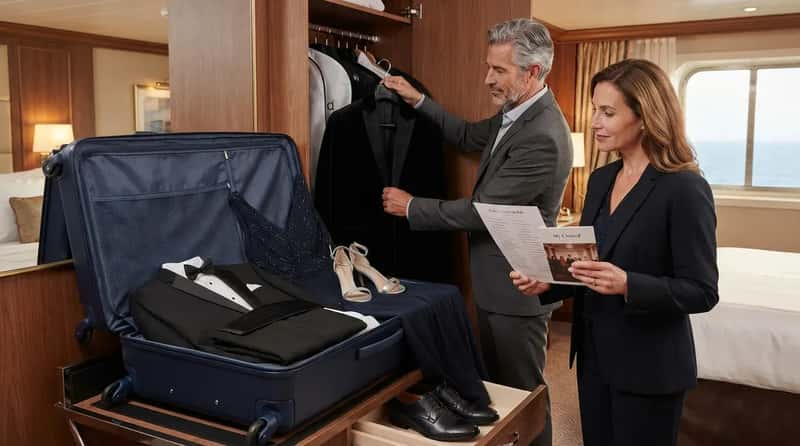
Here’s the controversial part. One guide says black tie is non-negotiable in Grill class. Britannia guests get slightly more flexibility.
Some travelers call a full tux overkill for a week at sea, while others say dressing up is half the fun. Week-long voyages usually include at least two Gala Evenings, and Cunard posts theme details in My Cunard. Check your themes before you pack, not after. AARP says a suit or cocktail dress works if you’d rather skip the tux or gown.
At a Glance
- Grill class: Black tie is treated as non-negotiable.
- Britannia: Slightly more flexibility on dress.
- Gala Evenings: Usually at least two on a week-long voyage.
- Themes: Posted in My Cunard before you sail.
The next item is something no dress code can improve…
#7 – Binoculars for the Part of the Ocean You Didn’t Expect to Watch
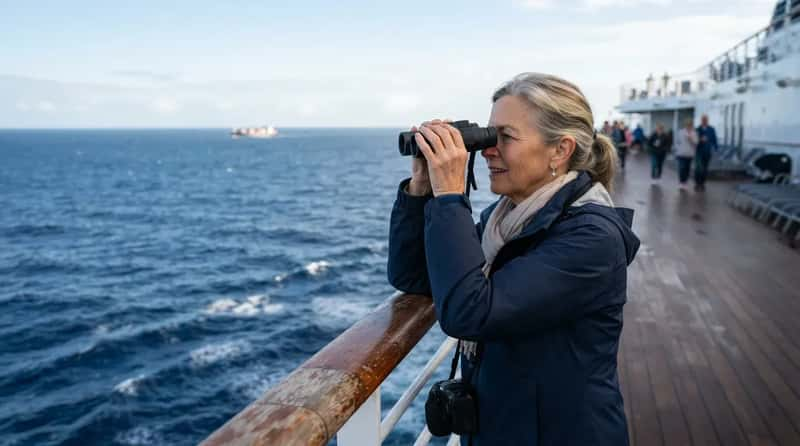
An open horizon can feel empty at first. Then you notice something small. Seasoned crossers bring compact binoculars for passing ships, birds and whatever breaks the surface.
First timers leave them home because there’s “nothing to see.” The sea is rarely as empty as it first looks. Sightings aren’t guaranteed, but a good pair makes a long watch far more rewarding.
Next, a very low-tech item that people only think of once it’s too late…
#6 – Sunscreen and Sunglasses for a Sun That Hits Twice
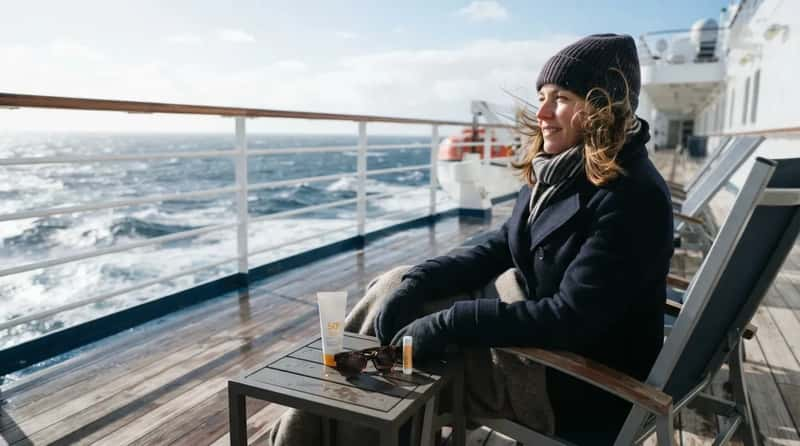
Cold air tricks people. A chilly deck can still deliver a real sunburn. Water reflects light back up at you, and a long sea day gives you plenty of exposure.
First timers dress for the wind and forget the sun. Cold weather doesn’t switch off the sun. Seasoned crossers pack sunscreen, sunglasses and a lip balm with SPF, then reapply after each long walk.
The next item is less glamorous, but far more important…
#5 – Extra Days of Medication in a Carry-On, Not a Checked Bag
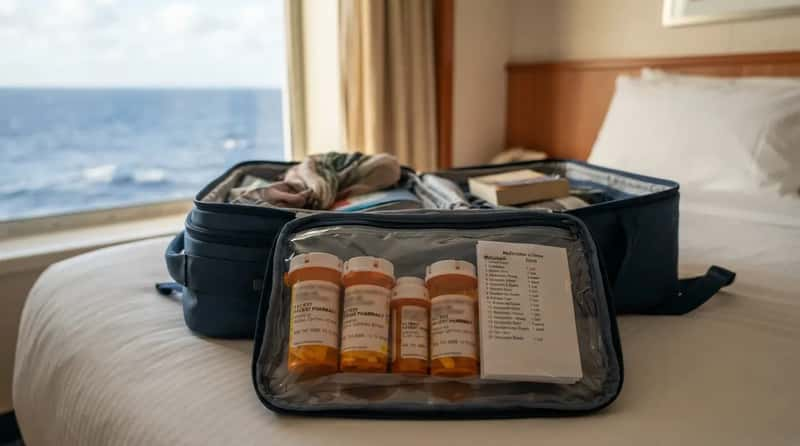
No ports means no pharmacy. If a delay stretches your trip, there’s nowhere to refill. Seasoned crossers pack more than they need, in original labeled containers.
Bags don’t always reach your cabin right away. Medication belongs in the bag that never leaves your side. Add a short list of your prescriptions and doses, kept separate from the bottles.
Then there’s the gadget that makes sure everything else keeps working…
#4 – A Portable Charger and Plug Adapter for the Other Side
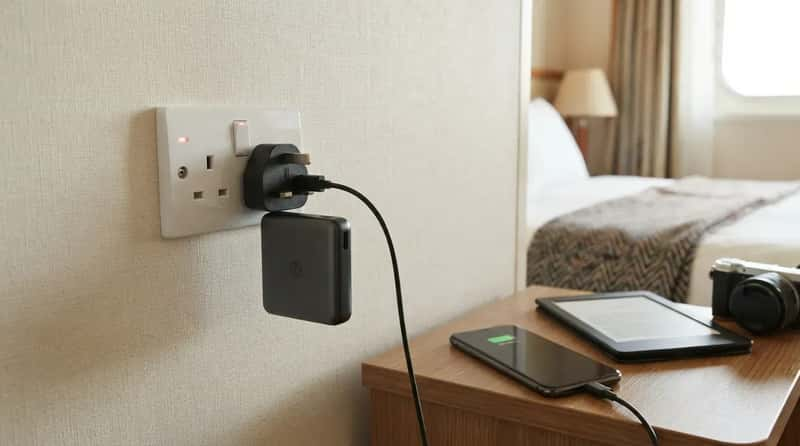
Phones, cameras and e-readers all drain faster than you’d expect. Cabin outlets can be limited, and a crossing ends in a country with different plugs. Seasoned crossers pack a power bank and the right adapter.
First timers realize this at the arrival terminal. A dead phone is the worst way to start in a new country. Check the outlet types for both your ship and your destination before you leave.
Fast Facts
- U.S. outlets run on about 120 volts, while the UK uses about 230 volts.
- The UK uses the three-pronged Type G plug, which U.S. plugs don’t fit.
- Airlines require power banks in carry-on bags, not checked luggage.
- Charge everything the night before you disembark.
Now for the item that has nothing to do with batteries…
#3 – A Deck of Cards That Does More Than Pass the Time

Everyone expects a week of fine dining and shows. Few expect the quiet hours in between. A deck of cards, a puzzle or a travel game turns those hours into conversation.
First timers wait to be invited. A deck on a table is an open invitation. Seasoned crossers say some of the best parts of the voyage were the people they met over a game.
The next one takes a little planning, and a lot of honesty…
#2 – The Tuxedo Trousers You Haven’t Tried On Since Before You Booked
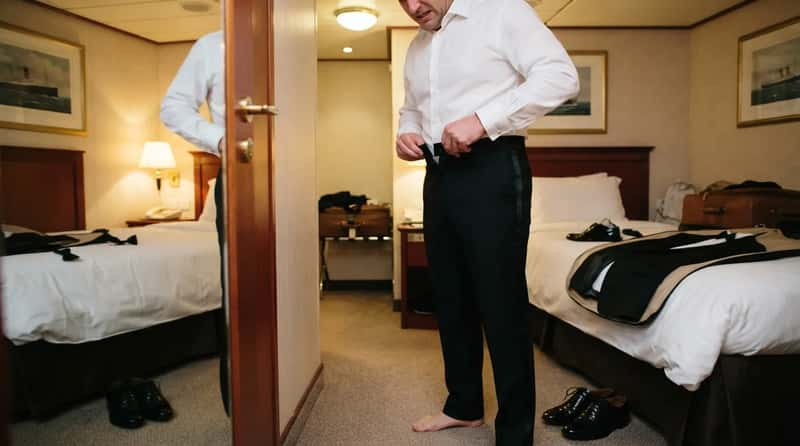
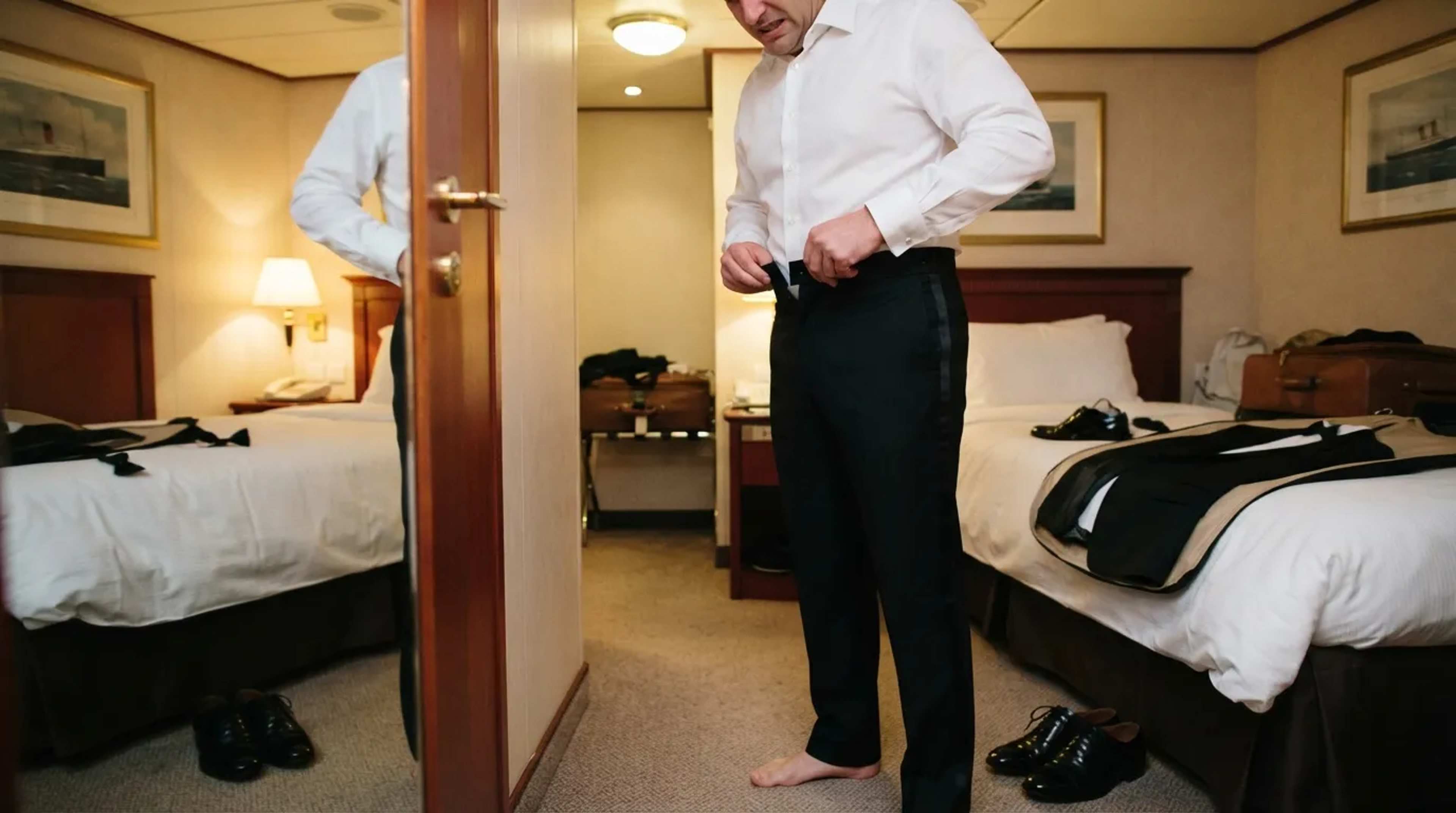
The funniest mistake in cruising is also one of the most common. One Queen Mary 2 traveler wrote that he needed to get the tuxedo pants let out before the trip. He found out only after trying them on.
First timers learn the truth at the last minute, in a cabin with no tailor. Formalwear that doesn’t fit is a problem you can only solve at home. Try on every piece weeks ahead.
But the item seasoned crossers say matters most weighs less than all of these…
#1 – A Blank Notebook for the Days When Land Disappears

Somewhere in the middle of the crossing, the horizon is all there is. No ports, no shops, no schedule that demands anything. First timers expect that to feel empty.
Seasoned crossers know it’s the point. The crossing is the destination. A blank notebook lets you capture the odd, quiet moments before they blur: the light at dawn, the people at your table, the day the clocks moved. It weighs nearly nothing, and it’s the one thing you’ll reread.
First timers pack for where the ship is going. Seasoned crossers pack for the ocean in between, and the cheapest items on this list tend to matter most because there’s no shop to rescue you out there.
So the next time someone asks what the big deal is about days with no land in sight, tell them to bring a hat, a spare pair of glasses and something to write with.