Coach tours have a reputation for being the calmest, most relaxed way to see a country. Sit back, let the driver handle the traffic, let the guide handle the logistics, right? Turns out the real chaos on a 40-seat motorcoach has nothing to do with the itinerary and everything to do with the passengers sitting in it.
Ask any tour director who’s spent twenty years on the road and they’ll describe the exact same handful of habits, whether the trip runs through Nashville or Nova Scotia. Adults 55 and older now favor guided group tours more than any other age group, and nearly half say they’ll book another one within the year – which means these same little frictions repeat, tour after tour, on buses full of people who genuinely like each other by the end. Here’s what tour directors actually put up with, counted down from mildly irritating to legendary.
#23 – They Show Up an Hour Early With Bags Already Tagged

Some passengers treat a 7 a.m. coach departure like an international flight, arriving with suitcases color-coded, tagged, and lined up outside the hotel lobby before the sun’s even up. They’re not wrong to be careful – they just haven’t learned yet that the group almost always leaves a few minutes behind schedule anyway.
The early birds mean well, but their nervous energy puts a strange pressure on everyone else still finishing coffee in the lobby. Regulars have learned the departure time is more of a target than a rule, and they stroll out with a cup in hand, luggage already loaded, completely unbothered. The overly punctual crowd eventually relaxes too – usually by day three.
#22 – They Melt Down When Their Seat Isn’t “Theirs” Anymore
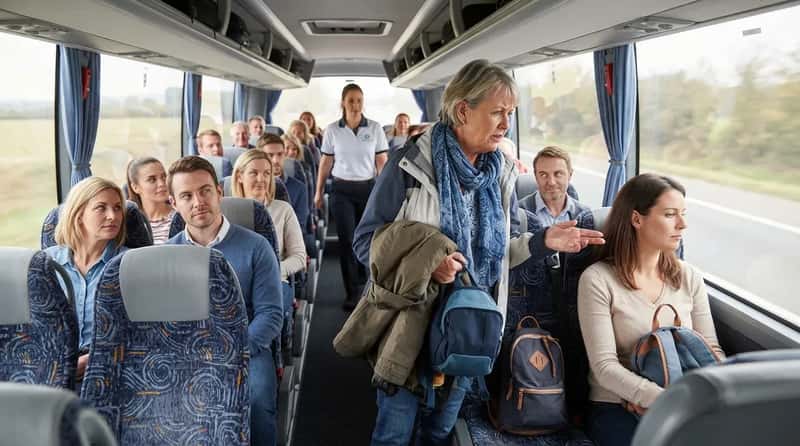
Nothing outs a coach-tour rookie faster than a quiet meltdown over seating. Seats on most coach tours aren’t assigned, and groups are encouraged to rotate daily so everyone gets a turn with the good view up front. That doesn’t stop someone from acting personally wronged when their spot from day one is suddenly occupied by a stranger.
Guides say the smart move is asking about the rotation policy on the very first morning. It’s a thirty-second question that saves a week of side-eyes and passive-aggressive seat-shuffling. Skip that question, and you become the person the whole bus quietly rolls their eyes at by Wednesday.
#21 – They Drag a Full Suitcase Off the Bus for a Ten-Minute Stop
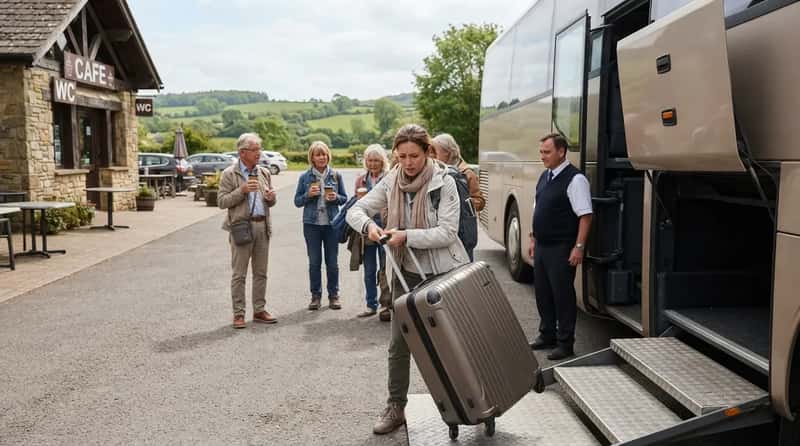
This one genuinely baffles seasoned tour directors every single time. First-timers haven’t yet figured out what’s actually safe to leave behind, so they haul their entire 40-pound suitcase off the bus for a ten-minute coffee stop. The bus is locked, the driver is standing right there, and out it comes anyway.
Veterans grab a phone, a wallet, maybe a water bottle, and leave the rest tucked under the seat. It cuts boarding time nearly in half at every single stop along the route. Multiply that savings across two weeks of touring, and it’s the difference between a relaxed itinerary and a rushed one.
Fast Facts
- Coffee and rest stops usually last just 10 to 15 minutes, start to finish.
- Leaving luggage locked on the bus can cut boarding time nearly in half.
- Veteran travelers carry only a phone, wallet, and water bottle off the coach.
- Faster stops mean more time left over for the next scenic overlook or attraction.
#20 – They Blast a Video With Zero Headphones
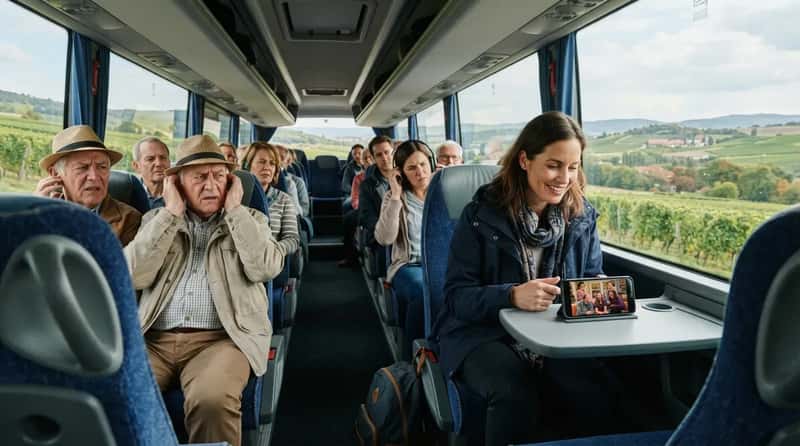
Somewhere on every long coach ride, a phone speaker starts playing a movie, a game, or a grandkid’s video call at full volume. Most tour companies spell it out clearly in their guidelines: bring headphones if you want to watch or listen to something, so you don’t disturb the forty other people trapped in the same metal box. And yet it happens on almost every single trip.
The irony is that most passengers pack noise-canceling headphones for the flight over but forget them entirely for the coach. A six-hour drive through wine country turns into background noise from someone else’s sitcom. Guides eventually step in, but it’s an awkward conversation nobody wants to have twice.
#19 – They Recline the Seat All the Way Back
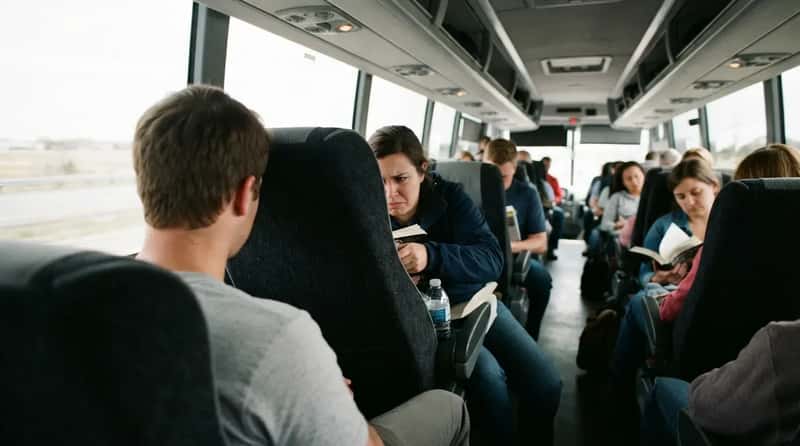
Coach seats have more recline than most people expect, and some travelers use every single inch of it. It’s tempting to lean back and relax on a long stretch of highway, but reclining too far invades the personal space of whoever’s sitting behind, leaving them with a seatback inches from their face for the next four hours.
Basic courtesy says a quick glance backward before reclining goes a long way. Most guides suggest reclining only slightly, or simply asking first if a full recline is really necessary. Skip that step, and the tension lingers far longer than the nap does.
#18 – They Sprawl Across the Aisle Like It’s a Bedroom
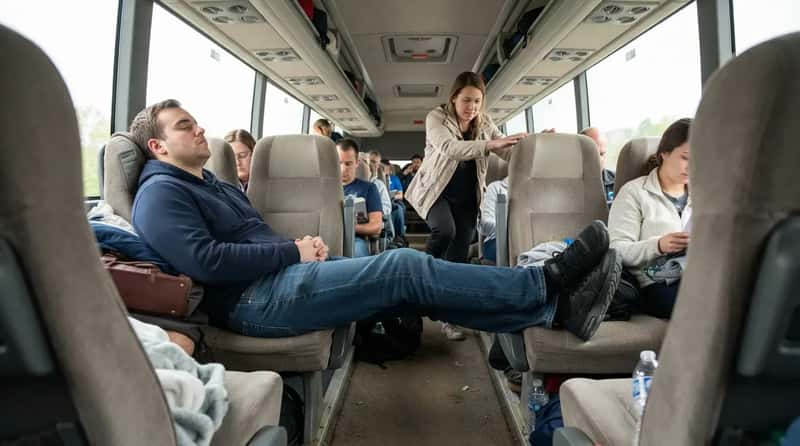
Long travel days bring out the worst seating habits in otherwise perfectly polite people. Passengers doze off and stretch out across the aisle, so anyone trying to work their way from front to back has to hop over strangers’ legs like an obstacle course. It sounds harmless until someone’s trying to reach the restroom mid-nap-fest.
Guides on long-haul routes see this constantly, especially on overnight or all-day segments through wide-open country. A balled-up jacket as a pillow is fine; a fully extended leg blocking the walkway is not. It’s a small habit with an outsized effect on everyone trying to move around the coach.
#17 – They Pack the Loudest, Smelliest Snack on the Bus

Every coach tour has one passenger who brings a snack the entire vehicle can smell within seconds of unwrapping it. Regulars stick to quiet, low-odor options out of pure experience – granola bars, crackers, anything without a strong smell or a crinkly wrapper. The first-timer version usually involves a breakfast sandwich, a bag of chips, or something loaded with onions.
Tour guidelines actually spell this out for a reason most people never think about. Messy snacks or anything with a pungent smell that lingers just aren’t good choices for a sealed motor coach, and light, portable food with minimal wrapper noise works best. Ignore that advice, and thirty-nine other passengers will silently judge the choice for the next hour.
#16 – They Talk Over the Guide’s Live Commentary

A good tour guide is basically narrating in real time, pointing out details that vanish out the window in seconds if you miss them. Some passengers treat that narration as background noise for their own side conversation. One infamous version talks the entire time the guide is speaking, gets shushed by the group, and starts right back up the moment the guide takes a breath.
It’s not just rude – it means everyone around the talker misses the one fact they actually wanted to hear. Guides rarely call people out directly, so the group ends up policing itself with pointed looks and louder “shhh”s. By day two, most chatty passengers get the hint.
#15 – They Play “I Already Know More Than the Guide”
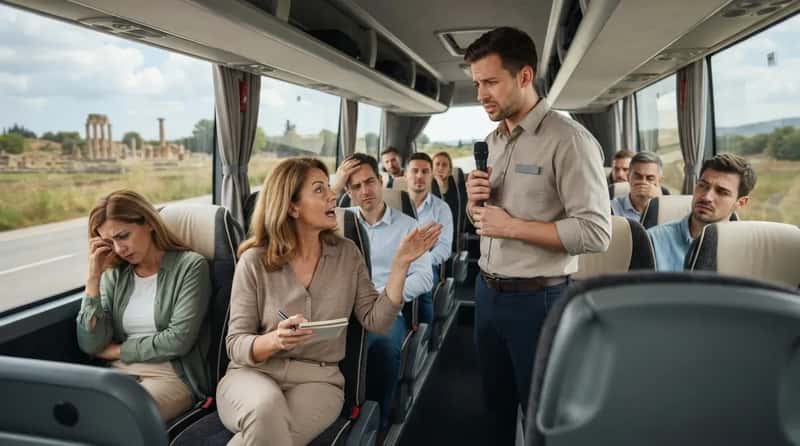
Every tour eventually has one passenger determined to prove they’ve done more research than the professional standing at the front of the bus. On one archaeology-focused coach trip, a woman spent the entire ride telling everyone she already knew what the guide was explaining, visibly hoping to catch him in a mistake. Her own travel companion looked mortified the whole time.
Guides have seen this exact personality on nearly every route in the world. It rarely lands the way the person intends – instead of impressing the group, it usually just isolates them. Most fellow passengers quietly gravitate toward literally anyone else at the next rest stop.
#14 – They Take a Full Speakerphone Call in Row 12

Cell phones on coaches create a specific kind of chaos, and speakerphone calls are the worst offender. Tour policies ask passengers to keep phones on vibrate and, if a call does come through, to lower their voice and keep it brief. Somehow, one call always turns into a twenty-minute conversation about a home renovation, broadcast to the entire bus.
Guides also ask that personal topics stay private when strangers can hear every single word. A crowded coach has terrible acoustics for privacy, whether the caller realizes it or not. What feels like a normal phone call at home becomes an involuntary group therapy session at 55 miles an hour.
#13 – They Treat the Onboard Restroom Like a Real Bathroom
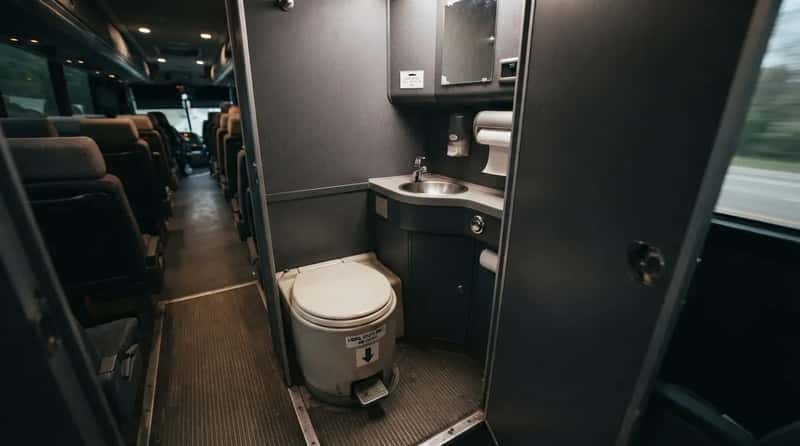
Most passengers have no idea how limited a coach restroom actually is until someone breaks the unwritten rule. It isn’t a general-use bathroom – it’s built for liquid waste only, since pumping and servicing a chemical toilet mid-route is too costly and time-consuming to do often. First-timers usually learn this the hard way, via an awkward driver announcement over the loudspeaker.
Veterans know to time their real bathroom needs around scheduled fuel and rest stops instead. It sounds like a minor detail, but ignoring it can shut down the onboard restroom for the rest of the day. Nobody wants to be the reason forty people lose that option on a six-hour stretch.
Worth Knowing
- Onboard coach restrooms are designed for liquid waste only, not solid waste.
- Servicing or pumping the small holding tank mid-route is costly, so most companies avoid it whenever possible.
- Breaking this rule can shut the restroom down for the rest of the day for everyone aboard.
- Veterans time real bathroom needs around scheduled fuel and rest stops instead.
#12 – They Cough and Sneeze Into the Open Air

A sealed coach recirculates the same air for hours, sometimes days, across an entire multi-week itinerary. One uncovered cough near the front can spread through the whole vehicle by the next rest stop. Tour directors have quietly learned to keep hand sanitizer within arm’s reach at all times for exactly this reason.
It’s rarely malicious – most people just forget they’re sharing recycled air with thirty-nine strangers for the next two weeks. But on multi-day tours, one under-the-weather passenger without basic cough etiquette can turn into half the group nursing a cold by the final stretch. Guides notice it every single trip, without exception.
#11 – They Turn Every Rest Stop Into a Complaint Session

Some travelers arrive on day one expecting a group tour to bend around their personal preferences. They treat the itinerary like it’s a private car service – flexible, adjustable, built entirely around their own whims. When it doesn’t bend, every rest stop becomes another chance to vent to whoever will listen.
It wears down the whole group faster than any weather delay or traffic jam ever could. Most passengers signed up specifically for the structure and convenience of a planned itinerary, not a running debate about changing it. The complaining rarely changes the schedule – it just changes everyone else’s mood for the rest of the day.
#10 – They Photograph Absolutely Everything Out the Window
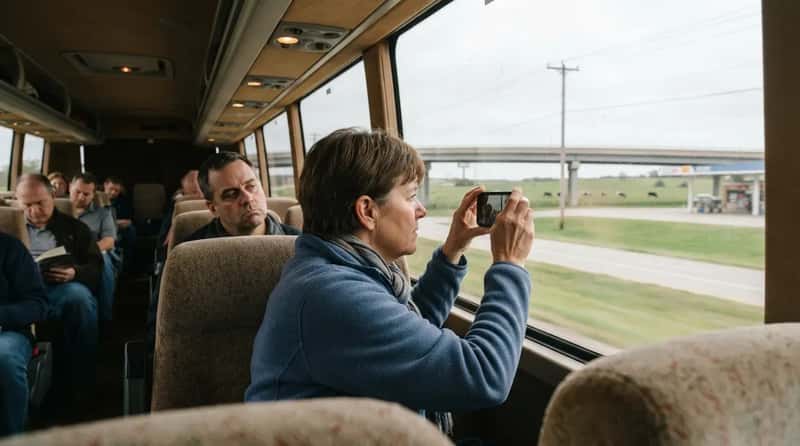
Somewhere between the hotel and the first attraction, one passenger decides every gas station, cow pasture, and highway overpass deserves a photo. Phones press against the glass for entire stretches of highway, blocking the view for whoever’s stuck in the window seat right next to them. It’s a habit that seems harmless until the fifth hour of it.
The irony is that most of these photos never get looked at again. Meanwhile, the actual scenic overlooks and photo stops built into the itinerary get a fraction of the attention they deserve. Guides often nudge the group toward saving battery and patience for the moments actually worth capturing.
#9 – They Skip the Welcome Chat and Stay Strangers All Week

The first-night welcome meeting feels optional, so plenty of travelers duck out early to unpack or nap instead. It seems like a minor scheduling choice, but it quietly shapes the whole trip that follows. That fifteen-minute chat is usually the only structured moment the entire group interacts before meals and excursions take over completely.
Skip it, and the awkward stranger dynamic can linger well into week two of a longer tour. The people who show up learn names, swap hometowns, and end up seated together at dinner without even trying. It’s a small window that closes fast once the trip actually gets moving.
#8 – They Flash Cash and Jewelry at Crowded Rest Stops

Highway rest stops and crowded transit hubs are exactly the wrong place to count out large bills or wear flashy jewelry. It also draws exactly the wrong kind of attention when a passport gets left sitting out on a table in plain view. None of it feels dangerous in the moment – it just looks careless to anyone watching.
Guides quietly keep an eye out for this behavior because it puts the entire group at slightly higher risk in unfamiliar locations. A discreet money belt or a single card instead of a wad of cash solves the problem instantly. It’s a small habit change with a genuinely serious payoff.
#7 – They Tip the Wrong Guide Entirely

Tipping etiquette trips up more travelers than almost anything else on a coach tour. Some travelers tip the wrong person entirely, confusing a local step-on guide with the actual tour director who’s been with the group since departure day one. The step-on guide gets an envelope meant for someone else, and the mix-up isn’t discovered until days later.
Fixing that mistake mid-trip is uncomfortable for everyone involved, including the person who made the honest error. Getting it straight early avoids an awkward correction that nobody actually wants to have out loud. A quick question to the tour director on day one solves it before it ever becomes a problem.
Quick Compare
- Tour director: Stays with the group for the entire trip and is usually tipped once, for the whole tour.
- Step-on guide: Joins for a single city or site only, and is tipped separately, often right on the spot.
- Golden rule: When it’s unclear who’s who, ask the tour director directly on day one.
#6 – They Assume They Get to Choose Their Own Seatmate
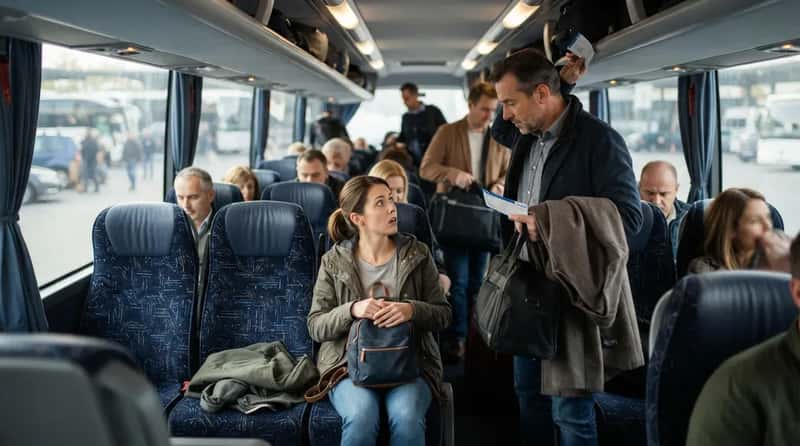
Solo travelers and odd-numbered groups are almost always paired with another passenger for the seating chart. Anyone traveling alone, or arriving in an odd-numbered group, will usually need to share a row with a stranger for the whole trip. Some assume they’ll get a spare seat to themselves, which almost never happens on a fully booked coach.
The mismatch in expectations usually surfaces the moment boarding starts on the very first morning. A little advance research on how a company handles solo travelers avoids the surprise entirely. Most solo-friendly tour operators explain this policy upfront specifically to prevent day-one confusion.
#5 – They Wander Off and Make 40 People Wait
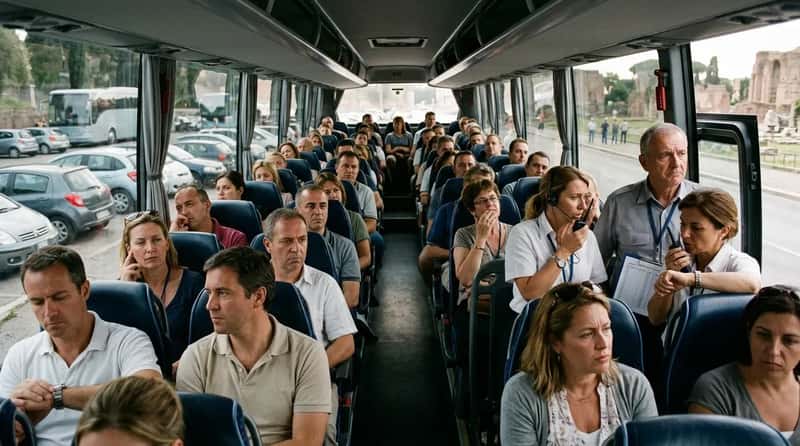
This is the mistake that genuinely irritates every other passenger on board. First-timers consistently underestimate how tight the schedule really is, treating a stated meet-back time as more of a gentle suggestion than an actual deadline. Typical meet-back windows run just ten to fifteen minutes, which isn’t much time to wander far from the bus.
One missing passenger can delay an entire coach of forty-plus people, and that delay compounds across every stop for the rest of the day. Guides physically count heads before every single departure without exception, and the whole group knows exactly who they’re waiting on. It’s a habit that turns one person’s leisurely stroll into everyone else’s shortened lunch.
At a Glance
- Typical meet-back windows run just 10 to 15 minutes at each stop.
- One late passenger can hold up an entire coach of 40 or more travelers.
- Guides count heads before every single departure, no exceptions.
- Repeated delays can eat into scheduled meal or sightseeing time later in the day.
#4 – They Hijack the Front Seat and Refuse to Rotate

The front row has the best view, the least engine noise, and the easiest exit – which is exactly why most coach companies rotate it on purpose. Plenty of first-day travelers plant a jacket on one seat anyway and treat it as permanently theirs for the rest of the trip. That single move creates tension almost immediately, whether they realize it or not.
This creates friction fast, especially with couples who assume window-and-aisle is locked in for the whole two weeks. A rotation system only works if everyone actually rotates along with it. One holdout, and the whole system quietly breaks down for the rest of the tour.
#3 – They Turn the Dinner Table Into Their Own Personal Stage

Group dinners are supposed to be a shared highlight, but one loud personality can dominate the entire table every single night. Stories stretch longer, opinions get louder, and quieter travelers slowly stop trying to jump into the conversation. By the third dinner, half the table has learned to just nod along and pass the bread.
Tour directors notice this dynamic fast because it shapes the whole group’s social mood for the rest of the trip. A little self-awareness – leaving space for others to actually talk – goes further than most people realize. Without it, dinner becomes something certain passengers quietly start dreading instead of looking forward to.
#2 – They Strike Up Nonstop Conversation Nobody Asked For
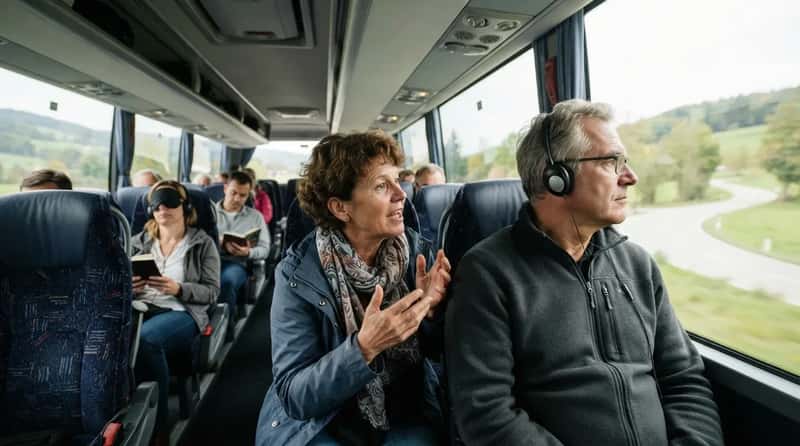
There’s a specific kind of passenger who treats the coach ride as one long, uninterrupted conversation opportunity. They’re the needy, lonely personality that seemingly every group has at least one of, and they’ll latch onto whoever makes eye contact first. Polite responses get mistaken for genuine interest, and suddenly there’s no escaping the conversation for the rest of the drive.
Most fellow travelers are too polite to say anything directly, so they resort to headphones, feigned naps, or sudden intense window-gazing. Guides sometimes step in gently to redirect that energy toward the group as a whole instead of one captive target. It’s a harmless personality trait that still manages to exhaust an entire coach by day four.
#1 – They Become the Reason for the Headcount, Every Single Stop
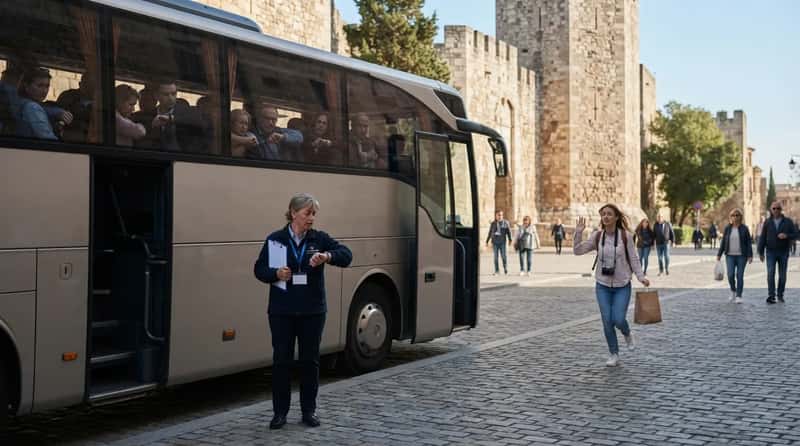
Every long-running tour director has a story about this exact person – the one who’s chronically five, ten, sometimes twenty minutes late to every single meet-back point. Nothing separates newcomers from regulars faster than being the person the whole bus is waiting on. It happens at the museum, the lunch stop, the gift shop, and eventually becomes a running joke – except it isn’t funny to the thirty-nine people sitting on a parked bus in the heat.
What makes it worse is how habit-forming the behavior becomes. Guests who push the clock on day one tend to keep doing it, and eventually the whole group starts quietly pulling away without stragglers. Nobody wants to be the one jogging toward a moving coach on day three – but for this one passenger, it happens more than once, and everyone else has learned, resigned, to just wait a little longer.
None of these habits are dealbreakers on their own. Most tour directors will say the same thing: a coach full of forty strangers turns into a genuinely close-knit group by the final day, quirks and all. The seat hoggers mellow out, the loud talkers get the hint, and the chronic latecomers eventually learn to check their watch.
What’s clear is that coach touring works precisely because of the shared, unwritten rules everyone eventually follows – even the ones who broke every single one of them on day one. The passengers who adapt fastest tend to be the ones who enjoy the trip the most. Which of these have you personally witnessed on a tour? Drop your story in the comments.