Long before the ship leaves the pier, someone in a crisp uniform has already sorted the first-timers from the twentieth-timers. There’s no guest list and no quiz. Just a handful of quiet habits that seasoned cruisers can’t seem to hide.
The 27 giveaways below are the patterns crew members and cruise insiders keep describing. No single one proves anything, but together they’re hard to miss. And the funny part is that the biggest clues aren’t what veterans do. They’re what veterans skip, and a few of them are probably things you’ve done yourself.
#27 – They Walk Straight Past the Embarkation Photo Line

First-timers line up happily in front of the painted backdrop, smiling for a photo they haven’t decided to buy. Veterans already own a small museum of those pictures. They also know where the line really leads: a photo gallery with a price list.
So the twentieth-voyage guest nods politely at the photographer and keeps walking. They’ve learned that the first hour aboard is worth more than another souvenir shot. Usually they’re headed somewhere specific, and they’re in a hurry to get there.
#26 – Their Shoes Look Boring, and That’s the Whole Point

Newcomers dress for the brochure, in heels, shiny new sandals and soles that turn slick on a wet deck. Veterans wear flat, broken-in shoes with real grip. Pool decks get slippery, and a ship is far longer than it looks from the pier.
By the end of day one, crew can read a lot from the way people walk. The guest wincing on the stairs is probably on sailing number one. The guest still strolling at 11 p.m. has already done the math on how far a ship really stretches.
But the next giveaway starts before they even reach the ship.
#25 – The Key Card Is Already on a Lanyard Before the Gangway

On most ships, your room key doubles as your onboard ID and your payment card. Veterans know how easily one slips out of a pocket or a wet swimsuit. So theirs hangs around the neck from the very start.
Crew hear about lost cards all week, and almost never from the guest wearing a lanyard with a clip. It’s a tiny habit, but it quietly says this person has seen what happens without one.
#24 – Their Cabin Door Is Wearing Magnets and Flags
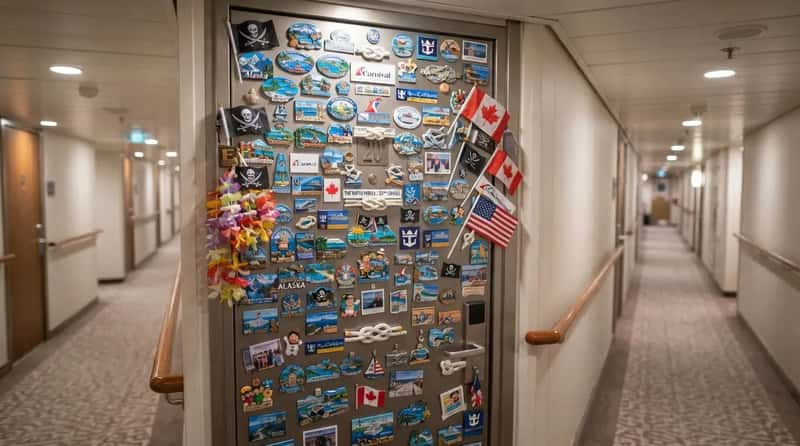
Walk down any cruise corridor and the repeat guests give themselves away. Their doors are covered in magnets, flags and printed name signs. Cabin doors and walls are typically metal, which is why the magnets stick.
It began as a practical way to find your own door in a very long hallway. Now it’s practically a badge of experience. Many cruisers say they decorate to cheer up their neighbors, though the funniest doors often belong to the most seasoned guests.
And the next item on the list was packed in their luggage.
#23 – They Packed the One Power Strip the Rules Allow
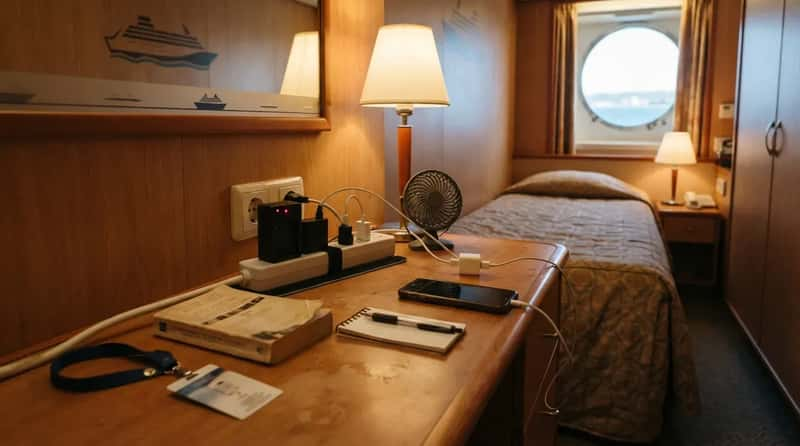
Cabins have famously few outlets, and veterans know it. Many cruise lines ban power strips with surge protectors and will sometimes confiscate them. So repeat guests bring a plain extension cord or a USB hub that follows the policy.
First-timers often learn this at security, when a staff member holds up the offending strip like evidence. The twentieth-voyage guest checks the line’s current rules before packing. Policies vary, so they never assume.
#22 – The Suitcases Vanish Under the Bed Within Minutes
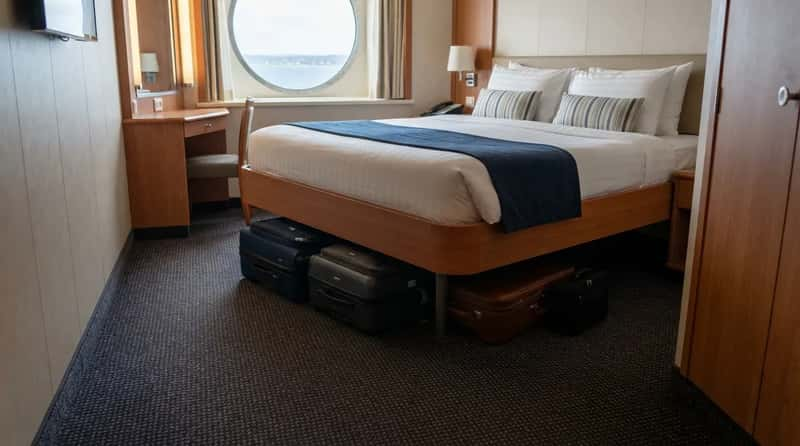
Many cabins have just enough clearance under the bed to slide a suitcase out of sight. Veterans do it right away, before the room fills up with stuff. Cabins belonging to first-timers can look like luggage showrooms for days.
It’s a small trick that changes the whole feel of a tiny room. Floor space is the most precious thing in a cabin, and the people who know that protect it from the first hour.
What they do next is the thing crew notice most.
#21 – They Reach the Muster Station Before the Announcement Ends
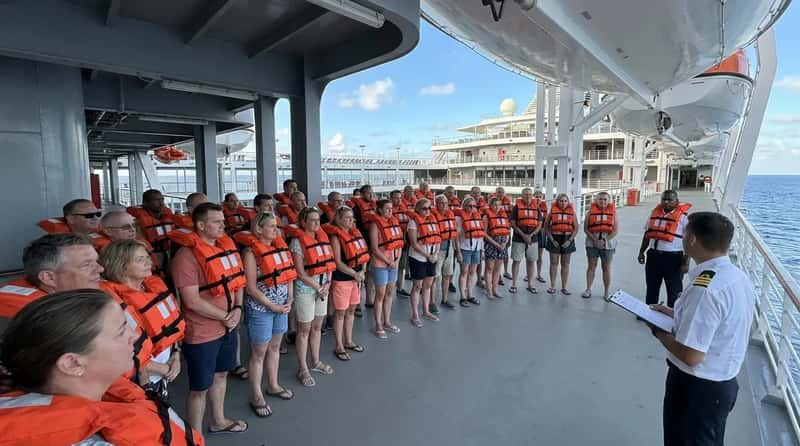
International maritime safety rules require a passenger safety drill before the ship sails or right as it departs. First-timers wander, ask for directions and clog the hallways. Veterans already know their station, because it’s printed on the back of the cabin door.
Many lines now let guests complete part of the briefing on their phone, which veterans appreciate. They also know the crew take the drill seriously, so they stay quiet and pay attention. The calm ones in the muster line are very often the ones who’ve been there before.
Worth Knowing
- The general emergency signal on a ship is seven short blasts followed by one long blast.
- Your assembly station is listed on the back of your cabin door.
- Crew expect guests to be quiet during the drill so everyone can hear instructions.
- Some lines now let guests finish part of the briefing on a phone before boarding.
#20 – They Know the Embarkation-Day Lunch Move
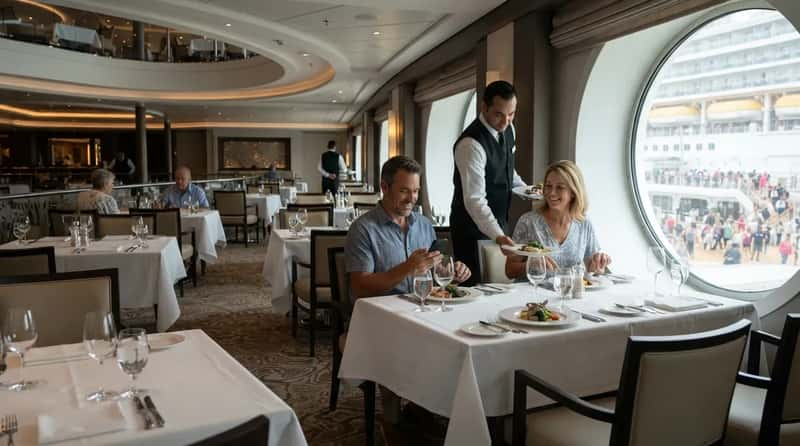
The buffet is jammed on boarding day, and everyone who’s ever been on a ship knows it. Veterans often skip it for a sit-down lunch in the main dining room. It usually has a calmer pace and real table service.
It’s not an official secret. It’s just something you only learn by being aboard one too many times. Plenty of newcomers have no idea the free restaurant is open that early.
Meanwhile, their phones are already loaded.
#19 – Their Phone Already Knows the Ship Before They Board

Most big lines now have an app for dining reservations, excursions and the daily schedule. Repeat cruisers download it and log in at home, while everyone else is still dragging bags through the terminal. They know the popular times fill up first.
Newcomers discover the app at the Wi-Fi desk. The seasoned guest has already locked in the show seat and the specialty dinner table. Crew notice, because a guest who knows what’s offered asks much sharper questions.
#18 – They Read Tomorrow’s Daily Planner Tonight
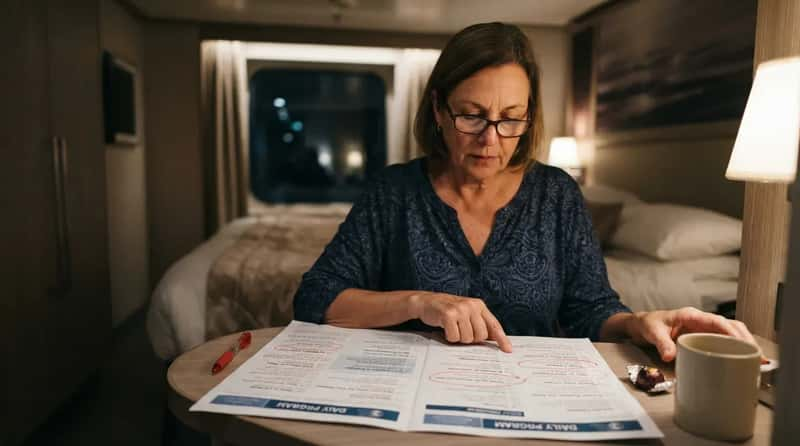
Every ship delivers a printed daily schedule to your cabin. Royal Caribbean calls its version the Cruise Compass, and Carnival’s is called Fun Times. Veterans read it the night before and circle what matters.
First-timers skim it at breakfast and miss half the day. Experienced guests plan around trivia hour, the best seats and the quiet pool windows. Planning the day before is one of the habits crew mention most.
Next up is a habit the crew appreciate more than almost any other.
#17 – The Cabin Steward Gets a Name and a Note on Day One
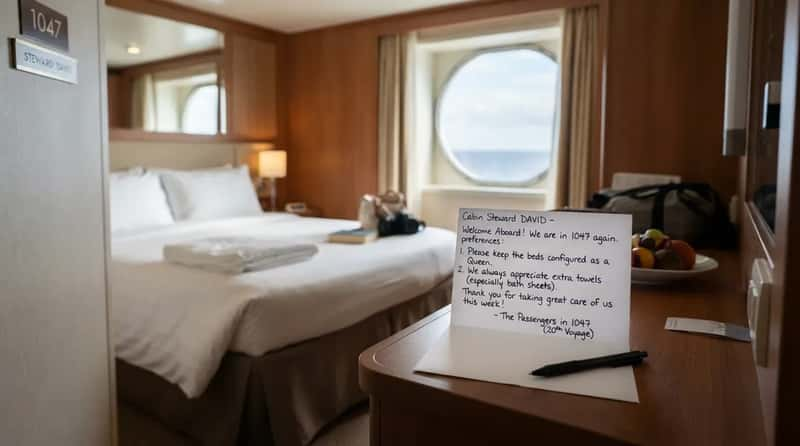
Veterans learn their steward’s name fast and actually use it. They leave a short note with their preferences, like extra towels or how the beds should be set up. It saves the steward the guesswork.
Stewards often look after a long list of cabins, and the guests who make the job easier get remembered. Experienced cruisers know a small courtesy on day one tends to pay off all week.
But the cabin they pick tells even more.
#16 – They Book a Midship, Lower-Deck Cabin on Purpose

The brochure sells the high-deck balcony with the big view. Veterans often choose a lower, central cabin instead, for a calmer ride. It sits near the ship’s center of motion, so it tends to move less in rough seas.
Many first-timers learn this the hard way on a windy night at sea. The twentieth-voyage guest probably learned it around sailing number three. The best-value cabin isn’t always the one with the prettiest view.
And if the ship does move, they’re ready.
#15 – Seasickness Is Handled Before the First Swell

Veterans don’t wait to feel queasy. They use a remedy that works for them, such as wristbands, ginger or an over-the-counter option their doctor approves. They start early, because it’s much harder to catch up later.
Crew see the contrast on rough days. The newer guest is pale and confused, while the veteran is cheerfully ordering breakfast. Motion sickness comes from a mismatch between what your inner ear feels and what your eyes see, and veterans plan around it.
Quick Compare
- First-timer: waits for the queasy feeling, then goes hunting for a remedy.
- Veteran: starts a preferred remedy before the ship leaves port.
- Rough-morning result: one skips breakfast, the other is already in the buffet line.
#14 – A Refillable Mug Swings From Their Hand
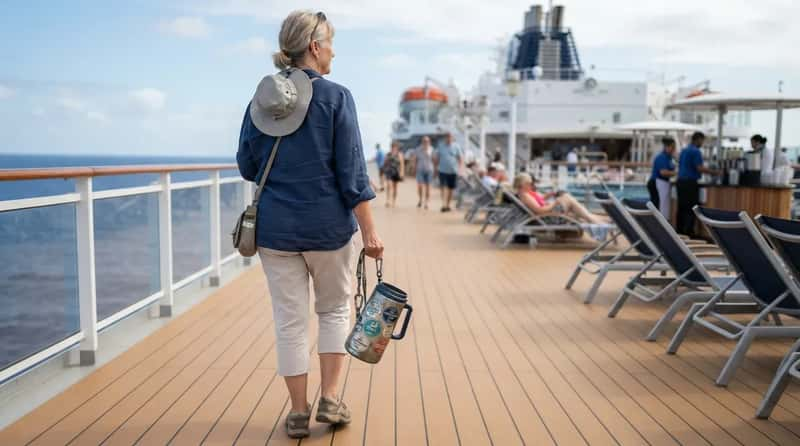
Repeat guests carry their own cups so they never wait in line for a refill. Some lines sell refillable mugs, and some guests bring their own bottles. Either way, it signals a person who has learned exactly how thirsty a sea day gets.
It’s a quiet flex, honestly. A collection of mugs from past sailings is practically a loyalty card of its own. Crew can spot the well-worn ones across the deck.
Then there’s how they move around the ship.
#13 – They Take the Stairs While Everyone Else Stares at the Elevator Button

At peak times, elevators on a big ship can be painfully slow. Veterans know the shortcut and use the stairwell, especially when they’re only going down a couple of decks. First-timers stand and stare at the button.
It’s also a handy way to dodge the crowd at show time. Stairwells are rarely busy, and the extra steps help offset dinner. Most newcomers never realize how much faster it is.
#12 – They Know the Towel-and-Lounger War Is Real
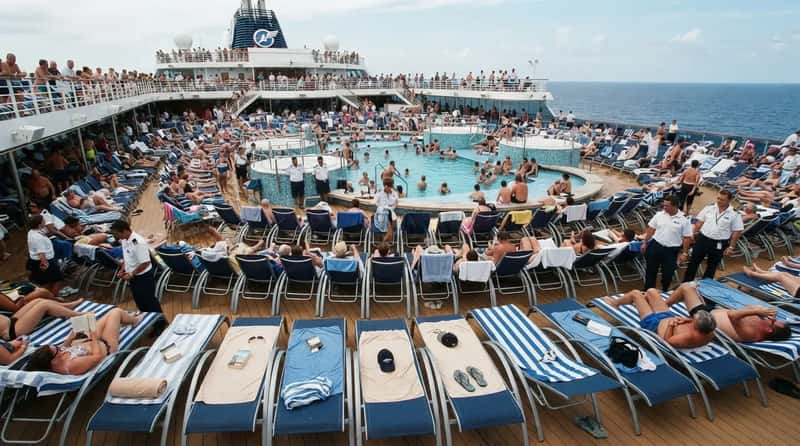
Pool chairs are the most contested real estate on any ship. Veterans know the unspoken rules and the official ones. Many lines have policies limiting how long an unattended chair can be saved.
The opinion here is divisive. Some experienced cruisers say chair-saving is rude, and others call it survival. Crew say they hear both sides daily, and they’d honestly rather everyone just share.
But nothing separates veterans from rookies like what happens in port.
#11 – They Are Never Late for the Ship

The all-aboard time is earlier than the departure time, and it’s not a suggestion. Ships generally don’t wait for guests who wander off on their own, only for official excursions. Missing it means finding your own way to the next port.
The twentieth-voyage cruiser sets an alarm and heads back early. They’ve watched someone sprint down a pier, and they’d rather not star in that story. The ship will leave without you.
And formal night has changed a lot, too.
#10 – They Treat Formal Night as Optional

Dress codes have loosened on many mainstream lines in recent years. Veterans know the options and dress for their own comfort. A few still go all out, with a suit or a gown and a photo.
Crew say there’s a clear split. First-timers worry about being underdressed, and veterans simply pick what they like. In the end, the people who wear whatever makes them happy tend to have the best night.
#9 – They Say Port, Starboard and Aft Without Thinking
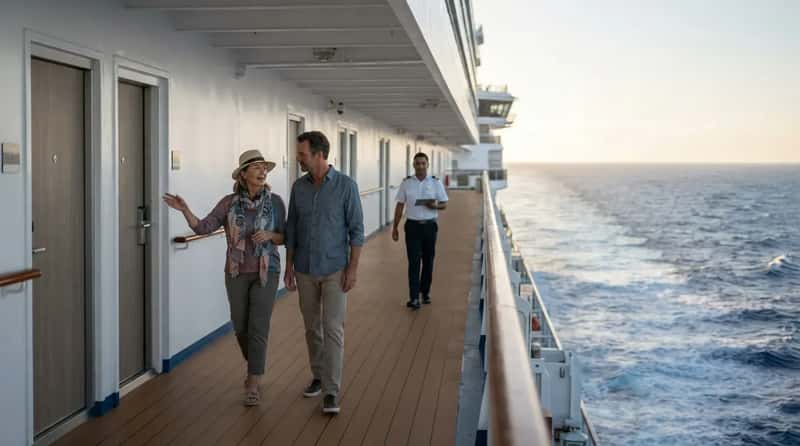
Twenty voyages in, “left side of the ship” turns into port. Repeat cruisers also say forward and aft, since that’s how directions and cabin numbers make sense onboard. Newcomers just point.
It’s not showing off. Nautical terms are the fastest way to describe where you are on a vessel hundreds of yards long. The crew use them all day, so veterans pick them up almost by accident.
Next, a trick for the first afternoon.
#8 – Their Carry-On Holds a Swimsuit and Sunscreen

Checked luggage often reaches cabins well after boarding. Veterans pack a daypack with swimwear, sunscreen and essentials, so the pool is open to them right away. First-timers wait around in street clothes, watching the hallway for their bags.
That small bag matters again on the last night. Experienced cruisers know the final morning starts early and the bags have to be out. It’s the difference between a smooth first day and a slow one.
At a Glance
- Wear or carry: swimsuit, cover-up and flat sandals.
- Protect: sunscreen and sunglasses for the first sun-soaked afternoon.
- Keep close: medications, chargers and anything you’d hate to lose.
- Why it works: your cabin may not be ready, and your suitcases may not arrive for hours.
#7 – They Know Their Loyalty Points by Heart
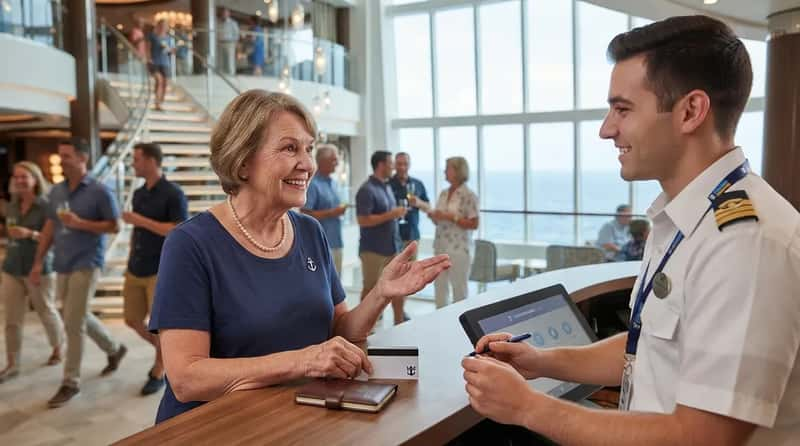
Ask a veteran how many cruises they’ve taken, and you’ll get a number fast. Royal Caribbean guests earn one cruise point per night sailed, with double points for suites. The top tier, Pinnacle Club, starts at 700 points.
Carnival is changing its system too, replacing the old VIFP Club with a program called Carnival Rewards, with current status carrying over. Crew hear loyalty talk constantly, and the numbers say a lot about who’s aboard.
And then comes the move that crew see constantly.
#6 – They Book the Next Cruise Before This One Ends
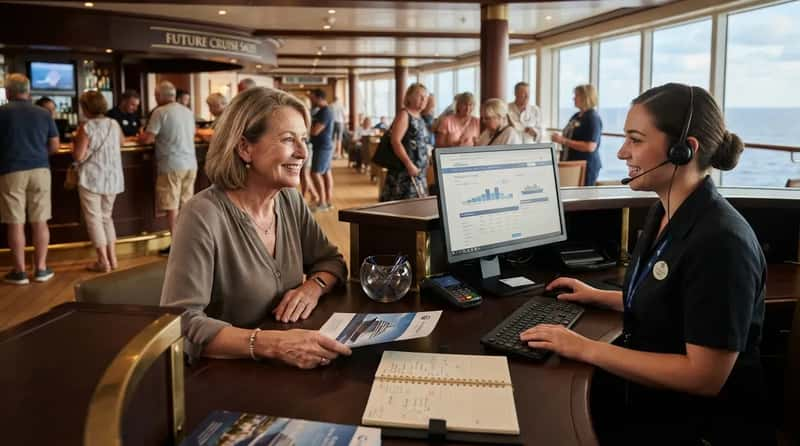
Onboard booking desks often offer perks for reserving the next sailing before you go home. Veterans know that, and many have already picked their dates. Crew say the desk gets busy on the last sea days.
It’s a smart habit, but also a revealing one. Someone on their twentieth trip rarely needs convincing. They arrive with a calendar in hand.
But what they do with the crew matters far more.
#5 – They Ask the Crew Where They’re From, and Actually Listen

Cruise crews come from dozens of countries and work long contracts, often several months at a time. Veterans know that and ask real questions. Then they remember the answers.
A guest who asks about a bartender’s hometown gets a different kind of service. It isn’t a trick. For many crew members, it’s the moment the job feels human again.
#4 – They Actually Love Sea Days

First-timers see sea days as dead time between ports. Veterans see them as the whole point. They bring a book, claim a deck chair and ignore the schedule.
Here’s the controversial part. Many experienced cruisers argue that ports are overrated and the ship itself is the destination. Crew say the guests who relax most on sea days are very often the repeat ones.
And the quiet places on board reveal even more.
#3 – They Find the Corners No Brochure Mentions

Every ship has a quiet lounge, a forgotten deck or a window seat that most guests never find. Veterans locate theirs on day one. Crew often see the same faces in the same spots all week.
That’s the real mark of a regular. They don’t chase the crowd, because they’ve already found what they like. A seat with a view and no line beats a show every time.
Why It Stands Out
- It’s never on the deck plan highlights, so you only find it by wandering.
- The same guest returns to the same seat, which is how crew start recognizing them.
- It trades noise and crowds for a view, a book and a quiet hour.
#2 – They Talk About Ships Like Old Friends
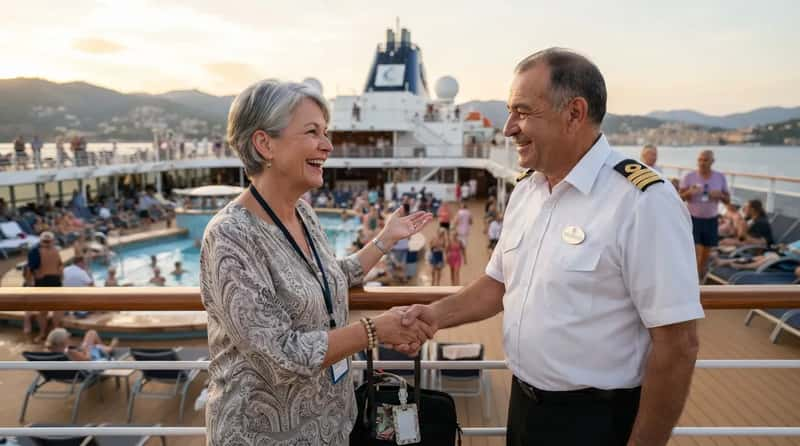
Veterans often have a favorite ship, a favorite deck and even a favorite cabin number. They compare vessels the way people compare diners. Crew hear it daily, from “she’s a little worn” to “this is my ship.”
It’s loyalty to something that moves. A ship changes with every itinerary and crew rotation. Yet some guests still describe stepping aboard as coming home.
But the clearest giveaway of all shows up on the last night.
#1 – The Crew Know Them, and They Know the Crew
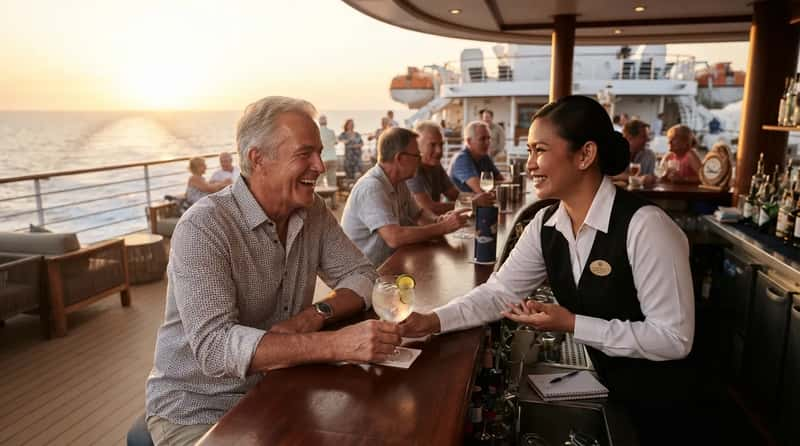
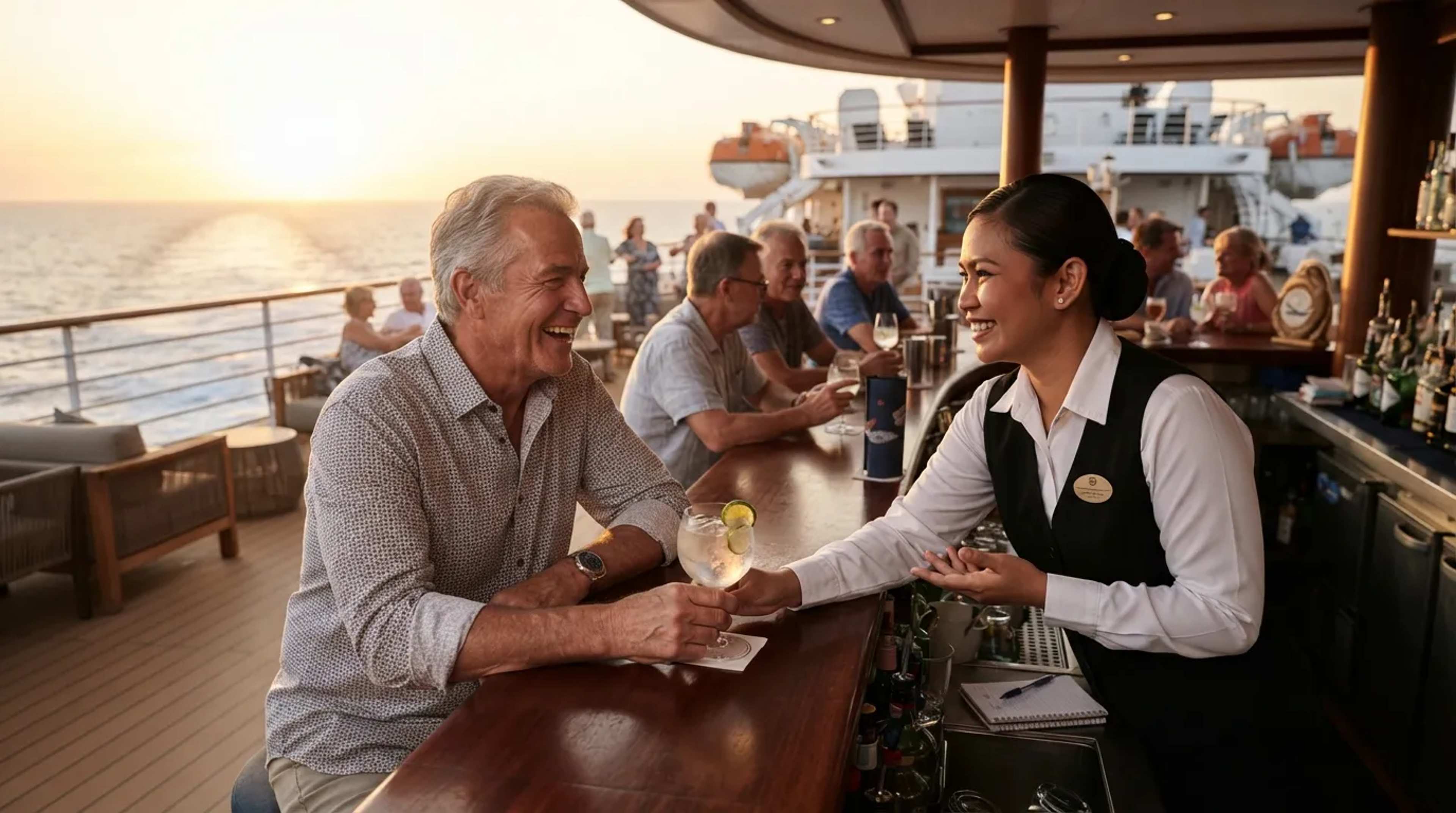
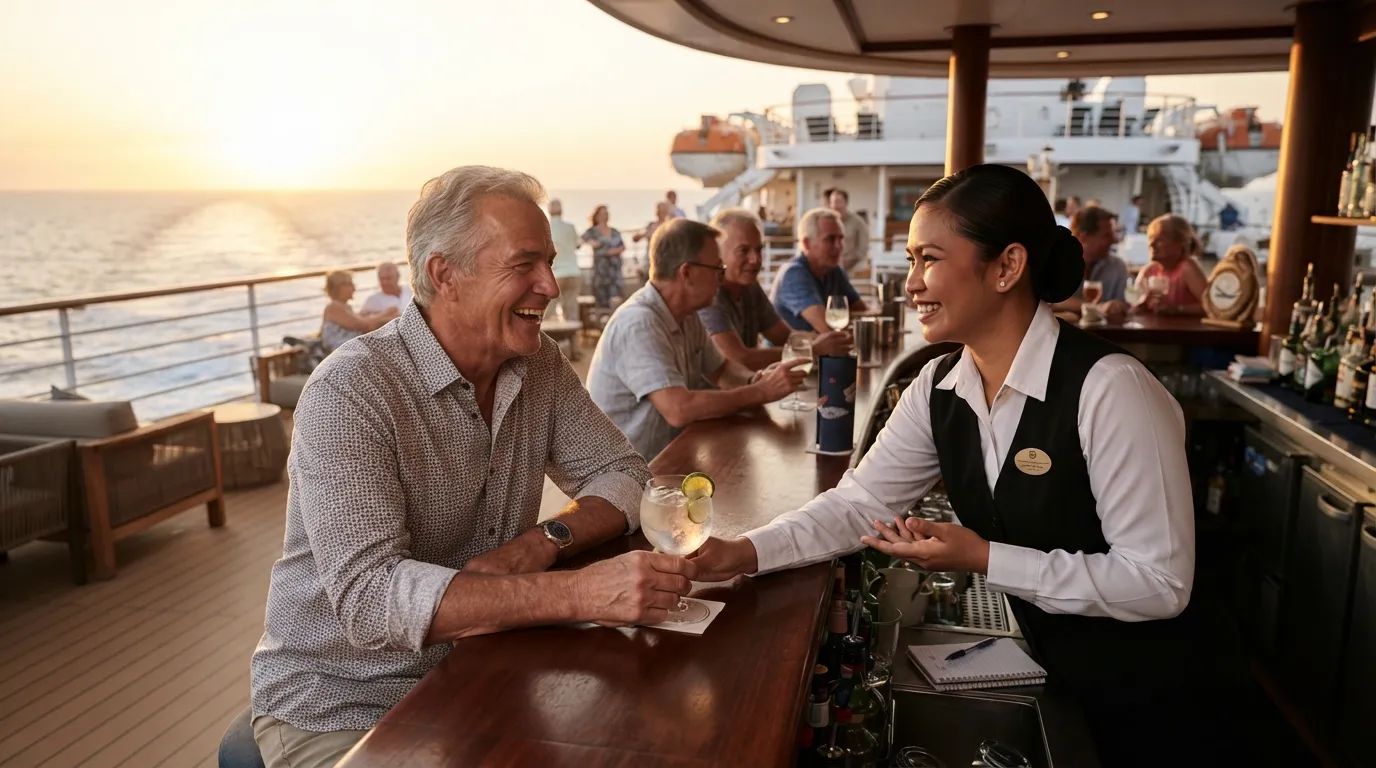
The surest sign of a twentieth voyage is a warm greeting from a crew member who actually remembers you. A bartender starts your usual order, or a steward asks about last year’s trip. It happens more often than first-timers would guess, especially on ships that sail the same routes.
On the final night, veterans thank the crew, not just with a tip but with their time. They write a note or find a manager to praise someone by name. The crew rarely forget it, and the guest never forgets them either.
That’s how a passenger becomes part of the ship’s story. Every other giveaway on this list is just a habit that leads here.
The next time you board, watch who the crew greets first.