Most people walk through an airport thinking about their gate number, not their body language. Yet a surprising number of ordinary habits, things travelers do without a second thought, can quietly move them from a routine checkpoint into a much longer conversation with an officer. None of these habits are illegal on their own, but together they form the kind of pattern that federal screening systems are built to notice.
The rules around airport and border screening have shifted noticeably over the past couple of years, with expanded device search policies, stricter cash reporting enforcement, and a heavier reliance on behavioral analysis. Understanding what actually draws attention, rather than relying on rumor, can save travelers a lot of stress and a lot of time.
1. Carrying more than $10,000 in cash without declaring it
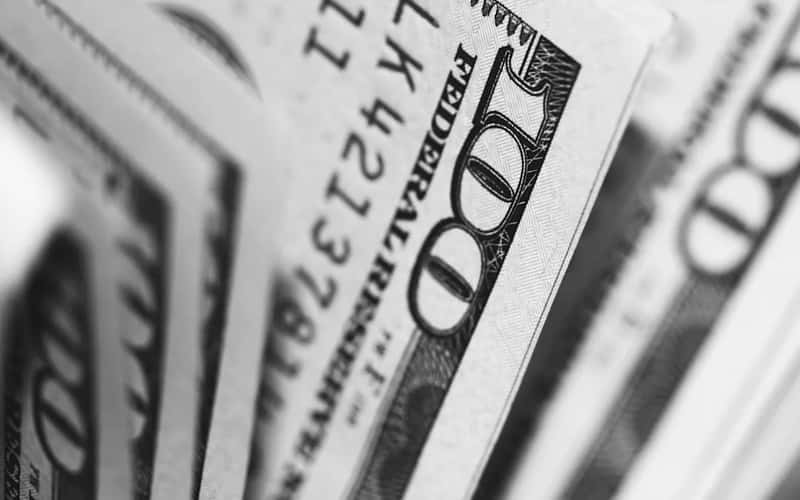
The rule itself is simple and has not changed: anyone crossing a U.S. border with ten thousand dollars or more in cash or monetary instruments must report it. If you are transporting, attempting to transport, or causing to be transported a total amount exceeding $10,000 at one time into or out of the U.S., you must file a report.[1] That report is FinCEN Form 105, and filling it out takes only a few minutes at the port of entry.
The trouble starts when travelers assume that carrying large sums is illegal and try to hide it instead. It is not illegal, but concealment is. CBP can seize all of your money, not just the amount over $10,000, and travelers may face civil penalties, including forfeiture of funds, and criminal charges.[2] Splitting cash between family members to dodge the threshold does not help either, since the $10,000 threshold applies to the total amount a family or group is carrying or sending collectively, not per individual.[3]
2. Showing visible signs of stress at the checkpoint
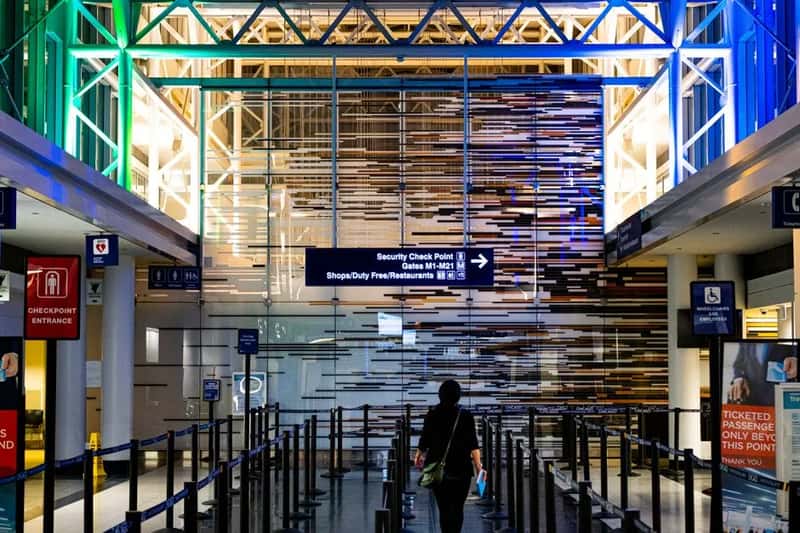
Airport security is stressful for almost everyone, but officers are trained to notice when someone’s nervousness looks different from ordinary travel jitters. TSA officers are trained through the SPOT program, which uses a list of behaviors that could indicate high levels of stress, fear, or deception, including yawning, rapid blinking, gulping, skin flushing, coughing, throat clearing, and leg shaking.[4] These are reflexive, everyday responses to anxiety, not evidence of wrongdoing, but they can still draw a second look.
The distinction officers try to make is between fatigue and fear. Excessive nervousness such as visible sweating, trembling hands, or voice cracking when answering questions is flagged when officers can distinguish travel-fatigue-nervous from situation-specific-nervous, since most people are mildly anxious at customs while conspicuously anxious behavior stands out as a flag.[5] Interestingly, even a poorly timed yawn has a psychological backstory: researchers have found that nervous people yawn more as a displacement activity, a way to calm their body in a heightened or stressful state.[4]
3. Giving answers that don’t quite line up
Officers spend a lot of their training listening for small contradictions, not just watching for suspicious body language. Providing inconsistent or unclear responses during initial questioning can escalate to secondary screening, since officers often ask about travel purposes, accommodation, and contacts abroad, and contradictions like claiming a family visit while hotel bookings show a business stay can trigger additional checks.[6] The mismatch does not have to be dramatic. A wrong hotel name or a vague answer about how long a trip will last is often enough to prompt a follow-up question.
What makes this particular habit tricky is that overcorrecting can backfire too. An inconsistent story includes any answer that contradicts a previous answer or the documentation, but overprepared or rehearsed answers can ironically appear more suspicious than a natural response.[5] The safest approach is simply knowing your own itinerary well enough to answer plainly, without sounding like you memorized a script the night before.
4. Walking away from your bag, even for a minute
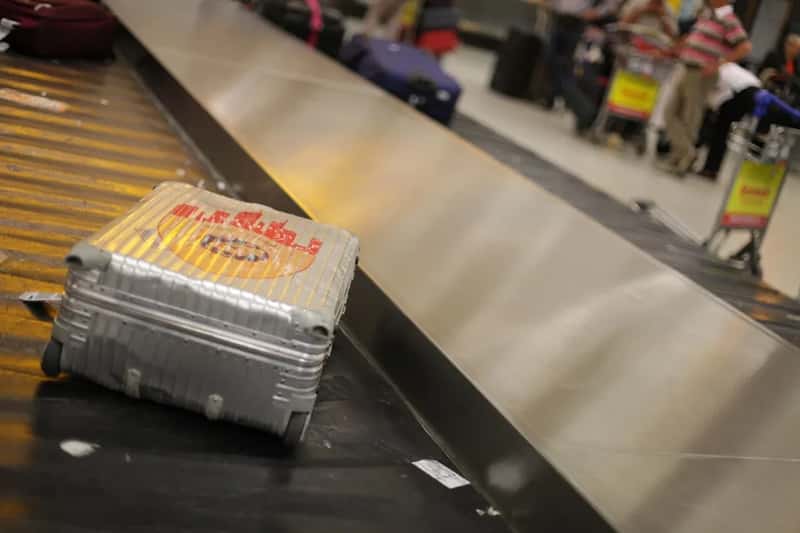
Leaving a suitcase or backpack unattended, even briefly to grab a coffee or use the restroom, is one of the fastest ways to trigger a security response. Inspecting seemingly abandoned baggage isn’t meant to cast suspicion on an individual traveler, but to maintain a safe and orderly environment for everyone, and as a result the TSA often treats neglected bags as a risk even if they end up being harmless.[7] A real example from late 2025 shows how far this can go. In San Antonio in December 2025, a bomb squad inspected an unattended suitcase that was ultimately found to be filled with music gear.[7]
That kind of response is not TSA being dramatic. It reflects a broader public safety effort that predates any single traveler’s actions. The Department of Homeland Security has sponsored major public-awareness campaigns encouraging travelers to report unattended items.[7] The lesson is straightforward: if you need to step away, take your bag with you or ask someone to watch it directly.
5. Refusing to unlock your phone or laptop for CBP
Electronic devices have become one of the most closely watched categories at U.S. borders, and the rules around them have tightened. Under CBP’s updated January 2026 directive, U.S. Customs and Border Protection has broad authority to search a phone, laptop, or any other electronic device at the border without a warrant, and a basic manual review can happen without any suspicion at all, while a deeper forensic extraction requires reasonable suspicion and supervisor approval.[8] Travelers do have the right to decline, but that right comes with a real cost.
For U.S. citizens, refusing a password request cannot result in denial of entry, but it almost always means losing the device for a while. Citizens have an absolute right to re-enter the country, but CBP can detain the device for further inspection and may keep it for days or weeks.[9] For visa holders and foreign visitors, the stakes are higher: visa holders and foreign visitors may be denied entry to the U.S. for refusing to provide access to electronic devices.[10] These searches remain rare in absolute terms, since CBP processed approximately 420 million travelers in fiscal year 2024, and of those, roughly 47,000 had their electronic devices searched, less than one hundredth of one percent of all travelers.[8]