Cabin crew members see the same behavior play out on nearly every flight, year after year, airline after airline. Some habits are minor annoyances, the kind that make a long-haul flight feel a little more chaotic than it needs to be. Others cross into territory that actually slows down the crew’s ability to keep everyone safe, which is really their main job once that door closes.
Talking to flight attendants who have logged thousands of hours in the air reveals a pretty consistent list of complaints. None of it is secret information, and most of it comes down to simple courtesy. Still, these patterns keep repeating, which suggests a lot of travelers either don’t know the impact of what they’re doing or just haven’t thought about it from the crew’s side of the aisle.
1. Touching or poking flight attendants to get their attention
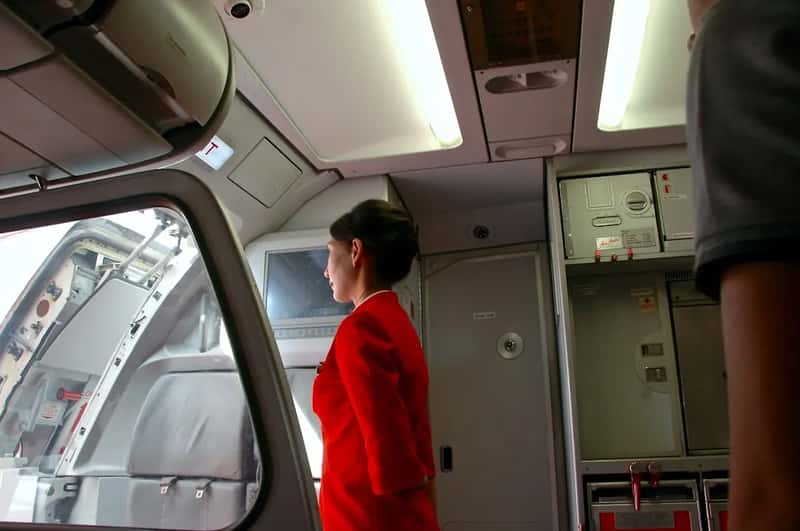
This might be the single most common complaint cabin crew members raise when asked what bothers them most. Veteran flight attendants Michelle Montez, Joshua Boyd and Darion Foy issued a public notice on their Jumpseat Chronicles Podcast about the proper way to get their attention. Boyd described it bluntly, noting “We get poked and touched as flight attendants,” calling it one of the biggest recurring issues.
It’s not a small thing either. Foy has said passengers sometimes go as far as poking crew members in places that clearly cross a line, and Boyd joked that “if we got paid $1 for it, we would be millionaires.” Some crew members have started wearing patches, lanyards or aprons advising passengers not to touch them, which says a lot about how often it happens. A simple call button press or a polite “excuse me” works just fine.
2. Ignoring safety instructions and using devices during takeoff and landing
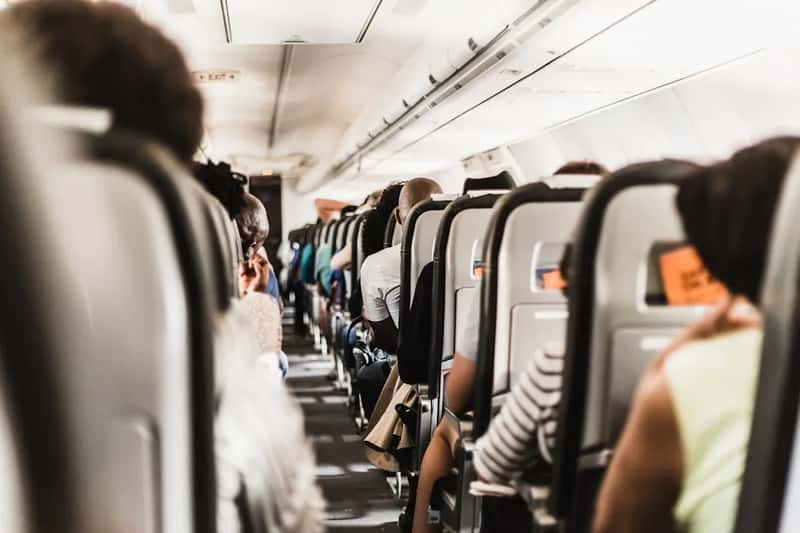
Takeoff and landing are the two phases of flight where things are statistically most likely to go wrong, and they’re also the moments crew members need passengers paying attention. Yet it’s precisely when a growing number of passengers seem to forget the basic rules entirely. Phones stay out, headphones stay in, and safety briefings get tuned out entirely.
Research on this isn’t just anecdotal. Studies have demonstrated that the simple presence of electronic devices can create cognitive distractions, diverting attention from vital safety instructions. That distraction matters more than people assume, because passengers deeply engrossed in their devices might overlook essential instructions and safety protocols that could matter in an emergency. Crew members aren’t being dramatic when they ask you to look up for a minute.
3. Rushing the aisle before the seatbelt sign turns off
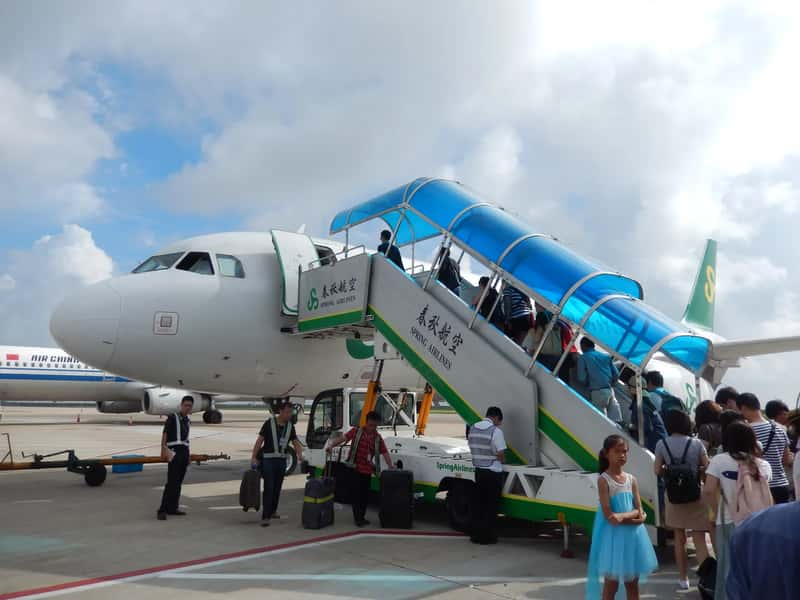
The plane lands, there’s a bump or two of taxiing left, and half the cabin is already standing with a bag in hand. Former Piedmont Airlines flight attendant Michelle Hall says this is one of the habits she notices constantly, explaining that this is one of the most common habits she’s seen and that it can create safety issues if the aircraft is still taxiing. Her question to passengers who jump the gun is a fair one: “What’s the rush?” she points out. “You can’t go anywhere if the door is closed. Just wait for your turn.”
Beyond the safety angle, it just slows everyone down. When passengers crowd the aisle too early, they block others from retrieving their bags and exiting in an orderly way once the doors open. Staying seated until that chime actually helps everyone deplane faster, not slower, even though it feels counterintuitive in the moment.
4. Treating the galley like a lounge
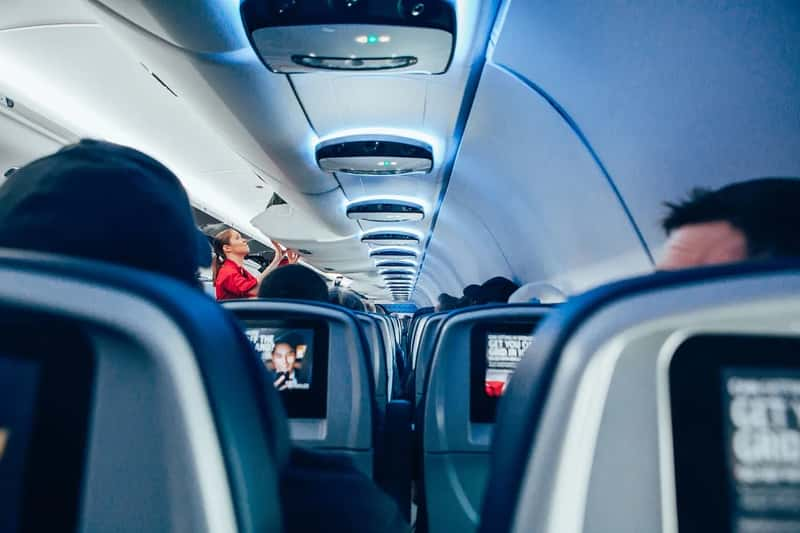
The galley is where crew members eat, rest, and prep service, not a place for passengers to stretch their legs or strike up a conversation. One flight attendant, Lentini, put it plainly, saying “As a passenger, I would never stand in the aircraft galley for a lengthy period of time. This is the flight attendant’s workspace where we work and eat. Last thing we want is to have a passenger doing yoga poses in our faces while we are having our lunch.”
The break windows crew members get are shorter than most passengers realize. On some long-haul routes, free time in uniform was a mere 15 minutes within a 15-hour time frame, usually spent hastily grabbing a meal that often got interrupted by someone needing assistance. Giving that space a wide berth, even just for a few minutes, actually makes a real difference to someone working a demanding shift.
5. Playing music or videos out loud without headphones

It seems obvious, yet it keeps coming up in every informal poll of passenger complaints. One traveler summed up the frustration on a Reddit thread aimed at flight attendants, writing that crew members “don’t stop people [from] playing music and videos without earphones on.” Another commenter backed that up, describing a similar experience where a crew member brushed off the request entirely.
This one isn’t really about crew preference so much as basic cabin etiquette. A confined metal tube with recycled air and thin walls between seats is not the place for a speaker to be doing the work headphones were built for. Most airlines don’t have a hard rule against it, but that doesn’t mean the row around you wants to hear it either.
6. Fighting over overhead bin space instead of following boarding order
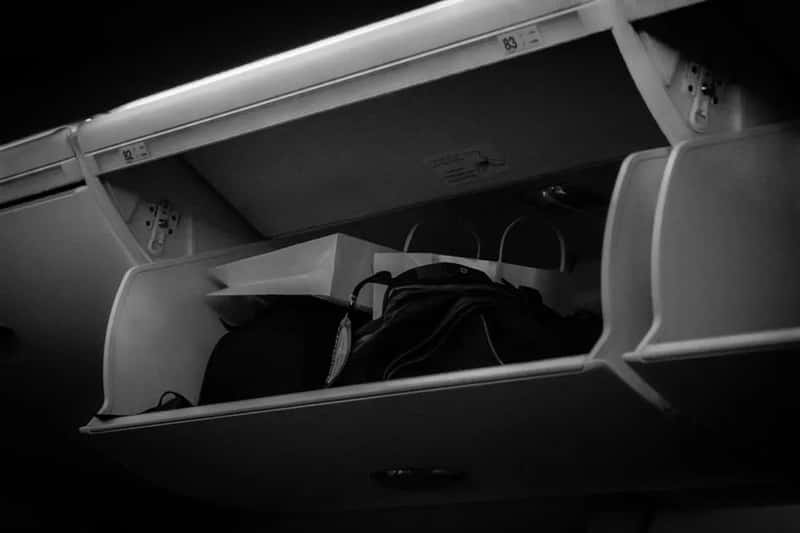
Overhead bins fill up fast, and the frustration around them has become one of the more persistent themes in passenger complaints. One Reddit user aimed at cabin crew wrote about pre-boarders taking up space meant for other cabins, saying “Don’t let the pre-boarders with seats in the back fill the overhead space in FC or C+. It drives me insane.”
Another complaint focused on bags being stashed far from their owner’s actual seat, which creates headaches during deplaning. As one commenter put it, “Allowing passengers to put their bags in the first empty space in the overhead when there is room above their seats further back” is a recurring source of friction. Keeping your bag near your own row, even if it takes an extra minute to find space, saves everyone a scramble later.
7. Hogging the armrest and reclining without a glance behind you
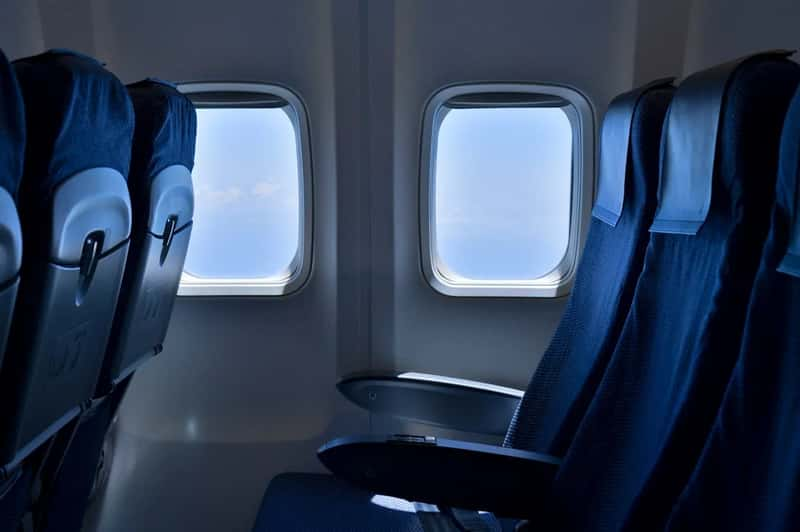
Seat space fights are nothing new, but they remain one of the most consistent irritants on any flight. A HotelTonight survey of American travelers found that travelers are likely to be irritated when their seatmate hogs the armrest, according to 40% of American travelers surveyed. Reclining brings its own tension too, and a separate Fox News poll found that more than 50% of people are bothered when others recline their seats on planes directly in front of them.
Nobody expects passengers to skip reclining altogether, especially on longer flights where a few extra inches make a real difference. A quick glance back before leaning your seat, though, avoids spilled drinks and crushed laptops, and it costs nothing. Small gestures like that tend to go a long way in a cabin where everyone’s already a little cramped.
8. Pressing the call button repeatedly for non-urgent requests

Crew members generally don’t mind the call button when it’s used for what it’s meant for. The trouble comes when it turns into a shortcut for things that could wait, or when passengers escalate a minor request into a demand for special treatment. One commenter on a crew-focused Reddit thread noted frustration with how some staff “give in to drama queens that want to change seats”, which reflects how repeated, low-priority requests can pile up during a single flight.
Cabin crew are managing service, safety checks, and often more than a hundred passengers at once, all within a tightly timed schedule. A call button pressed every few minutes for something that isn’t urgent pulls attention away from passengers who might actually need help. Waiting for a natural pause, or simply flagging a crew member as they pass by, tends to get better and faster results anyway.
Most of these behaviors come down to the same root cause: passengers forgetting that a plane cabin is also someone’s workplace, one with real safety responsibilities attached to it. None of these fixes require much effort. A little more patience, a little more awareness of the people working just a few feet away, and most of these friction points disappear on their own.