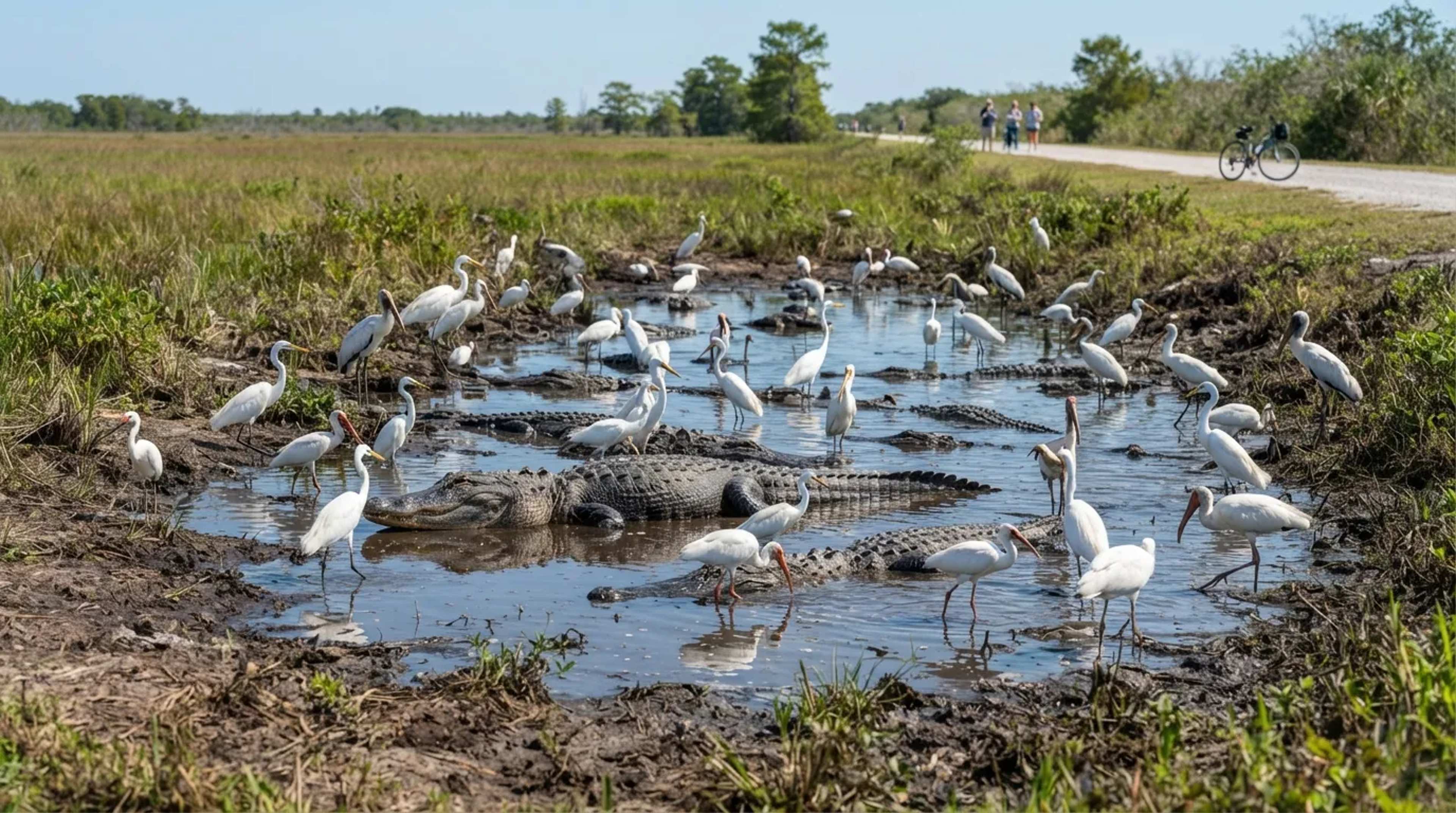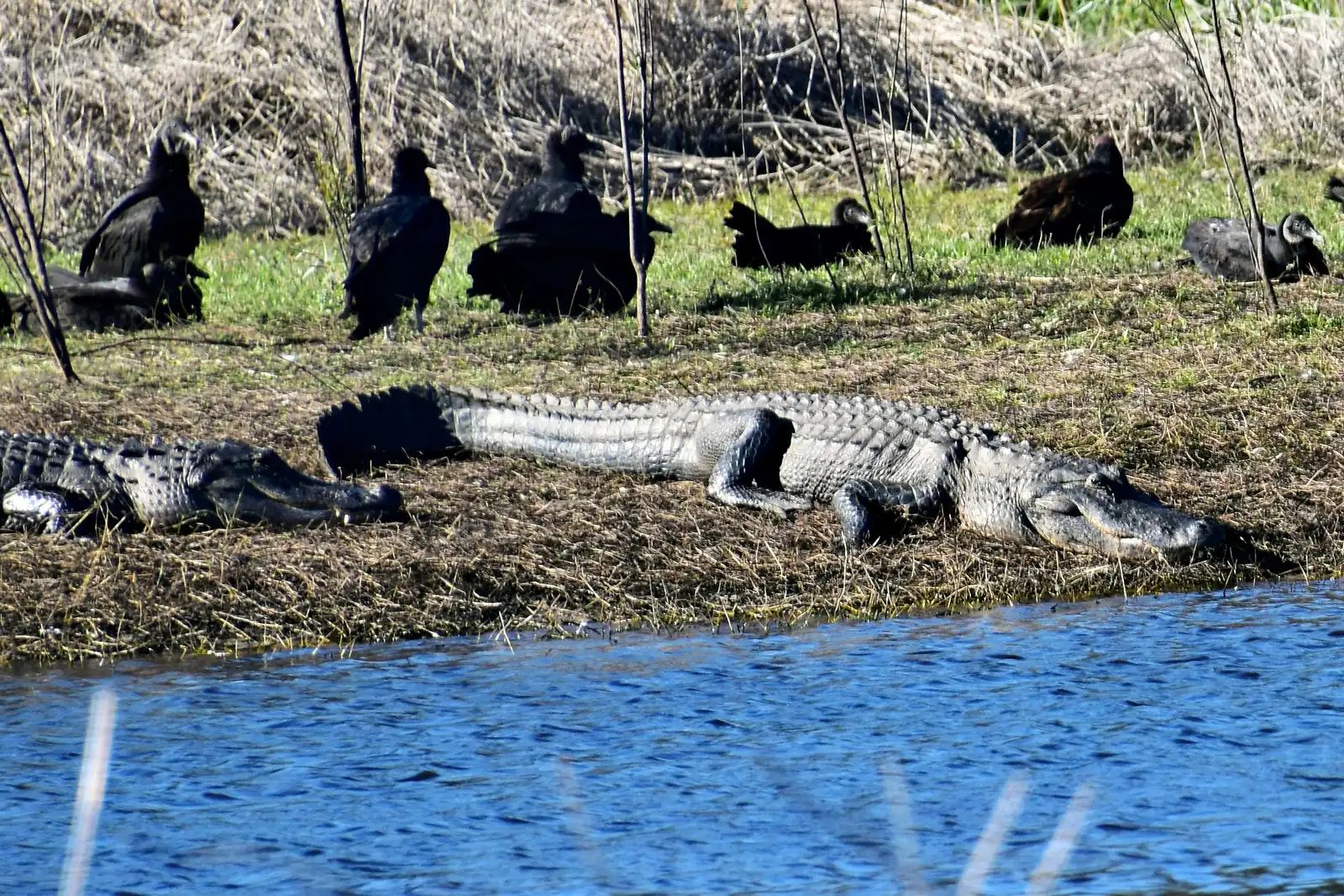
Louisiana – Federal officials are weighing whether to open seven national wildlife refuges to the kind of regulated alligator hunting the state began this fall. The proposal comes from the U.S. Fish and Wildlife Service, and it remains a draft that could change after public review. The Louisiana Wildlife Federation has backed the idea and submitted comments in favor of it. ([1]) ([4])
A Proposal Still Moving Through Review
The Fish and Wildlife Service announced the draft environmental assessment in mid-November, describing it as a plan to open these refuges to recreational alligator hunting for the first time. ([2])If the plan is approved, hunts could begin in October 2027, with new opportunities added each year.
The public has until November 27 to weigh in. Comments can be sent by email to a regional hunt and fish coordinator or by mail, and the draft document is available for review at the Southeast Louisiana National Wildlife Refuge in Lacombe and the North Louisiana National Wildlife Refuge in Farmerville. ([3])The agency has said it will consider those comments before preparing a final version, so the outcome is not yet settled.
Louisiana’s Season as a Test Case
The proposal follows closely on the heels of the state’s own experiment. Louisiana ended its first recreational alligator season on October 31, and the Louisiana Department of Wildlife and Fisheries reported that 3,606 hunters harvested 1,817 alligators. ([3])
That season sits alongside a commercial harvest that Louisiana has regulated since 1972. The alligator population fell sharply in the middle of the twentieth century before recovering through habitat protection, controlled harvests, enforcement, research, and cooperation among state agencies, landowners, hunters, and the alligator industry. Officials estimate the wild population now stands near three million animals, and the state continues to adjust its harvest rules based on reports and biological data.
What the proposal would and would not do
- It is a federal draft, not a final decision.
- Hunts could begin in October 2027 if approved.
- Hunters would need Louisiana licenses and win tags through the state lottery.
- Refuge rules and harvest reporting would still apply.
- The agencies would set the number of tags for each refuge every year.
Which Refuges Are Included
The federal proposal names seven refuges, all of which are open to visitors for activities such as hiking, birding, and fishing. None of them took part in Louisiana’s first recreational season, so the plan would bring them into the state’s general framework for the first time.
- Bayou Sauvage Urban National Wildlife Refuge
- Big Branch Marsh National Wildlife Refuge
- Black Bayou Lake National Wildlife Refuge
- D’Arbonne National Wildlife Refuge
- Delta National Wildlife Refuge
- Tensas River National Wildlife Refuge
- Upper Ouachita National Wildlife Refuge
Under the proposal, hunting on these lands would run through Louisiana’s licensing and lottery system. The Fish and Wildlife Service and the state wildlife department would work together each year to decide how many hunters and tags each refuge receives. Access would not be unlimited, and the harvest would not be open-ended. Hunters would also have to follow refuge rules and report what they take.
Related Stories From Travelbinger



The Case Supporters Are Making
The Louisiana Wildlife Federation argues that the plan extends a proven management model onto federal property. Its position rests on several points, including the state’s monitored alligator population, decades of wildlife department experience, and a first season that ran on a controlled lottery and tag system. The group also says annual reviews would allow the program to change if biological conditions shift.
Regulated hunting could give refuge managers another tool for handling alligator populations and conflicts with people. Supporters say it would also reduce the need for refuge or state staff to remove some animals through separate nuisance efforts. Whether the federal government adopts that view will depend on the comments submitted before the November 27 deadline and the final assessment that follows.