Boeing’s reputation for manufacturing quality has taken another hit as whistleblowers describe a factory culture where damaged, deteriorated, and otherwise unusable aircraft components allegedly found their way onto commercial jets. The claims, some dating back years but resurfacing with fresh intensity through 2024 and 2025, paint a picture of a company under pressure to keep production lines moving even when parts failed to meet basic safety standards.
What makes the current wave of allegations so striking is not just their volume but their consistency. Multiple current and former employees, speaking separately and years apart, have described strikingly similar patterns of missing paperwork, hidden inventory, and components that should never have left the factory floor being installed anyway.
A Whistleblower Steps Into the Spotlight

The most detailed and widely covered account came from Sam Mohawk, a Boeing quality investigator with thirteen years of experience at the company’s Renton, Washington facility. Mohawk spoke publicly for the first time about problems he had witnessed during his years working in quality assurance at Boeing’s commercial airplane factories, and said he had warned both Boeing and federal regulators about lapses in safety practices before the Alaska Airlines door plug incident. His account, delivered through a “60 Minutes” interview and an Occupational Safety and Health Administration complaint, became a focal point for congressional scrutiny.
Mohawk did not mince words about what he believed was happening on the factory floor. He told CBS News that there was so much chaos in the factory that there was a desperation for parts because of problems with parts suppliers, and that in order to get planes built and out the door in time, some of those parts were recycled back onto airplanes rather than stopping production. It is this kind of description, workers reportedly grabbing degraded components rather than waiting for proper replacements, that has fueled public characterizations of Boeing using rotted or spoiled parts.
Inside the “Parts Jail”
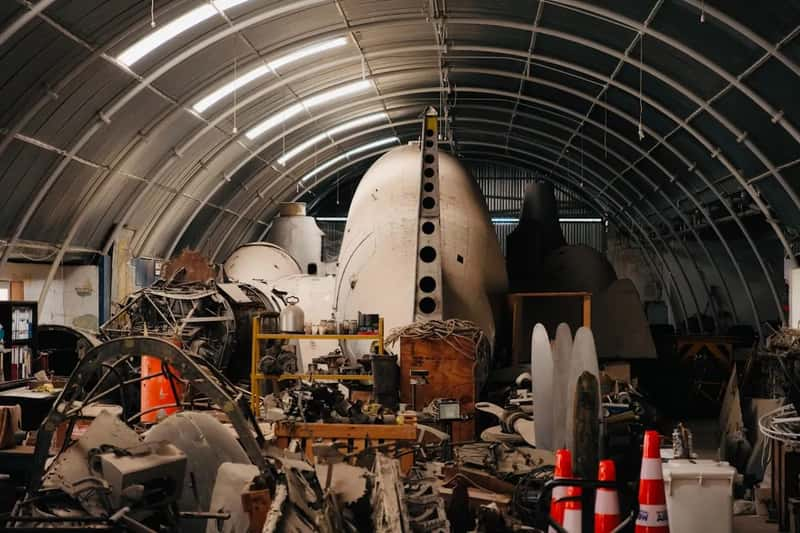
Central to the controversy is a system Boeing employees informally call the “parts jail.” As a quality investigator, part of Mohawk’s job was to keep track of defective airplane parts in what some employees call the parts jail, so named because the parts are meant to be under lock and key and tracked like a chain of evidence. In theory, this system exists precisely to prevent damaged or nonconforming components from ever reaching an assembled aircraft.
The problem, according to Mohawk, was that the safeguard broke down under production pressure. He said that amid pressure to keep production moving, some employees sidestepped Boeing protocol and took bad parts out of the parts jail when his team wasn’t looking, and his concern was that those nonconforming parts could be ending up on planes. So-called non-conforming parts are damaged or inadequate components that are supposed to be tracked, disposed of or repaired, with meticulous records to ensure they aren’t used in the aircraft manufacturing process.
Missing Rudders and Other Vanishing Components
The scale of what allegedly went missing is what elevated this from an internal quality dispute to a matter of congressional interest. As of last year, Boeing had lost as many as 400 faulty 737 Max aircraft parts and deleted records for many of those from an internal cataloging system, according to the complaint, with non-conforming parts referring to damaged or inadequate components that are supposed to be tracked, disposed of, or repaired with meticulous records. These were not trivial fasteners in every case.
Among the most alarming details were claims about flight-critical steering components. In addition to bolts and smaller units, workers also took important items like rudders, which control an aircraft’s steering, and according to Mohawk, 42 flawed or nonconforming rudders went missing, evidence that the practice of nabbing parts behind lock and key was pervasive. Separately, investigators noted that other large components were also unaccounted for. Mohawk also claimed that Boeing “intentionally hid” improperly stored non-conforming parts, including large components such as rudders and flaps, from the US Federal Aviation Administration ahead of an on-site inspection.
Boeing’s Rebuttal and Internal Reviews
Boeing has consistently pushed back against the most alarming interpretations of these claims. The company told Fortune it completed two investigations into Mohawk’s claims, which included interviewing employees and walking the factory, but did not find evidence that any defective parts ended up on Boeing aircraft, and said Mohawk’s claims did not impact aircraft safety. The company has framed its response as evidence of a healthy internal reporting culture.
In a formal statement, Boeing characterized the episode as proof its systems work as intended. “This is an example of how Boeing listens to employees and thoroughly reviews their concerns about safety and quality,” the statement said. Regulators, for their part, have not always taken as generous a view. Following the door plug blowout, FAA inspectors found multiple instances where quality control procedures were not followed, and an assessment by an FAA expert panel mandated by Congress described a disconnect between Boeing’s senior management and its assembly workers, some of whom feared retaliation for reporting safety issues.
Conclusion: A Reckoning Still Unfolding

Whether or not the word “rotted” fairly captures what happened inside Boeing’s factories, the underlying allegations are serious enough on their own terms. Whistleblowers describe damaged parts pulled from storage under production pressure, paperwork that vanished from tracking systems, and components allegedly hidden from federal inspectors. Boeing has repeatedly denied that any of this compromised the safety of delivered aircraft, and its internal investigations have not substantiated the most severe claims.
Still, the pattern stretching from Ducommun-supplied parts in the 1990s to Spirit AeroSystems fuselages in the 2010s to Renton’s parts jail in the 2020s suggests a persistent structural problem rather than an isolated lapse. As Boeing works through a felony conviction, ongoing civil litigation, and continued FAA scrutiny, the company’s ability to convince regulators, employees, and the flying public that it has truly changed its culture may matter more than any single allegation. The story of Boeing’s parts is, in many ways, the story of an industry giant trying to prove that speed and safety do not have to be at odds.