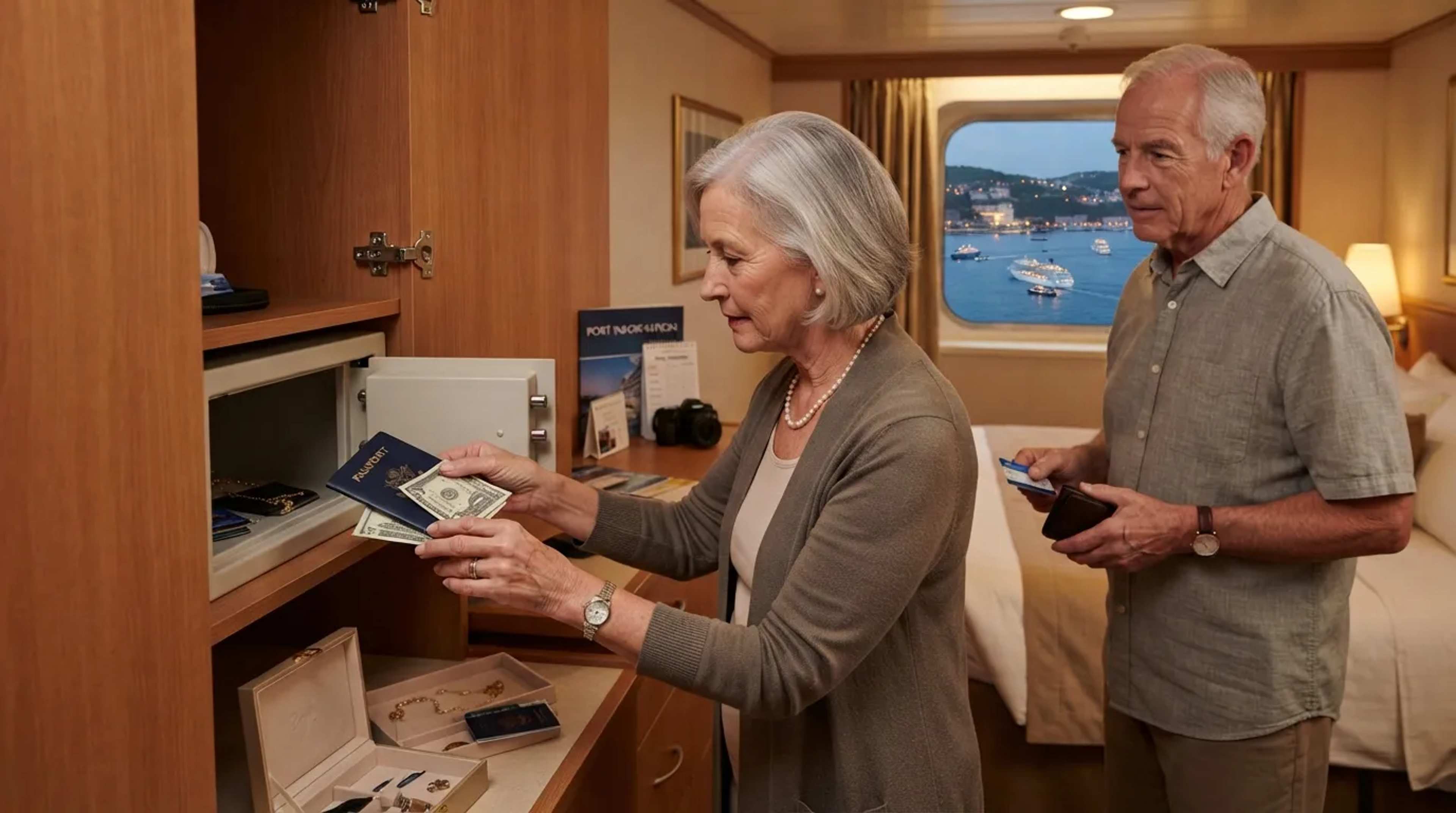
Most people think a calm morning departure comes down to luck, a loud alarm, and an early start. Watch seasoned travelers closely and you will see the real work happens the evening before, in about twenty quiet minutes.
Many travelers past sixty have settled into sixteen small habits that take nearly every decision out of the morning. None of them looks impressive alone, but one, saved for last, is the one veterans say holds the other fifteen together.
1. The Outfit Laid Out on a Chair
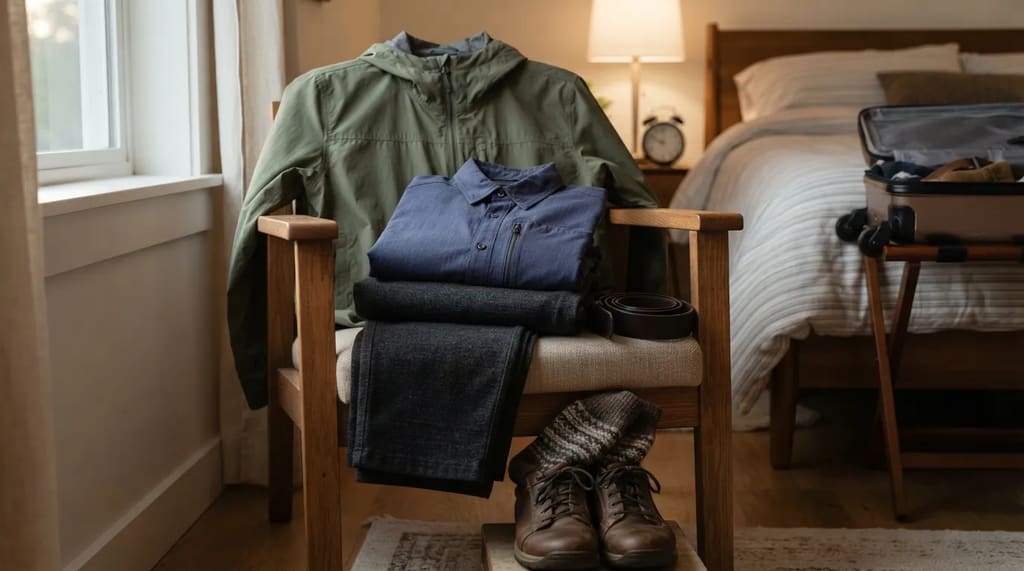
Most seasoned travelers choose tomorrow’s clothes before they brush their teeth tonight. The outfit goes on a chair or the back of a door, in the order it will go on.
Layers are the usual rule, since a departure morning can start cool at home and end warm on a crowded train platform. Many pick a top or jacket with a pocket that closes, so a boarding pass or ticket has a safe place.
Turns out the point is not style. Nobody wants to stand in front of a closet at an early hour, half awake, wondering whether the gray trousers are the clean ones.
Some travelers lay the clothes out in dressing order, socks on top. Getting dressed becomes something done on autopilot, with the lights barely on.
But the item that sits next to that chair is the one most people forget until they are standing in the hallway.
2. The Shoes by the Door
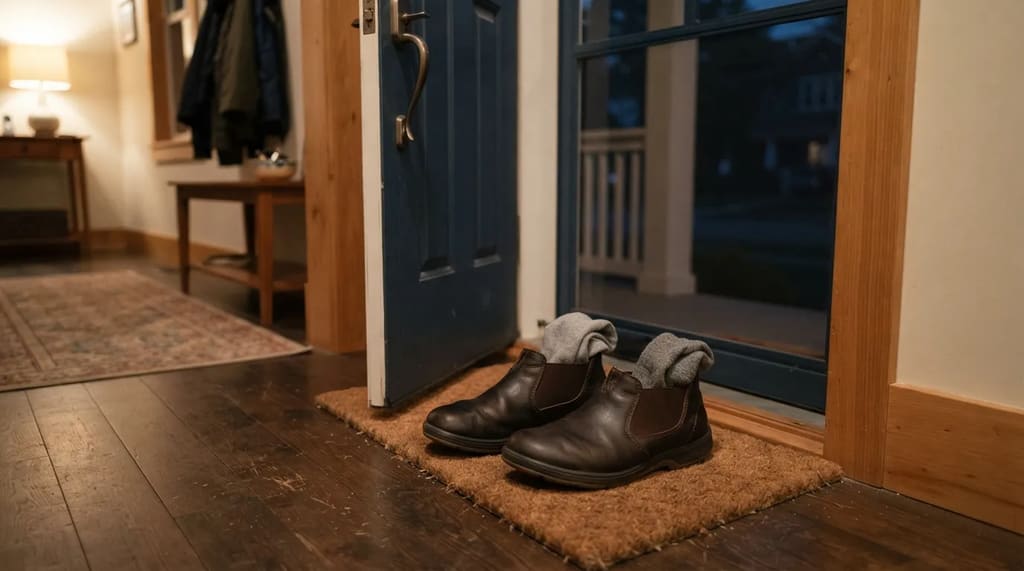
The shoes for a travel day are chosen for the checkpoint, not for the closet. Slip-ons and easy lace-ups win, because most travelers expect to take them off.
TSA’s own travel checklist says that in a standard screening lane you remove your shoes and place them directly on the X-ray belt.1 Screening rules at individual airports have changed over the years, so a quick look at the current guidance is wise.1
Veterans put the shoes right by the front door, with the socks tucked inside. Most of them also insist that stiff, brand-new shoes have no place on a travel morning.
Broken-in pairs are the quiet favorite, because a travel day can mean long miles of terminal floors and station platforms. Nobody wants to find out at gate forty that a new pair pinches.
Yet the shoes only matter if the weather cooperates, and checking that takes a minute.
3. A Quick Look at the Weather
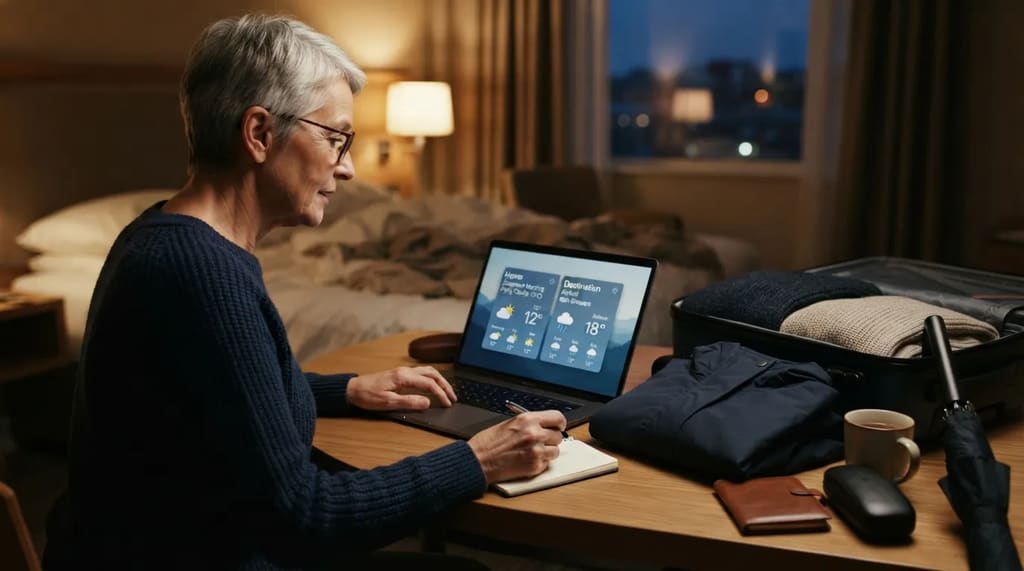
Experienced travelers check the forecast for two places, not one. They look at the morning they leave and at the place they are going.
The first tells them whether to carry a rain jacket out the door or leave a little early for slick roads. The second settles what goes on top in the carry-on.
They do it once, in the evening, and then they stop. Many argue that refreshing the forecast every ten minutes is the real mistake of travel mornings.
A forecast can nudge a plan, but it rarely rewrites one. An umbrella by the door and a sweater in the bag cover most of what the sky can throw at a traveler.
Weather is only half the story, because a forecast does nothing for you if the papers in your hand are not in order.
4. All Documents in One Sleeve
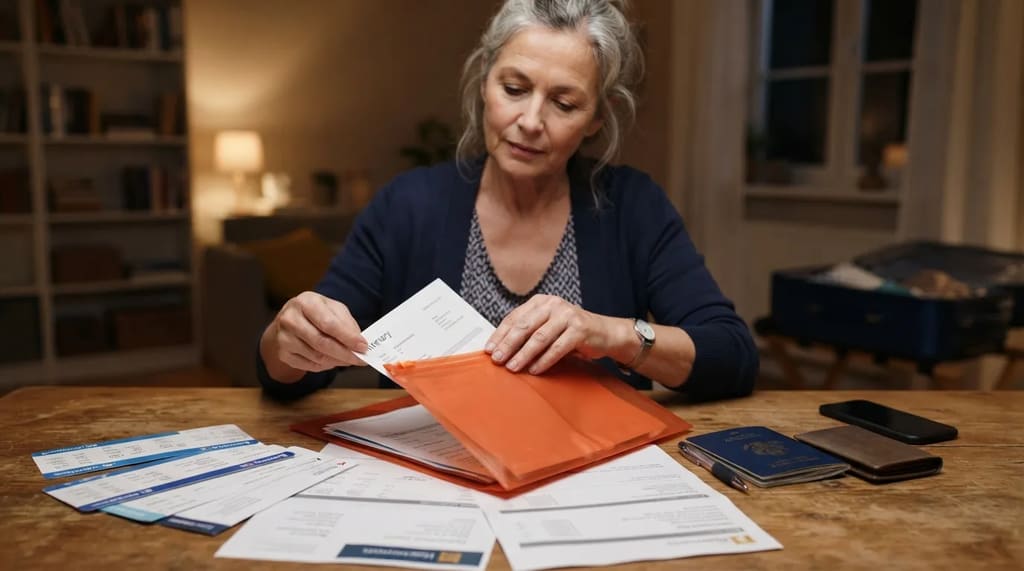
One flat sleeve, one folder, one pocket: every travel paper lives together. Boarding details, reservation numbers, hotel addresses, and a written copy of the itinerary all slide inside.
Many travelers carry a paper copy even though everything is on the phone. A dead battery or a weak signal in a train station is the usual reason.
Younger travelers often call paper old-fashioned. Plenty of veterans reply that a paper backup is the one item with no battery and no signal to lose.
Some choose a brightly colored folder so it stands out against a dark bag. A sleeve you can spot from across the room is a sleeve you rarely lose.
And inside that sleeve there is one document that gets a pocket of its own.
5. The Passport Pocket
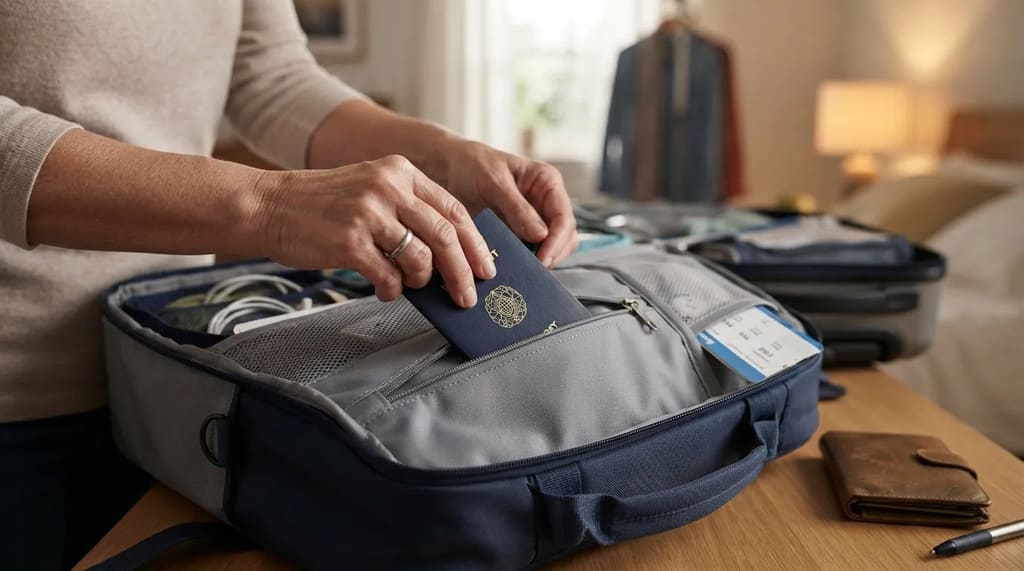
If the trip crosses a border, the passport gets its own pocket, and it never moves. Many travelers choose an inside zip pocket of the carry-on or a flat pouch under a jacket.
The rule is simple: it goes in the pocket at home, comes out at the counter, and goes straight back. TSA’s checklist also tells flyers to have ID and a boarding pass ready for inspection.
Most veterans will tell you a passport never goes into a checked bag. The night before, they also look at the expiry date, since some countries have their own rules about how long a passport must remain valid.2
Worth Knowing
- The passport rides in the carry-on or on your person, never in a checked bag.
- Some countries want a passport valid well beyond your travel dates, often around six months, though it varies by destination.2
- Check the expiry date tonight, while there is still time to think it through.
- Put it back in the same pocket every single time it comes out.
Some give the pocket a quick pat on the way out the door, the same way people check for keys. It takes one second and calms a lot of nerves.
The same pocket, every time, is the whole trick. Once the passport is settled, the next worry is a smaller object that causes a surprising amount of trouble.
6. The Charger and a Full Battery
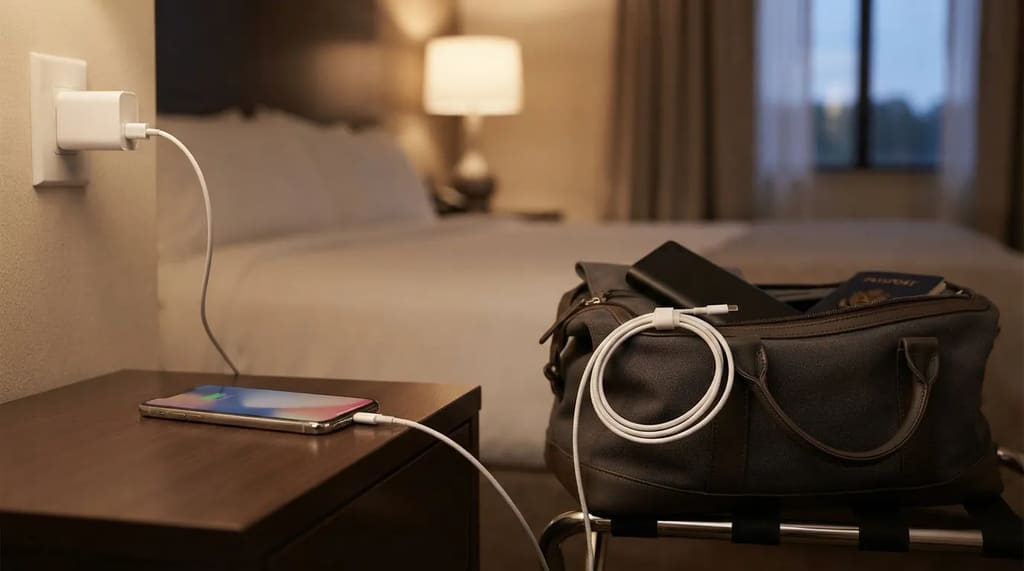
The phone gets plugged in before bed, and the cable goes into the bag the moment it leaves the wall. That one rule prevents a familiar travel mistake.
A charger left on a bedroom wall is a classic way to start a trip badly. Many seasoned travelers keep a second short cable in the carry-on all year, so there is never a decision to make.
They also think about where spare batteries and power banks go. Airline safety rules generally want those in the carry-on, not the checked bag.3
It is worth checking your airline’s current rules before you pack. A quick look at the night before beats a surprise at the counter.
The next item looks trivial, yet it is the one that starts quiet arguments at security.
7. The Water Bottle, Empty and Ready
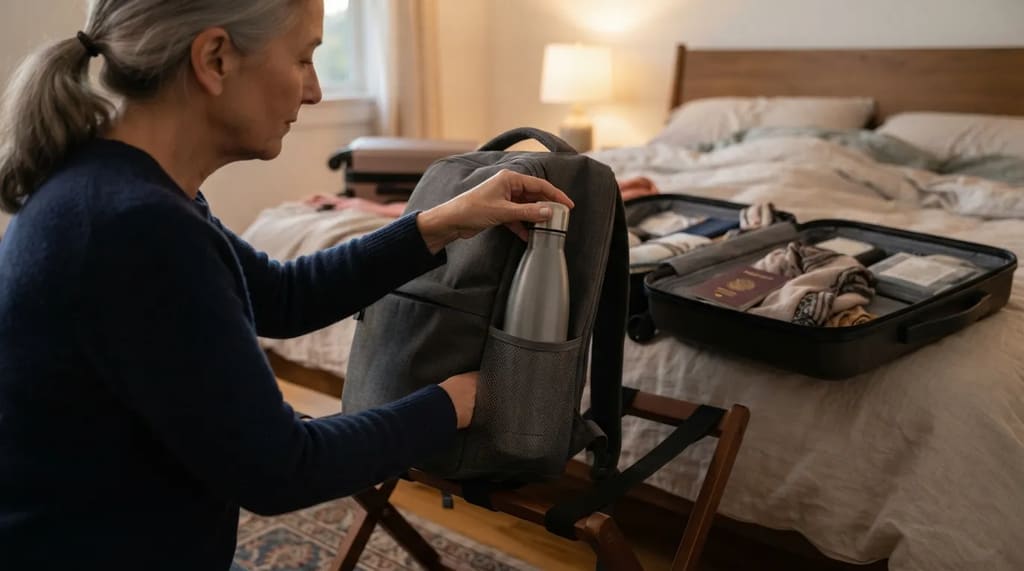
A reusable bottle goes into the bag the night before, and it goes in empty. Seasoned flyers know a checkpoint treats a full bottle very differently from an empty one.
TSA’s liquids rule limits each container in a carry-on to 3.4 ounces or less.4 That is a small amount, so a full bottle is usually emptied before the line and filled again afterward.
Quick Compare
- Empty bottle: light in the bag, simple at the checkpoint, ready for a refill station beyond it.
- Full bottle: too much liquid for a carry-on container, so it gets emptied before the line anyway.
- Best shape: one that slides into a side pocket so the bag still zips.
Many airports have refill stations past the checkpoint, and experienced travelers look for them. Some set the bottle by the door beside the shoes, so it becomes part of the same little pile.
An empty bottle weighs almost nothing and rarely gets stopped. Speaking of what a bag holds, the next ritual needs no scale at all.
8. The Bag Lifted by Hand
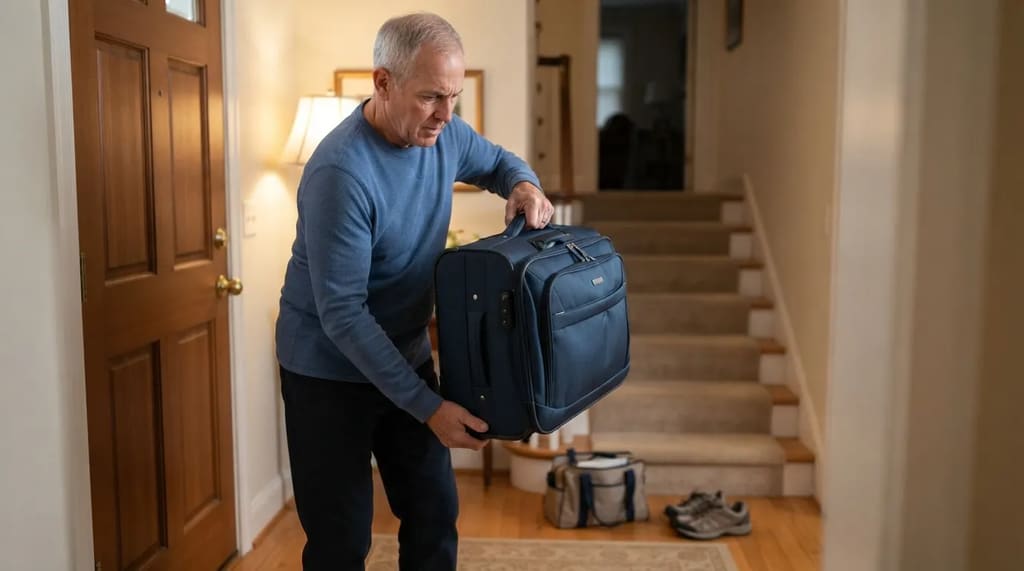
Before bed, travelers pick up the packed bag, carry it to the front door, and walk it down the steps. That is the whole test.
No scale, no guesswork. If the bag feels heavy at the door at night, it will feel much heavier on a staircase in a train station at dawn.
Many take one more thing out and lift again. Some say that if you cannot manage your own bag, you have packed for someone else’s trip, and the honest test is whether you can lift it overhead without a groan.
The best travelers treat the bag like a companion they have to walk with all day. If it complains at the front door, it will complain louder at the far end of a platform.
Once the bag passes the lift test, one small pouch inside it deserves a closer look.
9. The Ordinary Toiletry Kit
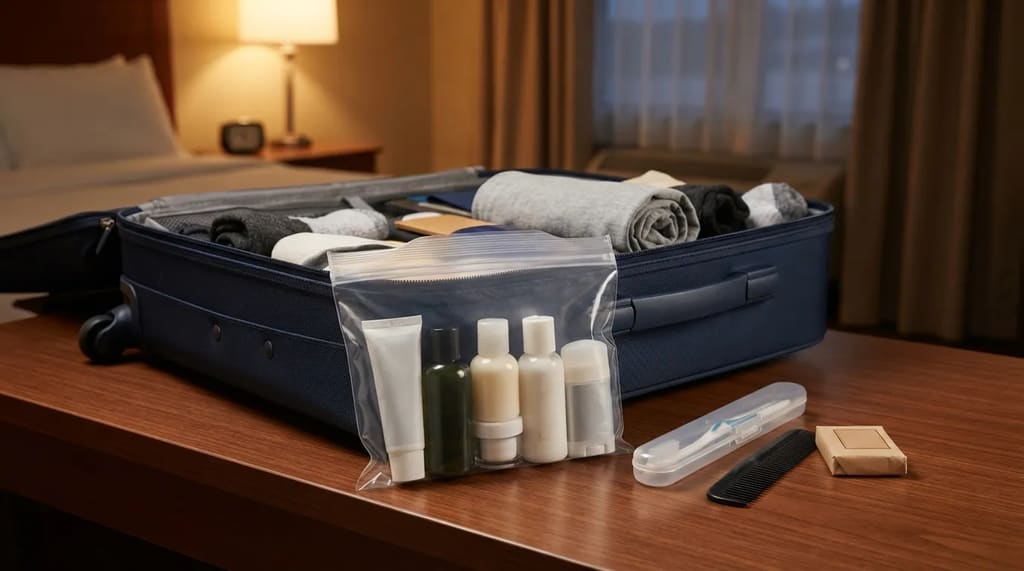
The toiletry kit is packed the night before, and it holds only everyday items. Think of a toothbrush, a comb, a small soap, and a little lotion.
The liquids rule is the reason it gets packed early. Containers must be 3.4 ounces or less, and all of them must fit in one clear quart-size bag, with one bag per passenger.4 5
TSA suggests keeping that bag in the front pocket of the carry-on so it is easy to reach. Turns out the rule also covers pastes and creams, which surprises first-time flyers.5
Veterans often keep a duplicate kit ready all year, so nothing is rebuilt from scratch each trip. A kit that lives in the suitcase is a kit that never gets forgotten on a bathroom shelf.
With the bag settled, the next ritual is about the first thing you will want in the morning.
10. The Breakfast Plan
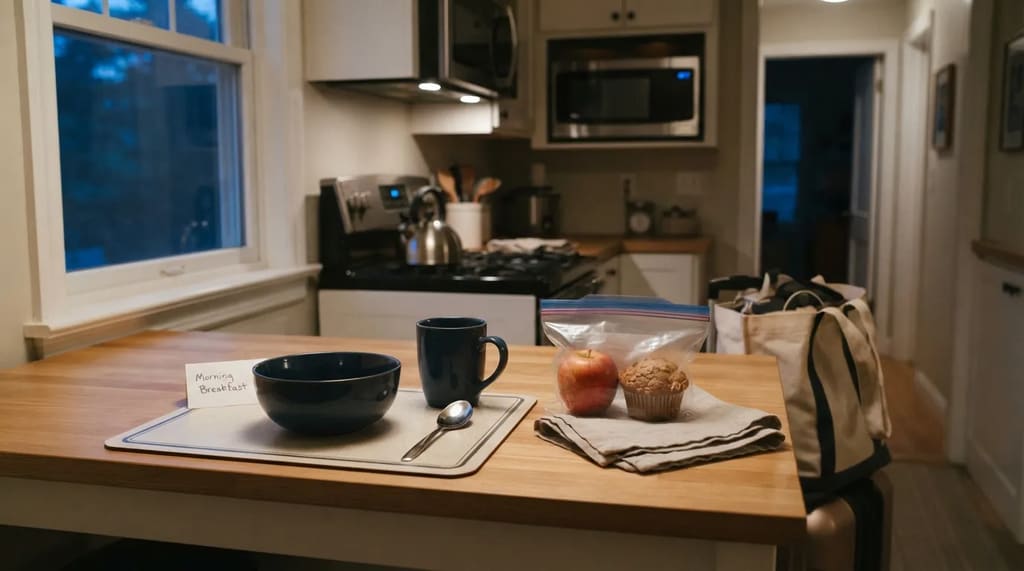
The breakfast plan is settled the night before, and it is usually one of three things. Eat at home, carry something along, or eat on the way.
Those who eat at home put out the bowl, the cup, and the spoon, so the kitchen takes five minutes. Those who carry something pack a piece of fruit or a muffin in a bag by the door.
At a Glance
- At home: bowl, cup, and spoon set out tonight, so the morning kitchen stays quick.
- Carried along: fruit or a muffin in a bag by the door, grabbed on the way out.
- On the way: a relaxed stop that works best when the ride has a built-in cushion.
Travelers heading abroad check what food may be brought in on arrival before packing fruit. Rules differ from country to country, and a forgotten apple can become a problem at the border.6
Some argue that eating at the airport is the biggest mistake of the morning, since lines are long and gates are far. Others insist that a hot breakfast on the road is half the pleasure of travel, and either way, a decided breakfast never delays a departure.
Whichever side you take, the next ritual tells you exactly when breakfast must end.
11. The Ride, Timed Backward
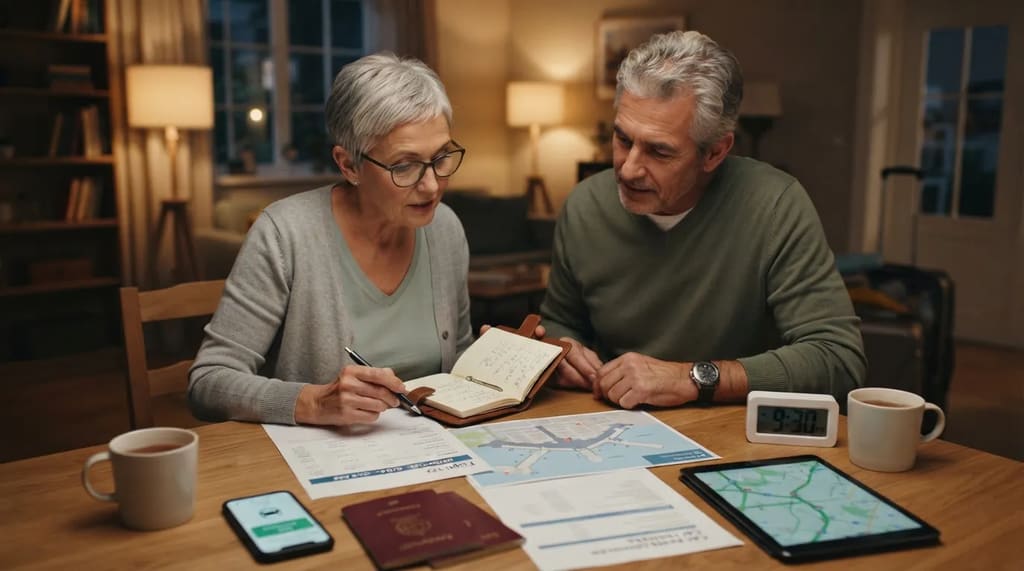
The ride is planned backward from the departure, not forward from the front door. Seasoned travelers start with the time boarding begins or the train leaves, and they subtract.
They take away the drive, the drop-off or parking, the walk to the entrance, and the line at the checkpoint. The answer is the time they walk out the door, and most add a cushion for traffic.
They also confirm the ride itself. A neighbor’s lift, a taxi booked, a shuttle time, or the route to the station gets checked once more.
Many call arriving just in time a young person’s game, and every veteran refuses to shave the cushion. They would rather read a book at the gate than sprint toward it.
Still, the whole schedule falls apart without the next item.
12. The Alarm, Set Twice
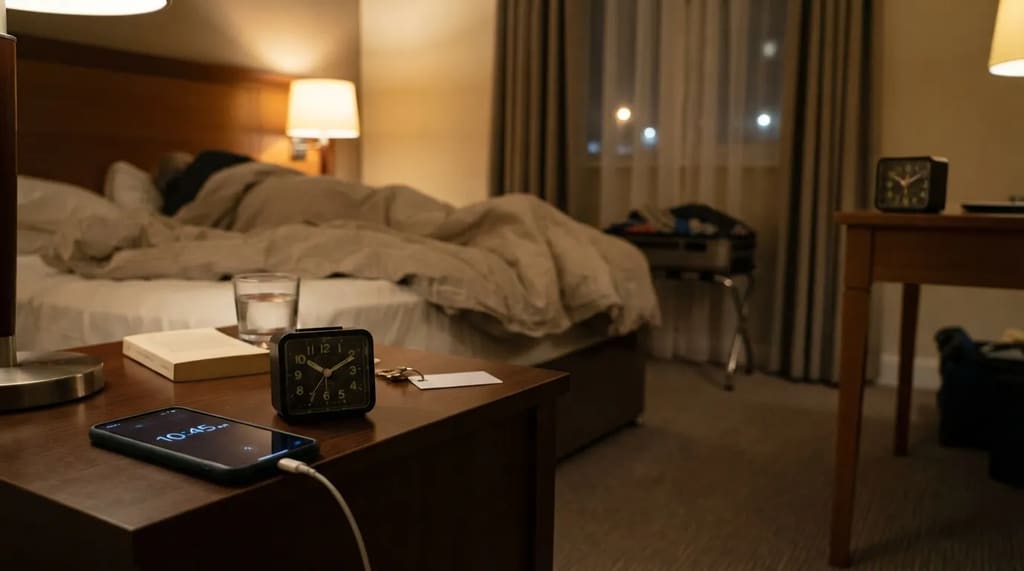
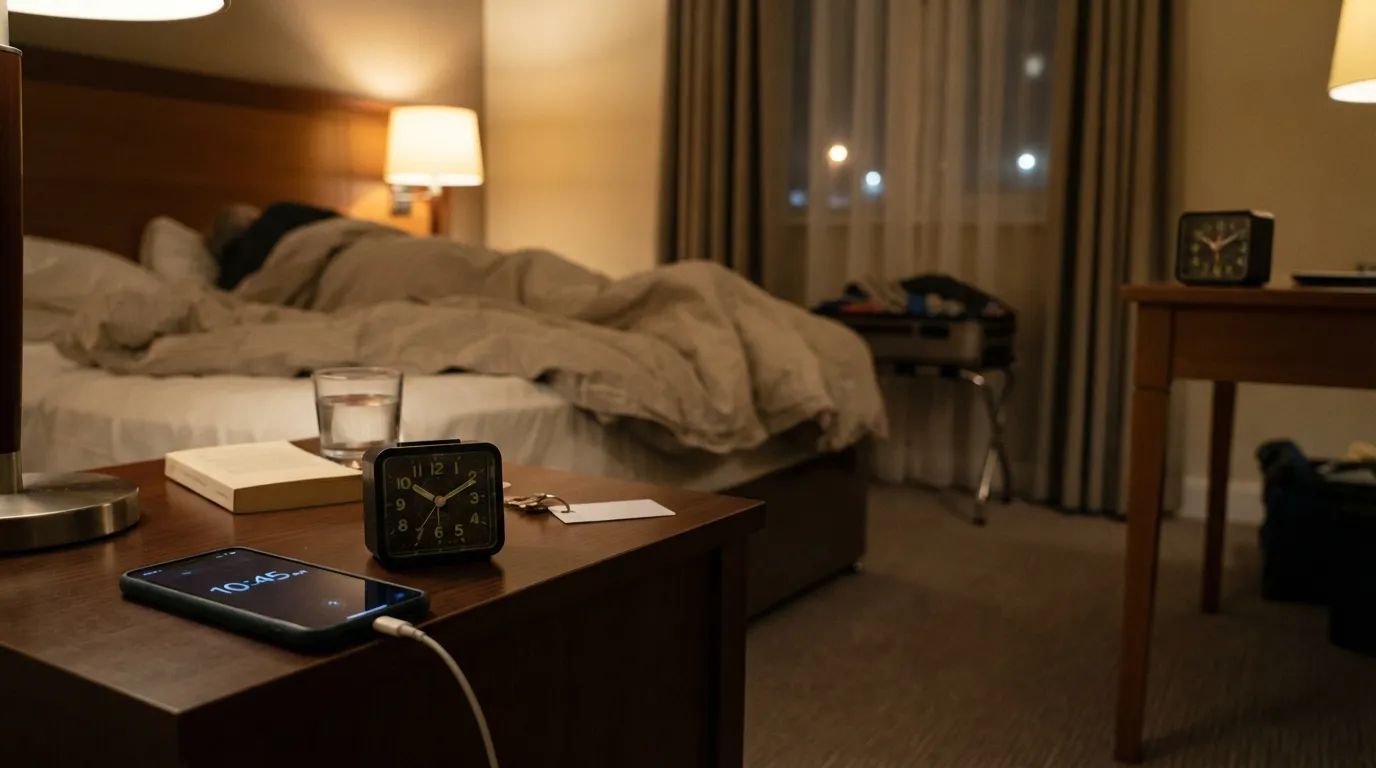
Most seasoned travelers set two alarms, and they put them in two different places. The phone is one, and a plain bedside clock or a second device is the other.
The reasoning matches the paper copies. A phone left on a strange setting, or a battery that quietly ran down overnight, can ruin a plan that took weeks to build.
They also check the alarm itself. Setting it for PM instead of AM is the oldest mistake in the book.
Some travelers say a phone alone is a gamble, while others trust it completely. The ones with two alarms tend to sleep better either way.
With the wake-up time secured, attention turns to the house you are about to leave behind.
13. The Lights and Switches at Home
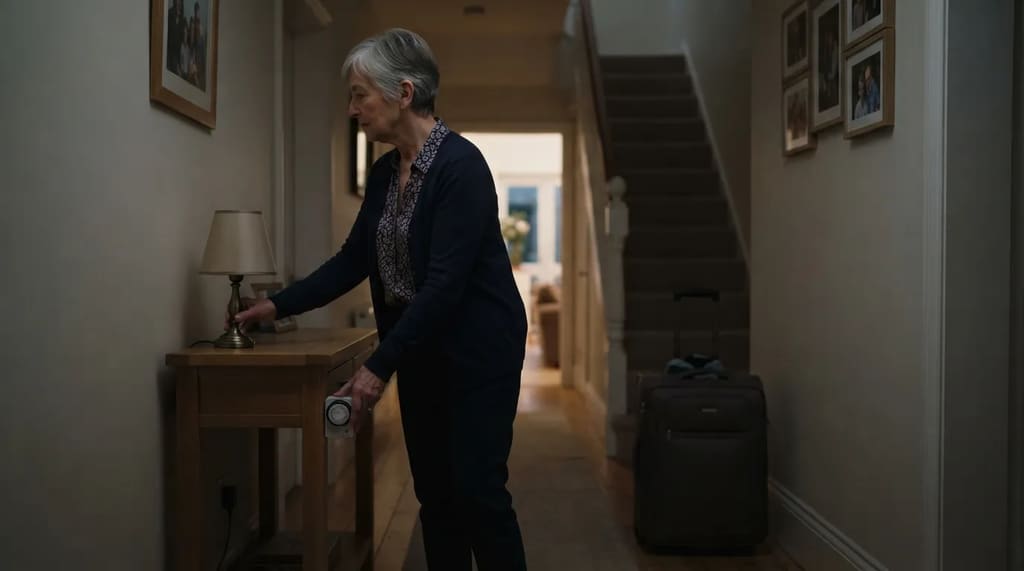
The night before a departure, travelers decide which lights will be on while they are gone. Some leave one lamp on a timer, and others leave none at all.
Then comes the quiet walk through the house. Windows are latched, the back door is locked, and small appliances are switched off at the wall.
Anything that announces an empty house gets cleared away, such as a stack of flyers on the step. Opinion is split on timers: plenty of travelers swear by them, and others call them an obvious giveaway.
Many finish by standing in the dark hallway for a moment and listening. A house that is quiet and settled makes it easier to walk out the door without looking back.
Related Stories From Travelbinger



But no house is ever fully ready without one more person who knows the plan.
14. The Note for the Neighbor
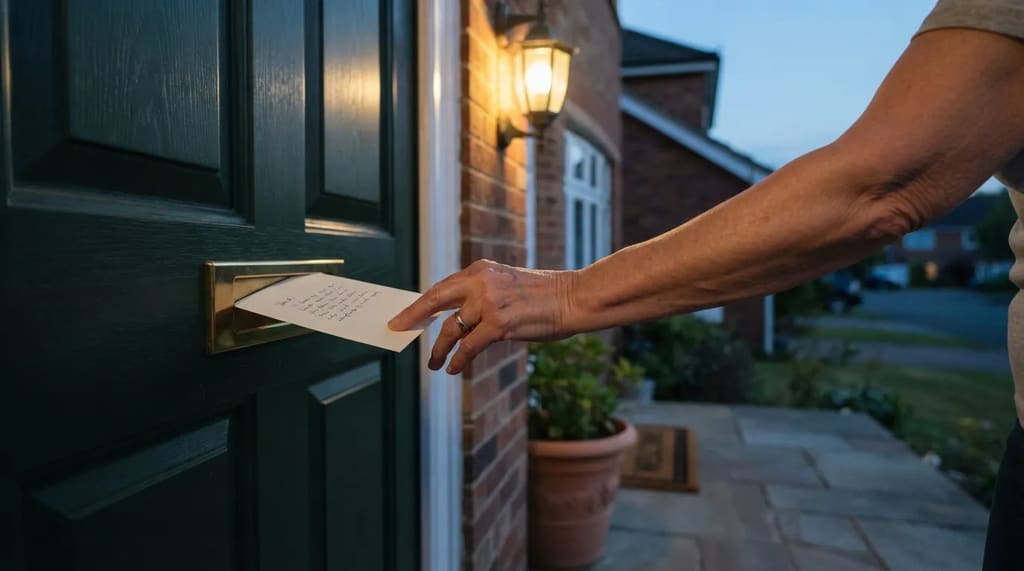
A short note for a trusted neighbor is on many travelers’ list the night before. It gives the dates away, who holds the spare key, and a phone number to reach you.
Some slip it under the door, and others knock and say it in person. Either way, one name on the street now knows the house is empty on purpose.
Fast Facts
- Dates you will be away, written plainly.
- A phone number where you can be reached.
- Who holds the spare key, if anyone does.
- One small request, such as watering a plant or collecting the mail.
Veterans keep it brief, and the best note is the one that fits on a single card.
A neighbor who knows the plan is also a pair of friendly eyes on the street. A porch light that stays on, a parcel brought in, a curtain that gets opened all say the house is looked after.
Privacy-minded travelers disagree and say the fewer people who know, the better. That debate aside, there is one last check still waiting at the front door.
15. The Final Walk-Through at the Door
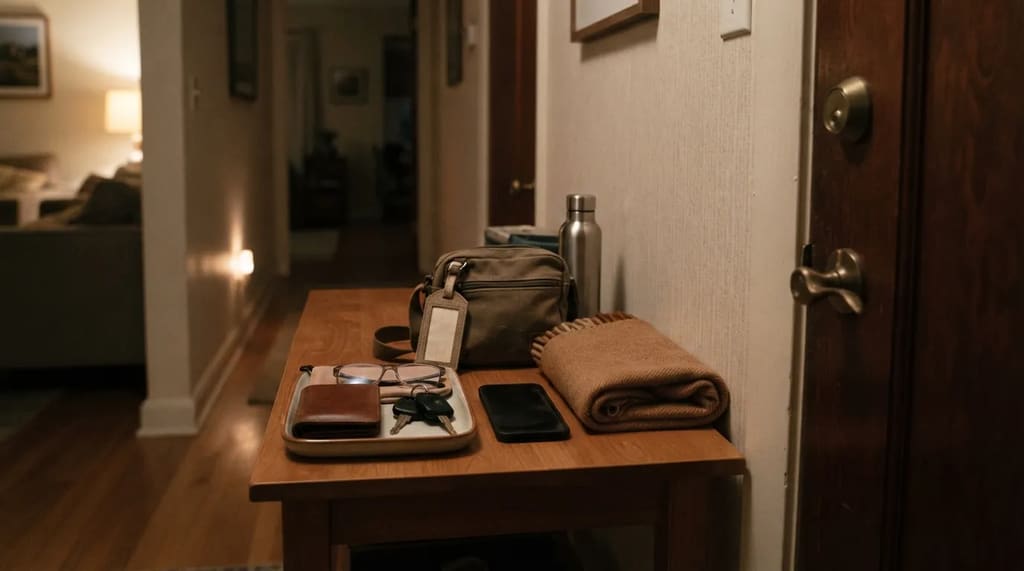
The last ritual before bed is a slow pass by the door, naming each item out loud. Keys, wallet, phone, glasses, sleeve, bag, and bottle all get a look.
Many call it the touch-and-name check. They look at each item, say its name, and the whole list takes under a minute.
Seasoned travelers put everything in the same spot every time, a tray or a chair near the door. Reading glasses, usually left beside the bed, are the item most likely to be forgotten.
The pile by the door becomes a picture the mind can hold. In the morning, a glance is enough to tell whether anything is missing.
Skeptics find it silly. The ones who have turned back at the end of the road tell a different story, and there is still one ritual left that veterans call the most important of the sixteen.
16. Lights Out, Early

The final ritual is the one that makes all the others pay off: going to bed early. Seasoned travelers treat an early bedtime as part of the packing list.
By then, nothing is left to do. The outfit is on the chair, the shoes are by the door, the bag has been lifted, and the alarm is set twice.
Many say this is the part that feels most like a reward. They put the phone down, glance once at the clock, and turn off the lamp.
Actually, the secret is hiding in plain sight. Nothing in the morning needs a decision.
The first fifteen rituals prepare the departure, and the sixteenth lets you arrive as a traveler rather than a casualty of the schedule.
Closing Thoughts
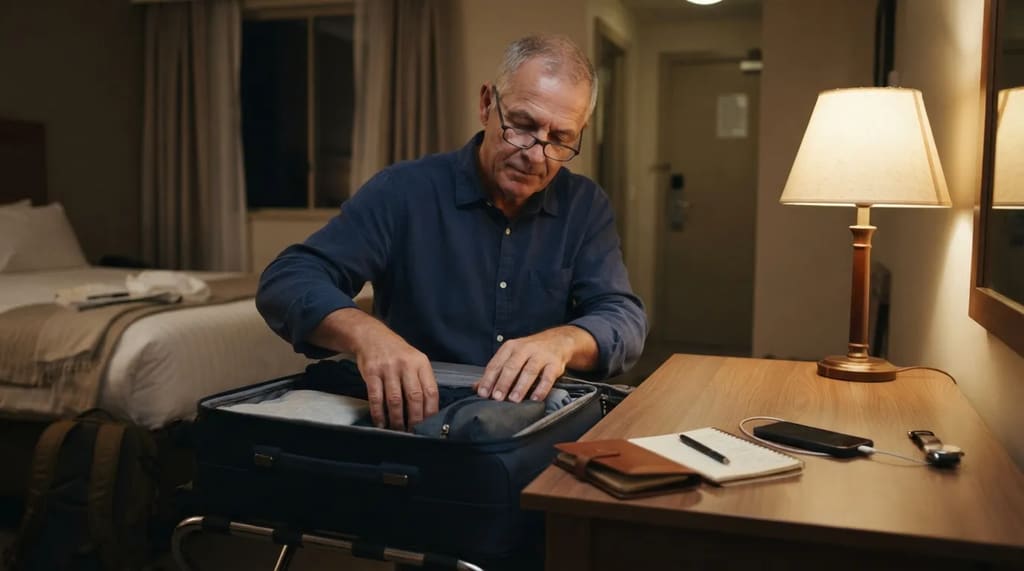
None of these habits is dramatic, and almost none of them takes more than a few minutes. Together they move the thinking, checking, and worrying to the evening, when there is time to do it properly.
Travelers over sixty did not invent the idea, but many of them have refined it through years of early departures. Pick the rituals that fit your trips, and let the morning stay simple.
The best departures often look effortless from the outside. The effort just happened the night before, quietly, under a single lamp.
Bonus: The Insider Trick Nobody Tells You
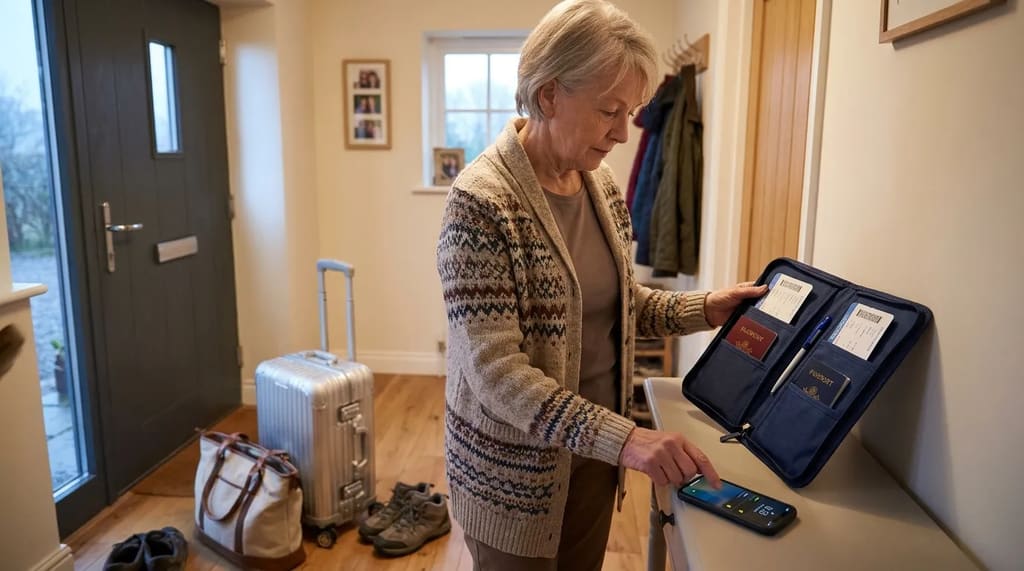
Set a third alarm, and make it a leave-the-house alarm rather than a wake-up alarm. A wake-up alarm tells you when to rise, but nothing tells you when to walk out the door.
- Take the walk-out time you calculated in the backward-timed ride ritual and set an alarm for that exact minute.
- Label it Shoes on, door open so the words do the nagging for you.
- Set one more reminder fifteen minutes earlier, labeled Last look, and use it for the touch-and-name check at the door.
- Tonight, photograph the pile by the door and the open document sleeve, and compare them with the real thing in the morning.
Breakfast, coffee, and a chatty neighbor can quietly eat a cushion you spent all evening building. A labeled alarm turns the plan into a signal you cannot talk yourself out of.
- CBS News Shoes-Off Policy: https://www.cbsnews.com/news/tsa-aiports-shoes-off-on-airport-security-cbs-news-explains/
- State Department Passport Validity: https://travel.state.gov/content/travel/en/passports/passport-help/faqs.html
- FAA PackSafe Lithium Batteries: https://www.faa.gov/hazmat/packsafe/lithium-batteries
- TSA 3-1-1 Liquids Rule: https://www.tsa.gov/videos/travel-tips-3-1-1-liquids-rule
- NerdWallet 3-1-1 Liquids Guide: https://www.nerdwallet.com/article/travel/3-1-1-liquids
- CBP Bringing Food Into U.S.: https://www.cbp.gov/travel/international-visitors/agricultural-items