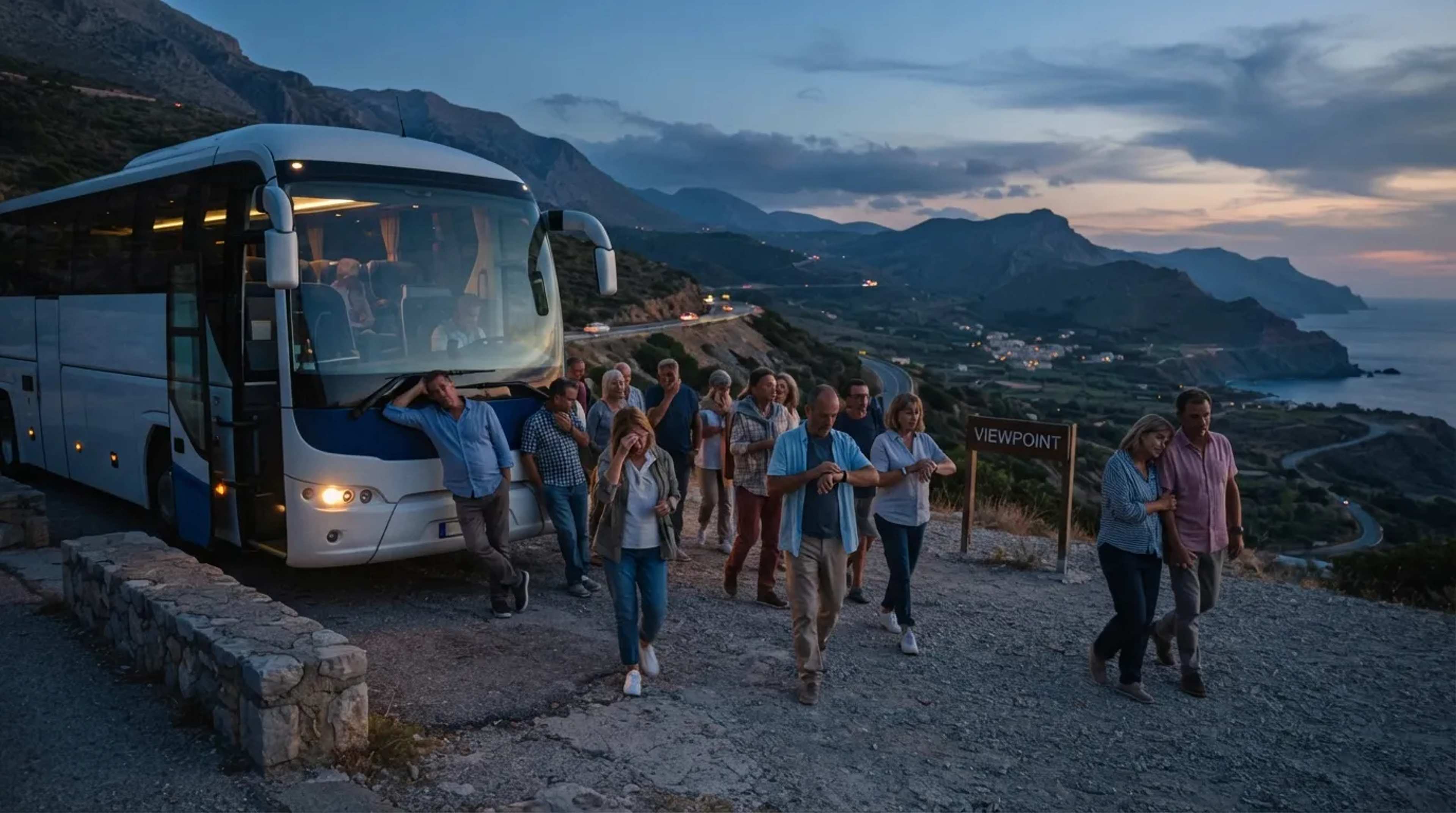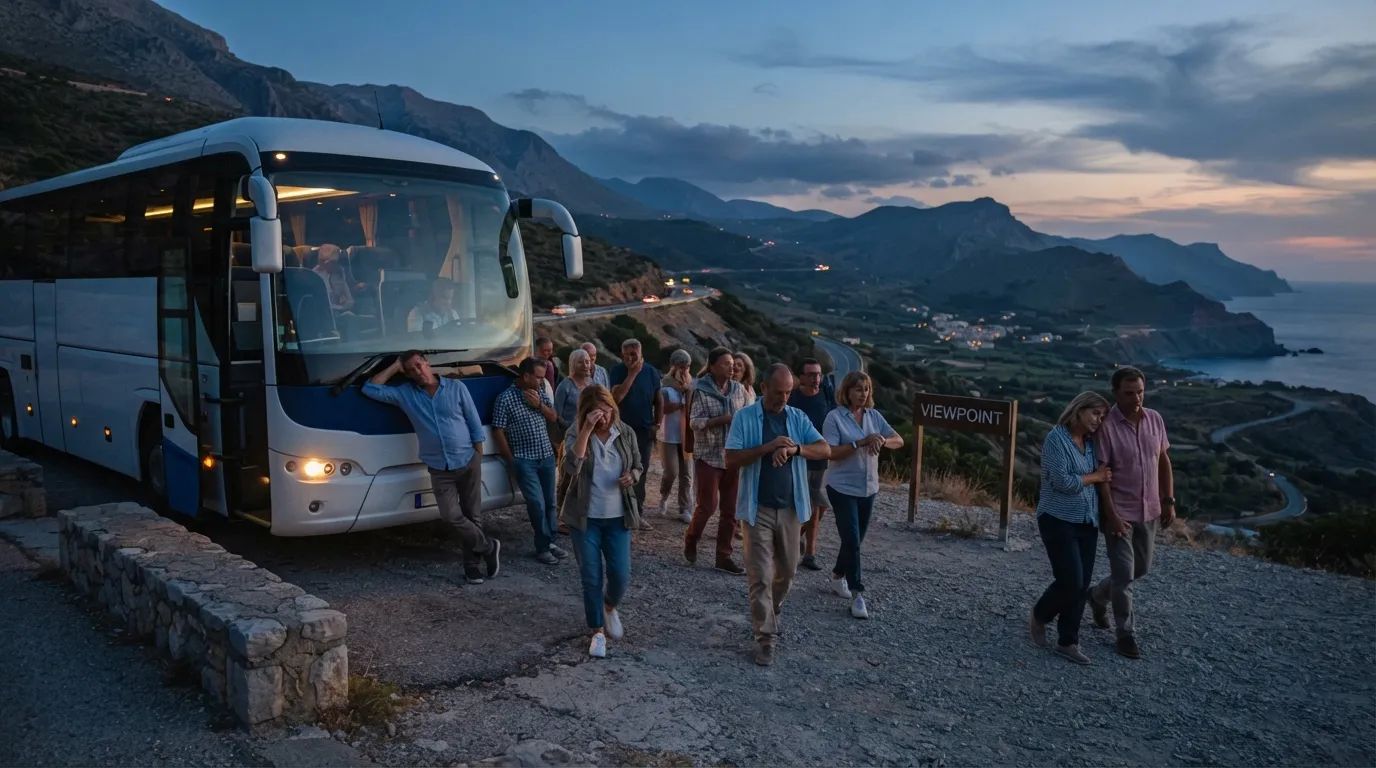
You probably think a coach driver just steers, stays quiet, and watches the road. Not quite. From behind the wheel, with a big mirror showing the whole cabin, a driver is quietly reading a rolling mini-society. Plenty of drivers say they can size up a group’s mood, organization, and manners before the first ten miles are behind them.
The clues aren’t the ones you’d guess. It’s not the loudest person or the biggest tipper. It’s a pile of luggage, a row of seats nobody will touch, and a silence that arrives at the wrong moment. And the clue drivers talk about most comes at the very end of the trip, right when everyone assumes the driver has stopped paying attention.
#15 – The Luggage Pile Tells the Driver How the Day Will Go
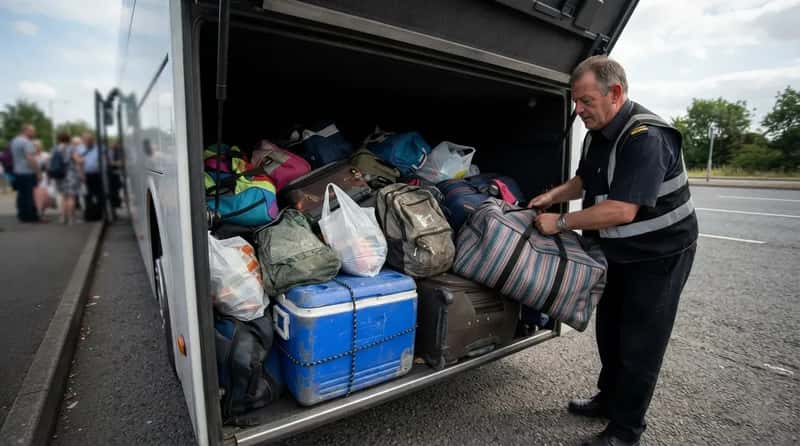
Drivers say loading the luggage bay is the first real preview. A group with matching bags, tags, and a tidy stack is usually a group with a plan. A heap of mismatched duffels, loose shopping bags, and one suspiciously heavy cooler usually means a looser day ahead.
Then there’s the item that wasn’t supposed to come. Coach luggage bays are big, but they aren’t bottomless, and every driver has a story about a last-minute oversized bag. The bay is often the first place a schedule starts slipping. A group that loads in ten minutes tends to unload in ten minutes. But the next clue shows up once everyone boards, and it’s all about seats…
#14 – The Back Row Rush Draws the Group’s Social Map in Sixty Seconds
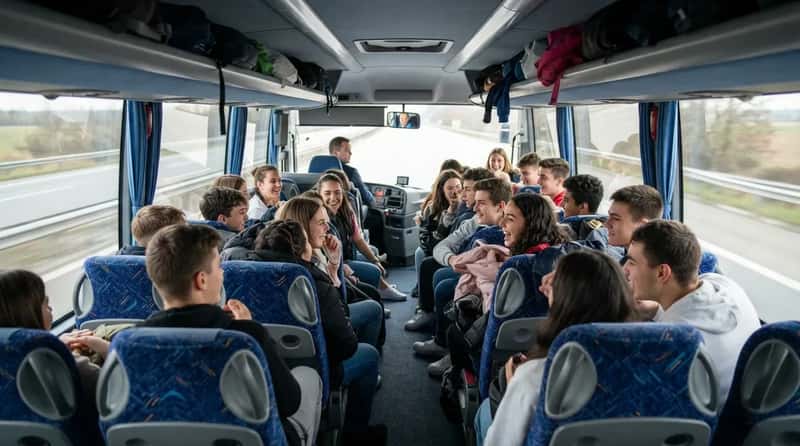
Within the first few minutes, drivers can usually tell who wants to be seen and who wants to disappear. The back rows fill first with friends who want to talk, laugh, or nap without an audience. By the time the doors close, the group’s pecking order is already sketched out in the mirror.
They also notice who gets stuck with the awkward seats. Sometimes it’s the one person who arrived alone. A group that waves that person over usually has a relaxed, friendly day coming. Drivers say the seating shuffle predicts the mood better than any itinerary.
But the seats nobody wants tell an even funnier story, and that’s #13…
#13 – The Empty Front Seats Nobody Dares to Touch
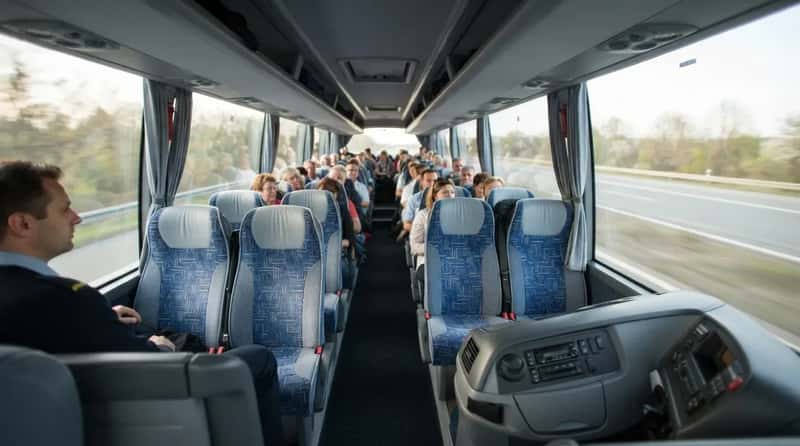
Ask almost any coach driver and they’ll mention the front rows sitting empty. Groups treat them like the teacher’s desk, an invisible boundary nobody wants to cross. Drivers call it one of the most predictable group habits there is.
Why It Stands Out
- The front rows usually offer the widest windshield view.
- They tend to have the least bounce on the whole coach.
- Drivers say the best chats start once someone finally sits there.
- Most groups still leave them empty until the very last boarder.
The irony is that those seats are often the smartest pick on board. One brave front-row passenger can change the whole feel of the trip. Most travelers think the back is the fun zone, but many drivers quietly argue the front is the better deal. Meanwhile, someone else in the group is doing something that tells the driver even more…
#12 – Whoever Holds the Clipboard (or the Phone) Really Runs the Day
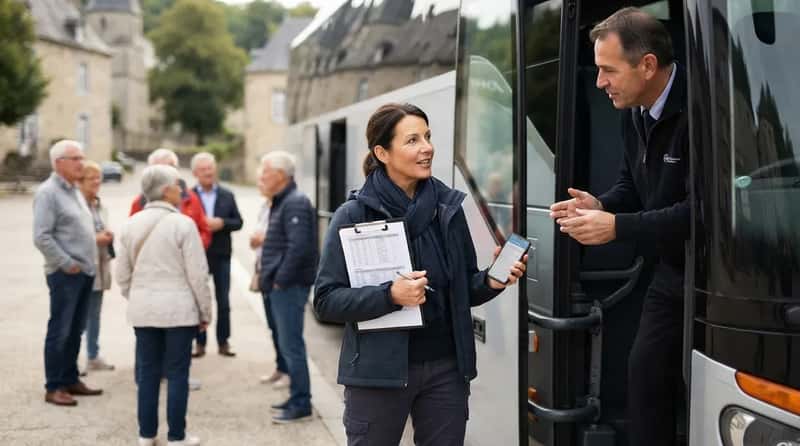
Every group has a real leader, and it isn’t always the person with the title. Drivers can spot the one who’s actually in charge by who gets approached with questions. Sometimes that’s a teacher or tour escort. Sometimes it’s a quiet aunt with a printed schedule.
A clear leader makes a driver’s day easier, because stops and times are settled before anyone asks. Without one, a driver can get five different directions from five different people. The most stressful groups are the ones with no single point of contact. And the leader’s habits show up in the very next thing drivers notice…
Because the leader’s attitude spreads to everyone, starting with how people say hello.
#11 – The First “Good Morning” Is a Weather Forecast for the Whole Trip

Drivers say the boarding greeting is a surprisingly good forecast. A group that looks up, nods, and says hello usually keeps that energy all day. A group that files past with eyes glued to phones often treats the driver like part of the vehicle.
It’s a small thing, but drivers notice it every time. They spend long days with strangers, so real friendliness stands out. Many drivers say they can guess the noise level and the mood from boarding alone. It’s not science, just pattern recognition from thousands of miles. And the next clue is one you can smell…
Because food smells travel fast in an enclosed cabin.
#10 – The Snack Bag Exposes Who Thought About the Cabin
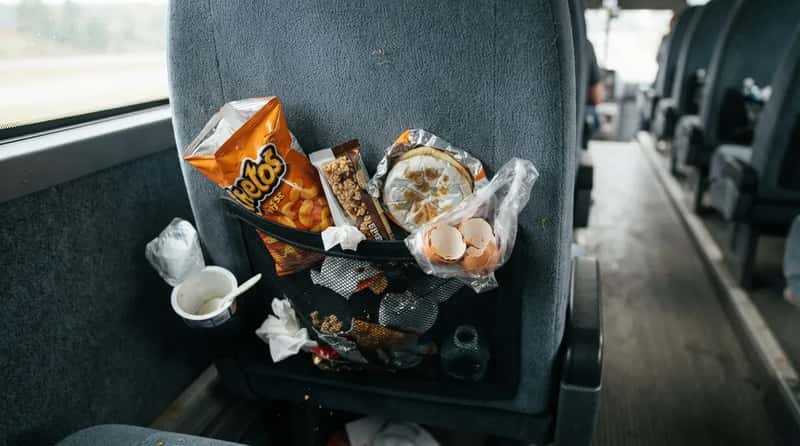
A sealed coach turns one strong-smelling lunch into everyone’s problem. Hot, pungent food in a closed cabin can fill the air within minutes. Groups that bring dry, easy snacks are usually thinking about the people around them, whether they realize it or not.
Quick Compare
- Cabin-friendly: crackers, granola bars, pretzels, whole fruit.
- Cabin-risky: hot fast food, tuna, boiled eggs, anything heavy on garlic.
- Cleanup test: wrapped snacks vanish into a bag, while crumbly or sticky ones end up in the seat pocket.
Then comes the aftermath. Many drivers walk the aisle at the end of a trip, and the state of the floor tells them a lot. A tidy cabin at drop-off is one of the clearest signs of a considerate group. Wrappers stuffed into seat pockets are the quiet complaint nobody ever hears. But the thing that really tests a driver’s patience comes next…
#9 – The Restroom Request That Hits Ten Minutes After Every Stop
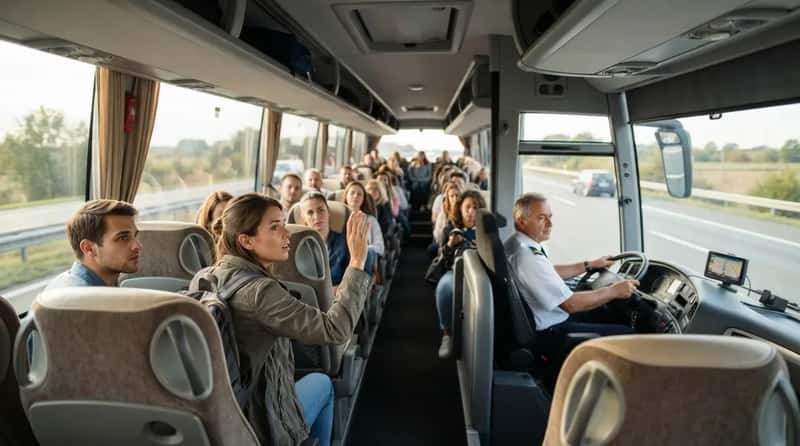
Drivers swear this happens on nearly every trip. The group leaves a rest area, and almost right away someone needs to go. It’s so common that experienced drivers plan around it.
Not every coach has a restroom, and pulling a big vehicle onto a highway shoulder is rarely a safe option. A “quick stop” can cost far more time than passengers realize, because safe places for a large coach to pull off are limited. Groups that use the facilities before departure save everyone the trouble.
And that’s tame compared to what a restless group does to the volume, which is #8…
#8 – The Volume Meter Never Stops Running
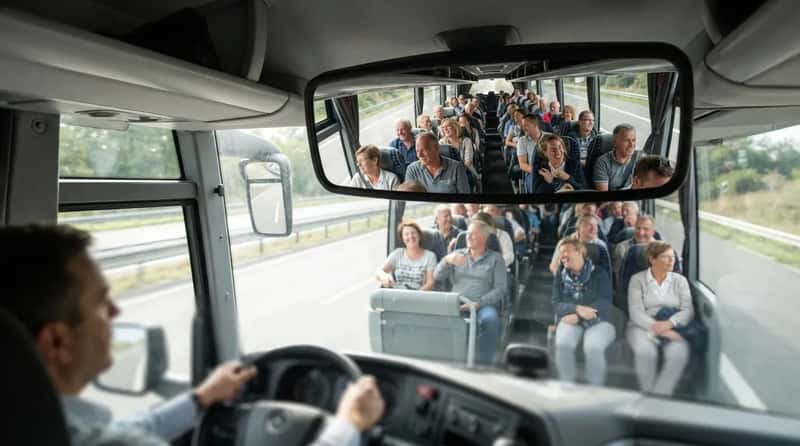
Drivers hear everything. A coach cabin carries sound surprisingly well, and the driver sits right at the front of it. Many describe a predictable curve: loud early, quiet midday, loud again after lunch.
What worries them isn’t laughter. It’s sudden silence, or an argument that rises fast. Drivers glance at the mirror for exactly that. A cabin that goes quiet all at once can mean someone isn’t feeling well. Experienced drivers learn to check the mirror when the noise shifts, not just when it gets loud.
Still, nothing tests a group like a stop, because the driver is counting heads, as you’ll see in #7.
#7 – The Headcount Habit Separates the Pros From the Chaos
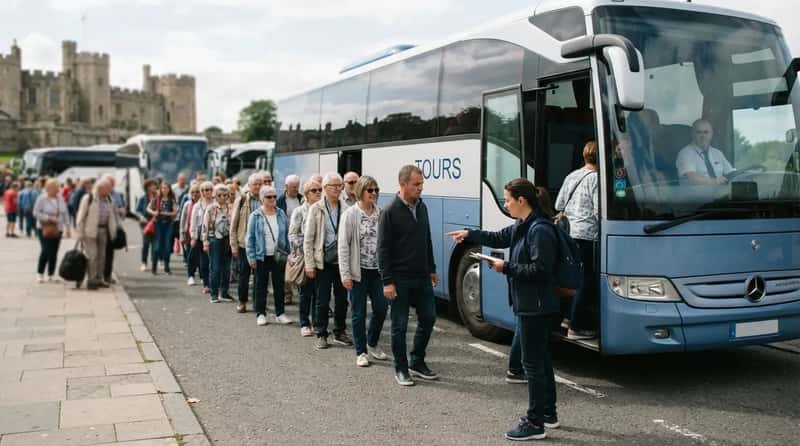
Drivers notice right away whether a group counts itself. Disciplined groups have someone who counts on the way out and again on the way back. Chaotic groups assume somebody else is keeping track.
At a Glance
- When: once leaving the coach, once before it rolls out.
- Who: one named counter, not “everybody.”
- Time: about thirty seconds per count.
- Risk: one missing person can reshuffle the whole schedule.
The consequence is real. Drivers have waited, called, and circled back for passengers who wandered off. One missing person can unravel an entire day’s schedule. The groups that count are usually the ones who finish on time. But the next detail is physical, and it quietly makes some people miserable…
#6 – The Peaceful Sleeper and the Quietly Queasy Look Very Different

Drivers learn to tell a sleeper from a sick passenger. The sleeper is slumped and peaceful. The queasy one is pale, still, and staring straight ahead. Both are common, and both get noticed.
Motion sickness is a real issue on winding roads, and a smooth driver can only do so much. The earlier a passenger speaks up, the easier it is to help. Waiting until the last minute is the most common mistake drivers see. A group that checks on its quiet members earns high marks.
But what drivers see down at floor level is a different story, and it’s #5…
#5 – Feet on the Seats Say More Than Any Rulebook
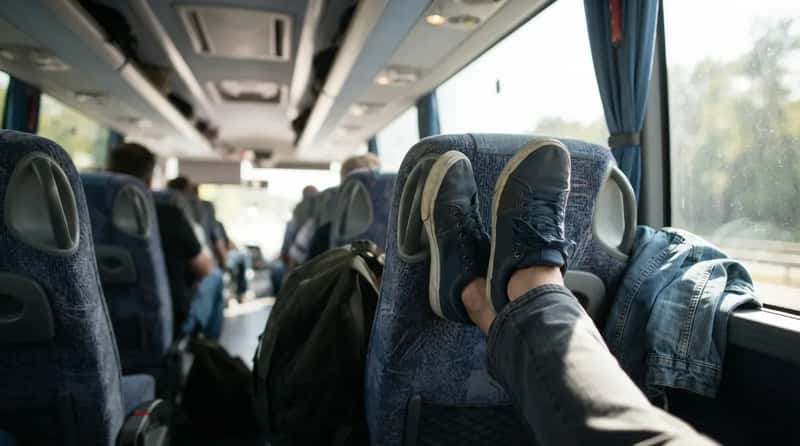
It’s a tiny act, and drivers see it constantly. Feet go up on the seat in front, a jacket gets draped over a window, a bag blocks the aisle. Some groups treat the coach like a shared space, and others treat it like a private living room.
Drivers aren’t just being picky. The coach often goes out again the same day with another group. The mess from one trip can become the next group’s first impression. Careful groups keep aisles clear too, which matters for safety, not just tidiness. And speaking of safety, the next item may surprise you…
Because it involves a buckle that most groups forget.
#4 – The Seat Belt Surprise Most Passengers Don’t Expect
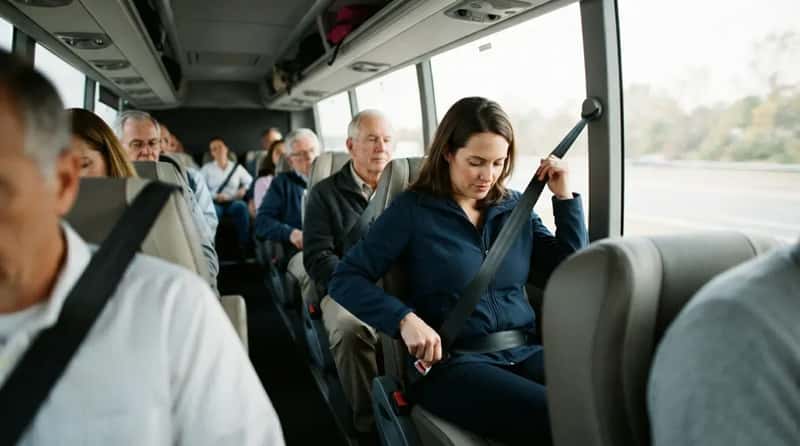
Many people assume buses don’t have seat belts. Newer coaches do. Federal rules require lap and shoulder belts on new motorcoaches built since late 2016. Drivers notice who clicks in without being asked and who treats the belt as optional.
Fast Facts
- The federal rule applies to new motorcoaches built on or after November 28, 2016.
- The belts are the lap-and-shoulder type, not just a simple lap strap.
- Older coaches still on the road may not have them.
- Drivers generally can’t allow anyone to stand while the coach is moving.
Groups that buckle up on their own usually have a safety-minded leader. Groups that need reminders tend to need them again and again. The belt is there for the one moment nobody plans for. And one more habit separates the easy groups from the exhausting ones…
#3 – The “Just One More Stop” Group Drivers Know by Heart
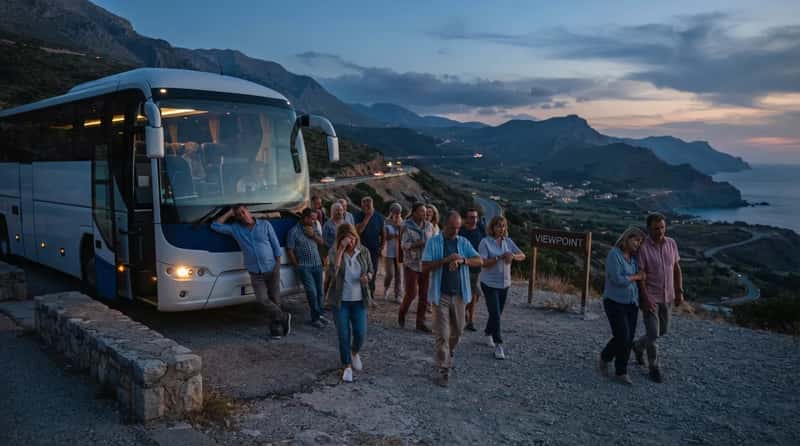
Every driver knows this group. The schedule says three stops, but the group wants six. Each extra one sounds tiny, until evening arrives and everyone is exhausted.
Here’s the controversial part. Many drivers argue that overpacked itineraries ruin more trips than bad weather ever does. The stop everyone insisted on is often the one nobody remembers. A realistic plan leaves breathing room. The happiest groups, drivers say, pick fewer stops and actually enjoy them.
Yet the schedule isn’t only about enjoyment, and that brings us to #2…
#2 – The Invisible Clock the Driver Can’t Beat
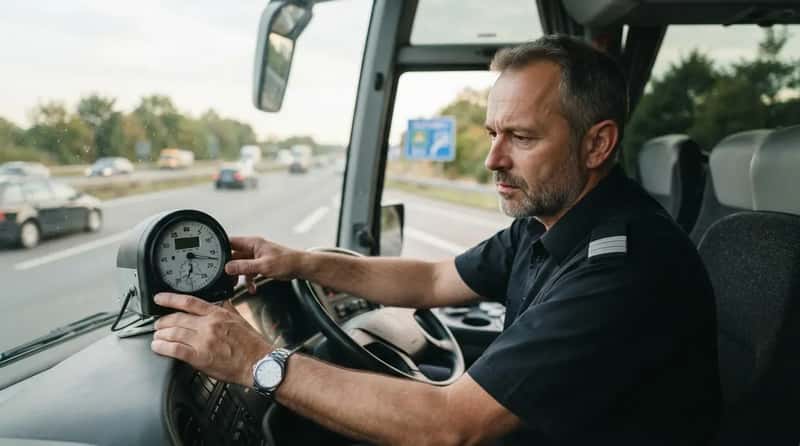
Drivers notice quickly who understands that they can’t just keep going. Their hours are regulated, and they can’t drive past the legal limit to make up for lost time. A group that assumes otherwise is in for a rough conversation.
Under federal rules, passenger-carrying drivers have a cap on both driving time and on-duty time. A late start can quietly force a driver to cut the evening short. Groups that respect the clock tend to plan earlier departures. Groups that don’t often find out the hard way at the end of the day.
But the single biggest tell, the one drivers talk about most, happens at the very end…
#1 – What Happens at the Last Stop, When the Doors Open for Good
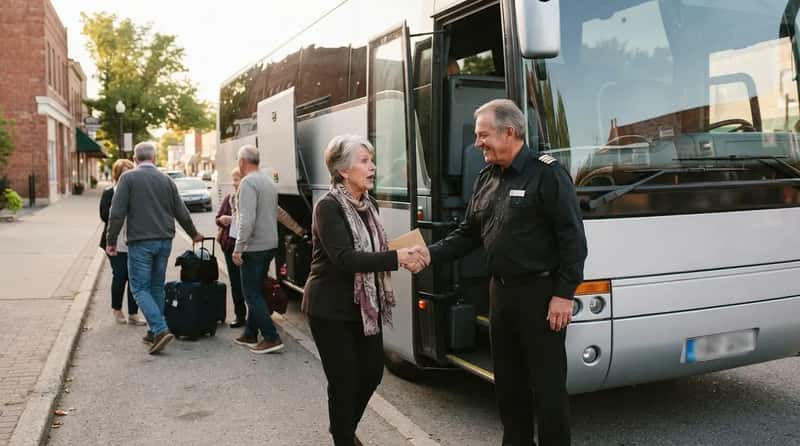
This is the one drivers remember. When the doors open for the final time, some people file out without a glance. Others stop, say thank you, and even use the driver’s name.
Tipping is customary in the U.S. for coach drivers, though amounts vary and it’s never guaranteed. But drivers say the acknowledgment sticks longer than the envelope. A sincere “thanks for getting us home safe” can stay with a driver for years. They’ve spent the day watching everyone’s belongings and everyone’s safety. The group that notices that is the one they’d happily drive again.
By the time the coach is ten miles down the road, the driver usually has a pretty good read on who’s aboard. The biggest clues are small ones: a hello at the door, a buckled belt, a headcount nobody asked for.
Nobody is grading anyone, but somebody up front is always watching. The best groups make that read easy, and they’re the ones a driver remembers long after the bus is empty.