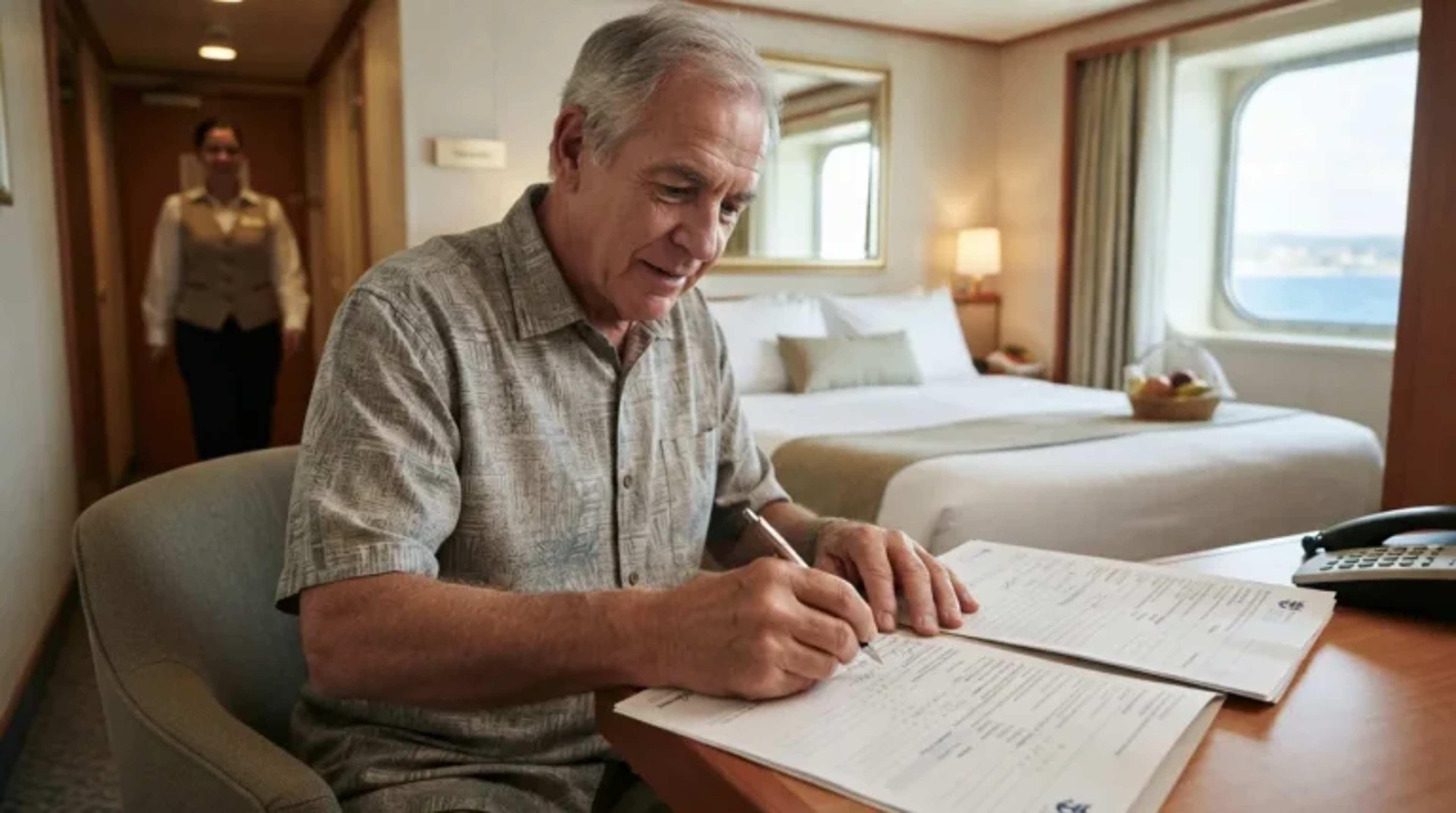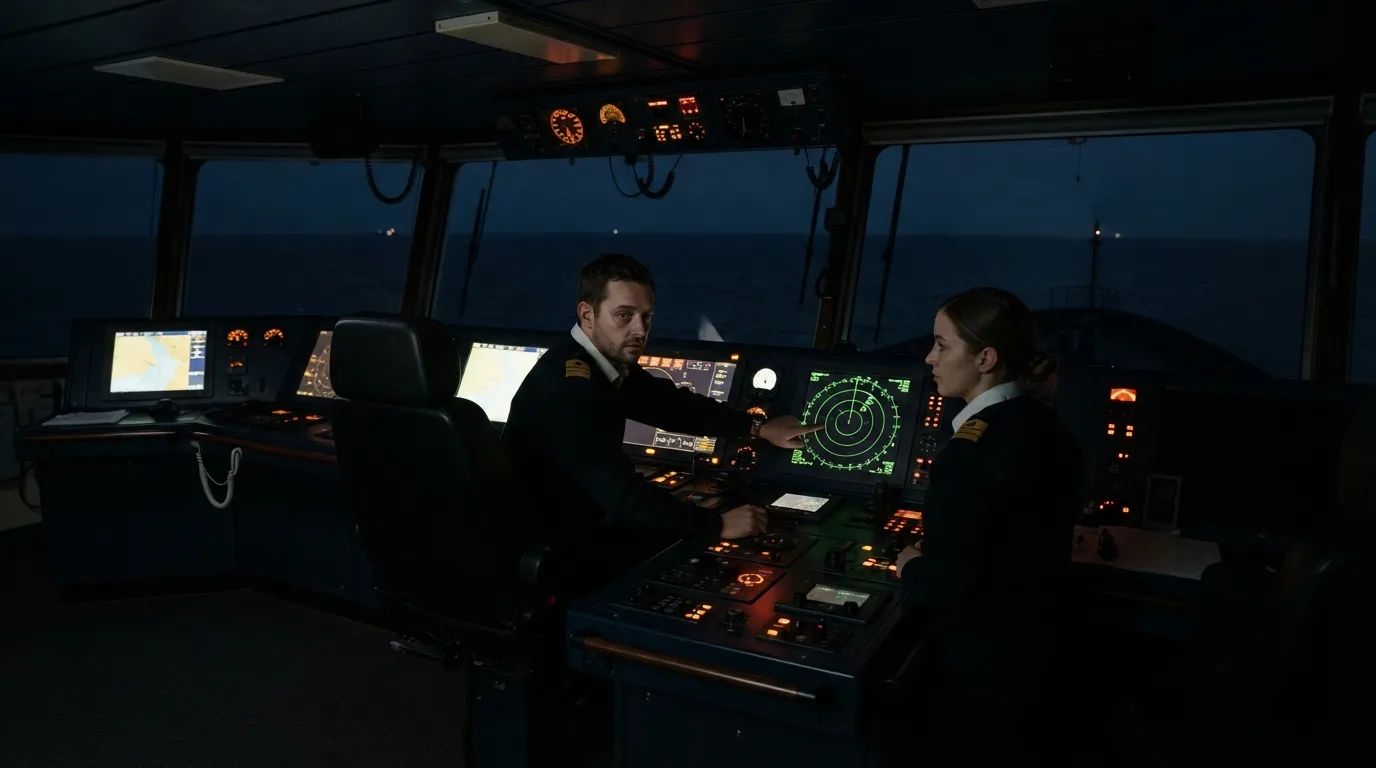
Most passengers assume the ship falls asleep right along with them, drifting through the dark like a resort running on autopilot.
They could not be more wrong.
While the pool deck sits empty and the buffet lights dim, a small, disciplined crew of navigators, engineers, and security officers is running a shift that never actually stops.
Deck officers who have spent years standing the midnight watch describe a side of cruising passengers never see – one built on split-second judgment calls, legal accountability, and a level of vigilance most vacationers would never expect above their heads.
Here is what actually , according to the people who live it every single night.
18. The Ship Never Actually Stops Moving
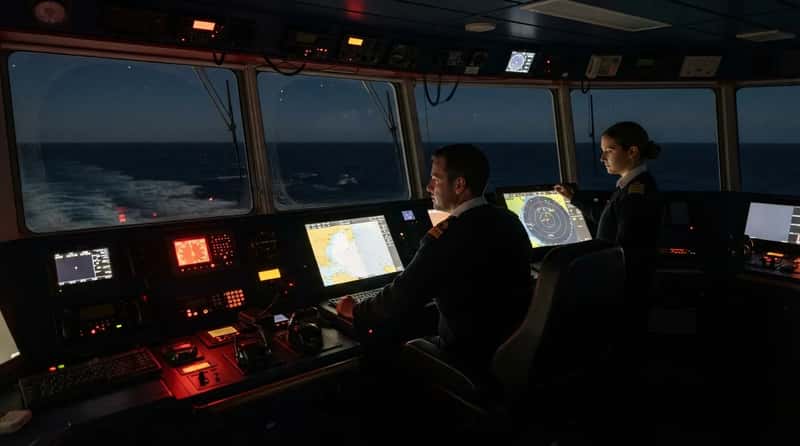
Most passengers assume that once they fall asleep, the ship basically drifts along with nobody really watching. That assumption is dead wrong.
A ship is operated 24 hours a day, every day of the voyage, and the clock at sea is broken into four-hour blocks called watches, starting at midnight.
Deck officers stand on the bridge through every one of those blocks, tracking position, course, and speed with radar, GPS, and electronic charts to keep the vessel locked to its planned route.
At midnight, while guests are ordering room service or drifting off to the sound of the water, a qualified officer is already running a full check of every navigation instrument on board. The ship is never unattended – not even close.
17. The Watch Handover Is a High-Stakes Ritual
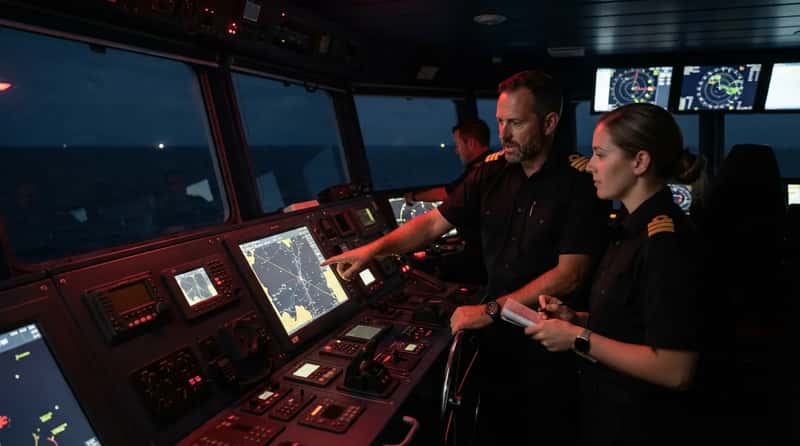
Every watch change at sea follows strict rules, and the midnight changeover is one of the most carefully choreographed moments in a deck officer’s day.
One rule sits above all the others: nobody hands over the watch in the middle of a maneuver. If the ship is turning to avoid a contact or working through a close-quarters situation, the relief waits until things are clear again.
The outgoing officer carries a real responsibility here too. If there is any doubt that the relieving officer is fit to take over – fatigue, illness, anything – the handover stops and the captain is told immediately.
It is a level of procedural discipline that most passengers standing in line for the midnight buffet would never guess is unfolding just a few decks above them.
16. The “Middle Watch” Is the Loneliest Four Hours at Sea
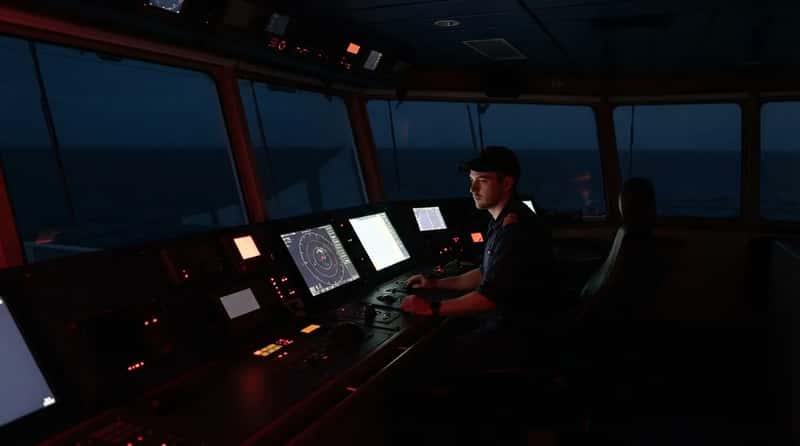
The stretch from midnight to 4 a.m. has a name sailors have used for centuries: the Middle Watch. It is widely considered the hardest shift in the rotation.
That window belongs to the Second Officer – four hours in the dead of night, right when human alertness naturally bottoms out.
At a Glance
- First Watch: 8 p.m. to midnight
- Middle Watch: midnight to 4 a.m., long considered the toughest shift of the rotation
- Morning Watch: 4 a.m. to 8 a.m.
- Forenoon and Afternoon Watches: split the daylight hours into two four-hour blocks
- Dog Watches: two short two-hour shifts in the early evening that rotate the schedule so nobody stands the Middle Watch every single night
Traditionally the second mate works a “12-4”: midnight to 4 a.m., then noon to 4 p.m. During that time, they are the one enforcing every safety and pollution regulation on the ship.
Officers who have stood this watch for years call it a test of discipline against biology. The body wants to sleep; training keeps the eyes on the horizon anyway.
15. Radar and AIS Never Sleep Either
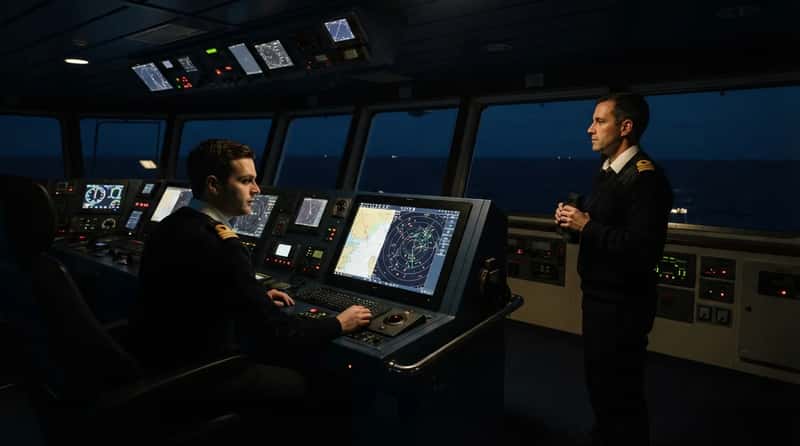
The bridge at night does not look like the dark, quiet room passengers might picture. It is alive with glowing screens, alarms, and data that refreshes constantly.
The Electronic Chart Display and Information System, or ECDIS, blends electronic charts with GPS, radar, and AIS to give a live, moving picture of the ship’s position and route.
AIS works like a transponder, broadcasting the ship’s position and speed to every nearby vessel and port authority. Layered with radar, it lets officers see both cooperative and non-cooperative targets on one screen.
Even so, officers are trained never to trust the screens alone. The sea at night hides things no algorithm catches – a darkened fishing boat, an unlit obstacle, a fog bank rolling in with no warning.
14. Technology Is a Tool, Not a Substitute
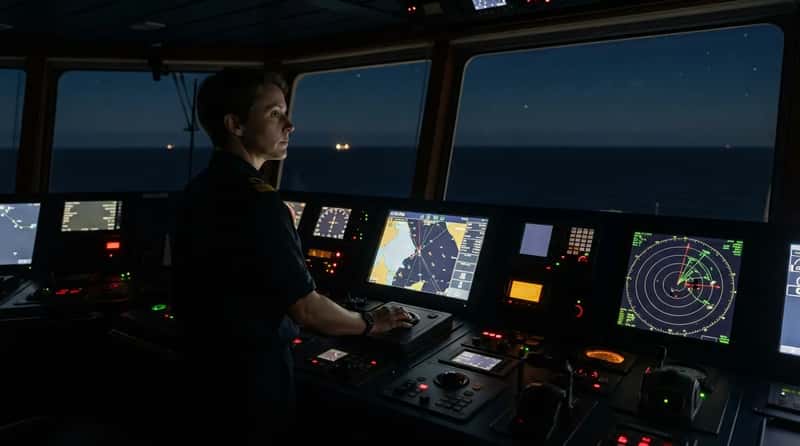
One of the biggest myths passengers carry about modern cruise ships is that automation has basically replaced human judgment at night. Officers push back hard on that idea.
Bridge technology has genuinely improved maritime safety, but investigators keep finding the same failure pattern: navigational aids muted, set incorrectly, or trusted without a second check.
Eyes and ears still come first. Radar, ARPA, AIS, and ECDIS are cross-checked against each other, never trusted blindly – the officers who get caught out are usually the ones who stopped looking out the window.
After midnight, with fewer crew on the bridge and quieter radios, the officer of the watch is carrying a concentration load that is genuinely harder to sustain than during daylight hours.
13. The Bridge Has a Strict “Never Leave” Rule
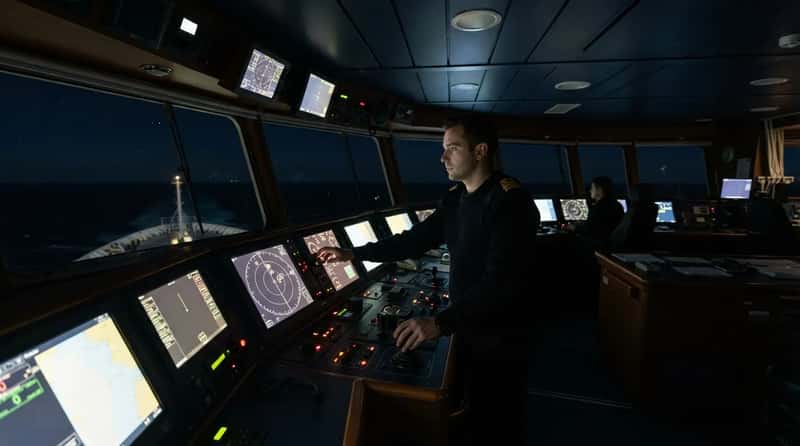
Passengers can wander freely after midnight – the casino, the deck bar, back to the cabin, wherever. The officer of the watch has no such freedom.
They hold what is called “the conn”: full conduct of the ship, including every helm and engine order. Under international standards, they do not leave the bridge until properly relieved.
The officer-of-the-watch post is staffed around the clock by a qualified deck officer – the same bridge passengers casually tour by day is, at 2 a.m., a workstation with real stakes.
Four hours in the same space, responsible for thousands of lives, with no option to step away. Very few shore-based jobs come close to that kind of standing accountability.
12. Fatigue Is Treated as Seriously as a Broken Radar
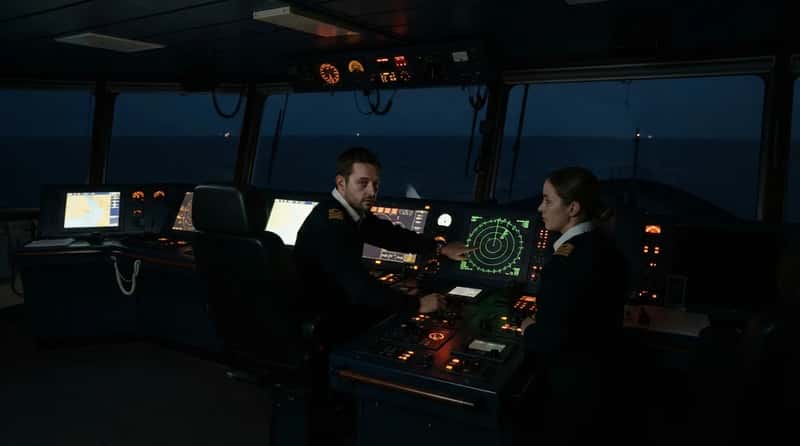
The maritime world does not treat fatigue as a personal problem. It treats it as a safety hazard, on par with a failing instrument.
International rules require at least 10 hours of rest in every 24-hour period, and 77 hours across every 7 days. Disrupted sleep raises real, measurable risk on the bridge.
That is exactly why watch handovers happen at quiet moments instead of tense ones – a tired watchkeeper is a hazard the same way a defective radar is a hazard, and the rules treat it accordingly.
Most crew members work contracts of six to nine months, often over ten hours a day with limited full days off. For anyone standing navigation watches, fatigue management is a constant, unglamorous fight.
11. Security Patrols the Entire Ship, Every Hour
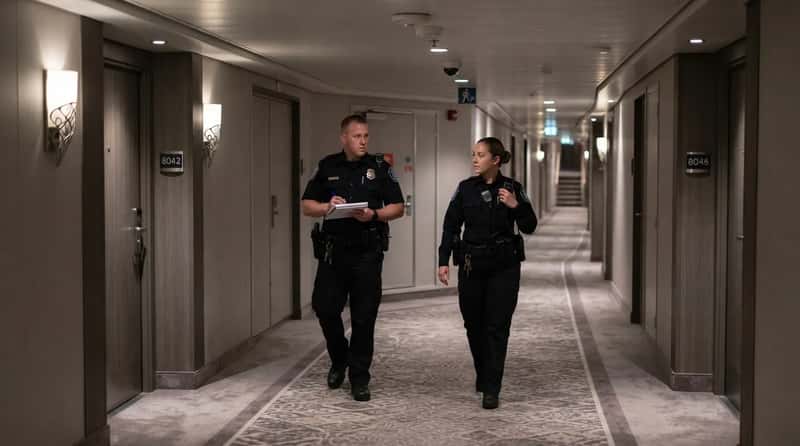
While deck officers run the navigation watch from the bridge, a separate operation moves quietly through every corridor, stairwell, and open deck.
Ship security never sleeps. Officers patrol public areas, watch the camera feeds, and respond to incidents around the clock.
A modern cruise ship carrying thousands of guests is essentially a small floating city, and the overnight rotation handles everything from noise complaints to genuine emergencies. Every patrol gets logged, every anomaly gets noted, and anything that looks wrong gets escalated fast.
What passengers experience as an uneventful night in their cabin is often the result of hours of quiet, invisible work by people trained to catch trouble before it becomes visible.
10. The Engine Room Never Goes Unmanned
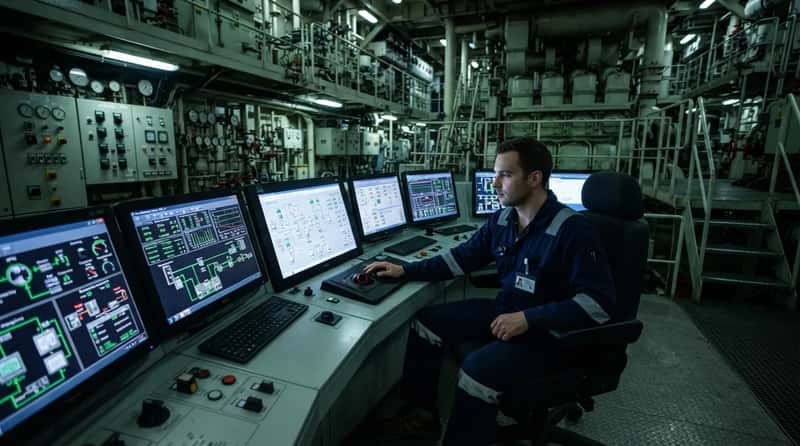
Passengers rarely think about what keeps the lights on, the air conditioning running, and the propellers turning through the night. Engineers and bridge officers think about almost nothing else.
Navigation and engineering run as one continuous operation – officers steer, watch the weather and traffic, and scan for hazards, while engineers deep below keep propulsion, power, and life-support systems running.
Worth Knowing
- Many modern cruise ships carry a classification notation for periodically unmanned machinery spaces, allowing the engine room to run without someone physically present for set stretches.
- Automated sensors track temperature, pressure, and vibration on every major system around the clock.
- Any reading outside normal range triggers an alarm that goes straight to the duty engineer, and escalates further if it isn’t cleared quickly.
- Even with all this automation, a qualified engineer stays reachable within minutes, any hour of the night.
Many engine rooms run as “periodically unmanned machinery spaces,” watched remotely through automated monitoring and alarm systems from the bridge or a control room. Oversight never actually stops, even when nobody is physically standing there.
An alarm in the engine room at 2 a.m. triggers an immediate response chain, and the bridge officer is part of that chain whether the ship is in open water or lining up on a port.
9. Maintenance Crews Take Over the Guest Spaces
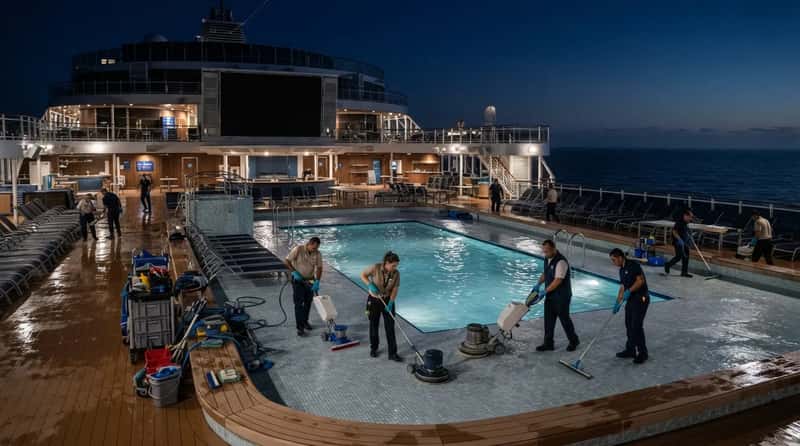
The moment the last guests drift away from the pool deck or the casino lounge, a completely different crew moves in. Overnight, the ship’s public spaces are handed over to a cleaning and maintenance operation run on military-tight scheduling.
As the corridors go quiet, the pace behind the scenes actually picks up – kitchens get deep-cleaned, public spaces get sanitized, bars get restocked, and breakfast service gets built from scratch before dawn.
Engineers use these same hours to service HVAC systems, test backup generators, recalibrate navigation gear, and inspect lifeboat mechanisms, with noise carefully managed even though brief vibrations sometimes slip through.
The gleaming, fully stocked buffet passengers walk into at 7 a.m. is the product of hours of silent, organized labor that started long before midnight.
8. Technical Inspections Are Deliberately Scheduled for the Dark Hours
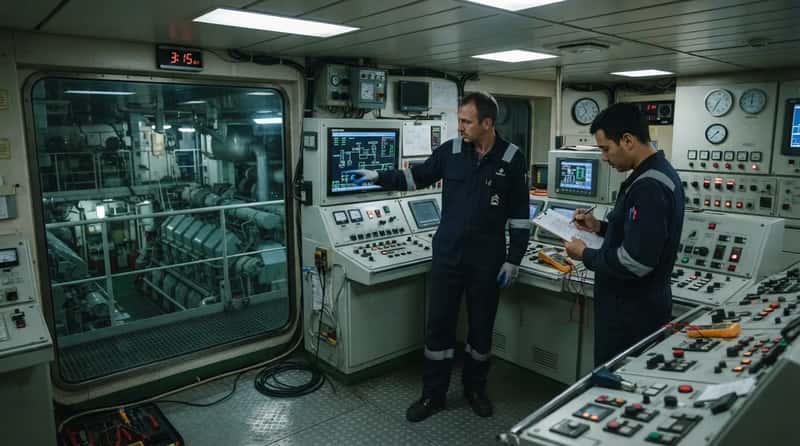
It is not an accident that certain repairs and system checks happen while passengers are asleep. It is written into the ship’s operating schedule on purpose.
Many inspections and minor repairs are deliberately pushed to after midnight specifically to avoid disrupting the guest experience.
These overnight maintenance windows are not optional extras – they are required under international safety standards, and doing the work at night keeps daytime disruption to a minimum.
So the next time you wake at 3 a.m. to a brief vibration or a distant mechanical hum, it is not cause for alarm. It is almost certainly the maintenance schedule doing exactly what it is supposed to do.
7. The Ship’s Log Gets Updated Through the Night
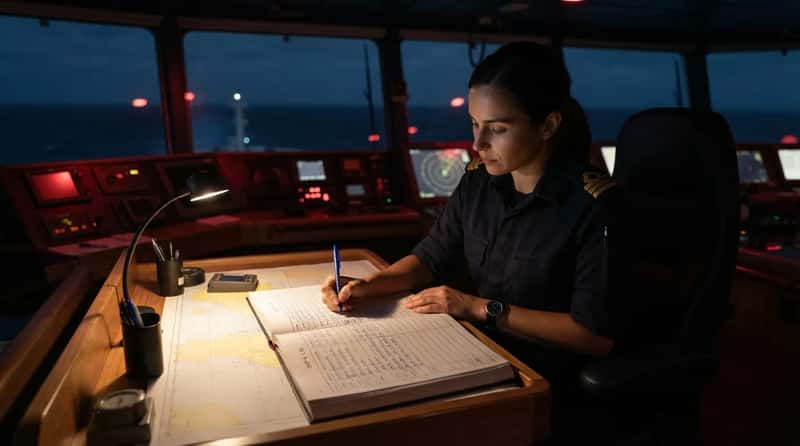
Every hour of every watch, the officer on duty writes in the ship’s official log. This is not paperwork in the boring, bureaucratic sense – it is a legal record with real consequences.
The officer of the watch supervises the watch itself, conducts night rounds, keeps the log current, and confirms every safety precaution is being followed.
Weather, course changes, speed adjustments, any vessel sighted, any alarm triggered, any incident at all – it all goes in with a timestamp. If something goes wrong days later, this log is the first document investigators pull.
Which means the Middle Watch officer is simultaneously navigator, safety monitor, and record-keeper – and, if needed, the person who makes the call that wakes the captain at 3 a.m.
6. The Lookout Position Still Exists, and It Still Matters
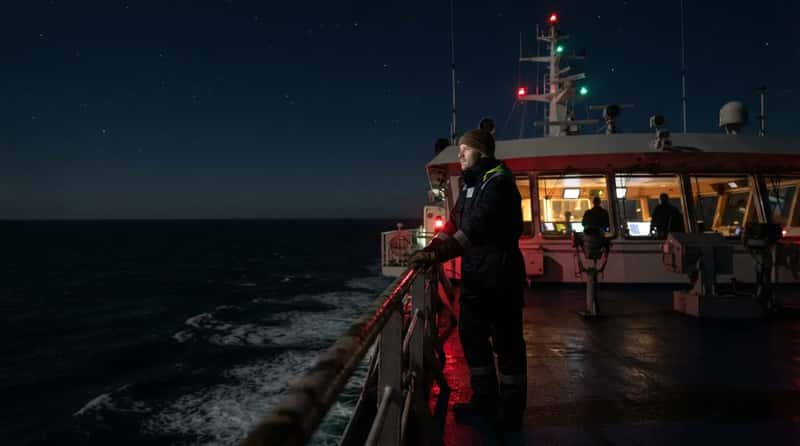
In the age of GPS and ECDIS, passengers often assume the lookout is a relic – something out of an old sailing novel. Deck officers correct that assumption fast.
A typical bridge watch includes both a lookout and a deck officer, and the two roles are treated as genuinely separate jobs.
A rating steering the wheel is not keeping a lookout. An officer may act as sole lookout only in daylight, in good visibility, with nothing else pulling their attention – and only after careful judgment that it is truly safe.
At night, in reduced visibility, in busy shipping lanes, the lookout is a real, standing post. Someone is out on the bridge wing right now, eyes adjusted to the dark, watching for what the radar might miss.
5. The Casino Stays Open, and Officers Know Exactly Where the Trouble Comes From
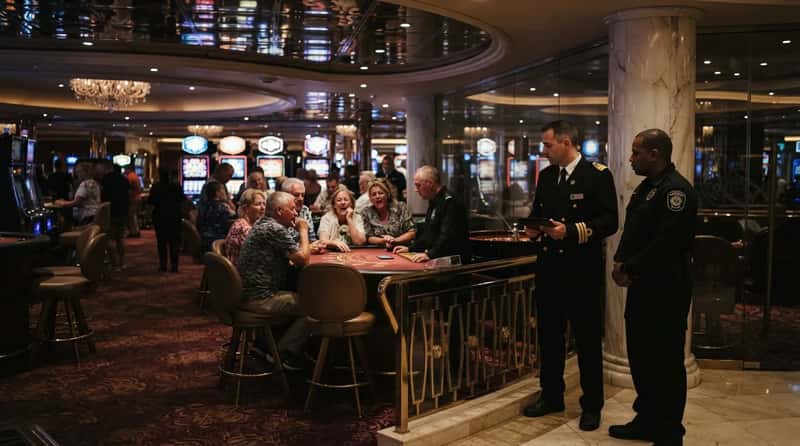
Deck officers and security teams pay close attention to which venues stay busy after midnight, because those spaces correlate directly with the incidents that generate overnight paperwork.
Casinos typically run deep into the early morning whenever the ship is in international waters – often the very last venue on the whole ship to close.
Quick Compare: What’s Still Open After Midnight
- Casino: often stays open until the very last guest walks away, sometimes well past 2 a.m.
- Room service: typically available around the clock, though the overnight menu is smaller
- Buffet and main dining: usually closed by midnight or 1 a.m., reopening hours later for early breakfast prep
- Spa, gym, and shops: generally shut overnight, giving staff a window for deep cleaning and restocking
On many large ships the casino closes only when the last guest leaves, not on a fixed schedule, with slot machines and table games pulling a steady late crowd especially on sea days.
A busy casino at 2 a.m. means more foot traffic, more alcohol, and more chances a security call comes in. Officers plan their patrol rotations around exactly that pattern.
4. Weather Calls Can Pull the Captain Out of Bed at Any Hour
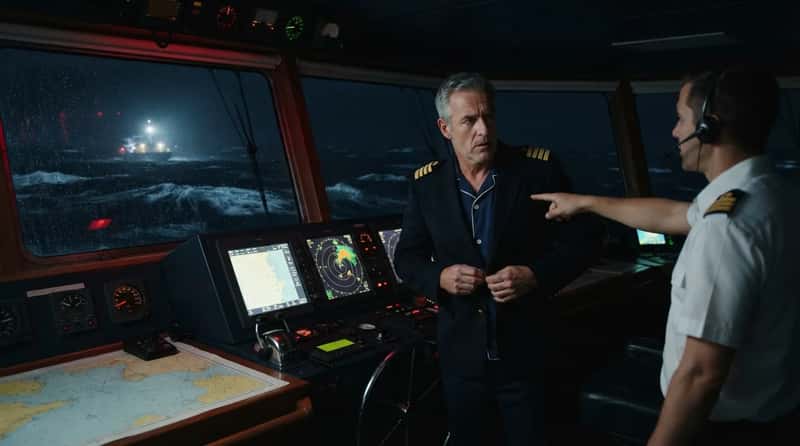
The captain’s night is nothing like a passenger’s night. Captains are never fully off duty, and deck officers are trained to know precisely when their sleep gets interrupted.
Every captain issues standing orders tailored to that specific voyage – weather forecasts, crew capability, known risks – and every officer has to read and acknowledge them.
Those orders spell out exactly when the officer of the watch must wake the captain: worsening visibility, a vessel on a collision course, an unplanned course change, or any machinery alarm that will not resolve.
Experienced officers call this one of the more pressured judgment calls in the job – not because waking the captain is ever wrong, but because you have to be certain, fast, and clear the moment you do it.
3. Passing Through Tight Waters at Night Puts Everyone on High Alert
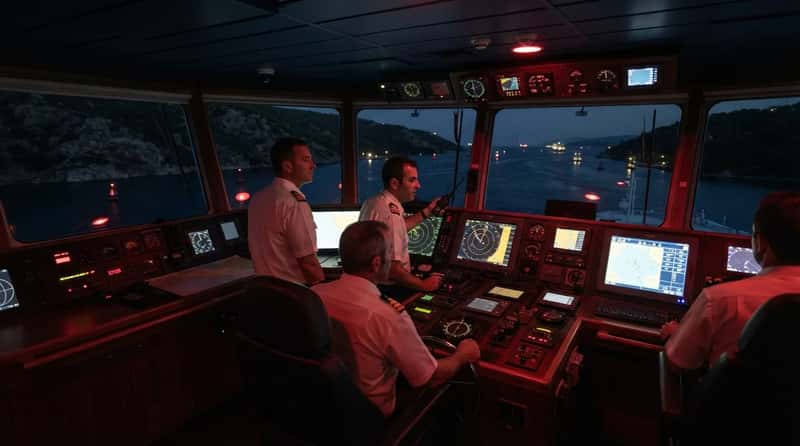
Open-ocean watchkeeping is demanding enough on its own. But when the ship nears a strait, a port channel, or a busy coastal lane after midnight, the entire tempo on the bridge shifts.
Best practice calls for the most experienced officers to work these hours, with the bridge team reinforced the moment waters get tighter.
In fog, officers switch to hand steering, slow down under collision-avoidance rules, add an extra visual lookout, and stretch radar and ARPA out to longer ranges.
A bridge that had one officer and a lookout during a calm open-ocean stretch can suddenly fill with the chief officer, the captain, an extra lookout, and a helmsman on manual steering – all before most passengers have any clue anything has changed.
2. The BNWAS: The Alarm That Watches the Watchkeeper
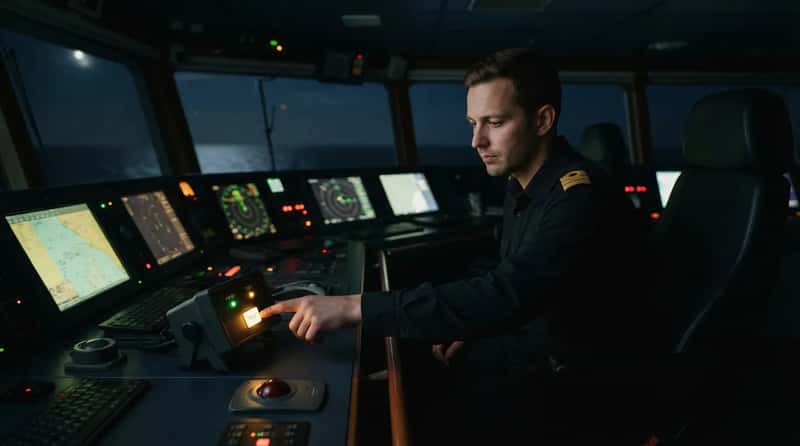
Here is something almost no passenger knows exists: a device built specifically to detect if the officer on watch has become incapacitated – unconscious, medically compromised, or simply asleep.
It is called the Bridge Navigational Watch Alarm System, or BNWAS. The officer must press a button or respond to a prompt at set intervals, and if no response comes, the alarm escalates – first on the bridge, then to officer cabins, then straight to the captain.
Fast Facts: The BNWAS
- Required on passenger ships built on or after July 1, 2011, and on most other vessels 150 gross tons and up
- The officer must reset the system every 3 to 12 minutes, depending on how the captain has it set
- Miss the reset, and a visual alarm appears on the bridge within 15 seconds
- Miss it again, and the alarm escalates straight to the captain’s and first officer’s cabins
It is a safety net, not a replacement for training. The technology exists precisely because everyone on the bridge understands that a human, even a well-trained one, is not infallible at 3 a.m.
Most passengers sleep soundly never knowing this system exists – never knowing that somewhere above them, an officer is pressing a button every few minutes just to confirm a human being is still in control of the ship.
1. The Moment That Defines Every Night Watch
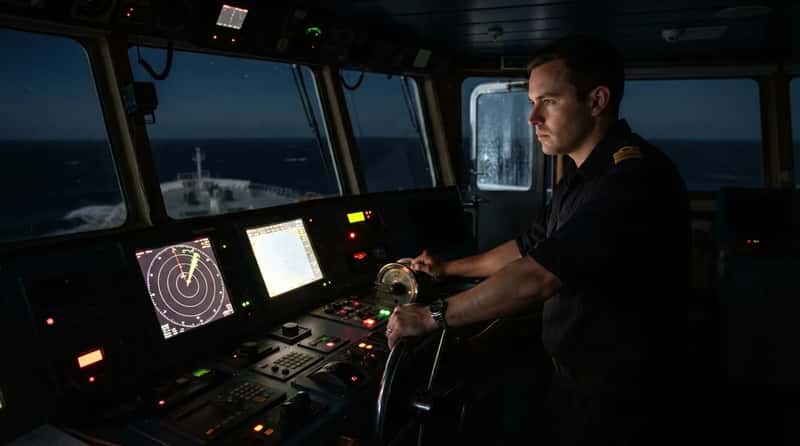
Everything above – the radar sweeps, the log entries, the BNWAS confirmations, the lookout braced against the wind on the bridge wing – is preparation for a moment most officers hope never comes, but train for constantly.
It is the moment something is genuinely wrong. The data does not add up, a contact is closing too fast, an alarm cannot be explained, and the officer of the watch has to decide, alone in the dark, whether to act now or call the captain.
In cases of need, the officer in charge of the navigational watch shall not hesitate to use the helm, engines, and sound signalling apparatus.
International Regulations for Preventing Collisions at Sea (COLREGs)
The rulebook is clear. The reality – in the middle of the night, with thousands of sleeping passengers and full personal accountability riding on one decision – carries a weight no written rule can fully capture.
The gap between the glossy daytime brochure and the real overnight machine is most visible right here, at 3 a.m., when hundreds of unseen workers keep the whole ship running. The officer standing the Middle Watch sits at the center of that gap – and would not trade it for anything else.
The Bottom Line
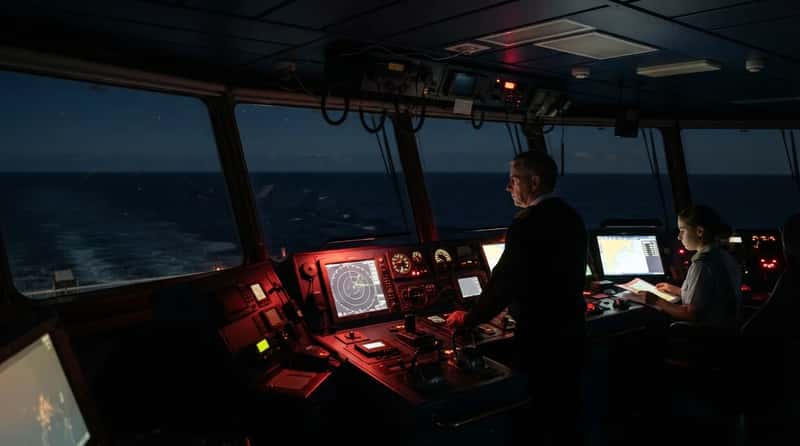
A cruise ship after midnight is not a floating hotel quietly idling in standby mode. It is a fully operational vessel being actively navigated, monitored, maintained, and guarded by people who trained for years to do exactly this.
Deck officers stand four-hour watches under strict international rules, hand off command with the same precision a surgeon hands off an open procedure, and carry legal accountability for thousands of lives with every line they write in the log.
Security walks every corridor. Engineers tend every system. Maintenance crews rebuild every public space before the sun comes up.
So the next time you’re up at 2 a.m. on a cruise and glance toward the lit-up bridge windows high above the bow, remember this: someone trained, wide awake, and fully responsible is already looking back out into the dark.