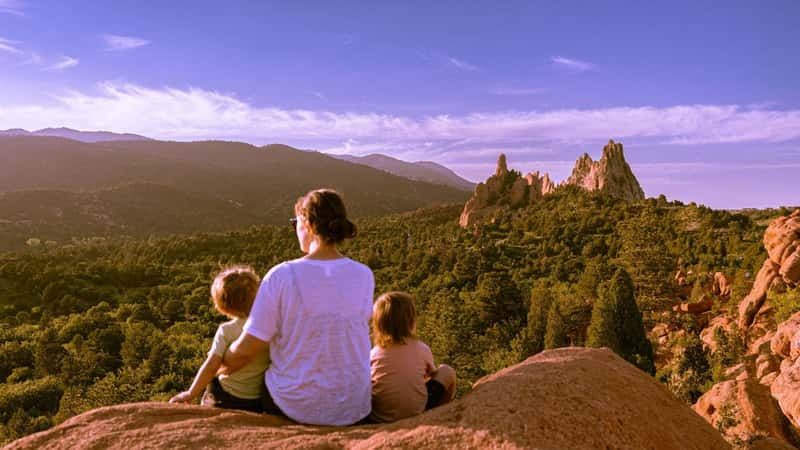
A parent and two young children sitting on a rock overlooking a mountainous landscape. – Image for illustrative purposes only (Image credits: Unsplash)
This August marks five years since I first became a father. My solo wanderings gave way to a new rhythm, one that still includes long journeys but now centers on sharing them with a curious five-year-old. Over that span we have moved from quick European escapes to extended overland routes across the Americas, and the experience has quietly reshaped how I think about both travel and parenting.
The world does not wait for perfect timing
Many well-meaning voices suggest waiting until children are older so they can form lasting memories. That advice overlooks a simple reality: the planet is vast, and no family will ever see every worthwhile place. Postponing a long-dreamed-of trip risks never taking it at all.
Instead of delaying, we kept moving. James may not recall every detail of certain landscapes, yet those early journeys turned travel into an ordinary part of life. He grew up seeing maps, hearing stories, and understanding that different countries exist beyond picture books. The same logic applies the other way around: if a destination feels right now, the next year can bring an entirely different one.
Children absorb far more than adults assume
Travel has a way of turning ordinary moments into quiet lessons. James can already identify small nations on a map and recognize cultural markers that surprise adults who meet him. The exposure comes not from drills but from repeated exposure to new places, languages, and routines.
We spend time with children’s books about characters who journey across continents, and those stories feed real-world curiosity. When we plan a trip, he knows the route and the basic expectations. That early involvement keeps him engaged rather than simply along for the ride. The longer parents wait, the more the child’s world narrows to what is already familiar at home.
Local experiences can still feel like play
Striking the right balance between child-friendly activities and authentic encounters is an ongoing puzzle. The goal is not to chase playgrounds or theme parks but to find moments that feel both fun and unmistakably local. A recent week in Serbia showed how possible that mix can be.
We stayed in Belgrade long enough to wander streets and try unfamiliar foods, then moved to rural farms where James fed animals alongside Serbian-speaking hosts. A final stretch in the mountains included a ride on a historic narrow-gauge train. None of it required museums or long lectures, yet he came away with a clear sense of the country’s landscapes, meals, and people. The same approach has worked in other settings: when the activity is rooted in place, the learning happens naturally.
Traveling together is not the same as traveling alone
A common worry is that children force travelers to miss signature experiences. In practice the trade-off looks different. A trip to Ecuador meant skipping a high-altitude climb, yet it opened three days on a small farm where local families welcomed us as one of their own. Those hours of conversation would never have happened on a solo itinerary.
The real distinction appears when one parent travels without a second adult. Simple tasks, such as fetching water late at night or managing a sudden illness, become logistical puzzles. Every meal, border crossing, and tantrum must be handled while carrying bags and keeping track of documents. The challenges are real, yet the slower pace also creates deeper connections that solo travel rarely matches.
What stands out after five years: Children adapt quickly when the adults around them stay calm. They rarely complain about modest lodging or limited menus if the day includes time together. Adults, by contrast, sometimes bring more expectations than the journey can meet.
These reflections come from one family’s experience, not a universal rulebook. Still, the central lesson remains consistent: having a child does not end the possibility of meaningful travel. It simply changes the shape of the adventure, often in ways that reward patience and flexibility more than speed or distance covered.