Most people board a long-haul flight and just hope for the best – hope the seat next to them stays empty, hope they sleep, hope they don’t land feeling like they got run over by the beverage cart. Frequent flyers don’t hope. They have a system, and it’s not the one you think.
Some of these habits look almost too small to matter – a bottle filled at the wrong fountain, a bag zipped the wrong way. But insiders say these tiny details are exactly what separates a smooth 14-hour flight from a miserable one. Here’s what frequent flyers actually do differently, every single time.
#26 – They Start Drinking Water Before They Even See the Gate
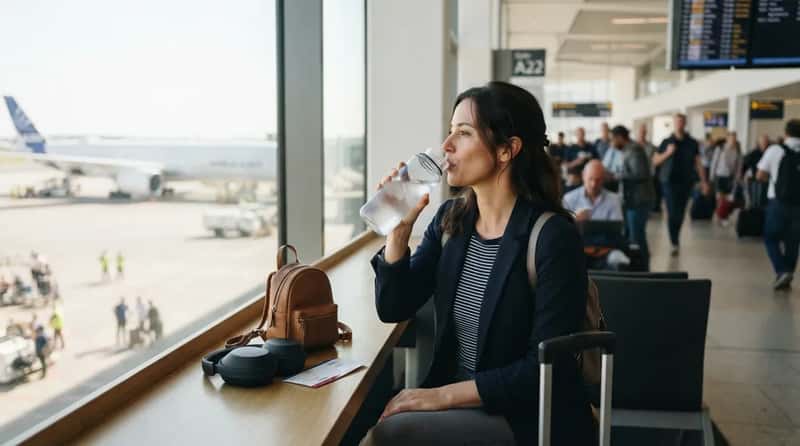
Frequent flyers don’t wait until they’re airborne to think about hydration. They start loading up hours before boarding, treating it less like a nice idea and more like a job requirement. By the time boarding starts, they’re already ahead of the deficit everyone else will spend the whole flight trying to fix.
Start hydrating before you board, aiming for at least one or two glasses of water in the hours leading up to your flight. It sounds almost too simple to matter, but veteran travelers say it’s the single habit that prevents the worst of the fog and headaches later.
#25 – They Fill Their Bottle After Security, Never Before
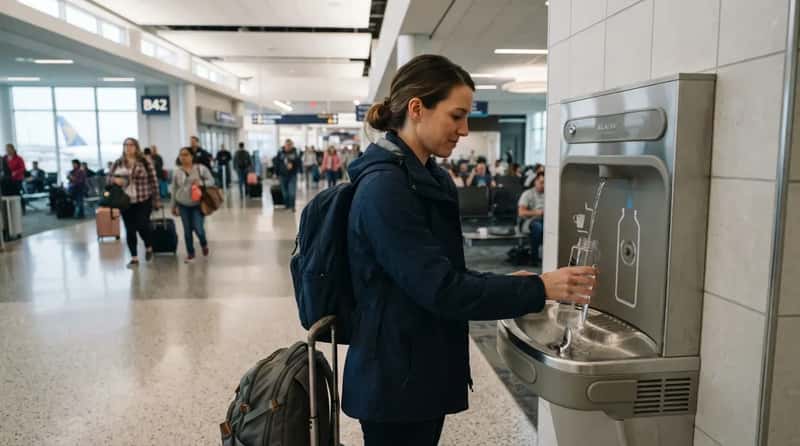
Rookies try to sneak a full bottle through the checkpoint and lose it every time. Frequent flyers carry an empty one on purpose.
They always bring a reusable water bottle and fill it after security, since most airports now have free water dispensers so you won’t even need to pay to fill up. It’s a five-second habit that saves real money over a year of flying, and it means they’re never stuck relying on a tiny in-flight cup.
#24 – They Know the Cabin Is Drier Than a Desert
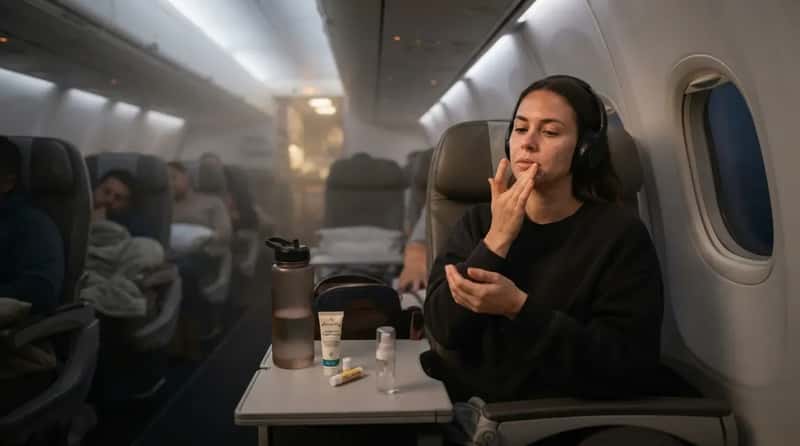
This one genuinely surprises casual travelers when they hear it for the first time.
Cabin air sits at just 4-20% humidity – drier than the Sahara desert, and experts say skin is actually most comfortable when humidity sits between 40 and 70 percent. Frequent flyers don’t fight this – they just accept it as fact and pack accordingly, which is exactly why the next few habits on this list exist at all.
Fast Facts
- Cabin humidity: 4-20%, often drier than most deserts
- Comfortable skin humidity range: 40-70%
- Typical cruising altitude: 35,000-40,000 feet
- Cabins are pressurized to feel like roughly 6,000-8,000 feet elevation
#23 – They Skip the Free Wine Every Single Time
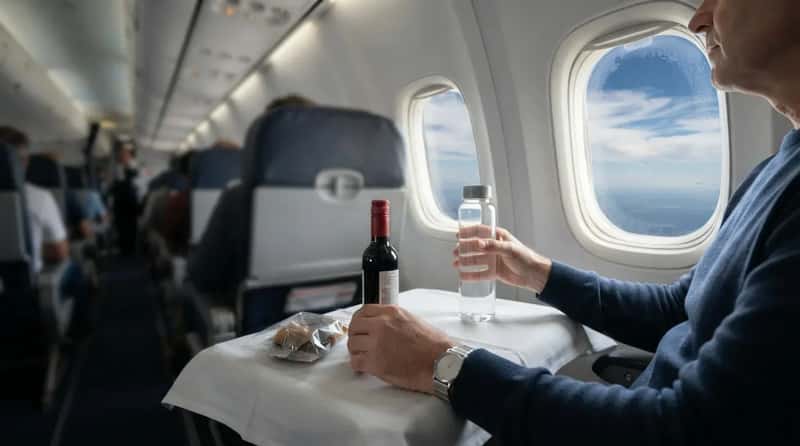
Turning down a free drink at 35,000 feet feels almost unpatriotic, but experienced flyers do it anyway.
Alcohol is the real problem on a flight, not caffeine, and it quietly speeds up the dehydration that’s already happening thanks to the dry cabin air. Many seasoned travelers now openly argue that the “free wine on international flights” perk is one of the most overrated parts of long-haul travel – it feels like a treat but it’s really a setup for a rough landing.
#22 – Compression Socks Aren’t Optional, They’re Automatic
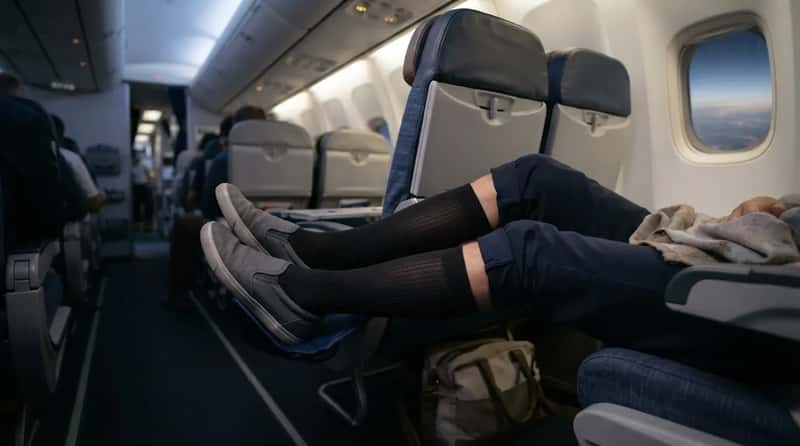
For frequent flyers, compression socks go on before boarding, no exceptions, no matter how short the flight looks on paper.
The habit isn’t vanity – it’s backed by real evidence. In one controlled study, below-knee stockings cut DVT incidence dramatically in higher-risk long-haul passengers. It’s a two-dollar habit protecting against a genuinely serious risk, which is exactly why it shows up on almost every seasoned traveler’s packing list.
#21 – They Get Up Every Two Hours, Like Clockwork
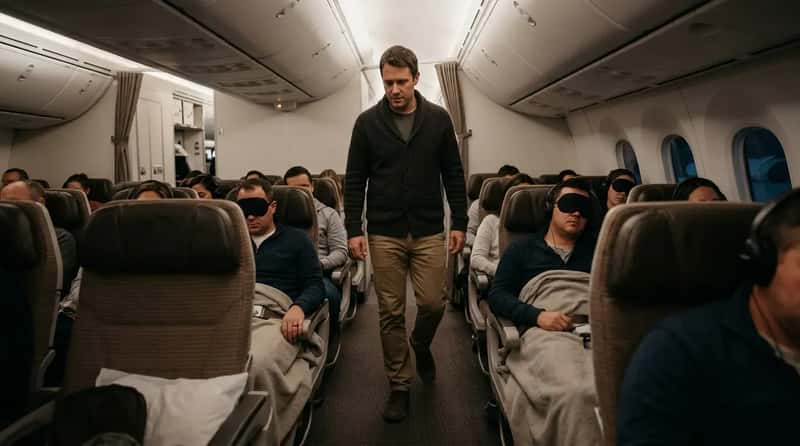
Nobody wants to climb over three sleeping strangers to reach the aisle, but frequent flyers do it anyway, on a schedule.
Sitting for long periods can lead to stiffness or even circulation issues, so experienced travelers try to walk up and down the aisle every couple of hours and do a few stretches in their seat. It’s not glamorous, but it’s the difference between landing ready to go and landing barely able to stand up straight.
#20 – They Never Cross Their Legs for the Whole Flight
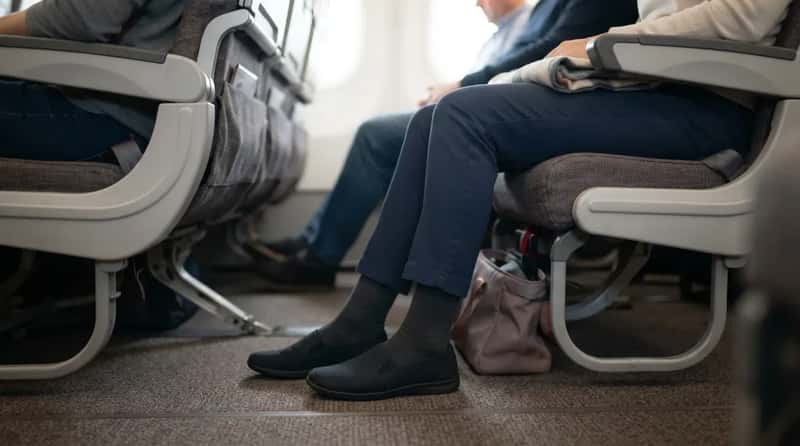
It’s a habit almost nobody talks about, but frequent flyers treat leg position like it actually matters – because it does.
Avoiding crossing your legs for long stretches and not wedging a bag under the seat so tightly you can’t move your feet are two of the smallest, least-discussed habits that make a genuine difference on flights over six hours. It costs nothing and takes zero extra time, which is probably why almost no casual traveler bothers.
#19 – They Eat Before Boarding, Not During
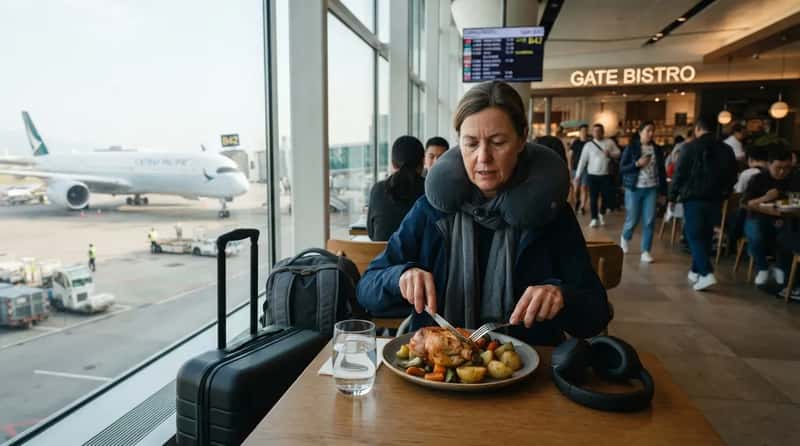
Rather than waiting on the meal cart, many veteran flyers eat a real meal at the gate and skip straight to sleep mode once seated.
One Lonely Planet staffer described the exact routine: boarding ready to sleep, popping on a neck pillow and noise-cancelling headphones instead of forcing themselves to stay awake for meal service. It sounds like giving something up, but frequent flyers say the extra hour of real sleep is worth far more than an airplane tray meal.
#18 – They Carry a Tiny “Flight Kit” That Never Leaves Their Bag
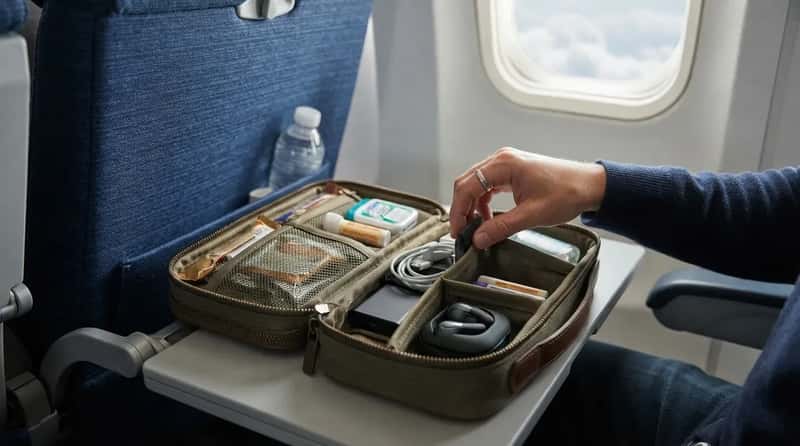
It’s usually just a small pouch, but frequent flyers never fly without it.
Frequent flyers often use packing cubes or compartmentalized bags to keep in-flight essentials easily accessible – snacks, headphones, chargers, and gum – so there’s no digging around during turbulence. It’s a small system, but it means they’re never the person frantically searching a backpack while a flight attendant waits.
#17 – They Never Plug Into a Public USB Port
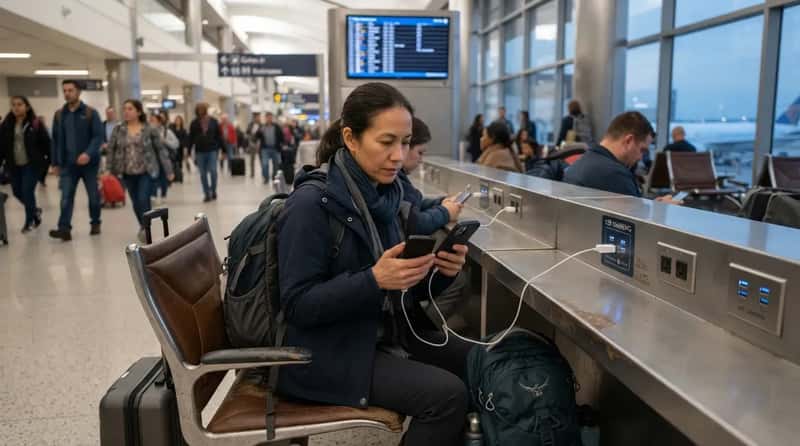
This one sounds paranoid until you hear the reasoning behind it.
Experienced travelers avoid leaving their phone at public charging stations and instead bring a portable power bank. It’s less about convenience and more about control – they’d rather manage their own battery than plug into hardware they can’t verify, especially during a long layover in an unfamiliar airport.
#16 – Everything Is Downloaded Before the Cabin Door Closes
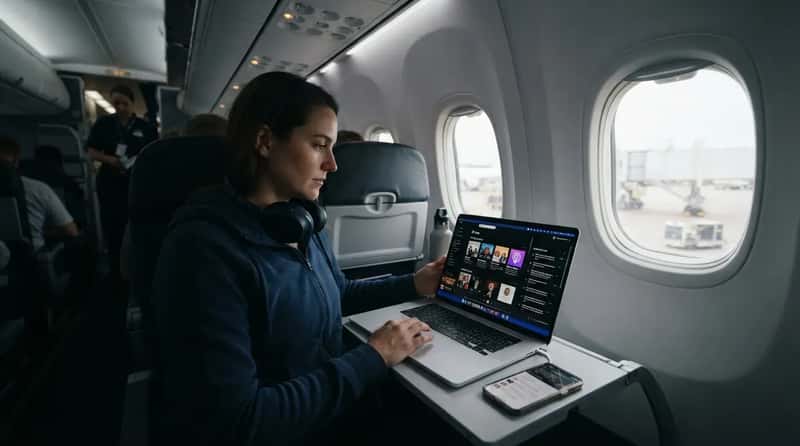
Frequent flyers treat mid-air Wi-Fi as a bonus, never a plan.
The trick is preparation – they download everything before boarding, from offline playlists to saved articles to synced cloud files, so nothing is left to chance at 35,000 feet. It’s a habit built from experience: the one time the entertainment system freezes or the Wi-Fi never connects is usually the flight someone forgot to prep.
#15 – Seat Choice Is Never Random
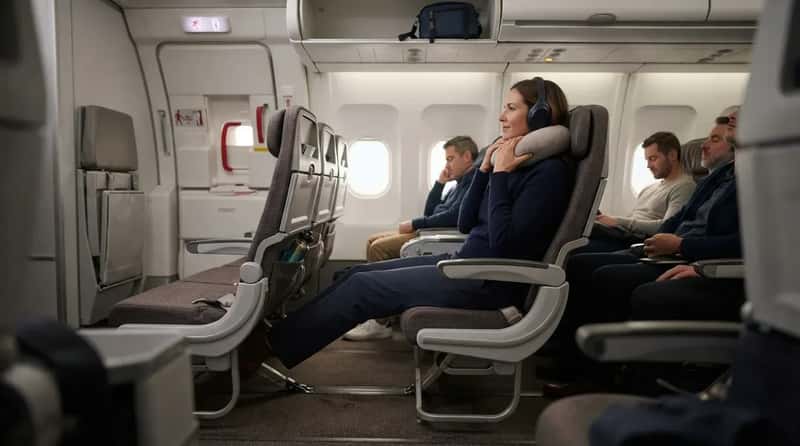
Casual travelers pick whatever seat pops up first. Frequent flyers pick on purpose, every time.
Some swear by a window seat to sleep and avoid disruption, while others prefer the aisle for freedom to move around, and many specifically choose a row near the emergency exits for the extra legroom. It’s a small five-second decision at booking that quietly shapes the entire flight ahead.
Quick Compare
- Window: best for uninterrupted sleep, but you’re climbing over neighbors to move
- Aisle: easy bathroom and stretch access, but you get bumped by carts and passing feet
- Exit row: extra legroom, but no under-seat storage and emergency duties if needed
#14 – They Dress for Comfort, Not for the Airport Mirror
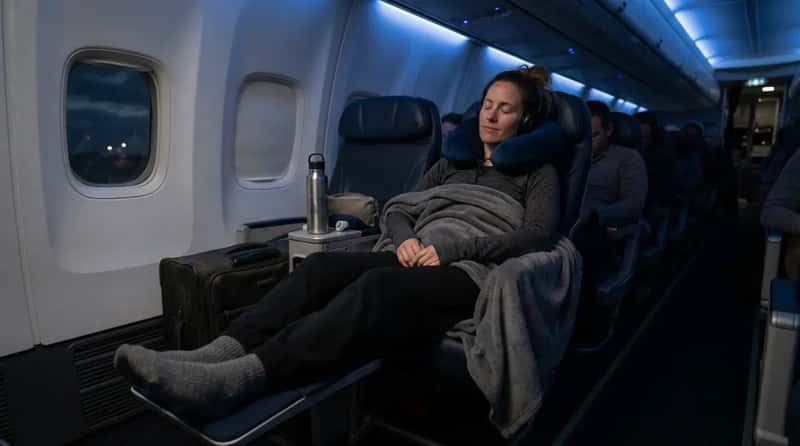
The “airport outfit” look is mostly for social media – frequent flyers dress for a completely different reason.
The routine is almost always the same: loose layers, a proper neck pillow, consistent hydration, and avoiding heavy meals and alcohol. It’s not about looking put-together. It’s about surviving a temperature swing from freezing cabin air to a stuffy jet bridge without needing to change clothes mid-trip.
#13 – They Bring Their Own Snacks and Skip the Cart
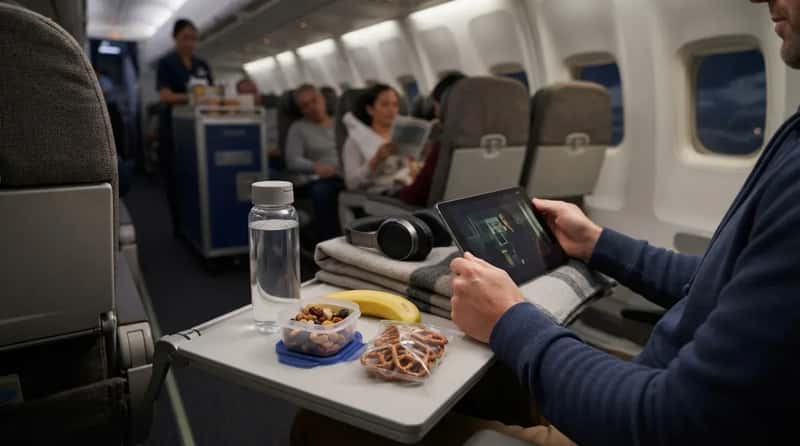
Waiting for the snack cart means eating on the airline’s schedule, and frequent flyers refuse to do that.
Bringing their own water, snacks, and entertainment means they eat when their body actually needs it, not when a cart happens to roll by two rows at a time. It also means they’re not stuck with whatever’s left by the time service reaches the back of the plane.
#12 – Their Entertainment List Is Built Before Takeoff
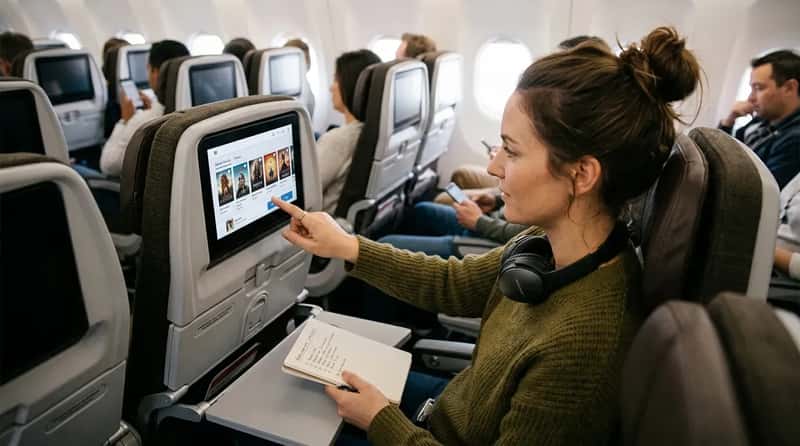
Endless scrolling through the seatback screen is a rookie move – experienced flyers arrive with a plan already made.
Frequent flyers rarely scroll aimlessly; they go in with a list, saving the foreign film they keep skipping, a documentary that needs a dedicated block of time, and a comedy rewatch for when energy dips around hour ten. It turns a 14-hour flight into something closer to a planned binge than a boredom emergency.
#11 – The First Hour Gets Used Completely Differently
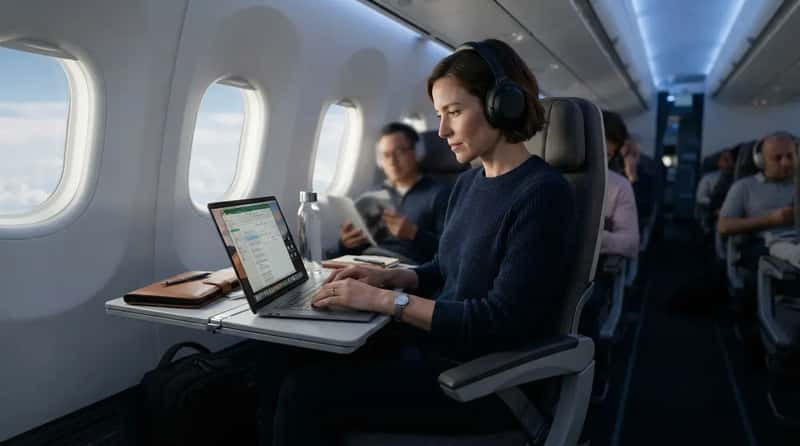
Most passengers spend the first hour settling in and complaining about legroom. Frequent flyers use it like a small, quiet office.
Long-haul regulars know the first hour is golden – the mind is still sharp, the cabin is quiet, and the Wi-Fi hasn’t been hammered yet, making it the window for drafting reports or clearing emails. It’s a habit that turns dead travel time into genuinely productive time, before fatigue sets in for good.
#10 – Sleep Gets Timed to the Destination, Not the Body
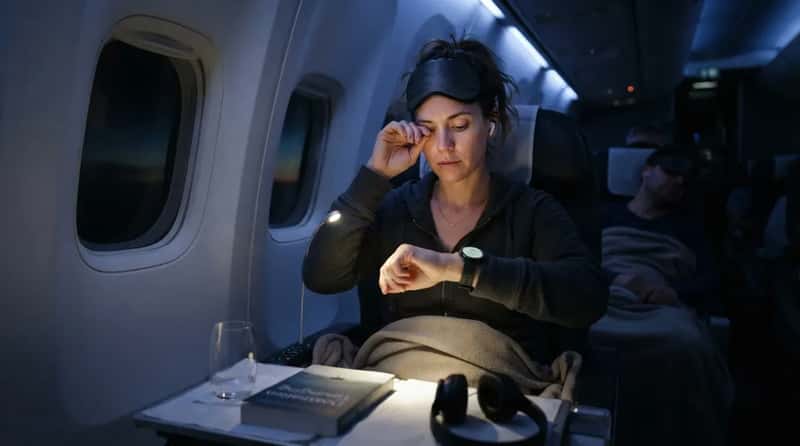
This is one of the more surprising habits, and it trips up almost every casual flyer.
Timing sleep isn’t about being tired – it’s about landing functionality. Experienced flyers force themselves to sleep or stay awake based on the clock at their destination, not their own exhaustion, even if it means fighting sleep for an extra hour or two mid-flight.
#9 – Noise-Cancelling Headphones Are Treated as Required Gear
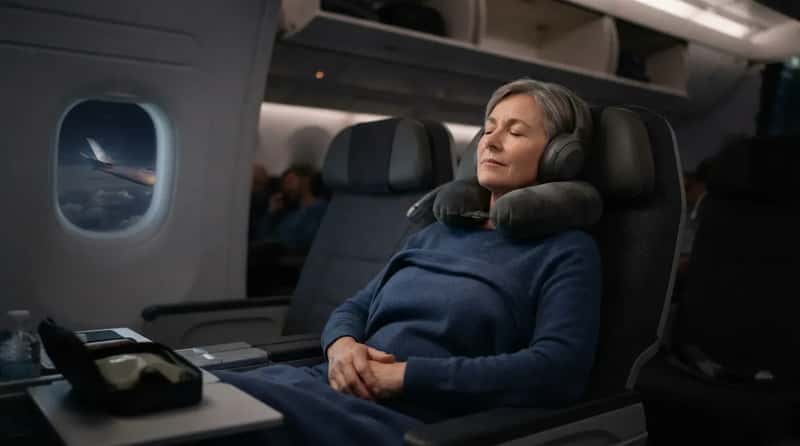
For frequent flyers, this isn’t a luxury item – it’s closer to a medical device.
One senior travel staffer’s entire pre-sleep routine centers on turning on the noise-cancelling setting right after boarding, before the seat is even fully reclined. Engine drone for ten straight hours is exhausting in a way most people don’t notice until it’s suddenly gone.
#8 – Bag Zippers Always Face Inward, Especially at Layovers
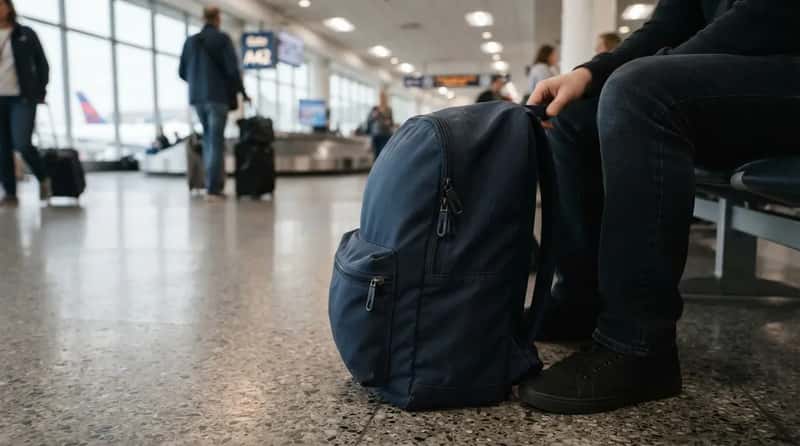
It’s a tiny habit that most travelers never even think about, but frequent flyers do it without fail.
They keep valuables close with bag zippers facing inward, because despite how much safer airports have become, security lines and baggage carousels remain hotspots for petty theft. It costs nothing and takes no extra time, which is exactly why it’s become second nature for anyone who flies constantly.
#7 – They Watch for Upgrades Like It’s a Second Job
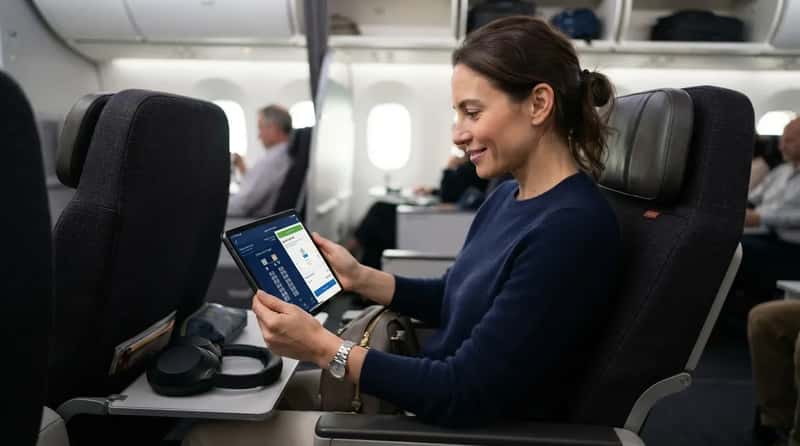
Upgrades don’t happen by luck as often as people assume – they happen because someone was paying attention.
Experienced travelers watch for last-minute business class openings, use miles at the right moment, and know which routes offer better seat configurations. Many say scoring even one upgrade on an ultra-long haul was enough to permanently change how they book every flight afterward.
Worth Knowing
- Elite status members are usually first in line when upgrade seats open
- Off-peak dates tend to have far better upgrade odds than holidays
- Many airlines release remaining upgrade inventory closer to departure day
- Checking in early can help your name move up any standby or upgrade list
#6 – They Talk to Flight Attendants Early, Not During an Emergency
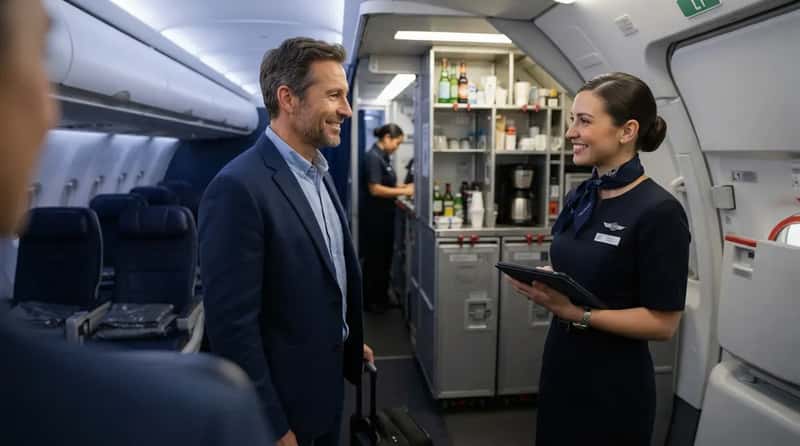
Most passengers only interact with crew when they need something urgently. Frequent flyers introduce themselves before there’s ever a problem.
It’s a small social habit, but it tends to pay off in quiet ways – extra water, a heads-up about turbulence, or simply better service throughout the flight. Crew notice who’s polite early on, and seasoned travelers know that goodwill on a 12-hour flight is worth more than most people realize.
#5 – Skincare Becomes Non-Negotiable Mid-Flight
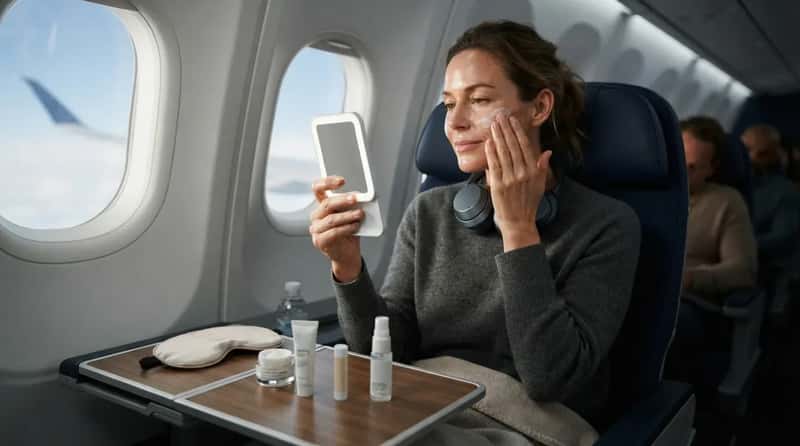
This is the habit that makes frequent flyers look suspiciously refreshed after a 14-hour flight while everyone else looks wrecked.
Dehydration doesn’t just cause headaches – over the long haul it irritates and dries out skin, so heavy moisturizer and lip balm become a mid-flight ritual, not an afterthought. It’s a small routine, but it’s often the single most visible difference between an experienced flyer and a first-timer stepping off the same plane.
#4 – They Book the Overnight Flight on Purpose
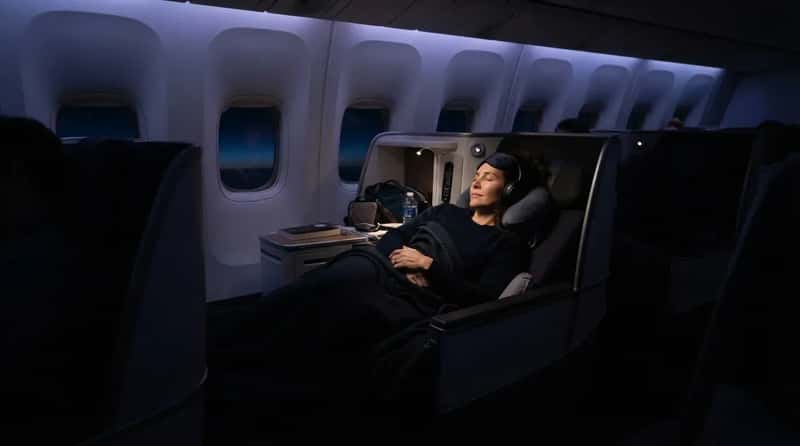
Casual travelers often avoid red-eyes. Frequent flyers frequently choose them deliberately.
An overnight departure that lands the next morning effectively lets them sleep through most of the flight and arrive with a full day still ahead, rather than burning daylight hours in the air. It’s a small scheduling decision, but over years of travel it can add up to entire extra vacation days that most people never realize they’re losing.
#3 – They Trade Movie Marathons for Podcasts and Language Apps
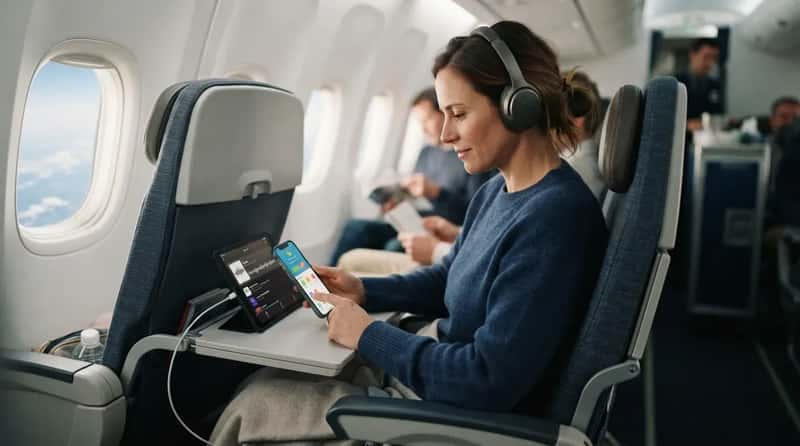
Not every frequent flyer spends ten hours watching films – some use the time in a way that feels almost productive.
Some use podcasts on topics they’d never research at home, while language-learning apps make surprising progress at altitude, with a couple of sessions per flight making a trip abroad feel less intimidating. It’s a quiet flex among frequent flyers, and honestly one of the more shareable habits on this whole list.
#2 – Everything Fits in a Carry-On, No Exceptions
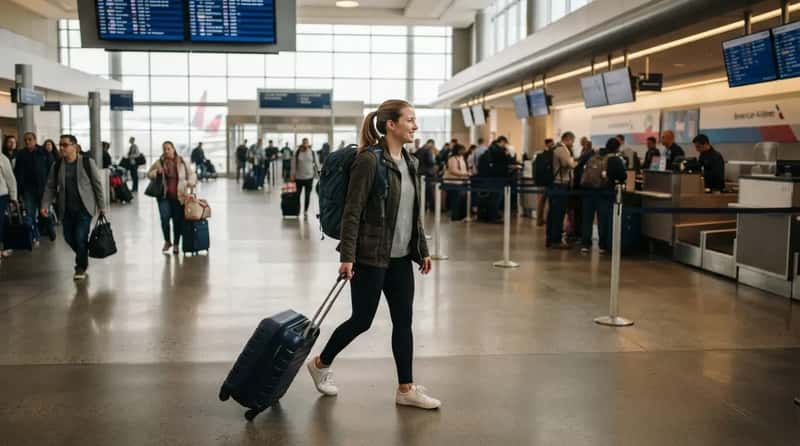
Checked bags are where long-haul trips go to fall apart, and frequent flyers know it better than anyone.
Tight connections, mishandled bags, and long carousel waits are avoidable problems for anyone who packs light enough to skip the check-in counter entirely. It’s less about minimalism and more about control – carry-on-only travelers are never at the mercy of a baggage system they can’t see or influence.
#1 – They Refuse to Fight the Jet Lag Clock
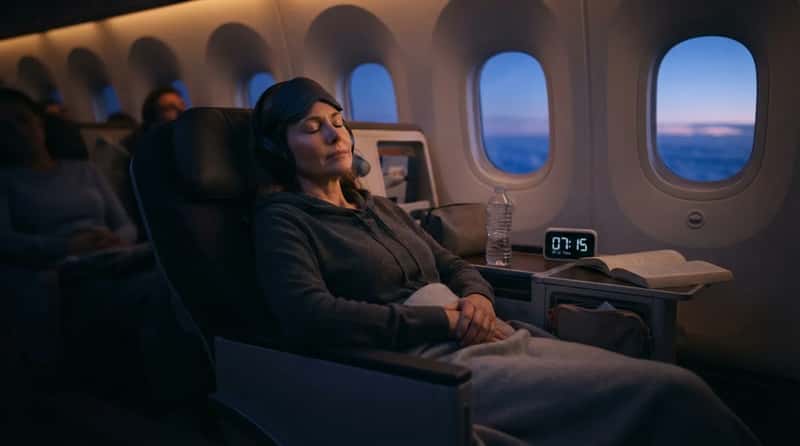
The single biggest habit separating frequent flyers from everyone else isn’t a product or a gadget – it’s a mindset shift that starts before the plane even leaves the ground.
Instead of adjusting after landing, seasoned travelers start living on destination time days in advance, adjusting sleep, meals, and light exposure before departure. Combined with hydration, movement, and smart sleep timing on the flight itself, it means they often land feeling almost normal while everyone else spends two full days recovering. It’s the quiet payoff of every other habit on this list working together at once.
At a Glance
- General rule of thumb: budget about one day of adjustment per time zone crossed
- Morning sunlight at your destination helps reset your body clock faster
- Shifting meal times a day or two early can ease the transition
- Avoiding heavy meals close to your new bedtime helps sleep stick faster
None of these 26 habits are secret, expensive, or complicated – that’s actually the point. Frequent flyers aren’t smarter travelers, they’ve just stacked small, boring decisions until the flight stopped feeling like an ordeal. Hydration, movement, and timing do more heavy lifting than any gadget ever will, and the science on cabin humidity and circulation backs that up clearly.
What’s your go-to long-haul habit – the one thing you refuse to fly without? Drop it in the comments, we’re always looking for the next one to try.