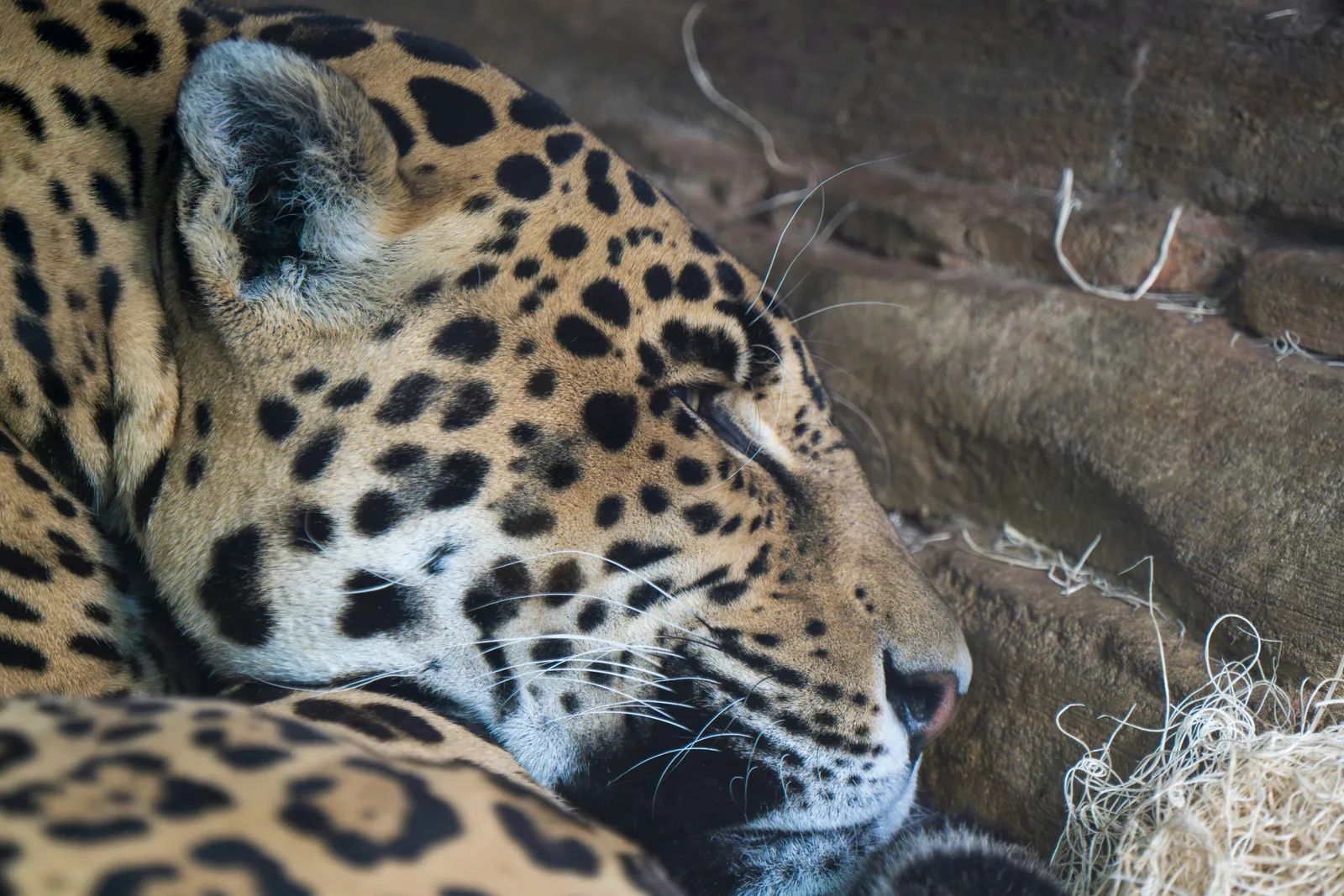
This spring, a remote camera beside a watering hole in southern Arizona recorded a large male jaguar drinking shortly after sunset. The cat, nicknamed Cinco, is one of only five jaguars documented in the state over 15 years, a sign of how far the species has retreated from its former range. With International Jaguar Day falling on November 29, the shrinking map of the world’s largest cat in the Americas is worth a closer look ([1]).
A Kingdom Cut Nearly in Half
Jaguars (Panthera onca) once occupied roughly 19 million square kilometers, or 7.3 million square miles, stretching from what is now the southwestern United States to central Argentina. Their territory today covers about 9 million square kilometers, or 3.5 million square miles. That leaves the species with less than half of the ground it once held.
Most of the surviving population is concentrated in a stronghold that runs from the Amazon Rainforest into the Pantanal wetlands, the Chaco dry forest and the Llanos grasslands shared by Colombia and Venezuela. Yet the cats have not vanished from the margins of that map. Reports from outside these core areas show that small groups still persist in places far from the species’ heartland.
Holding On at the Margins
In eastern Brazil, the Atlantic Forest and the dry Caatinga shelter fewer than 250 adult jaguars. Researchers there have started banking the animals’ genes as part of an effort that includes cloning, a measure taken because the population is so small.
Honduras tells a similar story. In the Sierra del Merendón, a mountain range in the country’s northwest, camera traps captured a young male at an altitude of about 2,200 meters, or 7,200 feet. It was the first recording of a jaguar in that area in a decade. Allison Devlin, quoted in the original reporting, pointed to the animal’s movement through high country as evidence of its endurance:
“The fact that they’re able to travel through these high elevation areas also shows how resilient they are.”
Cinco and the Arizona Edge
Cinco offers the clearest example of the species’ northern edge. Camera footage first captured him in November 2025, making him the fifth jaguar the University of Arizona group has seen in southern Arizona over 15 years. Since then, he’s been detected about 20 times.
The animal’s behavior has drawn attention from researchers. Cinco was captured on camera on three separate days and appears healthy, according to researchers. His repeated visits to the same watering area over ten days were described as rare. Dr. Susan Malusa, who leads the center’s jaguar and ocelot project, read the pattern as a sign that the edge population keeps returning because it is finding what it needs.
Even so, the picture remains cautious. The endangered jaguar remains rare in Arizona. Since 2011, UA’s Wild Cat Research & Conservation Center has detected five different jaguars throughout the region, all males. Newer footage released by the Center for Biological Diversity showed Cinco moving through a mountain range south of Tucson, captured during March and April.
Walls, Corridors and the Road Ahead
Survival at the edges depends on animals being able to move, and that movement is increasingly contested. Border wall construction continues in Arizona, including plans for a double border wall along most of the state’s southern border. Conservation advocates have long voiced concerns over border wall construction, citing its effect on jaguars and other endangered species.
Related Stories From Travelbinger



Camera records confirm individual animals, not an established breeding population. That distinction matters for any hope of a lasting return to the Southwest. For now, the footage shows that the cats can still reach the region, but whether they can stay is a separate question.
A Day Built Around a Shrinking Map
International Jaguar Day traces its origins to a 2018 gathering at United Nations headquarters in New York. Fourteen of the 18 jaguar range countries endorsed the Jaguar 2030 Statement at that forum, which led to the observance. The day is marked each November 29, and it draws attention to the cats’ habitat needs across their remaining territory.
The jaguar’s decline from 7.3 million square miles to roughly 3.5 million is a measure of loss. Still, the animals crossing deserts, mountains and borderlands suggest the cats have not yet lost their footing at the margins. Whether those edges can link back into a more connected range will likely determine the next chapter of the species’ story.